Representation of
Events
Focus on the representation of TWO events
From at least two different media texts
Enables you to demonstrate an understanding how events are
represented across media.
Events - definition
• Event = something that occurs or is about to occur
and is of interest to an audience.
• Events come in a range of shapes and forms and
can be local, national or international.
• E.g. the Royal Wedding, the Olympic Games or a
pop festival. International events may include wars
and global recession.
• Think of five current events you could explore?
Ideology
• The ideology of the text in which the event
features – right-wing or left-wing newspaper?
Royalist or anti-royalist?
• Is it clear what the text says about the event?
• Is there evidence of bias in the representation –
how do the visual, sound and linguistic codes
achieve this?
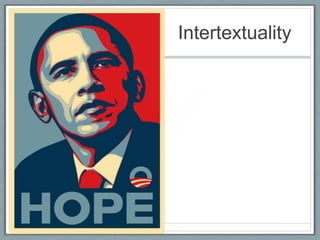
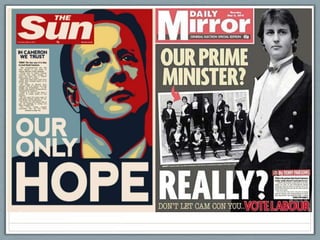
Intertextuality
How is the event
presented?
• Language - Critical? Adulatory?
• Mode of address?
• Anchorage?
• Use of images?
Construction
• Events in media representations are constructed –
they are ‘mediated’ by editors, journalists, graphic
designers, photographers.
• A football cup final will have lots of camera
positioning – producers will decide where the
camera is pointing and which is to be used. Music,
slow motion, and video filters can enhance the
images and make the players seem heroic and
superhuman.
Selection
• Whatever is chosen means other things are
omitted.
• Someone makes that decision – who? Why?
• If a peaceful student march has a brief skirmish
between one or two protestors and the police –
how might A) a student newspaper think about it
B) A right-wing tabloid?
Focus
• Headlines and images will direct our response to
certain aspects of the text and push us towards
assumptions and conclusions about the event
concerned.
• Who is interviewed? Who is not?
• Who is invited to commentate?
Audience
• Opinion leaders? Do they influence how
audiences think or feel about an event?
• The audience themselves – types of reading?
Hall?2
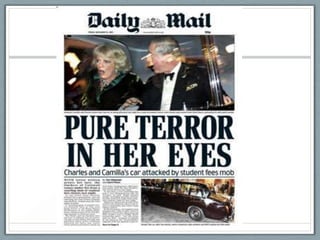
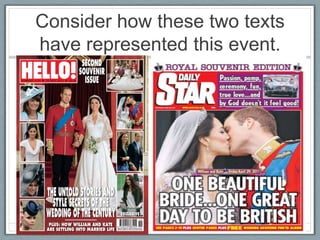
Consider how these two texts
have represented this event.

Representation of Events MS1

  • 1.
    Representation of Events Focus onthe representation of TWO events From at least two different media texts Enables you to demonstrate an understanding how events are represented across media.
  • 2.
    Events - definition •Event = something that occurs or is about to occur and is of interest to an audience. • Events come in a range of shapes and forms and can be local, national or international. • E.g. the Royal Wedding, the Olympic Games or a pop festival. International events may include wars and global recession. • Think of five current events you could explore?
  • 3.
    Ideology • The ideologyof the text in which the event features – right-wing or left-wing newspaper? Royalist or anti-royalist? • Is it clear what the text says about the event? • Is there evidence of bias in the representation – how do the visual, sound and linguistic codes achieve this?
  • 4.
  • 6.
    How is theevent presented? • Language - Critical? Adulatory? • Mode of address? • Anchorage? • Use of images?
  • 7.
    Construction • Events inmedia representations are constructed – they are ‘mediated’ by editors, journalists, graphic designers, photographers. • A football cup final will have lots of camera positioning – producers will decide where the camera is pointing and which is to be used. Music, slow motion, and video filters can enhance the images and make the players seem heroic and superhuman.
  • 8.
    Selection • Whatever ischosen means other things are omitted. • Someone makes that decision – who? Why? • If a peaceful student march has a brief skirmish between one or two protestors and the police – how might A) a student newspaper think about it B) A right-wing tabloid?
  • 10.
    Focus • Headlines andimages will direct our response to certain aspects of the text and push us towards assumptions and conclusions about the event concerned. • Who is interviewed? Who is not? • Who is invited to commentate?
  • 11.
    Audience • Opinion leaders?Do they influence how audiences think or feel about an event? • The audience themselves – types of reading? Hall?2
  • 12.
    Consider how thesetwo texts have represented this event.