Introduction to Extraction
What is extraction?
• is a method to purify DNA by using physical
and/or chemical methods from a sample
separating DNA from cell membranes,
proteins, and other cellular components
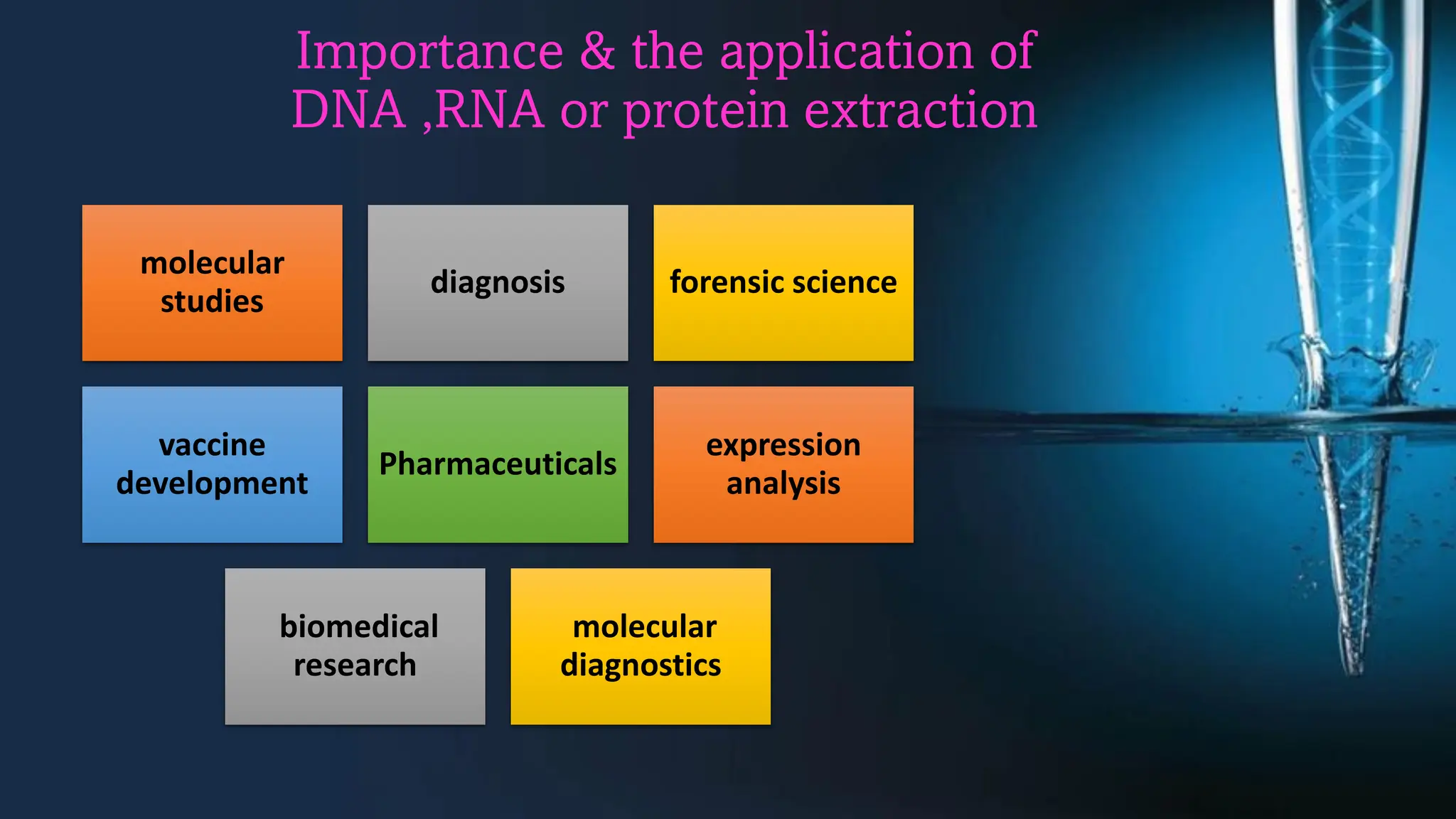
Importance & the application of
DNA ,RNA or protein extraction
molecular
studies
diagnosis forensic science
vaccine
development
Pharmaceuticals
expression
analysis
biomedical
research
molecular
diagnostics
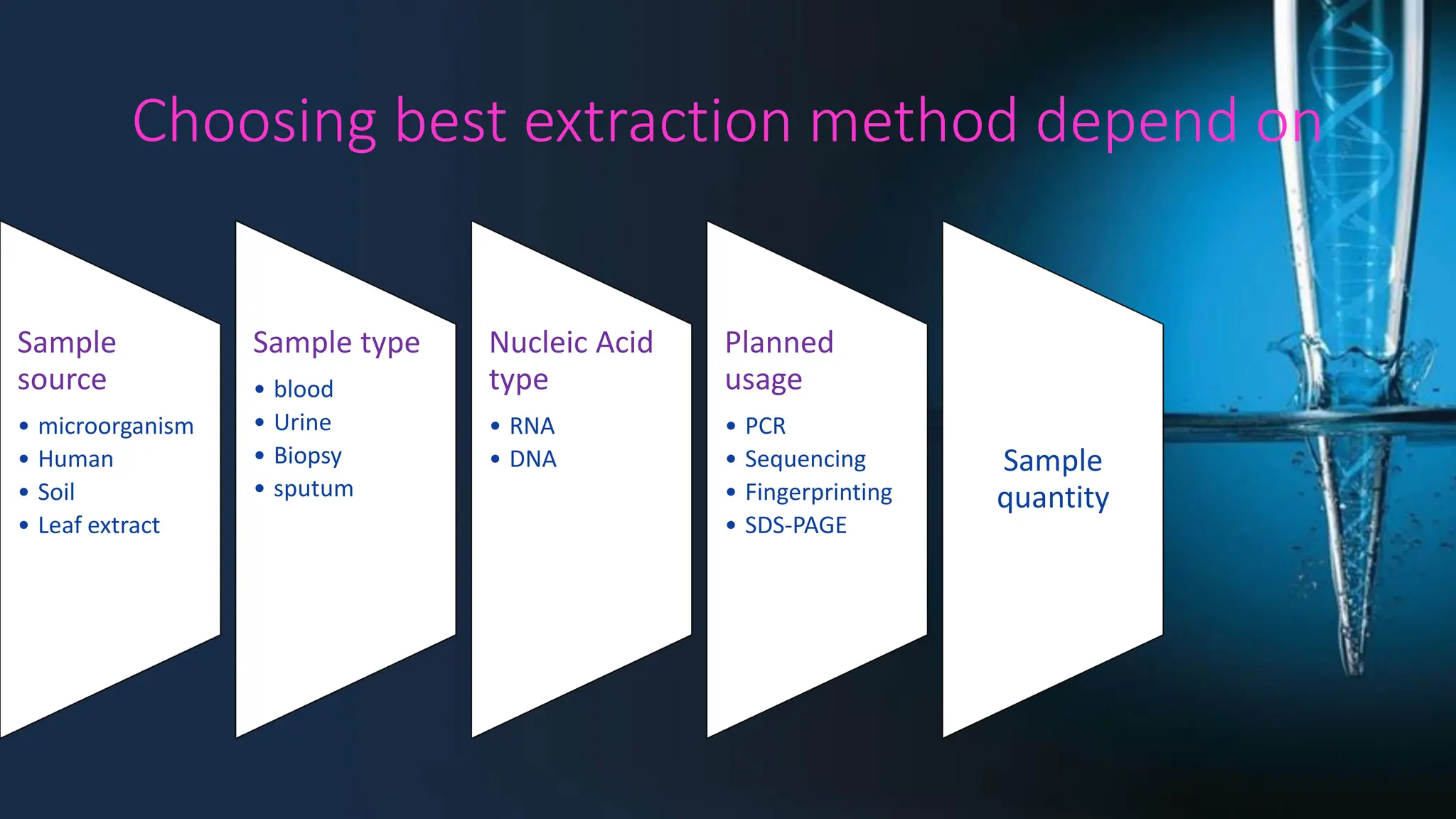
Choosing best extraction method depend on
Sample
source
• microorganism
• Human
• Soil
• Leaf extract
Sample type
• blood
• Urine
• Biopsy
• sputum
Nucleic Acid
type
• RNA
• DNA
Planned
usage
• PCR
• Sequencing
• Fingerprinting
• SDS-PAGE
Sample
quantity
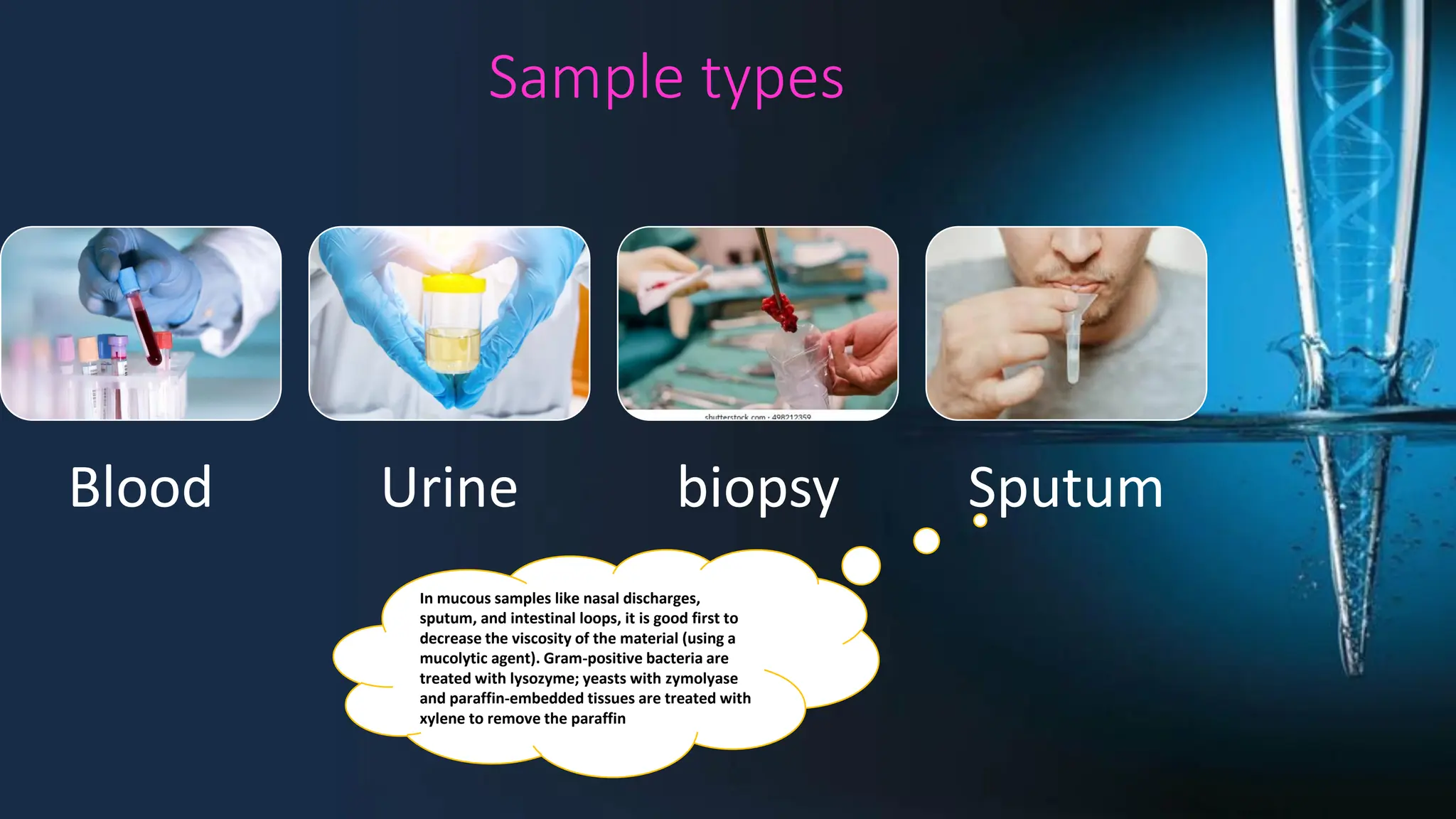
Sample types
Blood Urine biopsy Sputum
In mucous samples like nasal discharges,
sputum, and intestinal loops, it is good first to
decrease the viscosity of the material (using a
mucolytic agent). Gram-positive bacteria are
treated with lysozyme; yeasts with zymolyase
and paraffin-embedded tissues are treated with
xylene to remove the paraffin
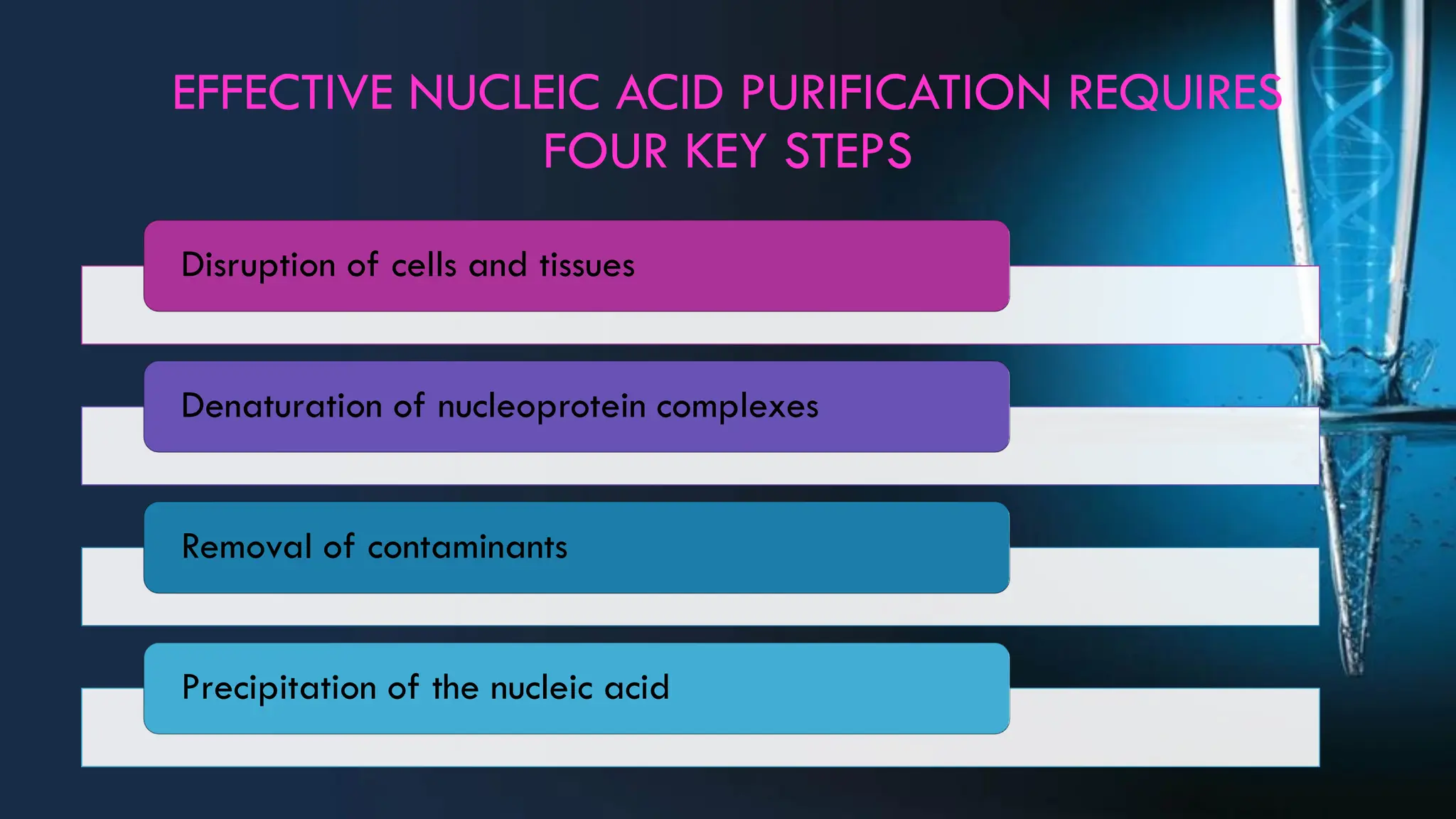
EFFECTIVE NUCLEIC ACID PURIFICATION REQUIRES
FOUR KEY STEPS
Disruption of cells and tissues
Denaturation of nucleoprotein complexes
Removal of contaminants
Precipitation of the nucleic acid
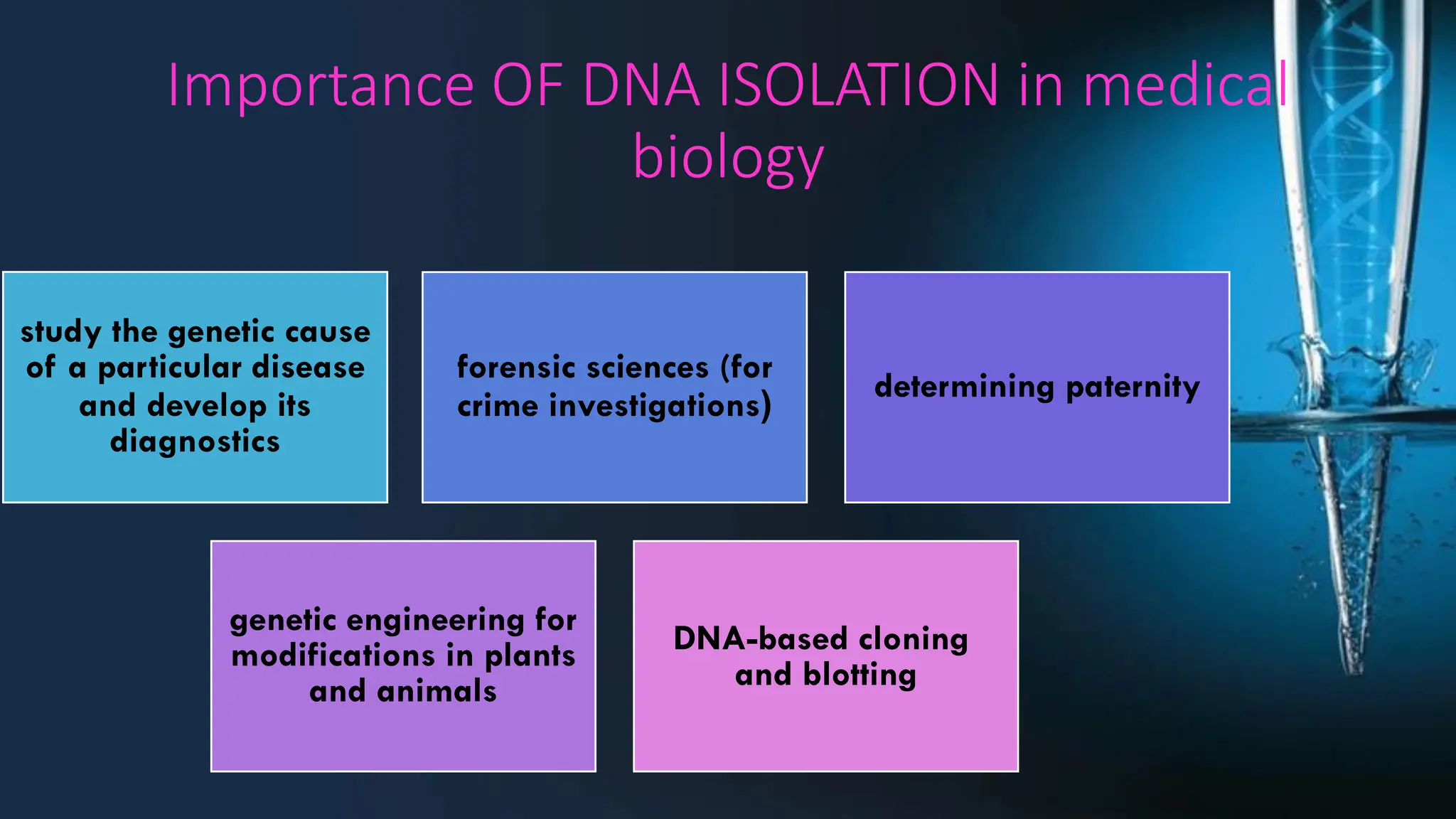
Importance OF DNA ISOLATION in medical
biology
study the genetic cause
of a particular disease
and develop its
diagnostics
forensic sciences (for
crime investigations(
determining paternity
genetic engineering for
modifications in plants
and animals
DNA-based cloning
and blotting

intro DNA Extraction.pdf

  • 1.
  • 2.
    What is extraction? •is a method to purify DNA by using physical and/or chemical methods from a sample separating DNA from cell membranes, proteins, and other cellular components
  • 3.
    Importance & theapplication of DNA ,RNA or protein extraction molecular studies diagnosis forensic science vaccine development Pharmaceuticals expression analysis biomedical research molecular diagnostics
  • 4.
    Choosing best extractionmethod depend on Sample source • microorganism • Human • Soil • Leaf extract Sample type • blood • Urine • Biopsy • sputum Nucleic Acid type • RNA • DNA Planned usage • PCR • Sequencing • Fingerprinting • SDS-PAGE Sample quantity
  • 5.
    Sample types Blood Urinebiopsy Sputum In mucous samples like nasal discharges, sputum, and intestinal loops, it is good first to decrease the viscosity of the material (using a mucolytic agent). Gram-positive bacteria are treated with lysozyme; yeasts with zymolyase and paraffin-embedded tissues are treated with xylene to remove the paraffin
  • 7.
    EFFECTIVE NUCLEIC ACIDPURIFICATION REQUIRES FOUR KEY STEPS Disruption of cells and tissues Denaturation of nucleoprotein complexes Removal of contaminants Precipitation of the nucleic acid
  • 8.
    Importance OF DNAISOLATION in medical biology study the genetic cause of a particular disease and develop its diagnostics forensic sciences (for crime investigations( determining paternity genetic engineering for modifications in plants and animals DNA-based cloning and blotting