Mulungushi University
School Of Medicine And Health Sciences
BIOMED II
Isolation, Extraction, and Purification
of Nucleic Acids
4/25/2024
-SP@MU2024-
Sichamba p.
1
Purpose of DNA Extraction
• DNA is extracted for downstream applications ranging
from
– PCR,
– Electrophoresis,
– Sequencing,
– Fingerprinting and
– Cloning.
• DNA extraction removes proteins, nucleases and
other impurities and any potential PCR inhibitors
(e.g. EDTA)
.
4
4/25/2024 -SP@MU2024-
3
Different methods for DNA extraction
1. Thermal extraction methods
2. Aqueous solution-based extraction
methods
3. Organic solvent-based extraction methods
4. Solid phase isolation using spin columns
5. Solid phase isolation using magnetic beads
4/25/2024 -SP@MU2024-
4
 Thermal extraction is a quick, crude and low-cost
method that does not require special reagents.
 It can be used to extract DNA from pure bacterial
cultures.
 The samples are heated at 100°C for 5–15 min and
then centrifuged; the supernatant contains the DNA.
4/25/2024 -SP@MU2024-
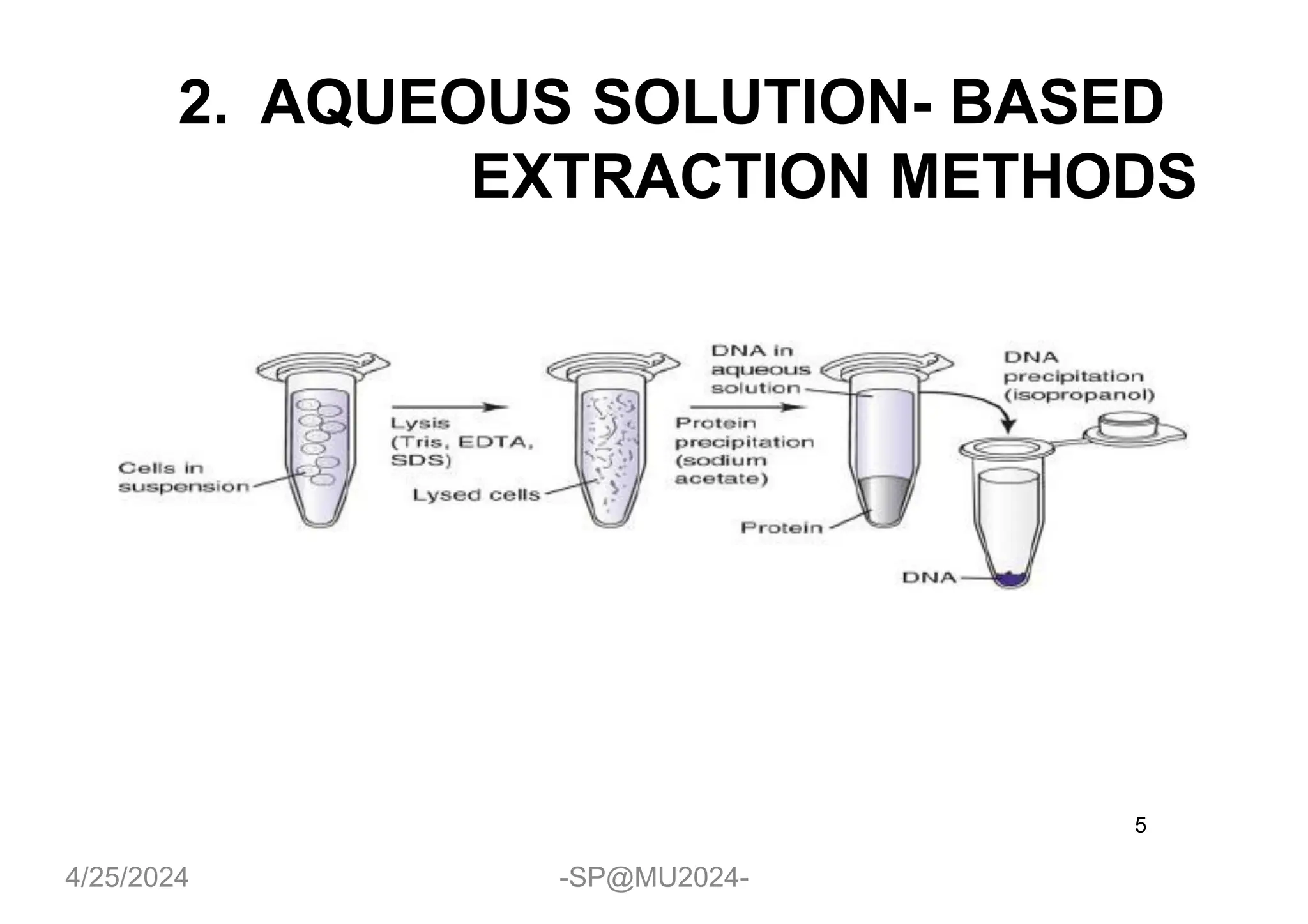
2. AQUEOUS SOLUTION- BASED
EXTRACTION METHODS
5
4/25/2024 -SP@MU2024-
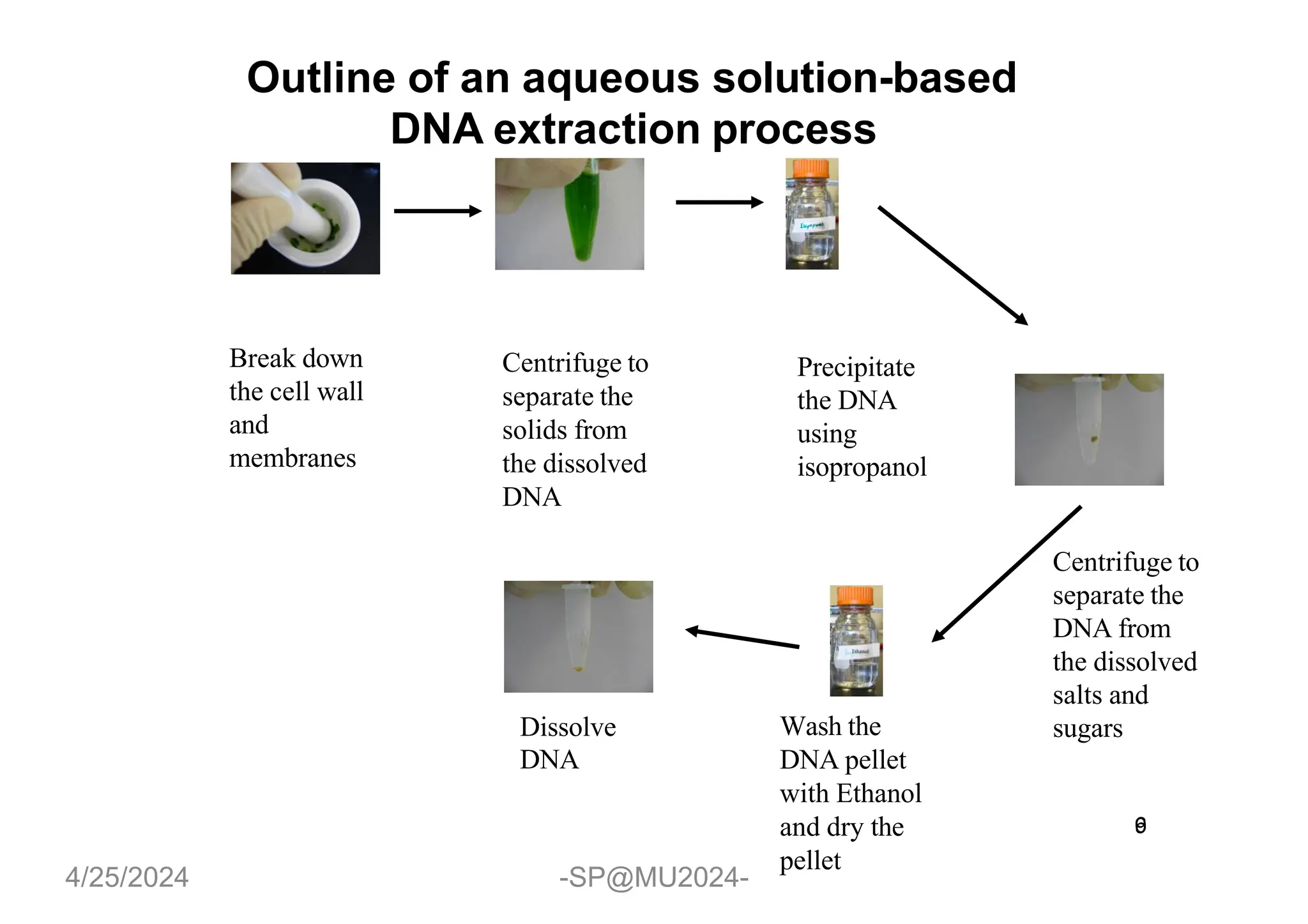
Break down
the cell wall
and
membranes
Centrifuge to
separate the
solids from
the dissolved
DNA
Precipitate
the DNA
using
isopropanol
Centrifuge to
separate the
DNA from
the dissolved
salts and
sugars
Wash the
DNA pellet
with Ethanol
and dry the
pellet
Dissolve
DNA
Outline of an aqueous solution-based
DNA extraction process
9
4/25/2024 -SP@MU2024-
6
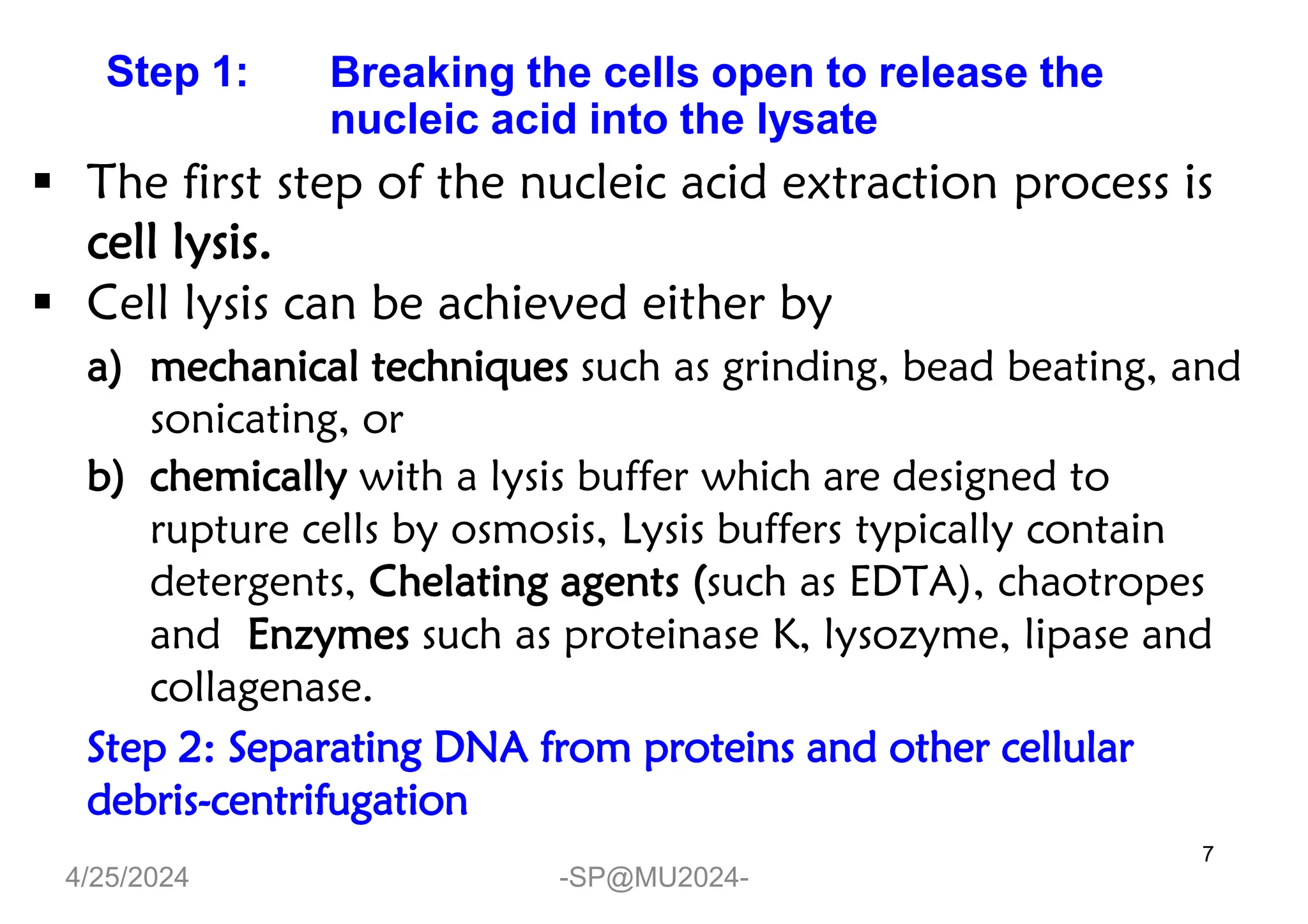
Step 1: Breaking the cells open to release the
nucleic acid into the lysate
 The first step of the nucleic acid extraction process is
cell lysis.
 Cell lysis can be achieved either by
a) mechanical techniques such as grinding, bead beating, and
sonicating, or
b) chemically with a lysis buffer which are designed to
rupture cells by osmosis, Lysis buffers typically contain
detergents, Chelating agents (such as EDTA), chaotropes
and Enzymes such as proteinase K, lysozyme, lipase and
collagenase.
Step 2: Separating DNA from proteins and other cellular
debris-centrifugation
4/25/2024 -SP@MU2024-
7
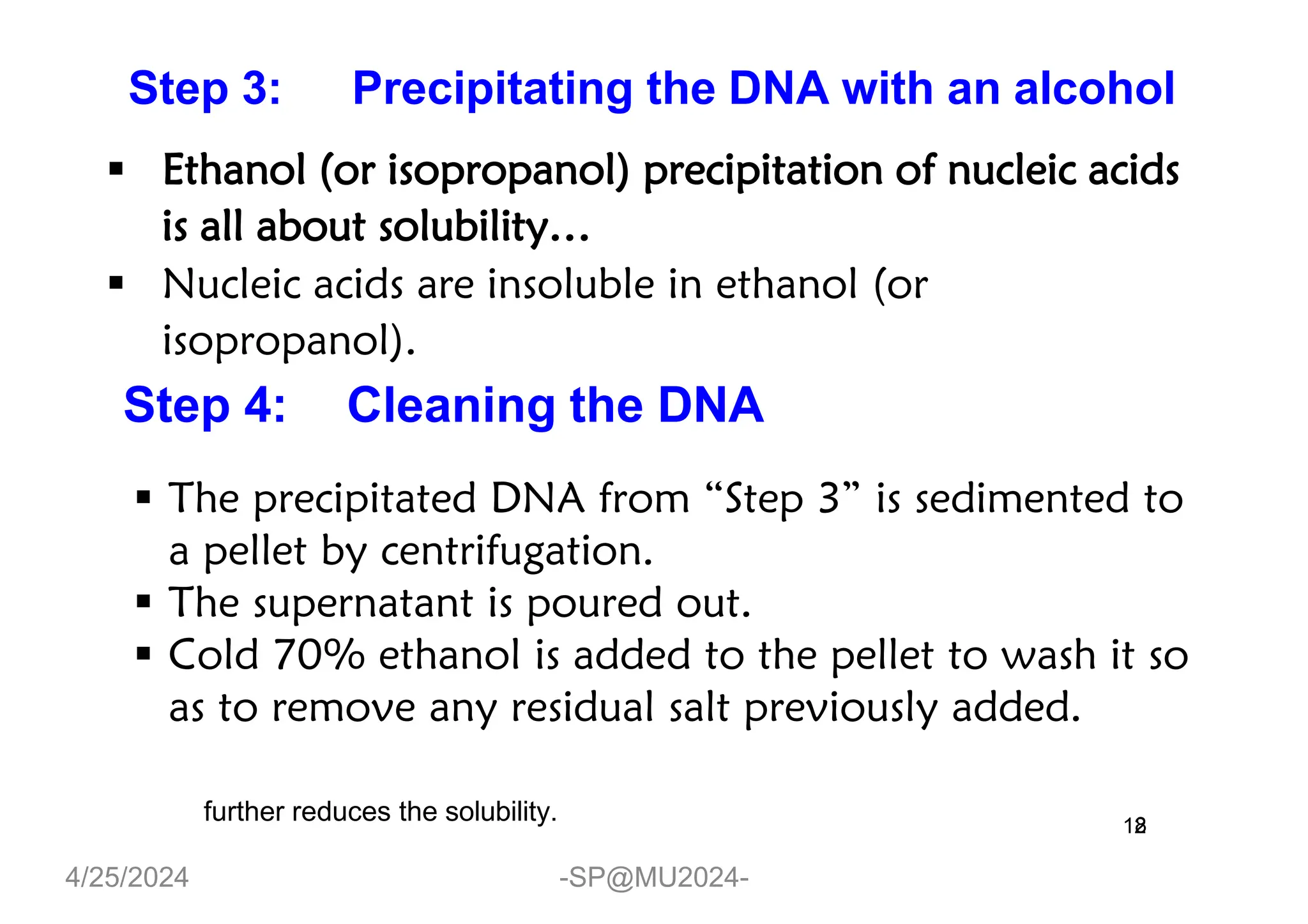
Step 3: Precipitating the DNA with an alcohol
 Ethanol (or isopropanol) precipitation of nucleic acids
is all about solubility…
 Nucleic acids are insoluble in ethanol (or
isopropanol).
further reduces the solubility. 12
4/25/2024 -SP@MU2024-
8
Step 4: Cleaning the DNA
 The precipitated DNA from “Step 3” is sedimented to
a pellet by centrifugation.
 The supernatant is poured out.
 Cold 70% ethanol is added to the pellet to wash it so
as to remove any residual salt previously added.
9
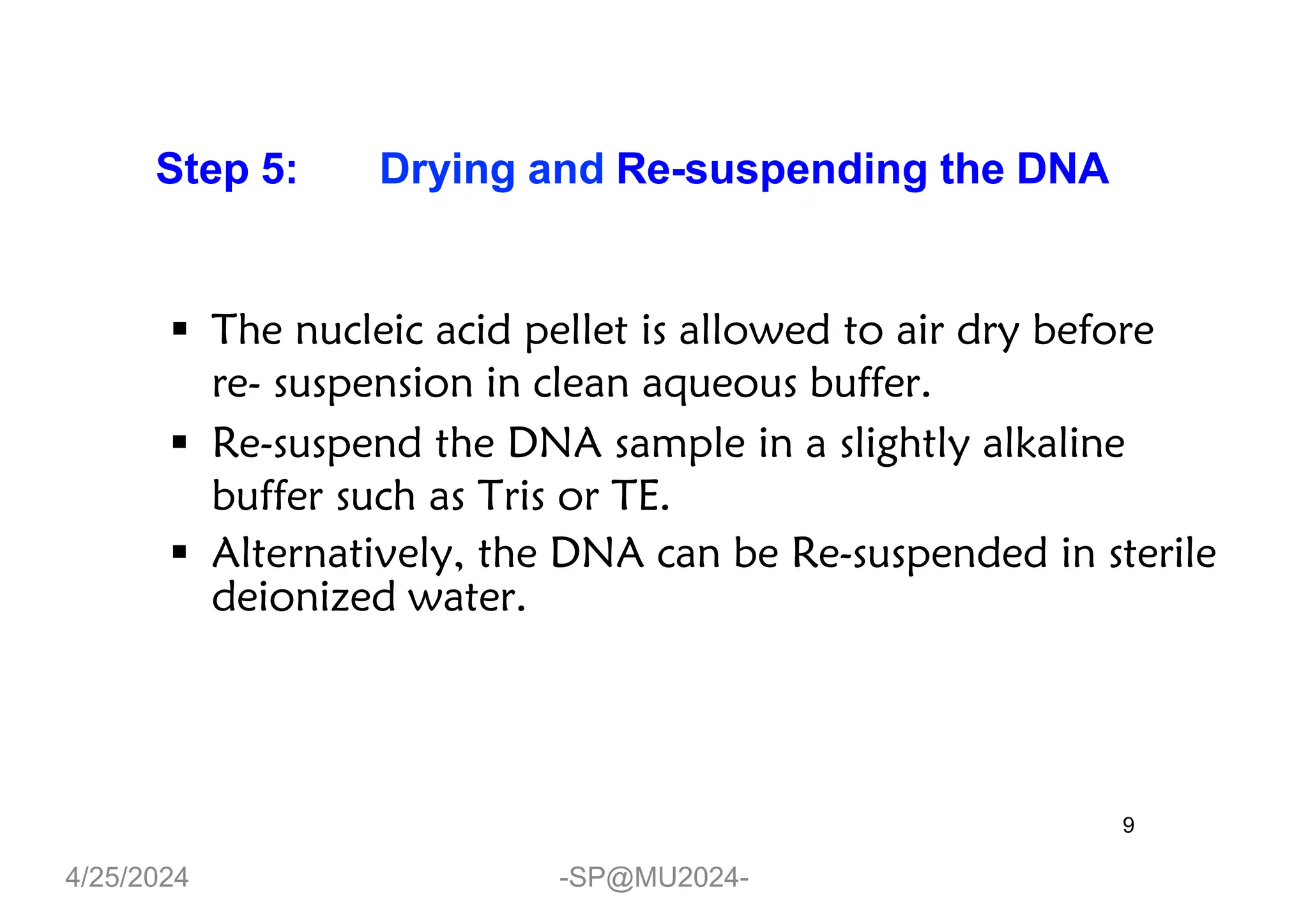
Step 5: Drying and Re-suspending the DNA
 The nucleic acid pellet is allowed to air dry before
re- suspension in clean aqueous buffer.
 Re-suspend the DNA sample in a slightly alkaline
buffer such as Tris or TE.
 Alternatively, the DNA can be Re-suspended in sterile
deionized water.
4/25/2024 -SP@MU2024-
10
Step 6: Confirming the presence and
quality of the DNA
– For further lab work, it is important to know the
concentration and quality of the DNA.
• Optical density readings taken by a spectrophotometer
can be used to determine the concentration and purity of
DNA in a sample.
• Alternatively, gel electrophoresis can be used to show
the presence of DNA in your sample and give an
indication of its quality.
4/25/2024 -SP@MU2024-
3. ORGANIC SOLVENT-BASED
EXTRACTION METHODS
11
4/25/2024 -SP@MU2024-
DNA extraction using
Phenol:Chloroform:Isoamyl alcohol (25:24:1)
• Step 1: Cell disruption
• The cells are disrupted using sodium dodecyl sulphate (SDS) &
proteinase K for the enzymatic digestion of proteins and non-
nucleic acid cellular components.
• Step 2: Reagent addition
• A mixture of phenol:chloroform:isoamyl alcohol (25:24:1) is then
added.
– Phenol dissociates proteins bound to DNA, denatures and solubilizes them
– Chloroform denatures proteins and lipids and stabilizes the aqueous/
organic boundary.
– Isoamyl alcohol prevents foaming and enables the separation of the
aqueous/organic phases.
4/25/2024 -SP@MU2024-
1
2
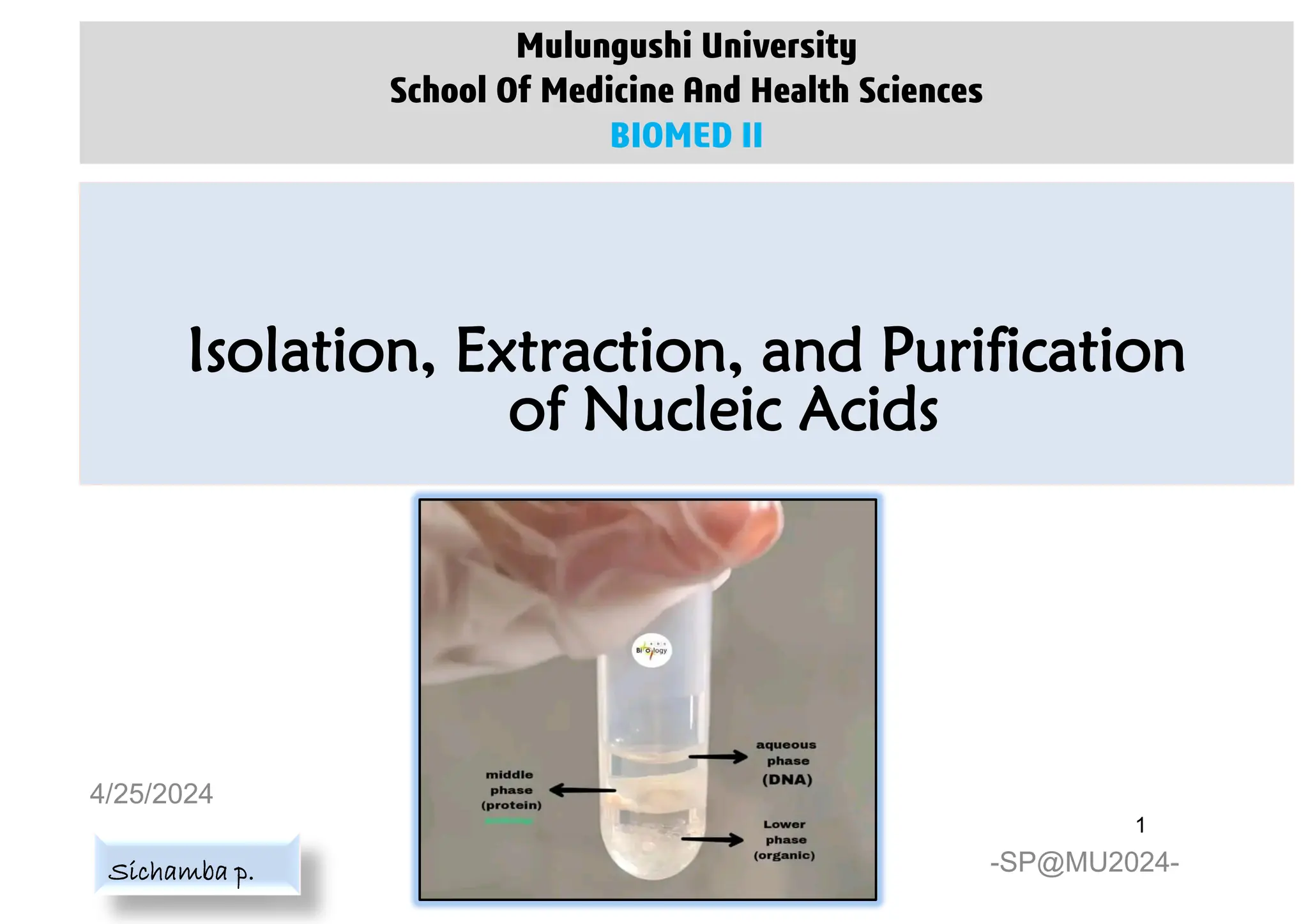
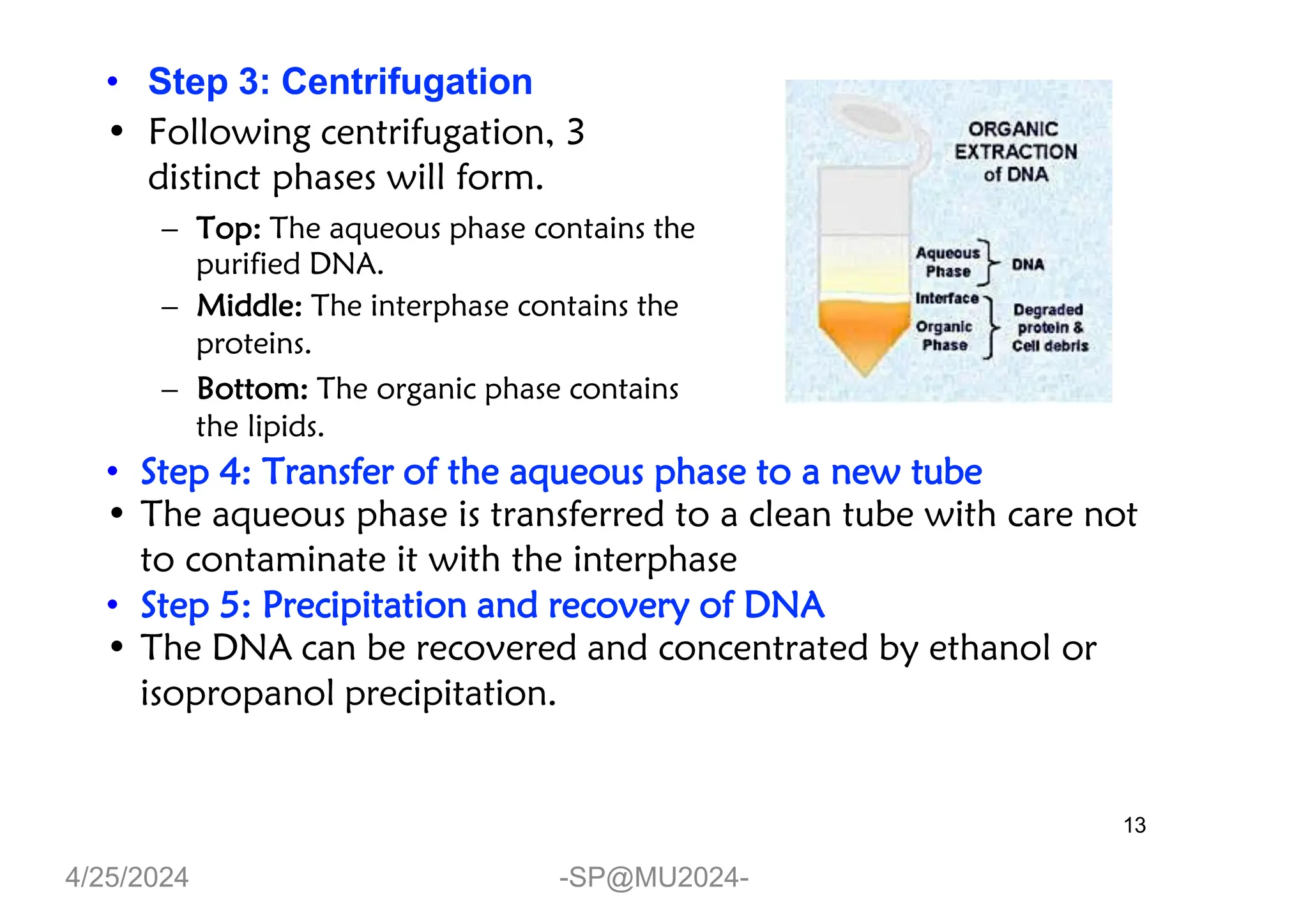
• Step 3: Centrifugation
• Following centrifugation, 3
distinct phases will form.
– Top: The aqueous phase contains the
purified DNA.
– Middle: The interphase contains the
proteins.
– Bottom: The organic phase contains
the lipids.
• Step 4: Transfer of the aqueous phase to a new tube
• The aqueous phase is transferred to a clean tube with care not
to contaminate it with the interphase
• Step 5: Precipitation and recovery of DNA
• The DNA can be recovered and concentrated by ethanol or
isopropanol precipitation.
13
4/25/2024 -SP@MU2024-
14
• DNA purified using the phenol/chloroform
extraction and ethanol precipitation
method is typically more pure than DNA
recovered from filter column purification.
• The recovered DNA is suitable for use in
PCR and Southern blot analysis.
4/25/2024 -SP@MU2024-
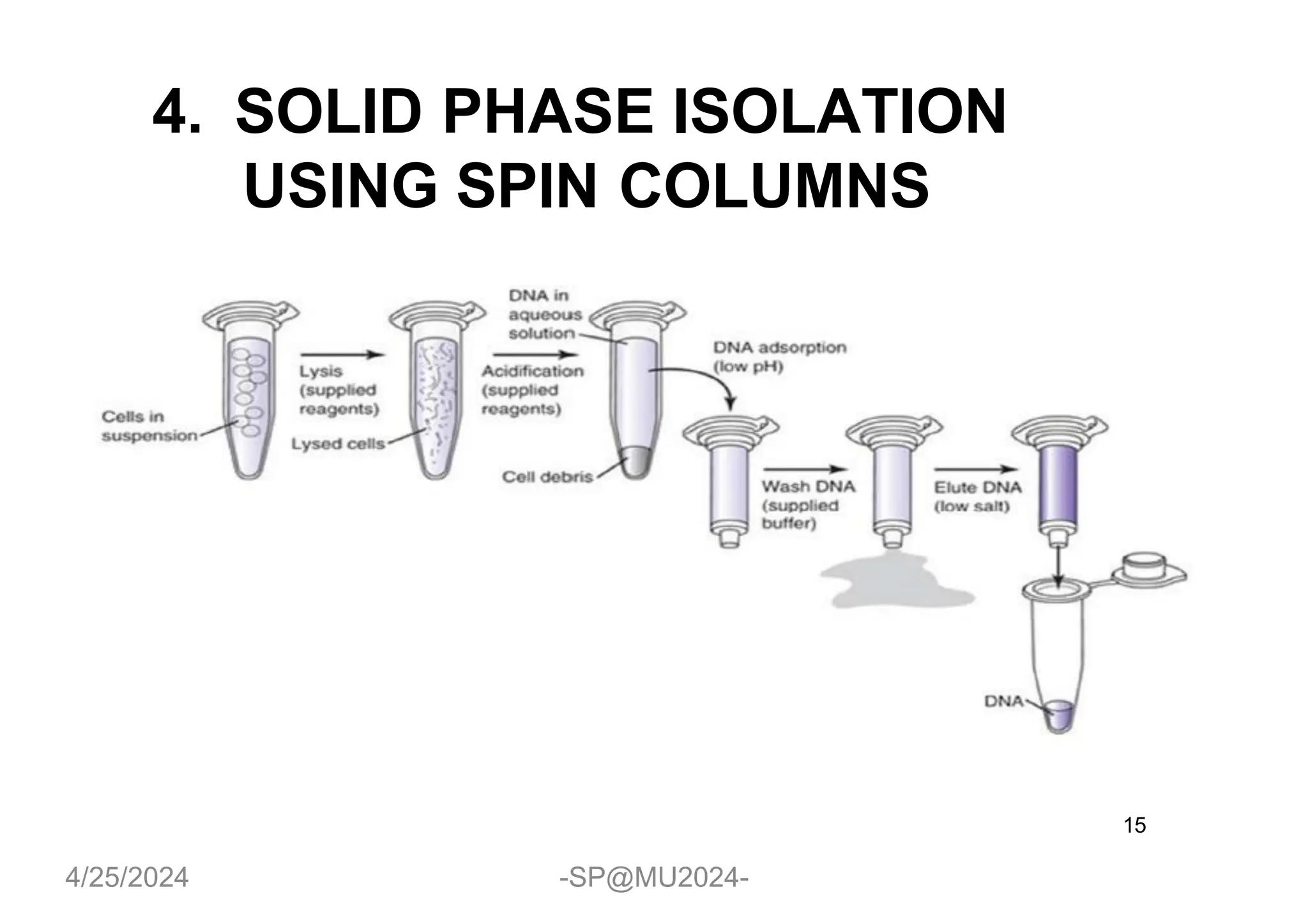
4. SOLID PHASE ISOLATION
USING SPIN COLUMNS
15
4/25/2024 -SP@MU2024-
16
4/25/2024 -SP@MU2024-
17
4/25/2024 -SP@MU2024-
18
4/25/2024 -SP@MU2024-
19
4/25/2024 -SP@MU2024-
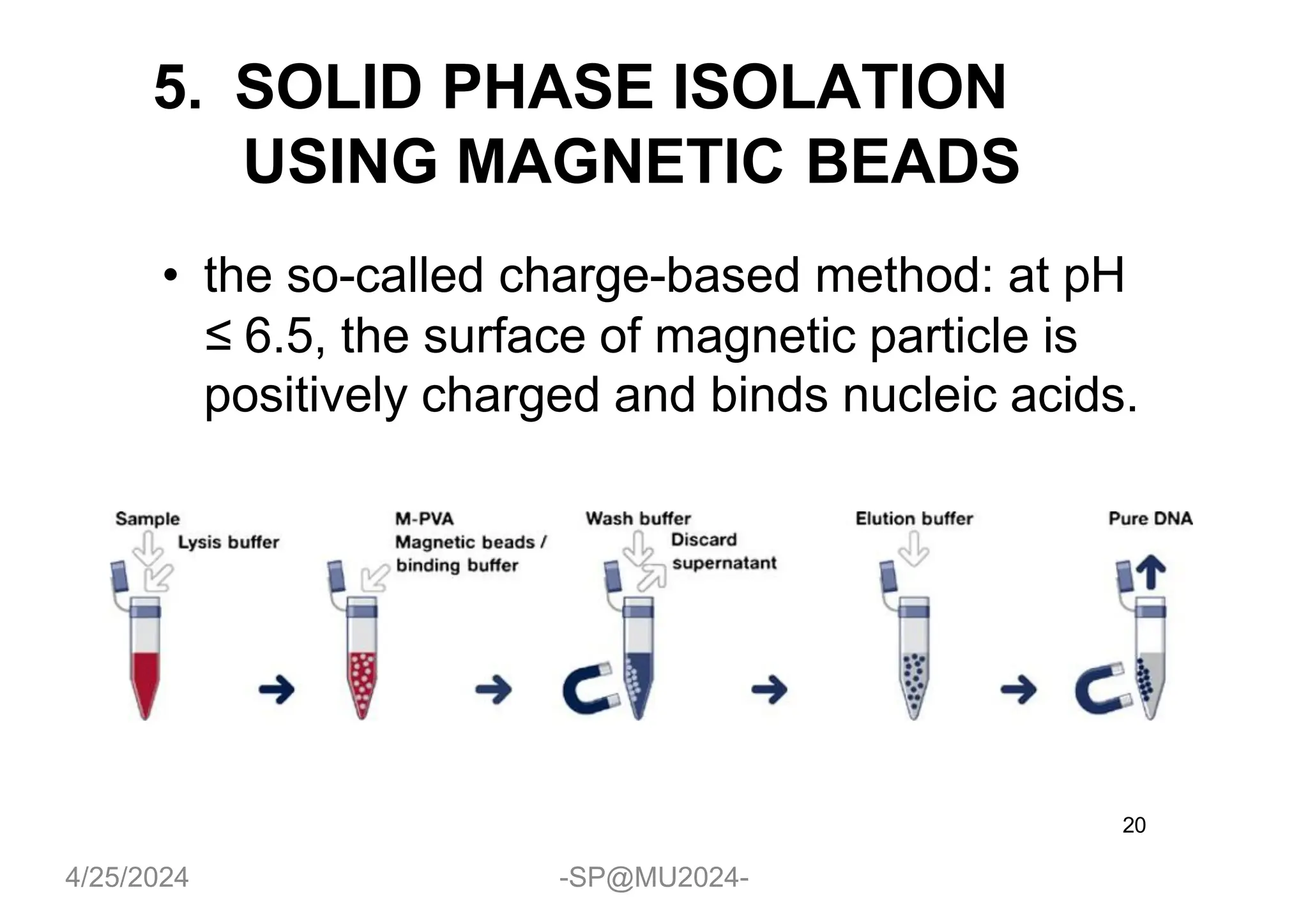
• the so-called charge-based method: at pH
≤ 6.5, the surface of magnetic particle is
positively charged and binds nucleic acids.
20
4/25/2024 -SP@MU2024-
5. SOLID PHASE ISOLATION
USING MAGNETIC BEADS
21
PCR Fragment Clean-up
• Purify DNA using a simple and rapid PCR clean-up method
that efficiently removes
– short primers,
– unincorporated dNTPs,
– enzymes,
– short-failed PCR products, and
– salts from PCR reactions.
 PCR Fragment Clean-up can be achieved by ExoSAP-IT™
Reagent, agarose gel electrophoresis spin column
purification methods
4/25/2024 -SP@MU2024-
PCR Fragment Clean-up using
spin column purification methods
• Can be used for purifying PCR products and other DNA molecules
>200 base pairs directly from PCR reaction mixtures.
• This effectively removes salts, nucleotides, enzymes, primers, and
primer-dimers from the DNA sample of interest.
• Purified DNA fragments are eluted into a collection tube and are
immediately available for secondary PCR, subcloning, restriction
digests, ligations, sequencing, and other enzymatic manipulations.
22
4/25/2024 -SP@MU2024-
PCR Fragment Clean-up using
ExoSAP-IT™ Reagent
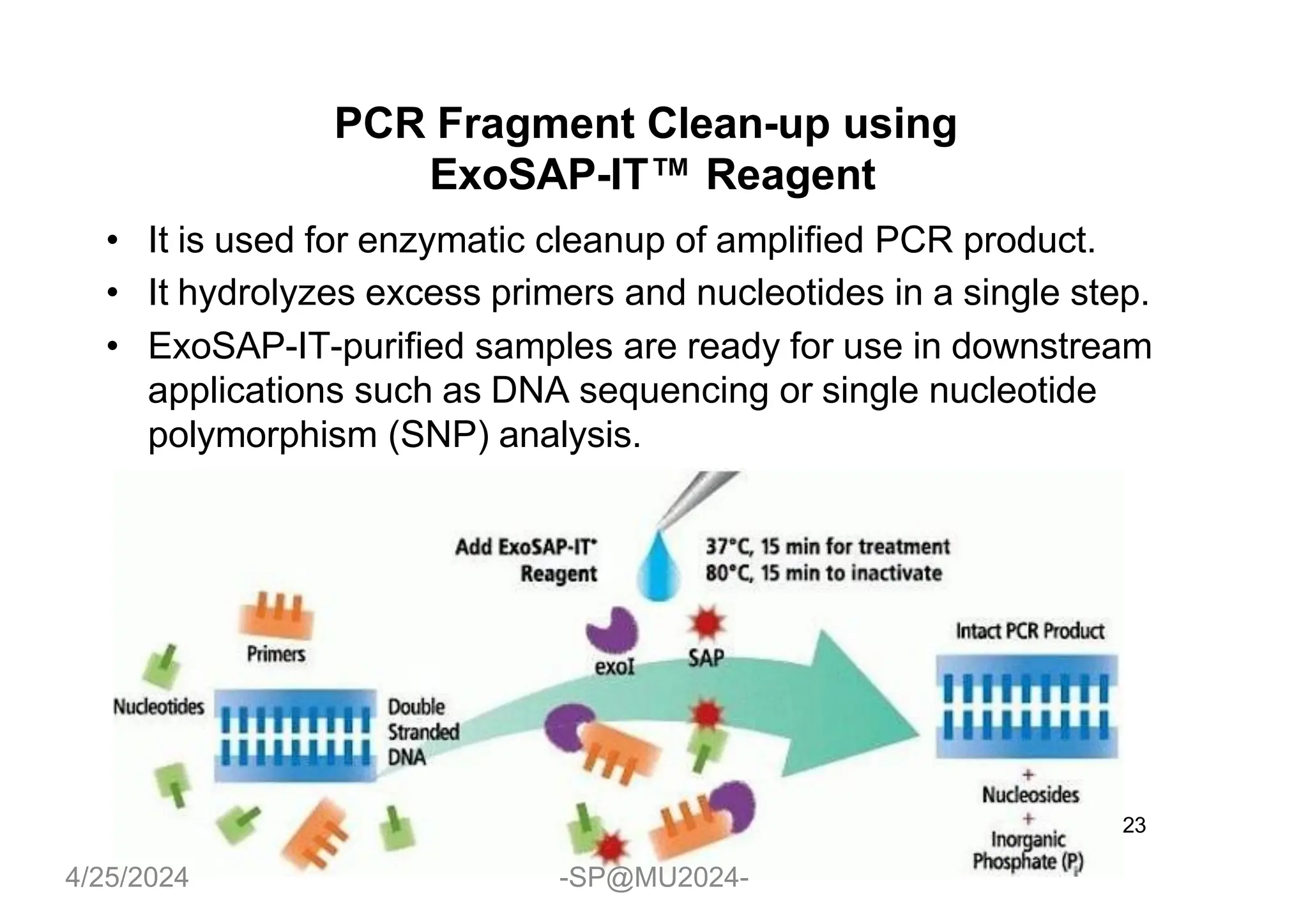
• It is used for enzymatic cleanup of amplified PCR product.
• It hydrolyzes excess primers and nucleotides in a single step.
• ExoSAP-IT-purified samples are ready for use in downstream
applications such as DNA sequencing or single nucleotide
polymorphism (SNP) analysis.
23
4/25/2024 -SP@MU2024-
24
MITOCHONDRIAL DNA
ISOLATION
4/25/2024 -SP@MU2024-
Mitochondrial DNA (mtDNA) isolation
• There are several steps that need to be carried out when isolating
mitochondrial DNA from tissue sample
1. Tissue homogenization
• Cell lysis
2. Isolation of mitochondria
• Mitochondria isolation can be performed by differential
centrifugation
– First, low speed centrifugation for the removal of large debris
– Then, ultracentrifugation in a cesium chloride (or sucrose)
density gradient for the isolation of the mitochondria.
3. Removal of genomic DNA (gDNA)
• To avoid contamination with gDNA, if the mtDNA is circular, treat
the mitochondria with exonuclease (not DNase).
2. Mitochondrial DNA isolation
• Mitochondrial DNA isolation can finally be carried out using
commercially available DNA isolation kits. 40
4/25/2024 -SP@MU2024-
2
5
PART 2:
RNA EXTRCTION
4/25/2024 -SP@MU2024-
2
6
RNA Extraction
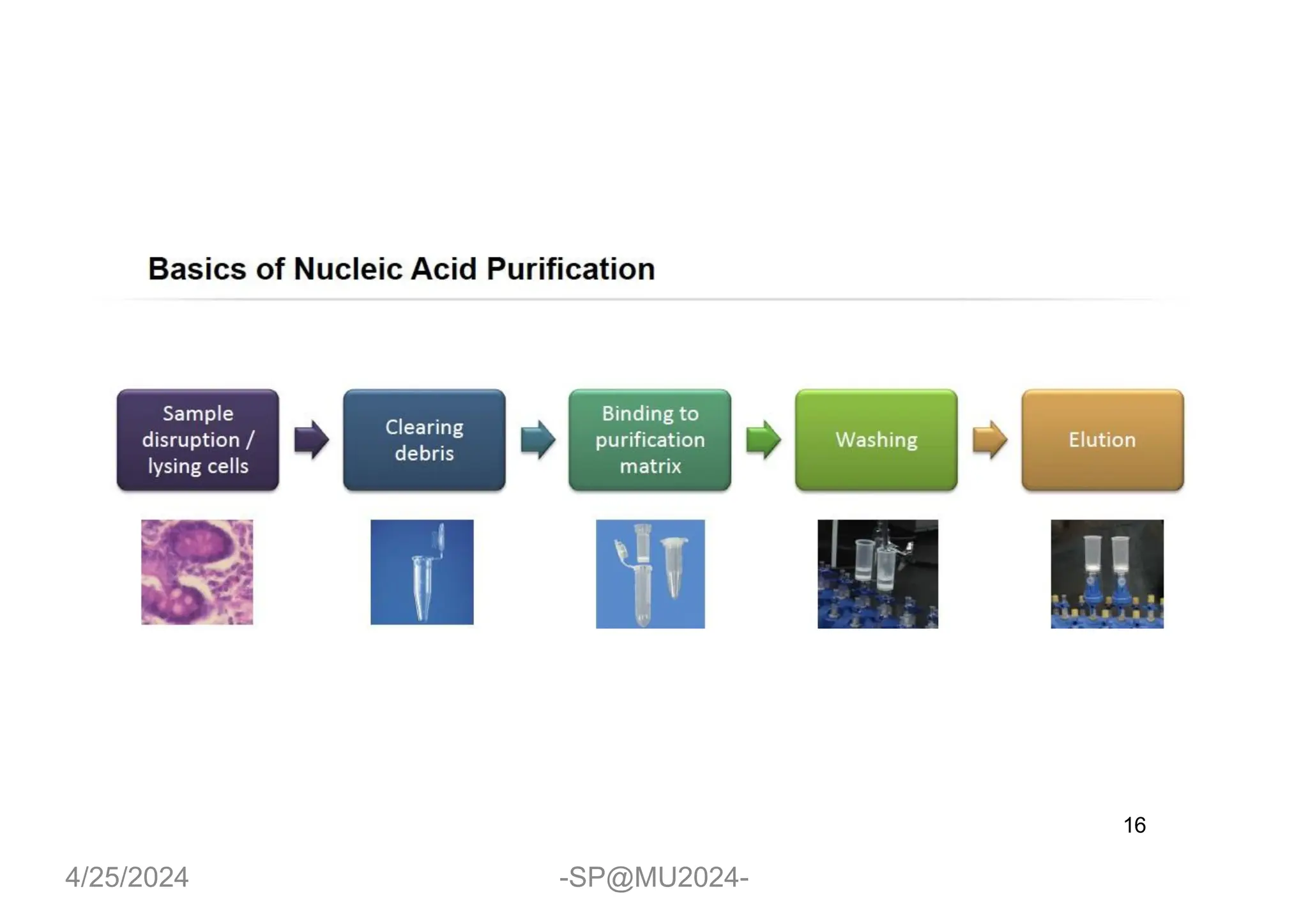
• Total RNA purification
– Organic RNA Extraction methods (e.g. TRIzol Reagents)
– Magnetic bead-based methods for high-throughput
purification of RNA and DNA
– Silica-membrane purification methods.
• mRNA purification
– mRNA molecules have a poly-A tail at the 3’ end
– Oligo(dT) probes can be used to purify mRNA from other
RNAs
– mRNA can be eluted from oligo(dT) matrix using water or
low-salt buffer
42
4/25/2024 -SP@MU2024-
2
7
• 80-90% of total RNA is ribosomal RNA.
• 2.5-5% is messenger RNA 43
4/25/2024 -SP@MU2024-
2
8
29
Different methods for RNA extraction
1. TRIzol reagents for organic RNA extraction
2. Magnetic bead-based methods for high
throughput purification of RNA and DNA
3. Silica-membrane RNA purification methods
4/25/2024 -SP@MU2024-
1. EXTRACTION OF RNA
USING ORGANIC REAGENTS
30
4/25/2024 -SP@MU2024-
31
4/25/2024 -SP@MU2024-
RNA Extraction using Guanidinium Isothiocyanate
Phenol/Chloroform
• Step1:
• A sample of interest is treated with a monophasic phenol
solution containing guanidinium isothiocyanate (a protein
denaturant and effectively inactivates RNases).
• Solid tissues are ground in this reagent to increase the surface
area.
• Step2:
• The sample is then subjected to an organic extraction with
chloroform.
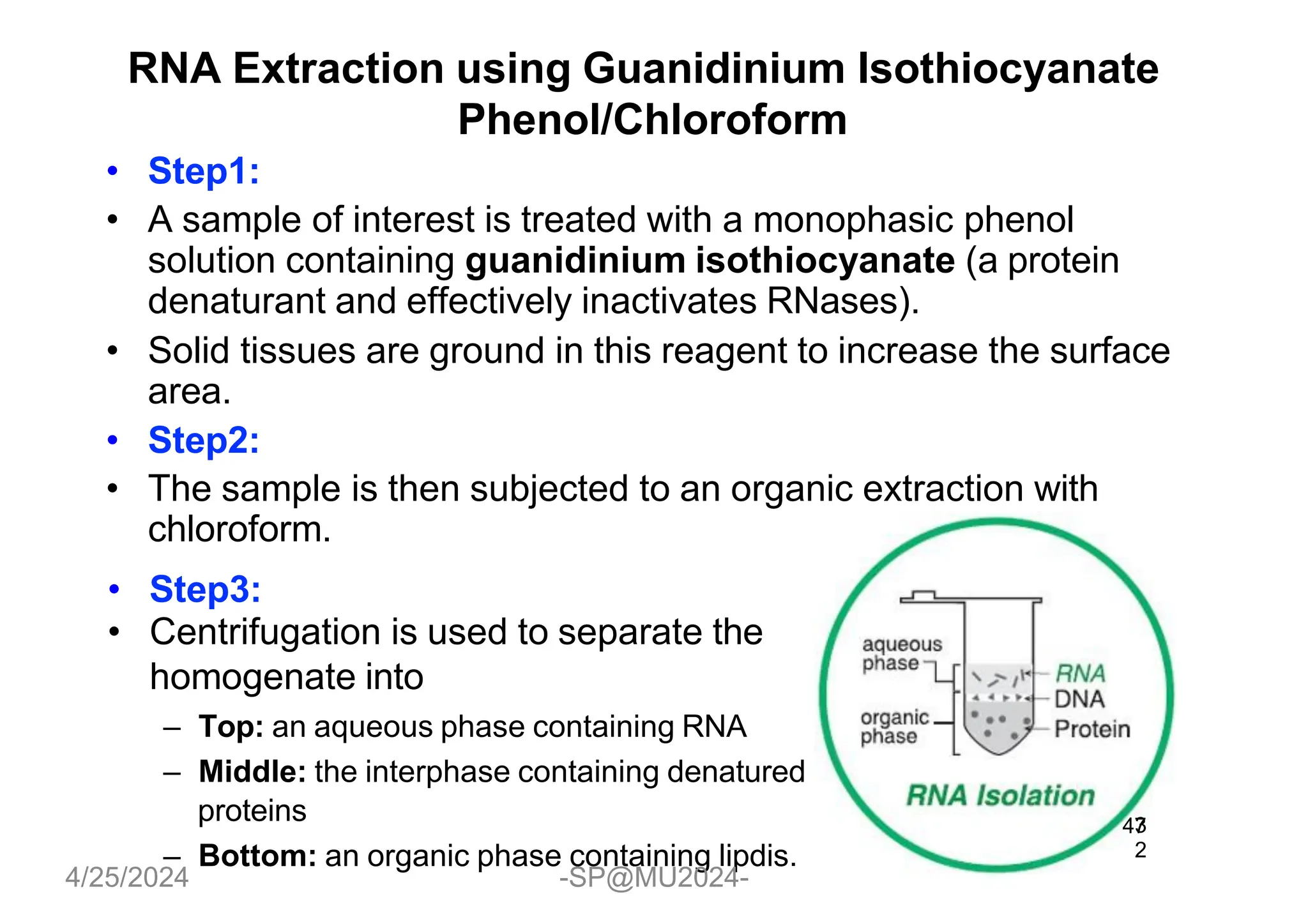
• Step3:
• Centrifugation is used to separate the
homogenate into
– Top: an aqueous phase containing RNA
– Middle: the interphase containing denatured
proteins
– Bottom: an organic phase containing lipdis.
47
4/25/2024 -SP@MU2024-
3
2
48
4/25/2024 -SP@MU2024-
3
3
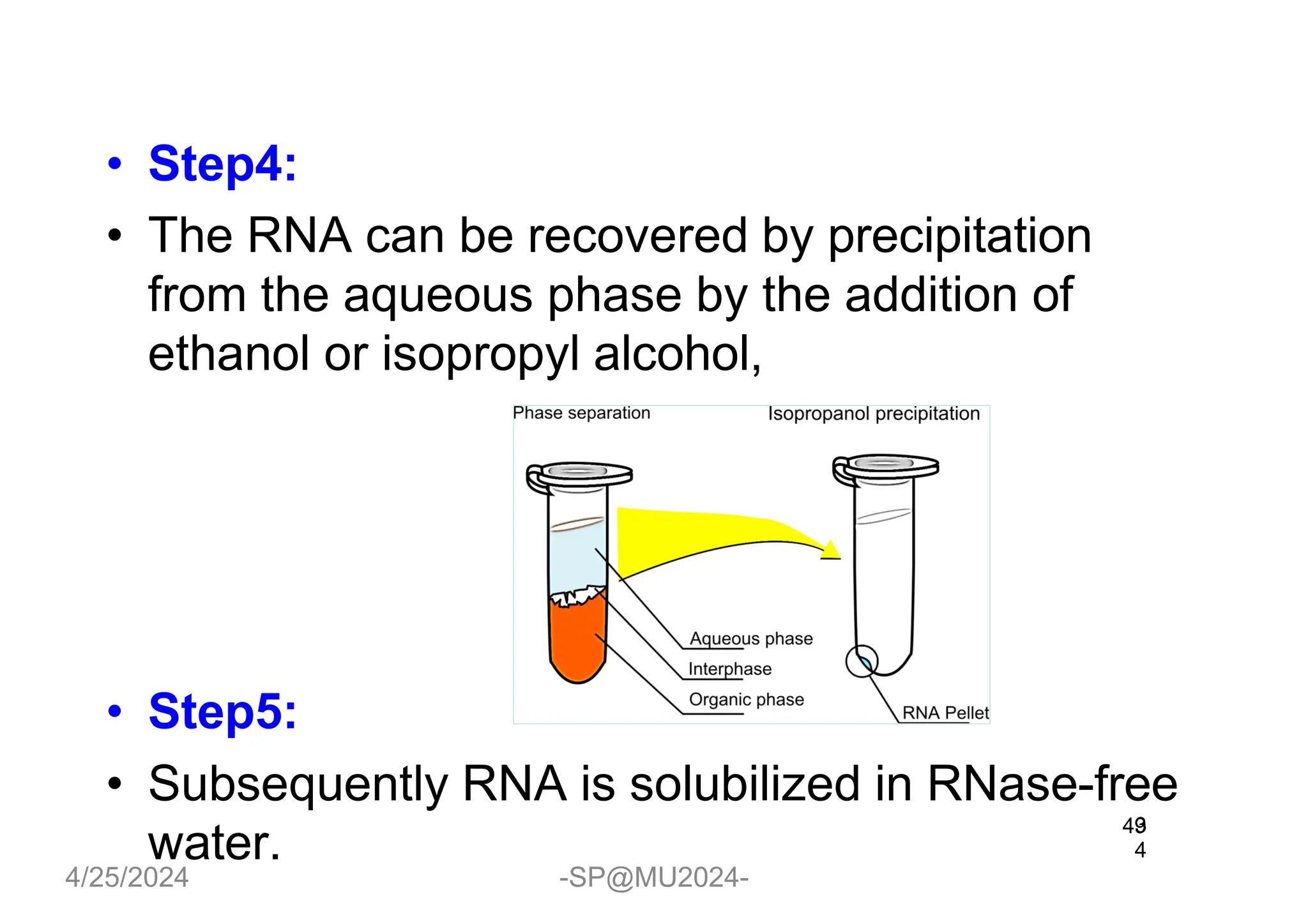
• Step4:
• The RNA can be recovered by precipitation
from the aqueous phase by the addition of
ethanol or isopropyl alcohol,
• Step5:
• Subsequently RNA is solubilized in RNase-free
water.
49
4/25/2024 -SP@MU2024-
3
4
• RNA isolated with the guanidinium isothiocyanate
phenol/chloroform extraction is generally DNA- and
protein-free, and can be used for
– northern blot analysis,
– in vitro translation,
– poly (A)+ selection,
– RNase protection assays,
– RT-qPCR, and
– molecular cloning.
• For RT-qPCR analysis, a DNase treatment step is
recommended to prevent the potential amplification of
any contaminating genomic DNA, which could lead to
overestimation of the copy number of an mRNA
50
4/25/2024 -SP@MU2024-
3
5
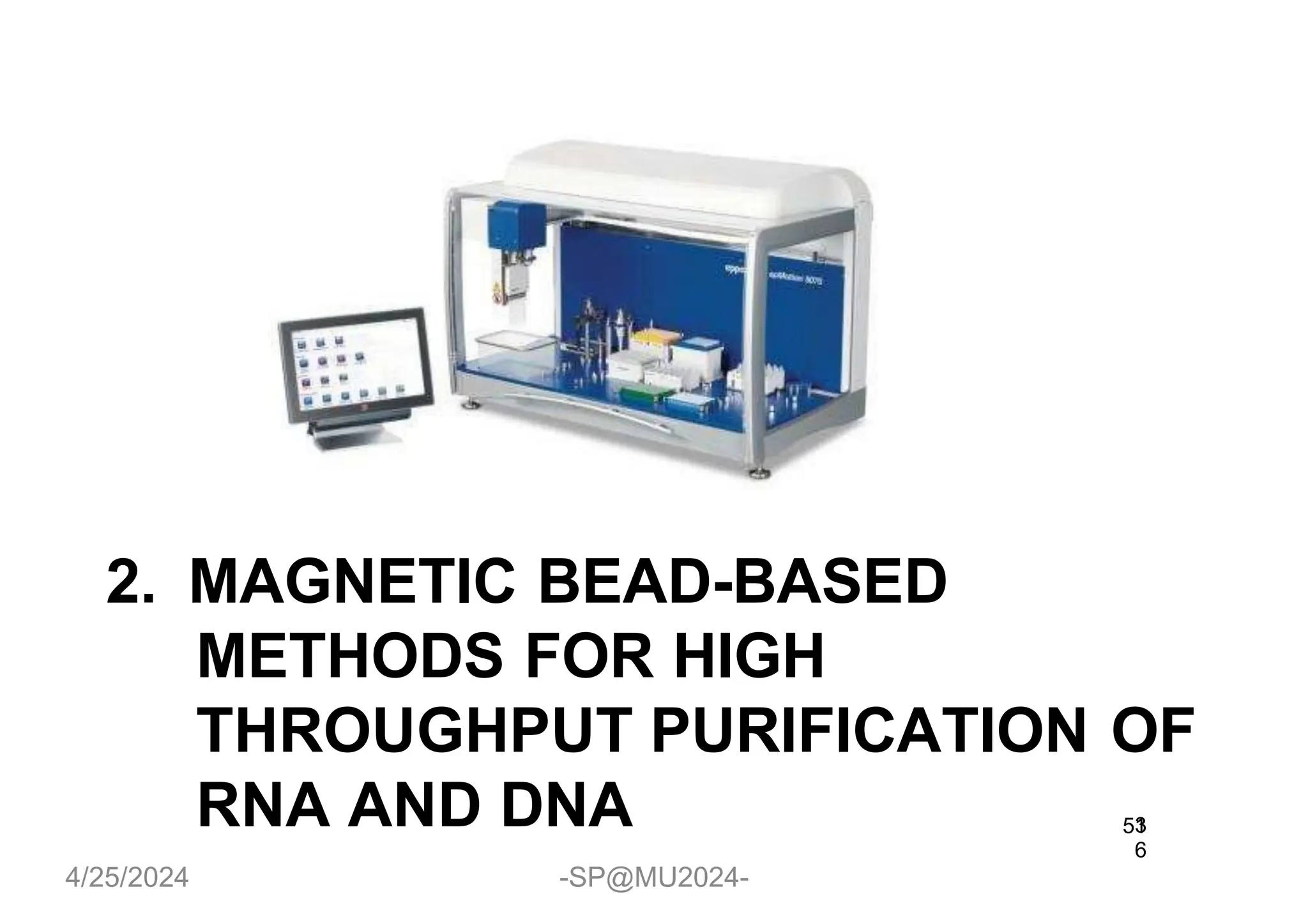
2. MAGNETIC BEAD-BASED
METHODS FOR HIGH
THROUGHPUT PURIFICATION OF
RNA AND DNA 51
4/25/2024 -SP@MU2024-
3
6
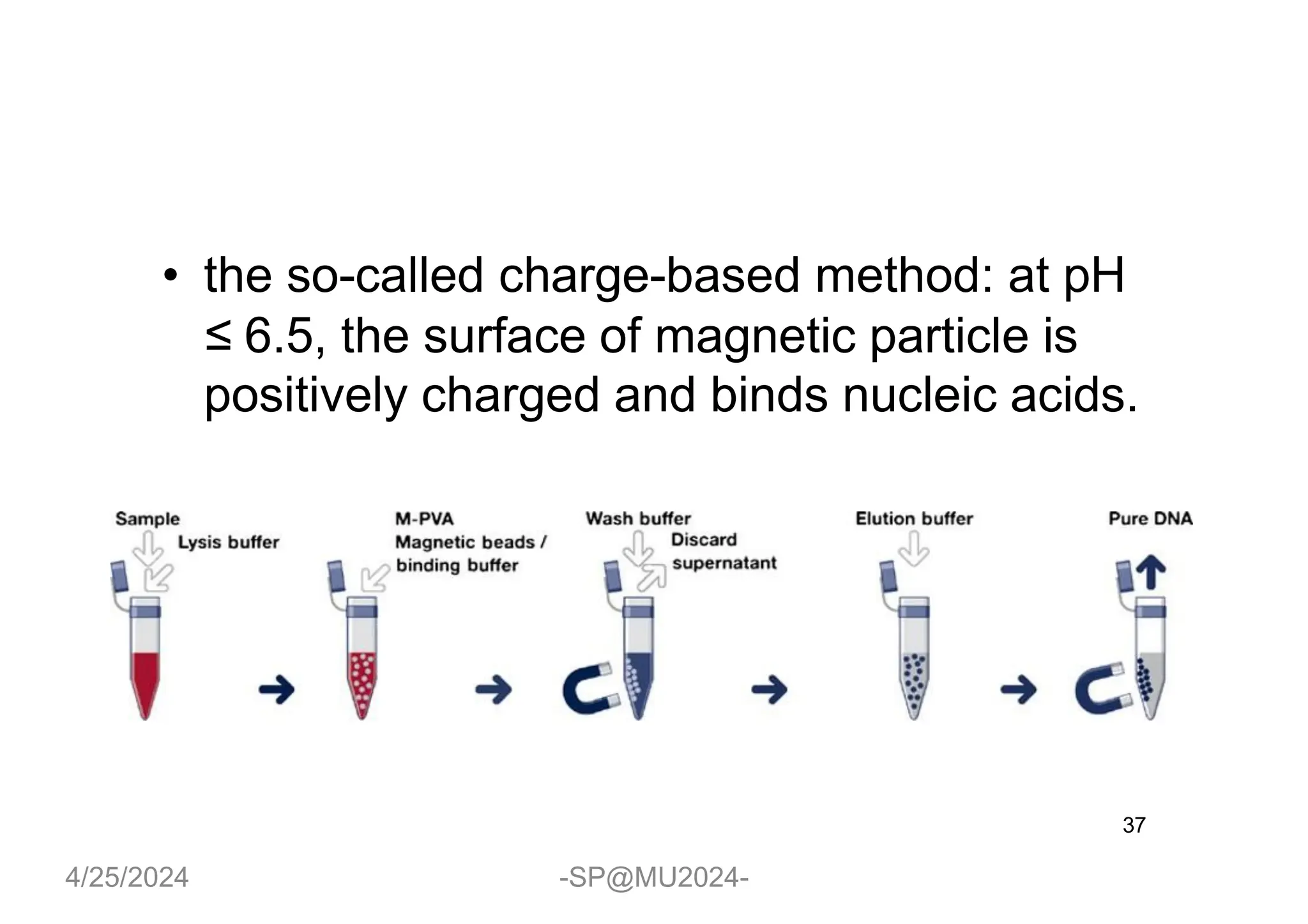
• the so-called charge-based method: at pH
≤ 6.5, the surface of magnetic particle is
positively charged and binds nucleic acids.
37
4/25/2024 -SP@MU2024-
38
3. SILICA-MEMBRANE RNA
PURIFICATION METHODS
4/25/2024 -SP@MU2024-
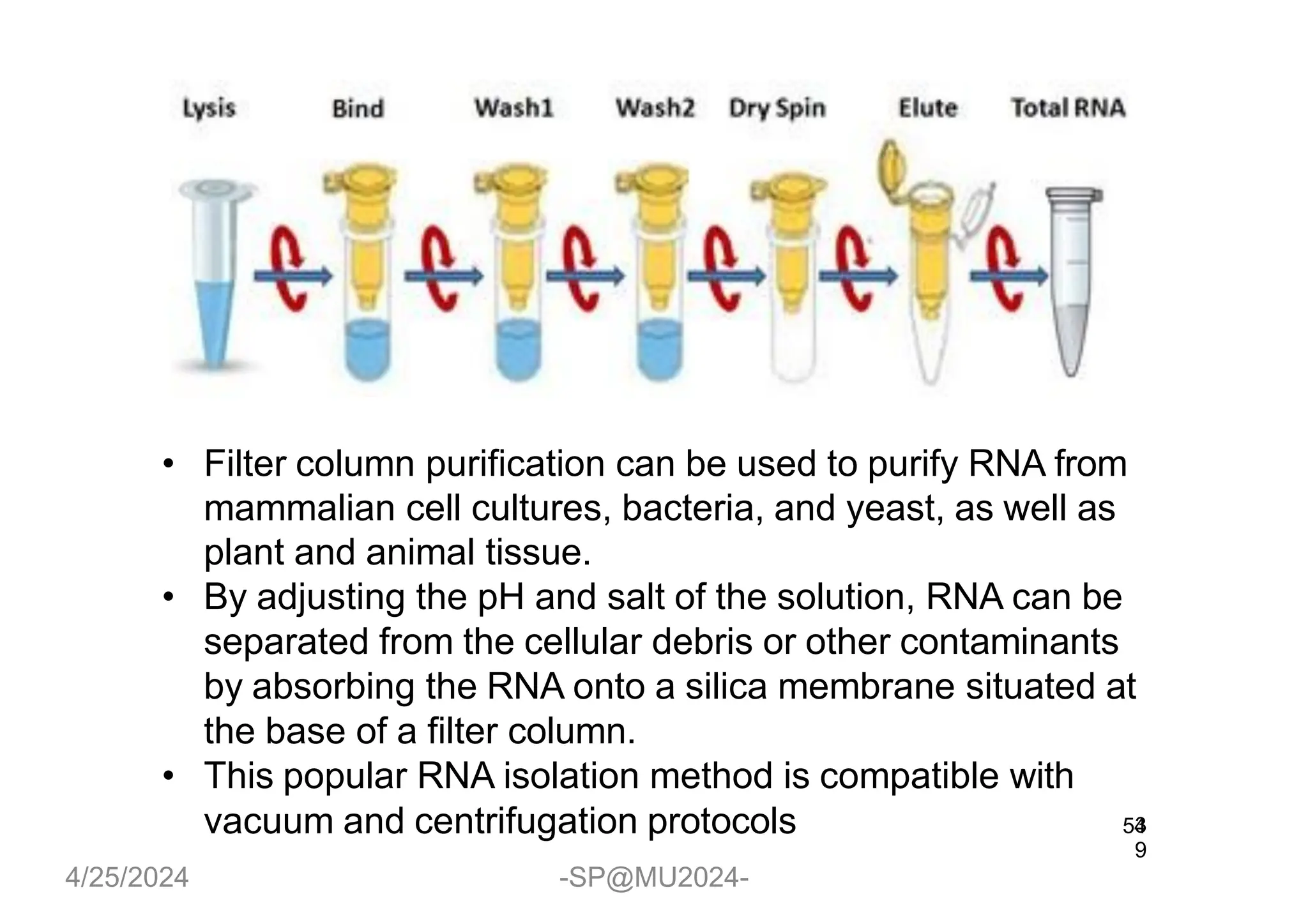
• Filter column purification can be used to purify RNA from
mammalian cell cultures, bacteria, and yeast, as well as
plant and animal tissue.
• By adjusting the pH and salt of the solution, RNA can be
separated from the cellular debris or other contaminants
by absorbing the RNA onto a silica membrane situated at
the base of a filter column.
• This popular RNA isolation method is compatible with
vacuum and centrifugation protocols 54
4/25/2024 -SP@MU2024-
3
9
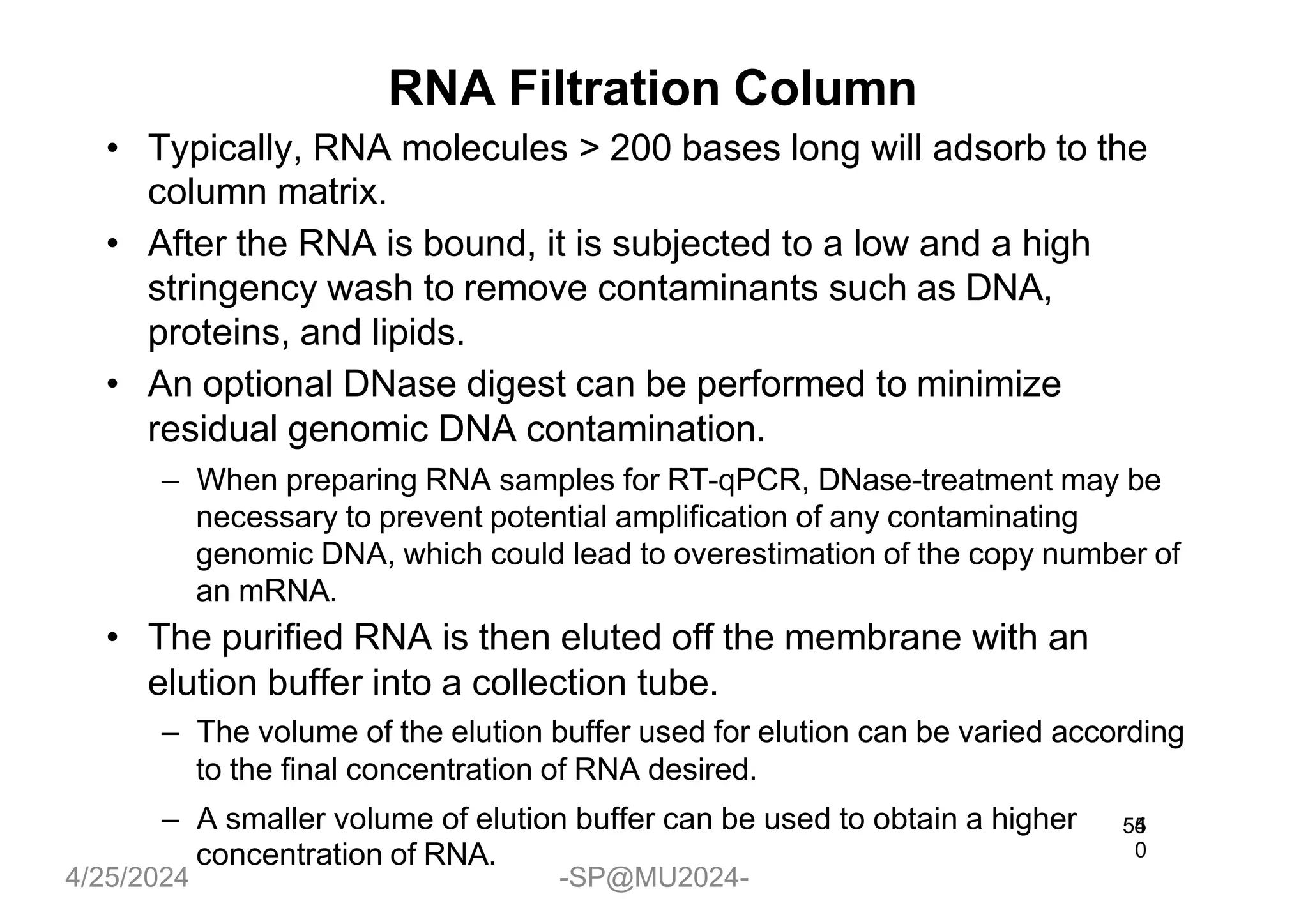
RNA Filtration Column
• Typically, RNA molecules > 200 bases long will adsorb to the
column matrix.
• After the RNA is bound, it is subjected to a low and a high
stringency wash to remove contaminants such as DNA,
proteins, and lipids.
• An optional DNase digest can be performed to minimize
residual genomic DNA contamination.
– When preparing RNA samples for RT-qPCR, DNase-treatment may be
necessary to prevent potential amplification of any contaminating
genomic DNA, which could lead to overestimation of the copy number of
an mRNA.
• The purified RNA is then eluted off the membrane with an
elution buffer into a collection tube.
– The volume of the elution buffer used for elution can be varied according
to the final concentration of RNA desired.
– A smaller volume of elution buffer can be used to obtain a higher
concentration of RNA.
55
4/25/2024 -SP@MU2024-
4
0
41
• RNA isolated using column purification is
suitable for use in a variety of downstream
applications including RT-PCR, real-time
PCR, and northern blot analysis.
4/25/2024 -SP@MU2024-
42
4/25/2024 -SP@MU2024-
43
ISOLATION OF microRNA (miRNA)
AND
SMALL INTERFERING RNA (siRNA)
4/25/2024 -SP@MU2024-
Isolation of MicroRNA (miRNA) and
small interfering RNA (siRNA)
• MicroRNAs (miRNAs) and small interfering RNAs (siRNAs) modulate
gene expression.
• The kits are optimized for isolation of small RNA molecules while
removing larger RNAs and minimizing genomic DNA contamination
for improved sensitive downstream applications.
• miRNAs and siRNA are isolated in a two-step process:
1. First, guanidinium Isothiocyanate Phenol/Chloroform Extraction
2. Then, enrichment of miRNAs and other small RNAs
• Removal of larger RNAs, such as mRNA and rRNA, may reduce
background in certain downstream applications.
• There are several commercially available kits based on spin column
technology for the enrichment of small RNAs, such as:
– The mirVana miRNA Isolation Kit (Thermo Fisher Scientific)
– miRNeasy Mini Kit (QIAGEN) 59
4/25/2024 -SP@MU2024-
4
4
45
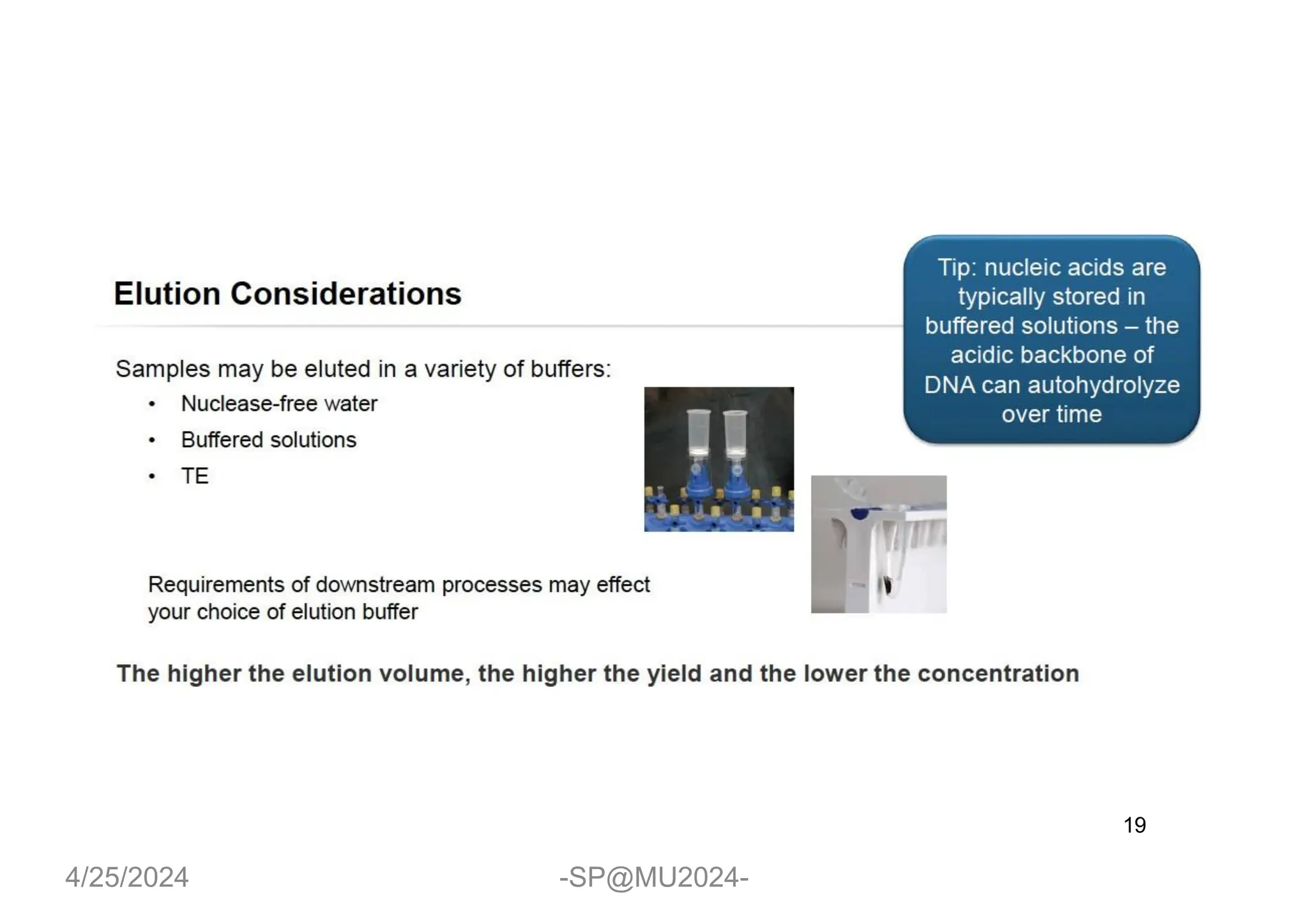
STORAGE OF ELUTED DNA
OR RNA
4/25/2024 -SP@MU2024-
46
4/25/2024 -SP@MU2024-
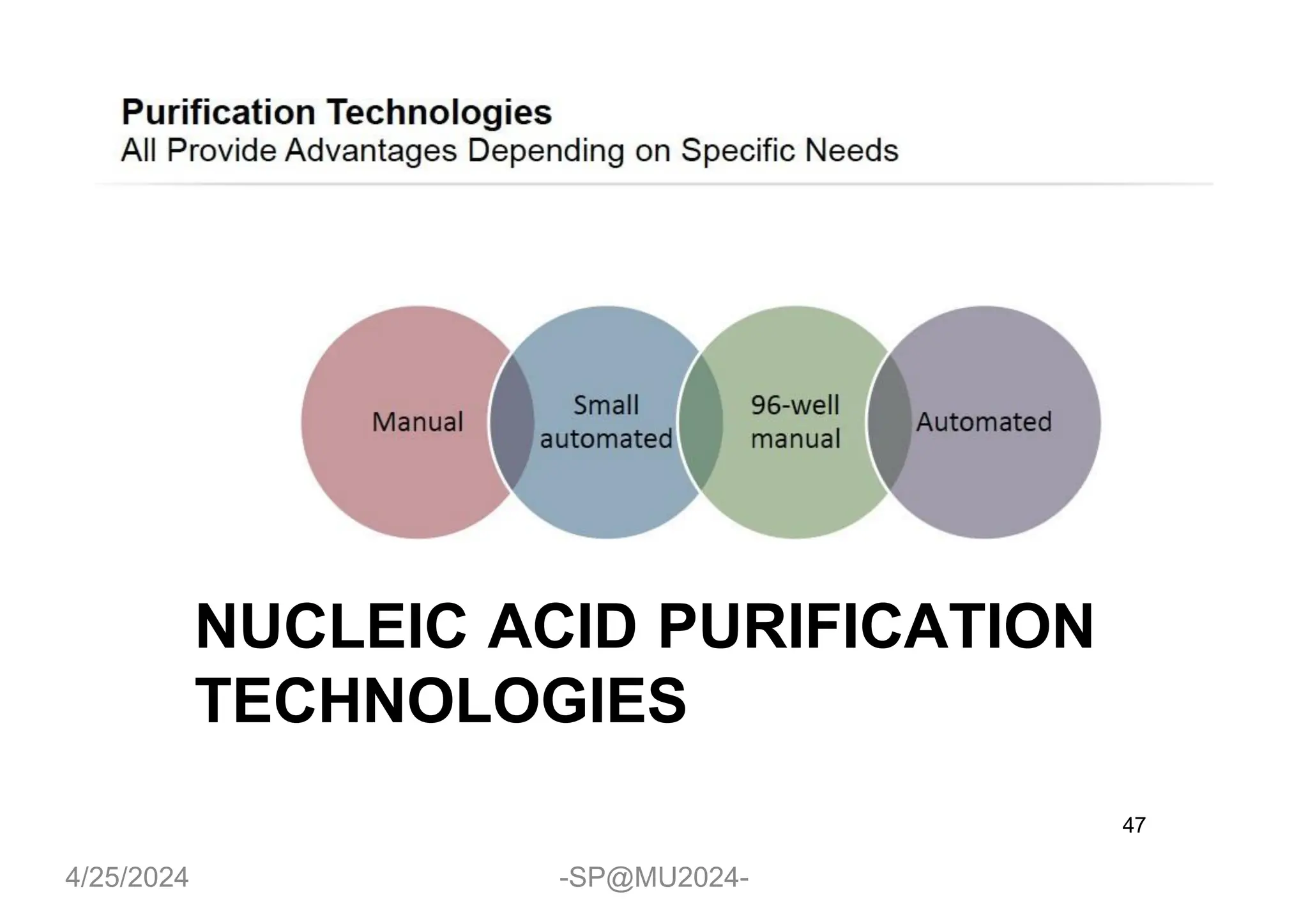
NUCLEIC ACID PURIFICATION
TECHNOLOGIES
47
4/25/2024 -SP@MU2024-
48
4/25/2024 -SP@MU2024-
49
4/25/2024 -SP@MU2024-
50
4/25/2024 -SP@MU2024-
51
4/25/2024 -SP@MU2024-
52
HOW TO CONCENTRATE DILUTE
NUCLEIC ACID SOLUTIONS
4/25/2024 -SP@MU2024-
53
How to concentrate DNA solutions
• Water molecules can be removed from dilute
aqueous nucleic acid solutions by extraction.
– Ice-cold ethanol/isopropanol precipitation followed
by re-suspension in desired volume.
– Direct evaporation followed by re-suspension in
desired volume.
• This procedure is useful for reducing the
volume or concentrating dilute solutions before
proceeding with the basic protocol.
4/25/2024 -SP@MU2024-

2-Isolation, Extraction and Purification of Nucleic acids.pdf

  • 1.
    Mulungushi University School OfMedicine And Health Sciences BIOMED II Isolation, Extraction, and Purification of Nucleic Acids 4/25/2024 -SP@MU2024- Sichamba p. 1
  • 2.
    Purpose of DNAExtraction • DNA is extracted for downstream applications ranging from – PCR, – Electrophoresis, – Sequencing, – Fingerprinting and – Cloning. • DNA extraction removes proteins, nucleases and other impurities and any potential PCR inhibitors (e.g. EDTA) . 4 4/25/2024 -SP@MU2024-
  • 3.
    3 Different methods forDNA extraction 1. Thermal extraction methods 2. Aqueous solution-based extraction methods 3. Organic solvent-based extraction methods 4. Solid phase isolation using spin columns 5. Solid phase isolation using magnetic beads 4/25/2024 -SP@MU2024-
  • 4.
    4  Thermal extractionis a quick, crude and low-cost method that does not require special reagents.  It can be used to extract DNA from pure bacterial cultures.  The samples are heated at 100°C for 5–15 min and then centrifuged; the supernatant contains the DNA. 4/25/2024 -SP@MU2024-
  • 5.
    2. AQUEOUS SOLUTION-BASED EXTRACTION METHODS 5 4/25/2024 -SP@MU2024-
  • 6.
    Break down the cellwall and membranes Centrifuge to separate the solids from the dissolved DNA Precipitate the DNA using isopropanol Centrifuge to separate the DNA from the dissolved salts and sugars Wash the DNA pellet with Ethanol and dry the pellet Dissolve DNA Outline of an aqueous solution-based DNA extraction process 9 4/25/2024 -SP@MU2024- 6
  • 7.
    Step 1: Breakingthe cells open to release the nucleic acid into the lysate  The first step of the nucleic acid extraction process is cell lysis.  Cell lysis can be achieved either by a) mechanical techniques such as grinding, bead beating, and sonicating, or b) chemically with a lysis buffer which are designed to rupture cells by osmosis, Lysis buffers typically contain detergents, Chelating agents (such as EDTA), chaotropes and Enzymes such as proteinase K, lysozyme, lipase and collagenase. Step 2: Separating DNA from proteins and other cellular debris-centrifugation 4/25/2024 -SP@MU2024- 7
  • 8.
    Step 3: Precipitatingthe DNA with an alcohol  Ethanol (or isopropanol) precipitation of nucleic acids is all about solubility…  Nucleic acids are insoluble in ethanol (or isopropanol). further reduces the solubility. 12 4/25/2024 -SP@MU2024- 8 Step 4: Cleaning the DNA  The precipitated DNA from “Step 3” is sedimented to a pellet by centrifugation.  The supernatant is poured out.  Cold 70% ethanol is added to the pellet to wash it so as to remove any residual salt previously added.
  • 9.
    9 Step 5: Dryingand Re-suspending the DNA  The nucleic acid pellet is allowed to air dry before re- suspension in clean aqueous buffer.  Re-suspend the DNA sample in a slightly alkaline buffer such as Tris or TE.  Alternatively, the DNA can be Re-suspended in sterile deionized water. 4/25/2024 -SP@MU2024-
  • 10.
    10 Step 6: Confirmingthe presence and quality of the DNA – For further lab work, it is important to know the concentration and quality of the DNA. • Optical density readings taken by a spectrophotometer can be used to determine the concentration and purity of DNA in a sample. • Alternatively, gel electrophoresis can be used to show the presence of DNA in your sample and give an indication of its quality. 4/25/2024 -SP@MU2024-
  • 11.
    3. ORGANIC SOLVENT-BASED EXTRACTIONMETHODS 11 4/25/2024 -SP@MU2024-
  • 12.
    DNA extraction using Phenol:Chloroform:Isoamylalcohol (25:24:1) • Step 1: Cell disruption • The cells are disrupted using sodium dodecyl sulphate (SDS) & proteinase K for the enzymatic digestion of proteins and non- nucleic acid cellular components. • Step 2: Reagent addition • A mixture of phenol:chloroform:isoamyl alcohol (25:24:1) is then added. – Phenol dissociates proteins bound to DNA, denatures and solubilizes them – Chloroform denatures proteins and lipids and stabilizes the aqueous/ organic boundary. – Isoamyl alcohol prevents foaming and enables the separation of the aqueous/organic phases. 4/25/2024 -SP@MU2024- 1 2
  • 13.
    • Step 3:Centrifugation • Following centrifugation, 3 distinct phases will form. – Top: The aqueous phase contains the purified DNA. – Middle: The interphase contains the proteins. – Bottom: The organic phase contains the lipids. • Step 4: Transfer of the aqueous phase to a new tube • The aqueous phase is transferred to a clean tube with care not to contaminate it with the interphase • Step 5: Precipitation and recovery of DNA • The DNA can be recovered and concentrated by ethanol or isopropanol precipitation. 13 4/25/2024 -SP@MU2024-
  • 14.
    14 • DNA purifiedusing the phenol/chloroform extraction and ethanol precipitation method is typically more pure than DNA recovered from filter column purification. • The recovered DNA is suitable for use in PCR and Southern blot analysis. 4/25/2024 -SP@MU2024-
  • 15.
    4. SOLID PHASEISOLATION USING SPIN COLUMNS 15 4/25/2024 -SP@MU2024-
  • 16.
  • 17.
  • 18.
  • 19.
  • 20.
    • the so-calledcharge-based method: at pH ≤ 6.5, the surface of magnetic particle is positively charged and binds nucleic acids. 20 4/25/2024 -SP@MU2024- 5. SOLID PHASE ISOLATION USING MAGNETIC BEADS
  • 21.
    21 PCR Fragment Clean-up •Purify DNA using a simple and rapid PCR clean-up method that efficiently removes – short primers, – unincorporated dNTPs, – enzymes, – short-failed PCR products, and – salts from PCR reactions.  PCR Fragment Clean-up can be achieved by ExoSAP-IT™ Reagent, agarose gel electrophoresis spin column purification methods 4/25/2024 -SP@MU2024-
  • 22.
    PCR Fragment Clean-upusing spin column purification methods • Can be used for purifying PCR products and other DNA molecules >200 base pairs directly from PCR reaction mixtures. • This effectively removes salts, nucleotides, enzymes, primers, and primer-dimers from the DNA sample of interest. • Purified DNA fragments are eluted into a collection tube and are immediately available for secondary PCR, subcloning, restriction digests, ligations, sequencing, and other enzymatic manipulations. 22 4/25/2024 -SP@MU2024-
  • 23.
    PCR Fragment Clean-upusing ExoSAP-IT™ Reagent • It is used for enzymatic cleanup of amplified PCR product. • It hydrolyzes excess primers and nucleotides in a single step. • ExoSAP-IT-purified samples are ready for use in downstream applications such as DNA sequencing or single nucleotide polymorphism (SNP) analysis. 23 4/25/2024 -SP@MU2024-
  • 24.
  • 25.
    Mitochondrial DNA (mtDNA)isolation • There are several steps that need to be carried out when isolating mitochondrial DNA from tissue sample 1. Tissue homogenization • Cell lysis 2. Isolation of mitochondria • Mitochondria isolation can be performed by differential centrifugation – First, low speed centrifugation for the removal of large debris – Then, ultracentrifugation in a cesium chloride (or sucrose) density gradient for the isolation of the mitochondria. 3. Removal of genomic DNA (gDNA) • To avoid contamination with gDNA, if the mtDNA is circular, treat the mitochondria with exonuclease (not DNase). 2. Mitochondrial DNA isolation • Mitochondrial DNA isolation can finally be carried out using commercially available DNA isolation kits. 40 4/25/2024 -SP@MU2024- 2 5
  • 26.
  • 27.
    RNA Extraction • TotalRNA purification – Organic RNA Extraction methods (e.g. TRIzol Reagents) – Magnetic bead-based methods for high-throughput purification of RNA and DNA – Silica-membrane purification methods. • mRNA purification – mRNA molecules have a poly-A tail at the 3’ end – Oligo(dT) probes can be used to purify mRNA from other RNAs – mRNA can be eluted from oligo(dT) matrix using water or low-salt buffer 42 4/25/2024 -SP@MU2024- 2 7
  • 28.
    • 80-90% oftotal RNA is ribosomal RNA. • 2.5-5% is messenger RNA 43 4/25/2024 -SP@MU2024- 2 8
  • 29.
    29 Different methods forRNA extraction 1. TRIzol reagents for organic RNA extraction 2. Magnetic bead-based methods for high throughput purification of RNA and DNA 3. Silica-membrane RNA purification methods 4/25/2024 -SP@MU2024-
  • 30.
    1. EXTRACTION OFRNA USING ORGANIC REAGENTS 30 4/25/2024 -SP@MU2024-
  • 31.
  • 32.
    RNA Extraction usingGuanidinium Isothiocyanate Phenol/Chloroform • Step1: • A sample of interest is treated with a monophasic phenol solution containing guanidinium isothiocyanate (a protein denaturant and effectively inactivates RNases). • Solid tissues are ground in this reagent to increase the surface area. • Step2: • The sample is then subjected to an organic extraction with chloroform. • Step3: • Centrifugation is used to separate the homogenate into – Top: an aqueous phase containing RNA – Middle: the interphase containing denatured proteins – Bottom: an organic phase containing lipdis. 47 4/25/2024 -SP@MU2024- 3 2
  • 33.
  • 34.
    • Step4: • TheRNA can be recovered by precipitation from the aqueous phase by the addition of ethanol or isopropyl alcohol, • Step5: • Subsequently RNA is solubilized in RNase-free water. 49 4/25/2024 -SP@MU2024- 3 4
  • 35.
    • RNA isolatedwith the guanidinium isothiocyanate phenol/chloroform extraction is generally DNA- and protein-free, and can be used for – northern blot analysis, – in vitro translation, – poly (A)+ selection, – RNase protection assays, – RT-qPCR, and – molecular cloning. • For RT-qPCR analysis, a DNase treatment step is recommended to prevent the potential amplification of any contaminating genomic DNA, which could lead to overestimation of the copy number of an mRNA 50 4/25/2024 -SP@MU2024- 3 5
  • 36.
    2. MAGNETIC BEAD-BASED METHODSFOR HIGH THROUGHPUT PURIFICATION OF RNA AND DNA 51 4/25/2024 -SP@MU2024- 3 6
  • 37.
    • the so-calledcharge-based method: at pH ≤ 6.5, the surface of magnetic particle is positively charged and binds nucleic acids. 37 4/25/2024 -SP@MU2024-
  • 38.
    38 3. SILICA-MEMBRANE RNA PURIFICATIONMETHODS 4/25/2024 -SP@MU2024-
  • 39.
    • Filter columnpurification can be used to purify RNA from mammalian cell cultures, bacteria, and yeast, as well as plant and animal tissue. • By adjusting the pH and salt of the solution, RNA can be separated from the cellular debris or other contaminants by absorbing the RNA onto a silica membrane situated at the base of a filter column. • This popular RNA isolation method is compatible with vacuum and centrifugation protocols 54 4/25/2024 -SP@MU2024- 3 9
  • 40.
    RNA Filtration Column •Typically, RNA molecules > 200 bases long will adsorb to the column matrix. • After the RNA is bound, it is subjected to a low and a high stringency wash to remove contaminants such as DNA, proteins, and lipids. • An optional DNase digest can be performed to minimize residual genomic DNA contamination. – When preparing RNA samples for RT-qPCR, DNase-treatment may be necessary to prevent potential amplification of any contaminating genomic DNA, which could lead to overestimation of the copy number of an mRNA. • The purified RNA is then eluted off the membrane with an elution buffer into a collection tube. – The volume of the elution buffer used for elution can be varied according to the final concentration of RNA desired. – A smaller volume of elution buffer can be used to obtain a higher concentration of RNA. 55 4/25/2024 -SP@MU2024- 4 0
  • 41.
    41 • RNA isolatedusing column purification is suitable for use in a variety of downstream applications including RT-PCR, real-time PCR, and northern blot analysis. 4/25/2024 -SP@MU2024-
  • 42.
  • 43.
    43 ISOLATION OF microRNA(miRNA) AND SMALL INTERFERING RNA (siRNA) 4/25/2024 -SP@MU2024-
  • 44.
    Isolation of MicroRNA(miRNA) and small interfering RNA (siRNA) • MicroRNAs (miRNAs) and small interfering RNAs (siRNAs) modulate gene expression. • The kits are optimized for isolation of small RNA molecules while removing larger RNAs and minimizing genomic DNA contamination for improved sensitive downstream applications. • miRNAs and siRNA are isolated in a two-step process: 1. First, guanidinium Isothiocyanate Phenol/Chloroform Extraction 2. Then, enrichment of miRNAs and other small RNAs • Removal of larger RNAs, such as mRNA and rRNA, may reduce background in certain downstream applications. • There are several commercially available kits based on spin column technology for the enrichment of small RNAs, such as: – The mirVana miRNA Isolation Kit (Thermo Fisher Scientific) – miRNeasy Mini Kit (QIAGEN) 59 4/25/2024 -SP@MU2024- 4 4
  • 45.
    45 STORAGE OF ELUTEDDNA OR RNA 4/25/2024 -SP@MU2024-
  • 46.
  • 47.
  • 48.
  • 49.
  • 50.
  • 51.
  • 52.
    52 HOW TO CONCENTRATEDILUTE NUCLEIC ACID SOLUTIONS 4/25/2024 -SP@MU2024-
  • 53.
    53 How to concentrateDNA solutions • Water molecules can be removed from dilute aqueous nucleic acid solutions by extraction. – Ice-cold ethanol/isopropanol precipitation followed by re-suspension in desired volume. – Direct evaporation followed by re-suspension in desired volume. • This procedure is useful for reducing the volume or concentrating dilute solutions before proceeding with the basic protocol. 4/25/2024 -SP@MU2024-