Problems associated with the
production of recombinant
protein
Antibodies
Recombinant
DNA products
Proteins
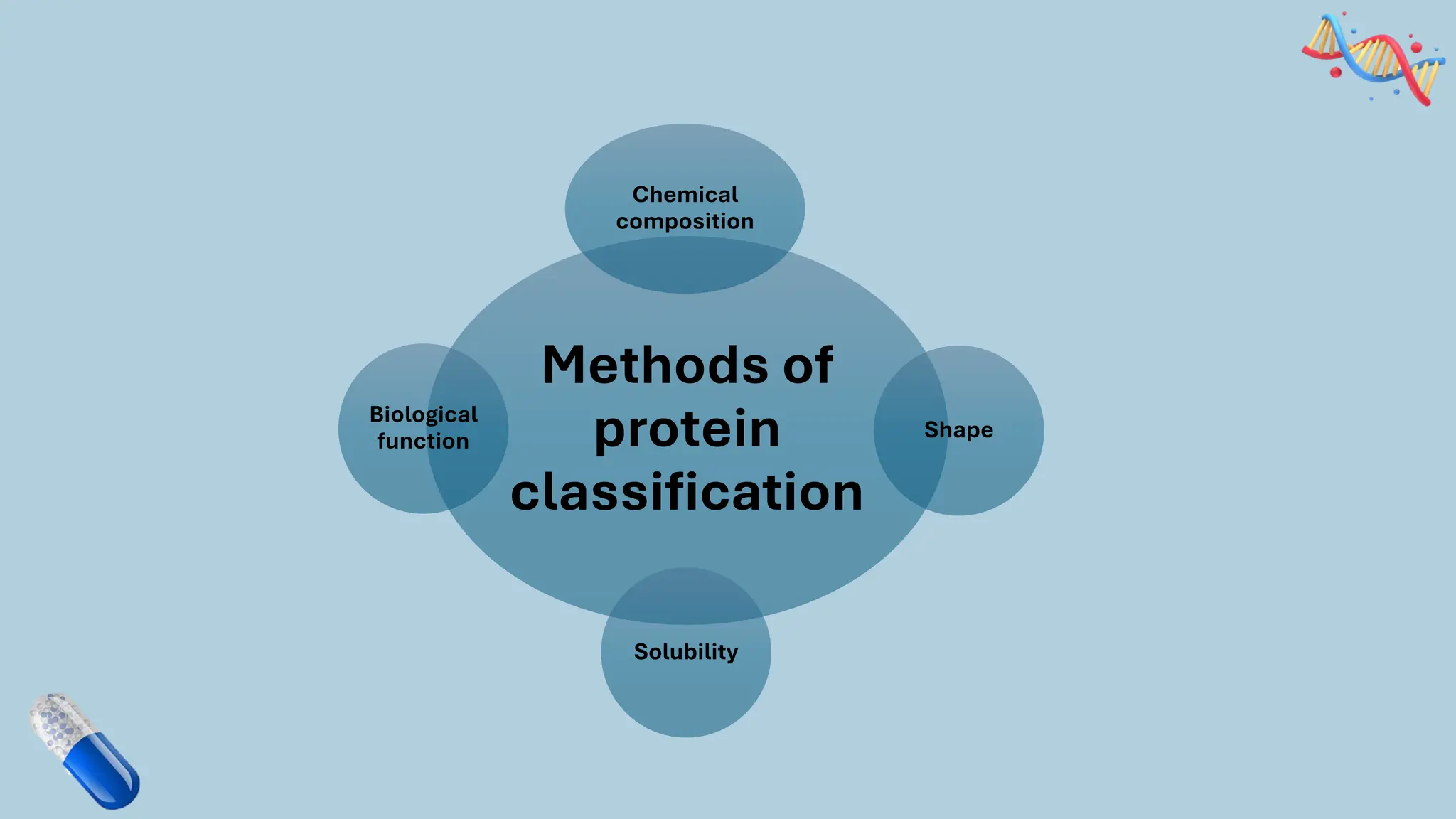
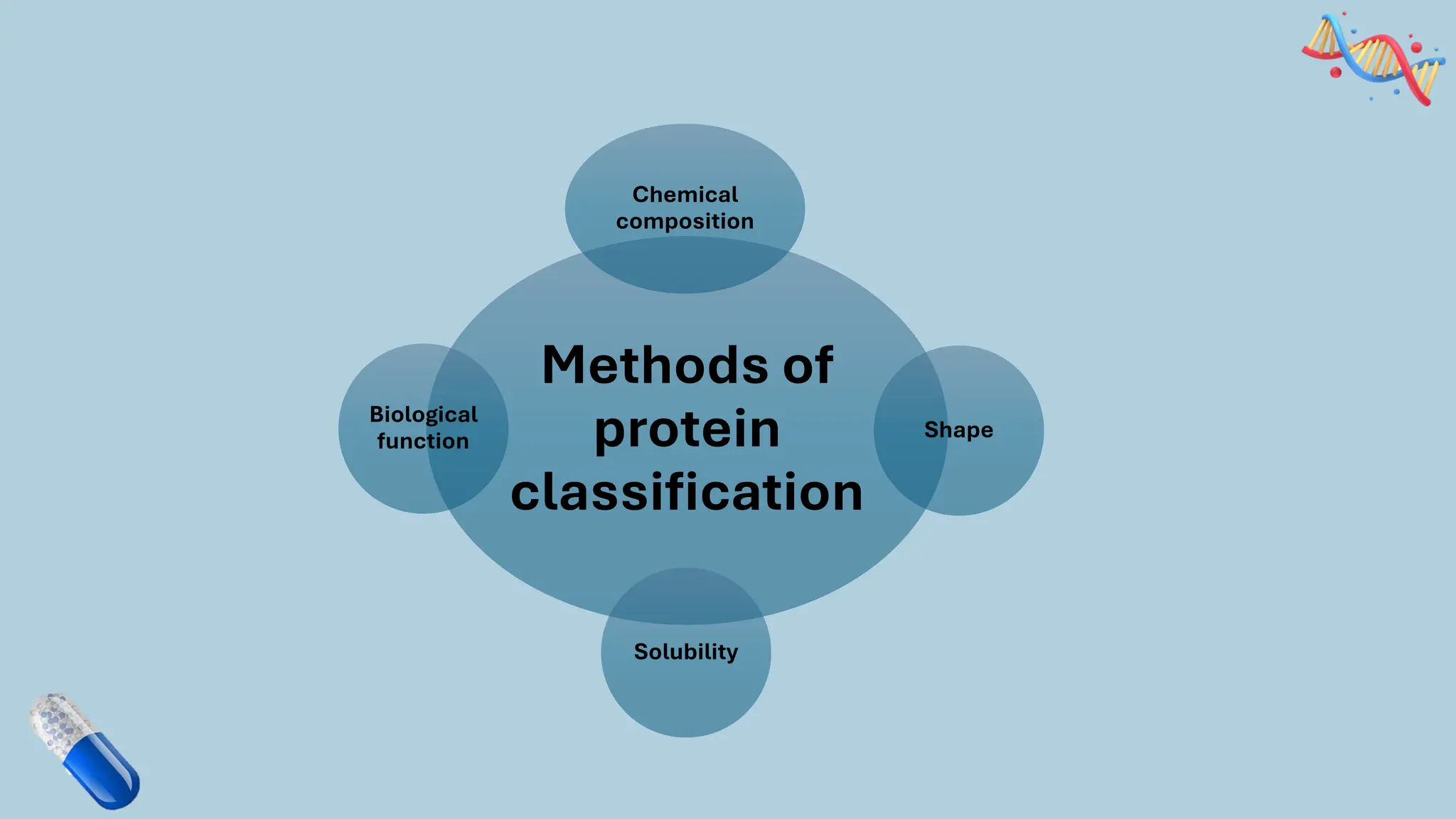
Methods of
protein
classification
Chemical
composition
Shape
Solubility
Biological
function
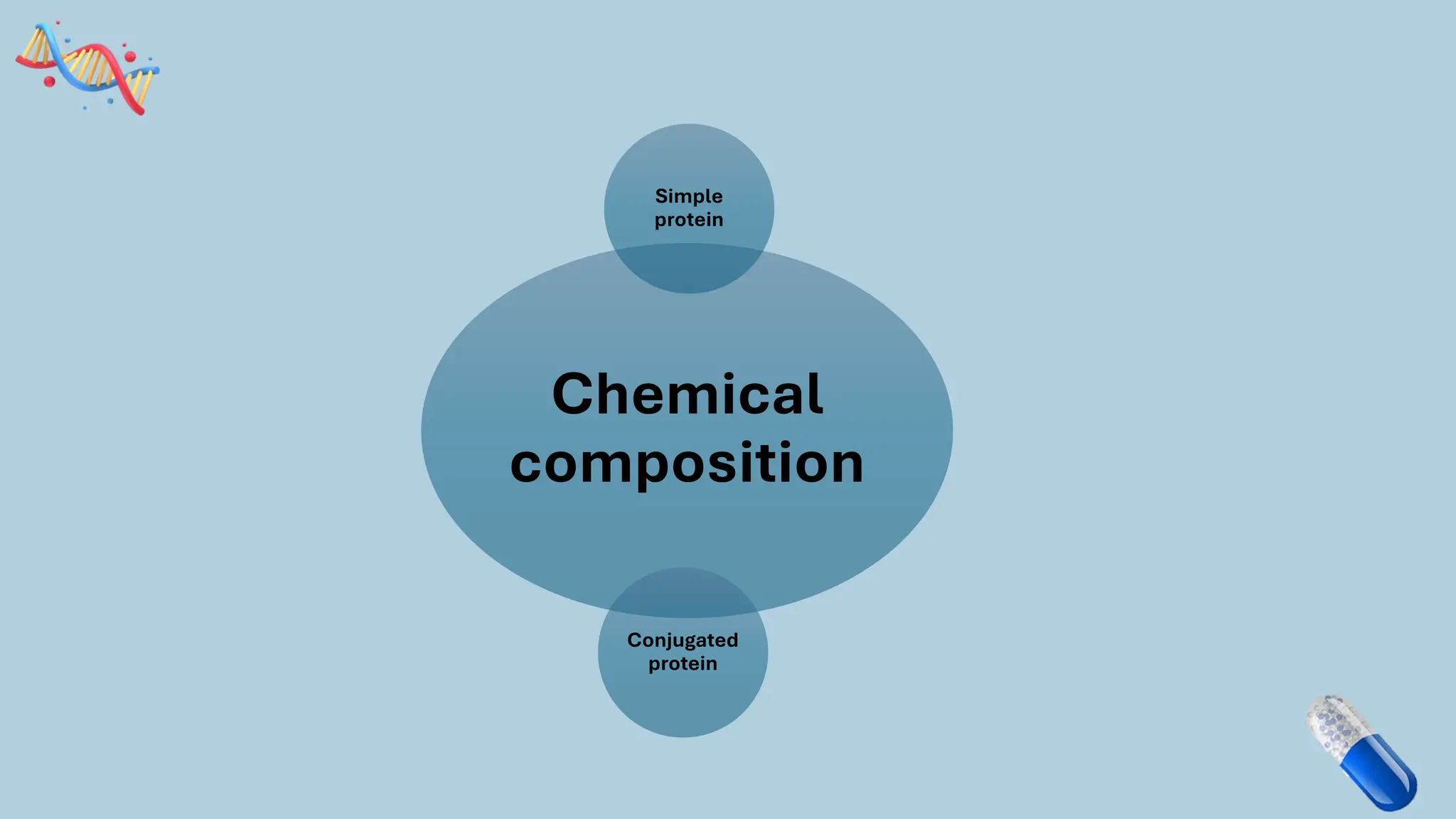
Chemical
composition
Simple
protein
Conjugated
protein
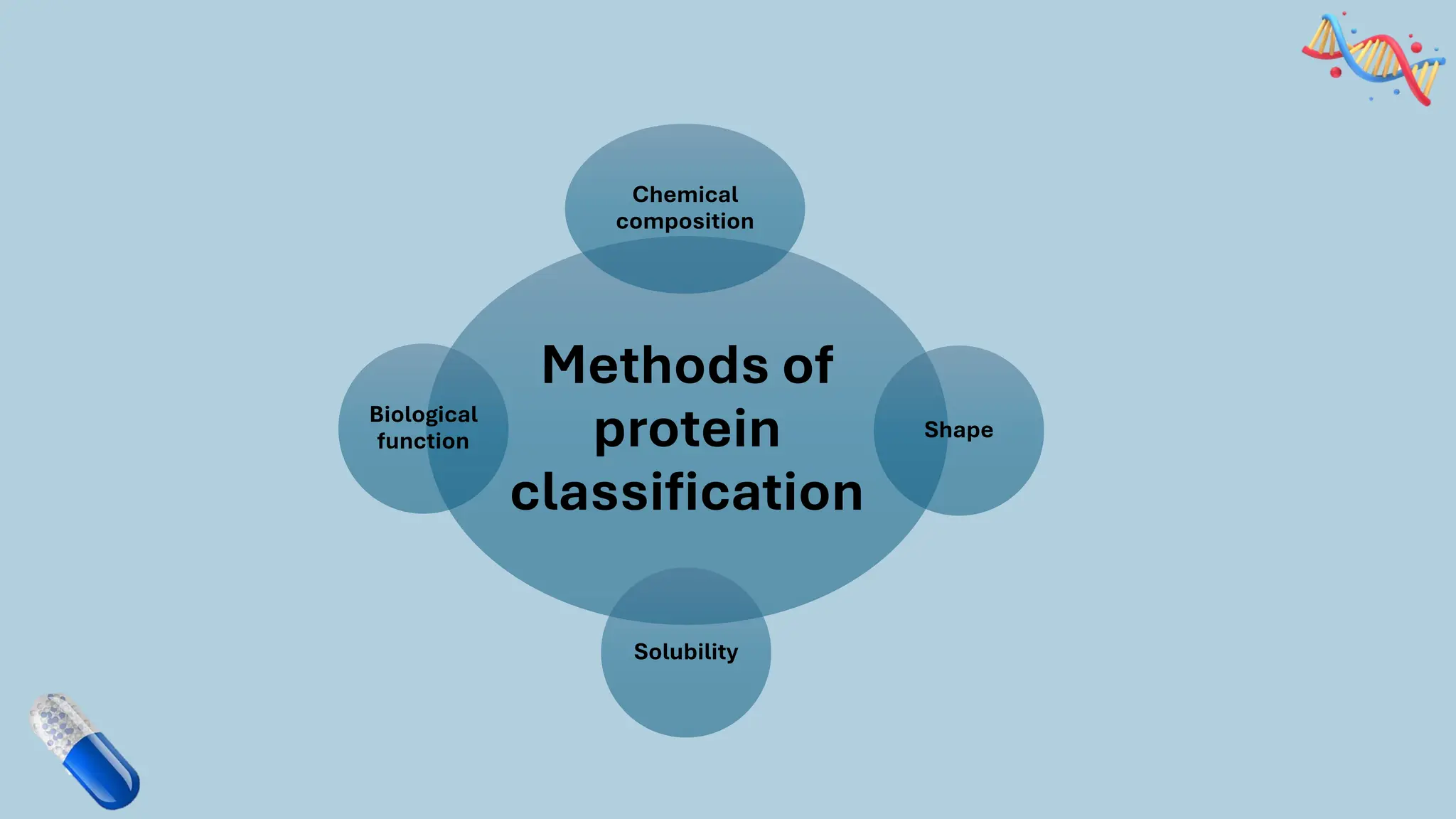
Methods of
protein
classification
Chemical
composition
Shape
Solubility
Biological
function
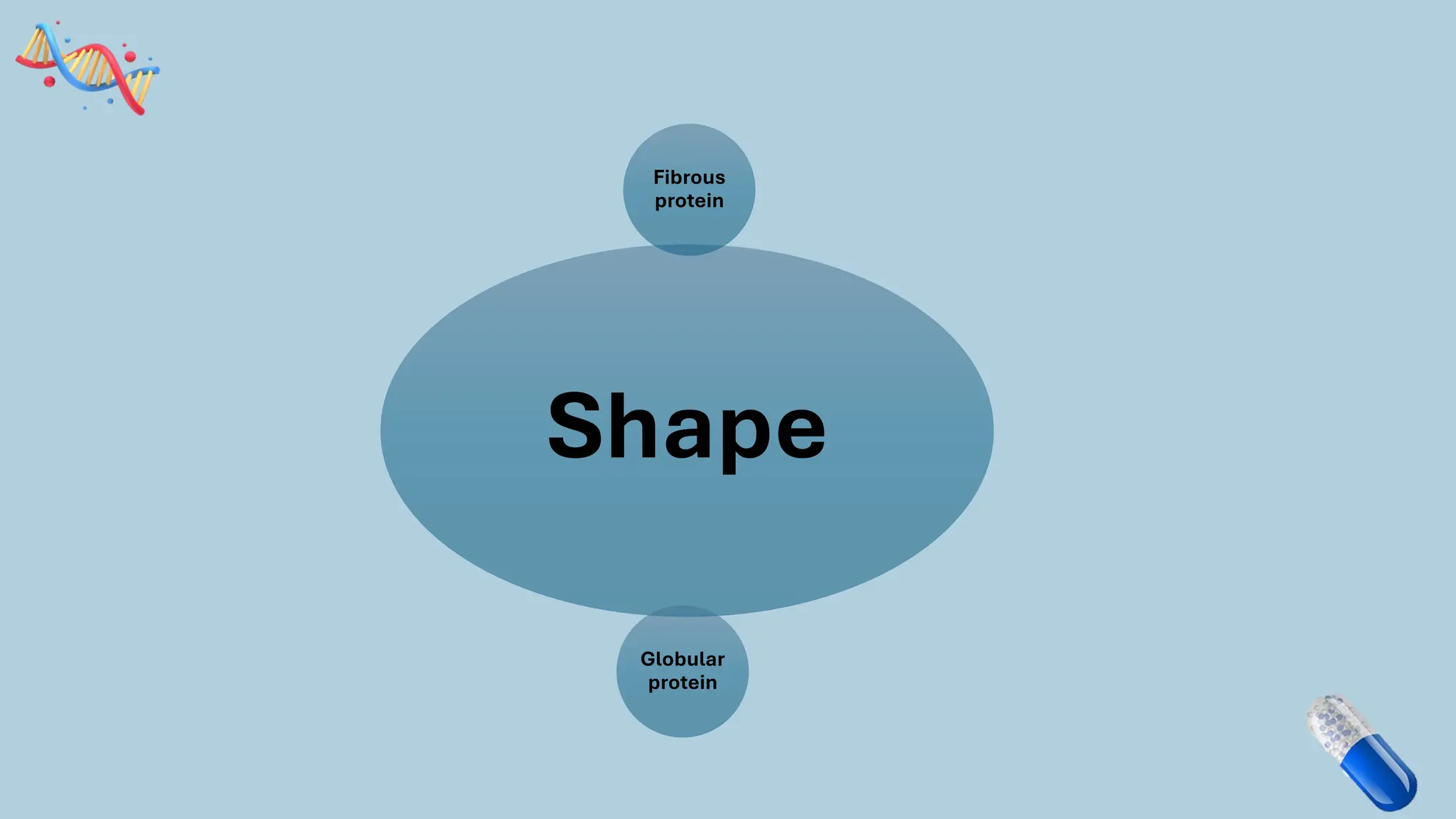
Shape
Fibrous
protein
Globular
protein
Methods of
protein
classification
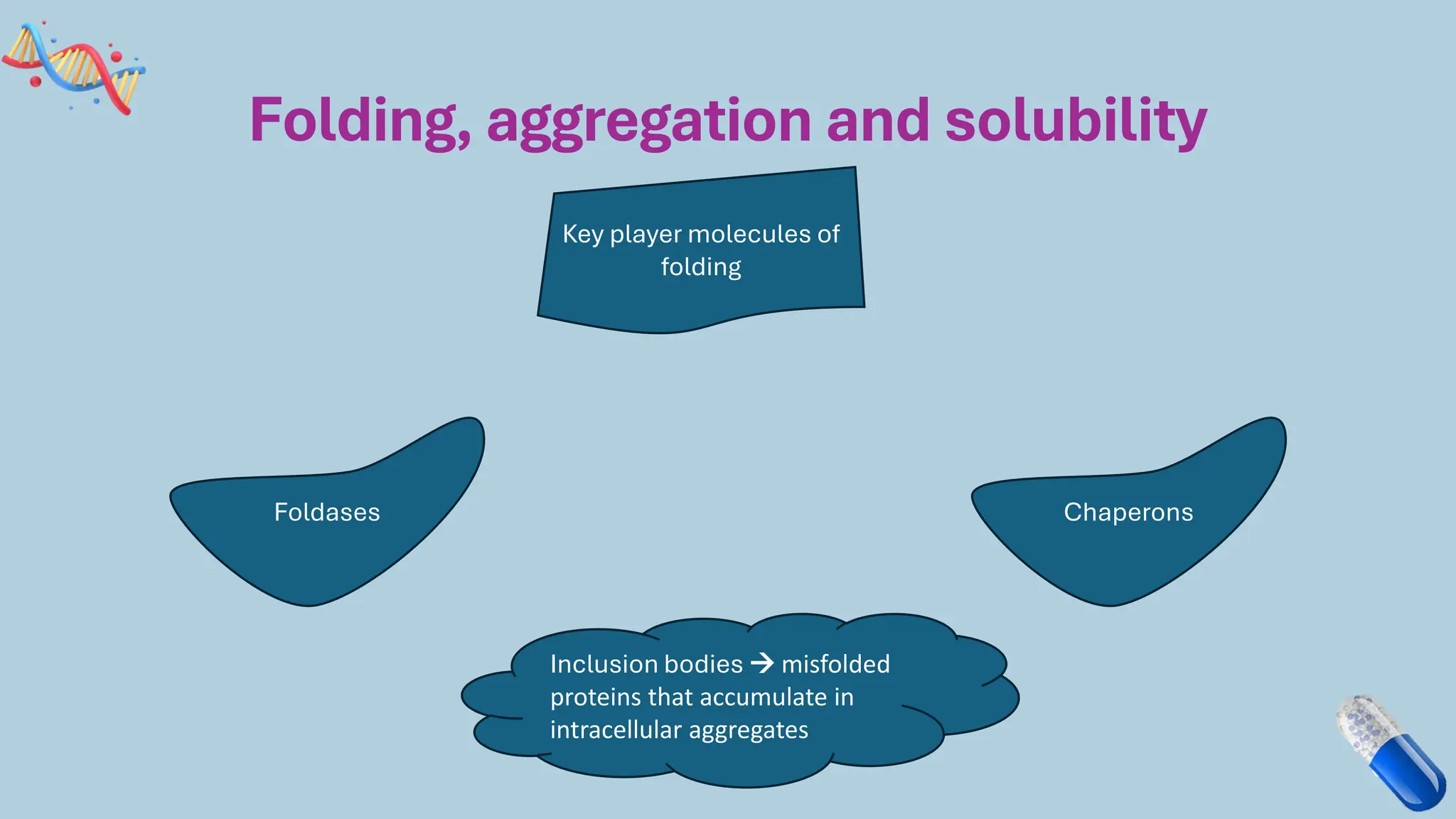
Chemical
composition
Shape
Solubility
Biological
function
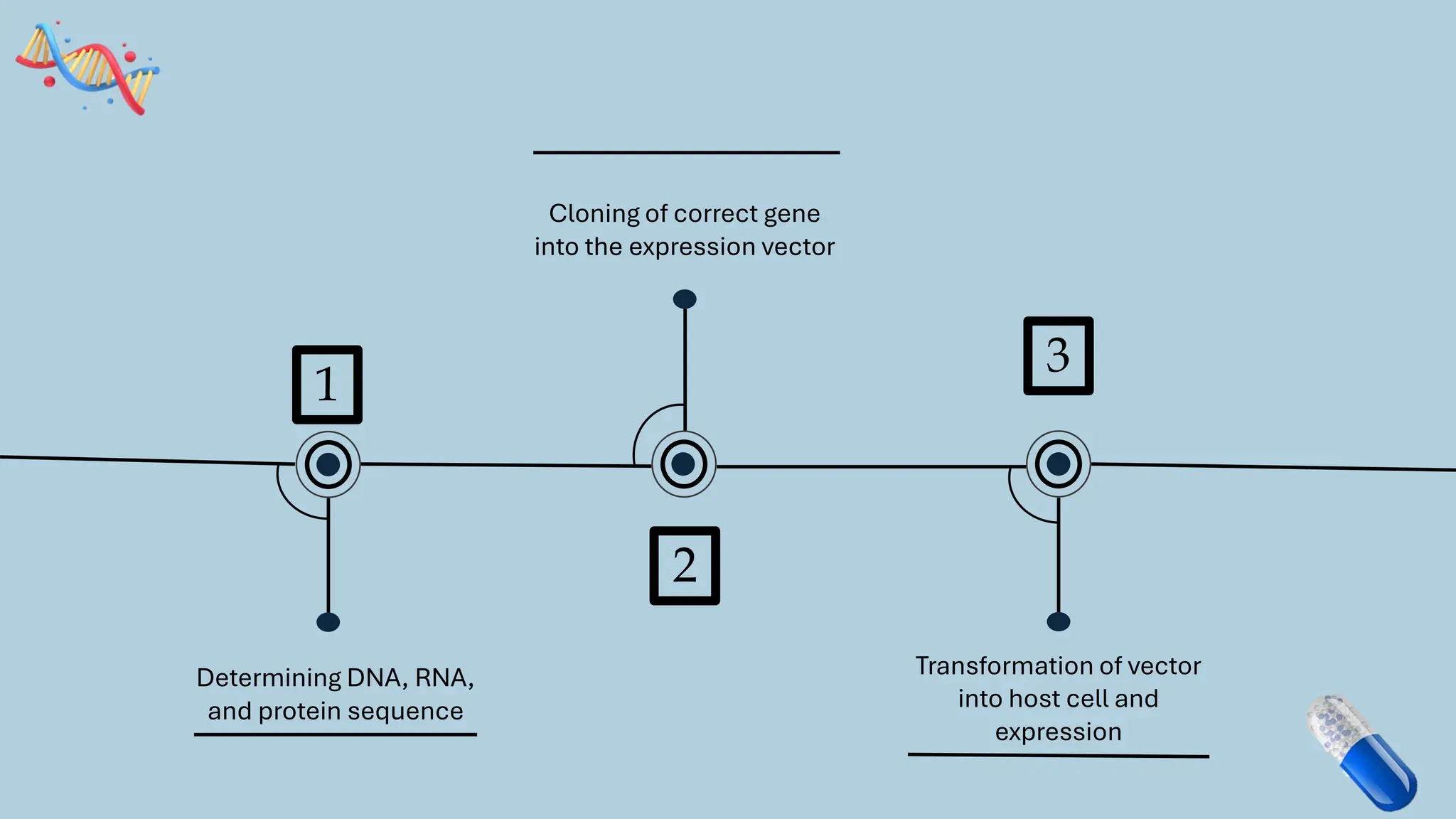
1
Determining DNA, RNA,
and protein sequence
3
2
Cloning of correct gene
into the expression vector
Transformation of vector
into host cell and
expression
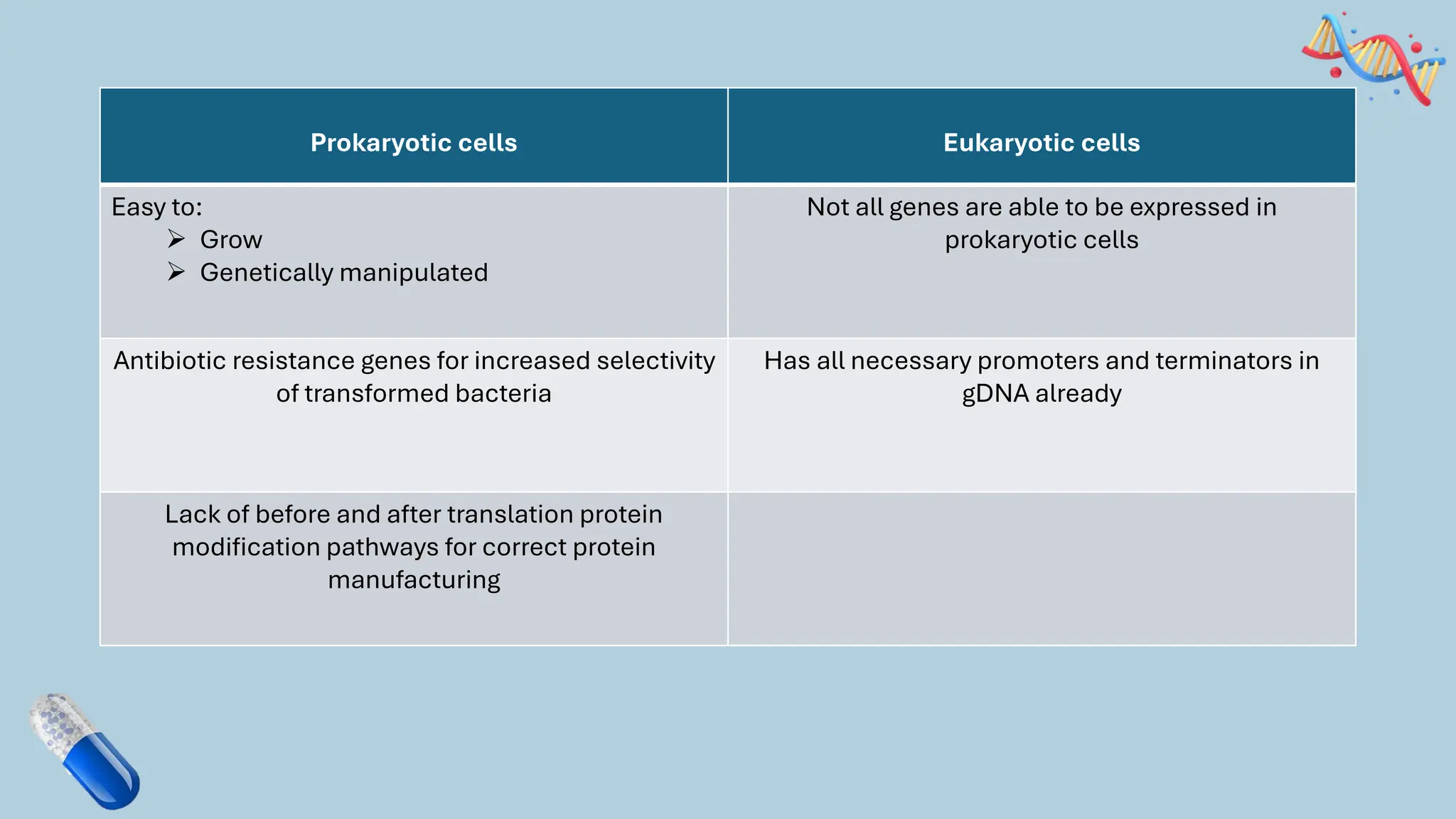
Prokaryotic cells Eukaryotic cells
Easy to:
➢ Grow
➢ Genetically manipulated
Not all genes are able to be expressed in
prokaryotic cells
Antibiotic resistance genes for increased selectivity
of transformed bacteria
Has all necessary promoters and terminators in
gDNA already
Lack of before and after translation protein
modification pathways for correct protein
manufacturing
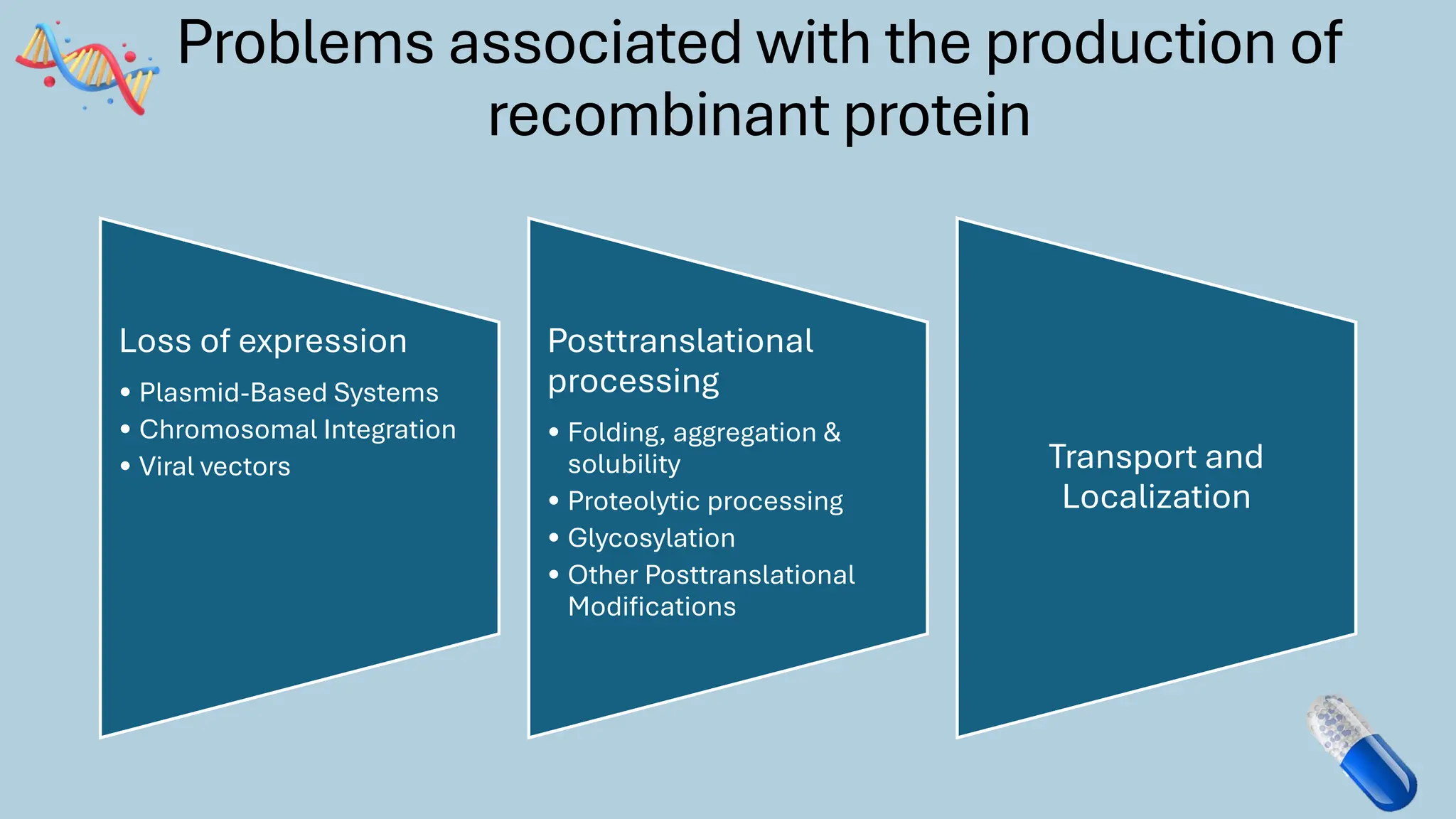
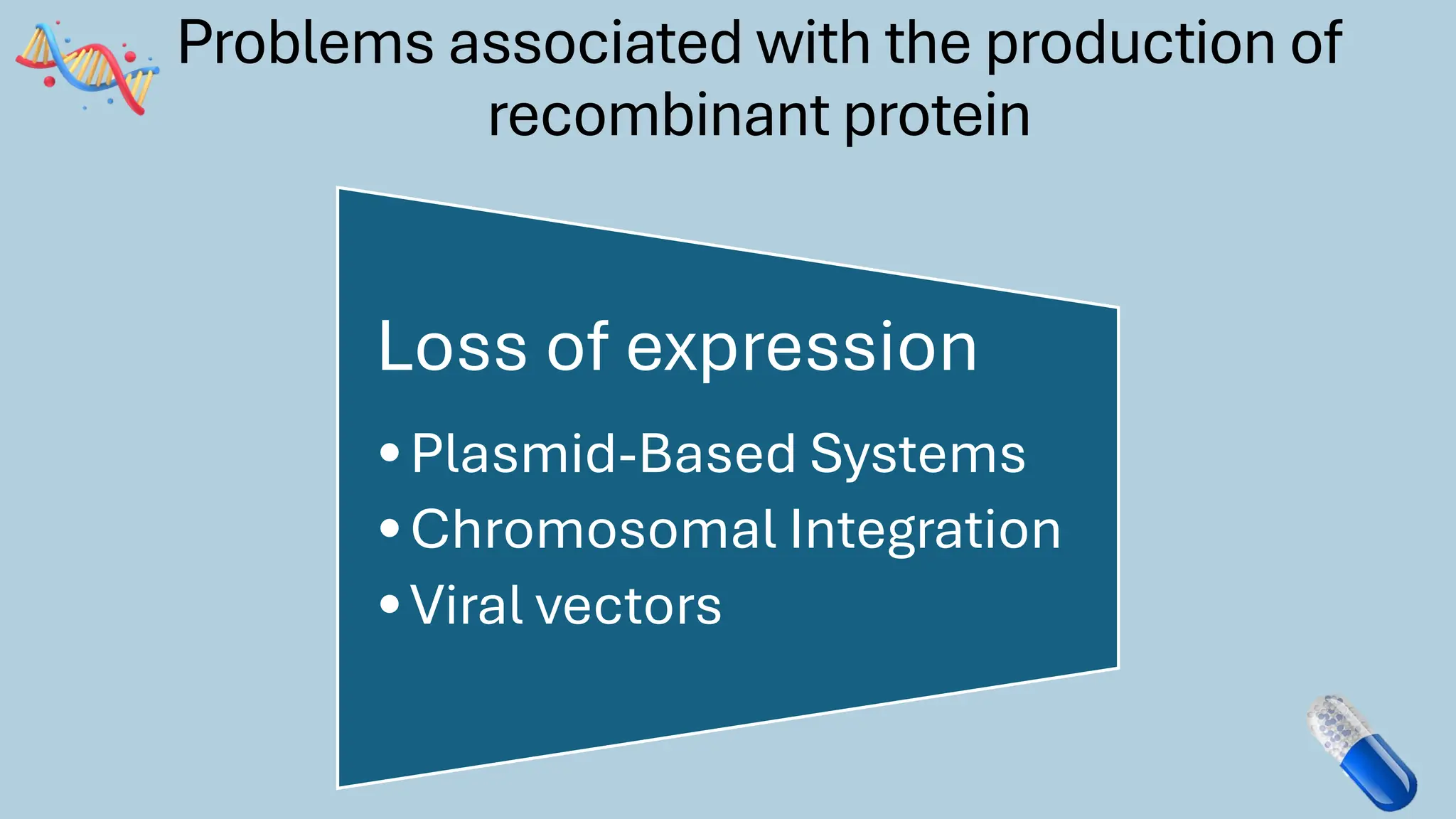
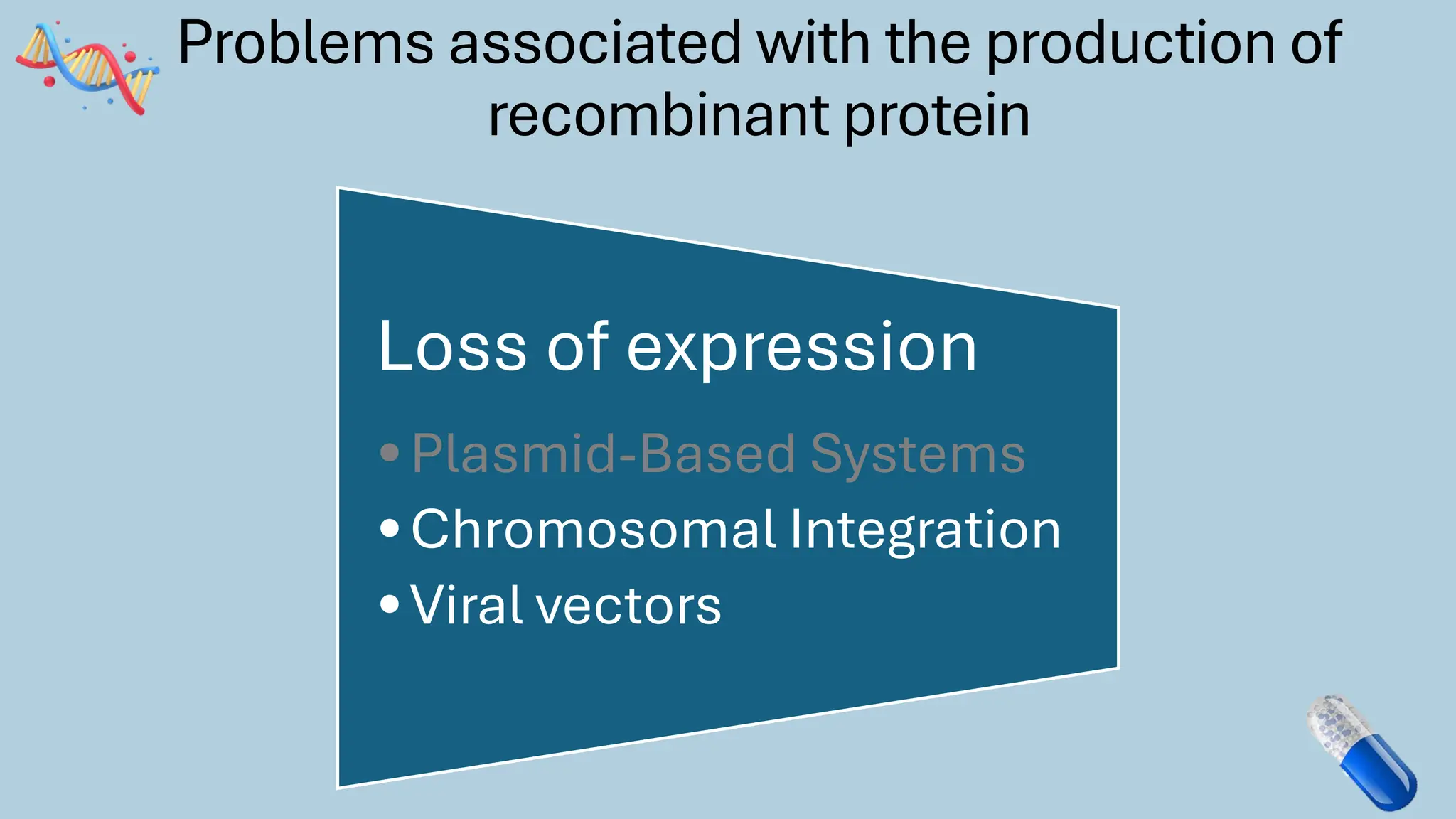
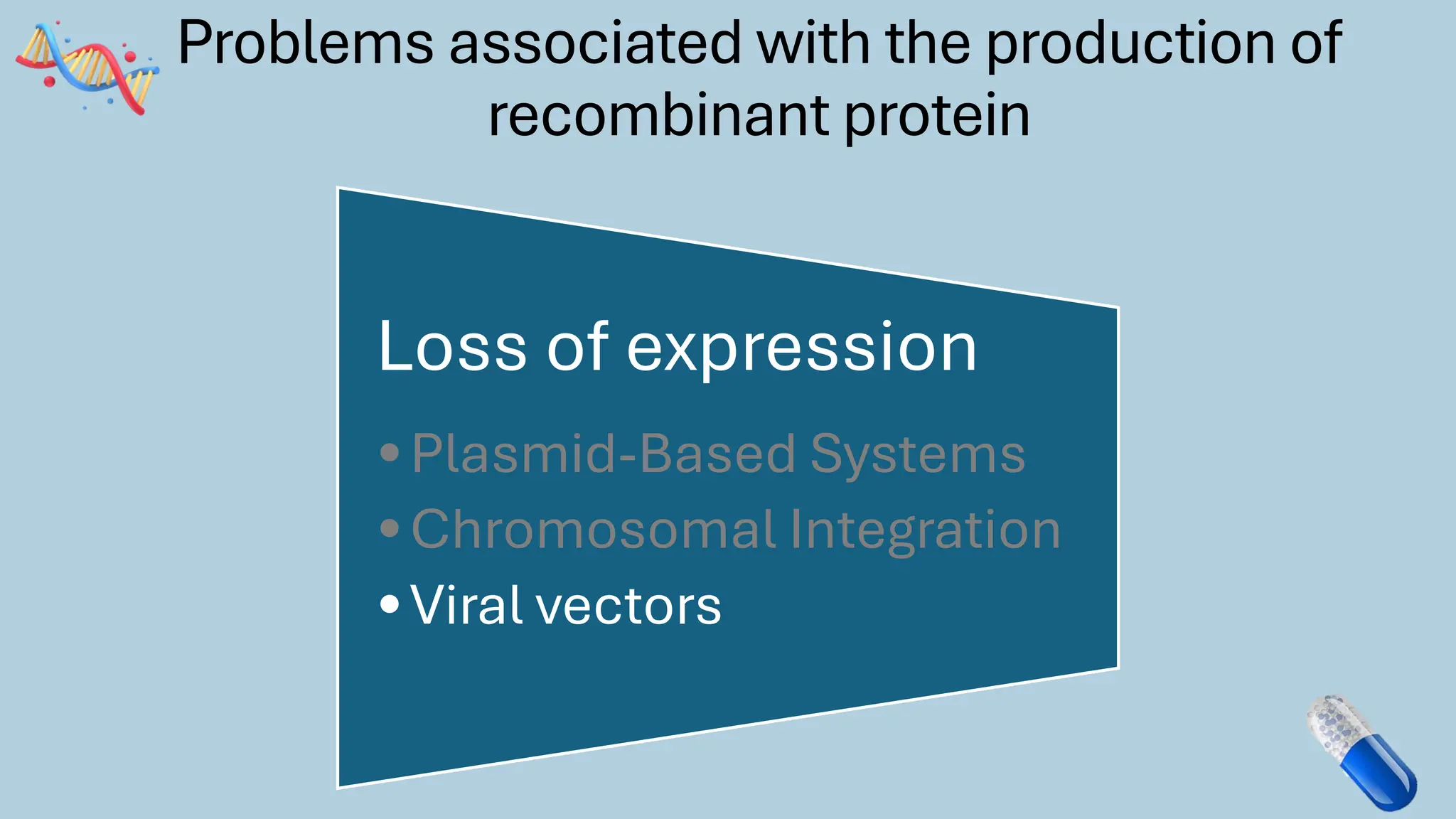
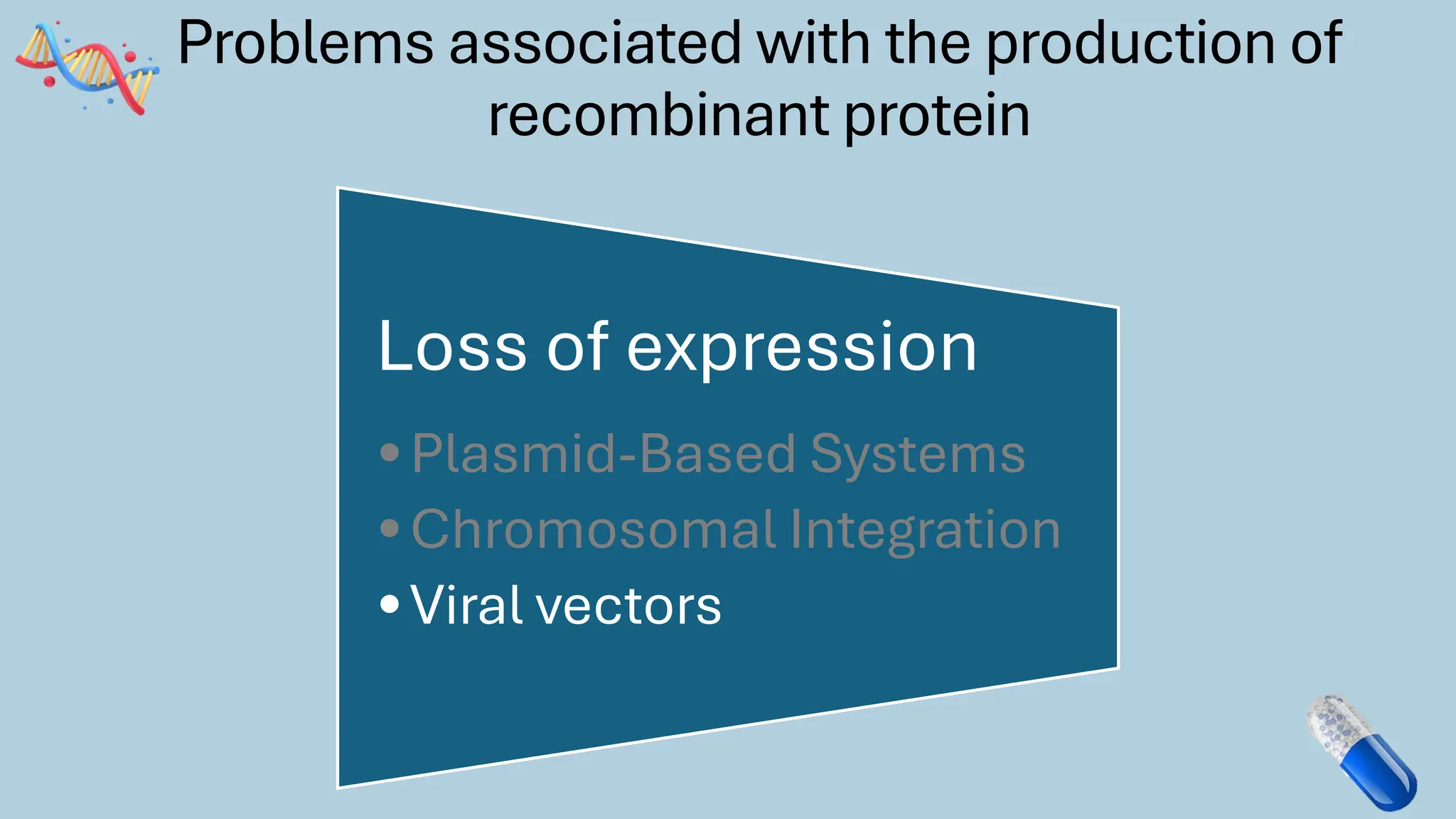
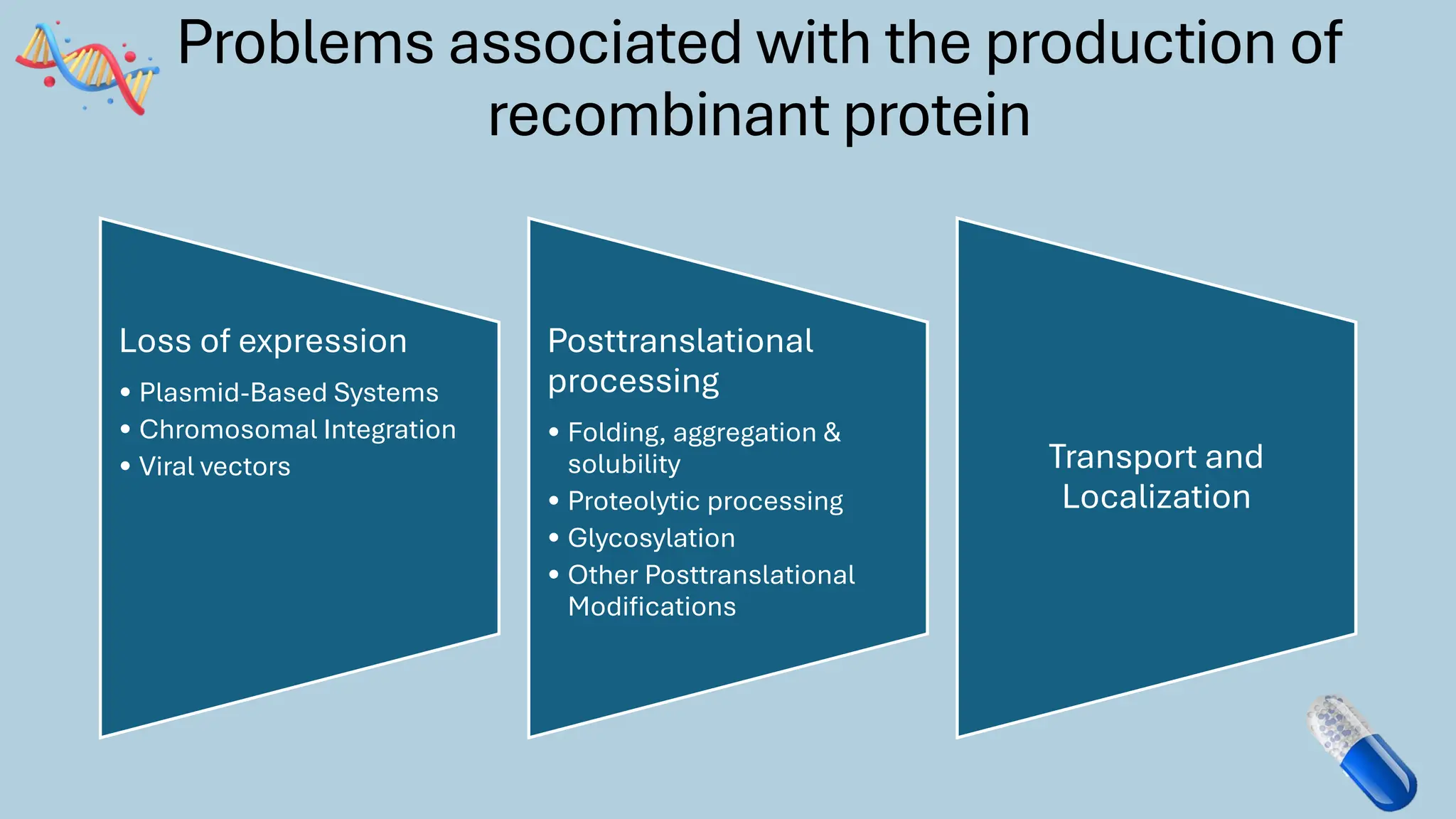
Problems associated with the production of
recombinant protein
Loss of expression
• Plasmid-Based Systems
• Chromosomal Integration
• Viral vectors
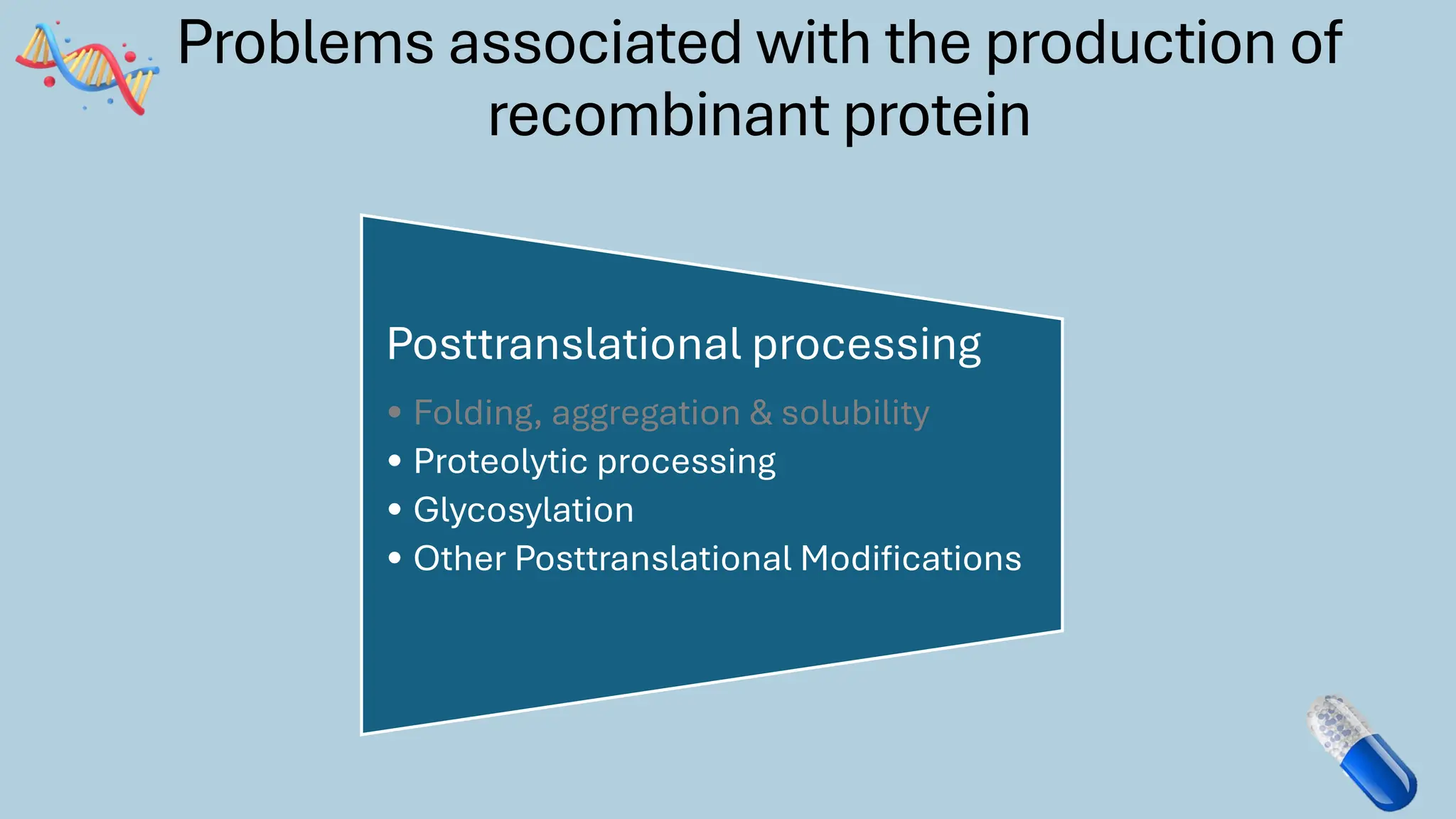
Posttranslational
processing
• Folding, aggregation &
solubility
• Proteolytic processing
• Glycosylation
• Other Posttranslational
Modifications
Transport and
Localization
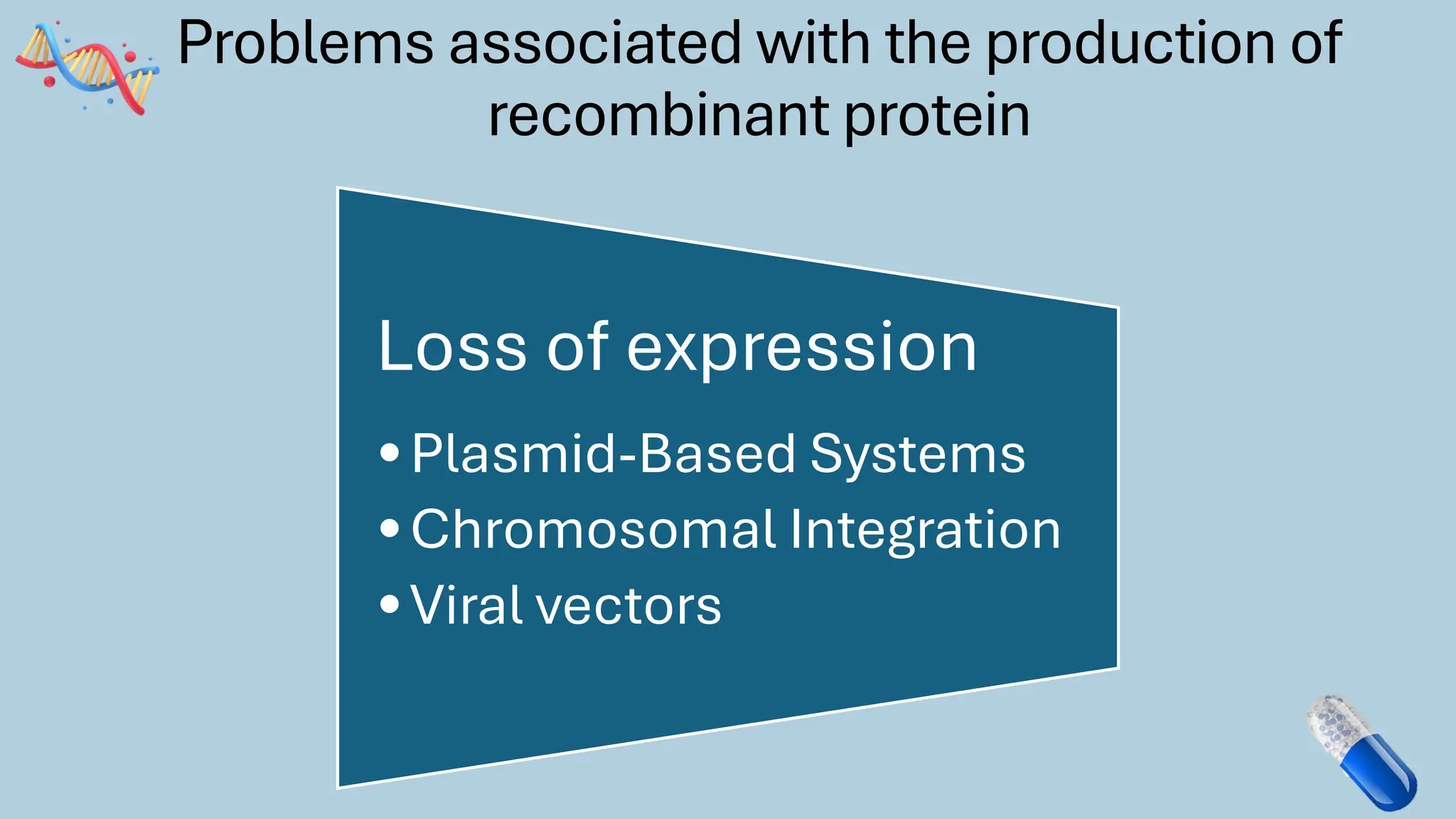
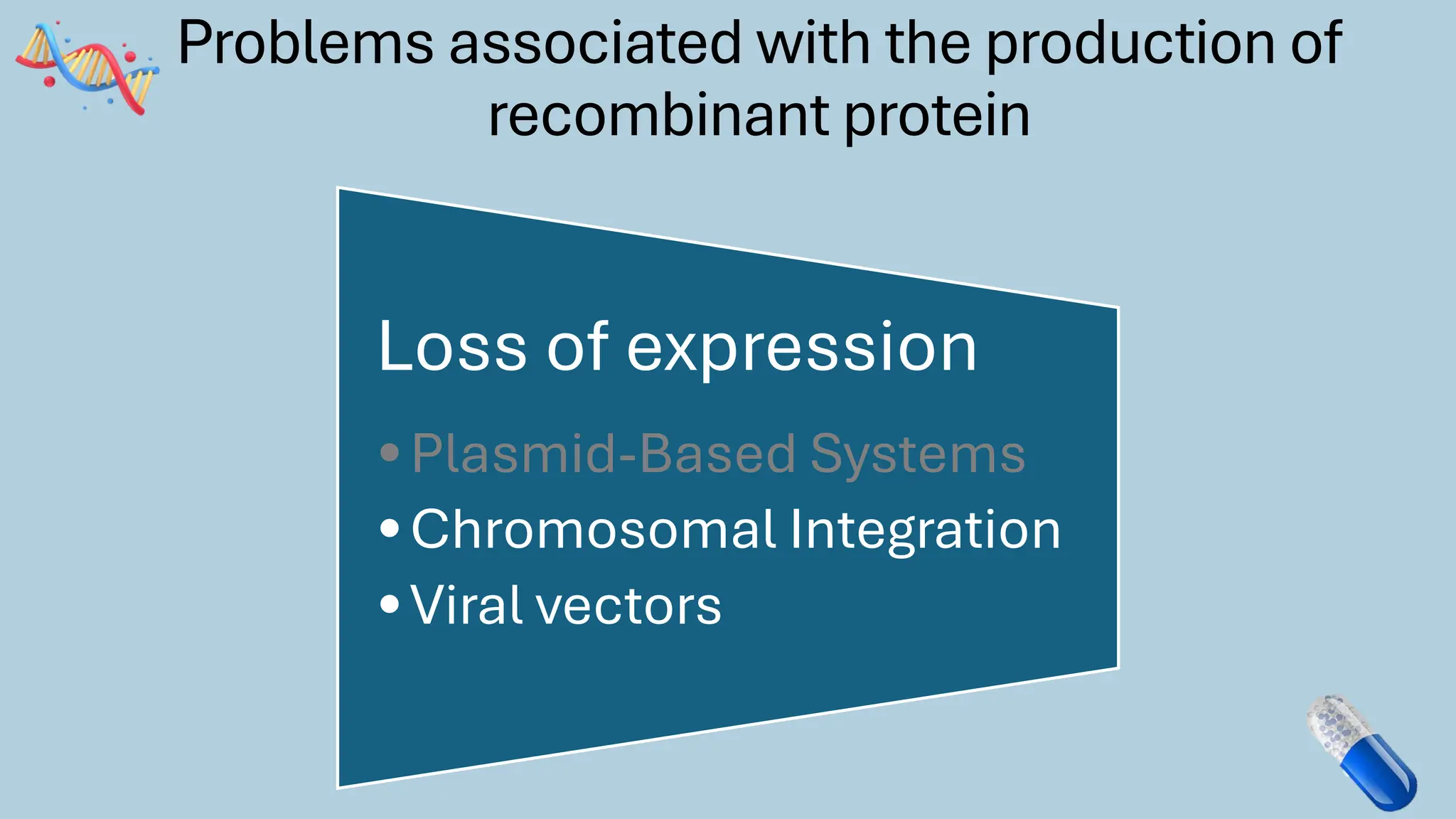
Problems associated with the production of
recombinant protein
Loss of expression
•Plasmid-Based Systems
•Chromosomal Integration
•Viral vectors
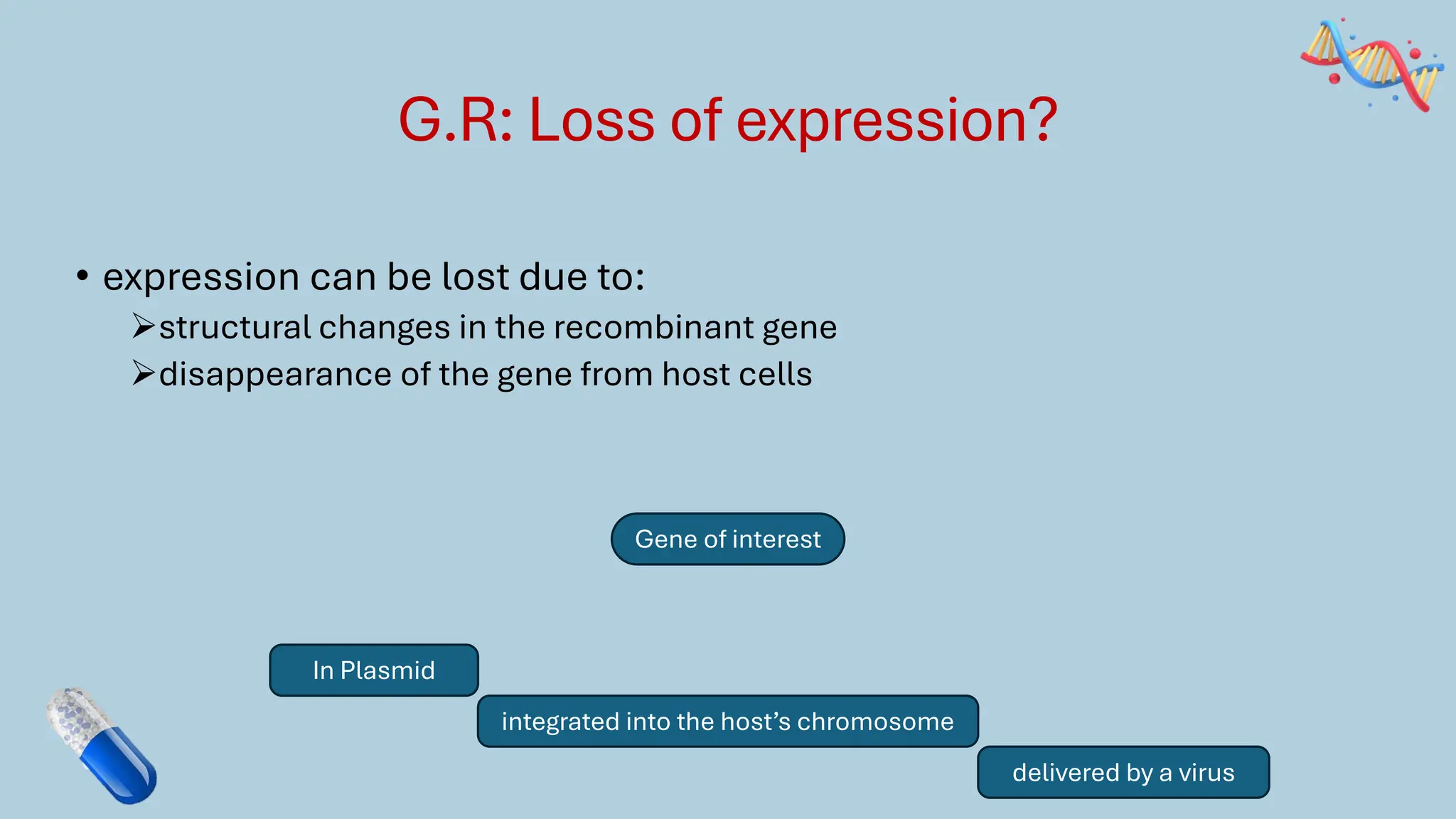
G.R: Loss of expression?
• expression can be lost due to:
➢structural changes in the recombinant gene
➢disappearance of the gene from host cells
Gene of interest
In Plasmid
delivered by a virus
integrated into the host’s chromosome
Plasmid-Based Systems
• Plasmid:
➢extra-chromosomal self-replicating cytoplasmic DNA
elements
➢found in prokaryotes and eukaryotes.
➢Used as molecular vehicles for recombinant genes
➢most popular choice when using prokaryotes as hosts?
▪ as genetic manipulation of plasmids is easy
Formation of a single dimeric circle with 2 ori
• As plasmid copies have the same sequence, they can recombine
and form a single dimeric circle with two origins of replication.
This results in fewer independent units to be segregated between
daughter cells, and consequently plasmid loss can increase
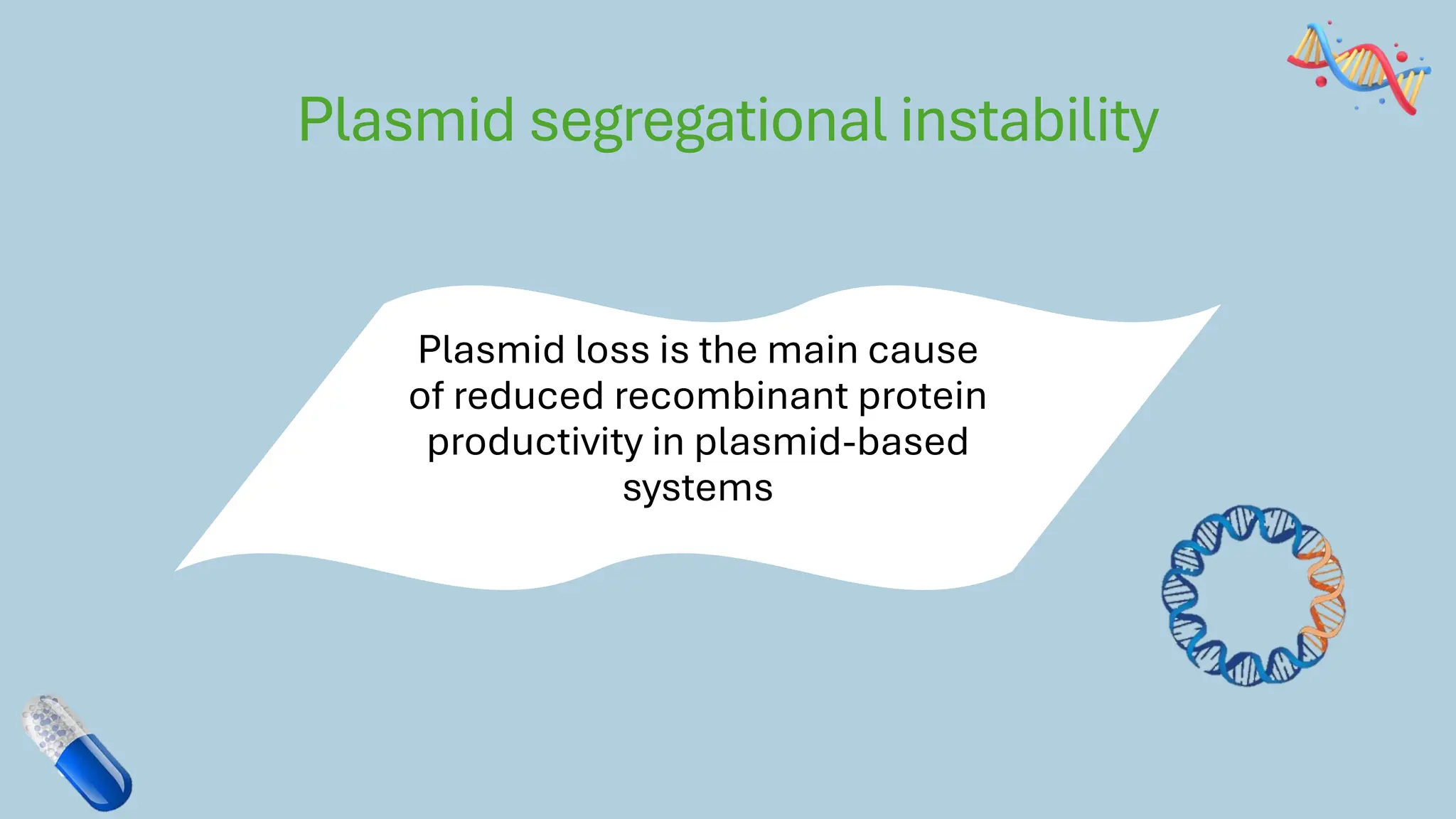
Plasmid segregational instability
Plasmid loss is the main cause
of reduced recombinant protein
productivity in plasmid-based
systems
Metabolic load and plasmid
• the size of the insert
• temperature,
• expression level
➢Constitutive gene expression may increase plasmid instability because
the metabolic load of recombinant protein production is constantly
present.
• recombinant protein yield
• toxicity of the expressed protein toward the host
Gene dosage
• refers to the number of copies of a specific gene present within an
organism's genome
• Gene dosage is higher than when the recombinant gene is
integrated into the host’s chromosome
• Medium to high copy number plasmids:
➢Relaxed replication
➢Random distribution
➢Relatively low loss: Continuously growing and toxic genes/gene products
will lead to plasmid loss.
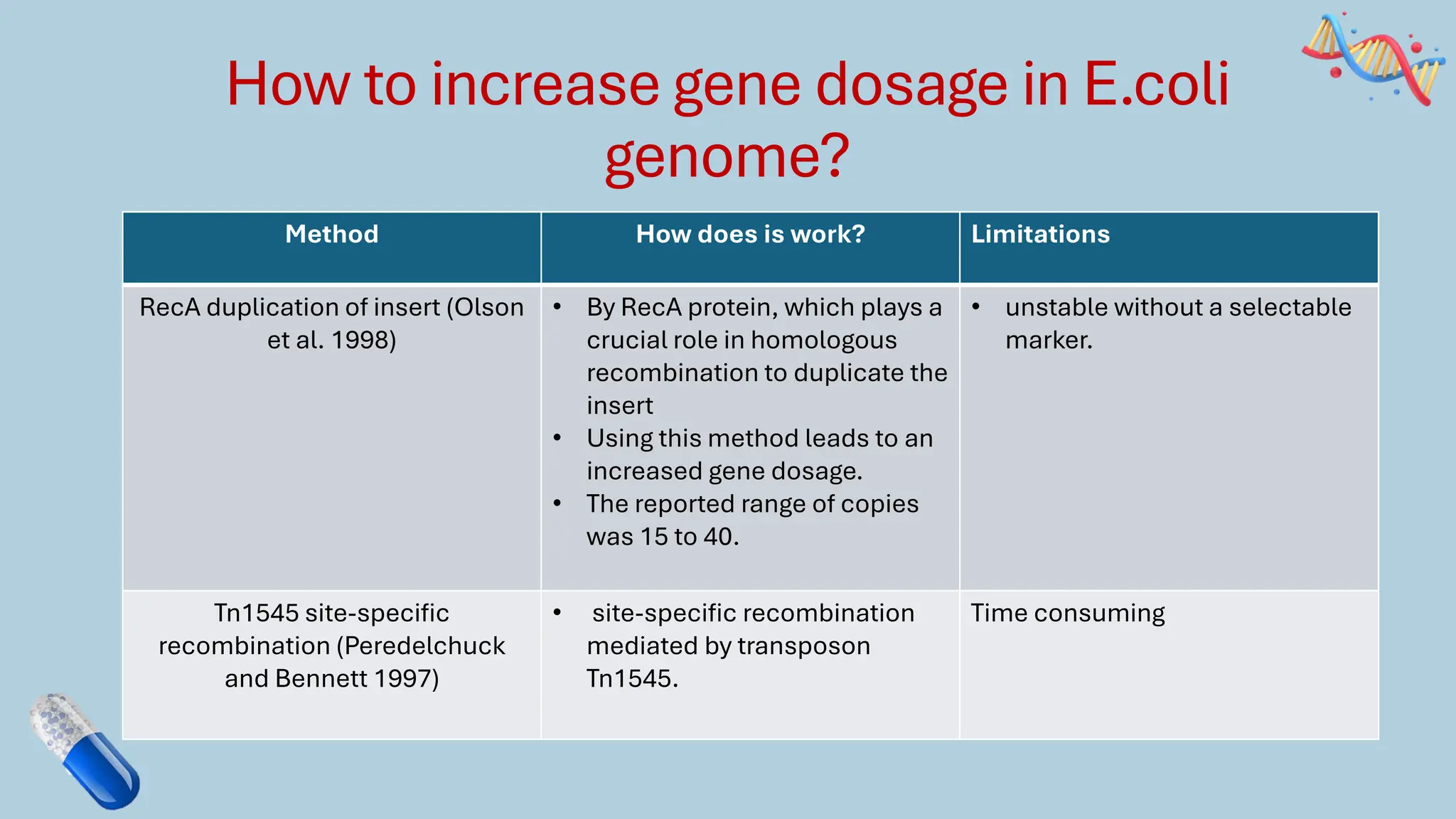
How to increase gene dosage in E.coli
genome?
Method How does is work? Limitations
RecA duplication of insert (Olson
et al. 1998)
• By RecA protein, which plays a
crucial role in homologous
recombination to duplicate the
insert
• Using this method leads to an
increased gene dosage.
• The reported range of copies
was 15 to 40.
• unstable without a selectable
marker.
Tn1545 site-specific
recombination (Peredelchuck
and Bennett 1997)
• site-specific recombination
mediated by transposon
Tn1545.
Time consuming
Plasmid copy number
For applications such as DNA
production for gene therapy, high
plasmid copy number is an
important objective function
Plasmid copy number
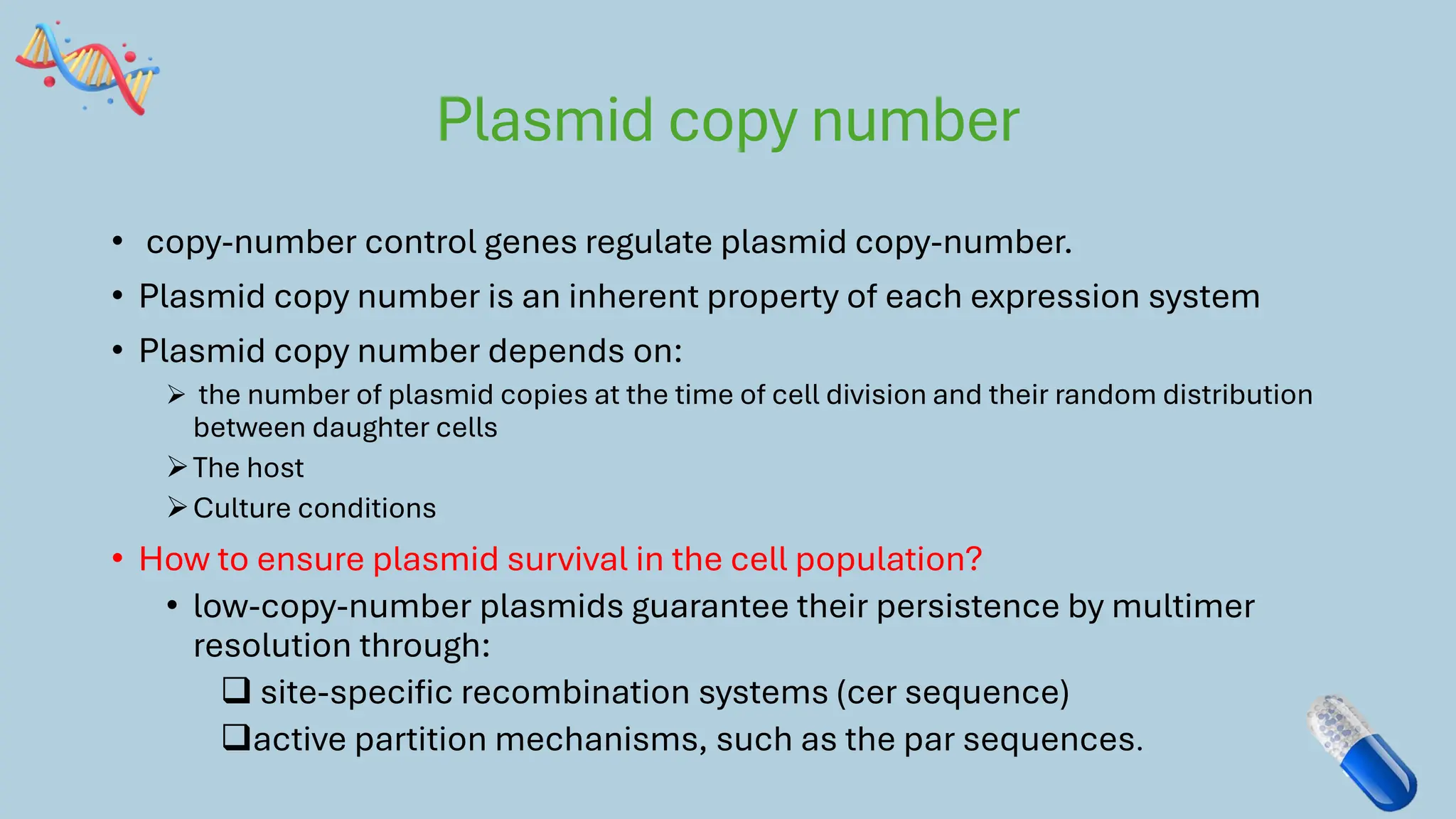
• copy-number control genes regulate plasmid copy-number.
• Plasmid copy number is an inherent property of each expression system
• Plasmid copy number depends on:
➢ the number of plasmid copies at the time of cell division and their random distribution
between daughter cells
➢The host
➢Culture conditions
• How to ensure plasmid survival in the cell population?
• low-copy-number plasmids guarantee their persistence by multimer
resolution through:
❑ site-specific recombination systems (cer sequence)
❑active partition mechanisms, such as the par sequences.
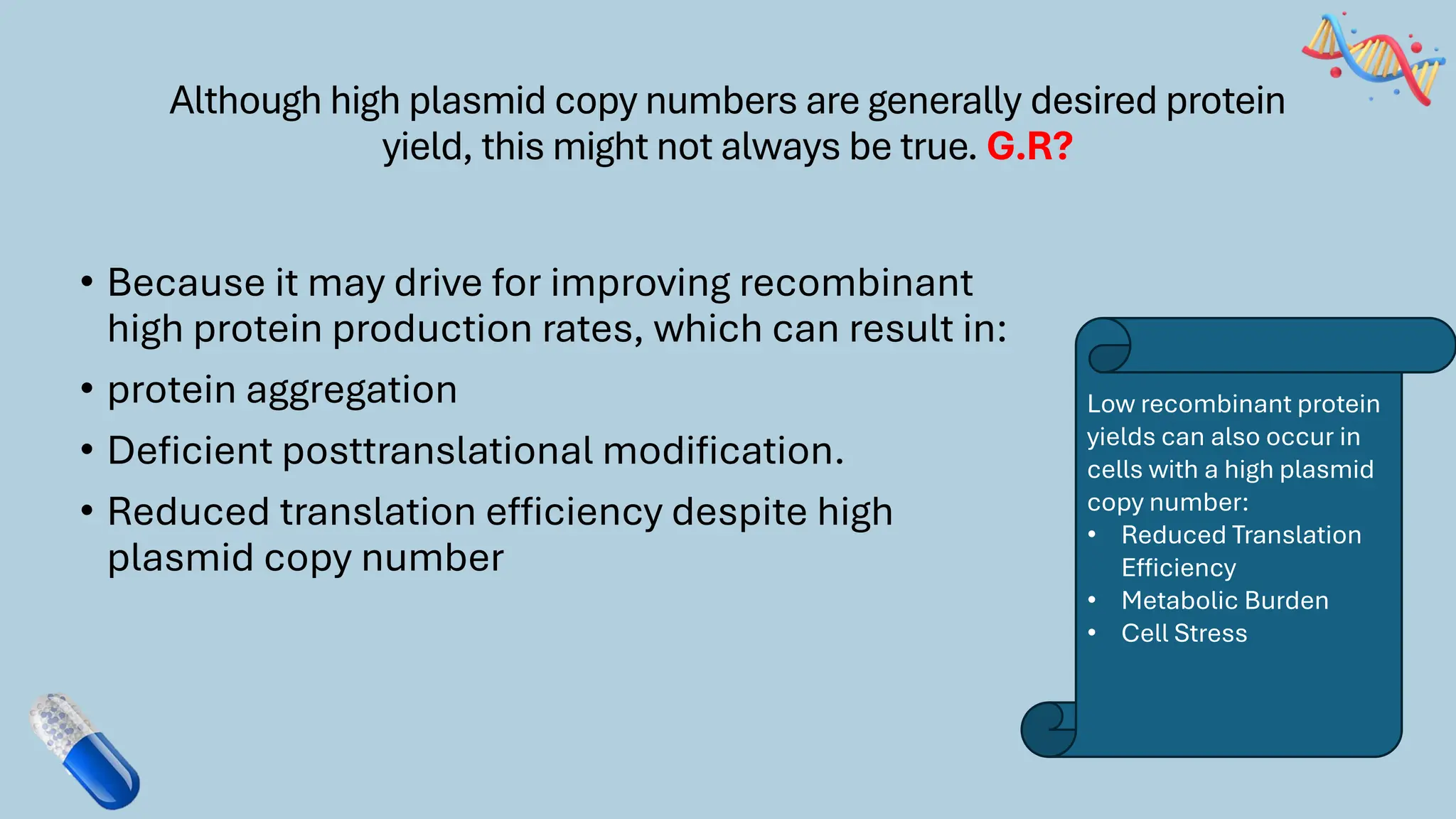
Although high plasmid copy numbers are generally desired protein
yield, this might not always be true. G.R?
• Because it may drive for improving recombinant
high protein production rates, which can result in:
• protein aggregation
• Deficient posttranslational modification.
• Reduced translation efficiency despite high
plasmid copy number
Low recombinant protein
yields can also occur in
cells with a high plasmid
copy number:
• Reduced Translation
Efficiency
• Metabolic Burden
• Cell Stress
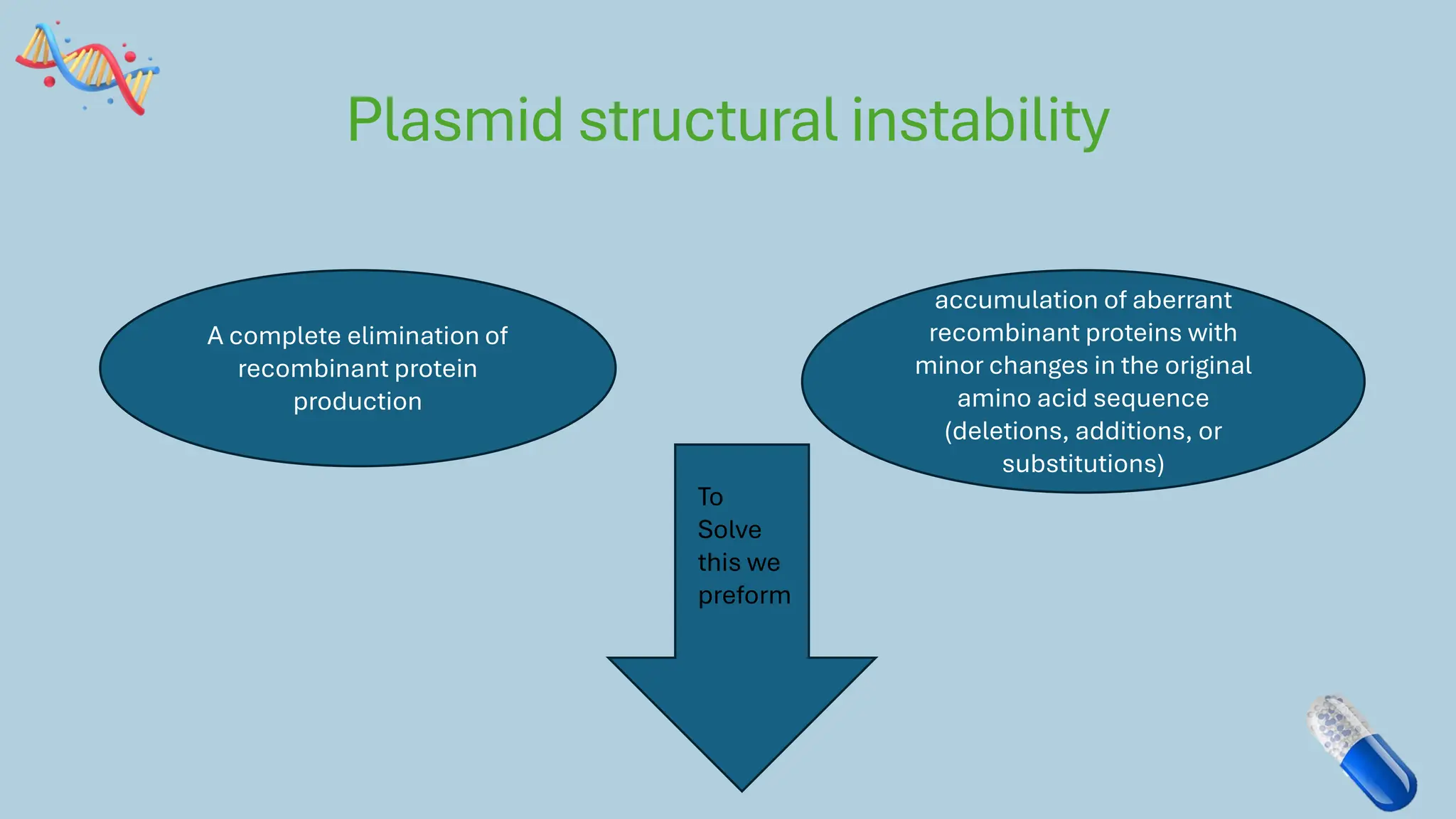
Plasmid structural instability
A complete elimination of
recombinant protein
production
accumulation of aberrant
recombinant proteins with
minor changes in the original
amino acid sequence
(deletions, additions, or
substitutions)
To
Solve
this we
preform
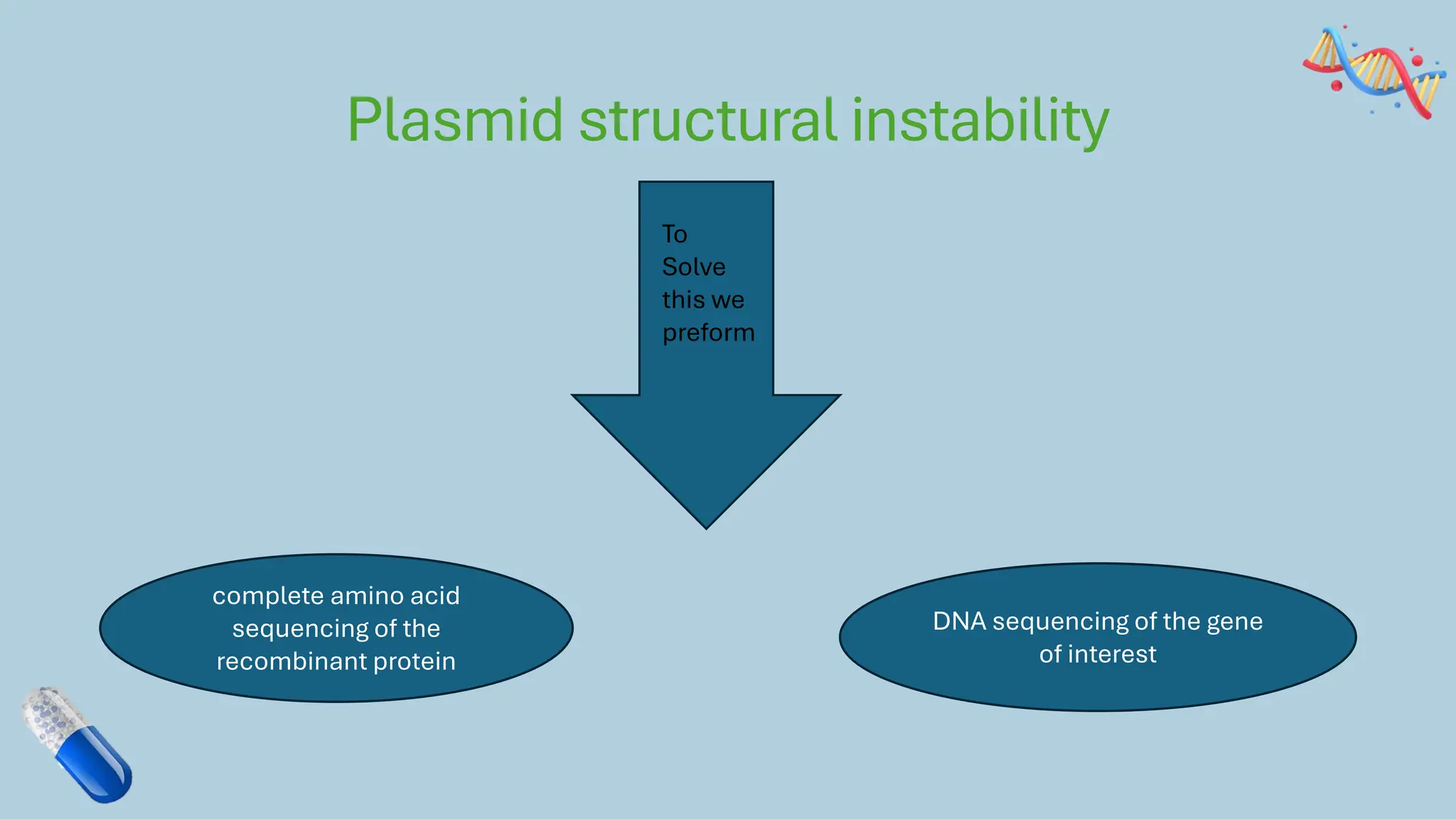
Plasmid structural instability
complete amino acid
sequencing of the
recombinant protein
DNA sequencing of the gene
of interest
To
Solve
this we
preform
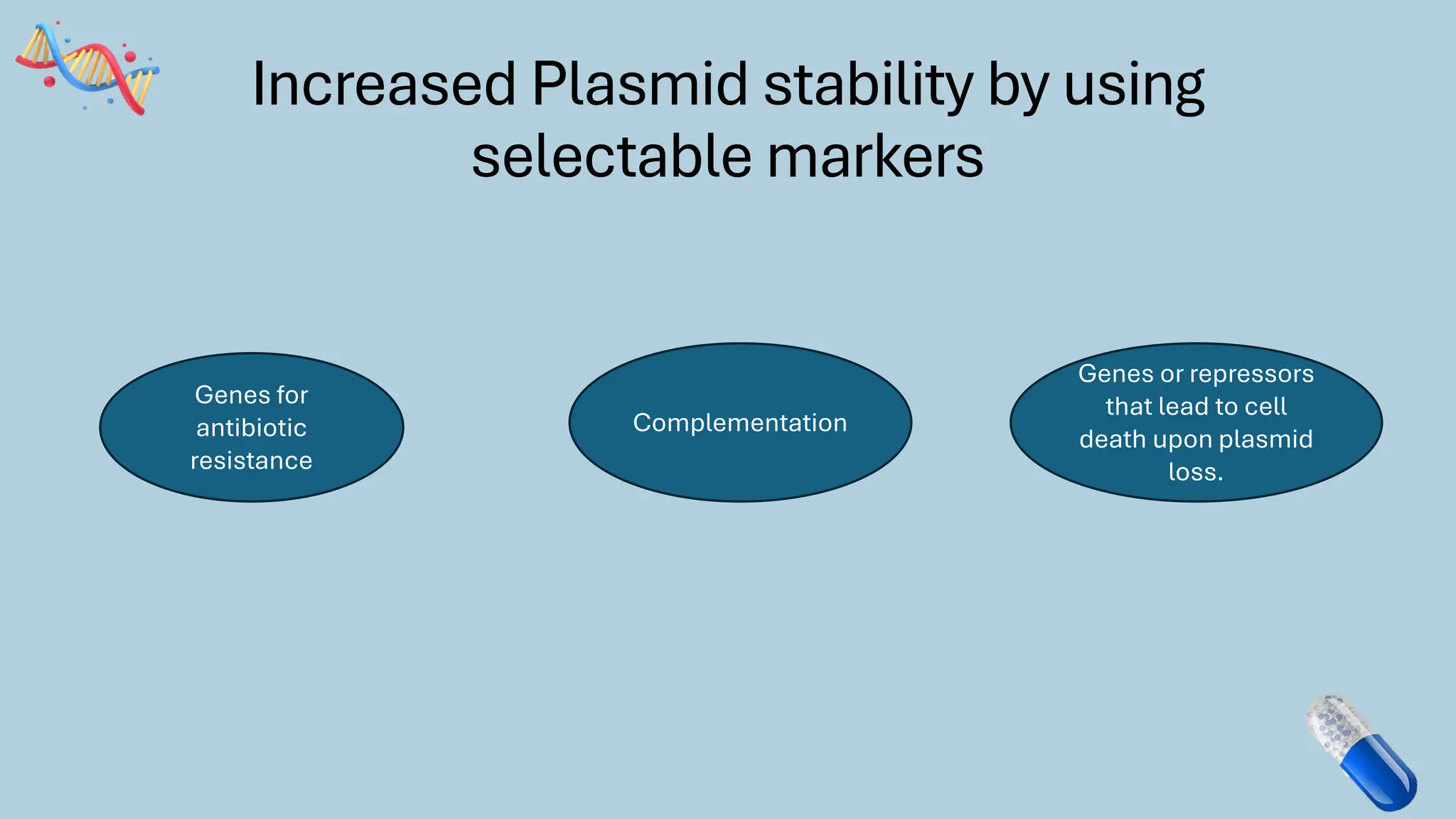
Increased Plasmid stability by using
selectable markers
Genes for
antibiotic
resistance
Complementation
Genes or repressors
that lead to cell
death upon plasmid
loss.
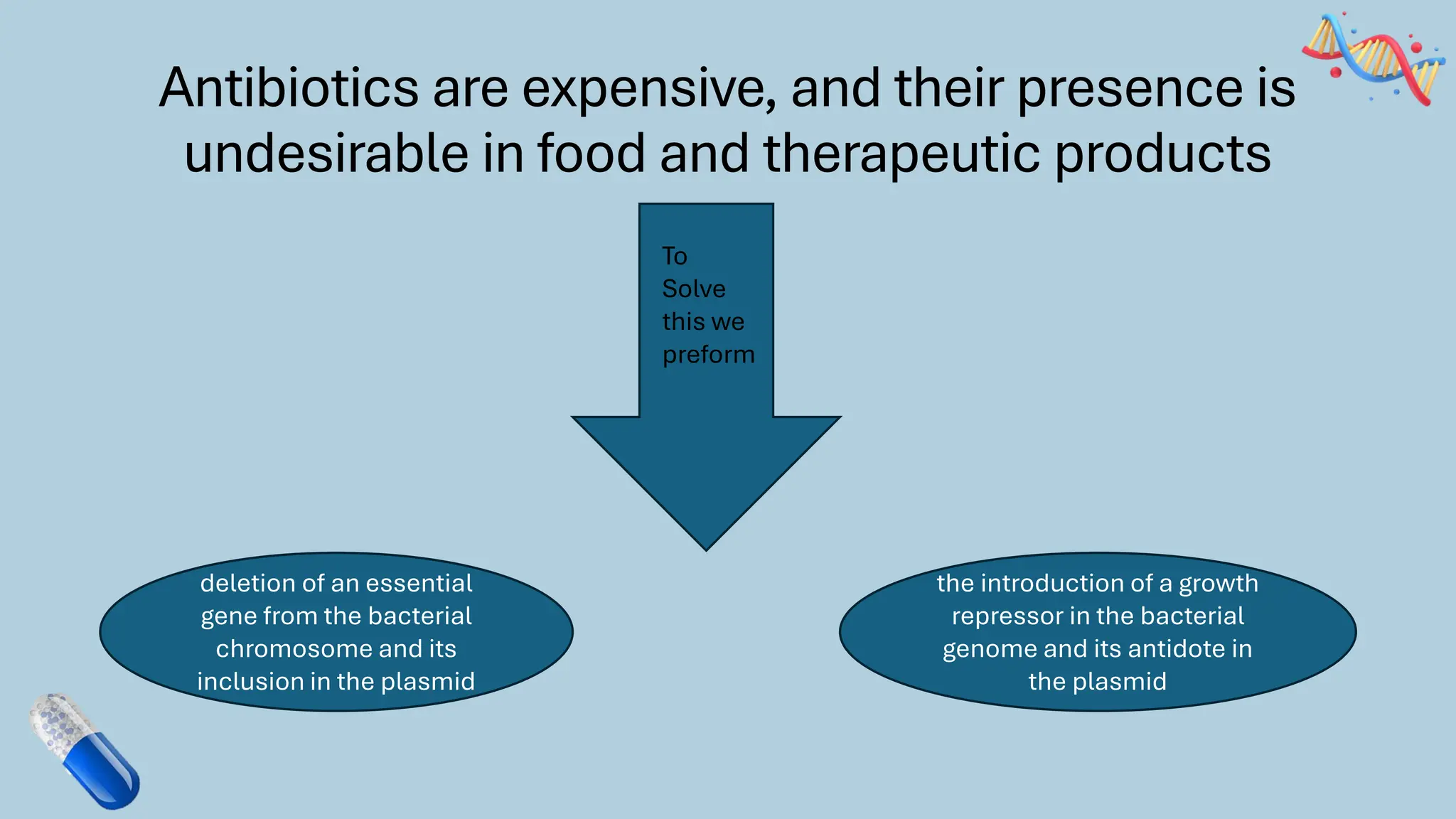
Antibiotics are expensive, and their presence is
undesirable in food and therapeutic products
deletion of an essential
gene from the bacterial
chromosome and its
inclusion in the plasmid
the introduction of a growth
repressor in the bacterial
genome and its antidote in
the plasmid
To
Solve
this we
preform
Problems associated with the production of
recombinant protein
Loss of expression
•Plasmid-Based Systems
•Chromosomal Integration
•Viral vectors
Problems associated with the production of
recombinant protein
Loss of expression
•Plasmid-Based Systems
•Chromosomal Integration
•Viral vectors
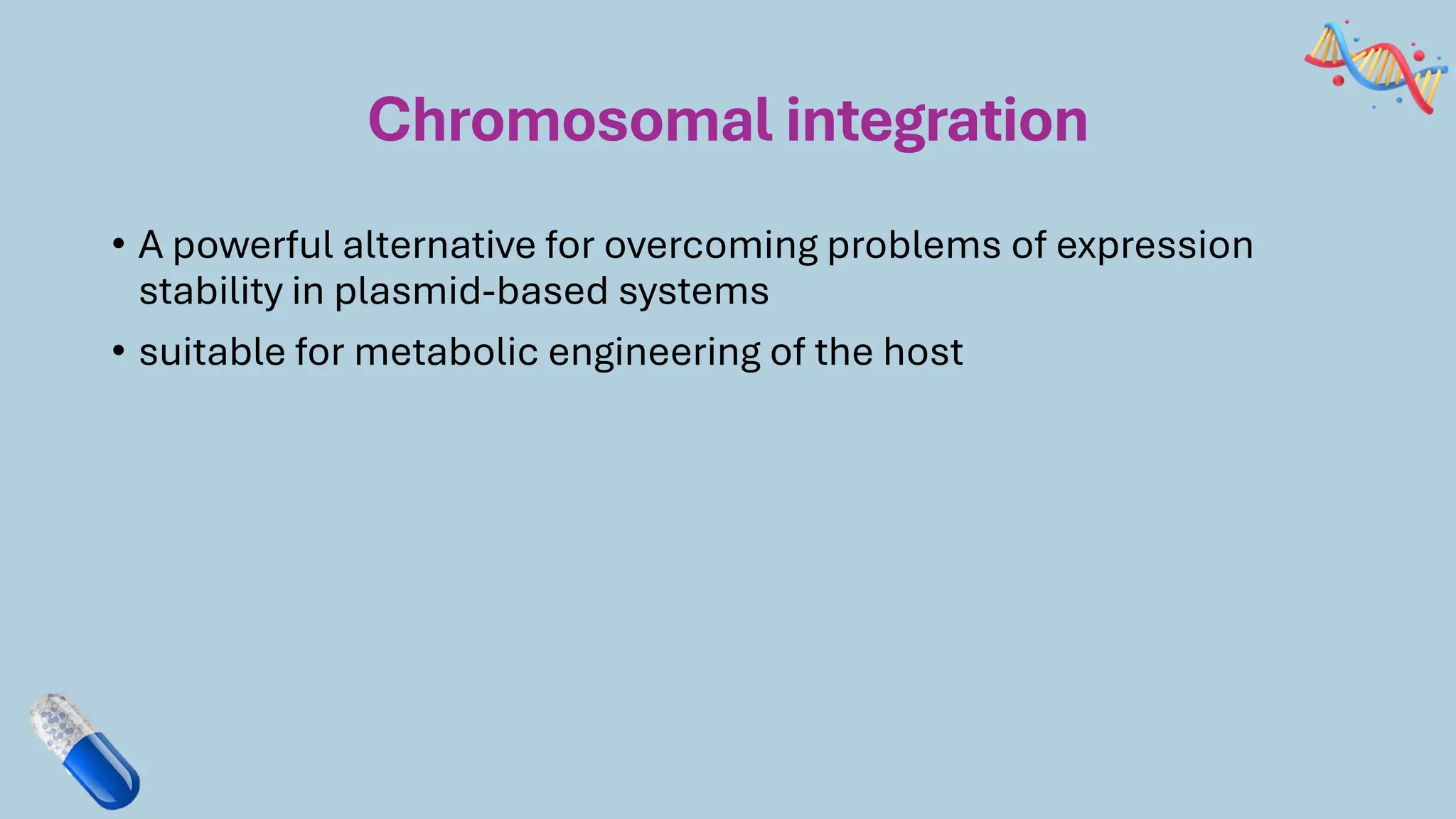
Chromosomal integration
• A powerful alternative for overcoming problems of expression
stability in plasmid-based systems
• suitable for metabolic engineering of the host
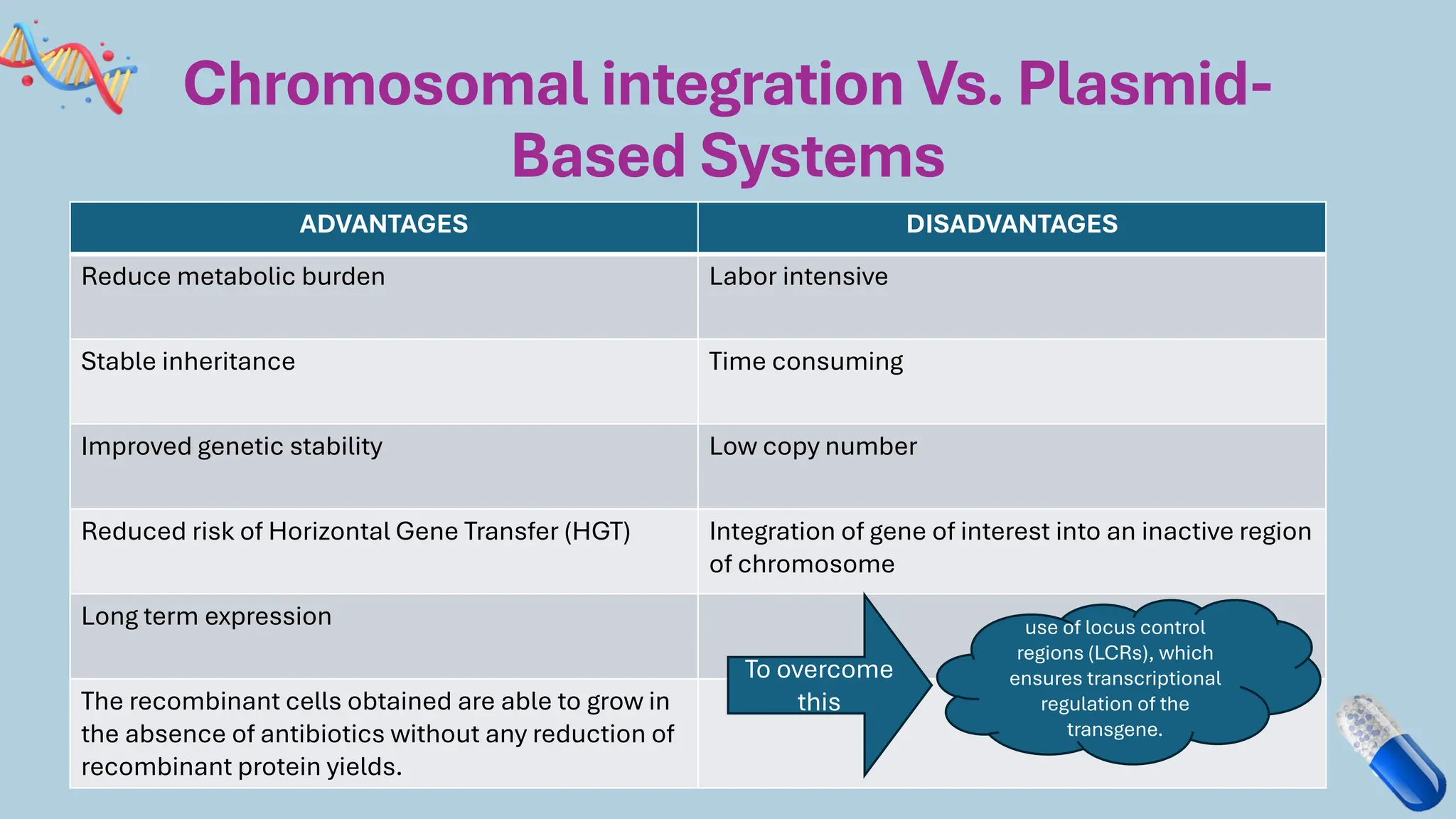
Chromosomal integration Vs. Plasmid-
Based Systems
ADVANTAGES DISADVANTAGES
Reduce metabolic burden Labor intensive
Stable inheritance Time consuming
Improved genetic stability Low copy number
Reduced risk of Horizontal Gene Transfer (HGT) Integration of gene of interest into an inactive region
of chromosome
Long term expression
The recombinant cells obtained are able to grow in
the absence of antibiotics without any reduction of
recombinant protein yields.
To overcome
this
use of locus control
regions (LCRs), which
ensures transcriptional
regulation of the
transgene.
Problems associated with the production of
recombinant protein
Loss of expression
•Plasmid-Based Systems
•Chromosomal Integration
•Viral vectors
Problems associated with the production of
recombinant protein
Loss of expression
•Plasmid-Based Systems
•Chromosomal Integration
•Viral vectors
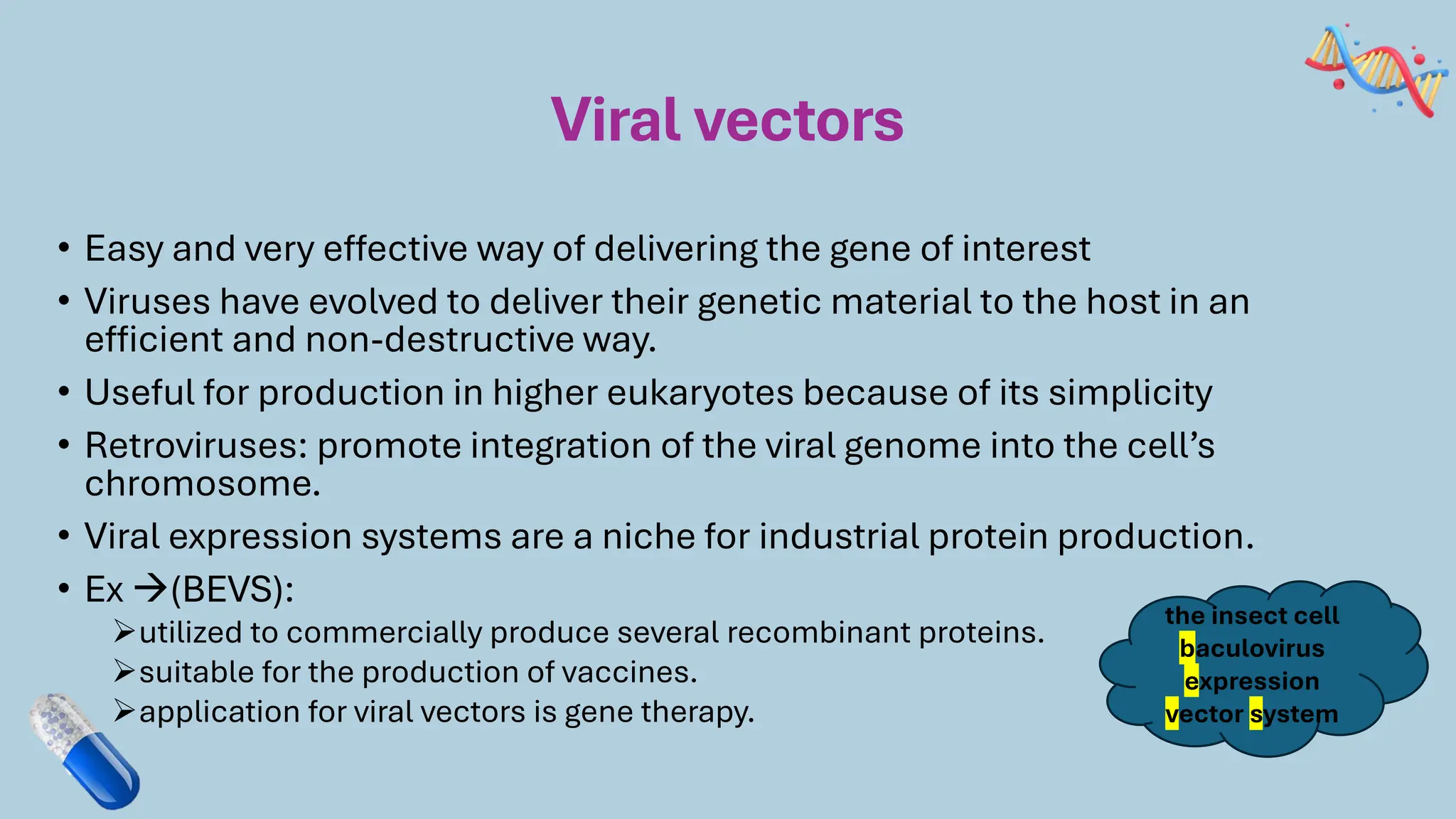
Viral vectors
• Easy and very effective way of delivering the gene of interest
• Viruses have evolved to deliver their genetic material to the host in an
efficient and non-destructive way.
• Useful for production in higher eukaryotes because of its simplicity
• Retroviruses: promote integration of the viral genome into the cell’s
chromosome.
• Viral expression systems are a niche for industrial protein production.
• Ex →(BEVS):
➢utilized to commercially produce several recombinant proteins.
➢suitable for the production of vaccines.
➢application for viral vectors is gene therapy.
the insect cell
baculovirus
expression
vector system
Viral vectors
• transient expression:
➢ refers to the temporary expression of genes in the host organism for a
limited duration
➢Allow rapid production of proteins or other gene products without the
need for stable integration into the host organism
➢utilized for rapidly generating sufficient amounts of protein for laboratory-
scale applications or preliminary testing of drug candidates
Once a promising molecule is identified, a stable cell line can be generated
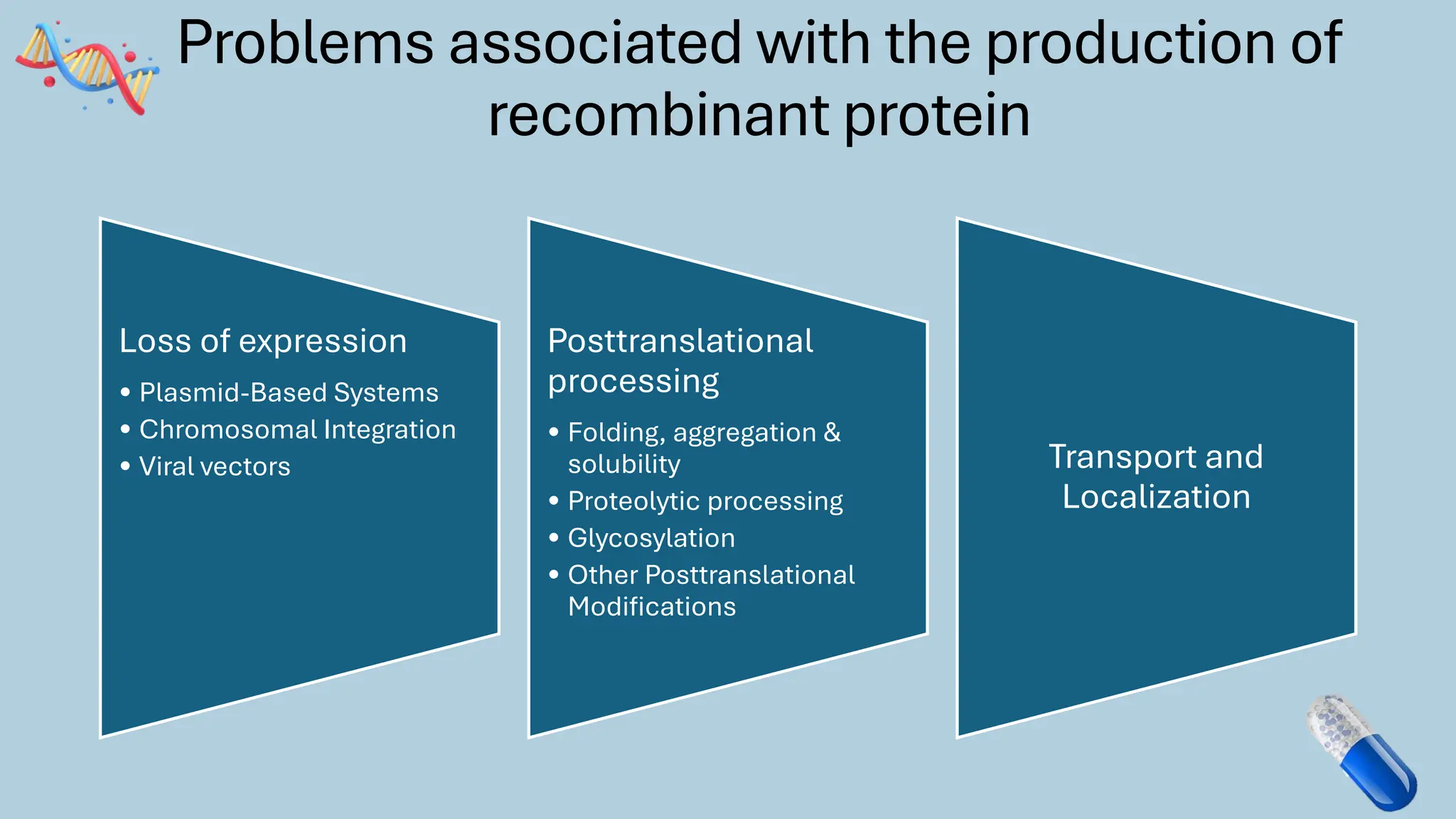
Problems associated with the production of
recombinant protein
Loss of expression
•Plasmid-Based Systems
•Chromosomal Integration
•Viral vectors
Problems associated with the production of
recombinant protein
Loss of expression
• Plasmid-Based Systems
• Chromosomal Integration
• Viral vectors
Posttranslational
processing
• Folding, aggregation &
solubility
• Proteolytic processing
• Glycosylation
• Other Posttranslational
Modifications
Transport and
Localization
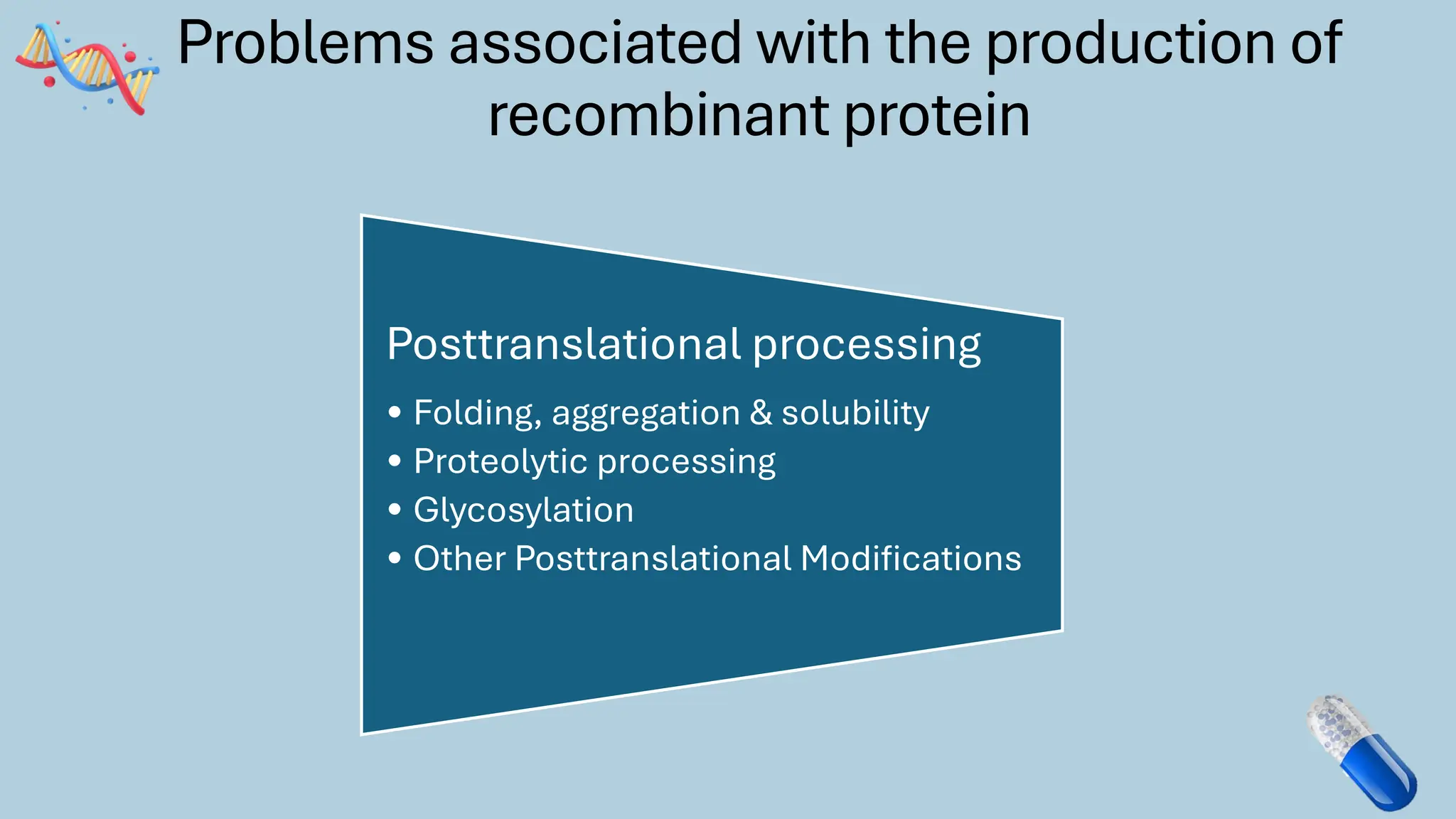
Problems associated with the production of
recombinant protein
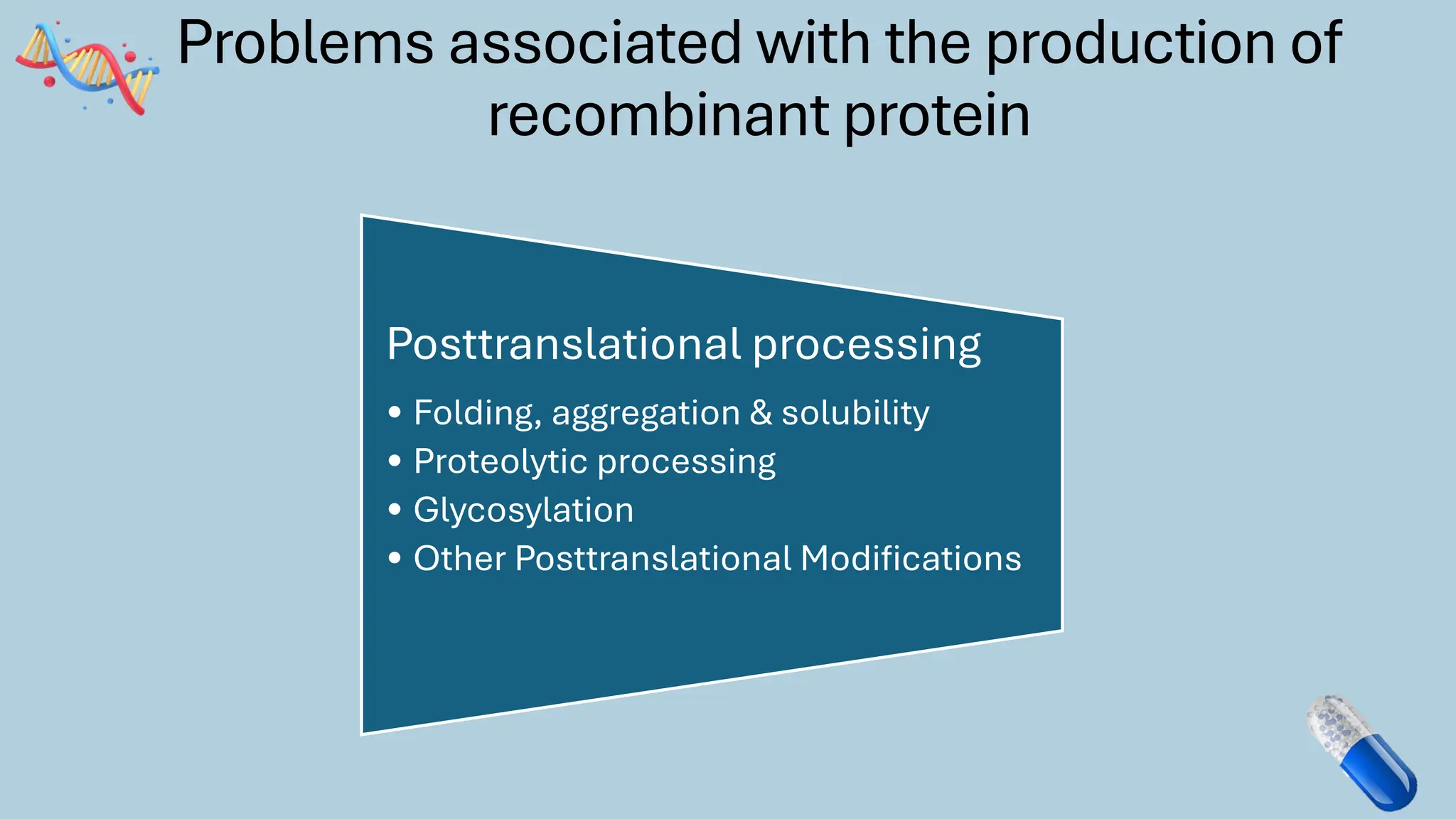
Posttranslational processing
• Folding, aggregation & solubility
• Proteolytic processing
• Glycosylation
• Other Posttranslational Modifications
Post-Translational Modifications
(PTM)
the extent of modification depends on the host utilized, being the
modifications performed by higher eukaryotic cells closer to
those found in human proteins
Folding, aggregation and solubility
Foldases Chaperons
Key player molecules of
folding
Inclusion bodies → misfolded
proteins that accumulate in
intracellular aggregates
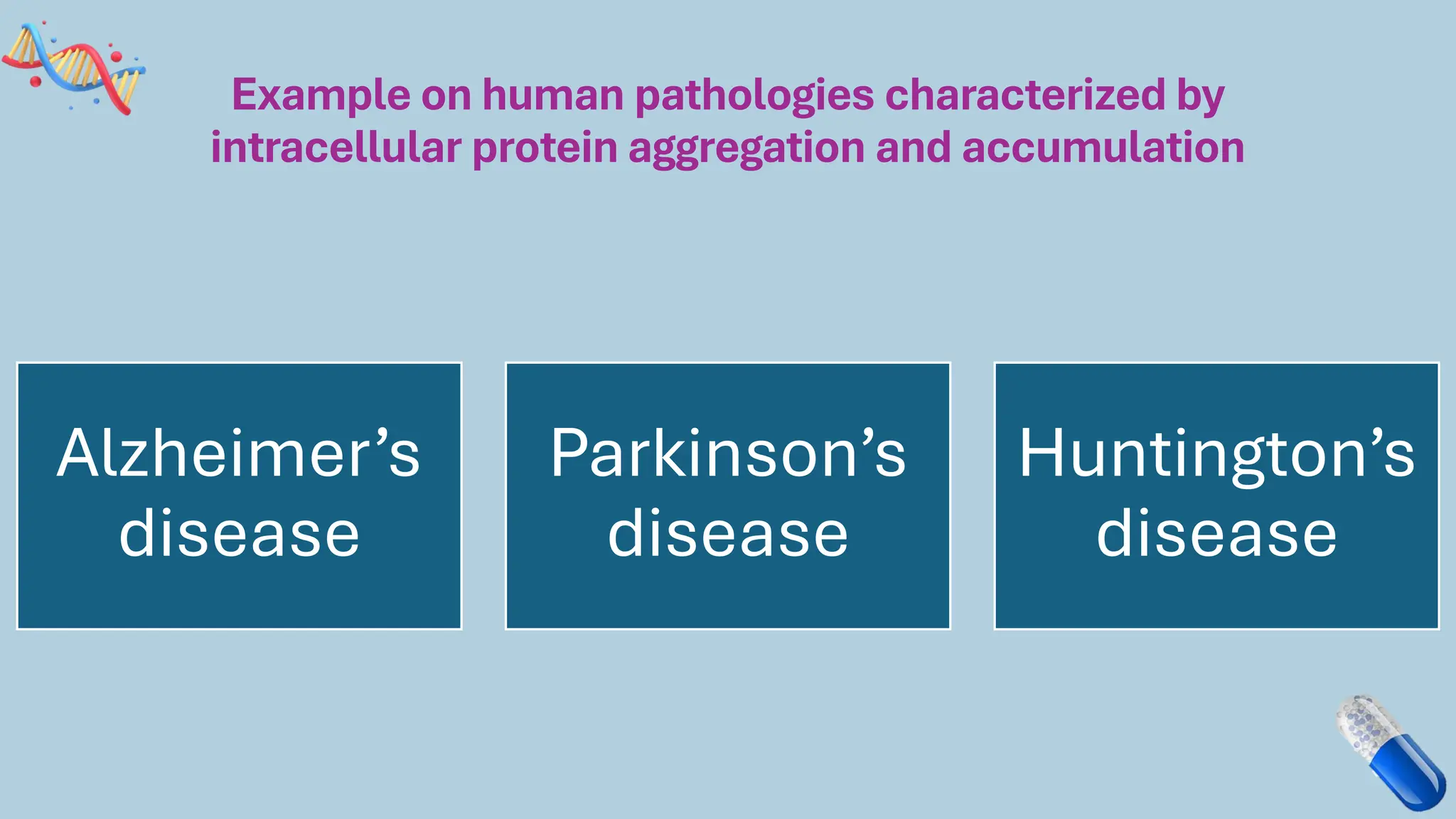
Example on human pathologies characterized by
intracellular protein aggregation and accumulation
Alzheimer’s
disease
Parkinson’s
disease
Huntington’s
disease
Folding, aggregation and solubility
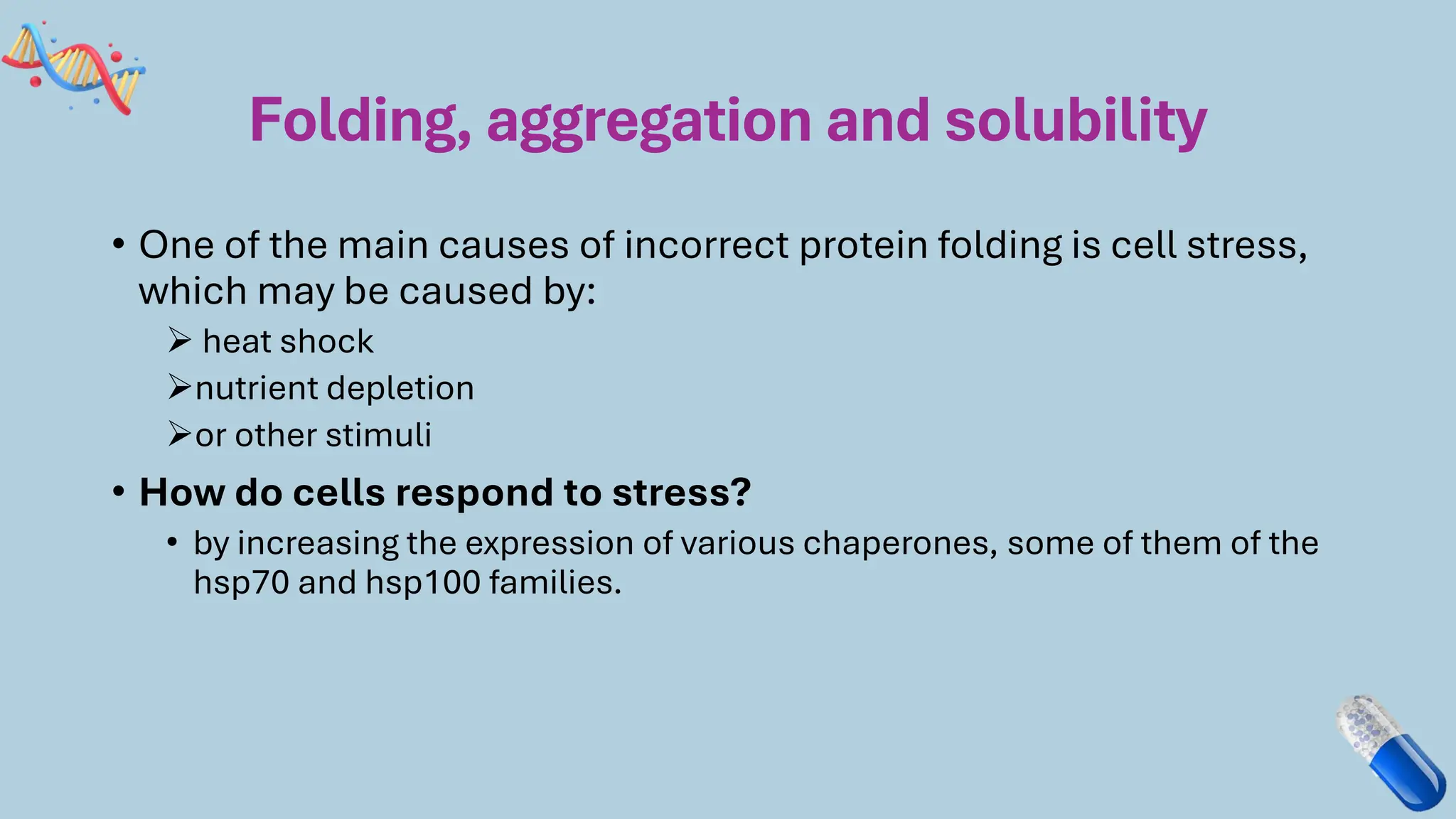
• One of the main causes of incorrect protein folding is cell stress,
which may be caused by:
➢ heat shock
➢nutrient depletion
➢or other stimuli
• How do cells respond to stress?
• by increasing the expression of various chaperones, some of them of the
hsp70 and hsp100 families.
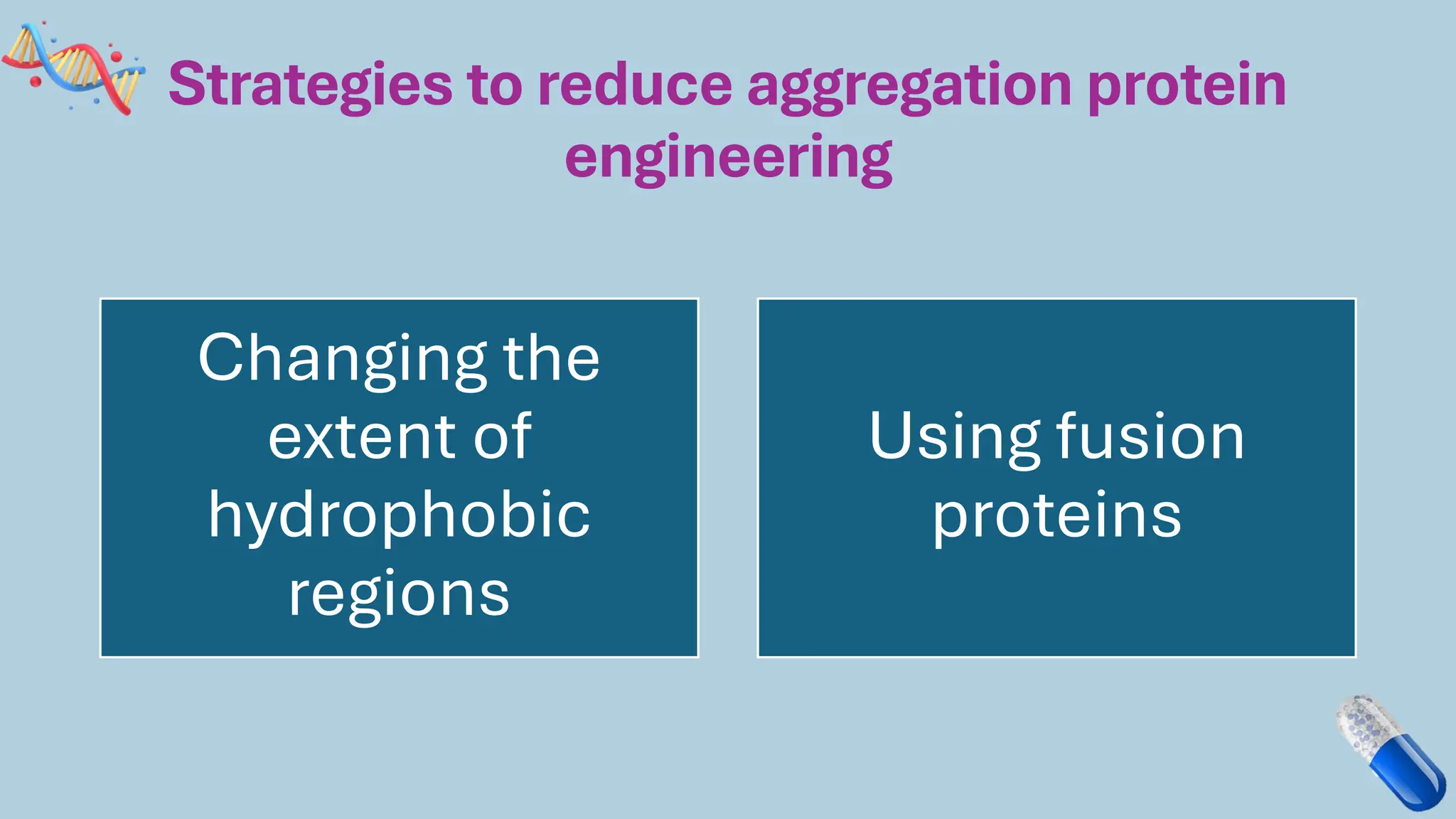
Strategies to reduce aggregation protein
engineering
Changing the
extent of
hydrophobic
regions
Using fusion
proteins
Strategies to reduce aggregation protein
engineering
Using fusion
proteins
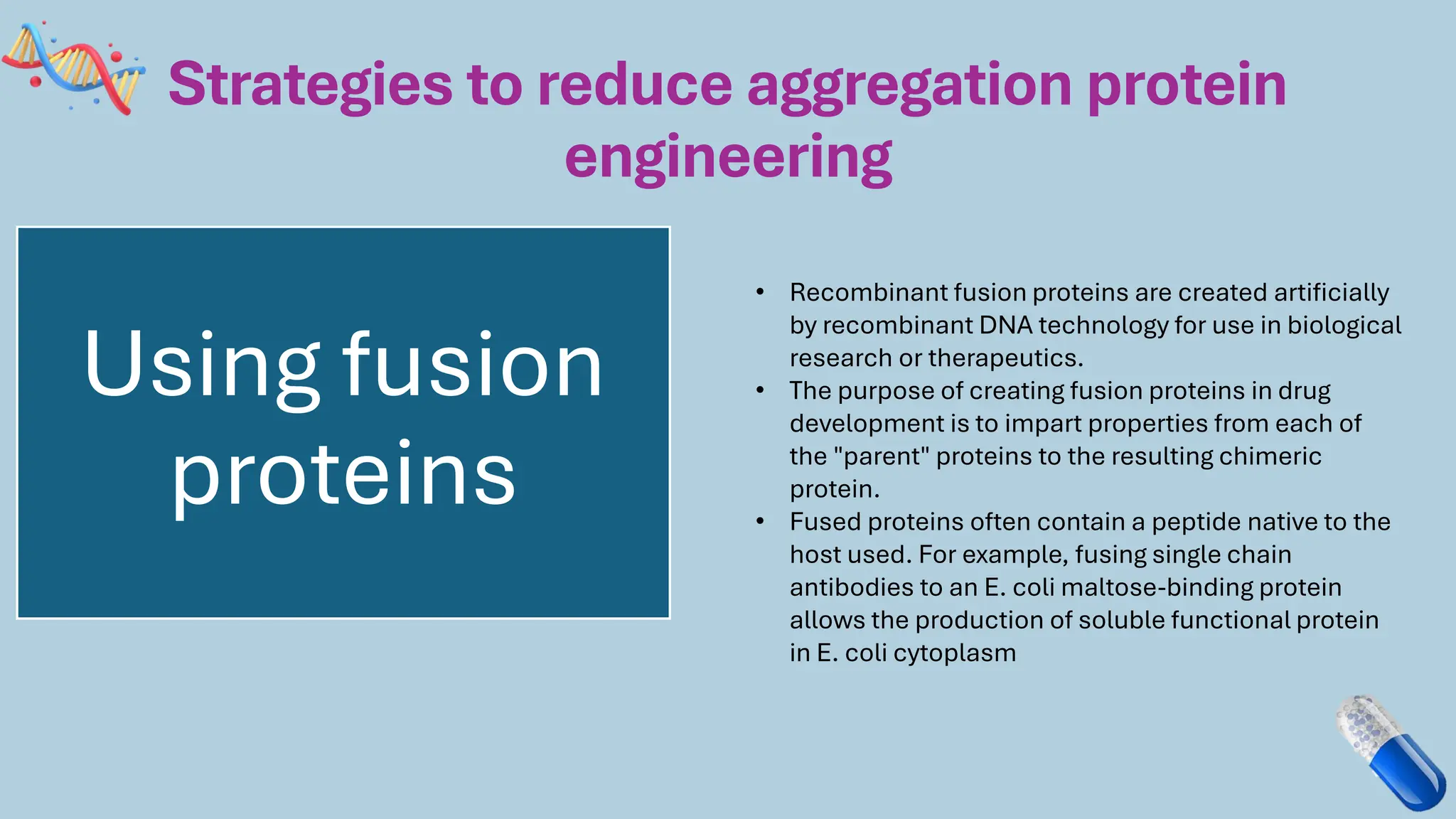
• Recombinant fusion proteins are created artificially
by recombinant DNA technology for use in biological
research or therapeutics.
• The purpose of creating fusion proteins in drug
development is to impart properties from each of
the "parent" proteins to the resulting chimeric
protein.
• Fused proteins often contain a peptide native to the
host used. For example, fusing single chain
antibodies to an E. coli maltose-binding protein
allows the production of soluble functional protein
in E. coli cytoplasm
Problems associated with the production of
recombinant protein
Posttranslational processing
• Folding, aggregation & solubility
• Proteolytic processing
• Glycosylation
• Other Posttranslational Modifications
Problems associated with the production of
recombinant protein
Posttranslational processing
• Folding, aggregation & solubility
• Proteolytic processing
• Glycosylation
• Other Posttranslational Modifications
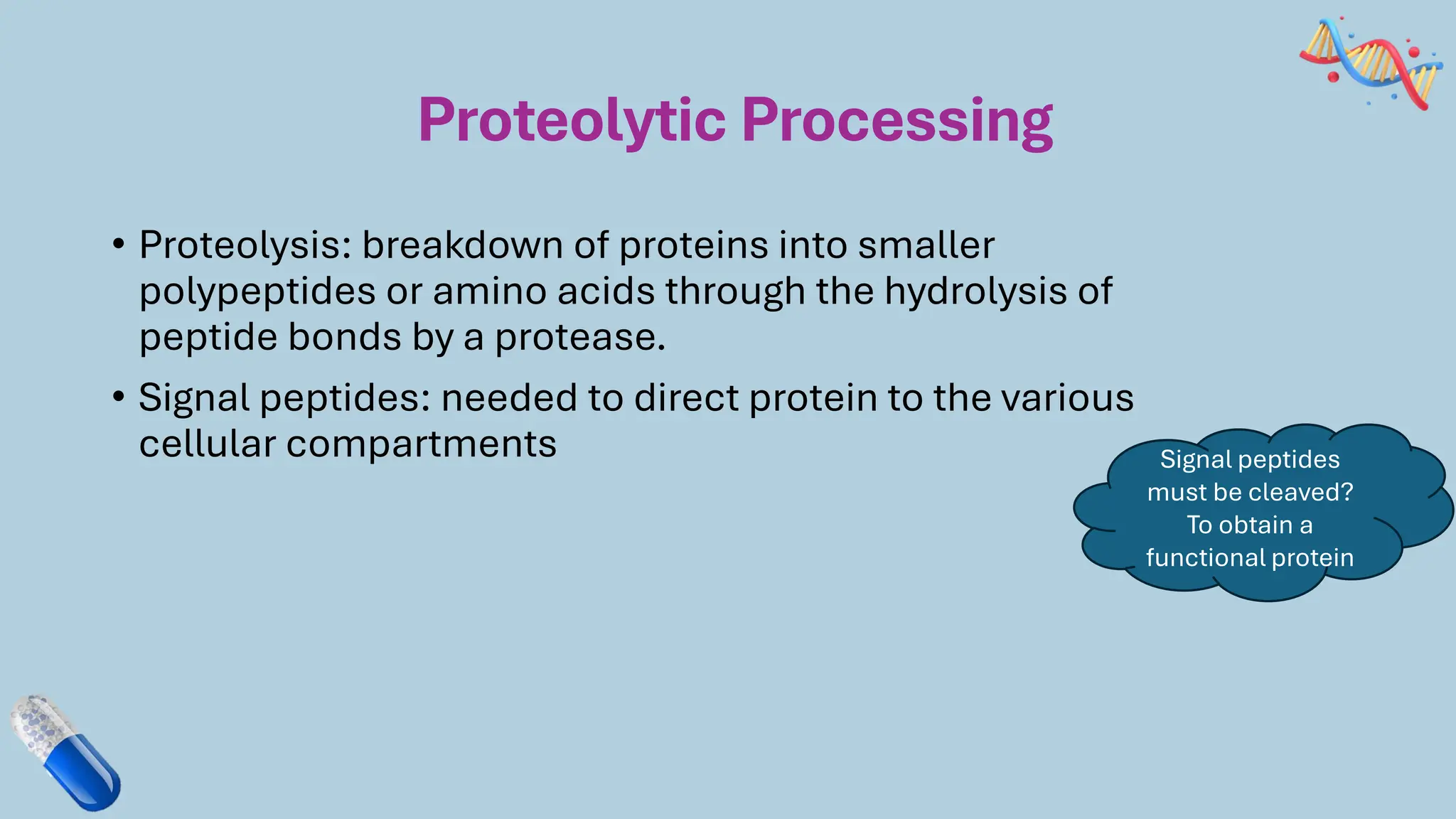
Proteolytic Processing
• Proteolysis: breakdown of proteins into smaller
polypeptides or amino acids through the hydrolysis of
peptide bonds by a protease.
• Signal peptides: needed to direct protein to the various
cellular compartments Signal peptides
must be cleaved?
To obtain a
functional protein
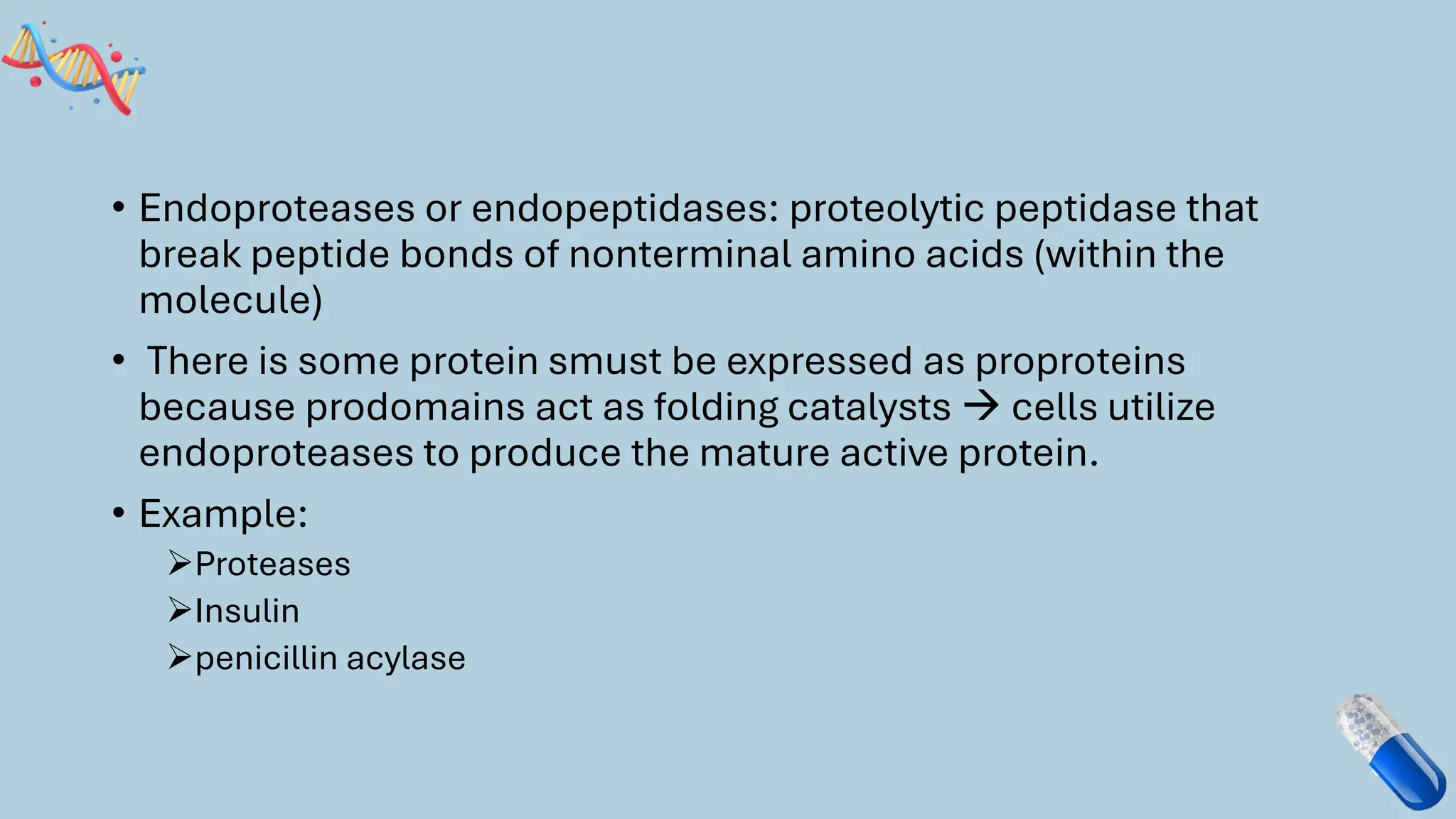
• Endoproteases or endopeptidases: proteolytic peptidase that
break peptide bonds of nonterminal amino acids (within the
molecule)
• There is some protein smust be expressed as proproteins
because prodomains act as folding catalysts → cells utilize
endoproteases to produce the mature active protein.
• Example:
➢Proteases
➢Insulin
➢penicillin acylase
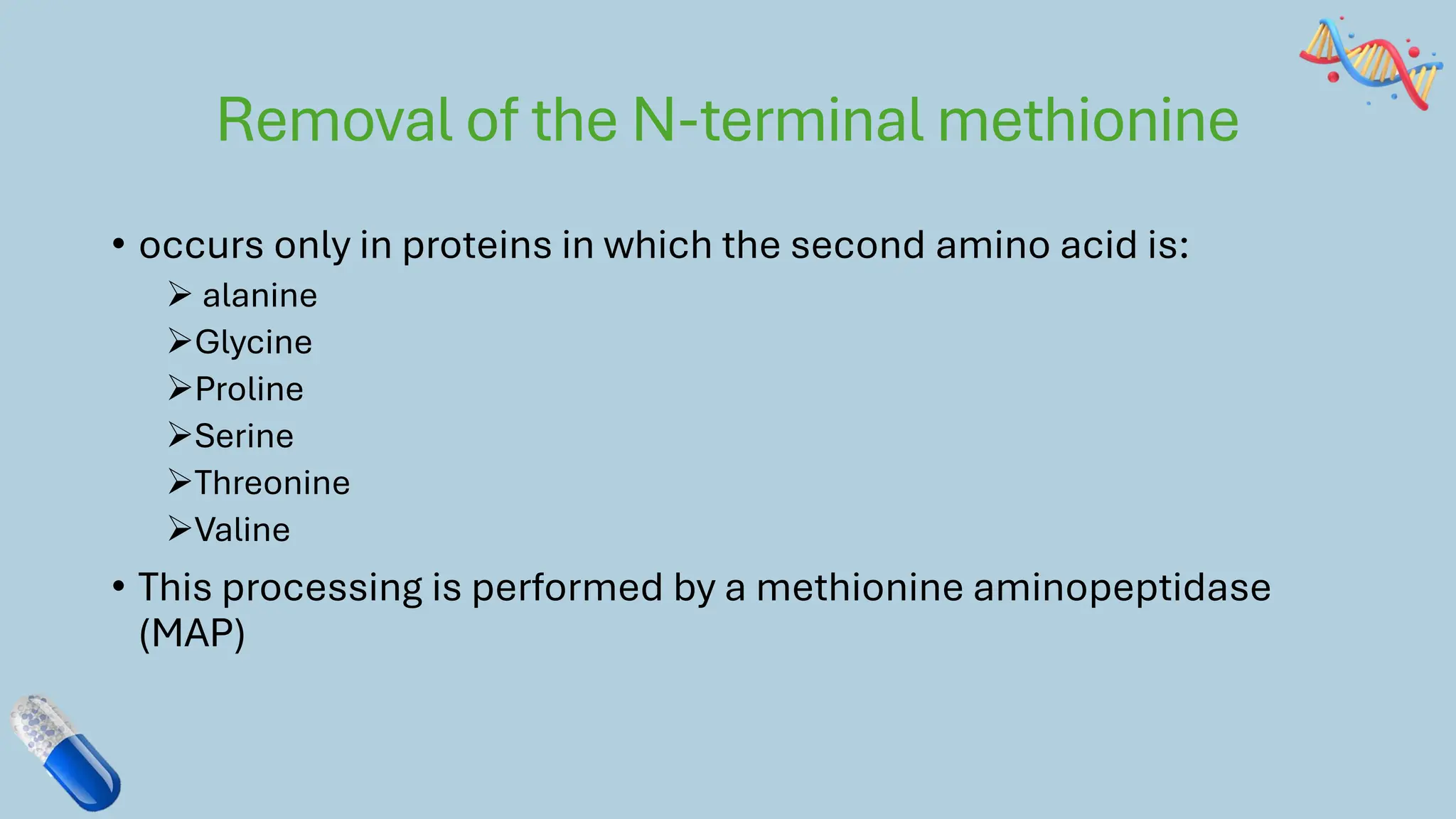
Removal of the N-terminal methionine
• occurs only in proteins in which the second amino acid is:
➢ alanine
➢Glycine
➢Proline
➢Serine
➢Threonine
➢Valine
• This processing is performed by a methionine aminopeptidase
(MAP)
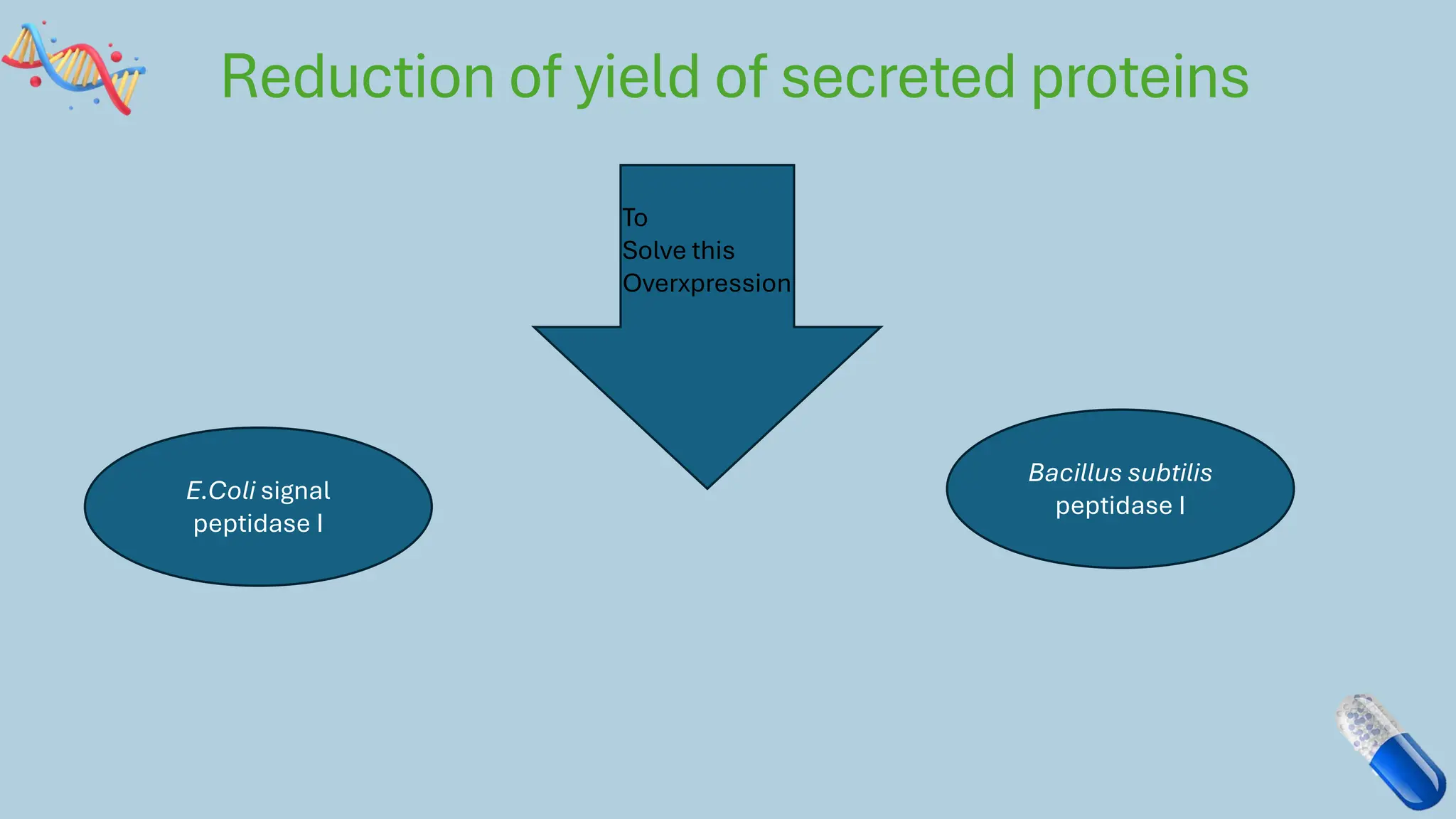
Reduction of yield of secreted proteins
To
Solve this
Overxpression
E.Coli signal
peptidase I
Bacillus subtilis
peptidase I
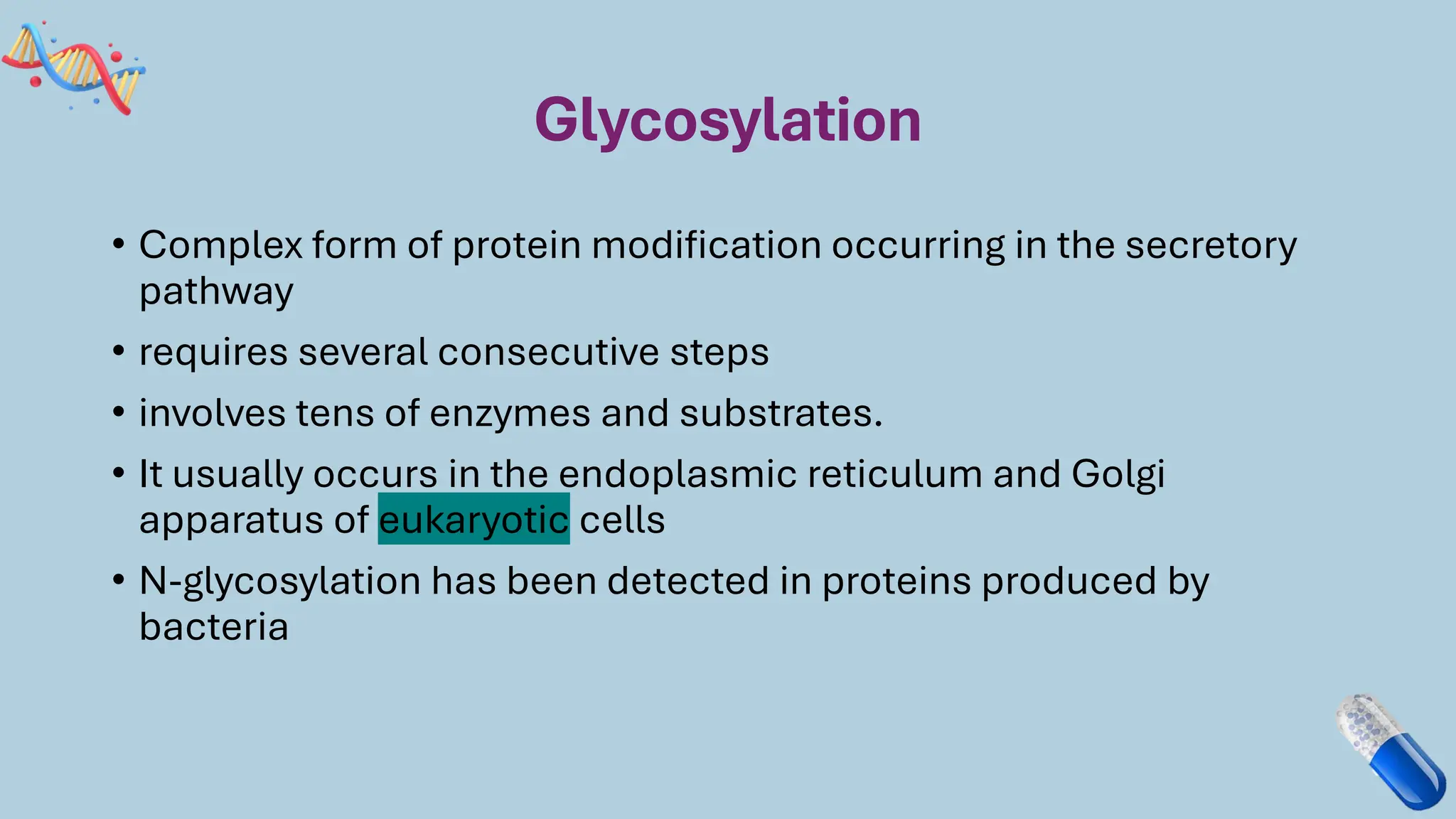
Glycosylation
• Complex form of protein modification occurring in the secretory
pathway
• requires several consecutive steps
• involves tens of enzymes and substrates.
• It usually occurs in the endoplasmic reticulum and Golgi
apparatus of eukaryotic cells
• N-glycosylation has been detected in proteins produced by
bacteria
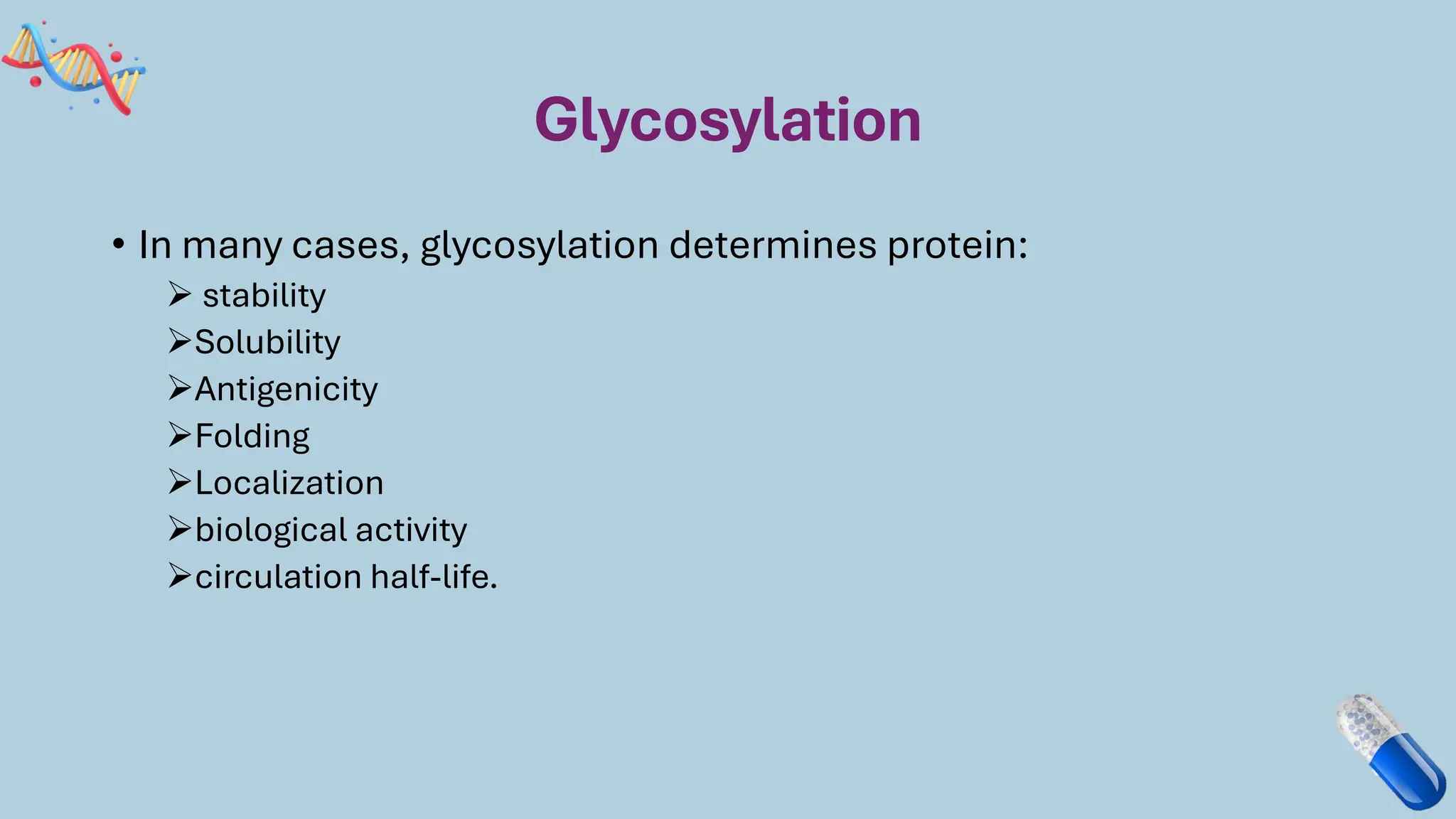
Glycosylation
• In many cases, glycosylation determines protein:
➢ stability
➢Solubility
➢Antigenicity
➢Folding
➢Localization
➢biological activity
➢circulation half-life.
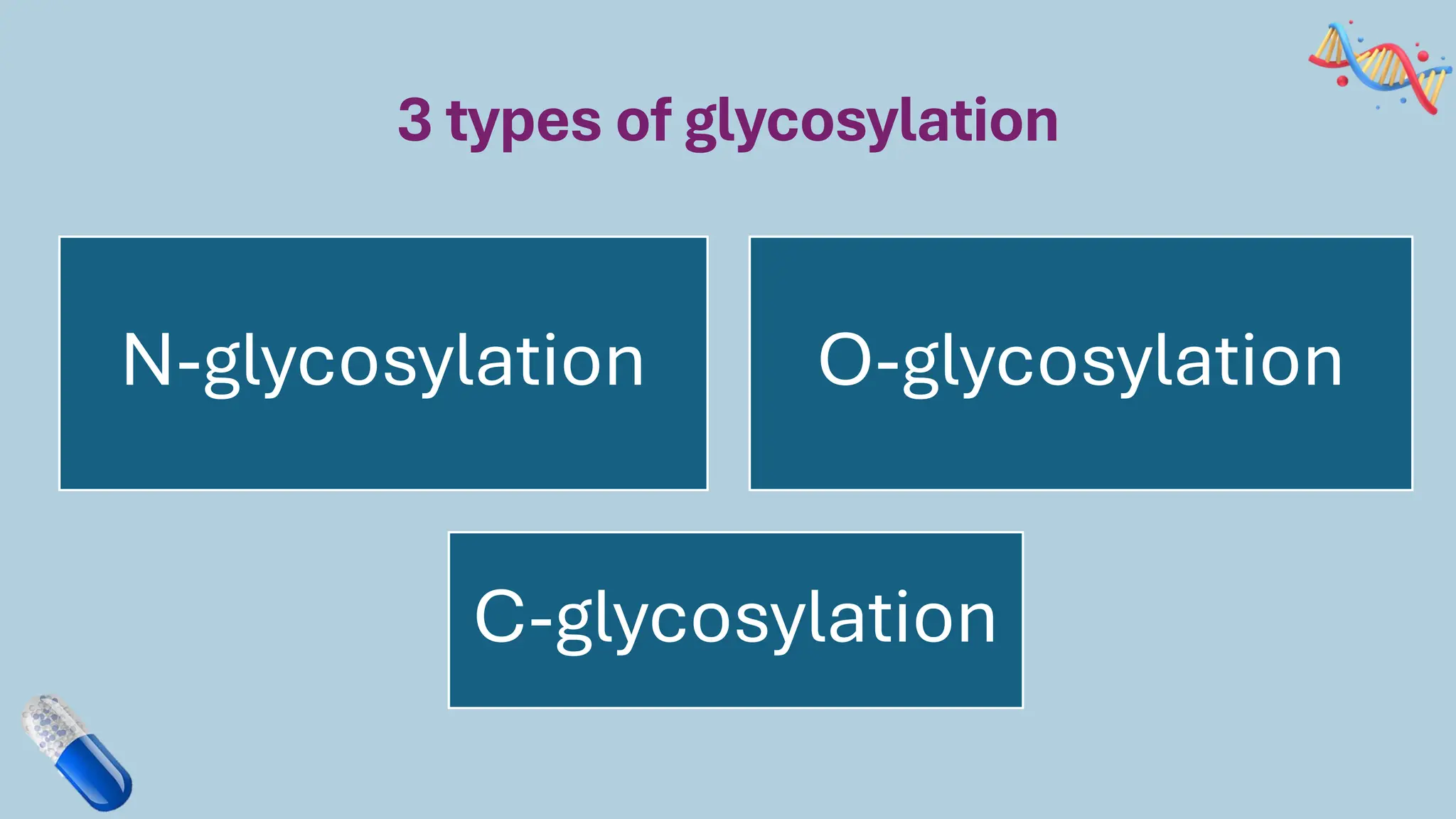
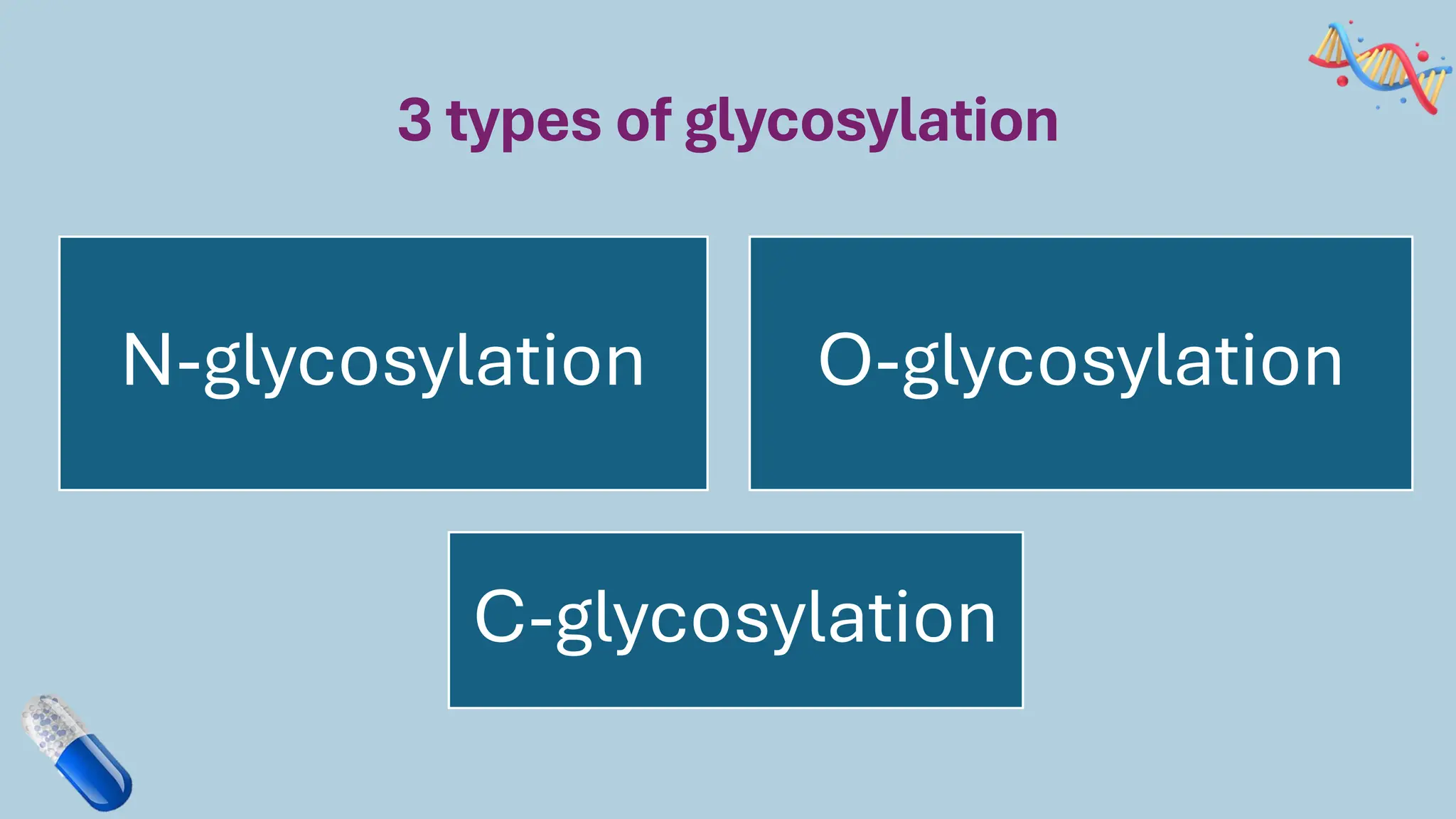
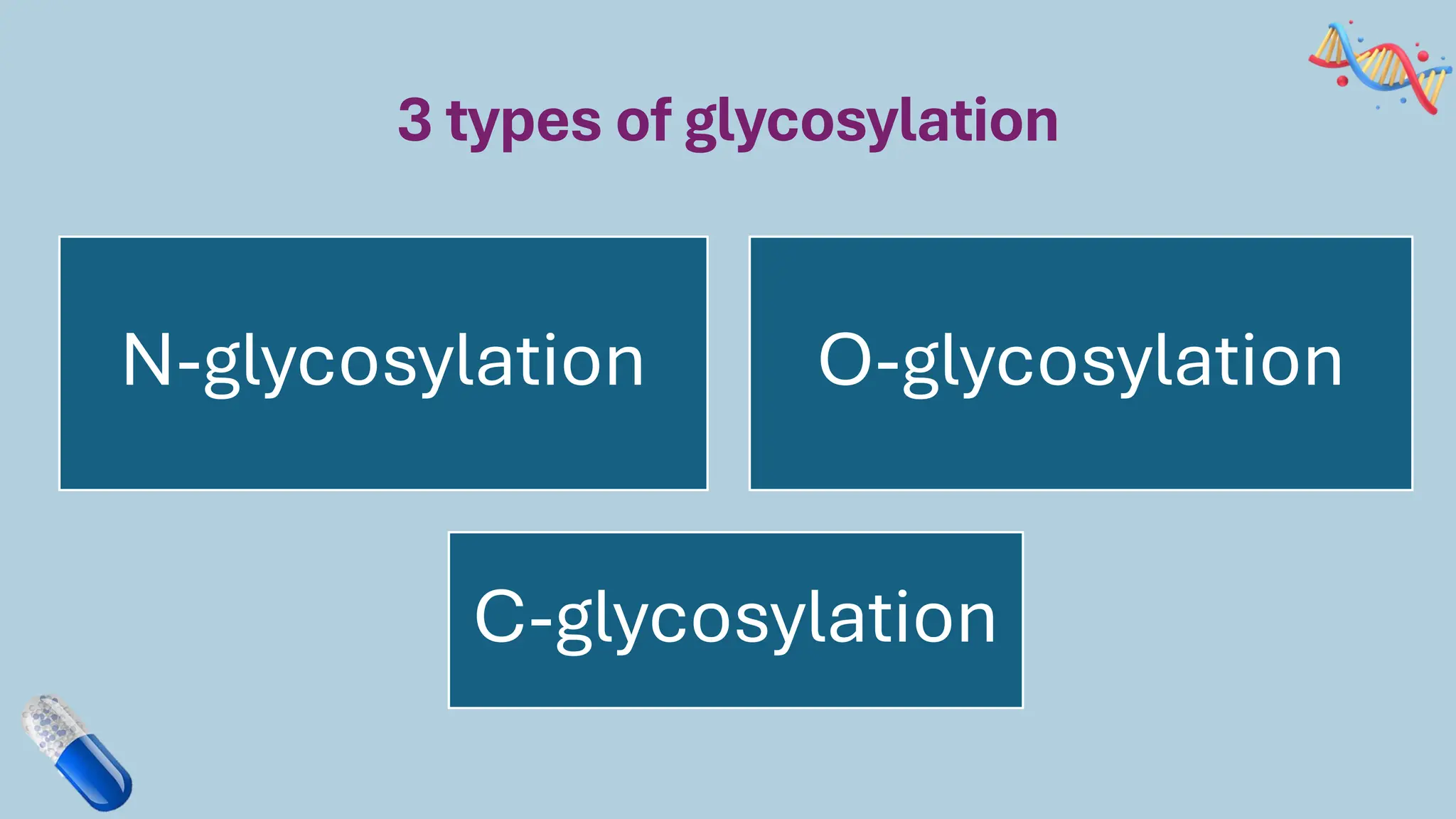
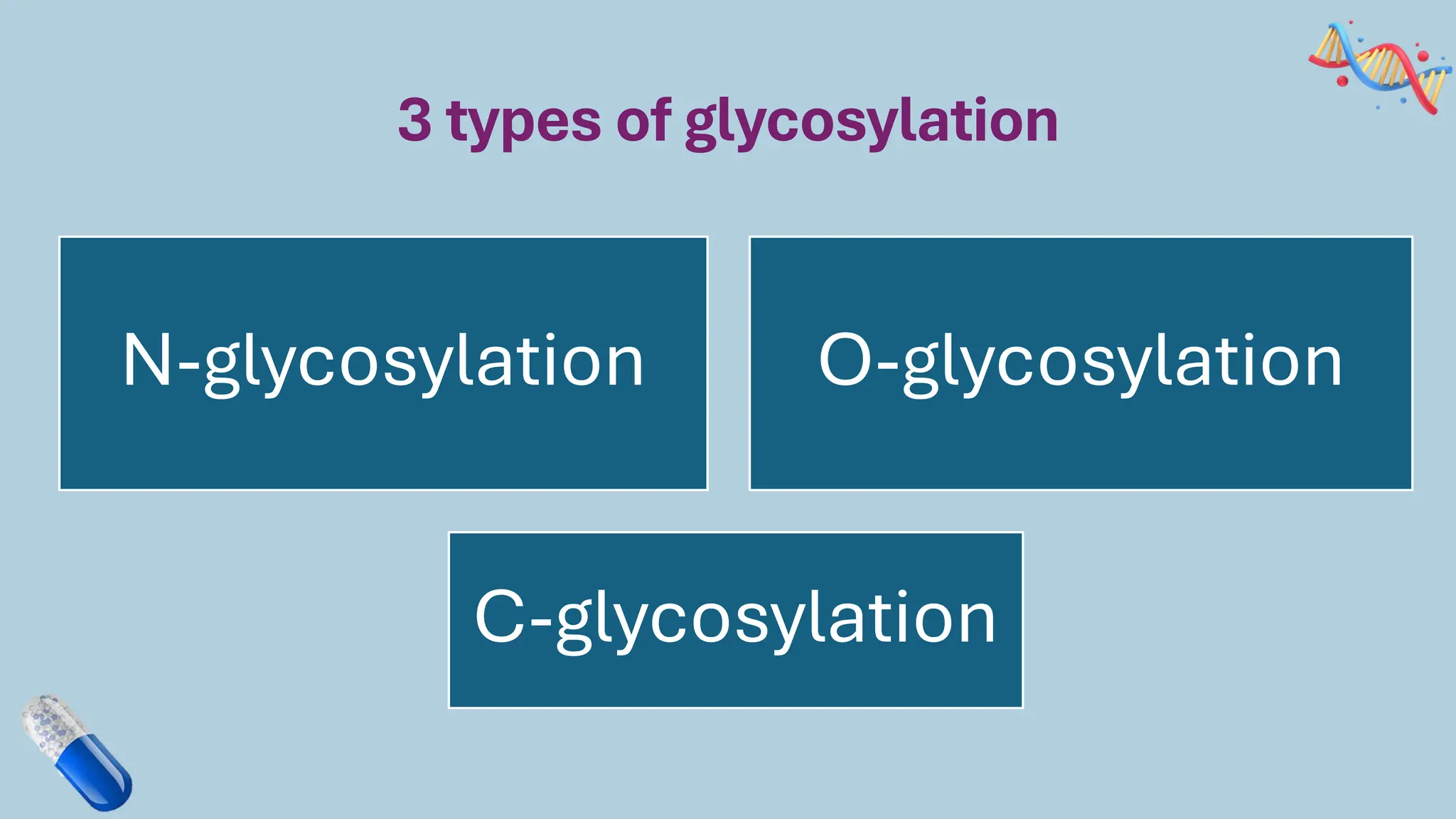
3 types of glycosylation
N-glycosylation O-glycosylation
C-glycosylation
3 types of glycosylation
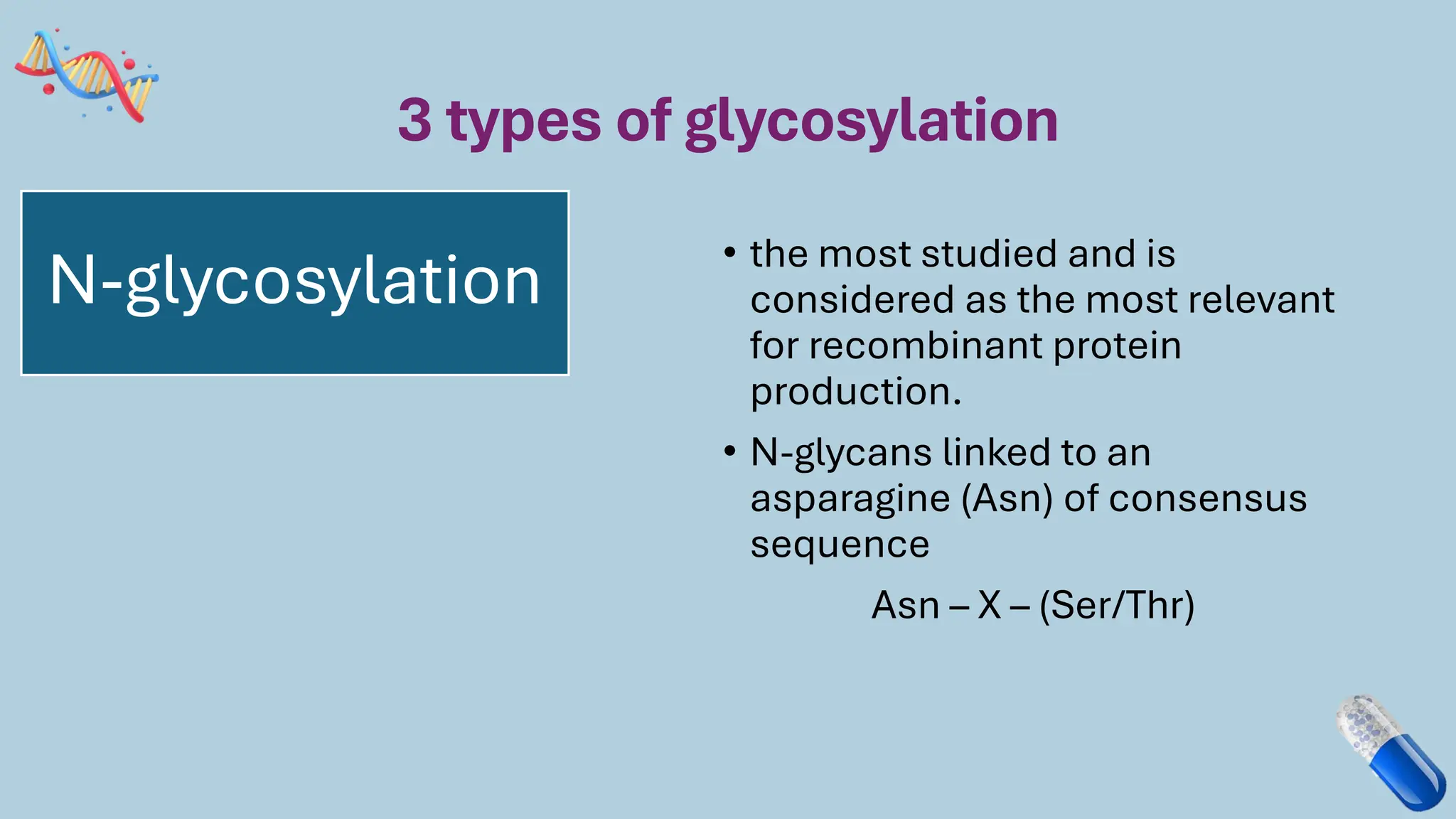
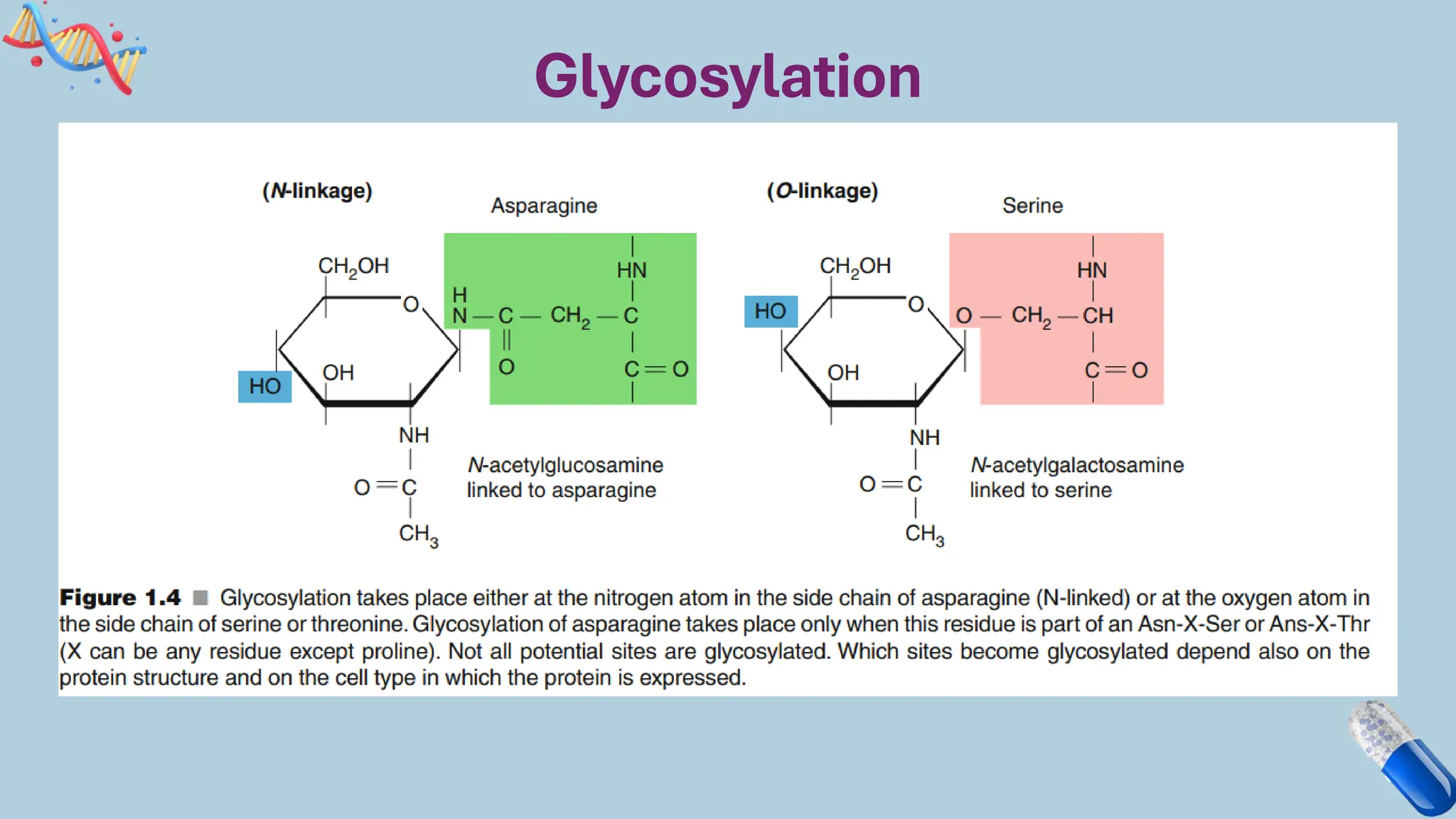
• the most studied and is
considered as the most relevant
for recombinant protein
production.
• N-glycans linked to an
asparagine (Asn) of consensus
sequence
Asn – X – (Ser/Thr)
N-glycosylation
3 types of glycosylation
N-glycosylation O-glycosylation
C-glycosylation
3 types of glycosylation
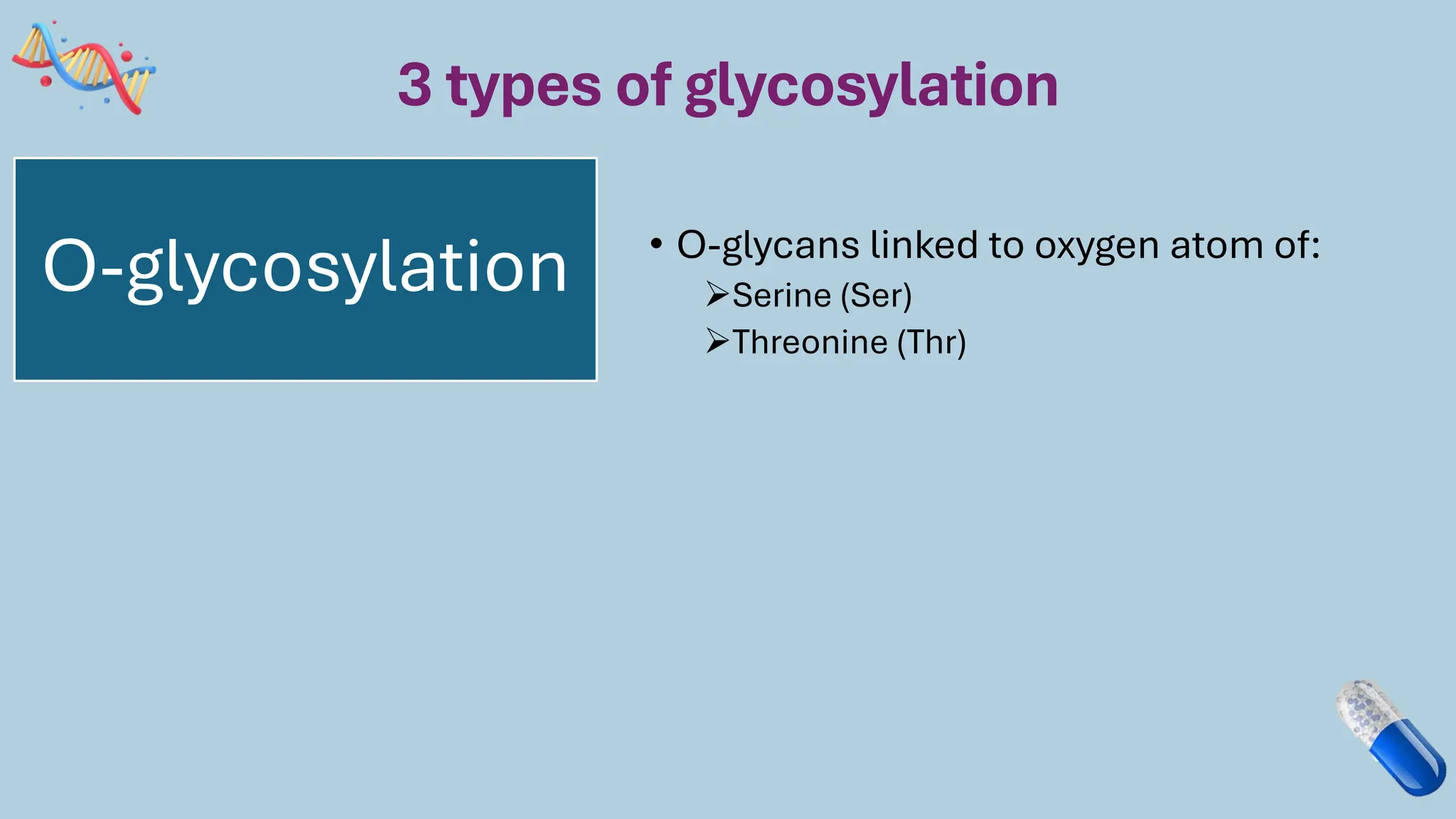
• O-glycans linked to oxygen atom of:
➢Serine (Ser)
➢Threonine (Thr)
O-glycosylation
3 types of glycosylation
N-glycosylation O-glycosylation
C-glycosylation
3 types of glycosylation
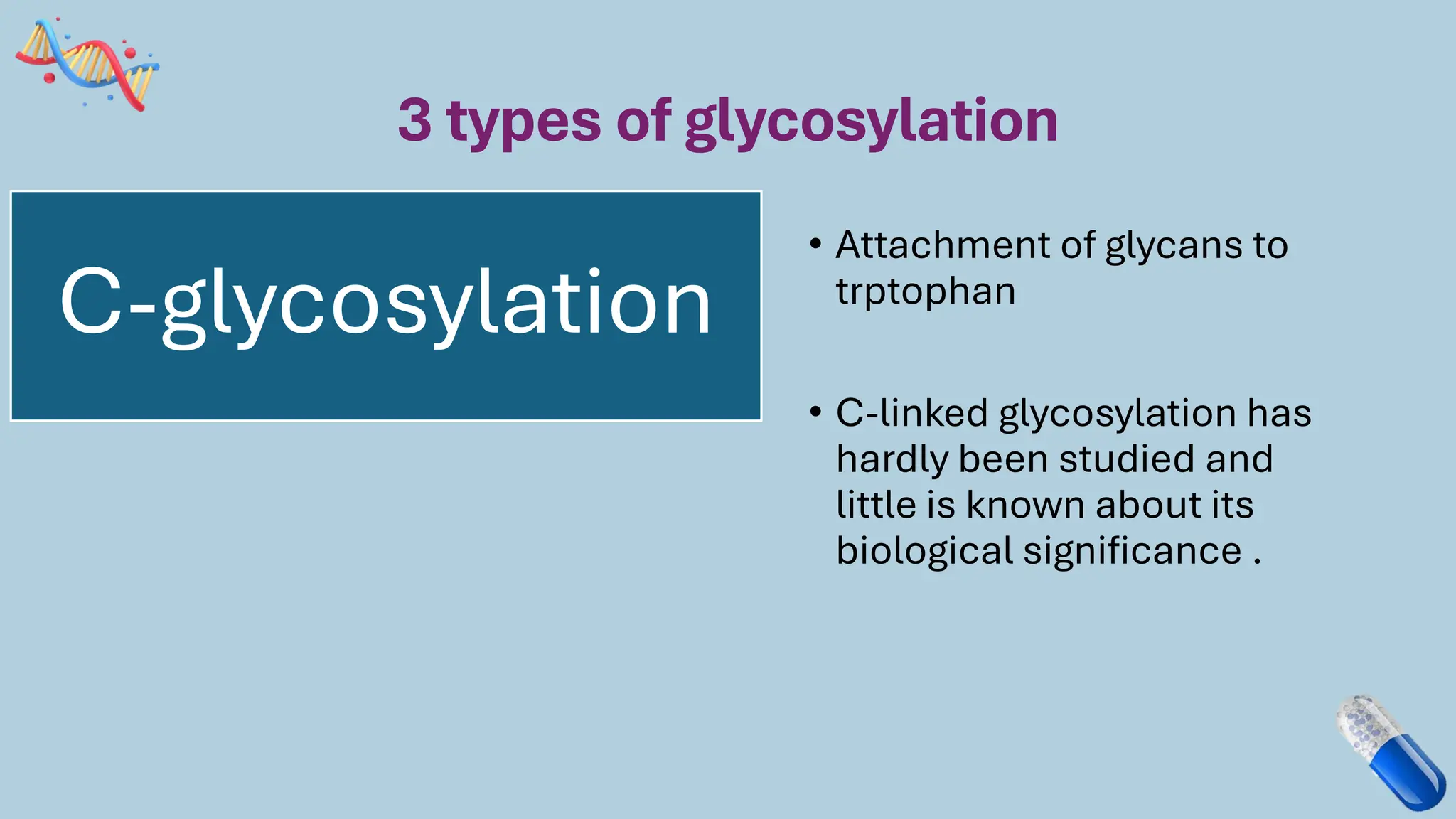
• Attachment of glycans to
trptophan
• C-linked glycosylation has
hardly been studied and
little is known about its
biological significance .
C-glycosylation
3 types of glycosylation
N-glycosylation O-glycosylation
C-glycosylation
Glycosylation
Glycosylation
• Glycosylation profiles are protein-, tissue-, and animal specific .
Nonauthentic glycosylation → may trigger immune responses
when present in proteins for human or animal use.
• Therefore, authentic glycosylation is especially relevant for
recombinant proteins to be utilized as drugs.
Problems associated with the production of
recombinant protein
Loss of expression
• Plasmid-Based Systems
• Chromosomal Integration
• Viral vectors
Posttranslational
processing
• Folding, aggregation &
solubility
• Proteolytic processing
• Glycosylation
• Other Posttranslational
Modifications
Transport and
Localization
• https://www.ncbi.nlm.nih.gov/pmc/articles/PMC316774/
• Proteolytic Post-translational Modification of Proteins: Proteomic
Tools and Methodology - PMC (nih.gov)

Problems associated with the production of recombinant protein.pdf

  • 1.
    Problems associated withthe production of recombinant protein
  • 2.
  • 3.
  • 4.
  • 5.
  • 6.
  • 7.
  • 8.
    1 Determining DNA, RNA, andprotein sequence 3 2 Cloning of correct gene into the expression vector Transformation of vector into host cell and expression
  • 9.
    Prokaryotic cells Eukaryoticcells Easy to: ➢ Grow ➢ Genetically manipulated Not all genes are able to be expressed in prokaryotic cells Antibiotic resistance genes for increased selectivity of transformed bacteria Has all necessary promoters and terminators in gDNA already Lack of before and after translation protein modification pathways for correct protein manufacturing
  • 11.
    Problems associated withthe production of recombinant protein Loss of expression • Plasmid-Based Systems • Chromosomal Integration • Viral vectors Posttranslational processing • Folding, aggregation & solubility • Proteolytic processing • Glycosylation • Other Posttranslational Modifications Transport and Localization
  • 12.
    Problems associated withthe production of recombinant protein Loss of expression •Plasmid-Based Systems •Chromosomal Integration •Viral vectors
  • 13.
    G.R: Loss ofexpression? • expression can be lost due to: ➢structural changes in the recombinant gene ➢disappearance of the gene from host cells Gene of interest In Plasmid delivered by a virus integrated into the host’s chromosome
  • 14.
    Plasmid-Based Systems • Plasmid: ➢extra-chromosomalself-replicating cytoplasmic DNA elements ➢found in prokaryotes and eukaryotes. ➢Used as molecular vehicles for recombinant genes ➢most popular choice when using prokaryotes as hosts? ▪ as genetic manipulation of plasmids is easy
  • 15.
    Formation of asingle dimeric circle with 2 ori • As plasmid copies have the same sequence, they can recombine and form a single dimeric circle with two origins of replication. This results in fewer independent units to be segregated between daughter cells, and consequently plasmid loss can increase
  • 16.
    Plasmid segregational instability Plasmidloss is the main cause of reduced recombinant protein productivity in plasmid-based systems
  • 17.
    Metabolic load andplasmid • the size of the insert • temperature, • expression level ➢Constitutive gene expression may increase plasmid instability because the metabolic load of recombinant protein production is constantly present. • recombinant protein yield • toxicity of the expressed protein toward the host
  • 18.
    Gene dosage • refersto the number of copies of a specific gene present within an organism's genome • Gene dosage is higher than when the recombinant gene is integrated into the host’s chromosome • Medium to high copy number plasmids: ➢Relaxed replication ➢Random distribution ➢Relatively low loss: Continuously growing and toxic genes/gene products will lead to plasmid loss.
  • 19.
    How to increasegene dosage in E.coli genome? Method How does is work? Limitations RecA duplication of insert (Olson et al. 1998) • By RecA protein, which plays a crucial role in homologous recombination to duplicate the insert • Using this method leads to an increased gene dosage. • The reported range of copies was 15 to 40. • unstable without a selectable marker. Tn1545 site-specific recombination (Peredelchuck and Bennett 1997) • site-specific recombination mediated by transposon Tn1545. Time consuming
  • 20.
    Plasmid copy number Forapplications such as DNA production for gene therapy, high plasmid copy number is an important objective function
  • 21.
    Plasmid copy number •copy-number control genes regulate plasmid copy-number. • Plasmid copy number is an inherent property of each expression system • Plasmid copy number depends on: ➢ the number of plasmid copies at the time of cell division and their random distribution between daughter cells ➢The host ➢Culture conditions • How to ensure plasmid survival in the cell population? • low-copy-number plasmids guarantee their persistence by multimer resolution through: ❑ site-specific recombination systems (cer sequence) ❑active partition mechanisms, such as the par sequences.
  • 22.
    Although high plasmidcopy numbers are generally desired protein yield, this might not always be true. G.R? • Because it may drive for improving recombinant high protein production rates, which can result in: • protein aggregation • Deficient posttranslational modification. • Reduced translation efficiency despite high plasmid copy number Low recombinant protein yields can also occur in cells with a high plasmid copy number: • Reduced Translation Efficiency • Metabolic Burden • Cell Stress
  • 23.
    Plasmid structural instability Acomplete elimination of recombinant protein production accumulation of aberrant recombinant proteins with minor changes in the original amino acid sequence (deletions, additions, or substitutions) To Solve this we preform
  • 24.
    Plasmid structural instability completeamino acid sequencing of the recombinant protein DNA sequencing of the gene of interest To Solve this we preform
  • 25.
    Increased Plasmid stabilityby using selectable markers Genes for antibiotic resistance Complementation Genes or repressors that lead to cell death upon plasmid loss.
  • 26.
    Antibiotics are expensive,and their presence is undesirable in food and therapeutic products deletion of an essential gene from the bacterial chromosome and its inclusion in the plasmid the introduction of a growth repressor in the bacterial genome and its antidote in the plasmid To Solve this we preform
  • 27.
    Problems associated withthe production of recombinant protein Loss of expression •Plasmid-Based Systems •Chromosomal Integration •Viral vectors
  • 28.
    Problems associated withthe production of recombinant protein Loss of expression •Plasmid-Based Systems •Chromosomal Integration •Viral vectors
  • 29.
    Chromosomal integration • Apowerful alternative for overcoming problems of expression stability in plasmid-based systems • suitable for metabolic engineering of the host
  • 30.
    Chromosomal integration Vs.Plasmid- Based Systems ADVANTAGES DISADVANTAGES Reduce metabolic burden Labor intensive Stable inheritance Time consuming Improved genetic stability Low copy number Reduced risk of Horizontal Gene Transfer (HGT) Integration of gene of interest into an inactive region of chromosome Long term expression The recombinant cells obtained are able to grow in the absence of antibiotics without any reduction of recombinant protein yields. To overcome this use of locus control regions (LCRs), which ensures transcriptional regulation of the transgene.
  • 31.
    Problems associated withthe production of recombinant protein Loss of expression •Plasmid-Based Systems •Chromosomal Integration •Viral vectors
  • 32.
    Problems associated withthe production of recombinant protein Loss of expression •Plasmid-Based Systems •Chromosomal Integration •Viral vectors
  • 33.
    Viral vectors • Easyand very effective way of delivering the gene of interest • Viruses have evolved to deliver their genetic material to the host in an efficient and non-destructive way. • Useful for production in higher eukaryotes because of its simplicity • Retroviruses: promote integration of the viral genome into the cell’s chromosome. • Viral expression systems are a niche for industrial protein production. • Ex →(BEVS): ➢utilized to commercially produce several recombinant proteins. ➢suitable for the production of vaccines. ➢application for viral vectors is gene therapy. the insect cell baculovirus expression vector system
  • 34.
    Viral vectors • transientexpression: ➢ refers to the temporary expression of genes in the host organism for a limited duration ➢Allow rapid production of proteins or other gene products without the need for stable integration into the host organism ➢utilized for rapidly generating sufficient amounts of protein for laboratory- scale applications or preliminary testing of drug candidates Once a promising molecule is identified, a stable cell line can be generated
  • 35.
    Problems associated withthe production of recombinant protein Loss of expression •Plasmid-Based Systems •Chromosomal Integration •Viral vectors
  • 36.
    Problems associated withthe production of recombinant protein Loss of expression • Plasmid-Based Systems • Chromosomal Integration • Viral vectors Posttranslational processing • Folding, aggregation & solubility • Proteolytic processing • Glycosylation • Other Posttranslational Modifications Transport and Localization
  • 37.
    Problems associated withthe production of recombinant protein Posttranslational processing • Folding, aggregation & solubility • Proteolytic processing • Glycosylation • Other Posttranslational Modifications
  • 38.
    Post-Translational Modifications (PTM) the extentof modification depends on the host utilized, being the modifications performed by higher eukaryotic cells closer to those found in human proteins
  • 39.
    Folding, aggregation andsolubility Foldases Chaperons Key player molecules of folding Inclusion bodies → misfolded proteins that accumulate in intracellular aggregates
  • 40.
    Example on humanpathologies characterized by intracellular protein aggregation and accumulation Alzheimer’s disease Parkinson’s disease Huntington’s disease
  • 41.
    Folding, aggregation andsolubility • One of the main causes of incorrect protein folding is cell stress, which may be caused by: ➢ heat shock ➢nutrient depletion ➢or other stimuli • How do cells respond to stress? • by increasing the expression of various chaperones, some of them of the hsp70 and hsp100 families.
  • 42.
    Strategies to reduceaggregation protein engineering Changing the extent of hydrophobic regions Using fusion proteins
  • 43.
    Strategies to reduceaggregation protein engineering Using fusion proteins • Recombinant fusion proteins are created artificially by recombinant DNA technology for use in biological research or therapeutics. • The purpose of creating fusion proteins in drug development is to impart properties from each of the "parent" proteins to the resulting chimeric protein. • Fused proteins often contain a peptide native to the host used. For example, fusing single chain antibodies to an E. coli maltose-binding protein allows the production of soluble functional protein in E. coli cytoplasm
  • 44.
    Problems associated withthe production of recombinant protein Posttranslational processing • Folding, aggregation & solubility • Proteolytic processing • Glycosylation • Other Posttranslational Modifications
  • 45.
    Problems associated withthe production of recombinant protein Posttranslational processing • Folding, aggregation & solubility • Proteolytic processing • Glycosylation • Other Posttranslational Modifications
  • 46.
    Proteolytic Processing • Proteolysis:breakdown of proteins into smaller polypeptides or amino acids through the hydrolysis of peptide bonds by a protease. • Signal peptides: needed to direct protein to the various cellular compartments Signal peptides must be cleaved? To obtain a functional protein
  • 47.
    • Endoproteases orendopeptidases: proteolytic peptidase that break peptide bonds of nonterminal amino acids (within the molecule) • There is some protein smust be expressed as proproteins because prodomains act as folding catalysts → cells utilize endoproteases to produce the mature active protein. • Example: ➢Proteases ➢Insulin ➢penicillin acylase
  • 48.
    Removal of theN-terminal methionine • occurs only in proteins in which the second amino acid is: ➢ alanine ➢Glycine ➢Proline ➢Serine ➢Threonine ➢Valine • This processing is performed by a methionine aminopeptidase (MAP)
  • 49.
    Reduction of yieldof secreted proteins To Solve this Overxpression E.Coli signal peptidase I Bacillus subtilis peptidase I
  • 50.
    Glycosylation • Complex formof protein modification occurring in the secretory pathway • requires several consecutive steps • involves tens of enzymes and substrates. • It usually occurs in the endoplasmic reticulum and Golgi apparatus of eukaryotic cells • N-glycosylation has been detected in proteins produced by bacteria
  • 51.
    Glycosylation • In manycases, glycosylation determines protein: ➢ stability ➢Solubility ➢Antigenicity ➢Folding ➢Localization ➢biological activity ➢circulation half-life.
  • 52.
    3 types ofglycosylation N-glycosylation O-glycosylation C-glycosylation
  • 53.
    3 types ofglycosylation • the most studied and is considered as the most relevant for recombinant protein production. • N-glycans linked to an asparagine (Asn) of consensus sequence Asn – X – (Ser/Thr) N-glycosylation
  • 54.
    3 types ofglycosylation N-glycosylation O-glycosylation C-glycosylation
  • 55.
    3 types ofglycosylation • O-glycans linked to oxygen atom of: ➢Serine (Ser) ➢Threonine (Thr) O-glycosylation
  • 56.
    3 types ofglycosylation N-glycosylation O-glycosylation C-glycosylation
  • 57.
    3 types ofglycosylation • Attachment of glycans to trptophan • C-linked glycosylation has hardly been studied and little is known about its biological significance . C-glycosylation
  • 58.
    3 types ofglycosylation N-glycosylation O-glycosylation C-glycosylation
  • 59.
  • 60.
    Glycosylation • Glycosylation profilesare protein-, tissue-, and animal specific . Nonauthentic glycosylation → may trigger immune responses when present in proteins for human or animal use. • Therefore, authentic glycosylation is especially relevant for recombinant proteins to be utilized as drugs.
  • 61.
    Problems associated withthe production of recombinant protein Loss of expression • Plasmid-Based Systems • Chromosomal Integration • Viral vectors Posttranslational processing • Folding, aggregation & solubility • Proteolytic processing • Glycosylation • Other Posttranslational Modifications Transport and Localization
  • 62.
    • https://www.ncbi.nlm.nih.gov/pmc/articles/PMC316774/ • ProteolyticPost-translational Modification of Proteins: Proteomic Tools and Methodology - PMC (nih.gov)