Intestinal atresia
Atresia
• The word atresia etymologically comes from
the Greek a, which means no or without,
and tresis, which means orifice.
Atresia
Intestinal atresia is a broad term
used to describe a complete
blockage anywhere in the
intestine.
• These conditions may involve any
portion of the gastrointestinal
tract, the small bowel is the most
commonly affected portion.
Pyloric Atresia
• Pyloric atresia involves an
obstruction at the pylorus, which
is the passage linking the
stomach and the first portion of
the duodenum.
• This is quite rare, and tends to run in
families. Children vomit stomach
contents, and due to the accumulation of
intestinal contents and gas, develop a
distended upper abdomen.
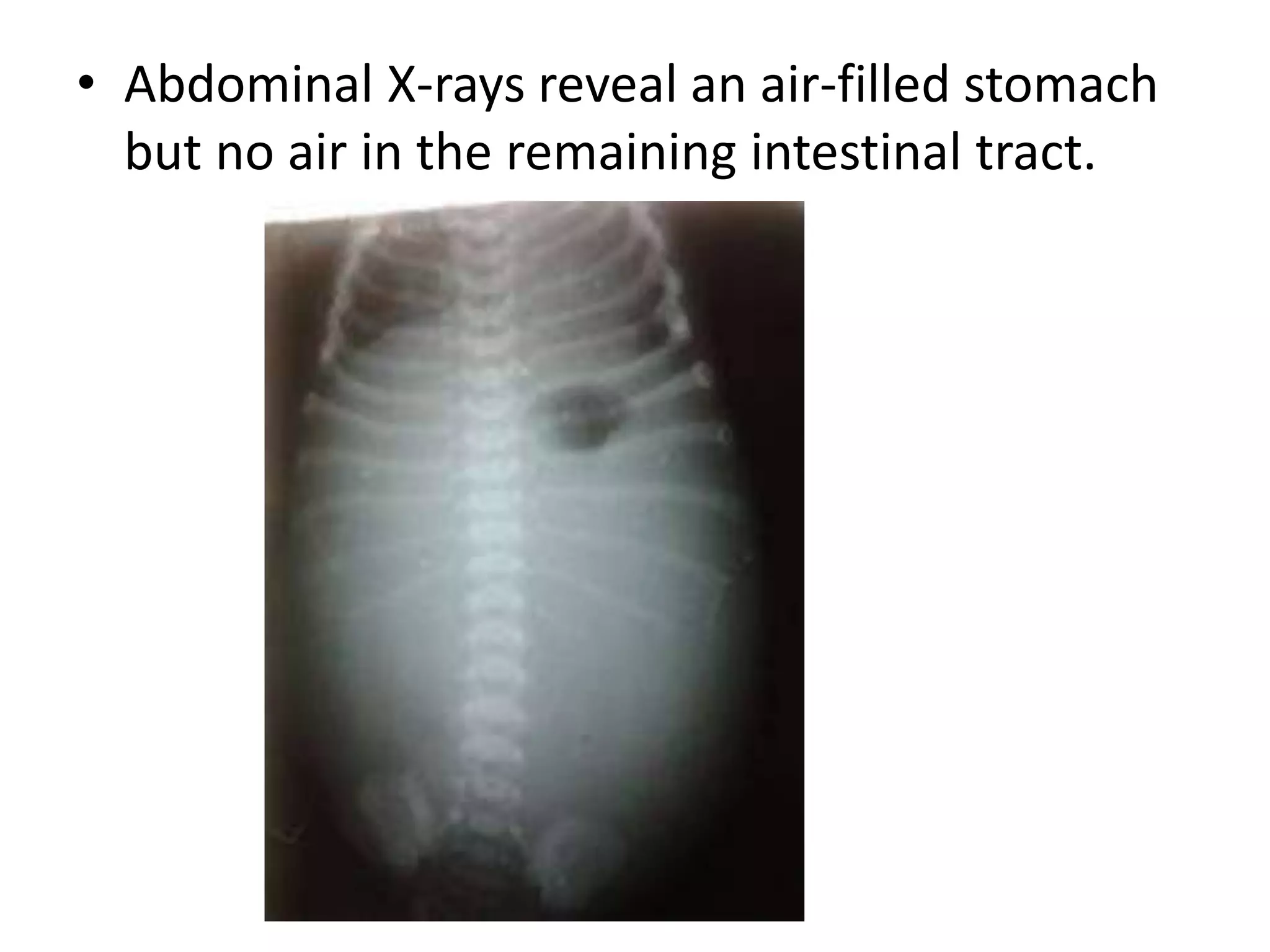
• Abdominal X-rays reveal an air-filled stomach
but no air in the remaining intestinal tract.
Duodenal Atresia
• The duodenum is the first portion of the small
intestine that receives contents emptied from
the stomach.
• Duodenal atresia occurs in one out of every
2,500 live births.
• Half of the infants with this condition
are born prematurely
• Approximately two-thirds have
associated abnormalities of the
heart, genitourinary or intestinal
tract.
• Nearly 40 percent have Down
syndrome.
• Infants with duodenal atresia usually
vomit within hours after birth, and
may develop a distended upper
abdomen.
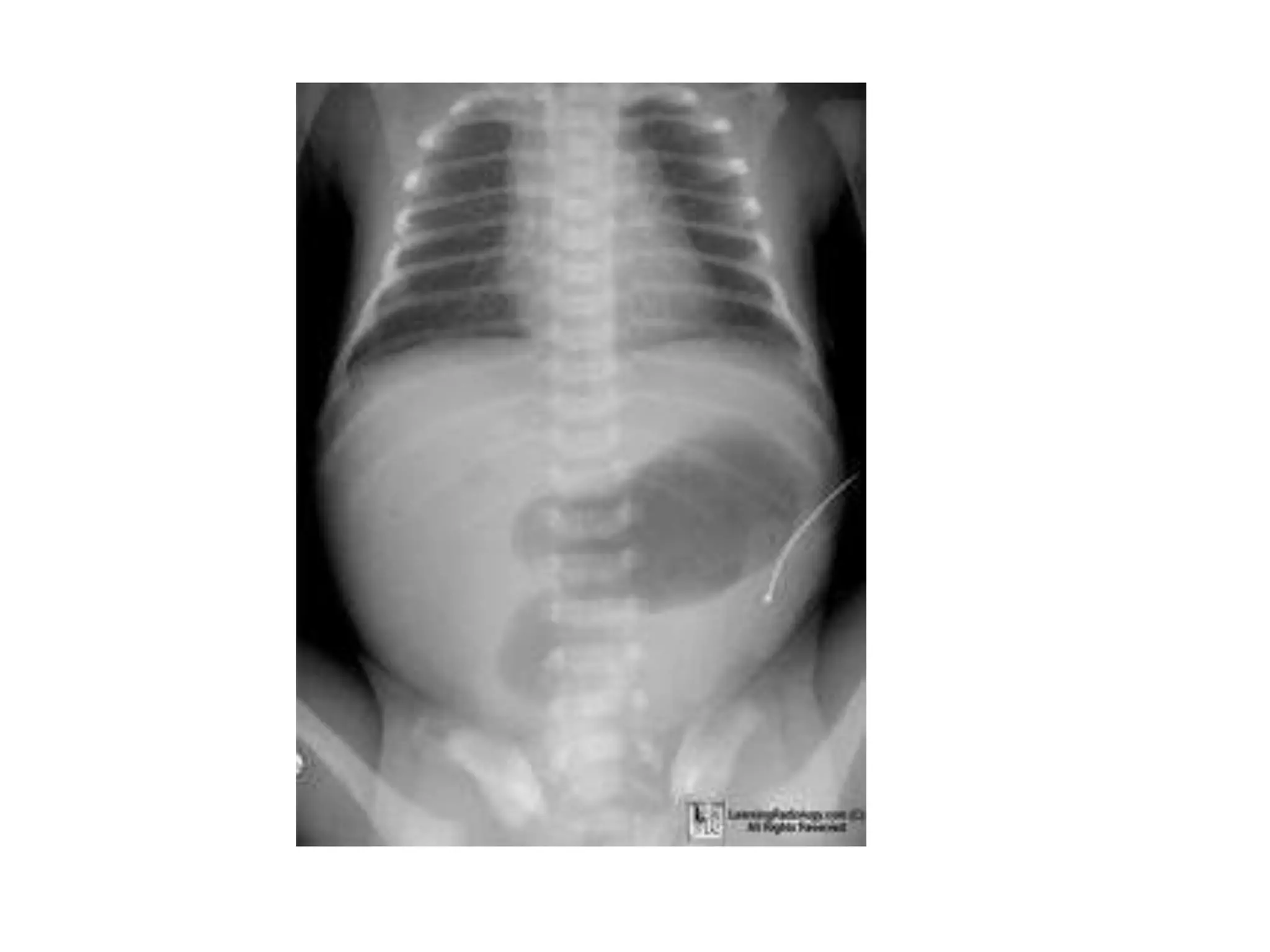
• Abdominal X-rays show a large dilated
stomach and duodenum without gas in the
remaining intestinal tract.
Contrst radiography
Jejunoileal Atresia
• Jejunoileal atresia involves an obstruction of
the jejunum or ileum of the small intestine.
• The segment of intestine just before the
obstruction becomes massively dilated, thus
hindering its ability to absorb nutrients and
peristaalsis through the digestive tract.
• In 10-15% of infants with jejunoileal atresia,
part of the intestine is necrosed during fetal
development.
• A significant percentage of infants with this
condition also has abnormalities of intestinal
rotation and fixation.
• Cystic fibrosis is also an associated
disorder and may seriously
complicate the management of
jejunoileal atresia. Infants with
jejunoileal atresia should be
screened for cystic fibrosis.
Types
• Type I atresia (23%) is a transluminal septum
with proximal dilated bowel in continuity with
collapsed distal bowel. The bowel is usually of
normal length.
• Type II atresia (10%) involves two blind-ending
atretic ends separated by a fibrous cord along
the edge of the mesentery with mesentery
intact.
• Type IIIa atresia (15%) is similar to type II, but
there is a mesenteric defect and the bowel
length may be foreshortened.
• Type IIIb atresia (19%) (“apple
peel”) consists of a proximal jejunal
atresia, often with malrotation with
absence of most of the mesentery
and a varying length of ileum
surviving on perfusion from
retrograde flow along a single artery
of supply.
• Type IV atresia is a multiple atresia of types I,
II, and III, like a string of sausages. Bowel
length is always reduced. The terminal ileum,
as in type III, is usually spared.
• Stenosis occurs in 11%.
Presentation
• Infants with jejunoileal atresia,
regardless of the subtype, usually
vomit green bile within the first 24
hours of life. However, those with
obstructions farther down in the
intestine may not vomit until two to
three days later.
• Infants often develop a distended abdomen
and may not have a bowel movement during
the first day of life.
• Given the age of the patient and the
symptoms, an abdominal X-ray is usually
sufficient to establish a diagnosis.
Colonic Atresia
• This rare form of intestinal atresia accounts for
less than 15% of all intestinal atresias. The bowel
becomes massively enlarged (dilated), and
patients develop signs and symptoms similar to
those associated with jejunoileal atresia. Colonic
atresia may occur in conjunction with small
bowel atresia, Hirschsprung's
disease or gastroschisis.
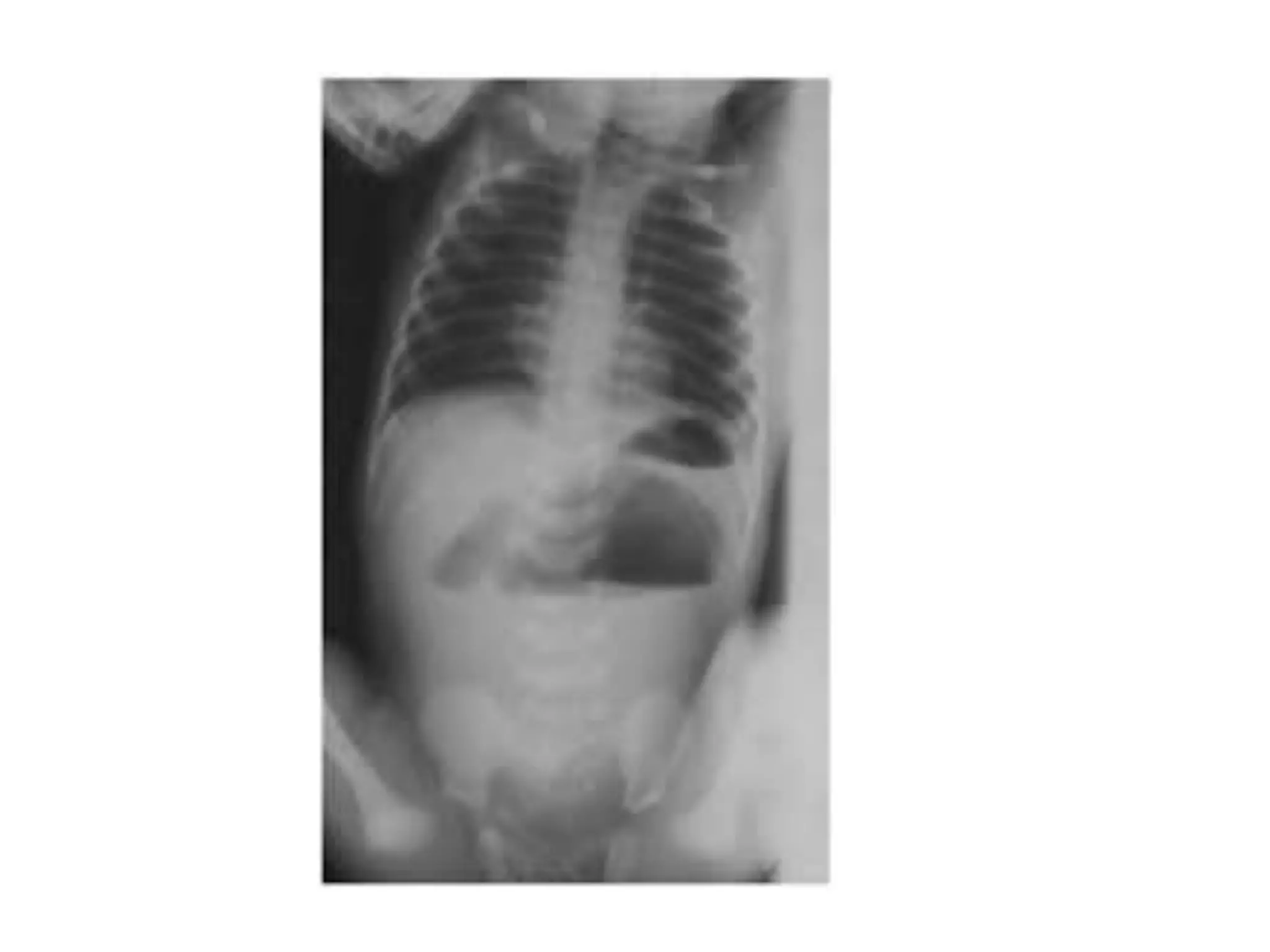
• The diagnosis is confirmed by an abdominal X-ray
along with an X-ray contrast enema.
Diagnosis
• prenatal ultrasounds. Intestinal
obstructions are increasingly being identified
through prenatal ultrasounds. This imaging
technique may indicate excess amniotic fluid
(polyhydramnios), which is caused by the
failure of the intestine to properly absorb
amniotic fluid.
•Abdominal X-ray: In most cases,
this can establish a diagnosis.
Treatment
• Pyloric Atresia: The pyloric obstruction is
opened and the stomach passageway is
repaired. The success of this operation is
excellent. Length of hospital stay is
generally one to three weeks. However, as in
all types of intestinal atresia, the hospital stay
is substantially longer for premature infants.
•Duodenal Atresia:
diamond shaped
anastomosis
• Jejuno-ileal atresia: With jejunoileal
atresia, the type of surgery depends on the type
of atresia, the amount of intestine present and
the degree of intestinal dilation.
• The most common operation involves removal of
the blind intestinal segments, and the remaining
ends are anastomosed. Similarly, a narrowed
(stenosed) segment of the intestine can be
removed and the bowel sutured together, thus
establishing anastomosis.
• Colonic Atresia: Babies with
colonic atresia may undergo
removal of the dilated colon in
addition to a temporary
colostomy. Less frequently, the
ETE anastomosis.
Thanks

Intestinal atresia

  • 1.
  • 2.
    Atresia • The wordatresia etymologically comes from the Greek a, which means no or without, and tresis, which means orifice.
  • 3.
    Atresia Intestinal atresia isa broad term used to describe a complete blockage anywhere in the intestine.
  • 4.
    • These conditionsmay involve any portion of the gastrointestinal tract, the small bowel is the most commonly affected portion.
  • 5.
    Pyloric Atresia • Pyloricatresia involves an obstruction at the pylorus, which is the passage linking the stomach and the first portion of the duodenum.
  • 6.
    • This isquite rare, and tends to run in families. Children vomit stomach contents, and due to the accumulation of intestinal contents and gas, develop a distended upper abdomen.
  • 8.
    • Abdominal X-raysreveal an air-filled stomach but no air in the remaining intestinal tract.
  • 9.
    Duodenal Atresia • Theduodenum is the first portion of the small intestine that receives contents emptied from the stomach. • Duodenal atresia occurs in one out of every 2,500 live births.
  • 10.
    • Half ofthe infants with this condition are born prematurely • Approximately two-thirds have associated abnormalities of the heart, genitourinary or intestinal tract. • Nearly 40 percent have Down syndrome.
  • 11.
    • Infants withduodenal atresia usually vomit within hours after birth, and may develop a distended upper abdomen.
  • 14.
    • Abdominal X-raysshow a large dilated stomach and duodenum without gas in the remaining intestinal tract.
  • 16.
  • 17.
    Jejunoileal Atresia • Jejunoilealatresia involves an obstruction of the jejunum or ileum of the small intestine. • The segment of intestine just before the obstruction becomes massively dilated, thus hindering its ability to absorb nutrients and peristaalsis through the digestive tract.
  • 18.
    • In 10-15%of infants with jejunoileal atresia, part of the intestine is necrosed during fetal development. • A significant percentage of infants with this condition also has abnormalities of intestinal rotation and fixation.
  • 19.
    • Cystic fibrosisis also an associated disorder and may seriously complicate the management of jejunoileal atresia. Infants with jejunoileal atresia should be screened for cystic fibrosis.
  • 20.
    Types • Type Iatresia (23%) is a transluminal septum with proximal dilated bowel in continuity with collapsed distal bowel. The bowel is usually of normal length.
  • 22.
    • Type IIatresia (10%) involves two blind-ending atretic ends separated by a fibrous cord along the edge of the mesentery with mesentery intact.
  • 23.
    • Type IIIaatresia (15%) is similar to type II, but there is a mesenteric defect and the bowel length may be foreshortened.
  • 24.
    • Type IIIbatresia (19%) (“apple peel”) consists of a proximal jejunal atresia, often with malrotation with absence of most of the mesentery and a varying length of ileum surviving on perfusion from retrograde flow along a single artery of supply.
  • 25.
    • Type IVatresia is a multiple atresia of types I, II, and III, like a string of sausages. Bowel length is always reduced. The terminal ileum, as in type III, is usually spared.
  • 26.
  • 27.
    Presentation • Infants withjejunoileal atresia, regardless of the subtype, usually vomit green bile within the first 24 hours of life. However, those with obstructions farther down in the intestine may not vomit until two to three days later.
  • 28.
    • Infants oftendevelop a distended abdomen and may not have a bowel movement during the first day of life. • Given the age of the patient and the symptoms, an abdominal X-ray is usually sufficient to establish a diagnosis.
  • 29.
    Colonic Atresia • Thisrare form of intestinal atresia accounts for less than 15% of all intestinal atresias. The bowel becomes massively enlarged (dilated), and patients develop signs and symptoms similar to those associated with jejunoileal atresia. Colonic atresia may occur in conjunction with small bowel atresia, Hirschsprung's disease or gastroschisis. • The diagnosis is confirmed by an abdominal X-ray along with an X-ray contrast enema.
  • 30.
    Diagnosis • prenatal ultrasounds.Intestinal obstructions are increasingly being identified through prenatal ultrasounds. This imaging technique may indicate excess amniotic fluid (polyhydramnios), which is caused by the failure of the intestine to properly absorb amniotic fluid.
  • 33.
    •Abdominal X-ray: Inmost cases, this can establish a diagnosis.
  • 34.
    Treatment • Pyloric Atresia:The pyloric obstruction is opened and the stomach passageway is repaired. The success of this operation is excellent. Length of hospital stay is generally one to three weeks. However, as in all types of intestinal atresia, the hospital stay is substantially longer for premature infants.
  • 35.
  • 36.
    • Jejuno-ileal atresia:With jejunoileal atresia, the type of surgery depends on the type of atresia, the amount of intestine present and the degree of intestinal dilation. • The most common operation involves removal of the blind intestinal segments, and the remaining ends are anastomosed. Similarly, a narrowed (stenosed) segment of the intestine can be removed and the bowel sutured together, thus establishing anastomosis.
  • 37.
    • Colonic Atresia:Babies with colonic atresia may undergo removal of the dilated colon in addition to a temporary colostomy. Less frequently, the ETE anastomosis.
  • 38.