Interviewing Skills
mini-Workshop
3rd Annual HR Minds Forum
September 10, 2015
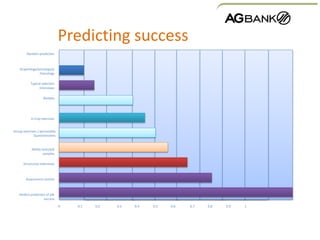
Random prediction
Graphology/astrology/p
hrenology
Typical selection
interviews
Biodata
In-tray exercises
Ability tests/job
samples
Structured interviews
Assessment centres
Perfect prediction of job
success
Predicting success
Group exercises / personality
Questionnaires
0 0.1 0.2 0.3 0.4 0.5 0.6 0.7 0.8 0.9 1
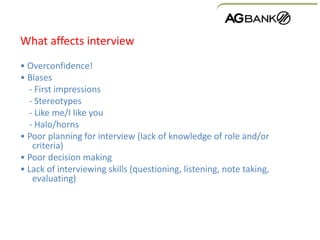
What affects interview
• Overconfidence!
• Biases
- First impressions
- Stereotypes
- Like me/I like you
- Halo/horns
• Poor planning for interview (lack of knowledge of role and/or
criteria)
• Poor decision making
• Lack of interviewing skills (questioning, listening, note taking,
evaluating)
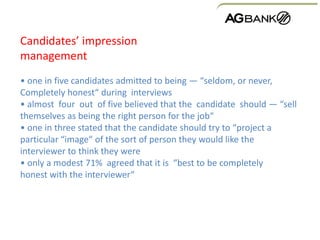
Candidates’ impression
management
• one in five candidates admitted to being — “seldom, or never,
Completely honest“ during interviews
• almost four out of five believed that the candidate should — “sell
themselves as being the right person for the job“
• one in three stated that the candidate should try to “project a
particular “image“ of the sort of person they would like the
interviewer to think they were
• only a modest 71% agreed that it is “best to be completely
honest with the interviewer“
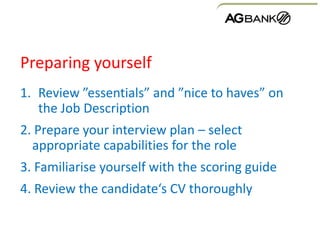
Preparing yourself
1. Review ”essentials” and ”nice to haves” on
the Job Description
2. Prepare your interview plan – select
appropriate capabilities for the role
3. Familiarise yourself with the scoring guide
4. Review the candidate‘s CV thoroughly
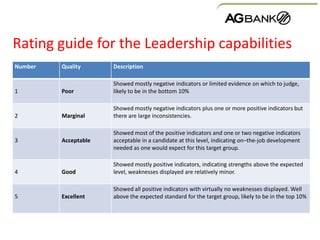
Number Quality Description
1 Poor
Showed mostly negative indicators or limited evidence on which to judge,
likely to be in the bottom 10%
2 Marginal
Showed mostly negative indicators plus one or more positive indicators but
there are large inconsistencies.
3 Acceptable
Showed most of the positive indicators and one or two negative indicators
acceptable in a candidate at this level, indicating on–the-job development
needed as one would expect for this target group.
4 Good
Showed mostly positive indicators, indicating strengths above the expected
level, weaknesses displayed are relatively minor.
5 Excellent
Showed all positive indicators with virtually no weaknesses displayed. Well
above the expected standard for the target group, likely to be in the top 10%
Rating guide for the Leadership capabilities
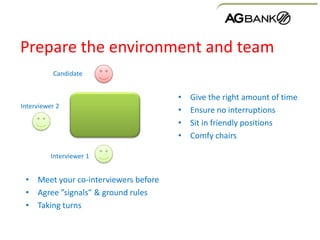
Prepare the environment and team
• Give the right amount of time
• Ensure no interruptions
• Sit in friendly positions
• Comfy chairs
• Meet your co-interviewers before
• Agree ”signals” & ground rules
• Taking turns
Interviewer 1
Interviewer 2
Candidate
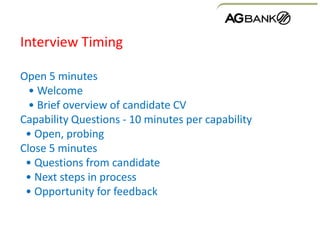
Interview Timing
Open 5 minutes
• Welcome
• Brief overview of candidate CV
Capability Questions - 10 minutes per capability
• Open, probing
Close 5 minutes
• Questions from candidate
• Next steps in process
• Opportunity for feedback
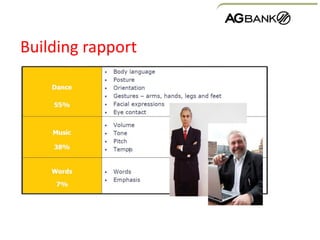
Building rapport
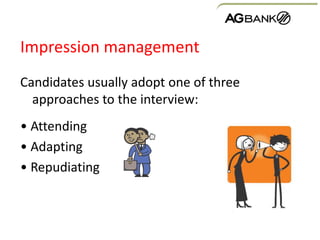
Impression management
Candidates usually adopt one of three
approaches to the interview:
• Attending
• Adapting
• Repudiating
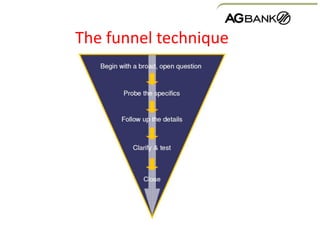
The funnel technique
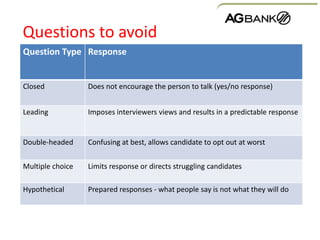
Question Type Response
Closed Does not encourage the person to talk (yes/no response)
Leading Imposes interviewers views and results in a predictable response
Double-headed Confusing at best, allows candidate to opt out at worst
Multiple choice Limits response or directs struggling candidates
Hypothetical Prepared responses - what people say is not what they will do
Questions to avoid
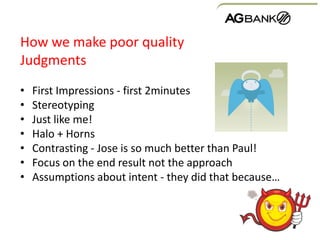
How we make poor quality
Judgments
• First Impressions - first 2minutes
• Stereotyping
• Just like me!
• Halo + Horns
• Contrasting - Jose is so much better than Paul!
• Focus on the end result not the approach
• Assumptions about intent - they did that because…
Note taking
• Use the Candidate‘s Own Words
• Note the Process as well as the Content
• Do not Summarise or Judge
• Be Open about Note Taking
• Be Sensitive
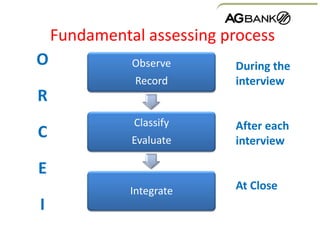
Observe
Record
Classify
Evaluate
Integrate
O
R
C
E
I
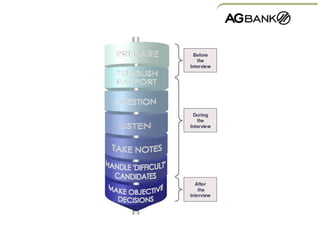
During the
interview
After each
interview
At Close
Fundamental assessing process
Personal review/action planning
When I am interviewing I will:
• STOP
• START
• CONTINUE
Thank you!
25.01.2014 18

Interviewing Skills mini-Workshop

  • 1.
    Interviewing Skills mini-Workshop 3rd AnnualHR Minds Forum September 10, 2015
  • 2.
    Random prediction Graphology/astrology/p hrenology Typical selection interviews Biodata In-trayexercises Ability tests/job samples Structured interviews Assessment centres Perfect prediction of job success Predicting success Group exercises / personality Questionnaires 0 0.1 0.2 0.3 0.4 0.5 0.6 0.7 0.8 0.9 1
  • 3.
    What affects interview •Overconfidence! • Biases - First impressions - Stereotypes - Like me/I like you - Halo/horns • Poor planning for interview (lack of knowledge of role and/or criteria) • Poor decision making • Lack of interviewing skills (questioning, listening, note taking, evaluating)
  • 4.
    Candidates’ impression management • onein five candidates admitted to being — “seldom, or never, Completely honest“ during interviews • almost four out of five believed that the candidate should — “sell themselves as being the right person for the job“ • one in three stated that the candidate should try to “project a particular “image“ of the sort of person they would like the interviewer to think they were • only a modest 71% agreed that it is “best to be completely honest with the interviewer“
  • 6.
    Preparing yourself 1. Review”essentials” and ”nice to haves” on the Job Description 2. Prepare your interview plan – select appropriate capabilities for the role 3. Familiarise yourself with the scoring guide 4. Review the candidate‘s CV thoroughly
  • 7.
    Number Quality Description 1Poor Showed mostly negative indicators or limited evidence on which to judge, likely to be in the bottom 10% 2 Marginal Showed mostly negative indicators plus one or more positive indicators but there are large inconsistencies. 3 Acceptable Showed most of the positive indicators and one or two negative indicators acceptable in a candidate at this level, indicating on–the-job development needed as one would expect for this target group. 4 Good Showed mostly positive indicators, indicating strengths above the expected level, weaknesses displayed are relatively minor. 5 Excellent Showed all positive indicators with virtually no weaknesses displayed. Well above the expected standard for the target group, likely to be in the top 10% Rating guide for the Leadership capabilities
  • 8.
    Prepare the environmentand team • Give the right amount of time • Ensure no interruptions • Sit in friendly positions • Comfy chairs • Meet your co-interviewers before • Agree ”signals” & ground rules • Taking turns Interviewer 1 Interviewer 2 Candidate
  • 9.
    Interview Timing Open 5minutes • Welcome • Brief overview of candidate CV Capability Questions - 10 minutes per capability • Open, probing Close 5 minutes • Questions from candidate • Next steps in process • Opportunity for feedback
  • 10.
  • 11.
    Impression management Candidates usuallyadopt one of three approaches to the interview: • Attending • Adapting • Repudiating
  • 12.
  • 13.
    Question Type Response ClosedDoes not encourage the person to talk (yes/no response) Leading Imposes interviewers views and results in a predictable response Double-headed Confusing at best, allows candidate to opt out at worst Multiple choice Limits response or directs struggling candidates Hypothetical Prepared responses - what people say is not what they will do Questions to avoid
  • 14.
    How we makepoor quality Judgments • First Impressions - first 2minutes • Stereotyping • Just like me! • Halo + Horns • Contrasting - Jose is so much better than Paul! • Focus on the end result not the approach • Assumptions about intent - they did that because…
  • 15.
    Note taking • Usethe Candidate‘s Own Words • Note the Process as well as the Content • Do not Summarise or Judge • Be Open about Note Taking • Be Sensitive
  • 16.
  • 17.
    Personal review/action planning WhenI am interviewing I will: • STOP • START • CONTINUE
  • 18.