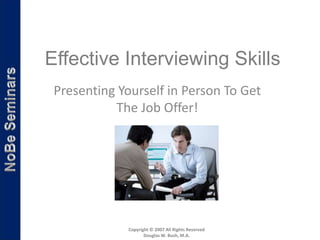
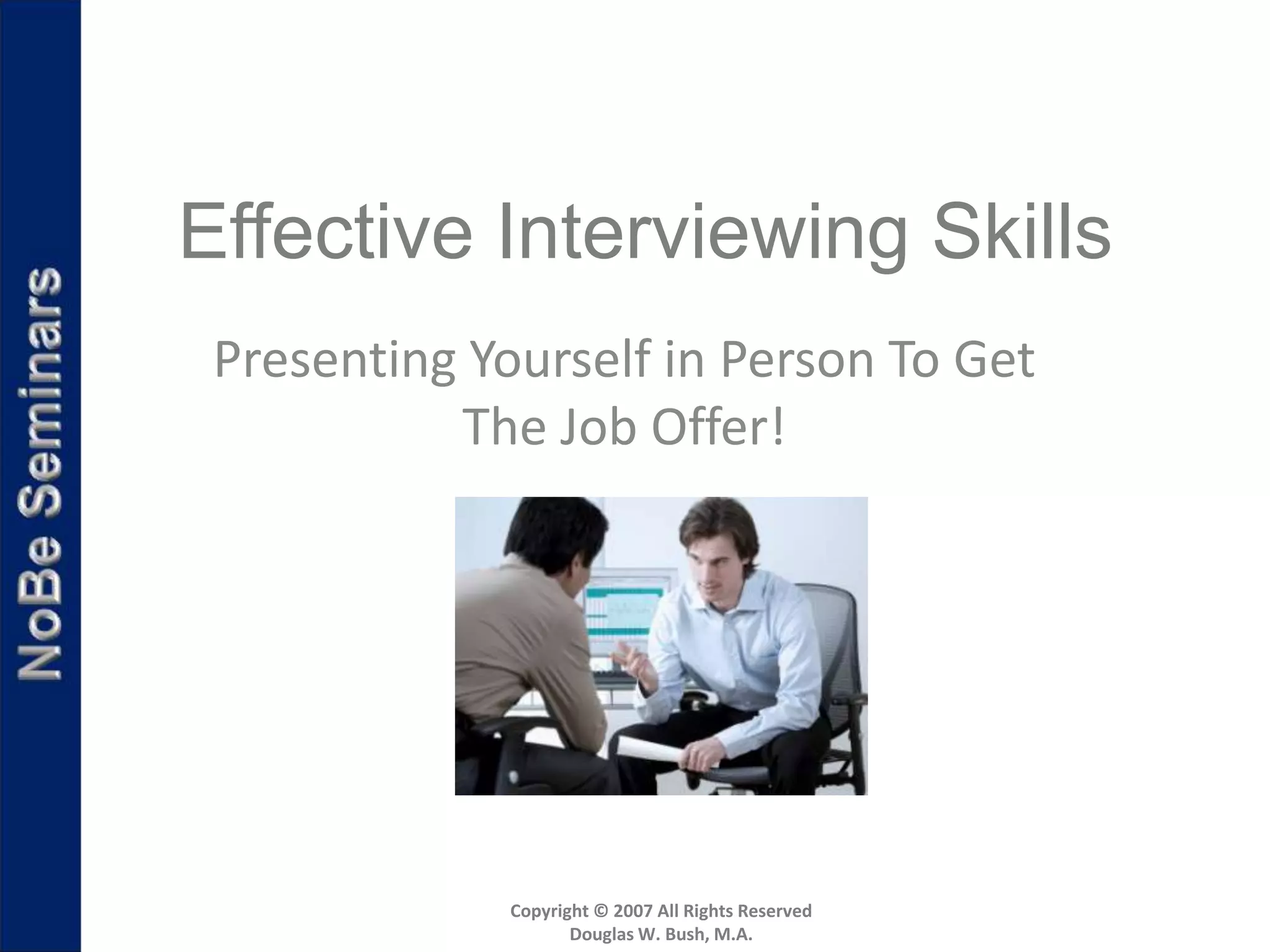
Effective Interviewing Skills
 Presenting Yourself in Person To Get
           The Job Offer!


              Copyright © 2007 All Rights Reserved
                     Douglas W. Bush, M.A.
Effective Interviewing Skills
Purpose

To provide you with the knowledge, skills and tools
to build a level of comfort and confidence in presenting
yourself effectively during an employment/job interview
to get the job offer!


                  Copyright © 2007 All Rights Reserved
                         Douglas W. Bush, M.A.
Effective Interviewing Skills
Objectives
Within the next two and a two hours you will learn:
  the type of job interview most companies use and why
  steps in the job interview process
  who your interviewers are like to be and their role
  skills for effective interviewing
  what the interviewers are looking for
  recommends model for answering questions
  how to prepare for questions asked
  the key to a successful job interview
  tips on building confidence and reducing anxiety

                        Copyright © 2007 All Rights Reserved
                               Douglas W. Bush, M.A.
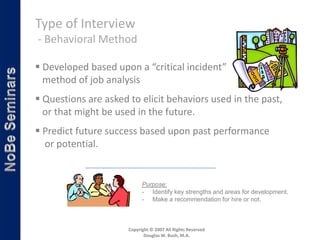
Type of Interview
- Behavioral Method

 Developed based upon a “critical incident”
  method of job analysis
 Questions are asked to elicit behaviors used in the past,
  or that might be used in the future.
 Predict future success based upon past performance
  or potential.


                            Purpose:
                            - Identify key strengths and areas for development.
                            - Make a recommendation for hire or not.


                      Copyright © 2007 All Rights Reserved
                             Douglas W. Bush, M.A.
Steps in the Interview Process

   Introductions

   Questions and Answers

   Closing

   Follow up
   Approximately 1 to 1-1/2 hours


                Copyright © 2007 All Rights Reserved
                       Douglas W. Bush, M.A.
Interviewers

 Who are they?

 What is their role?
 Where will they conduct the interview?

 Why more than one interviewer?

 How are they trained?
 When will they notify me?


                Copyright © 2007 All Rights Reserved
                       Douglas W. Bush, M.A.
Skills for Interviewing Effectively
            Be prepared to:
             Listen
             Speak
             Project
             Present
             Convince

             Influence


            Copyright © 2007 All Rights Reserved
                   Douglas W. Bush, M.A.
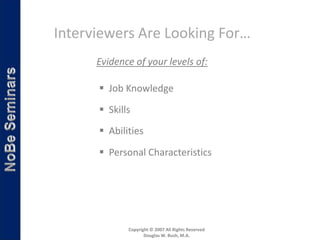
Interviewers Are Looking For…
      Evidence of your levels of:

       Job Knowledge

       Skills
       Abilities

       Personal Characteristics


             Copyright © 2007 All Rights Reserved
                    Douglas W. Bush, M.A.
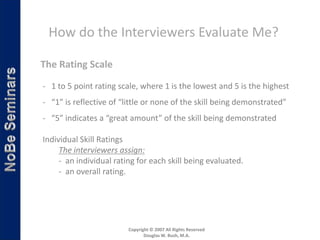
How do the Interviewers Evaluate Me?

The Rating Scale
- 1 to 5 point rating scale, where 1 is the lowest and 5 is the highest
- “1” is reflective of “little or none of the skill being demonstrated”
- “5” indicates a “great amount” of the skill being demonstrated

Individual Skill Ratings
     The interviewers assign:
     - an individual rating for each skill being evaluated.
     - an overall rating.


                         Copyright © 2007 All Rights Reserved
                                Douglas W. Bush, M.A.
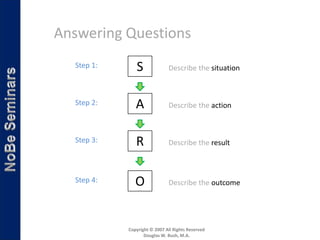
Answering Questions
  Step 1:      S              Describe the situation


  Step 2:      A              Describe the action


  Step 3:      R              Describe the result


  Step 4:      O              Describe the outcome


            Copyright © 2007 All Rights Reserved
                   Douglas W. Bush, M.A.
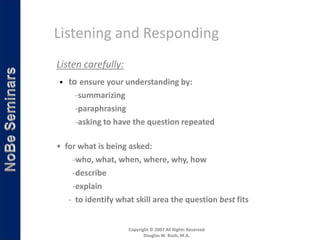
Listening and Responding
Listen carefully:
• to ensure your understanding by:
     -summarizing
     -paraphrasing
     -asking to have the question repeated

• for what is being asked:
    -who, what, when, where, why, how
    -describe
    -explain
   - to identify what skill area the question best fits


                    Copyright © 2007 All Rights Reserved
                           Douglas W. Bush, M.A.
Answering Questions Asked

Answer by demonstrating:

 that you possess the skill.

 the frequency with which you have used the skill.
 the outcome of when you used the skill in the past.


                  Copyright © 2007 All Rights Reserved
                         Douglas W. Bush, M.A.
Answering Questions Asked
Describe:

    a recent work-related example of when you
     used the skill:
        what was the situation?
        where did the situation occur?
        when did it happen?
        who was involved?
        why did the situation occur?
        … etc.

                  Copyright © 2007 All Rights Reserved
                         Douglas W. Bush, M.A.
Answering Questions Asked
Most importantly, state clearly:
 what action YOU took to respond to and
  correct the situation?
Summarize by demonstrating:
 that you have used the skill in the past with
  positive results.
 that it was a result of your special skills, abilities, or
  personal characteristics.
 how you would welcome the challenge of using the
  skill in the position you’re interviewing for.

                  Copyright © 2007 All Rights Reserved
                         Douglas W. Bush, M.A.
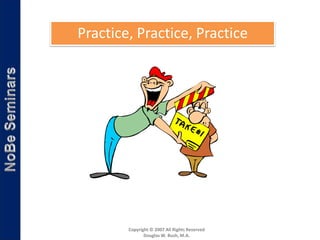
Practice, Practice, Practice


        Copyright © 2007 All Rights Reserved
               Douglas W. Bush, M.A.
Practice, Practice, Practice


                   Use the

“Interview Preparation Worksheet”
                  Provided


          Copyright © 2007 All Rights Reserved
                 Douglas W. Bush, M.A.
Key To Your Success…
  Distinguish yourself!

    Communicate a strong
     understanding of the job.
    Express how your strengths
     not only meet, but exceed,
     requirements even in a worst
     case scenario.
    Demonstrate how you will
     add value to the organization.


               Copyright © 2007 All Rights Reserved
                      Douglas W. Bush, M.A.
Building your confidence…
Tips:

 Talk about your best points and speak with
  confidence!

 DO use words that show you have faith in yourself.

 DO answer the interviewers’ concerns.

 DON’T put yourself down with negative statements.

 DON’T use weak words.

                 Copyright © 2007 All Rights Reserved
                        Douglas W. Bush, M.A.
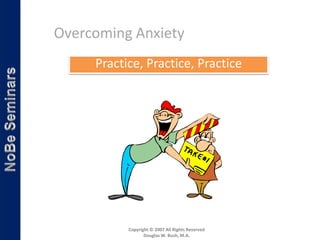
Overcoming Anxiety
     Practice, Practice, Practice


           Copyright © 2007 All Rights Reserved
                  Douglas W. Bush, M.A.
Questions To Ask Or Not?

Remember:

 Ask questions of the interviewers that support that
  you have the knowledge, skills, abilities, and
  personal qualities to meet the demands of the job.

 Avoid asking questions related to how you will
  benefit from getting the job.


                Copyright © 2007 All Rights Reserved
                       Douglas W. Bush, M.A.
Summary and Questions?


         Copyright © 2007 All Rights Reserved
                Douglas W. Bush, M.A.

Effective Interviewing Skills - To Get The Job Offer!

  • 1.
    Effective Interviewing Skills Presenting Yourself in Person To Get The Job Offer! Copyright © 2007 All Rights Reserved Douglas W. Bush, M.A.
  • 2.
    Effective Interviewing Skills Purpose Toprovide you with the knowledge, skills and tools to build a level of comfort and confidence in presenting yourself effectively during an employment/job interview to get the job offer! Copyright © 2007 All Rights Reserved Douglas W. Bush, M.A.
  • 3.
    Effective Interviewing Skills Objectives Withinthe next two and a two hours you will learn:  the type of job interview most companies use and why  steps in the job interview process  who your interviewers are like to be and their role  skills for effective interviewing  what the interviewers are looking for  recommends model for answering questions  how to prepare for questions asked  the key to a successful job interview  tips on building confidence and reducing anxiety Copyright © 2007 All Rights Reserved Douglas W. Bush, M.A.
  • 4.
    Type of Interview -Behavioral Method  Developed based upon a “critical incident” method of job analysis  Questions are asked to elicit behaviors used in the past, or that might be used in the future.  Predict future success based upon past performance or potential. Purpose: - Identify key strengths and areas for development. - Make a recommendation for hire or not. Copyright © 2007 All Rights Reserved Douglas W. Bush, M.A.
  • 5.
    Steps in theInterview Process  Introductions  Questions and Answers  Closing  Follow up  Approximately 1 to 1-1/2 hours Copyright © 2007 All Rights Reserved Douglas W. Bush, M.A.
  • 6.
    Interviewers  Who arethey?  What is their role?  Where will they conduct the interview?  Why more than one interviewer?  How are they trained?  When will they notify me? Copyright © 2007 All Rights Reserved Douglas W. Bush, M.A.
  • 7.
    Skills for InterviewingEffectively Be prepared to:  Listen  Speak  Project  Present  Convince  Influence Copyright © 2007 All Rights Reserved Douglas W. Bush, M.A.
  • 8.
    Interviewers Are LookingFor… Evidence of your levels of:  Job Knowledge  Skills  Abilities  Personal Characteristics Copyright © 2007 All Rights Reserved Douglas W. Bush, M.A.
  • 9.
    How do theInterviewers Evaluate Me? The Rating Scale - 1 to 5 point rating scale, where 1 is the lowest and 5 is the highest - “1” is reflective of “little or none of the skill being demonstrated” - “5” indicates a “great amount” of the skill being demonstrated Individual Skill Ratings The interviewers assign: - an individual rating for each skill being evaluated. - an overall rating. Copyright © 2007 All Rights Reserved Douglas W. Bush, M.A.
  • 10.
    Answering Questions Step 1: S Describe the situation Step 2: A Describe the action Step 3: R Describe the result Step 4: O Describe the outcome Copyright © 2007 All Rights Reserved Douglas W. Bush, M.A.
  • 11.
    Listening and Responding Listencarefully: • to ensure your understanding by: -summarizing -paraphrasing -asking to have the question repeated • for what is being asked: -who, what, when, where, why, how -describe -explain - to identify what skill area the question best fits Copyright © 2007 All Rights Reserved Douglas W. Bush, M.A.
  • 12.
    Answering Questions Asked Answerby demonstrating:  that you possess the skill.  the frequency with which you have used the skill.  the outcome of when you used the skill in the past. Copyright © 2007 All Rights Reserved Douglas W. Bush, M.A.
  • 13.
    Answering Questions Asked Describe:  a recent work-related example of when you used the skill:  what was the situation?  where did the situation occur?  when did it happen?  who was involved?  why did the situation occur?  … etc. Copyright © 2007 All Rights Reserved Douglas W. Bush, M.A.
  • 14.
    Answering Questions Asked Mostimportantly, state clearly:  what action YOU took to respond to and correct the situation? Summarize by demonstrating:  that you have used the skill in the past with positive results.  that it was a result of your special skills, abilities, or personal characteristics.  how you would welcome the challenge of using the skill in the position you’re interviewing for. Copyright © 2007 All Rights Reserved Douglas W. Bush, M.A.
  • 15.
    Practice, Practice, Practice Copyright © 2007 All Rights Reserved Douglas W. Bush, M.A.
  • 16.
    Practice, Practice, Practice Use the “Interview Preparation Worksheet” Provided Copyright © 2007 All Rights Reserved Douglas W. Bush, M.A.
  • 17.
    Key To YourSuccess… Distinguish yourself!  Communicate a strong understanding of the job.  Express how your strengths not only meet, but exceed, requirements even in a worst case scenario.  Demonstrate how you will add value to the organization. Copyright © 2007 All Rights Reserved Douglas W. Bush, M.A.
  • 18.
    Building your confidence… Tips: Talk about your best points and speak with confidence!  DO use words that show you have faith in yourself.  DO answer the interviewers’ concerns.  DON’T put yourself down with negative statements.  DON’T use weak words. Copyright © 2007 All Rights Reserved Douglas W. Bush, M.A.
  • 19.
    Overcoming Anxiety Practice, Practice, Practice Copyright © 2007 All Rights Reserved Douglas W. Bush, M.A.
  • 20.
    Questions To AskOr Not? Remember:  Ask questions of the interviewers that support that you have the knowledge, skills, abilities, and personal qualities to meet the demands of the job.  Avoid asking questions related to how you will benefit from getting the job. Copyright © 2007 All Rights Reserved Douglas W. Bush, M.A.
  • 21.
    Summary and Questions? Copyright © 2007 All Rights Reserved Douglas W. Bush, M.A.

Editor's Notes