The document provides tips for having a successful job interview. It emphasizes researching the company thoroughly, developing answers to common interview questions, focusing on strengths and weaknesses, preparing questions to ask the interviewer, maintaining a professional appearance and attitude, and following up after the interview. Key points include researching the company's products, competitors, culture and values; relating one's strengths and weaknesses to the position; dressing conservatively and being well-groomed; sending a thank you note within 24 hours; and evaluating one's interview performance to improve for next time.
Research the CompanyResearch the company thoroughly Where do you fit in (skill set)? Tailor your skills to company’s needs (review job description) Information you uncover reflects your interest and enthusiasm in position Establishes a common base of knowledge for questions
3.
What Do YouNeed To Know? Age of company Services or products Competitors within the industry Growth pattern Reputation Divisions and subsidiaries Locations/length of time there Size Number of employees Sales/assets/earnings New products or projects Culture and values
4.
Develop Career GoalsHave a focus--at least act like it, even if you don’t have a clue Identify challenges you are looking for Know what you want to accomplish Have a plan or agenda
5.
Write Down Answers/ScenariosDraft written answers to potential interview questions Develop job appropriate scenarios based on your research A marketing plan for a new product A solution to one of their problems
6.
What Are YourStrengths Relate them to the job Give examples of where you have demonstrated these How were they developed Identify your mentors and/or role models
7.
What are yourWeaknesses? Relate these to your work Show the positive side of these Identify the steps you have taken for improvement Detail the results and/or time frames expected Identify criticism you have received and its effects
8.
Write Out Questionsfor the Interviewer Consider multiple areas Corporate values Anticipated responsibilities Employment trends Measures of work performance Work environment Quality of work Personality factors Demonstrate your knowledge of the industry and company
9.
Appearance Matters. ..A Lot! If you don’t dress seriously, they can’t take you seriously!! Make a good first impression Pride in yourself implies pride in your work Show your creativity in your work, not your appearance Dress conservatively Be well groomed and clean
10.
Don’t Forget theDetails Nicely styled hair Natural, clean looking face/makeup Clean your fingernails Skip the clunky jewelry Press your clothes Avoid strong perfumes or colognes Avoid cigarettes
11.
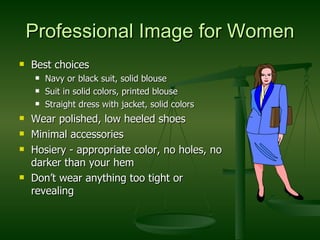
Professional Image forWomen Best choices Navy or black suit, solid blouse Suit in solid colors, printed blouse Straight dress with jacket, solid colors Wear polished, low heeled shoes Minimal accessories Hosiery - appropriate color, no holes, no darker than your hem Don’t wear anything too tight or revealing
12.
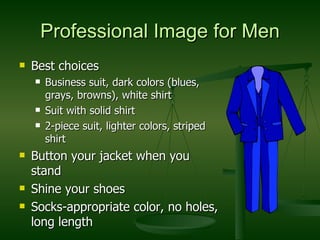
Professional Image forMen Best choices Business suit, dark colors (blues, grays, browns), white shirt Suit with solid shirt 2-piece suit, lighter colors, striped shirt Button your jacket when you stand Shine your shoes Socks-appropriate color, no holes, long length
13.
Attitude Be ontime for the interview Treat the receptionist with respect Be enthusiastic, eager, and smile Don’t sit until you’re invited to, and sit up straight Practice good eye contact Walk with confidence Adapt to your surroundings Use Mr. or Ms. unless asked to use first name
14.
Practice Your “SoftSkills” Greet people with a firm handshake Stand up to meet people Keep your guard up during lunch or dinner Practice your dining etiquette Remember “please” and “thank you” Be good at chatting and small talk
15.
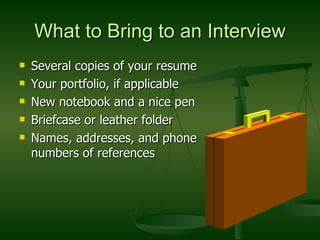
What to Bringto an Interview Several copies of your resume Your portfolio, if applicable New notebook and a nice pen Briefcase or leather folder Names, addresses, and phone numbers of references
16.
The Interviewer’s AgendaThey have an agenda To determine if you have the skills Identify your personal attributes Assess your motivation Help them by Showing how you fit their company Exhibit your personality Share your career goals
17.
Tell Me AboutYourself Create a 60-second sound byte Include Geographic origins Reason for choosing major Educational background 2 or 3 strengths related to position Specific expertise and accomplishments How you can contribute to company Identify your career goals Speak clearly and honestly
18.
Behavior Based InterviewingPrevious behavior predicts future behavior Examples show the meaning you have made of education and experience Provides insight on how the candidate’s mind works
19.
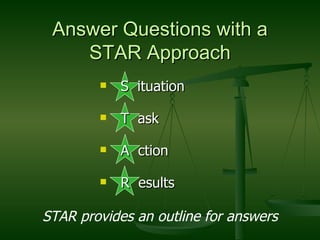
Answer Questions witha STAR Approach S ituation T ask A ction R esults STAR provides an outline for answers
20.
Illegal Topics Topicsto avoid include Nationality/race Marital status Religion Affiliations Disability or medical history Pregnancy, birth control, child care Age
21.
Telephone Interviews Dressup and use a professional environment to maintain your professionalism Have your notes organized, highlighted, and within easy access Without non-verbal communication, be aware that it is difficult to “read” the interviewer Make sure your voice conveys enthusiasm If more than one person on the other end, have them identify themselves when asking their questions
22.
Details Needed forFollow-up Ask for their business card Use interviewer’s name Send a short thank you note within 24 hours Remind them of key points from the interview Emphasize your interest
23.
Follow-up the InterviewSend a short thank you note within 24 hours Remind them of key points from the interview Emphasize your interest State when you expect the next contact to be
24.
Evaluate/Retrain How didyou do overall? What were your strengths? What needs improvement? Develop a follow-up chart for tracking -------------- [email_address] ---------------