Interviewing Strategies & Skills
What is an ‘INTERVIEW’??
An Interview Is A Conversation Between Two Or More
People Where Questions Are Asked By The Interviewer
To Elicit Facts Or Statements From The Interviewee.
Interview Process (3 Steps)
1. Preparation
Know yourself
 Be Able To Articulate YOUR
 Skills
 Values
 Interests
 Abilities
 Long Term Plans
 Be Able To Give Examples Of Them
 Know Your Resume Inside Out
 Use Common Sense
Know The Employer
 Research! Research! Research!
 Prepare To Demonstrate Your Knowledge Of The
Profession And The Company
 Prepare To Give Reasons For Your Interest In Working
In That Profession/Company
 Develop Questions In Advance To Ask About The
Job/Organization
Common Questions To Prepare
 Tell Me About Yourself.
 Why Do You Want This Job?
 How Did You Become Interested In This Field Of Work?
 What Do You Have To Offer This Organization?
 What Are Some Of Your Strengths And Weaknesses?
 What Do You See Yourself Doing In Five Years?
 How Do You Handle Stress And Pressure?
 Why Are You Leaving Or Have Left Your Job?
 Why Should We Hire You?
 What Are Your Goals For The Future?
Rehearse
 Practice
• Tape Recorder
• Mirror
• Video Camera
• Friends, Family
 Visualize The Interview
 No Memorized Answers
• Just Concepts And Key “Buzz Words”
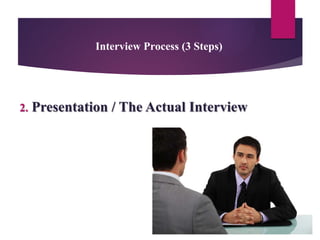
Interview Process (3 Steps)
2. Presentation / The Actual Interview
Types Of Interview
 On Campus Interviews
 Screening Interviews
 On Site Interviews
 Second Round Interviews
 One On One
 Panel Interviews
 Group Interviews
 Over A Meal
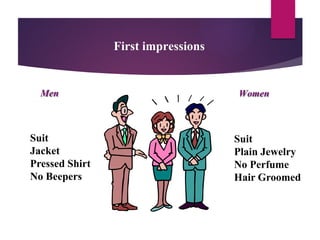
First impressions
Men Women
Suit
Jacket
Pressed Shirt
No Beepers
Suit
Plain Jewelry
No Perfume
Hair Groomed
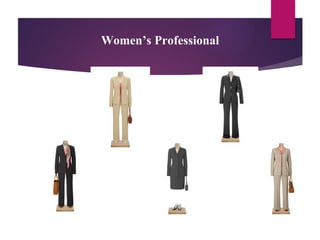
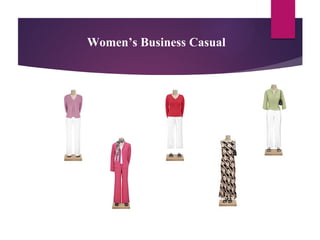
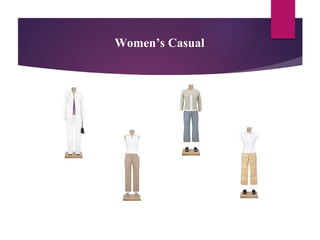
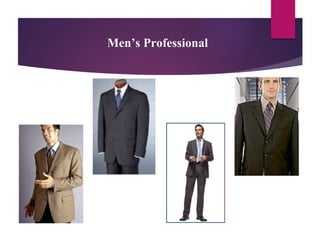
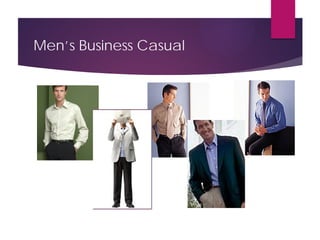
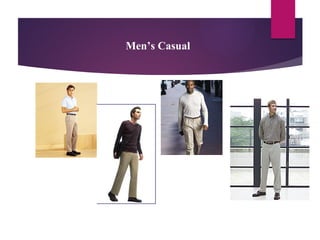
Different clothing types
 Professional Dress
Interview outfit
Daily clothing for professional office setting
 Business Casual Dress
Dress down Fridays or casual office environment
Career Fair
 Casual Dress
Company picnic
Traveling for work
Women’s Professional
Women’s Business Casual
Women’s Casual
Men’s Professional
Men’s Business Casual
Men’s Casual
Hints
 Dress For The Position You Want, Not The Position You Have
 Men
 Wear A White T-shirt Under Dress Shirt
 Helps With Perspiration
 Have Someone Help You Tie Your Tie
 Women
 Pull Hair Back
 Go Easy On Make Up
 One Ring Per Hand
Accessories
 Shoes
 Polished, Comfortable
 Socks/Hose
 Do Not Go Without Socks/Hose
 Belts
 If Have Belt Loops, Wear A Belt
 Jewelry
 Minimal
 Purse/Attache Case
Day Of The Interview
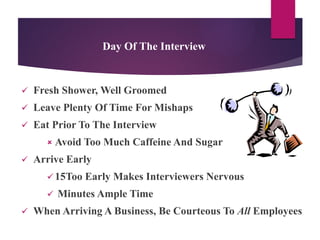
 Fresh Shower, Well Groomed
 Leave Plenty Of Time For Mishaps
 Eat Prior To The Interview
 Avoid Too Much Caffeine And Sugar
 Arrive Early
 15Too Early Makes Interviewers Nervous
 Minutes Ample Time
 When Arriving A Business, Be Courteous To All Employees
The Interview
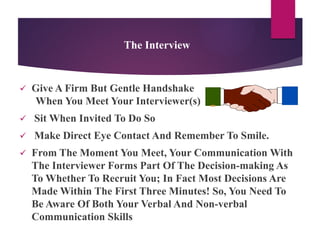
 Give A Firm But Gentle Handshake
When You Meet Your Interviewer(s)
 Sit When Invited To Do So
 Make Direct Eye Contact And Remember To Smile.
 From The Moment You Meet, Your Communication With
The Interviewer Forms Part Of The Decision-making As
To Whether To Recruit You; In Fact Most Decisions Are
Made Within The First Three Minutes! So, You Need To
Be Aware Of Both Your Verbal And Non-verbal
Communication Skills
Verbal Communication
 Verbal Communication
 Show Genuine Interest In The Position
 Listen And Answer The Questions Asked
 Never Argue A Point
 If You Do Not Understand Or Hear A
Question, Ask For It To Be Repeated
 Do Not Interrupt
Non-verbal Communication
 Appearance And Mannerisms Are Very Important – Think
Of Body Language And Facial
 Expressions
 Put Your Feet Squarely On The Floor Or Cross Your Legs
At The Ankle
 Put Anything You Are Carrying On The Floor
 Rest Your Hands In Your Lap
 Nod Your Head To Show You Are Listening
 Do Not Fidget
 Be Serious But Do Not Forget To Smile
Mistakes To Avoid In An Interview
× Be late
× Fidget or look at your watch
× Argue
× Put anything on the interviewer’s desk
× Say anything negative
× Appear indifferent
× Appear aggressive or act in a superior way – nobody
likes this!
× Show too much interest in money and holidays
Tricky Questions
a.k.a..
Behavioral
Questions
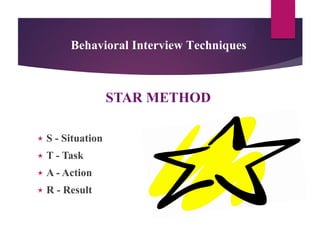
Behavioral Interview Techniques
 S - Situation
 T - Task
 A - Action
 R - Result
STAR METHOD
Behavioral Interview Questions
 Give me an example of a problem you encountered & how you handled it?
 Give me an example of a time when you faced a lot of obstacles to
achieving a goal…
 Talk about a stressful situation you’ve experienced…
 Tell me about a time when you’ve been a team player..
 Tell me about a project or role that you’ve taken on that is outside your
job description….
 How have you handled situations in which you had to deal with something
that you're not totally comfortable with?
 How do you build your confidence?
 Give me an example of how you’ve failed…
 Tell me about a time when you’ve had to challenge authority...
Closing The Interview
• Ask Your Questions - Make Sure You Have Asked All Your
Prepared Questions About The Job, Company And
Management.
• Reinforce The Positive - This Is The Time To Make A Positive
Closing Statement By Highlighting Why You Are The Best
Job Candidate.
• Make Sure You Have Addressed The Interviewers Concerns -
You Want To Be Sure That All The Issues Have Been Dealt
With. Try An Approach Such As,"are There Any Issues Or
Concerns That I Need To Address?"
Closing The Interview
• Find Out the Next Step - you need to know exactly what
happens next in the interview process - a second interview,
assessments, a medical etc. Establish the timeframe for a
hiring decision to be made and who you should get in
touch with to follow up the status of your application.
• Thank the Interviewer - Thank the interviewer sincerely
for the time spent with you. Give a firm handshake and
make confident eye contact when doing this. Ask for a
business card from the interviewer to follow up and write
a thank you note.
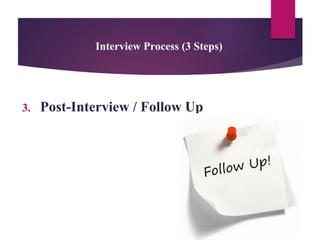
Interview Process (3 Steps)
3. Post-Interview / Follow Up
Most Importantly
 Remember to be yourself…
 Everyone is nervous…
 Be prepared
Hope You Learned Something
Worthwhile.. 

Interviewing Skills & Strategies

  • 1.
  • 2.
    What is an‘INTERVIEW’?? An Interview Is A Conversation Between Two Or More People Where Questions Are Asked By The Interviewer To Elicit Facts Or Statements From The Interviewee.
  • 3.
    Interview Process (3Steps) 1. Preparation
  • 4.
    Know yourself  BeAble To Articulate YOUR  Skills  Values  Interests  Abilities  Long Term Plans  Be Able To Give Examples Of Them  Know Your Resume Inside Out  Use Common Sense
  • 5.
    Know The Employer Research! Research! Research!  Prepare To Demonstrate Your Knowledge Of The Profession And The Company  Prepare To Give Reasons For Your Interest In Working In That Profession/Company  Develop Questions In Advance To Ask About The Job/Organization
  • 6.
    Common Questions ToPrepare  Tell Me About Yourself.  Why Do You Want This Job?  How Did You Become Interested In This Field Of Work?  What Do You Have To Offer This Organization?  What Are Some Of Your Strengths And Weaknesses?  What Do You See Yourself Doing In Five Years?  How Do You Handle Stress And Pressure?  Why Are You Leaving Or Have Left Your Job?  Why Should We Hire You?  What Are Your Goals For The Future?
  • 7.
    Rehearse  Practice • TapeRecorder • Mirror • Video Camera • Friends, Family  Visualize The Interview  No Memorized Answers • Just Concepts And Key “Buzz Words”
  • 8.
    Interview Process (3Steps) 2. Presentation / The Actual Interview
  • 9.
    Types Of Interview On Campus Interviews  Screening Interviews  On Site Interviews  Second Round Interviews  One On One  Panel Interviews  Group Interviews  Over A Meal
  • 10.
    First impressions Men Women Suit Jacket PressedShirt No Beepers Suit Plain Jewelry No Perfume Hair Groomed
  • 11.
    Different clothing types Professional Dress Interview outfit Daily clothing for professional office setting  Business Casual Dress Dress down Fridays or casual office environment Career Fair  Casual Dress Company picnic Traveling for work
  • 12.
  • 13.
  • 14.
  • 15.
  • 16.
  • 17.
  • 18.
    Hints  Dress ForThe Position You Want, Not The Position You Have  Men  Wear A White T-shirt Under Dress Shirt  Helps With Perspiration  Have Someone Help You Tie Your Tie  Women  Pull Hair Back  Go Easy On Make Up  One Ring Per Hand
  • 19.
    Accessories  Shoes  Polished,Comfortable  Socks/Hose  Do Not Go Without Socks/Hose  Belts  If Have Belt Loops, Wear A Belt  Jewelry  Minimal  Purse/Attache Case
  • 20.
    Day Of TheInterview  Fresh Shower, Well Groomed  Leave Plenty Of Time For Mishaps  Eat Prior To The Interview  Avoid Too Much Caffeine And Sugar  Arrive Early  15Too Early Makes Interviewers Nervous  Minutes Ample Time  When Arriving A Business, Be Courteous To All Employees
  • 21.
    The Interview  GiveA Firm But Gentle Handshake When You Meet Your Interviewer(s)  Sit When Invited To Do So  Make Direct Eye Contact And Remember To Smile.  From The Moment You Meet, Your Communication With The Interviewer Forms Part Of The Decision-making As To Whether To Recruit You; In Fact Most Decisions Are Made Within The First Three Minutes! So, You Need To Be Aware Of Both Your Verbal And Non-verbal Communication Skills
  • 22.
    Verbal Communication  VerbalCommunication  Show Genuine Interest In The Position  Listen And Answer The Questions Asked  Never Argue A Point  If You Do Not Understand Or Hear A Question, Ask For It To Be Repeated  Do Not Interrupt
  • 23.
    Non-verbal Communication  AppearanceAnd Mannerisms Are Very Important – Think Of Body Language And Facial  Expressions  Put Your Feet Squarely On The Floor Or Cross Your Legs At The Ankle  Put Anything You Are Carrying On The Floor  Rest Your Hands In Your Lap  Nod Your Head To Show You Are Listening  Do Not Fidget  Be Serious But Do Not Forget To Smile
  • 24.
    Mistakes To AvoidIn An Interview × Be late × Fidget or look at your watch × Argue × Put anything on the interviewer’s desk × Say anything negative × Appear indifferent × Appear aggressive or act in a superior way – nobody likes this! × Show too much interest in money and holidays
  • 25.
  • 26.
    Behavioral Interview Techniques S - Situation  T - Task  A - Action  R - Result STAR METHOD
  • 27.
    Behavioral Interview Questions Give me an example of a problem you encountered & how you handled it?  Give me an example of a time when you faced a lot of obstacles to achieving a goal…  Talk about a stressful situation you’ve experienced…  Tell me about a time when you’ve been a team player..  Tell me about a project or role that you’ve taken on that is outside your job description….  How have you handled situations in which you had to deal with something that you're not totally comfortable with?  How do you build your confidence?  Give me an example of how you’ve failed…  Tell me about a time when you’ve had to challenge authority...
  • 28.
    Closing The Interview •Ask Your Questions - Make Sure You Have Asked All Your Prepared Questions About The Job, Company And Management. • Reinforce The Positive - This Is The Time To Make A Positive Closing Statement By Highlighting Why You Are The Best Job Candidate. • Make Sure You Have Addressed The Interviewers Concerns - You Want To Be Sure That All The Issues Have Been Dealt With. Try An Approach Such As,"are There Any Issues Or Concerns That I Need To Address?"
  • 29.
    Closing The Interview •Find Out the Next Step - you need to know exactly what happens next in the interview process - a second interview, assessments, a medical etc. Establish the timeframe for a hiring decision to be made and who you should get in touch with to follow up the status of your application. • Thank the Interviewer - Thank the interviewer sincerely for the time spent with you. Give a firm handshake and make confident eye contact when doing this. Ask for a business card from the interviewer to follow up and write a thank you note.
  • 30.
    Interview Process (3Steps) 3. Post-Interview / Follow Up
  • 31.
    Most Importantly  Rememberto be yourself…  Everyone is nervous…  Be prepared
  • 32.
    Hope You LearnedSomething Worthwhile.. 