The document provides guidance on preparing for and conducting a job interview. It outlines key steps including researching the company and position, practicing responses to common questions, maintaining a professional appearance and body language during the interview, and following up after the interview. Key points emphasized are knowing yourself and the opportunity, having examples prepared that highlight relevant skills and experience, asking questions of the interviewer, and expressing interest in the position to close on a positive note.
In this document
Powered by AI
Introduction to interview processes, outlining its purpose and a detailed agenda.
The purpose of the interview is to assess if the job fits the candidate's qualifications.
Employers assess candidates based on cover letter, resume, experience, skills, and cultural fit.
Essential pre-interview preparation including self-awareness and practicing interview skills.
Understanding the company culture, job description, and its challenges is crucial for candidates.
Preparing questions, reviewing skills, and showcasing experiences are key elements for success.
Making a professional appearance and being early are fundamental aspects of initiating an interview.
Both positive and negative body language can significantly influence interview perceptions.
Key behaviors during the interview include professional conduct and managing responses to questions.
Understanding traditional and tricky questions, and utilizing the STAR method for effective responses.
Closing strategies include summarizing strengths and clarifying next steps with interviewers.
Steps after an interview such as sending thank-you notes and preparing for potential negotiations.
Concludes with an opportunity for questions and provides contact information for further communication.
Agenda Interview andits Purpose Preparation - Before the Interview Starting - Opening the Interview The Interview – Applying and showcasing Final laps - Closing the Interview Follow up - After the interview
Why Should IHire You? Quality of Cover Letter Quality of Resume Interview Performance Professionalism References Years of Relevant Work Experience Fit with Company Culture Relevant Skills Internal Candidate Candidate’s Familiarity with the Organization
How to Preparefor an Interview Self-Awareness - Know yourself Be very familiar with your resume Be able to articulate your goals and strengths College career office or library may have a sheet or booklet on interview technique. Take as much advice as you can. Try and 'practice' an interview. Ask a friend, or college teacher, to pretend to interview you. Make notes of your achievements and study the way you talk about them by practicing.
7.
Position Awareness Knowthe company and specific job description: # employees, culture, philosophy, news, challenges/opportunities primary & secondary functions of job
8.
PREP P repare3-5 questions for the interviewer R eview 3-6 key skills about yourself that fit the position E stablish 10 examples to showcase yourself P ractice, Practice, Practice!!!
Professional Appearance Bepositive, and confident (if you can!) but not over-confident. Take a pen, notepad, and several resume copies Be 15 minutes early Wear suitable interview clothes. Look yourself over once before entering the office Have questions ready to ask about the company and the job. Any applications handed before the interview begins, are to be filled in as accurately as possible Make sure they match the information in your CV and Cover Letter.
11.
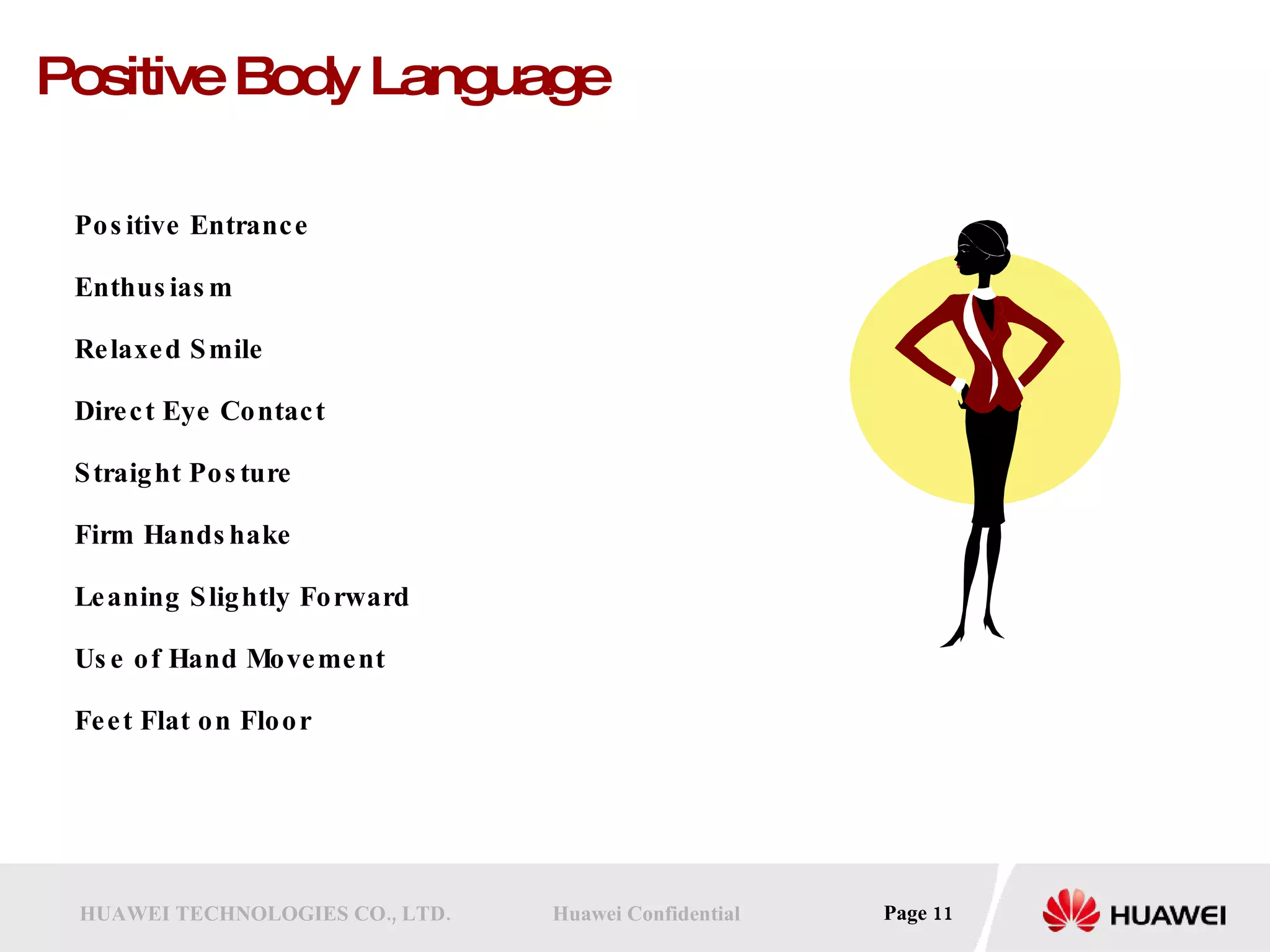
Positive Body LanguagePositive Entrance Enthusiasm Relaxed Smile Direct Eye Contact Straight Posture Firm Handshake Leaning Slightly Forward Use of Hand Movement Feet Flat on Floor
12.
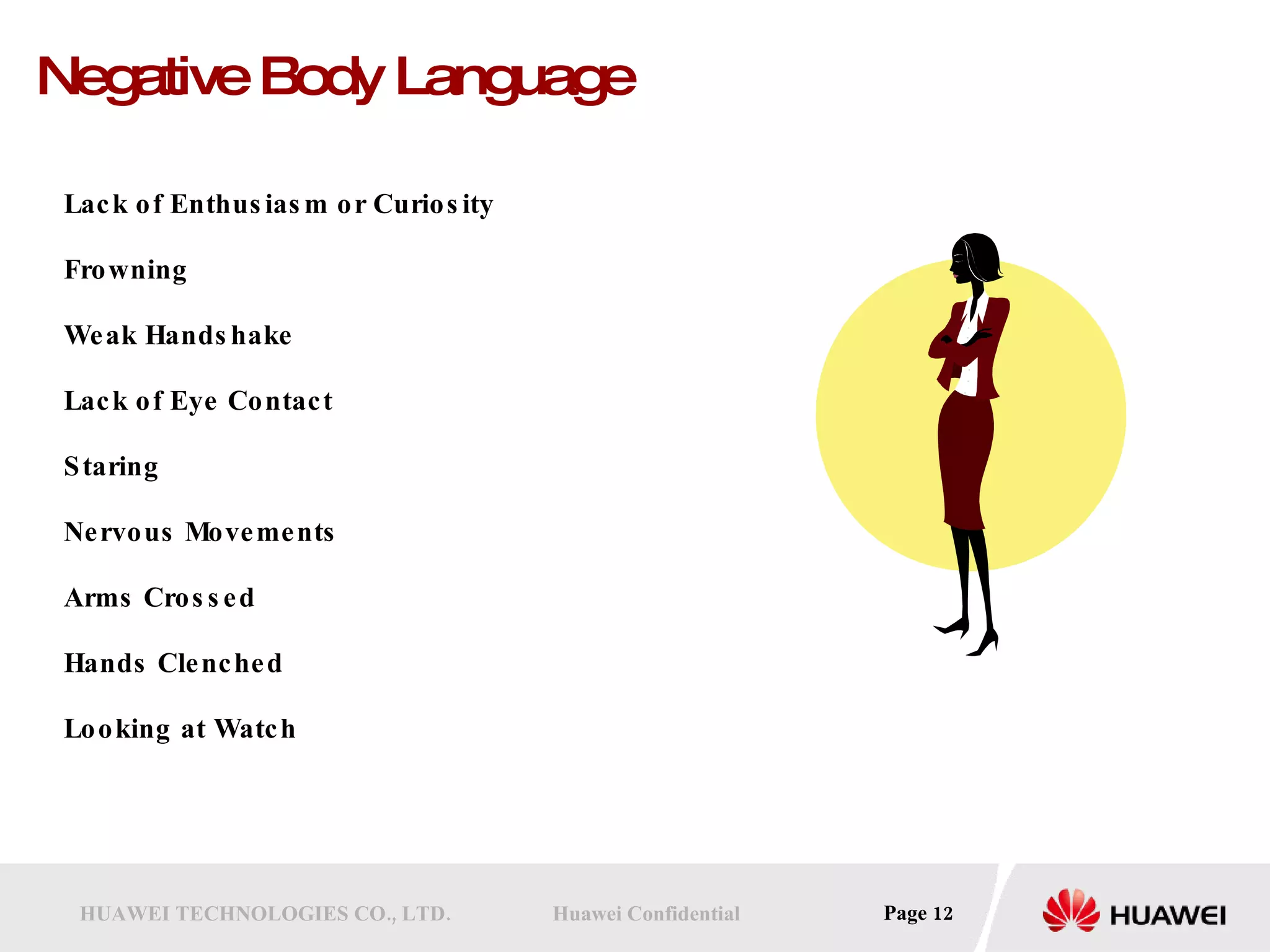
Negative Body LanguageLack of Enthusiasm or Curiosity Frowning Weak Handshake Lack of Eye Contact Staring Nervous Movements Arms Crossed Hands Clenched Looking at Watch
Startup Always greetthe interviewer by his/her last name and try to pronounce it correctly. Have a good firm handshake. Look alert and interested. Scan the room once and then keep your eyes on the interviewer. Wait until you are offered a chair before you sit down.
15.
Ice Breakers Youranswer to the initial opening statements in the job interview are important these are called "ice breakers" Some times the interviewer will ask whether you had difficulty finding the company premises Your answer should be brief and polite. The interviewer is merely being polite - if you had problems in finding the premises he/she doesn't need to know that.
16.
During Interview Stressyour achievements. Always conduct yourself professionally and if something beyond your control occurs, show a sense of humor. Be enthusiastic and show it in your replies and body language. Answer the interview question by more than a simple yes or no but try not to go over the 60 second limit. Avoid at all cost complaining about your current or former employer in your job interview. Do not answer questions about politics or religion if the job is completely unrelated.
17.
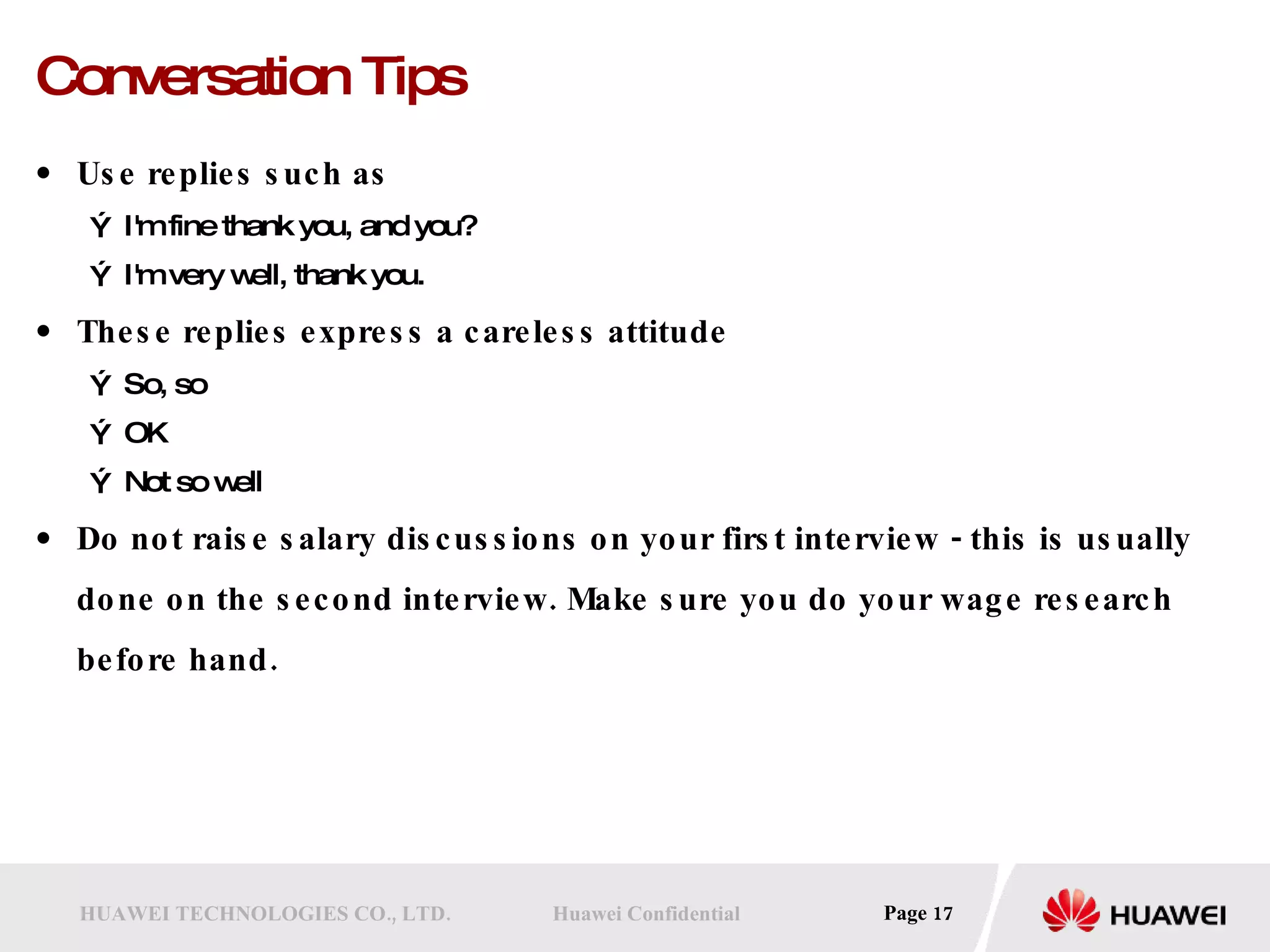
Conversation Tips Usereplies such as I'm fine thank you, and you? I'm very well, thank you. These replies express a careless attitude So, so OK Not so well Do not raise salary discussions on your first interview - this is usually done on the second interview. Make sure you do your wage research before hand.
18.
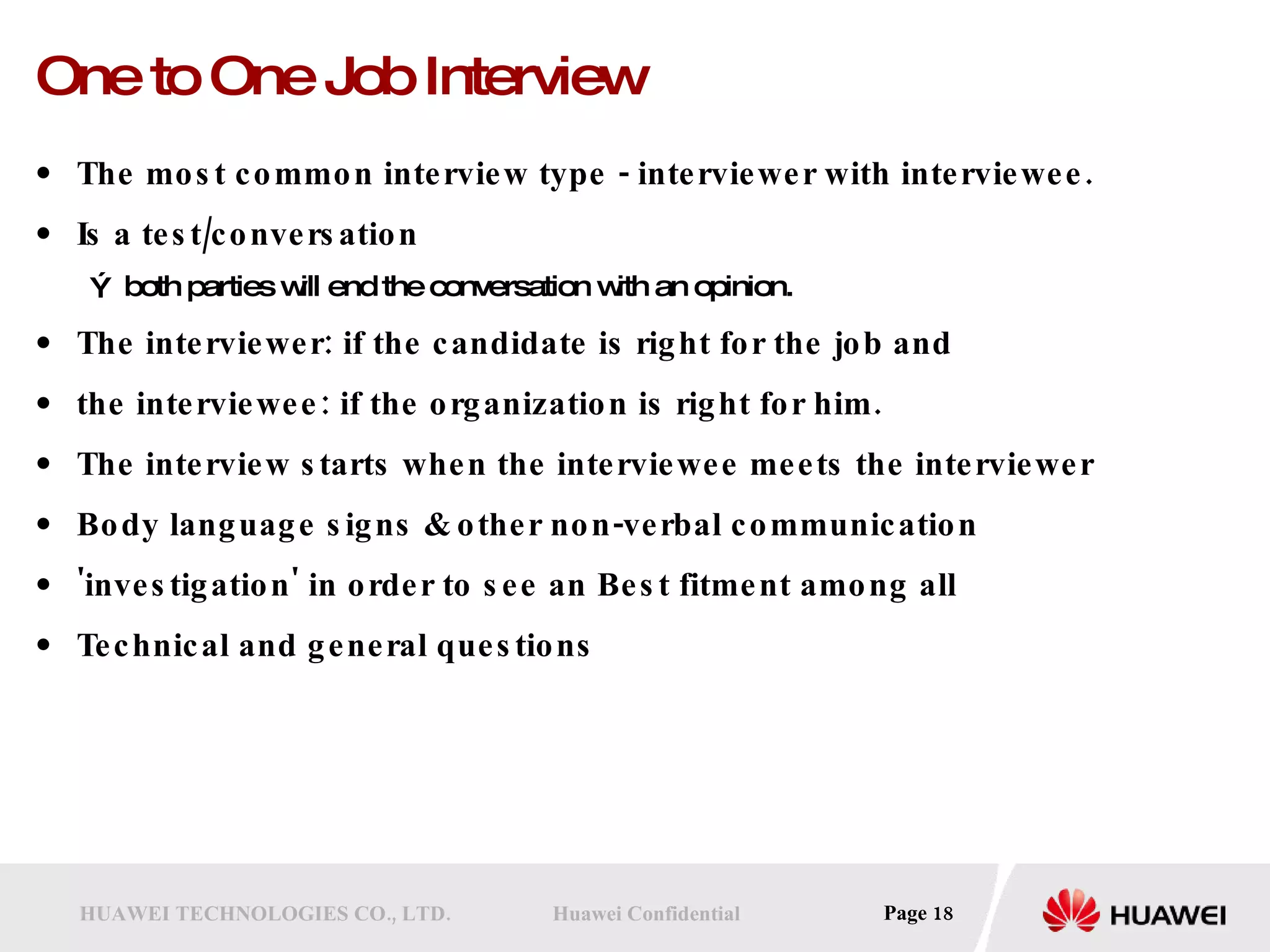
One to OneJob Interview The most common interview type - interviewer with interviewee. Is a test/conversation both parties will end the conversation with an opinion. The interviewer: if the candidate is right for the job and the interviewee: if the organization is right for him. The interview starts when the interviewee meets the interviewer Body language signs & other non-verbal communication 'investigation' in order to see an Best fitment among all Technical and general questions
19.
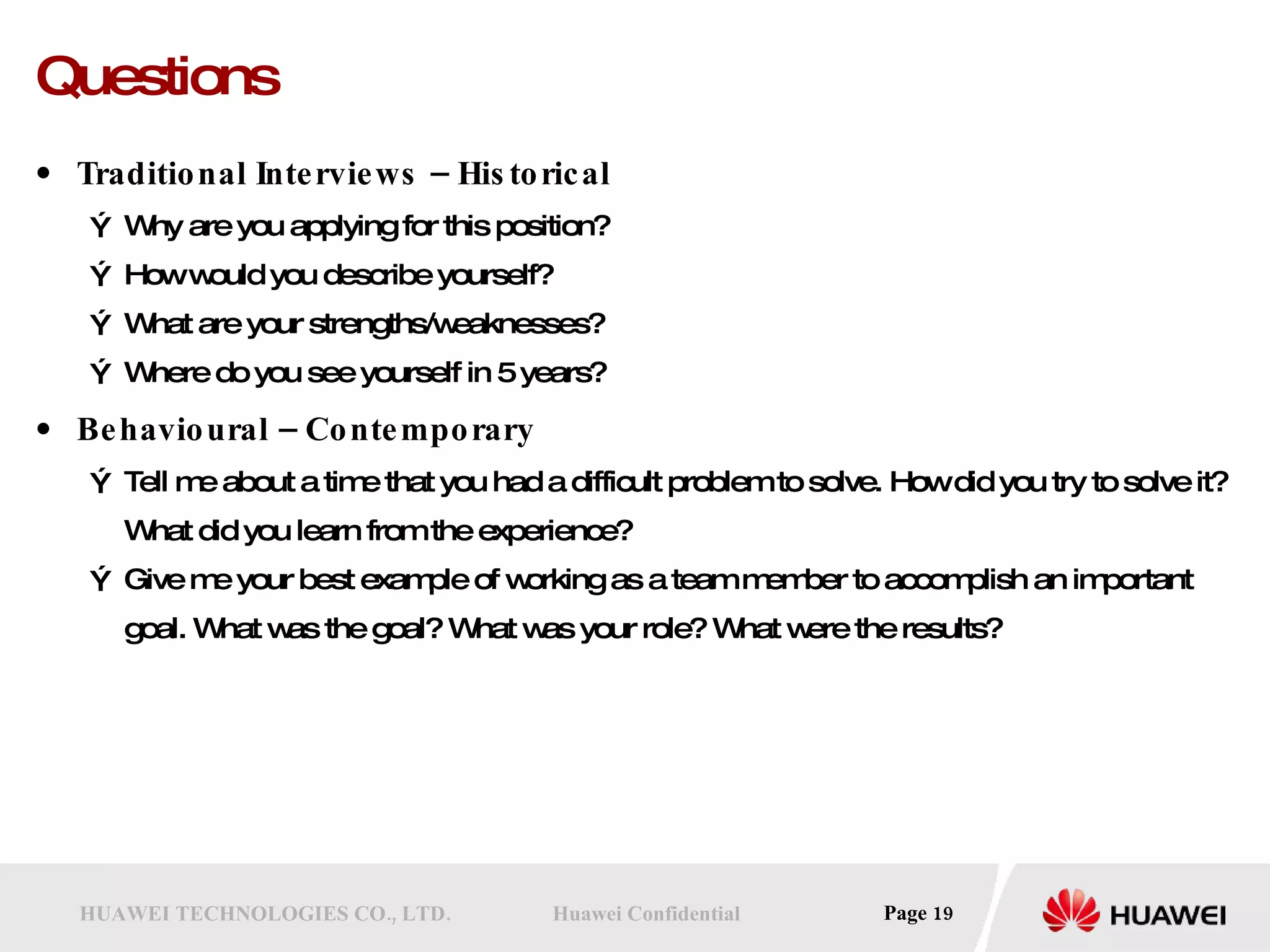
Questions Traditional Interviews– Historical Why are you applying for this position? How would you describe yourself? What are your strengths/weaknesses? Where do you see yourself in 5 years? Behavioural – Contemporary Tell me about a time that you had a difficult problem to solve. How did you try to solve it? What did you learn from the experience? Give me your best example of working as a team member to accomplish an important goal. What was the goal? What was your role? What were the results?
20.
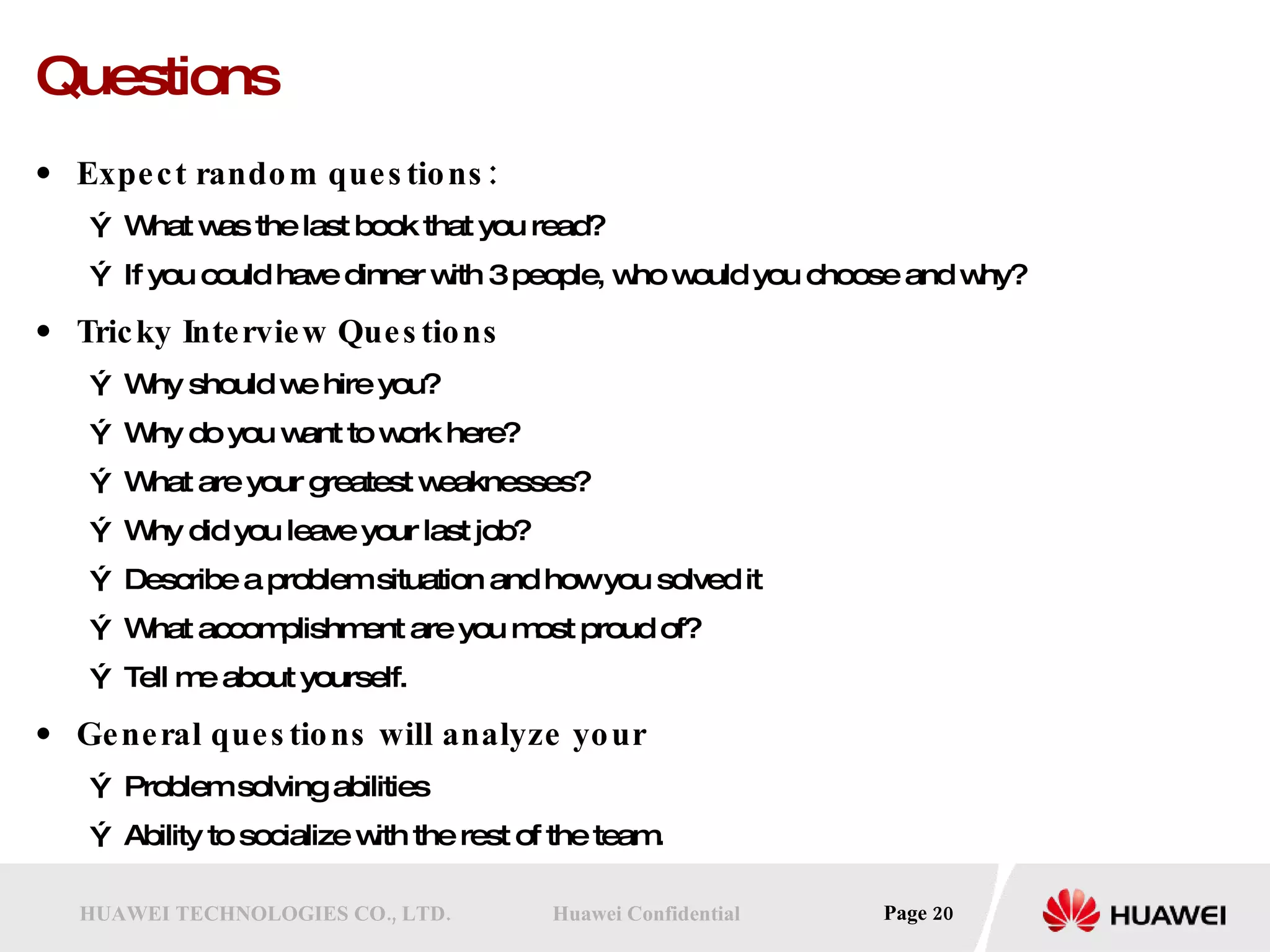
Questions Expect randomquestions: What was the last book that you read? If you could have dinner with 3 people, who would you choose and why? Tricky Interview Questions Why should we hire you? Why do you want to work here? What are your greatest weaknesses? Why did you leave your last job? Describe a problem situation and how you solved it What accomplishment are you most proud of? Tell me about yourself. General questions will analyze your Problem solving abilities Ability to socialize with the rest of the team.
21.
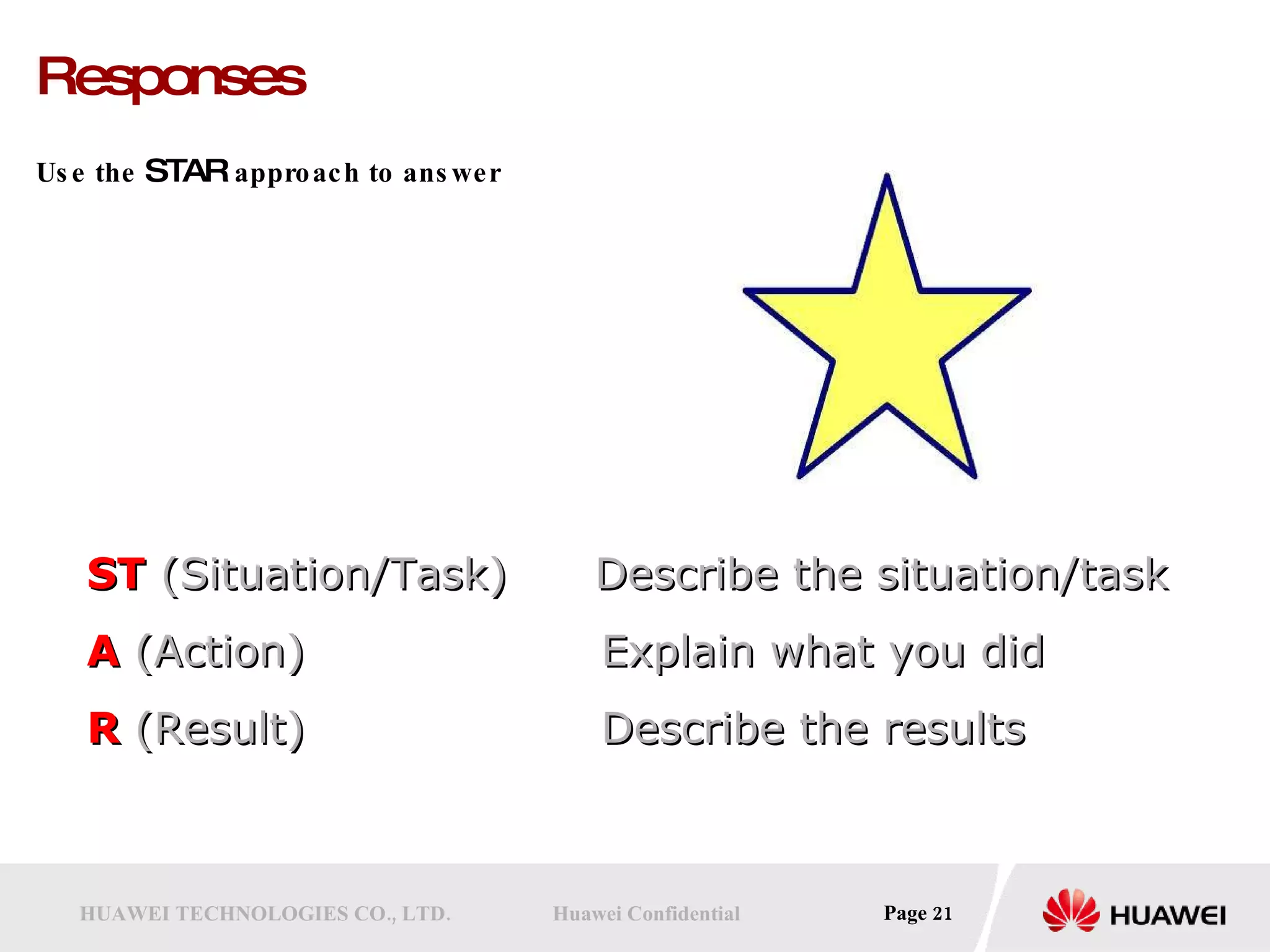
Responses Use the STAR approach to answer ST (Situation/Task) Describe the situation/task A (Action) Explain what you did R (Result) Describe the results
22.
In Any Interview Be ready for: “Tell me about yourself” Be honest, show your personality Help the interviewer to know: Are you dependable? Are you a good worker? Will you fit in here? Take support documents or portfolio if appropriate Give reasons to hire you over the 100 other applicants
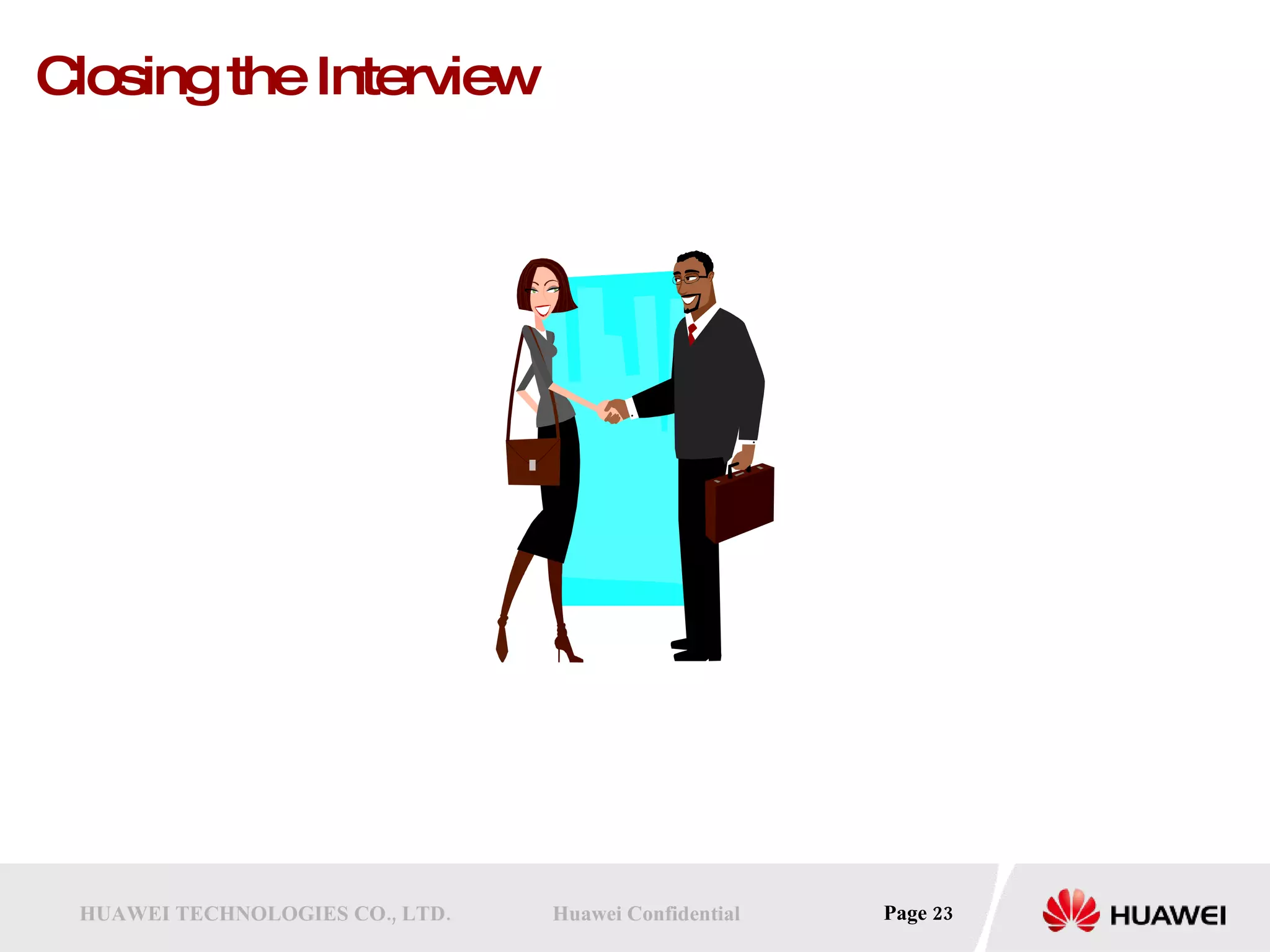
Closing the InterviewSummarize key strengths and match for the position Always ask questions Thank the interviewer by name Ask about the next step Express an interest in hearing from them
The Next StepFollow-up with a thank you note Be prepared for negotiating offer(s) or a second interview Contact them by phone or e-mail if you do not hear back within the time frame indicated Always leave them with a positive impression
s.senthilkumar Technical projectlead, IPOS-IPv6 Huawei Technologies India PVT LTD Level 3,4,5 and 7, Leela Galleria The Leela Palace, No 23, Airport Road, Bangalore – 560-008 E-Mail: senthilkumars@huawei.com Good Luck!! Wish you a happy journey!!!
Editor's Notes
#4 J. The purpose of the Interview is to get the job You are interviewing them as much as they are interviewing you!