MMI: Mechanics & Lessons Learned Stanford University School of Medicine Office of Student Services
Agenda High Level Support Public Opinion Planning
Institutional Support Key to accomplishing MMI Dean Phillip Pizzo Dr. Charles Prober, Senior Associate Dean of Medical Education Dr. Gabriel Garcia, Associate Dean for MD Admissions
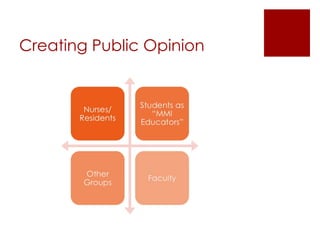
Creating Public Opinion
Pre-Planning: Research  Visit other schools who have already implemented MMI or will do so Begin sharing information with staff on what MMI is Get other school’s advice on: Timing/scheduling Recommended systems and processes Materials for applicants and interviewers How to organize
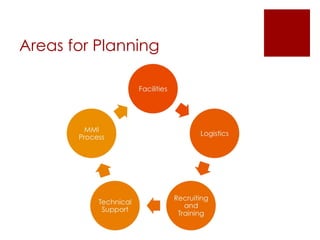
Areas for Planning
Scheduling and Staff Involve staff in determining timeframe Determine how many sessions/days Decide size of groups to use Select best days for applicants/interviewers Plan day’s agenda
Facilities Work closely with building manager/facility owner Educate facilities on MMI goals and requirements Select location to accommodate applicant groups, flow of people, and supporting activities (meals, presentations, breaks.)
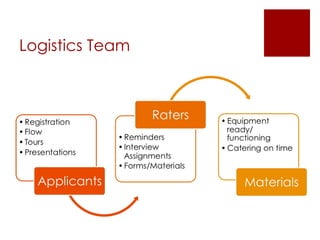
Logistics Team
Rater Recruiting and Training Start as early as possible Schedule several possible training sessions: ensure broad participation Make sure everyone attends training Establish ground rules Provide signs, checklists and reminders the day of interviews
Technical Support Begin working with them early to explain MMI Establish what resources are needed on site (printers, audio/visual) Develop good relationship so when problems do occur you get the response you need
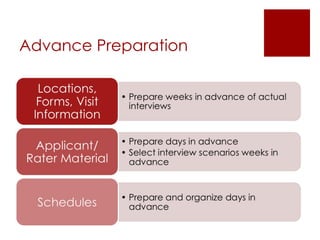
Advance Preparation
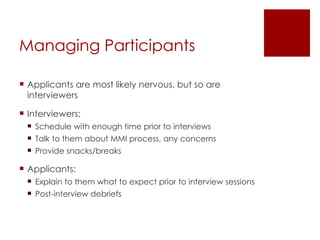
Managing Participants Applicants are most likely nervous, but so are interviewers Interviewers: Schedule with enough time prior to interviews Talk to them about MMI process, any concerns Provide snacks/breaks Applicants: Explain to them what to expect prior to interview sessions Post-interview debriefs
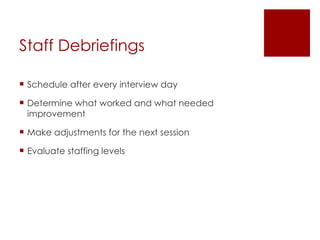
Staff Debriefings Schedule after every interview day Determine what worked and what needed improvement Make adjustments for the next session Evaluate staffing levels
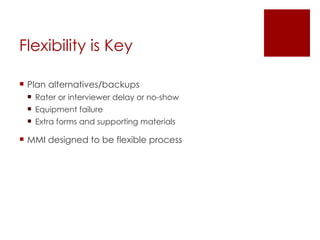
Flexibility is Key Plan alternatives/backups Rater or interviewer delay or no-show Equipment failure Extra forms and supporting materials MMI designed to be flexible process

Mmi lessons learned

  • 1.
    MMI: Mechanics &Lessons Learned Stanford University School of Medicine Office of Student Services
  • 2.
    Agenda High LevelSupport Public Opinion Planning
  • 3.
    Institutional Support Keyto accomplishing MMI Dean Phillip Pizzo Dr. Charles Prober, Senior Associate Dean of Medical Education Dr. Gabriel Garcia, Associate Dean for MD Admissions
  • 4.
  • 5.
    Pre-Planning: Research Visit other schools who have already implemented MMI or will do so Begin sharing information with staff on what MMI is Get other school’s advice on: Timing/scheduling Recommended systems and processes Materials for applicants and interviewers How to organize
  • 6.
  • 7.
    Scheduling and StaffInvolve staff in determining timeframe Determine how many sessions/days Decide size of groups to use Select best days for applicants/interviewers Plan day’s agenda
  • 8.
    Facilities Work closelywith building manager/facility owner Educate facilities on MMI goals and requirements Select location to accommodate applicant groups, flow of people, and supporting activities (meals, presentations, breaks.)
  • 9.
  • 10.
    Rater Recruiting andTraining Start as early as possible Schedule several possible training sessions: ensure broad participation Make sure everyone attends training Establish ground rules Provide signs, checklists and reminders the day of interviews
  • 11.
    Technical Support Beginworking with them early to explain MMI Establish what resources are needed on site (printers, audio/visual) Develop good relationship so when problems do occur you get the response you need
  • 12.
  • 13.
    Managing Participants Applicantsare most likely nervous, but so are interviewers Interviewers: Schedule with enough time prior to interviews Talk to them about MMI process, any concerns Provide snacks/breaks Applicants: Explain to them what to expect prior to interview sessions Post-interview debriefs
  • 14.
    Staff Debriefings Scheduleafter every interview day Determine what worked and what needed improvement Make adjustments for the next session Evaluate staffing levels
  • 15.
    Flexibility is KeyPlan alternatives/backups Rater or interviewer delay or no-show Equipment failure Extra forms and supporting materials MMI designed to be flexible process