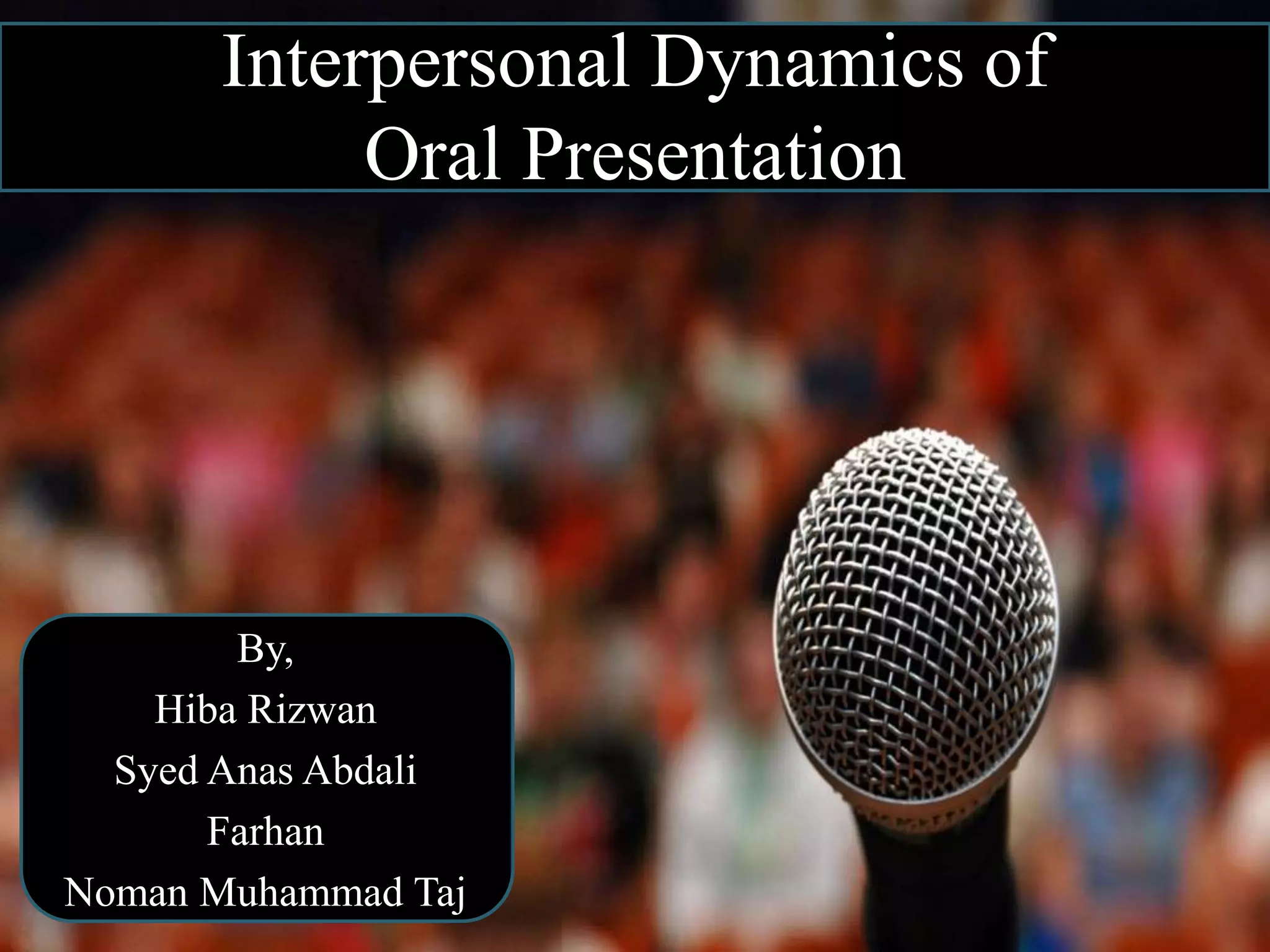

Interpersonal Dynamics of
Oral Presentation
By,
Hiba Rizwan
Syed Anas Abdali
Farhan
Noman Muhammad Taj
Types of Presentation
• INFORMATIVE
• INSTRUCTIONAL
• AROUSING
• PERSUASIVE
• DECISION MAKING
Types of Presentation
 Informative
These presentations are brief and to the point. They
generally stick to the facts and avoid complicated
information.
Types of Presentation
 Instructional
These presentations gives specific directions or order
to teach something new.
Types of Presentation
 Arousing
A presentation designed to make to audience consider
the topic or discussion to rouse the interest and
emotion of audience.
Types of Presentation
 Persuasive
To make the listeners accept and agree with the
presenter’s proposal.
Types of Presentation
 Decision Making
A presentation designed to convince listeners to act
on presenter’s proposal usually by giving evidence
and pointing out what can happen if this is not done.
Practical Guide to Oral Presentation
First Impressions
Within 30 seconds people judge your
– Economic level
– Educational level
– Social position
– Level of sophistication
– Level of success
First Impressions
Within 4 minutes people decide your
– Trustworthiness
– Compassion
– Reliability
– Intelligence
– Capability
– Humility
– Friendliness
– Confidence
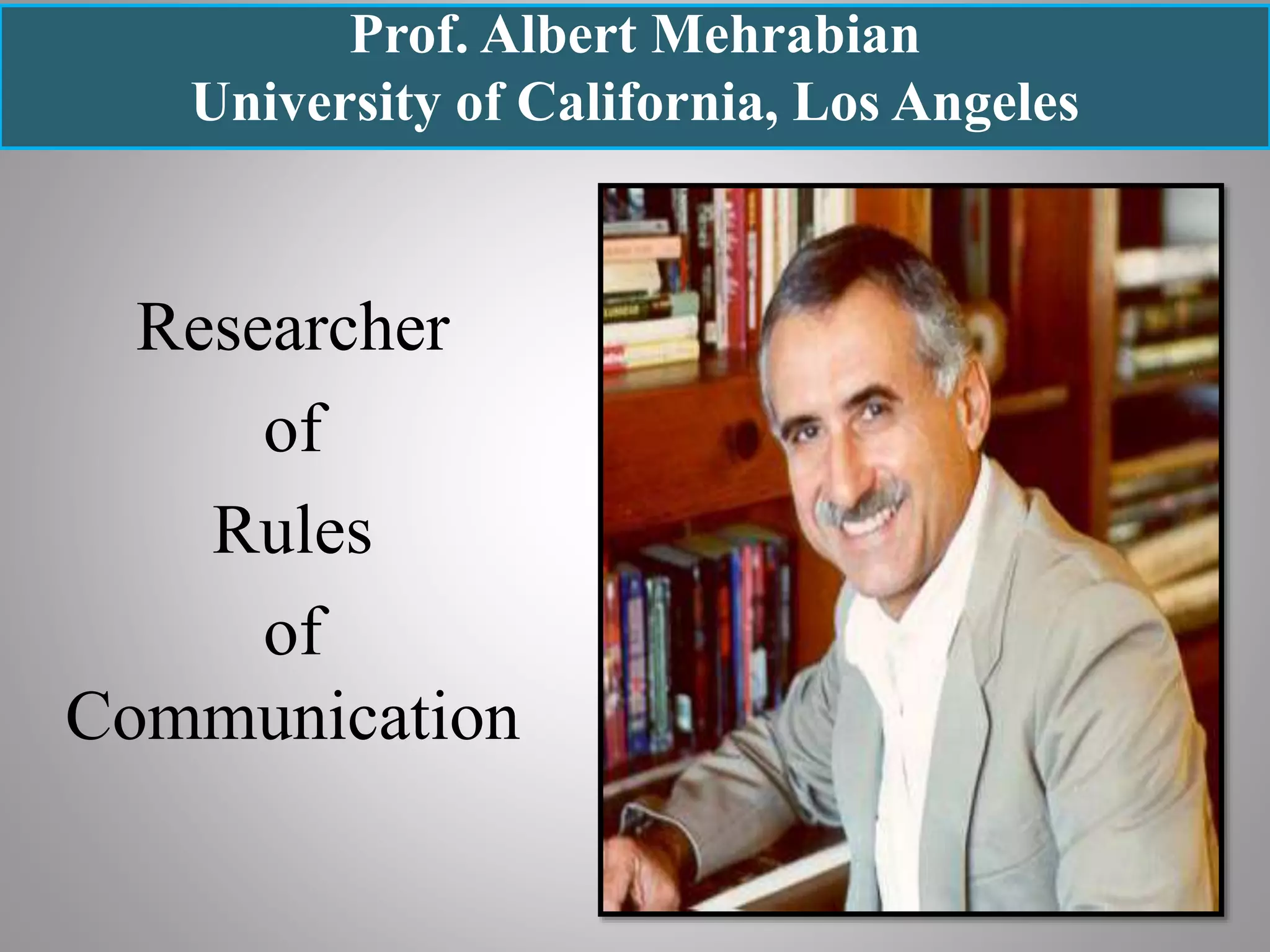
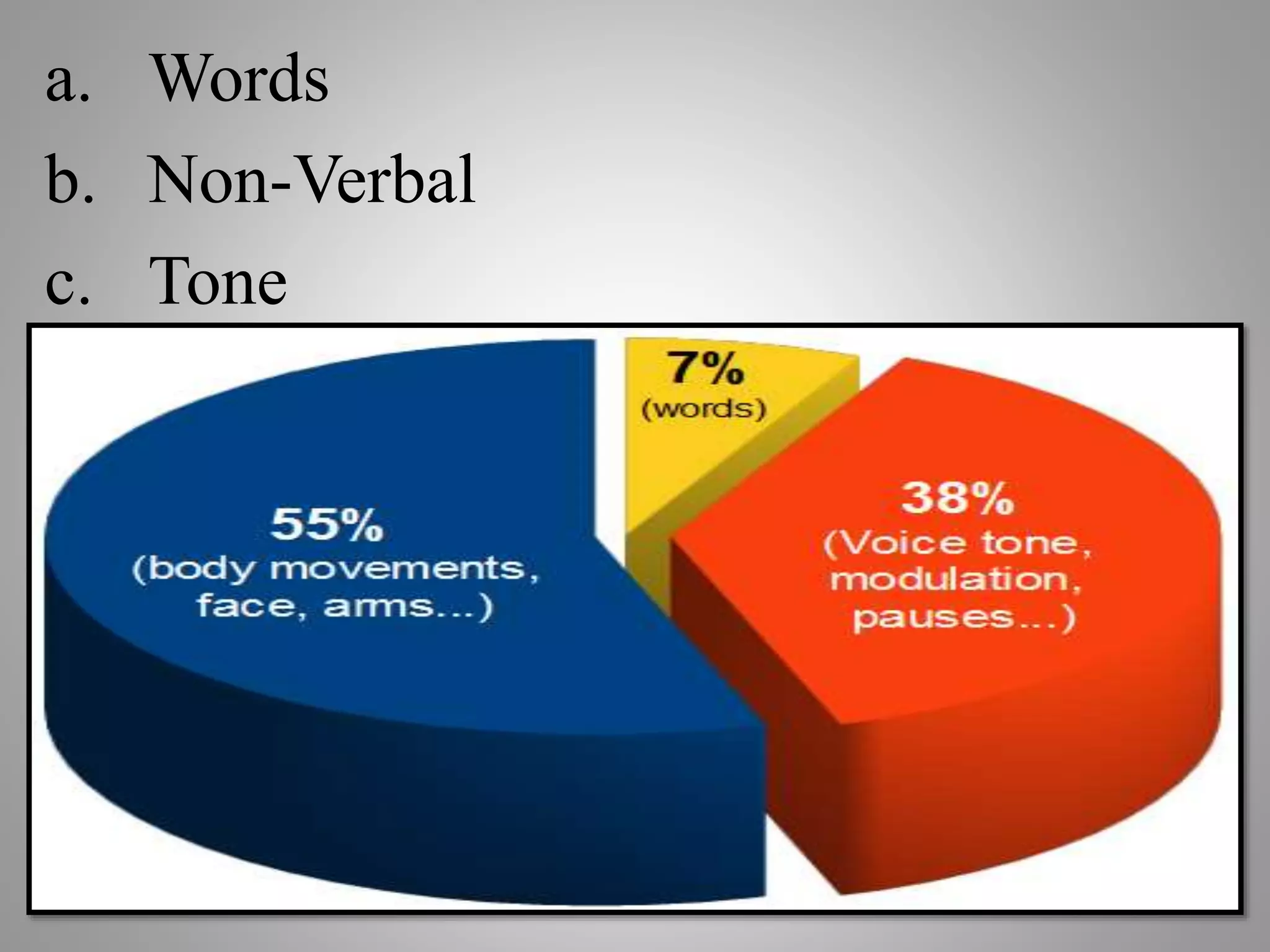
Prof. Albert Mehrabian
University of California, Los Angeles
Researcher
of
Rules
of
Communication
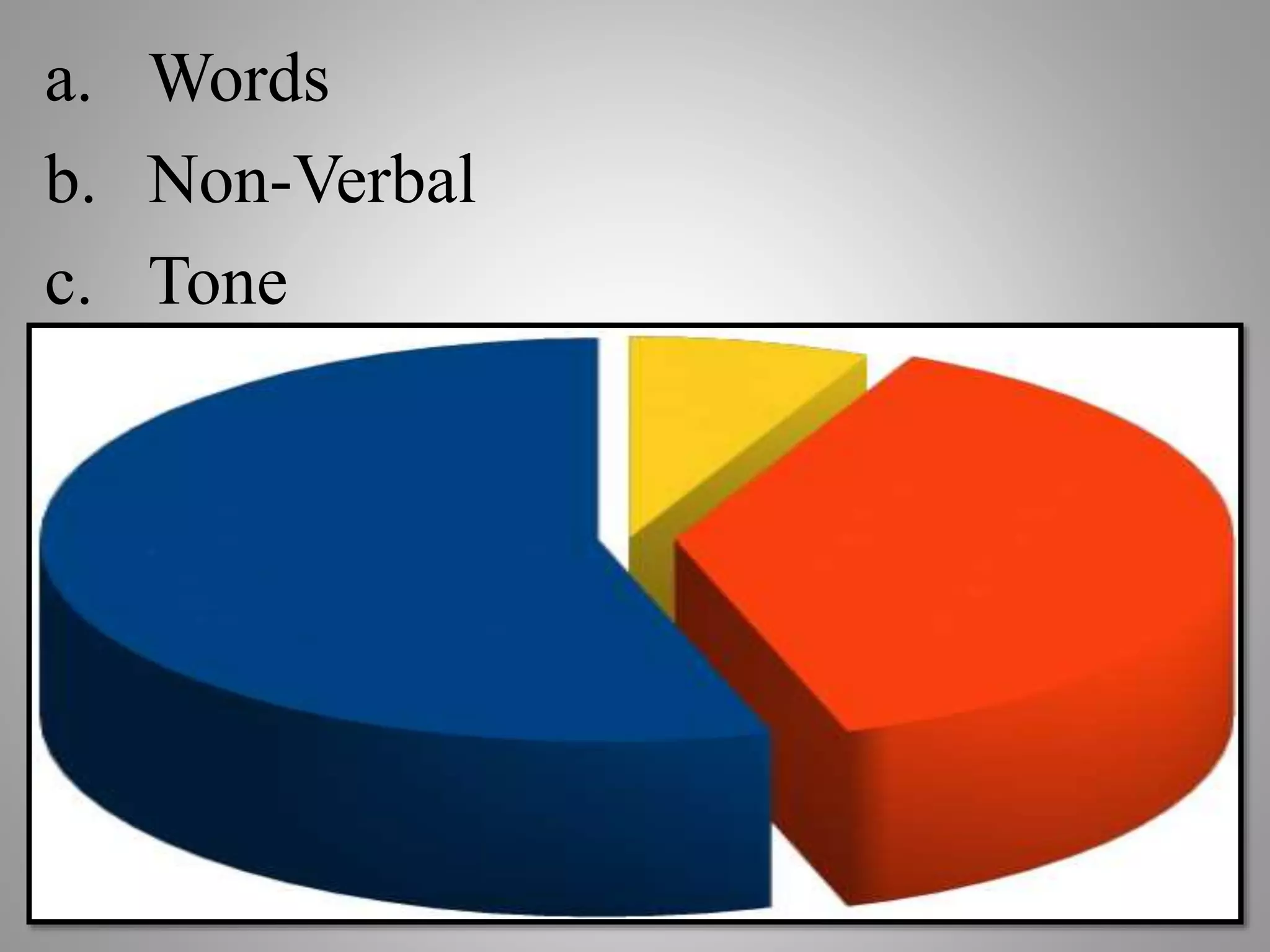
a. Words
b. Non-Verbal
c. Tone
a. Words
b. Non-Verbal
c. Tone
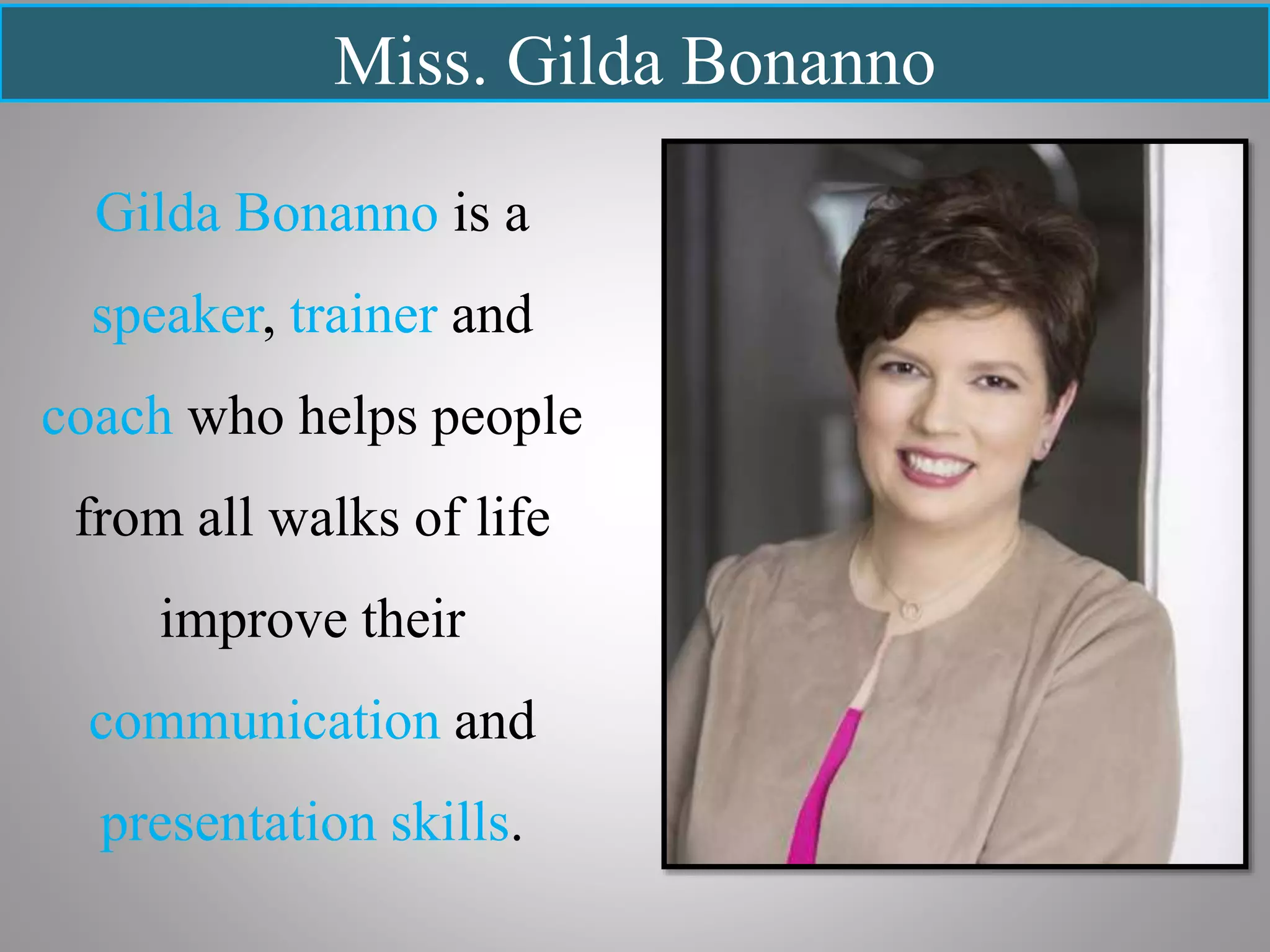
Miss. Gilda Bonanno
Gilda Bonanno is a
speaker, trainer and
coach who helps people
from all walks of life
improve their
communication and
presentation skills.
Gesture Mistakes
• Not using gestures at all- looks nervous.
• hand in your pockets- position leads down the slippery slope to
slouching.
• Fidgeting with your hands- play with unconsciously.
• Holding your hands behind your back- resembles that of a child
reciting a poem at a school assembly.
Gesture Mistakes
• Pointing at the audience- it's not polite to point.
• Folding your arms across your chest- closing yourself from the
audience.
• Gripping the podium.
• Using stilted gestures- you are not a Robot.
• Using overly rehearsed gestures- Cliché.
Movement Mistakes
• Moving without purpose- walk with purpose.
• Foot Problem- equal distribution of weight.
• Hiding behind- shows nervous.
Posture Mistakes
• Standing too stiffly- don’t be a frozen attention.
• Stand confidently- stand firm.
• Slouching- Shoulders Back.
• keeping your head down- conveys nervousness.
Facial Expression Mistakes
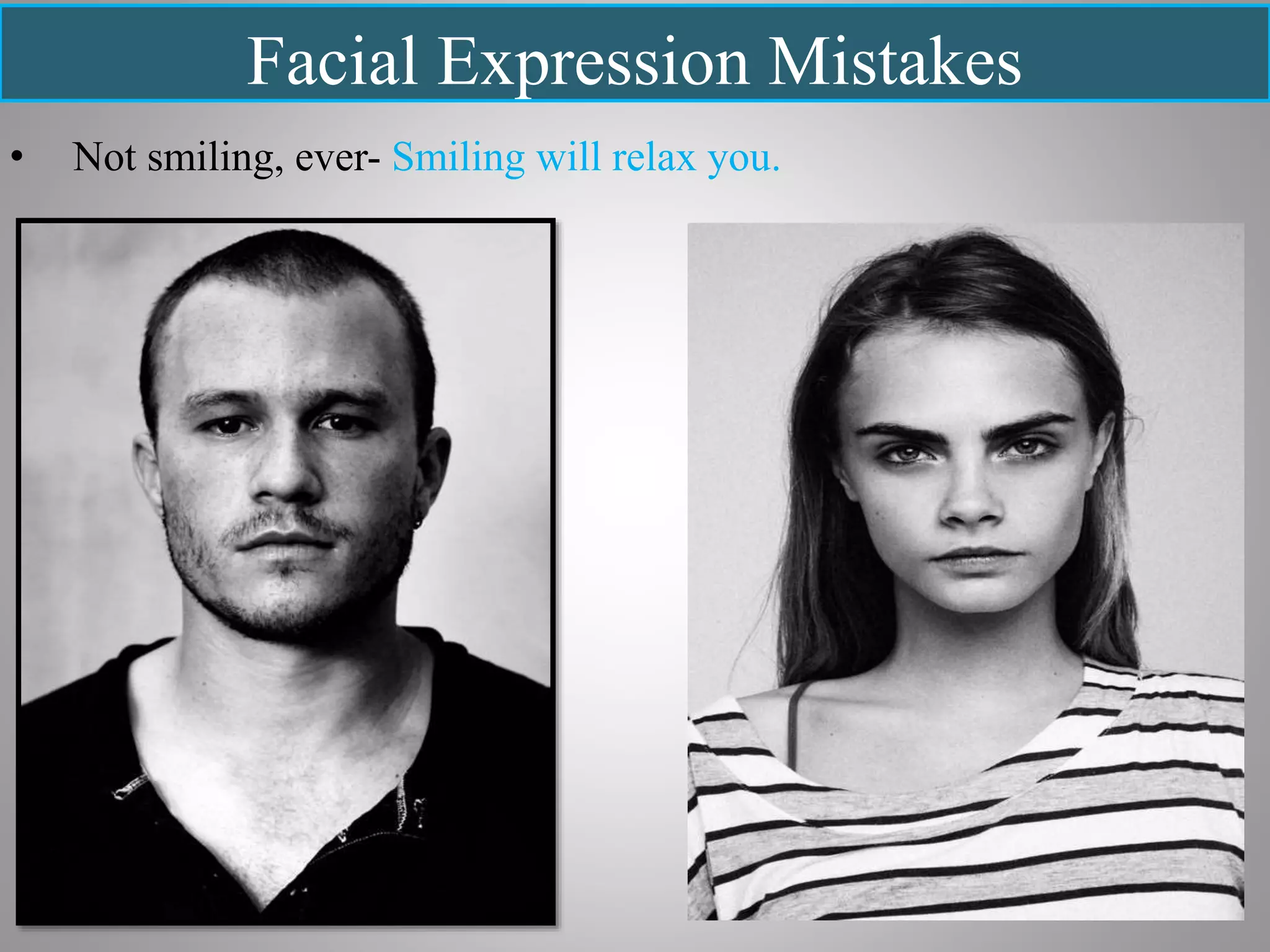
• Not smiling, ever- Smiling will relax you.
Facial Expression Mistakes
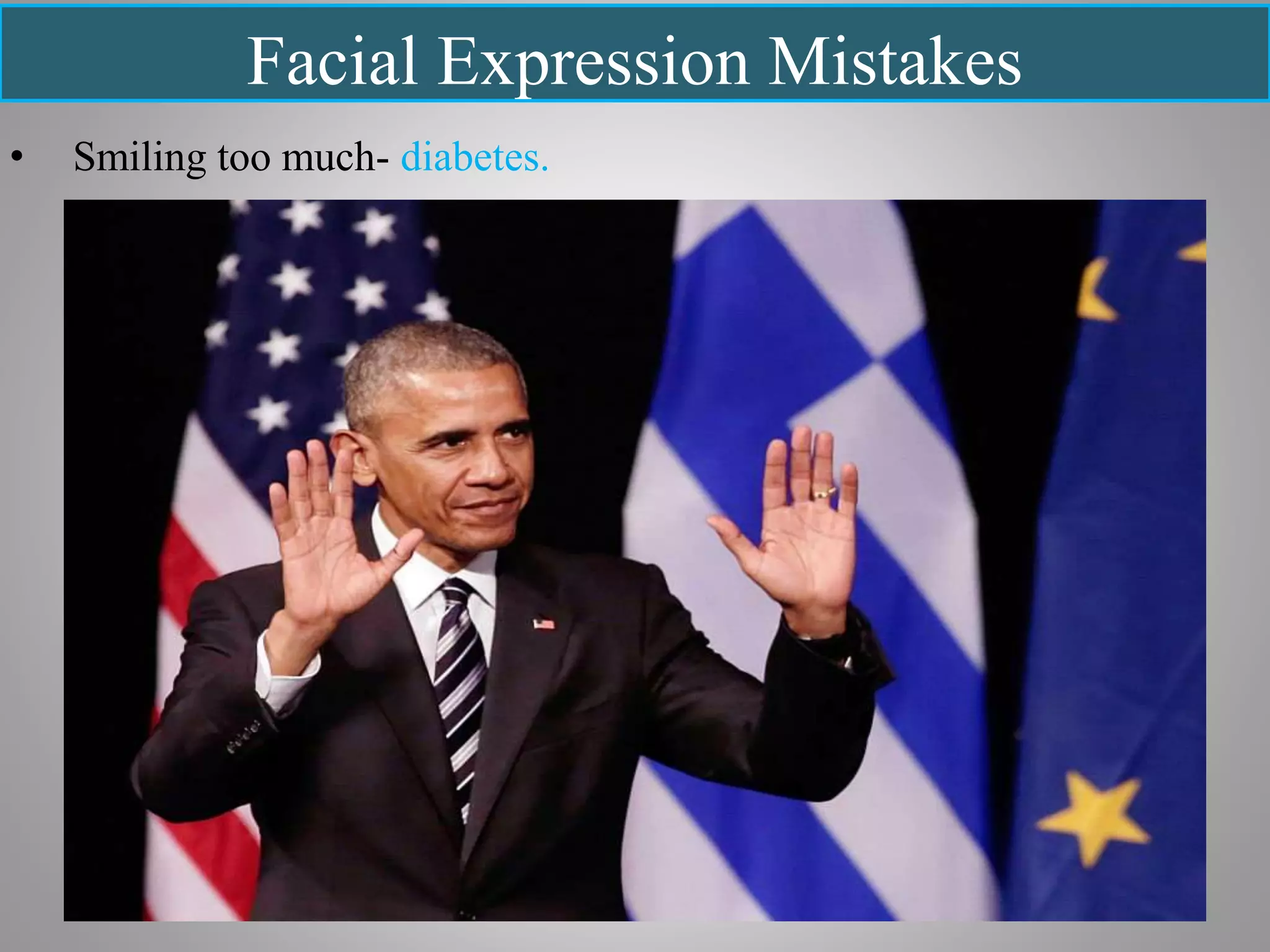
• Smiling too much- diabetes.
Vocal Techniques
• Loudness
– Will you be using a microphone?
• Pitch
– Vary to make points
• Pause for effect
– Allow time for message to “sink in”
The Voice
C: Clear – the use of simple, easily understood words
and phrases
L: Loud (enough) – it is important that everyone can
hear you
A: Assertive – a bright and confident air born of
knowledge of the subject and good preparation
P: Pause – it is essential to allow the listeners time to
digest what you have said
Use the Rights Words
What you say, and how you say it,
is the key to a successful presentation:
P – state your position or point
R – explain your ideas
E – use examples
P – restate your position or point
Want some
visual learning?
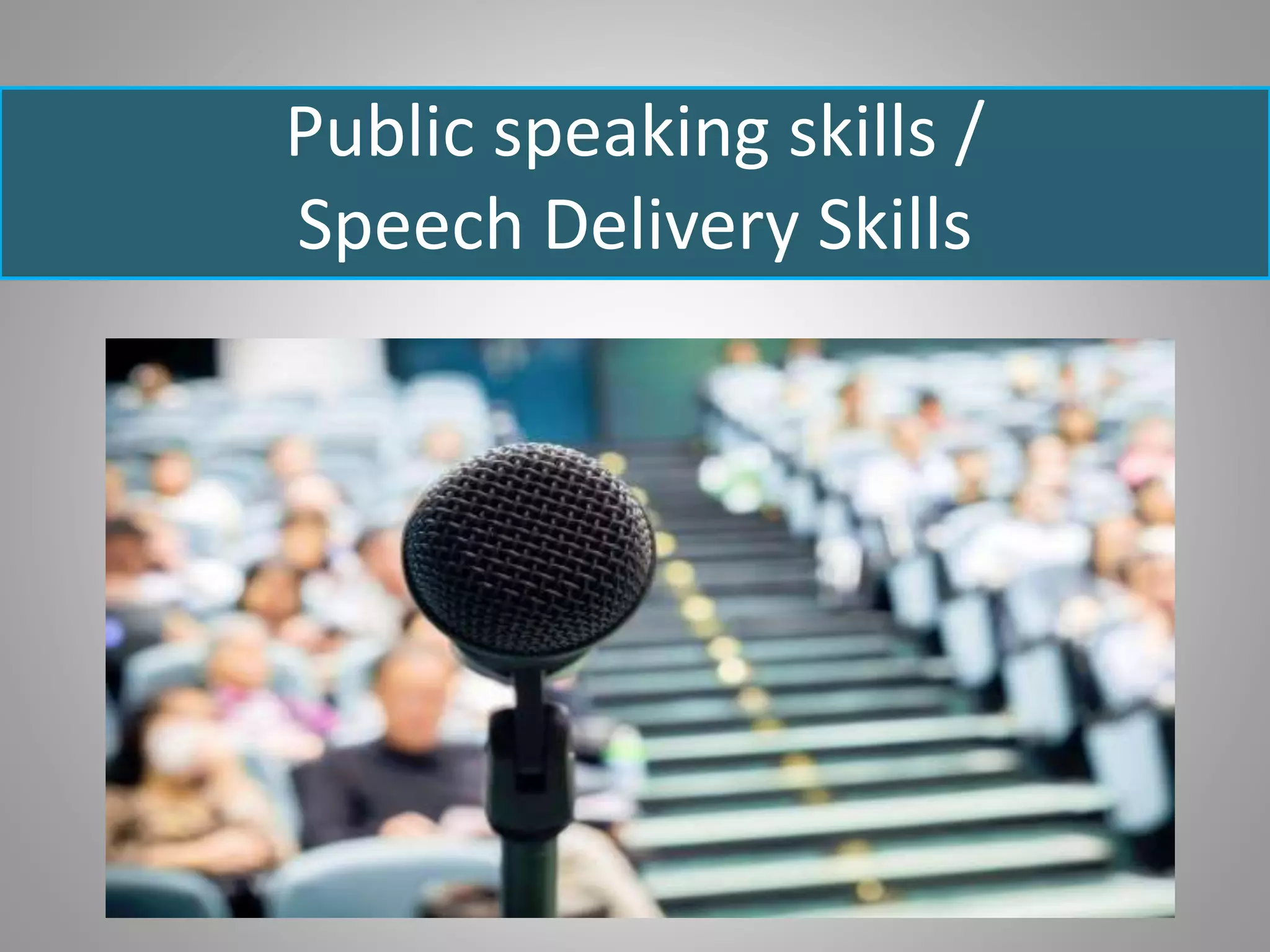
Public speaking skills /
Speech Delivery Skills
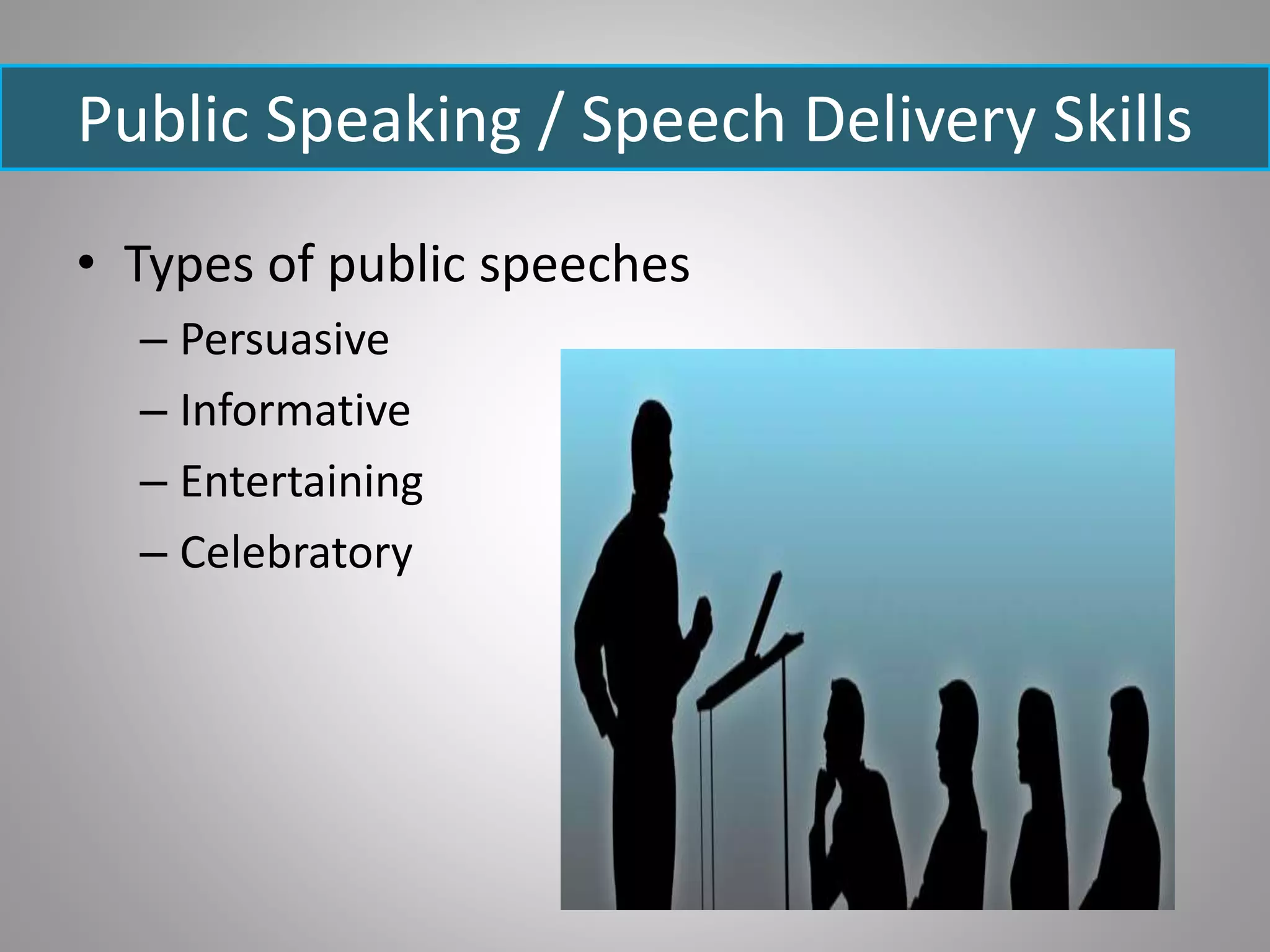
Public Speaking / Speech Delivery Skills
• Types of public speeches
– Persuasive
– Informative
– Entertaining
– Celebratory
Why is Public Speaking useful for
Students?
What Techniques can we Teach our
Students?
 Ideas / content generation
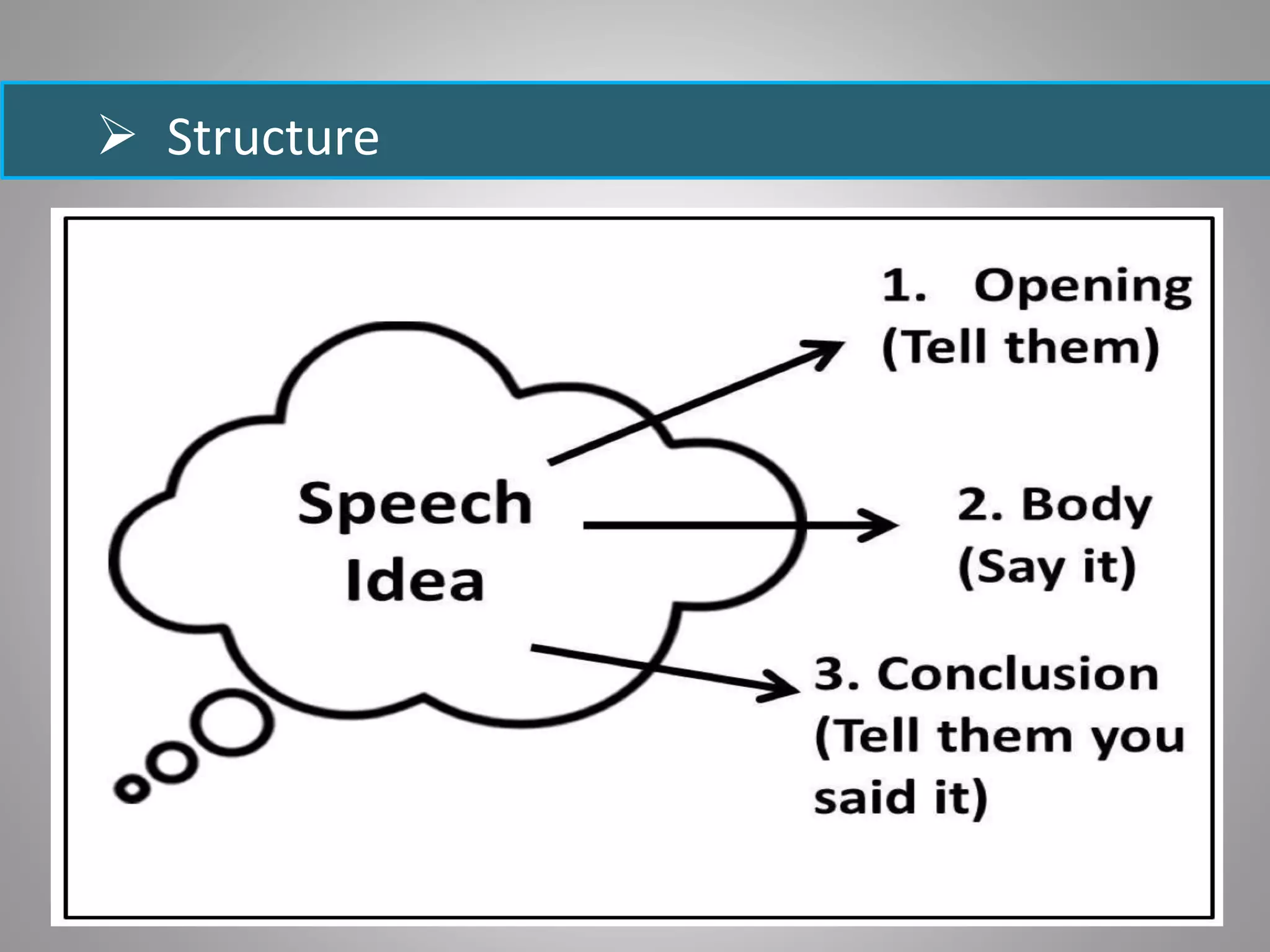
 Structure
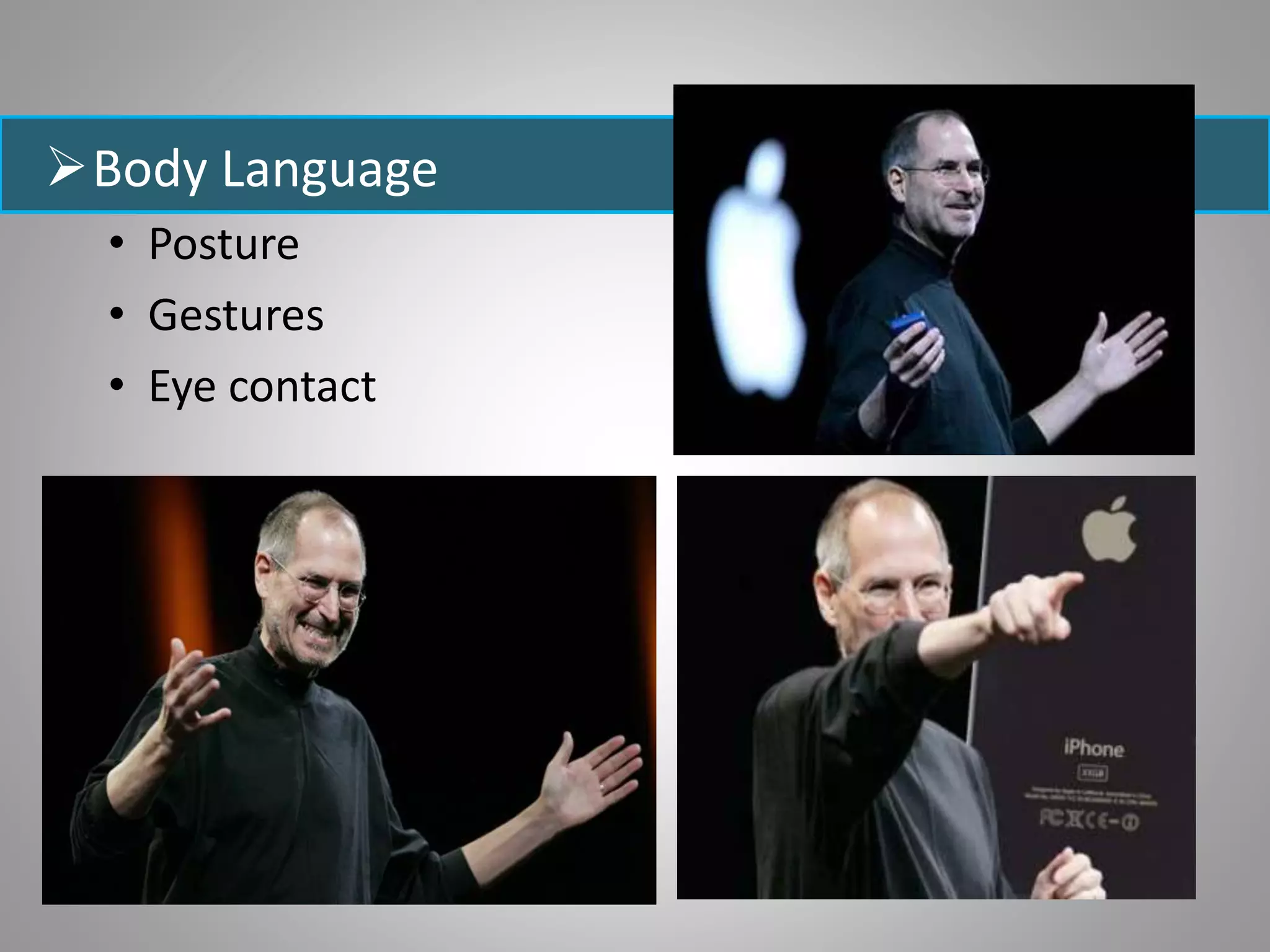
Body Language
• Posture
• Gestures
• Eye contact
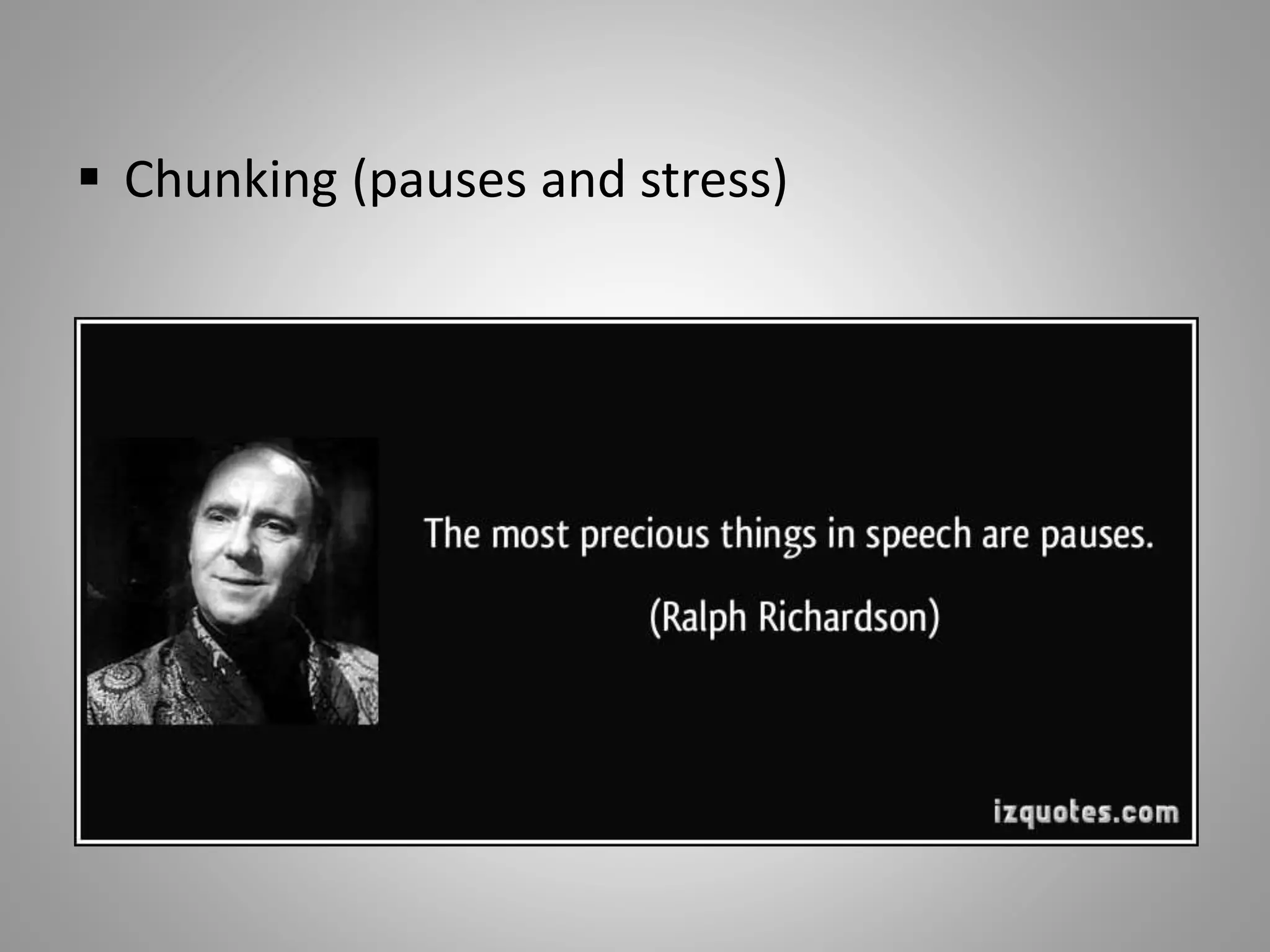
 Chunking (pauses and stress)
Common Problems and Solution
• Lack of confidence
• Speaking too fast
• Appropriacy of body language
• Boring speeches!
Managing speech anxiety
Glossophobia the fear of public speaking. It is the
single most common phobia (fear). Approximately
75% of people experience this. You are not alone in
your fear. You cannot eliminate your fear but you
CAN manage and reduce it.
What Makes People Anxious.?
Researcher have identified several factors that
underline the fair if addressing an audience.
These includes lack of public speaking,
experience of having a previous negative public
speaking.
1/.Select a topic of interest to you.
2/.Prepare carefully know your material
3/.Practice rehearse your talk with a friend
4/.Know your audience.
5/. Challenge negative thinking.
6/. Expect positive reactions–expect success.
7/. Express your fears to a friend.
10 ways to Manage Public Speaking.
8/. Sleep for success know and get the number of
hours of sleep you need for optimal performance.
9/. Eat several hours before the talk–not
immediately before.
10/. Use humor as needed.
Respected Sire,

Interpersonal dynamics of oral presentation

  • 1.
    Interpersonal Dynamics of OralPresentation By, Hiba Rizwan Syed Anas Abdali Farhan Noman Muhammad Taj
  • 2.
    Types of Presentation •INFORMATIVE • INSTRUCTIONAL • AROUSING • PERSUASIVE • DECISION MAKING
  • 3.
    Types of Presentation Informative These presentations are brief and to the point. They generally stick to the facts and avoid complicated information.
  • 4.
    Types of Presentation Instructional These presentations gives specific directions or order to teach something new.
  • 5.
    Types of Presentation Arousing A presentation designed to make to audience consider the topic or discussion to rouse the interest and emotion of audience.
  • 6.
    Types of Presentation Persuasive To make the listeners accept and agree with the presenter’s proposal.
  • 7.
    Types of Presentation Decision Making A presentation designed to convince listeners to act on presenter’s proposal usually by giving evidence and pointing out what can happen if this is not done.
  • 8.
    Practical Guide toOral Presentation
  • 9.
    First Impressions Within 30seconds people judge your – Economic level – Educational level – Social position – Level of sophistication – Level of success
  • 10.
    First Impressions Within 4minutes people decide your – Trustworthiness – Compassion – Reliability – Intelligence – Capability – Humility – Friendliness – Confidence
  • 11.
    Prof. Albert Mehrabian Universityof California, Los Angeles Researcher of Rules of Communication
  • 12.
  • 13.
  • 14.
    Miss. Gilda Bonanno GildaBonanno is a speaker, trainer and coach who helps people from all walks of life improve their communication and presentation skills.
  • 15.
    Gesture Mistakes • Notusing gestures at all- looks nervous. • hand in your pockets- position leads down the slippery slope to slouching. • Fidgeting with your hands- play with unconsciously. • Holding your hands behind your back- resembles that of a child reciting a poem at a school assembly.
  • 16.
    Gesture Mistakes • Pointingat the audience- it's not polite to point. • Folding your arms across your chest- closing yourself from the audience. • Gripping the podium. • Using stilted gestures- you are not a Robot. • Using overly rehearsed gestures- Cliché.
  • 17.
    Movement Mistakes • Movingwithout purpose- walk with purpose. • Foot Problem- equal distribution of weight. • Hiding behind- shows nervous.
  • 18.
    Posture Mistakes • Standingtoo stiffly- don’t be a frozen attention. • Stand confidently- stand firm. • Slouching- Shoulders Back. • keeping your head down- conveys nervousness.
  • 19.
    Facial Expression Mistakes •Not smiling, ever- Smiling will relax you.
  • 20.
    Facial Expression Mistakes •Smiling too much- diabetes.
  • 21.
    Vocal Techniques • Loudness –Will you be using a microphone? • Pitch – Vary to make points • Pause for effect – Allow time for message to “sink in”
  • 22.
    The Voice C: Clear– the use of simple, easily understood words and phrases L: Loud (enough) – it is important that everyone can hear you A: Assertive – a bright and confident air born of knowledge of the subject and good preparation P: Pause – it is essential to allow the listeners time to digest what you have said
  • 23.
    Use the RightsWords What you say, and how you say it, is the key to a successful presentation: P – state your position or point R – explain your ideas E – use examples P – restate your position or point
  • 24.
  • 25.
    Public speaking skills/ Speech Delivery Skills
  • 26.
    Public Speaking /Speech Delivery Skills • Types of public speeches – Persuasive – Informative – Entertaining – Celebratory
  • 27.
    Why is PublicSpeaking useful for Students?
  • 28.
    What Techniques canwe Teach our Students?  Ideas / content generation
  • 29.
  • 30.
    Body Language • Posture •Gestures • Eye contact
  • 31.
  • 32.
    Common Problems andSolution • Lack of confidence • Speaking too fast • Appropriacy of body language • Boring speeches!
  • 33.
    Managing speech anxiety Glossophobiathe fear of public speaking. It is the single most common phobia (fear). Approximately 75% of people experience this. You are not alone in your fear. You cannot eliminate your fear but you CAN manage and reduce it.
  • 34.
    What Makes PeopleAnxious.? Researcher have identified several factors that underline the fair if addressing an audience. These includes lack of public speaking, experience of having a previous negative public speaking.
  • 35.
    1/.Select a topicof interest to you. 2/.Prepare carefully know your material 3/.Practice rehearse your talk with a friend 4/.Know your audience. 5/. Challenge negative thinking. 6/. Expect positive reactions–expect success. 7/. Express your fears to a friend. 10 ways to Manage Public Speaking.
  • 36.
    10 ways toManage Public Speaking. 8/. Sleep for success know and get the number of hours of sleep you need for optimal performance. 9/. Eat several hours before the talk–not immediately before. 10/. Use humor as needed.
  • 37.