




A a G R B & R zi H N A H
 sm H I I    am   ANCI
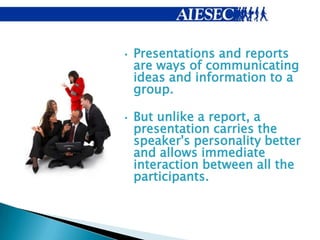
•   Presentations and reports
    are ways of communicating
    ideas and information to a
    group.

•   But unlike a report, a
    presentation carries the
    speaker's personality better
    and allows immediate
    interaction between all the
    participants.
Part 1:
Preparing a presentation
Content
           ◦ Research
           ◦ Organization of data and themes

          Structure
           ◦ Informative
           ◦ persuasive

          Design
           ◦ Architecture of the slides
4 Steps    ◦ Graphical enhancements Packaging
          Delivery
           ◦ How you develop your delivery
             strategy and style Human Element
   What?

   Why?

   Who?

   When?

   Where?
5 Compoents to analize
          - The audience
          - The situation / basic
              knowledge of the enviroment
          - The subject / Content
          - The meaning / the aim
          - The time / essential points
Part 2:
Giving a presentation
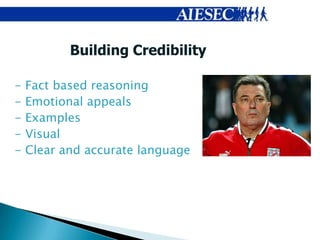
Building Credibility

-   Fact based reasoning
-   Emotional appeals
-   Examples
-   Visual
-   Clear and accurate language
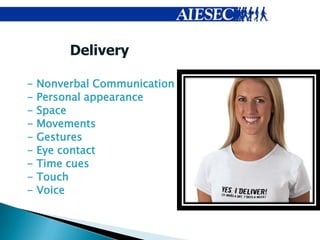
Delivery

-   Nonverbal Communication
-   Personal appearance
-   Space
-   Movements
-   Gestures
-   Eye contact
-   Time cues
-   Touch
-   Voice
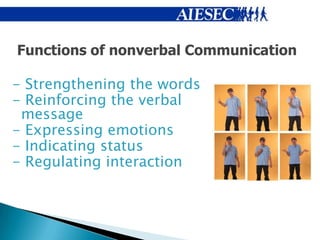
Functions of nonverbal Communication

- Strengthening the words
- Reinforcing the verbal
 message
- Expressing emotions
- Indicating status
- Regulating interaction
Essentials
To keep in mind
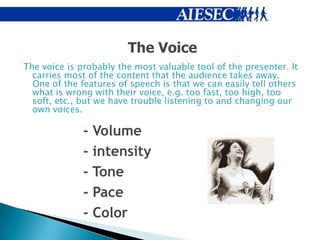
The Voice
The voice is probably the most valuable tool of the presenter. It
  carries most of the content that the audience takes away.
  One of the features of speech is that we can easily tell others
  what is wrong with their voice, e.g. too fast, too high, too
  soft, etc., but we have trouble listening to and changing our
  own voices.

              - Volume
              - intensity
              - Tone
              - Pace
              - Color
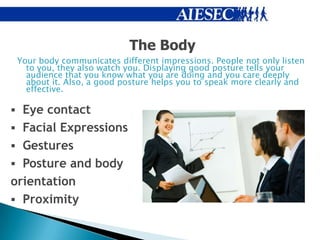
The Body
 Your body communicates different impressions. People not only listen
   to you, they also watch you. Displaying good posture tells your
   audience that you know what you are doing and you care deeply
   about it. Also, a good posture helps you to speak more clearly and
   effective.

 Eye contact
 Facial Expressions
 Gestures
 Posture and body
orientation
 Proximity
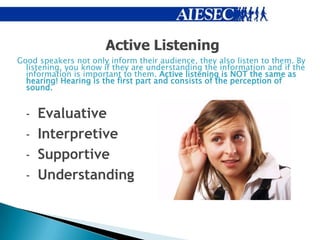
Active Listening
Good speakers not only inform their audience, they also listen to them. By
  listening, you know if they are understanding the information and if the
  information is important to them. Active listening is NOT the same as
  hearing! Hearing is the first part and consists of the perception of
  sound.


  - Evaluative
  - Interpretive
  - Supportive
  - Understanding
Nerves
    The main enemy of a presenter is tension, which ruins the voice, posture,
      and spontaneity. The voice becomes higher as the throat tenses.
      Shoulders tighten up and limits flexibility while the legs start to shake
      and causes unsteadiness. The presentation becomes "canned" as the
      speaker locks in on the notes and starts to read directly from them.


-    Before the presentation - Lie on the floor
-    Mental Visualization
-    During the presentation -Take a moment to yourself
-    Never drink alcohol to reduce tension
-    Know that even the best presenters make mistakes
Questions
       Keep cool if a questioner disagrees with you. You are a
     professional! No matter how hard you try, not everyone in the
                       world will agree with you!


-   Always allow time at the end of the presentation for questions.
-   Questions do not mean you did not explain the topic good enough
-   Make sure you listen to the question being asked
-   Answers that last 10 to 40 seconds work best
Tips ans Techniques
Eleanor Roosevelt was a shy young girl who was terrified at the thought of speaking
   in public. But with each passing year, she grew in confidence and self-esteem.
   She once said, "No one can make you feel inferior, unless you agree with it."


   -   If you have handouts, do not read straight from them.
   -   Do not put both hands in your pockets for long periods of time.
   -   Do not wave a pointer around in the air
   -   Speak to the audience...NOT to the visual aids.
   -   Use colored backgrounds on overhead transparencies and slides
   -   Learn the name of each participant as quickly as possible .
   -   Circulate around the room as you speak.
Be Impressive
      ” Be present and sensitive
      Be enthuastic and committed
     Show willingness to interact
Use the strength of peace and silence”
And GOOD LUCK 
Presentation Skills

Presentation Skills

  • 1.
    A a GR B & R zi H N A H sm H I I am ANCI
  • 2.
    Presentations and reports are ways of communicating ideas and information to a group. • But unlike a report, a presentation carries the speaker's personality better and allows immediate interaction between all the participants.
  • 3.
    Part 1: Preparing apresentation
  • 4.
    Content ◦ Research ◦ Organization of data and themes Structure ◦ Informative ◦ persuasive Design ◦ Architecture of the slides 4 Steps ◦ Graphical enhancements Packaging Delivery ◦ How you develop your delivery strategy and style Human Element
  • 5.
    What?  Why?  Who?  When?  Where?
  • 6.
    5 Compoents toanalize - The audience - The situation / basic knowledge of the enviroment - The subject / Content - The meaning / the aim - The time / essential points
  • 9.
    Part 2: Giving apresentation
  • 10.
    Building Credibility - Fact based reasoning - Emotional appeals - Examples - Visual - Clear and accurate language
  • 11.
    Delivery - Nonverbal Communication - Personal appearance - Space - Movements - Gestures - Eye contact - Time cues - Touch - Voice
  • 12.
    Functions of nonverbalCommunication - Strengthening the words - Reinforcing the verbal message - Expressing emotions - Indicating status - Regulating interaction
  • 13.
  • 14.
    The Voice The voiceis probably the most valuable tool of the presenter. It carries most of the content that the audience takes away. One of the features of speech is that we can easily tell others what is wrong with their voice, e.g. too fast, too high, too soft, etc., but we have trouble listening to and changing our own voices. - Volume - intensity - Tone - Pace - Color
  • 15.
    The Body Yourbody communicates different impressions. People not only listen to you, they also watch you. Displaying good posture tells your audience that you know what you are doing and you care deeply about it. Also, a good posture helps you to speak more clearly and effective.  Eye contact  Facial Expressions  Gestures  Posture and body orientation  Proximity
  • 16.
    Active Listening Good speakersnot only inform their audience, they also listen to them. By listening, you know if they are understanding the information and if the information is important to them. Active listening is NOT the same as hearing! Hearing is the first part and consists of the perception of sound. - Evaluative - Interpretive - Supportive - Understanding
  • 17.
    Nerves The main enemy of a presenter is tension, which ruins the voice, posture, and spontaneity. The voice becomes higher as the throat tenses. Shoulders tighten up and limits flexibility while the legs start to shake and causes unsteadiness. The presentation becomes "canned" as the speaker locks in on the notes and starts to read directly from them. - Before the presentation - Lie on the floor - Mental Visualization - During the presentation -Take a moment to yourself - Never drink alcohol to reduce tension - Know that even the best presenters make mistakes
  • 18.
    Questions Keep cool if a questioner disagrees with you. You are a professional! No matter how hard you try, not everyone in the world will agree with you! - Always allow time at the end of the presentation for questions. - Questions do not mean you did not explain the topic good enough - Make sure you listen to the question being asked - Answers that last 10 to 40 seconds work best
  • 19.
    Tips ans Techniques EleanorRoosevelt was a shy young girl who was terrified at the thought of speaking in public. But with each passing year, she grew in confidence and self-esteem. She once said, "No one can make you feel inferior, unless you agree with it." - If you have handouts, do not read straight from them. - Do not put both hands in your pockets for long periods of time. - Do not wave a pointer around in the air - Speak to the audience...NOT to the visual aids. - Use colored backgrounds on overhead transparencies and slides - Learn the name of each participant as quickly as possible . - Circulate around the room as you speak.
  • 20.
    Be Impressive ” Be present and sensitive Be enthuastic and committed Show willingness to interact Use the strength of peace and silence”
  • 21.