20 Public Speaking Tips
Peter Dhu
1 Use your nervous energy
 It is not about getting rid of nerves, but rather harnessing the nervous
energy
 Nerves will put you into your peak performance mode
 It is about making the butterfly's fly in formation
2 Leave your ego at the door
 Focus 100% on the audience and don’t worry about your own nerves and
your own self talk.
 If you focus on yourself then you are taking away from the audience
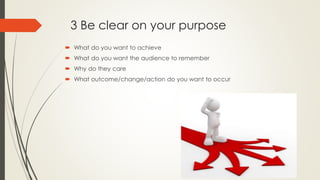
3 Be clear on your purpose
 What do you want to achieve
 What do you want the audience to remember
 Why do they care
 What outcome/change/action do you want to occur
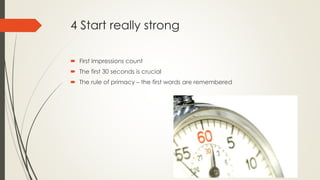
4 Start really strong
 First Impressions count
 The first 30 seconds is crucial
 The rule of primacy – the first words are remembered
5 What pain are you solving for your audience
 What problem are you solving
 What pain are you alleviating
 What questions are you answering
 What is keeping you audience
awake at night with worry
 Answer these questions and you will do a great job
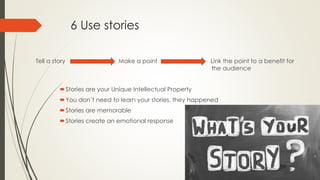
6 Use stories
Tell a story Make a point Link the point to a benefit for
the audience
Stories are your Unique Intellectual Property
You don’t need to learn your stories, they happened
Stories are memorable
Stories create an emotional response
7 Have a call to action
 Ask them to do something
 Challenge them
 Make the status quo unacceptable
8 Speak to the audience one to one
 Speak as though you are just having a conversation
 Be genuine, authentic and conversational
 Make eye contact one person at a time
9 Get out of your comfort zone
 Take a risk every day that gets you closer to your speaking goal
 If you are comfortable, then it is not big enough for you
 Dr Susan Jeffers said “Feel The Fear And Do It Anyway”
 Just speak more
10 Do your preparation
 Prior preparation prevents pathetically poor performance
 Spectacular performance is preceded by spectacular preparation
 Preparation is the foundation of every presentation
11 Use your voice
 Use tonal variation and intonation
 Vary your speed
 Vary your volume
 Use pause to create suspense
12 Always get feedback
 Feedback is the food of champions
 How do you know if you don’t ask
 Feedback will help you grow and unlock potential
13 Establish credibility
 Why you
 Where does your data come from
 What is your experience
 Why should we believe you
 Build your credibility stack
14 Don’t read your speech
 Use a mind map
 Have bullet points
 Tell your stories
 Speak extemporaneously
15 Gestural intelligence
 Have inclusive gestures
 Develop a rich gestural vocabulary
 Don’t fidget or use distracting hand movements
 Eliminate bounce in your gestures
 Don’t point at your audience
16 Connect with your audience
 Focus on connection, not perfection
 Build rapport
 Build trust
17 Don’t be afraid of the
elephant in the room
 Acknowledge differences
 Acknowledge concerns
 Acknowledge problems
 Acknowledge fears
18 Make your message memorable
 Use surprise or unexpected message
 What is in it for me
 Put a hook in your message
 Have a call to action
 Make your data concrete
 Use emotion
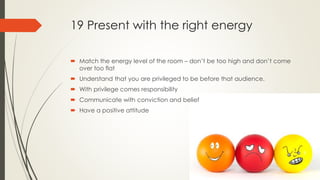
19 Present with the right energy
 Match the energy level of the room – don’t be too high and don’t come
over too flat
 Understand that you are privileged to be before that audience.
 With privilege comes responsibility
 Communicate with conviction and belief
 Have a positive attitude
20 Take care of your voice
 War m up with tongue twisters or humming
 Drink water before and during your presentation
 Do drink apple juice or pineapple juice to help lubricate your voice
 Don’t drink milk or soy based coffee
 Use a tick tack to avoid dry mouth
X

20 Public Speaking Tips

  • 1.
    20 Public SpeakingTips Peter Dhu
  • 2.
    1 Use yournervous energy  It is not about getting rid of nerves, but rather harnessing the nervous energy  Nerves will put you into your peak performance mode  It is about making the butterfly's fly in formation
  • 3.
    2 Leave yourego at the door  Focus 100% on the audience and don’t worry about your own nerves and your own self talk.  If you focus on yourself then you are taking away from the audience
  • 4.
    3 Be clearon your purpose  What do you want to achieve  What do you want the audience to remember  Why do they care  What outcome/change/action do you want to occur
  • 5.
    4 Start reallystrong  First Impressions count  The first 30 seconds is crucial  The rule of primacy – the first words are remembered
  • 6.
    5 What painare you solving for your audience  What problem are you solving  What pain are you alleviating  What questions are you answering  What is keeping you audience awake at night with worry  Answer these questions and you will do a great job
  • 7.
    6 Use stories Tella story Make a point Link the point to a benefit for the audience Stories are your Unique Intellectual Property You don’t need to learn your stories, they happened Stories are memorable Stories create an emotional response
  • 8.
    7 Have acall to action  Ask them to do something  Challenge them  Make the status quo unacceptable
  • 9.
    8 Speak tothe audience one to one  Speak as though you are just having a conversation  Be genuine, authentic and conversational  Make eye contact one person at a time
  • 10.
    9 Get outof your comfort zone  Take a risk every day that gets you closer to your speaking goal  If you are comfortable, then it is not big enough for you  Dr Susan Jeffers said “Feel The Fear And Do It Anyway”  Just speak more
  • 11.
    10 Do yourpreparation  Prior preparation prevents pathetically poor performance  Spectacular performance is preceded by spectacular preparation  Preparation is the foundation of every presentation
  • 12.
    11 Use yourvoice  Use tonal variation and intonation  Vary your speed  Vary your volume  Use pause to create suspense
  • 13.
    12 Always getfeedback  Feedback is the food of champions  How do you know if you don’t ask  Feedback will help you grow and unlock potential
  • 14.
    13 Establish credibility Why you  Where does your data come from  What is your experience  Why should we believe you  Build your credibility stack
  • 15.
    14 Don’t readyour speech  Use a mind map  Have bullet points  Tell your stories  Speak extemporaneously
  • 16.
    15 Gestural intelligence Have inclusive gestures  Develop a rich gestural vocabulary  Don’t fidget or use distracting hand movements  Eliminate bounce in your gestures  Don’t point at your audience
  • 17.
    16 Connect withyour audience  Focus on connection, not perfection  Build rapport  Build trust
  • 18.
    17 Don’t beafraid of the elephant in the room  Acknowledge differences  Acknowledge concerns  Acknowledge problems  Acknowledge fears
  • 19.
    18 Make yourmessage memorable  Use surprise or unexpected message  What is in it for me  Put a hook in your message  Have a call to action  Make your data concrete  Use emotion
  • 20.
    19 Present withthe right energy  Match the energy level of the room – don’t be too high and don’t come over too flat  Understand that you are privileged to be before that audience.  With privilege comes responsibility  Communicate with conviction and belief  Have a positive attitude
  • 21.
    20 Take careof your voice  War m up with tongue twisters or humming  Drink water before and during your presentation  Do drink apple juice or pineapple juice to help lubricate your voice  Don’t drink milk or soy based coffee  Use a tick tack to avoid dry mouth X