The process through which
people create and manage their
relationships
When two people engage in
ongoing interactions, exchanging
nurturing as well as functional
messages
Does that mean that all kinds of communication
between two people is INTERPERSONAL?
NO!
Quality is what distinguishes interpersonal
communication
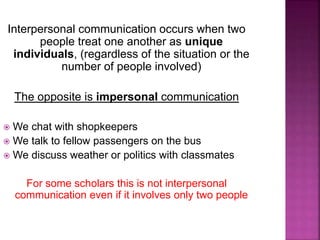
Interpersonal communication occurs when two
people treat one another as unique
individuals, (regardless of the situation or the
number of people involved)
The opposite is impersonal communication
 We chat with shopkeepers
 We talk to fellow passengers on the bus
 We discuss weather or politics with classmates
For some scholars this is not interpersonal
communication even if it involves only two people
Functional Messages
Vs
Nurturing Messages
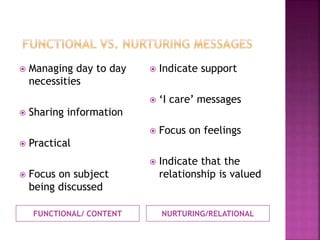
FUNCTIONAL/ CONTENT NURTURING/RELATIONAL
 Managing day to day
necessities
 Sharing information
 Practical
 Focus on subject
being discussed
 Indicate support
 ‘I care’ messages
 Focus on feelings
 Indicate that the
relationship is valued
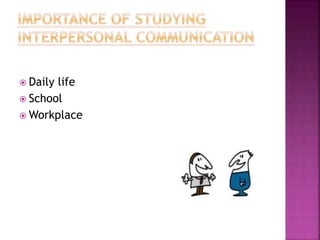
 Daily life
 School
 Workplace
 Interpersonal communication skills used to
build or maintain a good relationship
 Used in both workplace and non workplace
situations
 Recognition
 Sharing personal information
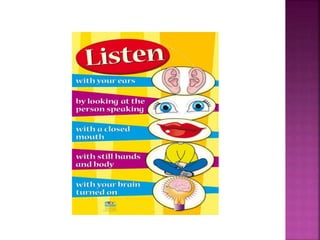
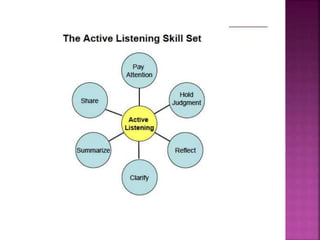
 Active listening
 Constructive criticism
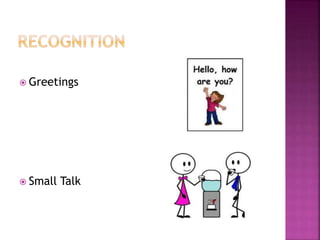
 Greetings
 Small Talk
 Telling someone private information about
yourself
 Listening to others’ private information
 The ability to recognize other person’s
feelings while listening
 Engaging fully with the conversation
 Being there for the speaker in that moment
 Telling others what is bothering you and,
 making sincere and thoughtful suggestions
for change
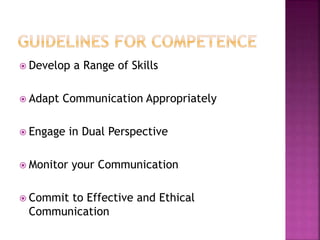
 Develop a Range of Skills
 Adapt Communication Appropriately
 Engage in Dual Perspective
 Monitor your Communication
 Commit to Effective and Ethical
Communication
For further read visit;
https://daamarketer.com/what-is-interpersonal-communication-
and-interpersonal-conflict/
The End

Interpersonal communication Process

  • 1.
    The process throughwhich people create and manage their relationships
  • 2.
    When two peopleengage in ongoing interactions, exchanging nurturing as well as functional messages
  • 3.
    Does that meanthat all kinds of communication between two people is INTERPERSONAL? NO! Quality is what distinguishes interpersonal communication
  • 4.
    Interpersonal communication occurswhen two people treat one another as unique individuals, (regardless of the situation or the number of people involved) The opposite is impersonal communication  We chat with shopkeepers  We talk to fellow passengers on the bus  We discuss weather or politics with classmates For some scholars this is not interpersonal communication even if it involves only two people
  • 5.
  • 6.
    FUNCTIONAL/ CONTENT NURTURING/RELATIONAL Managing day to day necessities  Sharing information  Practical  Focus on subject being discussed  Indicate support  ‘I care’ messages  Focus on feelings  Indicate that the relationship is valued
  • 7.
     Daily life School  Workplace
  • 8.
     Interpersonal communicationskills used to build or maintain a good relationship  Used in both workplace and non workplace situations
  • 9.
     Recognition  Sharingpersonal information  Active listening  Constructive criticism
  • 10.
  • 11.
     Telling someoneprivate information about yourself  Listening to others’ private information
  • 12.
     The abilityto recognize other person’s feelings while listening  Engaging fully with the conversation  Being there for the speaker in that moment
  • 15.
     Telling otherswhat is bothering you and,  making sincere and thoughtful suggestions for change
  • 16.
     Develop aRange of Skills  Adapt Communication Appropriately  Engage in Dual Perspective  Monitor your Communication  Commit to Effective and Ethical Communication
  • 17.
    For further readvisit; https://daamarketer.com/what-is-interpersonal-communication- and-interpersonal-conflict/ The End