





Internet Gaming Disorder
Dr.Suresh Kumar Murugesan PhD
Yellow
Pond
About the Presenter
● Dr.Suresh Kumar Murugesan is a Passionate Professor, Researcher
and Positive Mental Health Practitioner from Madurai, Tamil Nadu,
India
● At present he is Heading the department of Psychology, The
American College, Madurai and Adjunct Professor of School of
Behavioural Sciences and Education at TAU
● He is very keen in learning new research studies in behavioural
Sciences and open to learn.
● His ultimate aim is to make impression in the field of Knowledge
● His area of specializations are Psychometry, Positive
Psychotherapy
Yellow
Pond
Disclaimer
● This presentation is prepared for learning
purpose only and all the images and pictures
used in this presentation are taken from google
image search.
● Due recognition was given to all the material
collected from the various sources.
● Any name or reference is missed kindly bring it to
the notice of the presenter for inclusion.
● Email - sureshkumar800@yahoo.com Thank you
Yellow
Pond
History of Gaming
Yellow
Pond
Yellow
Pond
Yellow
Pond
Some Facts
Yellow
Pond
Yellow
Pond
Yellow
Pond
Yellow
Pond
Yellow
Pond
Yellow
Pond
The other side of Internet Game
Yellow
Pond
Yellow
Pond
2017 2017
Yellow
Pond
2018
Yellow
Pond
PUBG
addiction
leads to
patricide,
Karnataka
youth
beheads
father (2019)
Yellow
Pond
2019
Andhra Pradesh
teen ends life for not
being allowed to
play PUBG
Yellow
Pond
2020
Yellow
Pond
Deadly Games
1. The Choking
Challenge
2. The Car Surfing
Challenge
3. Ice and Salt Challenge
4. The Cinnamon
Challenge
Yellow
Pond
Internet
Gaming
Disorder
Yellow
Pond
Internet gaming disorder
(IGD)
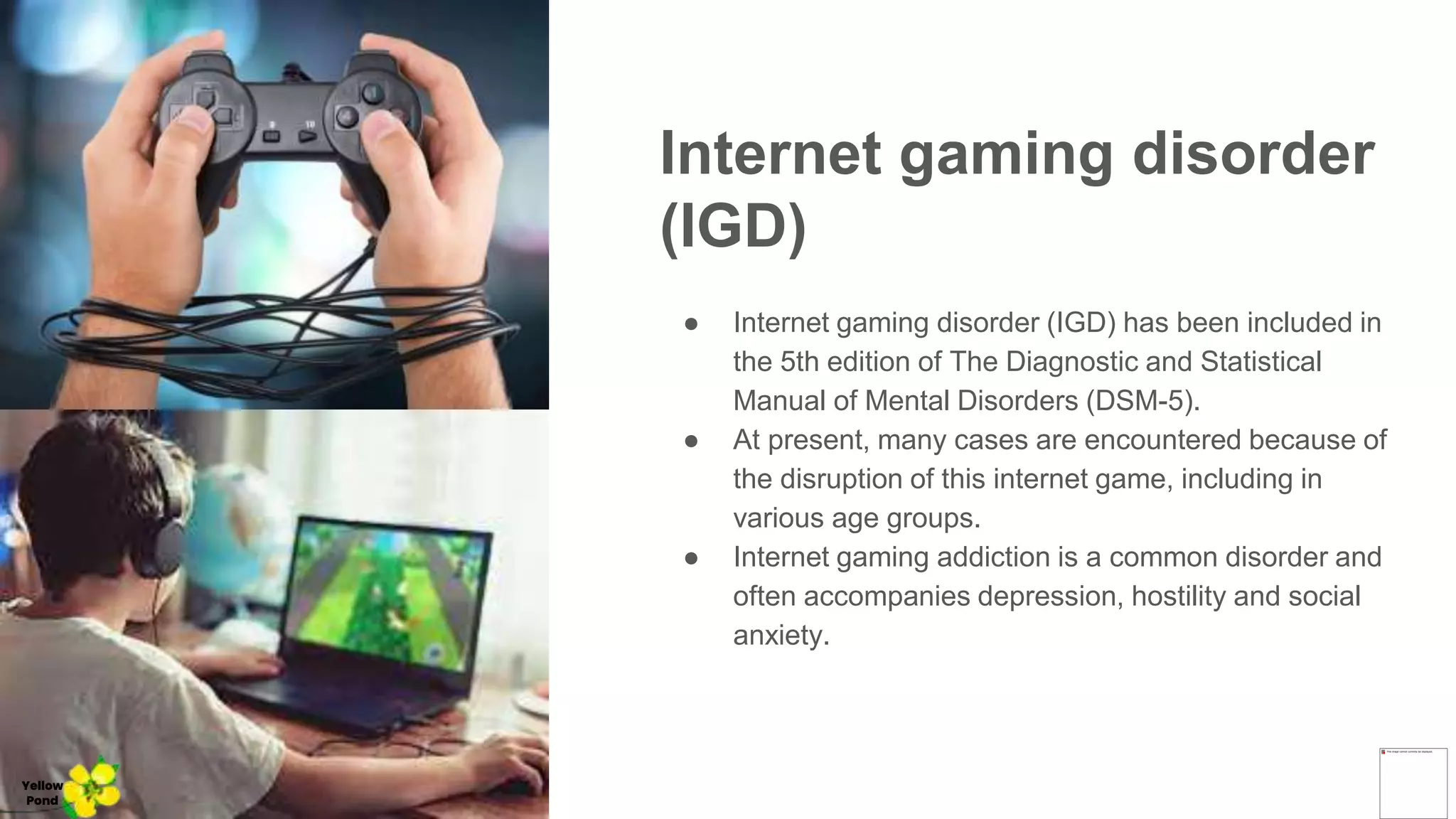
● Internet gaming disorder (IGD) has been included in
the 5th edition of The Diagnostic and Statistical
Manual of Mental Disorders (DSM-5).
● At present, many cases are encountered because of
the disruption of this internet game, including in
various age groups.
● Internet gaming addiction is a common disorder and
often accompanies depression, hostility and social
anxiety.
Yellow
Pond
IGD
The diagnosis of Internet
Gaming Disorder is now
included in the DSM-5 and
ICD 11
Yellow
Pond
Internet Gaming Disorder
IGD is a pattern of gaming behavior (“digital-gaming” or “video-
gaming”) characterized by impaired control over gaming, increasing
priority given to gaming over other activities to the extent that gaming
takes precedence over other interests and daily activities, and
continuation or escalation of gaming despite the occurrence of
negative consequences. - ICD 11
Yellow
Pond
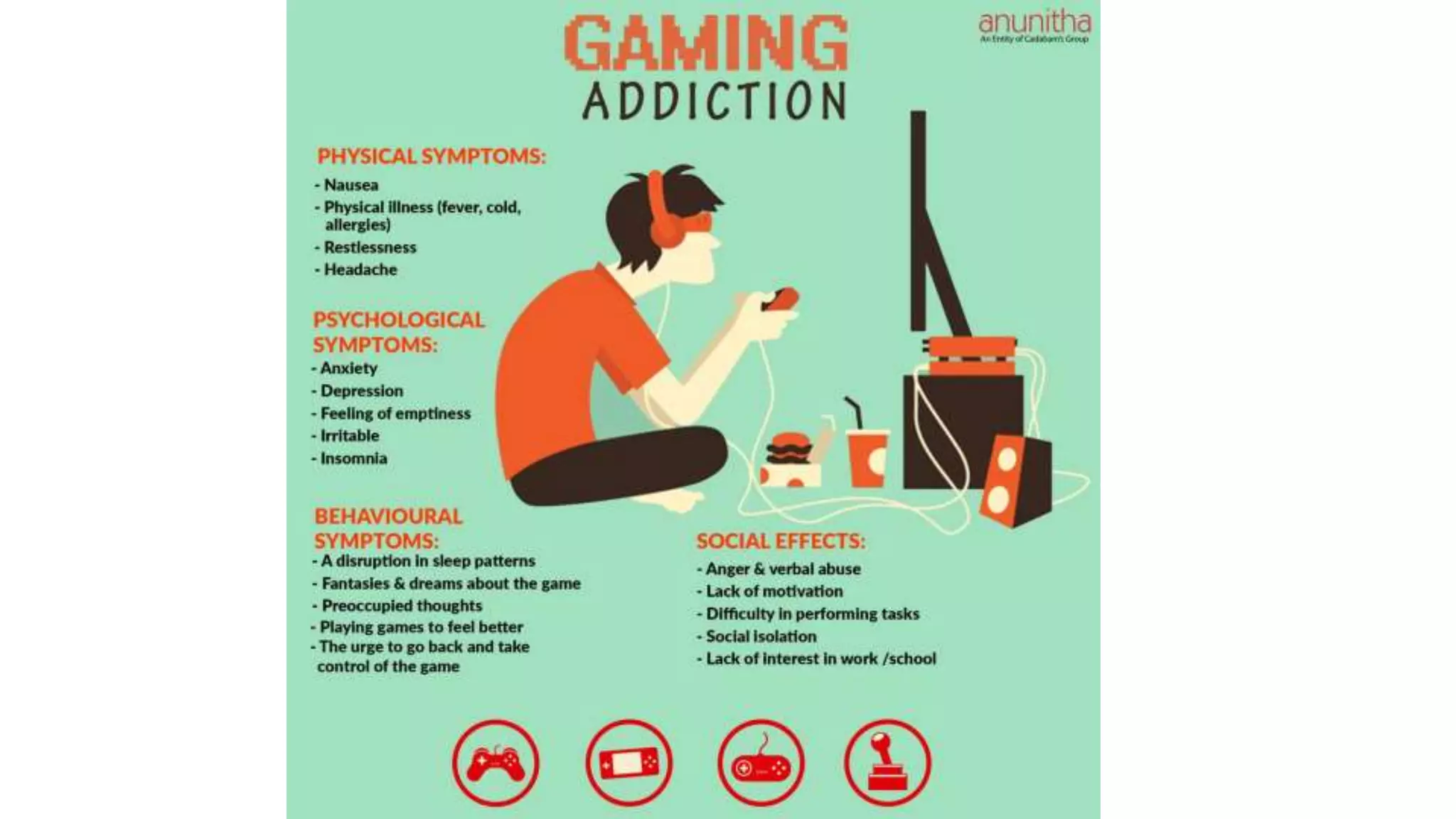
Signs and
Symptoms
Yellow
Pond
Yellow
Pond
Yellow
Pond
Neurology of
Gaming
Yellow
Pond
Yellow
Pond
Yellow
Pond
Why people are addictive?
Yellow
Pond
Yellow
Pond
Effect of Gaming Addiction
Yellow
Pond
Effects of Gaming Addiction
There are many mental, physical, emotional and social effects that may be experienced by an individual with a gaming
disorder, as well as secondary effects on people who are close to these individuals. These include:
● Social effects like greater isolation decreased desire to interact with friends, family or acquaintances in a
physical setting
● Emotional effects, such as a detached sense of self or society, adopting a false identity associated with one’s
online character or increased aggressive tendencies
● Mental effects, like a decrease in mental performance in other activities such as school work, sleeping and
remembering obligations
● Physical effects, which may include an increased risk for childhood obesity, headaches (eye strain), backaches
and the development of carpal tunnel syndrome (pain and numbness experienced in the wrists and hands due to
overuse).
Yellow
Pond
Game Withdrawal
Symptoms
Yellow
Pond
Game Withdrawal
In a study conducted in 2016, individuals with an official diagnosis of an internet gaming disorder were directly compared
to individuals who also played video games but not to a pathological degree. This study found that both groups
experienced typical withdrawal symptoms over 84 hours of abstaining from video games. This study suggests that both
addicted and non-addicted individuals can experience withdrawal symptoms, which may include:
● Increased irritability
● Stress
● Anxiety
● Depression or sadness
● Strong desire to play video games
● Loneliness
● Restlessness
● Mood swings
Yellow
Pond
Co-occurring Disorder
Yellow
Pond
Yellow
Pond
Gaming Addiction and Co-Occurring Disorders
Gaming addiction often co-occurs with disorders including substance use disorders and other mental health conditions. Particularly in children and adolescents, having
another disorder may impact an individual’s propensity to become addicted to video games. Some conditions that co-occur with gaming addiction include:
● Attention-Deficit Hyperactivity Disorder (ADHD): In a study conducted in 2019, individuals diagnosed with ADHD were found to be at higher risk for a co-occurring
video game addiction. Additionally, severe cases of ADHD were at higher risk for video game addiction than less severe cases, indicating a relationship between
the two disorders.
● Autism: In a study published in 2013, male adolescents ages 8–18 that were diagnosed with autism spent almost twice as long playing video games compared
with typical males or those diagnosed with ADHD. These results indicate that having autism may predispose individuals to more severe video game addictions.
● Depression: A recent study showed a link between depression and video game addiction based on brain scans of adolescent males diagnosed with pathological
gaming. The study found that video game addiction caused activation in certain brain regions and was associated with worsening depression. These results
indicate a direct relationship between video game addiction and depression.
● Substance Abuse: It is known that certain individuals play video games while under the influence of drugs and alcohol. However, a study conducted in 2011 found
no direct association between substance use disorders and video game addiction. Other studies suggest that dopamine surges like that seen with cocaine use
are similar in individuals who play video games. Nevertheless, more research is needed to fully understand the relationship between these co-occurring
disorders.
Yellow
Pond
How to identify?
Yellow
Pond
Yellow
Pond
Yellow
Pond
Yellow
Pond
Yellow
Pond
Treatment for Internet Gaming
Addiction
● Typical treatment approaches for video game addiction include cognitive
behavioral therapy (CBT).
● CBT focuses on teaching individuals decision-making skills, how to control their
desire to play video games, meditation techniques, new life skills and video
game relapse techniques, among many others.
● In cases where video game addiction co-occurs with another mental health
condition, like addiction, treatment that addresses both disorders is essential to
long-term recovery.
Yellow
Pond
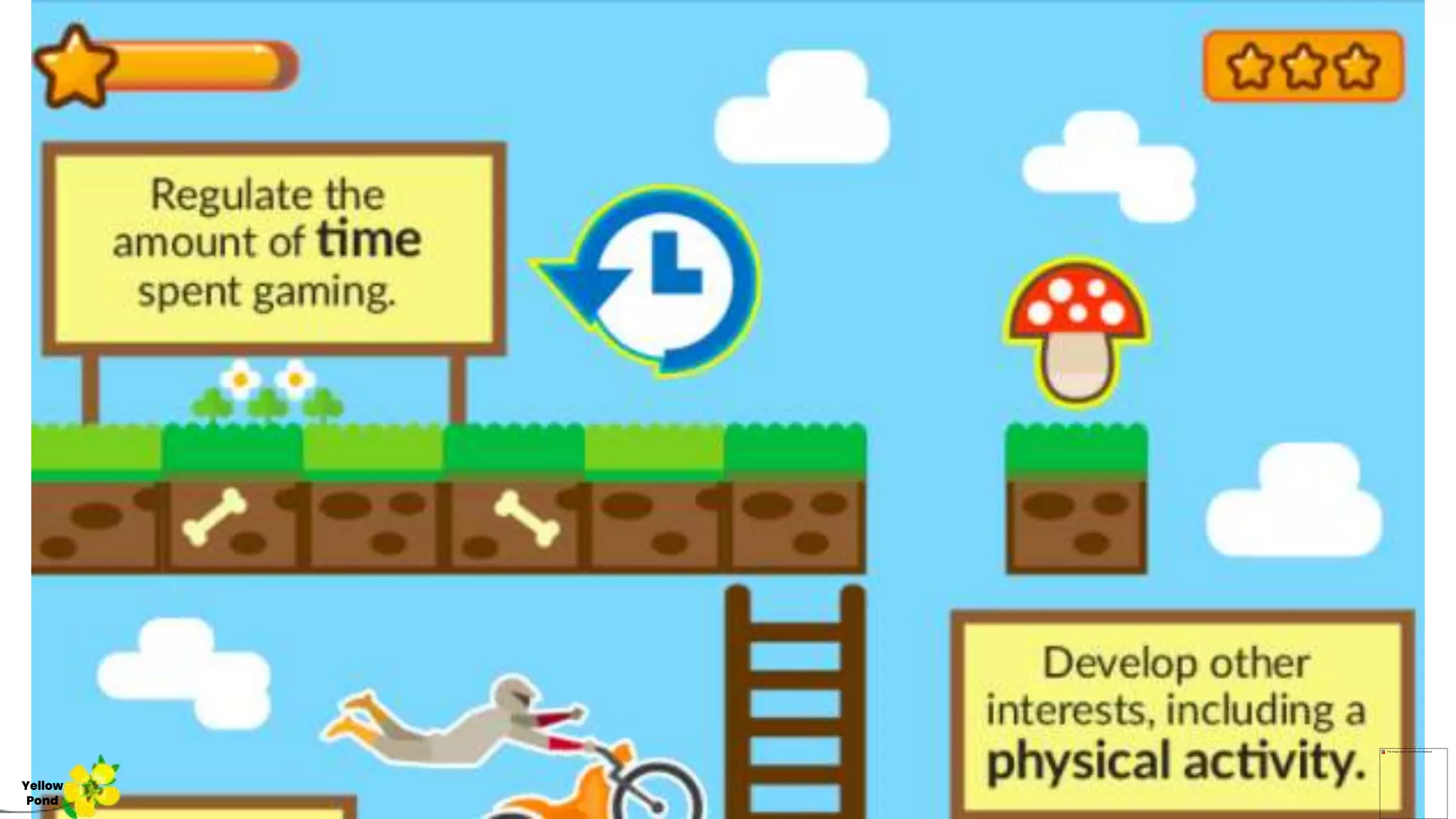
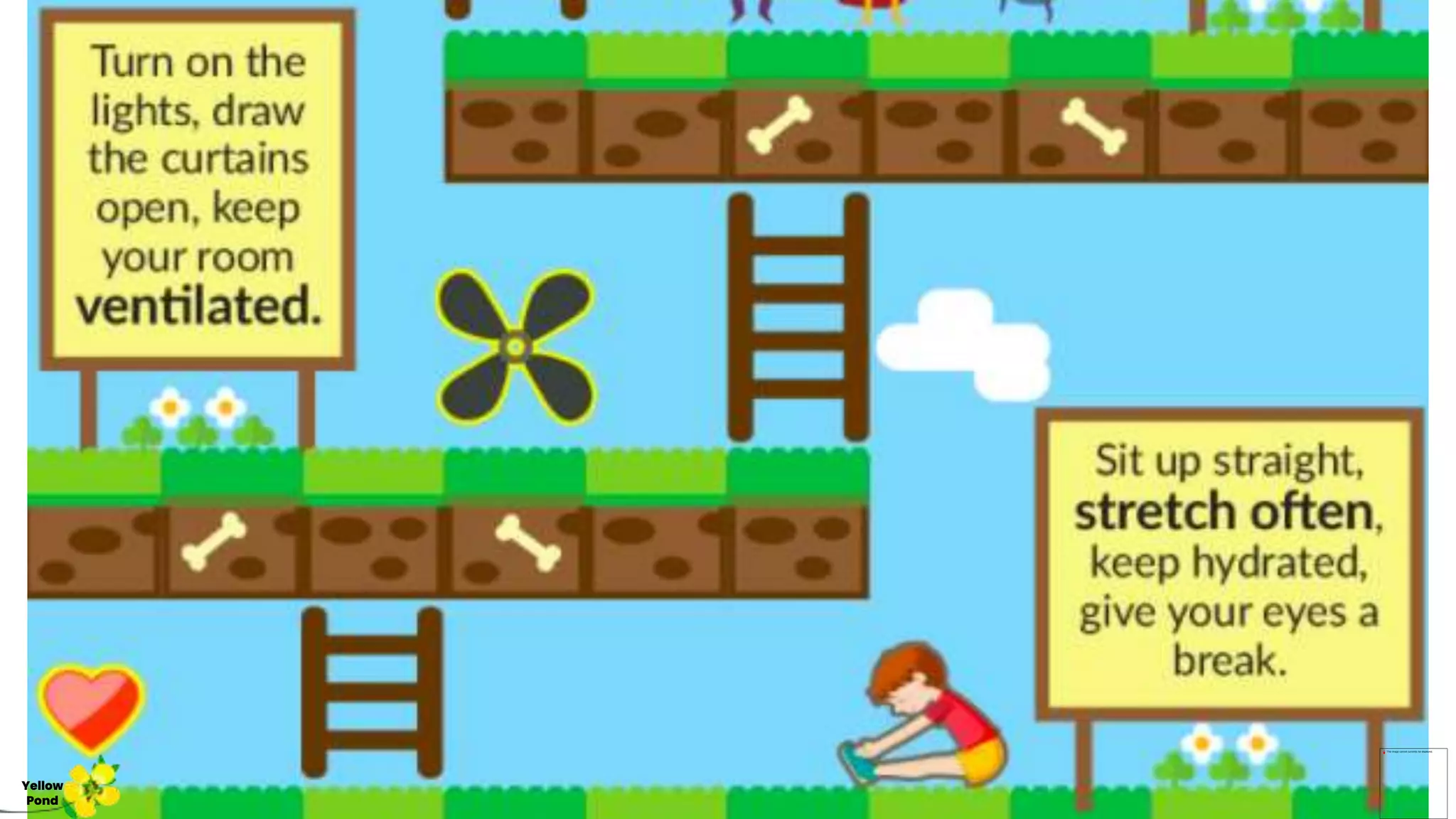
Strategies to minimise
IGA
Yellow
Pond
Yellow
Pond
Yellow
Pond
Yellow
Pond
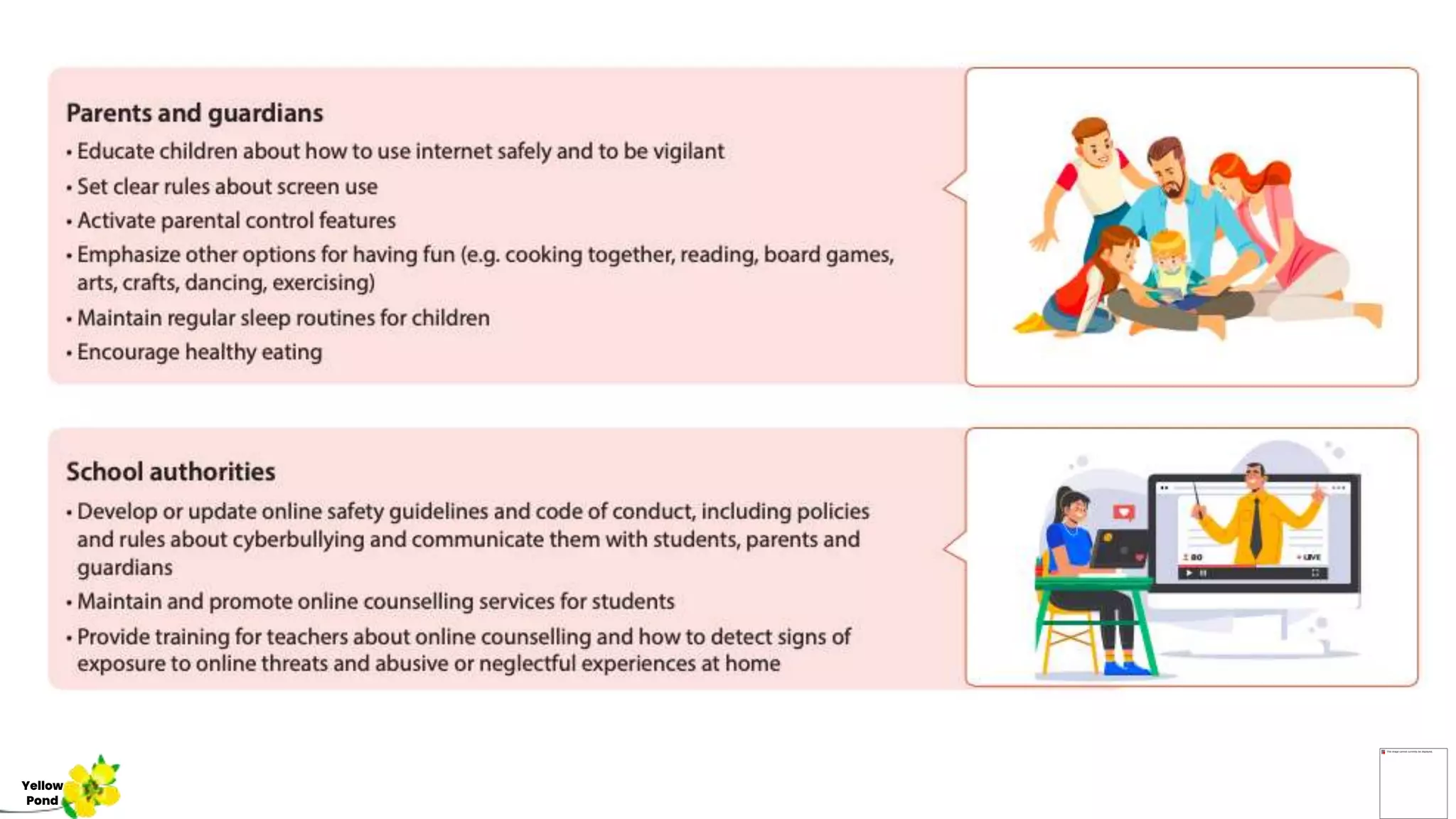
Role of Parents in IGD
Yellow
Pond
Yellow
Pond
Yellow
Pond
Yellow
Pond
Yellow
Pond
Additional Reading
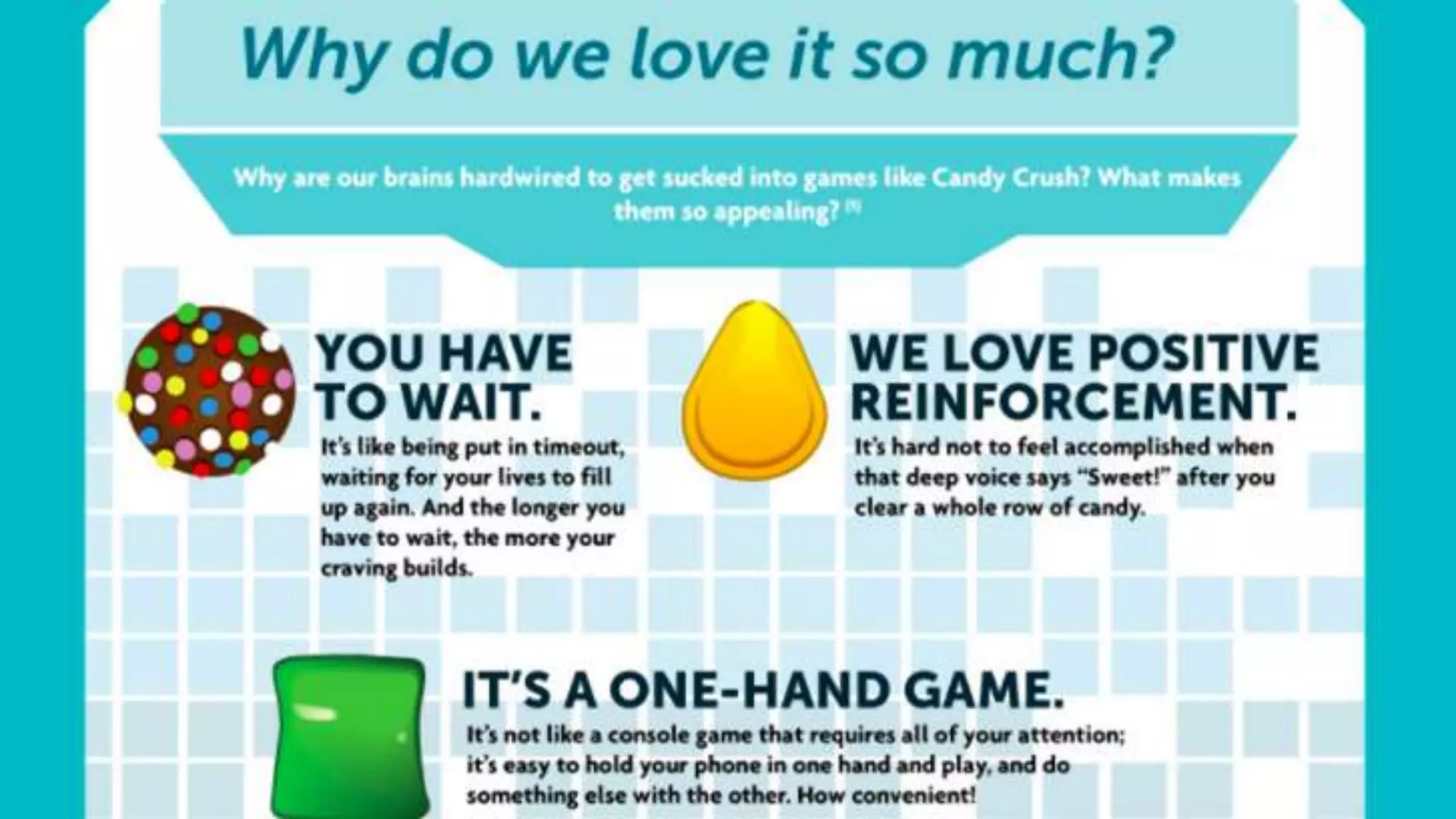
Why do we
love it so
much?
1. You have to wait. It’s like being put in timeout, waiting for your
lives to fill up again. And the longer you have to wait, the more
your craving builds.
2. We love positive reinforcement. It’s hard not to feel
accomplished when that deep voice says “Sweet!” after you clear a
whole row of candy.
3. It’s a one-hand game. It’s not like a console game that requires
all of your attention; it’s easy to hold your phone in one hand and
play, and do something else with the other. How convenient!
4. It never ends. The game’s developers are always making new
levels, so you’ll probably never actually beat the game. You can
always come back for more.
5. It’s technically free, but paying for add-ons is easy. Just a
few clicks and that extra life or power-up is yours.
6. Kids love candy. There’s something to be said about the bright
colors and animated treats; it taps into our inner child.
7. It’s social. People feel a sense of pride when they finish a hard
level. The game allows you to immediately share that with your
friends via social media.
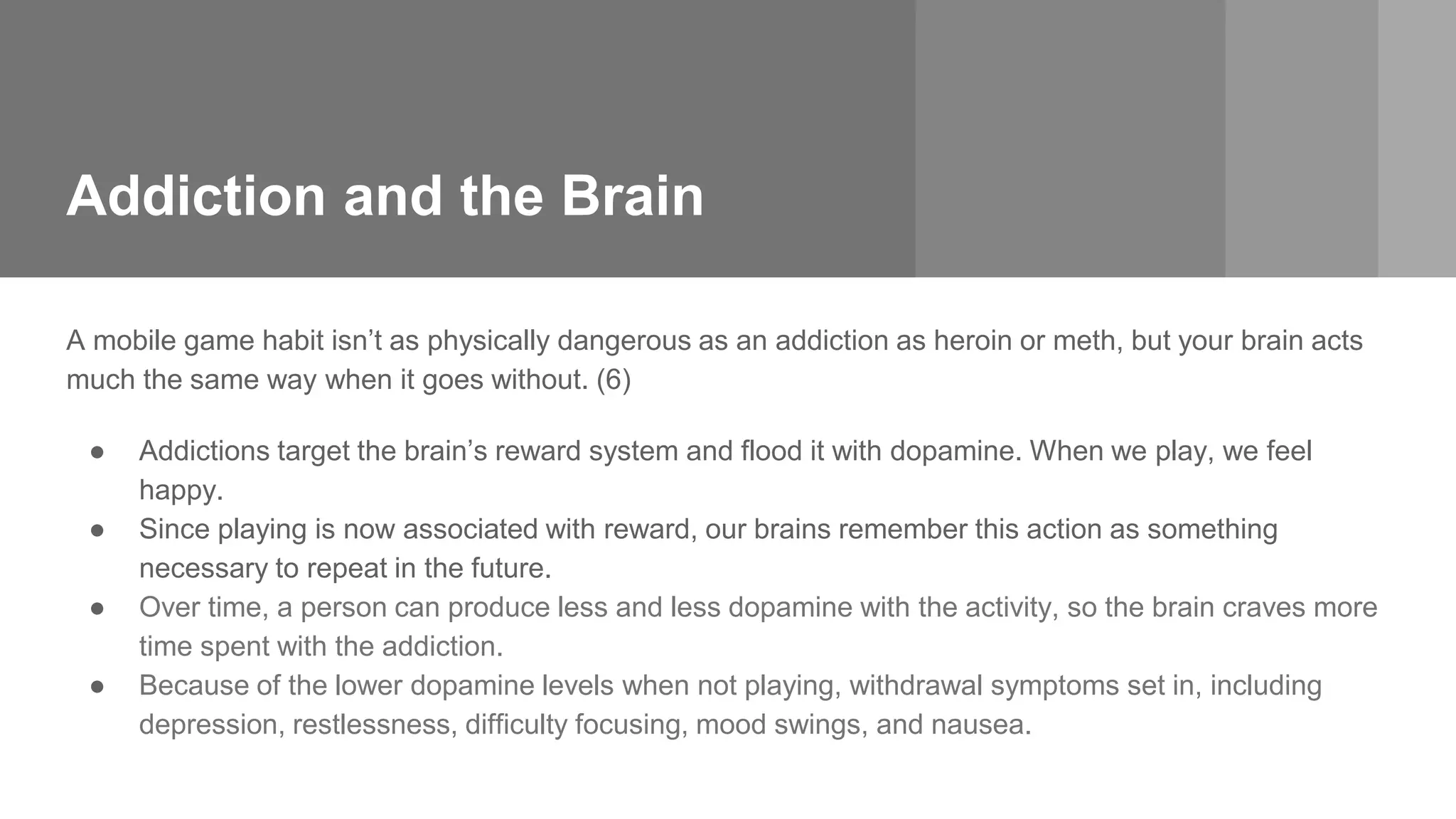
Addiction and the Brain
A mobile game habit isn’t as physically dangerous as an addiction as heroin or meth, but your brain acts
much the same way when it goes without. (6)
● Addictions target the brain’s reward system and flood it with dopamine. When we play, we feel
happy.
● Since playing is now associated with reward, our brains remember this action as something
necessary to repeat in the future.
● Over time, a person can produce less and less dopamine with the activity, so the brain craves more
time spent with the addiction.
● Because of the lower dopamine levels when not playing, withdrawal symptoms set in, including
depression, restlessness, difficulty focusing, mood swings, and nausea.
Symptoms of IGD
○ Preoccupation with gaming
○ Withdrawal symptoms when gaming is taken away or not
possible (sadness, anxiety, irritability)
○ Tolerance, the need to spend more time gaming to satisfy the
urge
○ Inability to reduce playing, unsuccessful attempts to quit gaming
○ Giving up other activities, loss of interest in previously enjoyed
activities due to gaming
○ Continuing to game despite problems
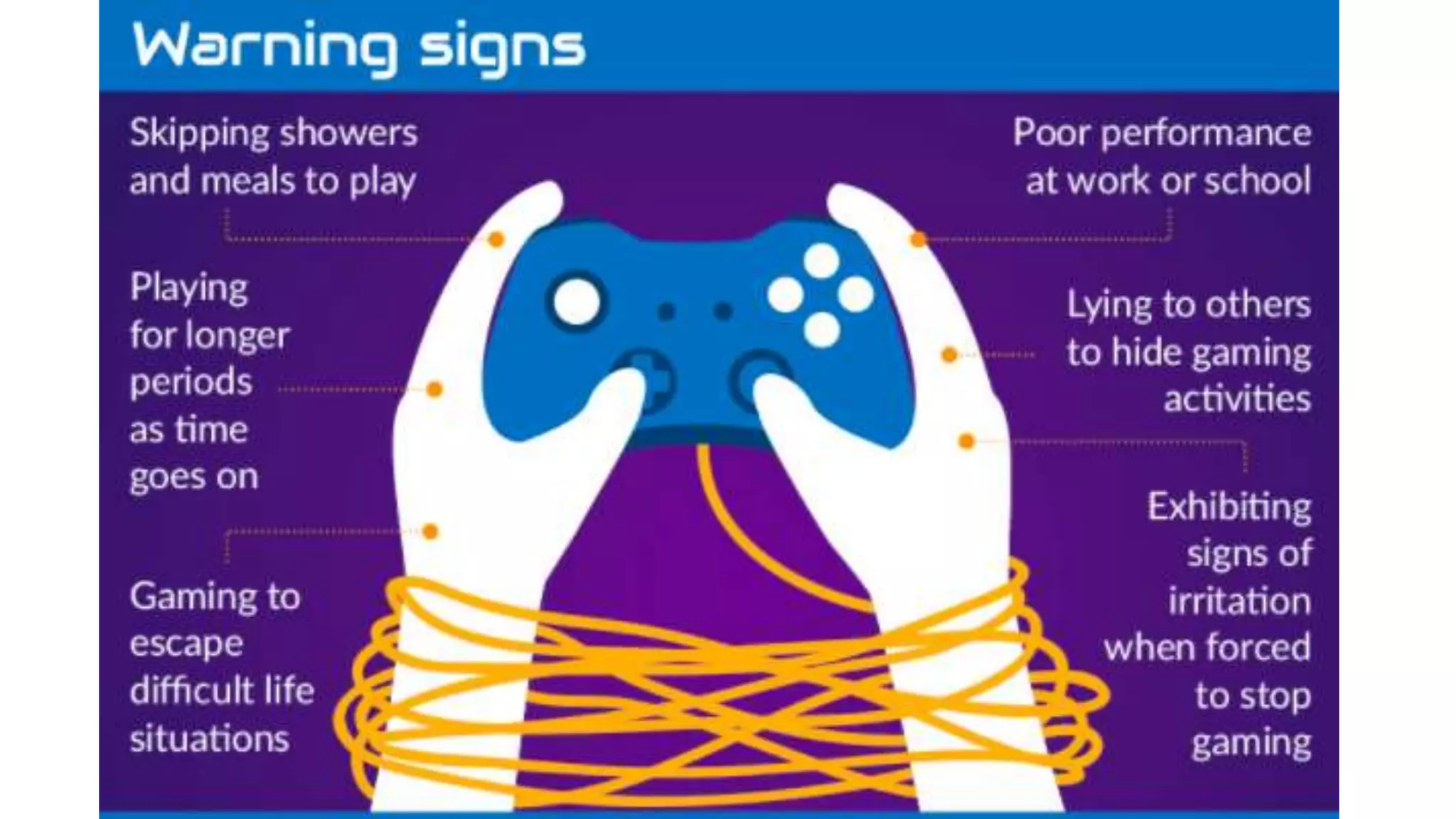
○ Deceiving family members or others about the amount of time
spent on gaming
○ The use of gaming to relieve negative moods, such as guilt or
hopelessness
○ Risk, having jeopardized or lost a job or relationship due to
gaming
Warning Signs and
Symptoms of
Gaming Addiction
In addition to diagnostic criteria for a gaming disorder, an individual may exhibit tell-tale signs
and symptoms of a video game addiction. Typically, the symptoms of video game addiction
differ between children and adults. Some of the tell-tale warning signs and symptoms of a
gaming disorder in adults include:
● Individuals become obsessed or consumed with one or more video games
● Individuals are not satisfied until they continue to play video games for increasing
amounts of time
● Individuals cannot stop playing video games despite repeated attempts or a
strong desire to stop
● Individuals become anxious, increasingly moody or depressed when they cannot
play video games
● Individuals often play video games for much longer periods than they originally
intended
● Personal relationships are affected by an individual’s excessive video game use
● Individuals are dishonest or lie about the severity of their video game use
● Playing video games provides the individual with a sense of relief from personal
issues
Symptoms
of School
Children
IGA
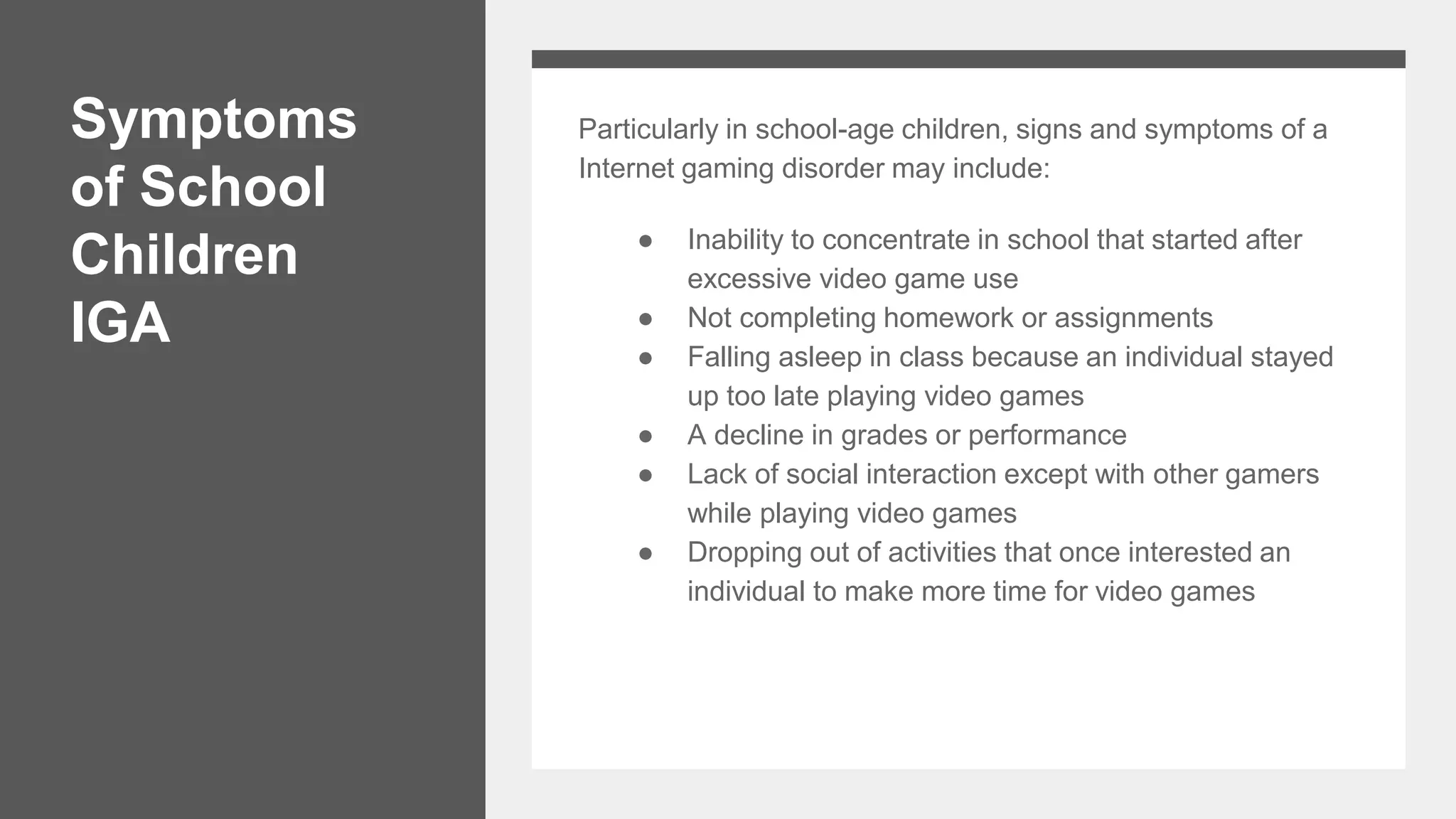
Particularly in school-age children, signs and symptoms of a
Internet gaming disorder may include:
● Inability to concentrate in school that started after
excessive video game use
● Not completing homework or assignments
● Falling asleep in class because an individual stayed
up too late playing video games
● A decline in grades or performance
● Lack of social interaction except with other gamers
while playing video games
● Dropping out of activities that once interested an
individual to make more time for video games
References
● Ranna Parekh (June 2018). Internet Gaming. https://www.psychiatry.org/patients-families/internet-gaming
● Fachrul A. Nasution,* Elmeida Effendy, and Mustafa M. Amin (2019 Aug 30). Internet Gaming Disorder (IGD): A Case Report of Social
Anxiety. https://www.ncbi.nlm.nih.gov/pmc/articles/PMC6876823/
● https://pediatrics.aappublications.org/content/140/Supplement_2/S81
● WHO (14 September 2018). Addictive behaviours: Gaming disorder. https://www.who.int/news-room/q-a-detail/addictive-behaviours-
gaming-disorder
● Sudeept Mishra (Mar 6, 2019). Rising online addiction to games wreaks havoc on minds, home ..
http://timesofindia.indiatimes.com/articleshow/68277415.cms?utm_source=contentofinterest&utm_medium=text&utm_campaign=cppst
● Sumitra Debroy (Jun 19, 2018). Gaming addicts spend 10-14 hours a day playing: Docs.
http://timesofindia.indiatimes.com/articleshow/64641099.cms?utm_source=contentofinterest&utm_medium=text&utm_campaign=cppst
● HDD Mag Team (October 10, 2018). Gaming Disorders & How To Game Healthy. https://hddmag.com/gaming-disorders/
● https://www.americaninfographic.com/post/107371988932/infographic-gaming-neurology
● Megan Hull (21 April, 2021). Video Game Addiction. https://www.therecoveryvillage.com/process-addiction/video-game-addiction/
● Rachel Kowert (23/10/2019). Internet Gaming Disorder: Navigating through the Moral Panic.https://www.rkowert.com/blog/internet-
gaming-disorder-navigating-through-the-moral-panic
● https://www.thestar.com.my/tech/tech-news/2019/01/28/change-your-game/
● https://www.online-psychology-degrees.org/mobile-gaming-addiction/
● https://stopvideogameaddictiongroup4.wordpress.com/
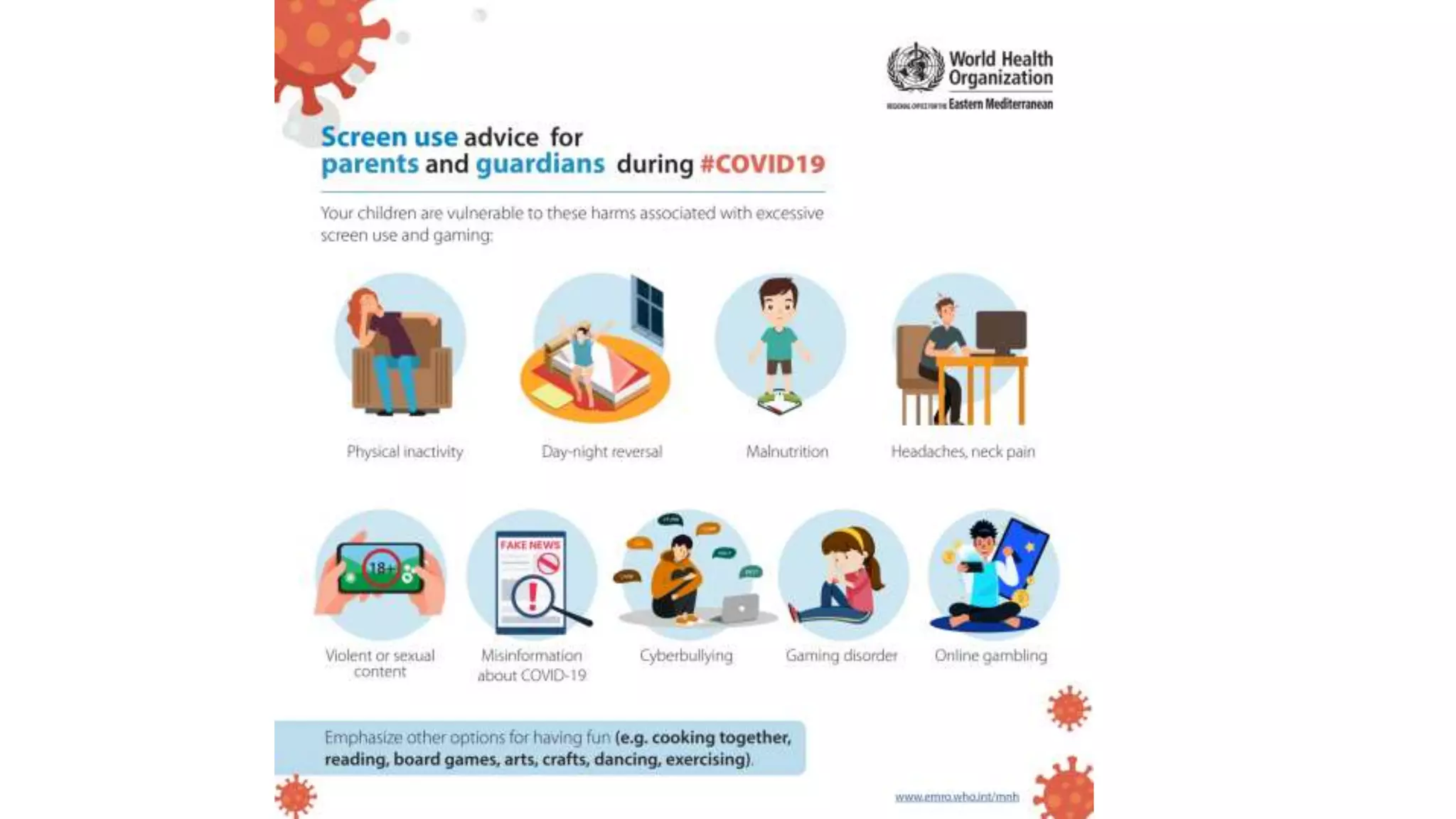
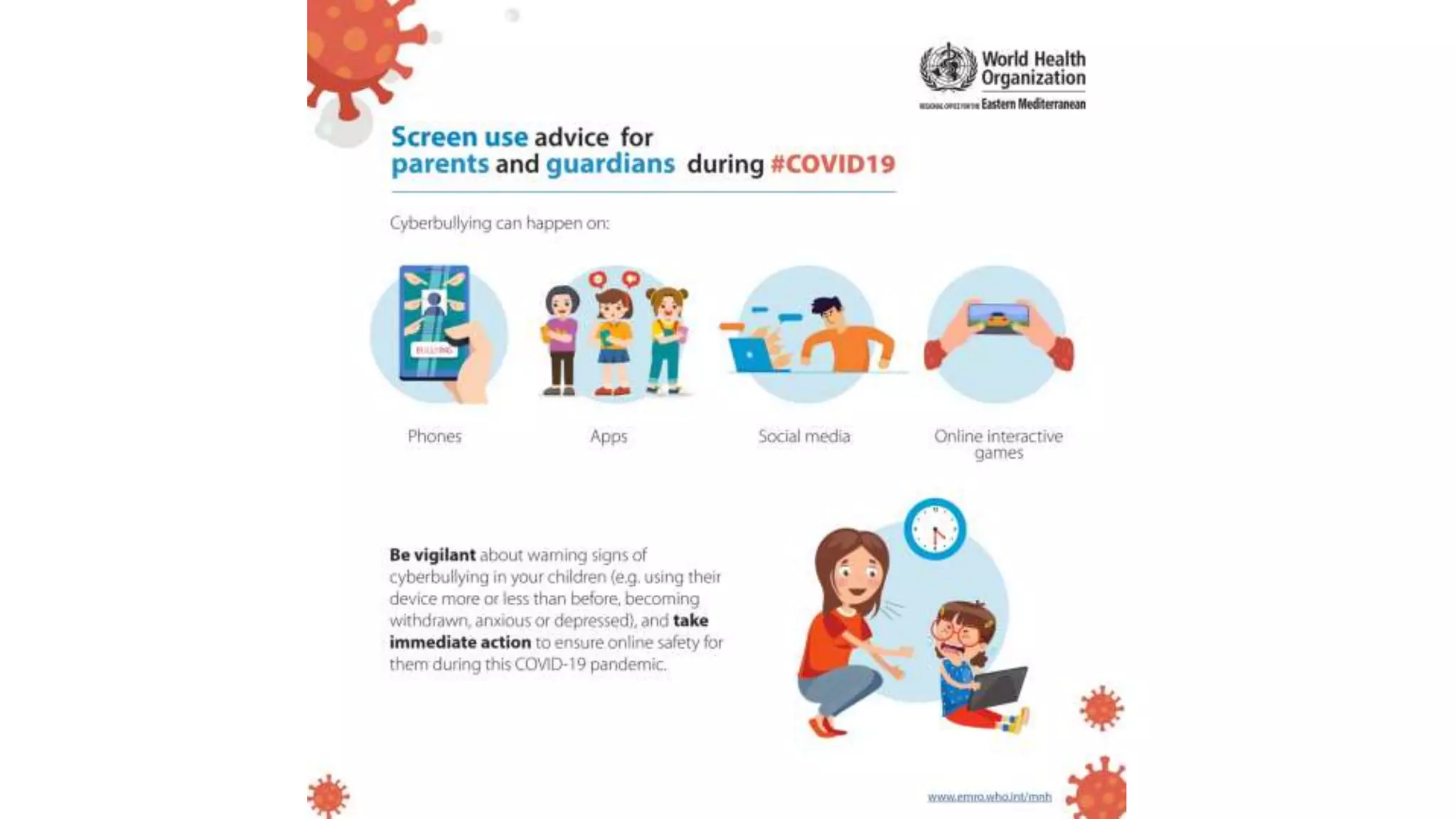
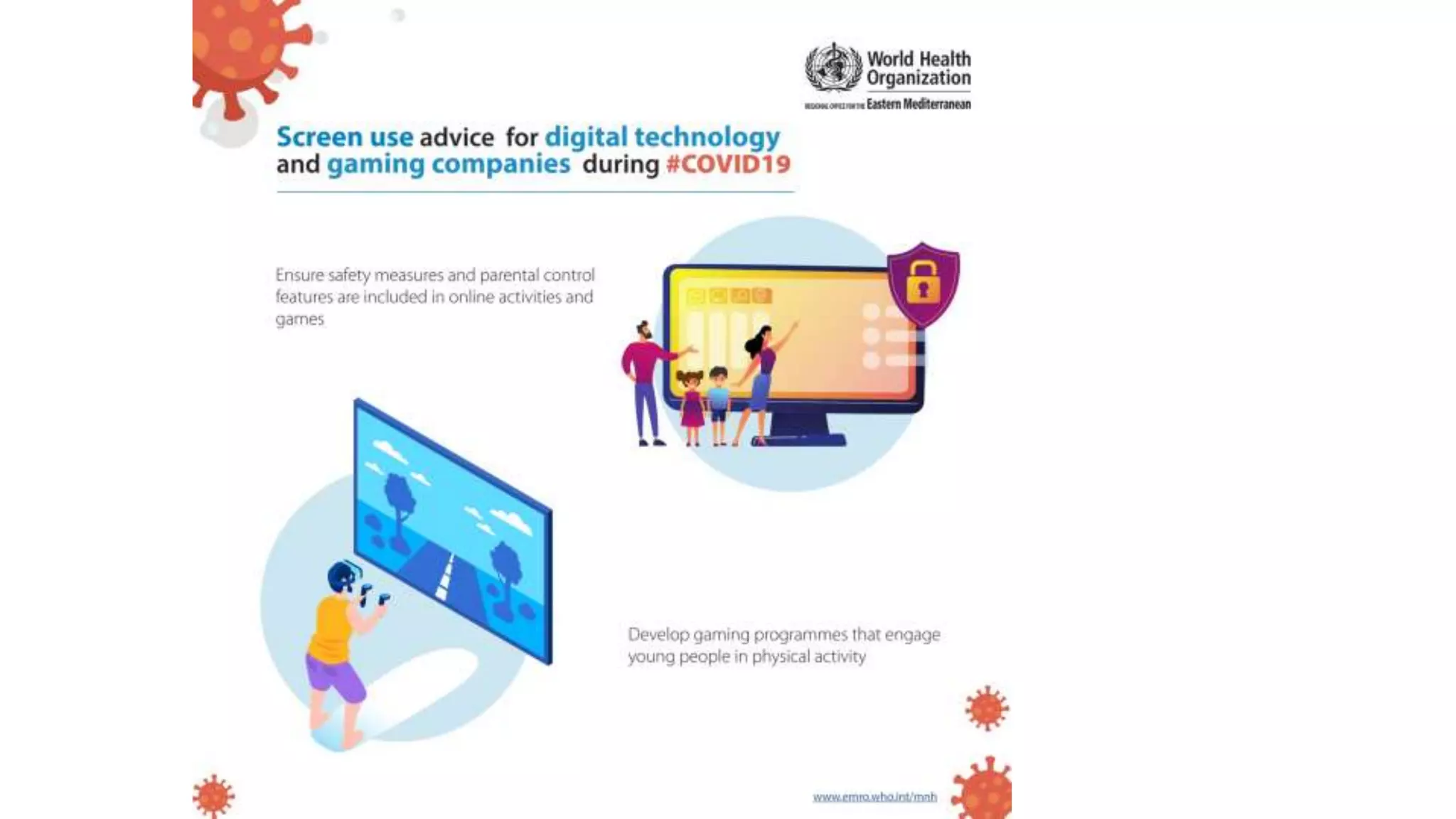
● http://www.emro.who.int/mnh/news/considerations-for-young-people-on-excessive-screen-use-during-covid19.html
Yellow
Pond

Internet gaming disorder

  • 1.
    Internet Gaming Disorder Dr.SureshKumar Murugesan PhD Yellow Pond
  • 2.
    About the Presenter ●Dr.Suresh Kumar Murugesan is a Passionate Professor, Researcher and Positive Mental Health Practitioner from Madurai, Tamil Nadu, India ● At present he is Heading the department of Psychology, The American College, Madurai and Adjunct Professor of School of Behavioural Sciences and Education at TAU ● He is very keen in learning new research studies in behavioural Sciences and open to learn. ● His ultimate aim is to make impression in the field of Knowledge ● His area of specializations are Psychometry, Positive Psychotherapy Yellow Pond
  • 3.
    Disclaimer ● This presentationis prepared for learning purpose only and all the images and pictures used in this presentation are taken from google image search. ● Due recognition was given to all the material collected from the various sources. ● Any name or reference is missed kindly bring it to the notice of the presenter for inclusion. ● Email - sureshkumar800@yahoo.com Thank you Yellow Pond
  • 4.
  • 5.
  • 6.
  • 7.
  • 8.
  • 9.
  • 10.
  • 11.
  • 12.
  • 13.
    The other sideof Internet Game Yellow Pond
  • 14.
  • 15.
  • 16.
  • 17.
  • 18.
    2019 Andhra Pradesh teen endslife for not being allowed to play PUBG Yellow Pond
  • 19.
  • 20.
    Deadly Games 1. TheChoking Challenge 2. The Car Surfing Challenge 3. Ice and Salt Challenge 4. The Cinnamon Challenge Yellow Pond
  • 21.
  • 22.
    Internet gaming disorder (IGD) ●Internet gaming disorder (IGD) has been included in the 5th edition of The Diagnostic and Statistical Manual of Mental Disorders (DSM-5). ● At present, many cases are encountered because of the disruption of this internet game, including in various age groups. ● Internet gaming addiction is a common disorder and often accompanies depression, hostility and social anxiety. Yellow Pond
  • 23.
    IGD The diagnosis ofInternet Gaming Disorder is now included in the DSM-5 and ICD 11 Yellow Pond
  • 24.
    Internet Gaming Disorder IGDis a pattern of gaming behavior (“digital-gaming” or “video- gaming”) characterized by impaired control over gaming, increasing priority given to gaming over other activities to the extent that gaming takes precedence over other interests and daily activities, and continuation or escalation of gaming despite the occurrence of negative consequences. - ICD 11 Yellow Pond
  • 25.
  • 26.
  • 27.
  • 28.
  • 29.
  • 30.
  • 31.
    Why people areaddictive? Yellow Pond
  • 32.
  • 33.
    Effect of GamingAddiction Yellow Pond
  • 34.
    Effects of GamingAddiction There are many mental, physical, emotional and social effects that may be experienced by an individual with a gaming disorder, as well as secondary effects on people who are close to these individuals. These include: ● Social effects like greater isolation decreased desire to interact with friends, family or acquaintances in a physical setting ● Emotional effects, such as a detached sense of self or society, adopting a false identity associated with one’s online character or increased aggressive tendencies ● Mental effects, like a decrease in mental performance in other activities such as school work, sleeping and remembering obligations ● Physical effects, which may include an increased risk for childhood obesity, headaches (eye strain), backaches and the development of carpal tunnel syndrome (pain and numbness experienced in the wrists and hands due to overuse). Yellow Pond
  • 35.
  • 36.
    Game Withdrawal In astudy conducted in 2016, individuals with an official diagnosis of an internet gaming disorder were directly compared to individuals who also played video games but not to a pathological degree. This study found that both groups experienced typical withdrawal symptoms over 84 hours of abstaining from video games. This study suggests that both addicted and non-addicted individuals can experience withdrawal symptoms, which may include: ● Increased irritability ● Stress ● Anxiety ● Depression or sadness ● Strong desire to play video games ● Loneliness ● Restlessness ● Mood swings Yellow Pond
  • 37.
  • 38.
  • 39.
    Gaming Addiction andCo-Occurring Disorders Gaming addiction often co-occurs with disorders including substance use disorders and other mental health conditions. Particularly in children and adolescents, having another disorder may impact an individual’s propensity to become addicted to video games. Some conditions that co-occur with gaming addiction include: ● Attention-Deficit Hyperactivity Disorder (ADHD): In a study conducted in 2019, individuals diagnosed with ADHD were found to be at higher risk for a co-occurring video game addiction. Additionally, severe cases of ADHD were at higher risk for video game addiction than less severe cases, indicating a relationship between the two disorders. ● Autism: In a study published in 2013, male adolescents ages 8–18 that were diagnosed with autism spent almost twice as long playing video games compared with typical males or those diagnosed with ADHD. These results indicate that having autism may predispose individuals to more severe video game addictions. ● Depression: A recent study showed a link between depression and video game addiction based on brain scans of adolescent males diagnosed with pathological gaming. The study found that video game addiction caused activation in certain brain regions and was associated with worsening depression. These results indicate a direct relationship between video game addiction and depression. ● Substance Abuse: It is known that certain individuals play video games while under the influence of drugs and alcohol. However, a study conducted in 2011 found no direct association between substance use disorders and video game addiction. Other studies suggest that dopamine surges like that seen with cocaine use are similar in individuals who play video games. Nevertheless, more research is needed to fully understand the relationship between these co-occurring disorders. Yellow Pond
  • 40.
  • 41.
  • 42.
  • 43.
  • 44.
  • 45.
    Treatment for InternetGaming Addiction ● Typical treatment approaches for video game addiction include cognitive behavioral therapy (CBT). ● CBT focuses on teaching individuals decision-making skills, how to control their desire to play video games, meditation techniques, new life skills and video game relapse techniques, among many others. ● In cases where video game addiction co-occurs with another mental health condition, like addiction, treatment that addresses both disorders is essential to long-term recovery. Yellow Pond
  • 46.
  • 47.
  • 48.
  • 49.
  • 50.
    Role of Parentsin IGD Yellow Pond
  • 51.
  • 52.
  • 53.
  • 54.
  • 55.
  • 56.
    Why do we loveit so much? 1. You have to wait. It’s like being put in timeout, waiting for your lives to fill up again. And the longer you have to wait, the more your craving builds. 2. We love positive reinforcement. It’s hard not to feel accomplished when that deep voice says “Sweet!” after you clear a whole row of candy. 3. It’s a one-hand game. It’s not like a console game that requires all of your attention; it’s easy to hold your phone in one hand and play, and do something else with the other. How convenient! 4. It never ends. The game’s developers are always making new levels, so you’ll probably never actually beat the game. You can always come back for more. 5. It’s technically free, but paying for add-ons is easy. Just a few clicks and that extra life or power-up is yours. 6. Kids love candy. There’s something to be said about the bright colors and animated treats; it taps into our inner child. 7. It’s social. People feel a sense of pride when they finish a hard level. The game allows you to immediately share that with your friends via social media.
  • 57.
    Addiction and theBrain A mobile game habit isn’t as physically dangerous as an addiction as heroin or meth, but your brain acts much the same way when it goes without. (6) ● Addictions target the brain’s reward system and flood it with dopamine. When we play, we feel happy. ● Since playing is now associated with reward, our brains remember this action as something necessary to repeat in the future. ● Over time, a person can produce less and less dopamine with the activity, so the brain craves more time spent with the addiction. ● Because of the lower dopamine levels when not playing, withdrawal symptoms set in, including depression, restlessness, difficulty focusing, mood swings, and nausea.
  • 74.
    Symptoms of IGD ○Preoccupation with gaming ○ Withdrawal symptoms when gaming is taken away or not possible (sadness, anxiety, irritability) ○ Tolerance, the need to spend more time gaming to satisfy the urge ○ Inability to reduce playing, unsuccessful attempts to quit gaming ○ Giving up other activities, loss of interest in previously enjoyed activities due to gaming ○ Continuing to game despite problems ○ Deceiving family members or others about the amount of time spent on gaming ○ The use of gaming to relieve negative moods, such as guilt or hopelessness ○ Risk, having jeopardized or lost a job or relationship due to gaming
  • 75.
    Warning Signs and Symptomsof Gaming Addiction In addition to diagnostic criteria for a gaming disorder, an individual may exhibit tell-tale signs and symptoms of a video game addiction. Typically, the symptoms of video game addiction differ between children and adults. Some of the tell-tale warning signs and symptoms of a gaming disorder in adults include: ● Individuals become obsessed or consumed with one or more video games ● Individuals are not satisfied until they continue to play video games for increasing amounts of time ● Individuals cannot stop playing video games despite repeated attempts or a strong desire to stop ● Individuals become anxious, increasingly moody or depressed when they cannot play video games ● Individuals often play video games for much longer periods than they originally intended ● Personal relationships are affected by an individual’s excessive video game use ● Individuals are dishonest or lie about the severity of their video game use ● Playing video games provides the individual with a sense of relief from personal issues
  • 76.
    Symptoms of School Children IGA Particularly inschool-age children, signs and symptoms of a Internet gaming disorder may include: ● Inability to concentrate in school that started after excessive video game use ● Not completing homework or assignments ● Falling asleep in class because an individual stayed up too late playing video games ● A decline in grades or performance ● Lack of social interaction except with other gamers while playing video games ● Dropping out of activities that once interested an individual to make more time for video games
  • 81.
    References ● Ranna Parekh(June 2018). Internet Gaming. https://www.psychiatry.org/patients-families/internet-gaming ● Fachrul A. Nasution,* Elmeida Effendy, and Mustafa M. Amin (2019 Aug 30). Internet Gaming Disorder (IGD): A Case Report of Social Anxiety. https://www.ncbi.nlm.nih.gov/pmc/articles/PMC6876823/ ● https://pediatrics.aappublications.org/content/140/Supplement_2/S81 ● WHO (14 September 2018). Addictive behaviours: Gaming disorder. https://www.who.int/news-room/q-a-detail/addictive-behaviours- gaming-disorder ● Sudeept Mishra (Mar 6, 2019). Rising online addiction to games wreaks havoc on minds, home .. http://timesofindia.indiatimes.com/articleshow/68277415.cms?utm_source=contentofinterest&utm_medium=text&utm_campaign=cppst ● Sumitra Debroy (Jun 19, 2018). Gaming addicts spend 10-14 hours a day playing: Docs. http://timesofindia.indiatimes.com/articleshow/64641099.cms?utm_source=contentofinterest&utm_medium=text&utm_campaign=cppst ● HDD Mag Team (October 10, 2018). Gaming Disorders & How To Game Healthy. https://hddmag.com/gaming-disorders/ ● https://www.americaninfographic.com/post/107371988932/infographic-gaming-neurology ● Megan Hull (21 April, 2021). Video Game Addiction. https://www.therecoveryvillage.com/process-addiction/video-game-addiction/ ● Rachel Kowert (23/10/2019). Internet Gaming Disorder: Navigating through the Moral Panic.https://www.rkowert.com/blog/internet- gaming-disorder-navigating-through-the-moral-panic ● https://www.thestar.com.my/tech/tech-news/2019/01/28/change-your-game/ ● https://www.online-psychology-degrees.org/mobile-gaming-addiction/ ● https://stopvideogameaddictiongroup4.wordpress.com/ ● http://www.emro.who.int/mnh/news/considerations-for-young-people-on-excessive-screen-use-during-covid19.html Yellow Pond