Internal Marketing
Tips to Align Your Staff to Your Brand Values and Vision.
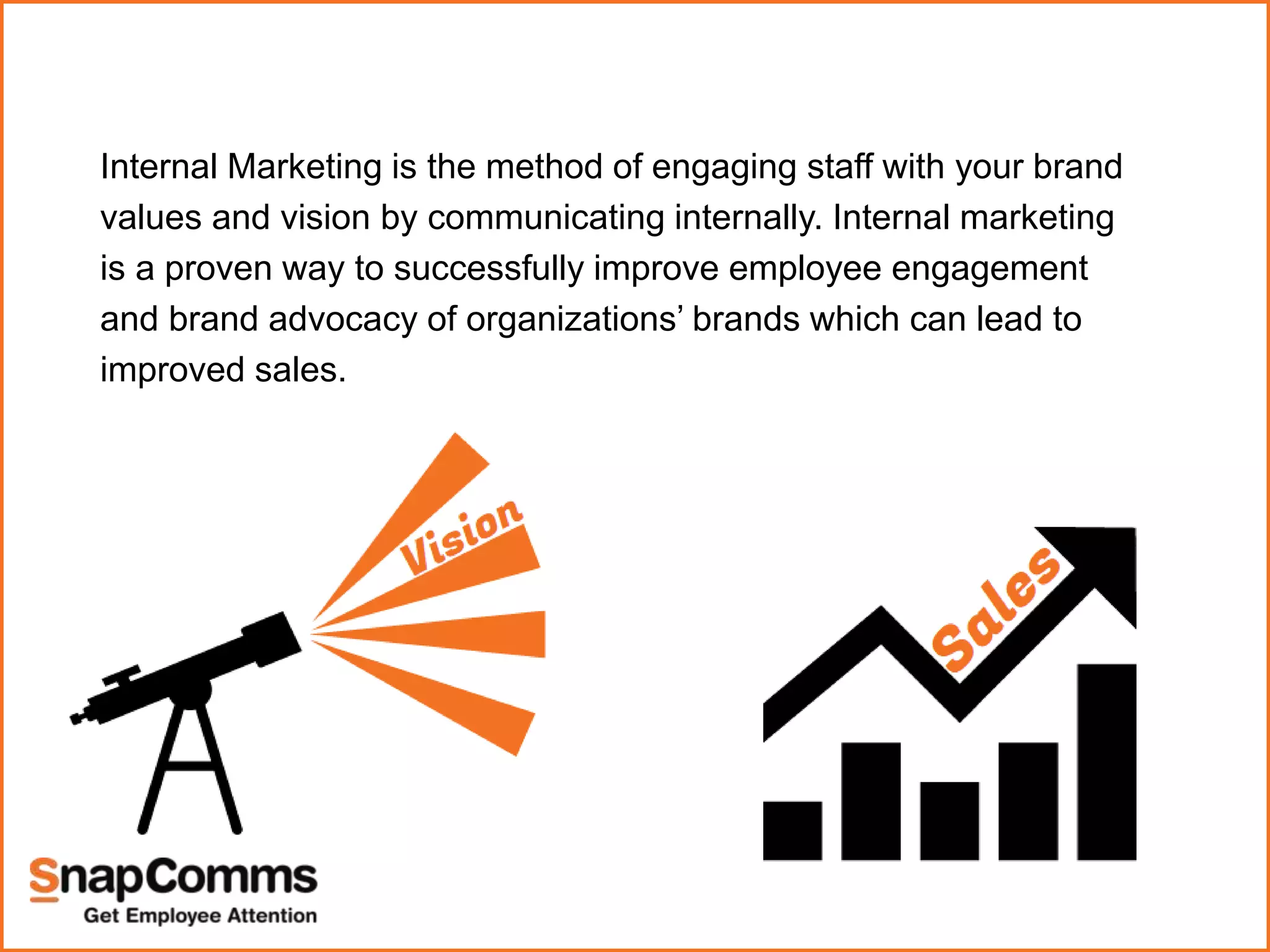
Internal Marketing is the method of engaging staff with your brand
values and vision by communicating internally. Internal marketing
is a proven way to successfully improve employee engagement
and brand advocacy of organizations’ brands which can lead to
improved sales.
There’s more to internal marketing than just telling staff your
brand values once. It requires a communication campaign, that
is; a series of messages communicated in engaging formats that
will communicate the goals and aspirations of your organization in
a way that will resonate with your staff.
Goals of
Internal
Marketing
1. Change Management
When you want to encourage culture change or introduce a new
system or software, internal marketing can be an effective way to
gain acceptance of working new practices and encourage behaviour
change through effective communication.
2. Build Your Corporate Image
One of the most common understandings of internal marketing is
marketing to your ‘internal customers’ however it goes further than
this. Building a corporate image is about building knowledge and
understanding of the company’s goals, strengths and aspirations.
Conveying this to staff helps them understand the company’s place
in the market, your competitive advantage which leads to increased
ability to communicate this to your external customers.
3. Develop an Internal Marketing
Strategy
Decide on and document the collaboration and commitment needed to
make external marketing strategies work.
Your strategy for internal marketing should include: determine goals,
agree on resource needed, create your story to help staff execute.
Tips to Improve Internal
Marketing in Your Organization
For your internal marketing to be effective, you need to
project the ideas of your brand to your staff so they will in
turn, project these values to your external staff.
Essential ingredients for improving internal
marketing: motivation, coordination, information and
education.
1. Clarify Your Company Values and
Goals
Before you think about your internal marketing strategy, you
need to be certain of your values and goals as a company,
most companies have a good idea of their goals but may
not have them written down – this is a good place to start.
2. Develop an Engaging Company
Narrative
Now that you have your goals clearly laid out, you sould
incorporate these into a company narrative to communicate
these aspirations. Your narrative should answer the following
questions:
• Why are we here?
• What can we accomplish?
• What do we need to do to accomplish this?
3. Create a Communication Campaign
Think like a marketer. The best way to get your messages
across to your staff are through engaging communication
formats which support your company narrative. These
should be repeated over time to remind existing staff and
new staff about your goals and values and include them in
your narrative.
• Make sure you are clear on your values
• Decide which of your messages need to be communicated at the
highest frequency – which are most crucial
• Choose a variety of channels and formats to engage staff, for
example: videos featuring your CEO can be a very effective way
of communicating important messages to staff.
• Repeat your messages through different channels to ensure
visibility – some more important messages will need more
• Measure your staff knowledge of these ideas, and adjust your
campaign to ensure the right messages stick.
How to create a campaign for your
communications:
4. Teach by Example
Practice what you preach. Your goal should be to get your staff to
live your values, the best way to do that is to lead by example and
ensure your management staff adhere to your rules too. It’s
important that your staff members know how they fit into the
narrative.
5. Personalize Messages
Establish the involvement of each department with the
company’s strategy and focus on relevant messages for each
department.
For example, sales people will need information about your
products, upskilling, being knowledgeable about all
products/services the company offers, and competitive strategy.
Watch this short video on our new product
Staff that deal with customer information need to be trained on the steps to take
to ensure they can keep that information secure.
4. Use Multiple Methods
Decide on a few communication methods e.g. print posters,
company wide desktop screensavers, emails, training sessions,
quizzes, or videos.
Screensavers are visually engaging and are an effective way
to remind staff to take action
5. Keep it Interesting
Create eye-catching ways of communicating your messages e.g.
cartoon characters, well-known internet characters, interesting
examples of big security breaches, random phishing tests,
interesting facts about the impacts of security breaches.
Interesting facts help communicate points and will stick in employees’ minds
6. Measure Your Impact
To ensure you are getting the most out of your campaign,
measurement is essential. You should measure:
- Reduction in breaches
- Increased staff awareness – by quizzing staff
- Readership of communications – some internal comms software
(including SnapComms) has this functionality
- Survey staff to see which messages they engaged best with
Information Security:
as easy as ABC
ALWAYS
BE
CAREFUL
Simple slogans can help make your lessons memorable to staff members.
To learn more about how SnapComms
can help you improve infosec awareness,
visit our website:
SnapComms.com/solutions/employee-security-awareness
SnapComms is a global leader in internal communications software, serving 1
million users in many of the world’s largest organizations across 45+ countries
including several fortune 500 companies.

Internal Marketing - Tips to align staff to your brand values and vision

  • 1.
    Internal Marketing Tips toAlign Your Staff to Your Brand Values and Vision.
  • 2.
    Internal Marketing isthe method of engaging staff with your brand values and vision by communicating internally. Internal marketing is a proven way to successfully improve employee engagement and brand advocacy of organizations’ brands which can lead to improved sales.
  • 3.
    There’s more tointernal marketing than just telling staff your brand values once. It requires a communication campaign, that is; a series of messages communicated in engaging formats that will communicate the goals and aspirations of your organization in a way that will resonate with your staff.
  • 4.
  • 5.
    1. Change Management Whenyou want to encourage culture change or introduce a new system or software, internal marketing can be an effective way to gain acceptance of working new practices and encourage behaviour change through effective communication.
  • 6.
    2. Build YourCorporate Image One of the most common understandings of internal marketing is marketing to your ‘internal customers’ however it goes further than this. Building a corporate image is about building knowledge and understanding of the company’s goals, strengths and aspirations. Conveying this to staff helps them understand the company’s place in the market, your competitive advantage which leads to increased ability to communicate this to your external customers.
  • 7.
    3. Develop anInternal Marketing Strategy Decide on and document the collaboration and commitment needed to make external marketing strategies work. Your strategy for internal marketing should include: determine goals, agree on resource needed, create your story to help staff execute.
  • 8.
    Tips to ImproveInternal Marketing in Your Organization For your internal marketing to be effective, you need to project the ideas of your brand to your staff so they will in turn, project these values to your external staff. Essential ingredients for improving internal marketing: motivation, coordination, information and education.
  • 9.
    1. Clarify YourCompany Values and Goals Before you think about your internal marketing strategy, you need to be certain of your values and goals as a company, most companies have a good idea of their goals but may not have them written down – this is a good place to start.
  • 10.
    2. Develop anEngaging Company Narrative Now that you have your goals clearly laid out, you sould incorporate these into a company narrative to communicate these aspirations. Your narrative should answer the following questions: • Why are we here? • What can we accomplish? • What do we need to do to accomplish this?
  • 11.
    3. Create aCommunication Campaign Think like a marketer. The best way to get your messages across to your staff are through engaging communication formats which support your company narrative. These should be repeated over time to remind existing staff and new staff about your goals and values and include them in your narrative.
  • 12.
    • Make sureyou are clear on your values • Decide which of your messages need to be communicated at the highest frequency – which are most crucial • Choose a variety of channels and formats to engage staff, for example: videos featuring your CEO can be a very effective way of communicating important messages to staff. • Repeat your messages through different channels to ensure visibility – some more important messages will need more • Measure your staff knowledge of these ideas, and adjust your campaign to ensure the right messages stick. How to create a campaign for your communications:
  • 13.
    4. Teach byExample Practice what you preach. Your goal should be to get your staff to live your values, the best way to do that is to lead by example and ensure your management staff adhere to your rules too. It’s important that your staff members know how they fit into the narrative.
  • 14.
    5. Personalize Messages Establishthe involvement of each department with the company’s strategy and focus on relevant messages for each department. For example, sales people will need information about your products, upskilling, being knowledgeable about all products/services the company offers, and competitive strategy. Watch this short video on our new product
  • 15.
    Staff that dealwith customer information need to be trained on the steps to take to ensure they can keep that information secure.
  • 16.
    4. Use MultipleMethods Decide on a few communication methods e.g. print posters, company wide desktop screensavers, emails, training sessions, quizzes, or videos.
  • 17.
    Screensavers are visuallyengaging and are an effective way to remind staff to take action
  • 18.
    5. Keep itInteresting Create eye-catching ways of communicating your messages e.g. cartoon characters, well-known internet characters, interesting examples of big security breaches, random phishing tests, interesting facts about the impacts of security breaches.
  • 19.
    Interesting facts helpcommunicate points and will stick in employees’ minds
  • 20.
    6. Measure YourImpact To ensure you are getting the most out of your campaign, measurement is essential. You should measure: - Reduction in breaches - Increased staff awareness – by quizzing staff - Readership of communications – some internal comms software (including SnapComms) has this functionality - Survey staff to see which messages they engaged best with
  • 21.
    Information Security: as easyas ABC ALWAYS BE CAREFUL Simple slogans can help make your lessons memorable to staff members.
  • 22.
    To learn moreabout how SnapComms can help you improve infosec awareness, visit our website: SnapComms.com/solutions/employee-security-awareness SnapComms is a global leader in internal communications software, serving 1 million users in many of the world’s largest organizations across 45+ countries including several fortune 500 companies.