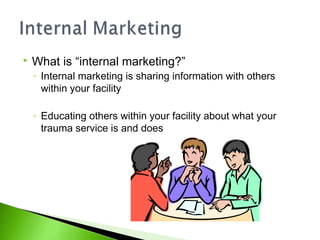
 What is “internal marketing?”
◦ Internal marketing is sharing information with others
within your facility
◦ Educating others within your facility about what your
trauma service is and does
 Who really knows what you do?
◦ You as the Trauma Coordinator know what you do
◦ The Trauma Medical Director and Registrar has some
idea
◦ The ED /OR/ICU/Floor staff have an idea what you do
◦ Perhaps your direct supervisor has an idea
◦ But everyone else has no clue what you do and perhaps,
on any given day, you wonder the same thing!!
 Who needs to know what you do? Anyone?
◦ EMS services
◦ ED physicians
◦ ED/ICU/Floor/Radiology/Lab and OR staffs
◦ Surgeons
◦ Other physicians
◦ Department managers, department staff
◦ EVERYONE in the facility needs to know
 Who is responsible to educate others?
 YOU ARE!!! Speak up!! Have a voice!
 BUT?????!!!!!
 How do you go about it?
◦ Find opportunities to talk about your program
 Staff meetings, while making rounds on trauma patients,
Trauma Committee meetings, other multidisciplinary
committee meetings, Hospital Board meetings, even while
having coffee in the cafeteria with other staff
 Food is often a good tool to use to get people to come to a
meeting
 Provide annual report to department heads, Administration,
Hospital Board about the trauma program
 Come up with some sort of articulate response to
this REALLY BIG question:
 “So really, what do you do and what is a Trauma Program?”
 Be able to talk about your service knowledgeably:
◦ How many patients a year do you see?
◦ Who are they (characteristics)?
◦ Has the patient population changed?
◦ What is the payer mix? How is reimbursement?
◦ What are the current care challenges?
◦ What processes are you currently working on?
◦ What resources do we have and what else is needed?
◦ What are your current program strengths?
Know who and what kinds of patients that your facility
provides care for
 Other ways to market your program internally;
◦ Write articles/give updates for your hospital newsletter
◦ Provide educational sessions
◦ Make sure your facility’s marketing program is aware of the Trauma
Service
◦ Participate in Community outreach and civic activities
◦ Provide presentations to civic and service groups
◦ Always share your news with Administration, Board, Leadership,
including your CEO
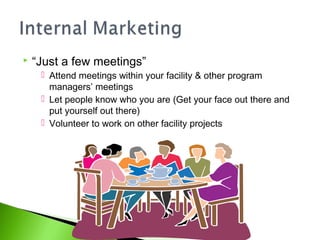
 “Just a few meetings”
 Attend meetings within your facility & other program
managers’ meetings
 Let people know who you are (Get your face out there and
put yourself out there)
 Volunteer to work on other facility projects
 What if people complain about care or criticize the program?
◦ Always take the complaints seriously and look at it from their
perspective. Elicit their ideas
◦ Keep an open mind; don’t pre-judge
◦ Thoroughly research the situation
◦ Involve all of those who are affected
◦ Educate people about what is happening and why
◦ Let people know the outcome once a complaint has gone through the
process
◦ Make sure any processes changes are thoroughly communicated to
those who need to know
◦ Always follow-through on any complaints
COMMUNICATION IS KEY!
 Share successes and challenges
 Network with other trauma coordinators
 Don’t reinvent the wheel
 Take your program into your community, region and
state; participate in all levels of activity
 Offer to provide a presentation at another facility in
your region that is considering designation or
struggling with their system
 Invite others to come to your service and let them
follow you around for a day;
“John Bleicher Trauma Coordinator Orientation Day!!”
 Let your community know about your facility’s
contribution to trauma care
◦ Make sure your facility’s public relations person is
included in marketing the trauma program
◦ Go to the schools and be involved with education,
retirement homes, Kiwanis , Knights of Columbus and
injury prevention activities
◦ Advertise in your community about what you do
 Billboards, pamphlets, newspaper articles, facility web sites
 Promotion
◦ Publicity strategies
◦ Vehicles for promotion
◦ The message itself
◦ Send that positive message about your program and
your facility and how your Trauma Program is changing
lives in your community!

Internal external marketing

  • 2.
     What is“internal marketing?” ◦ Internal marketing is sharing information with others within your facility ◦ Educating others within your facility about what your trauma service is and does
  • 3.
     Who reallyknows what you do? ◦ You as the Trauma Coordinator know what you do ◦ The Trauma Medical Director and Registrar has some idea ◦ The ED /OR/ICU/Floor staff have an idea what you do ◦ Perhaps your direct supervisor has an idea ◦ But everyone else has no clue what you do and perhaps, on any given day, you wonder the same thing!!
  • 4.
     Who needsto know what you do? Anyone? ◦ EMS services ◦ ED physicians ◦ ED/ICU/Floor/Radiology/Lab and OR staffs ◦ Surgeons ◦ Other physicians ◦ Department managers, department staff ◦ EVERYONE in the facility needs to know
  • 5.
     Who isresponsible to educate others?  YOU ARE!!! Speak up!! Have a voice!  BUT?????!!!!!
  • 6.
     How doyou go about it? ◦ Find opportunities to talk about your program  Staff meetings, while making rounds on trauma patients, Trauma Committee meetings, other multidisciplinary committee meetings, Hospital Board meetings, even while having coffee in the cafeteria with other staff  Food is often a good tool to use to get people to come to a meeting  Provide annual report to department heads, Administration, Hospital Board about the trauma program
  • 7.
     Come upwith some sort of articulate response to this REALLY BIG question:  “So really, what do you do and what is a Trauma Program?”
  • 8.
     Be ableto talk about your service knowledgeably: ◦ How many patients a year do you see? ◦ Who are they (characteristics)? ◦ Has the patient population changed? ◦ What is the payer mix? How is reimbursement? ◦ What are the current care challenges? ◦ What processes are you currently working on? ◦ What resources do we have and what else is needed? ◦ What are your current program strengths? Know who and what kinds of patients that your facility provides care for
  • 9.
     Other waysto market your program internally; ◦ Write articles/give updates for your hospital newsletter ◦ Provide educational sessions ◦ Make sure your facility’s marketing program is aware of the Trauma Service ◦ Participate in Community outreach and civic activities ◦ Provide presentations to civic and service groups ◦ Always share your news with Administration, Board, Leadership, including your CEO
  • 10.
     “Just afew meetings”  Attend meetings within your facility & other program managers’ meetings  Let people know who you are (Get your face out there and put yourself out there)  Volunteer to work on other facility projects
  • 11.
     What ifpeople complain about care or criticize the program? ◦ Always take the complaints seriously and look at it from their perspective. Elicit their ideas ◦ Keep an open mind; don’t pre-judge ◦ Thoroughly research the situation ◦ Involve all of those who are affected ◦ Educate people about what is happening and why ◦ Let people know the outcome once a complaint has gone through the process ◦ Make sure any processes changes are thoroughly communicated to those who need to know ◦ Always follow-through on any complaints
  • 12.
    COMMUNICATION IS KEY! Share successes and challenges  Network with other trauma coordinators  Don’t reinvent the wheel
  • 13.
     Take yourprogram into your community, region and state; participate in all levels of activity  Offer to provide a presentation at another facility in your region that is considering designation or struggling with their system  Invite others to come to your service and let them follow you around for a day; “John Bleicher Trauma Coordinator Orientation Day!!”
  • 14.
     Let yourcommunity know about your facility’s contribution to trauma care ◦ Make sure your facility’s public relations person is included in marketing the trauma program ◦ Go to the schools and be involved with education, retirement homes, Kiwanis , Knights of Columbus and injury prevention activities ◦ Advertise in your community about what you do  Billboards, pamphlets, newspaper articles, facility web sites
  • 15.
     Promotion ◦ Publicitystrategies ◦ Vehicles for promotion ◦ The message itself ◦ Send that positive message about your program and your facility and how your Trauma Program is changing lives in your community!