M2 MEEF November 2014 
Analysing 
interlanguage errors 
Tarone, E., & Swierzbin, B. (2009). Exploring learner language. Oxford 
University Press.
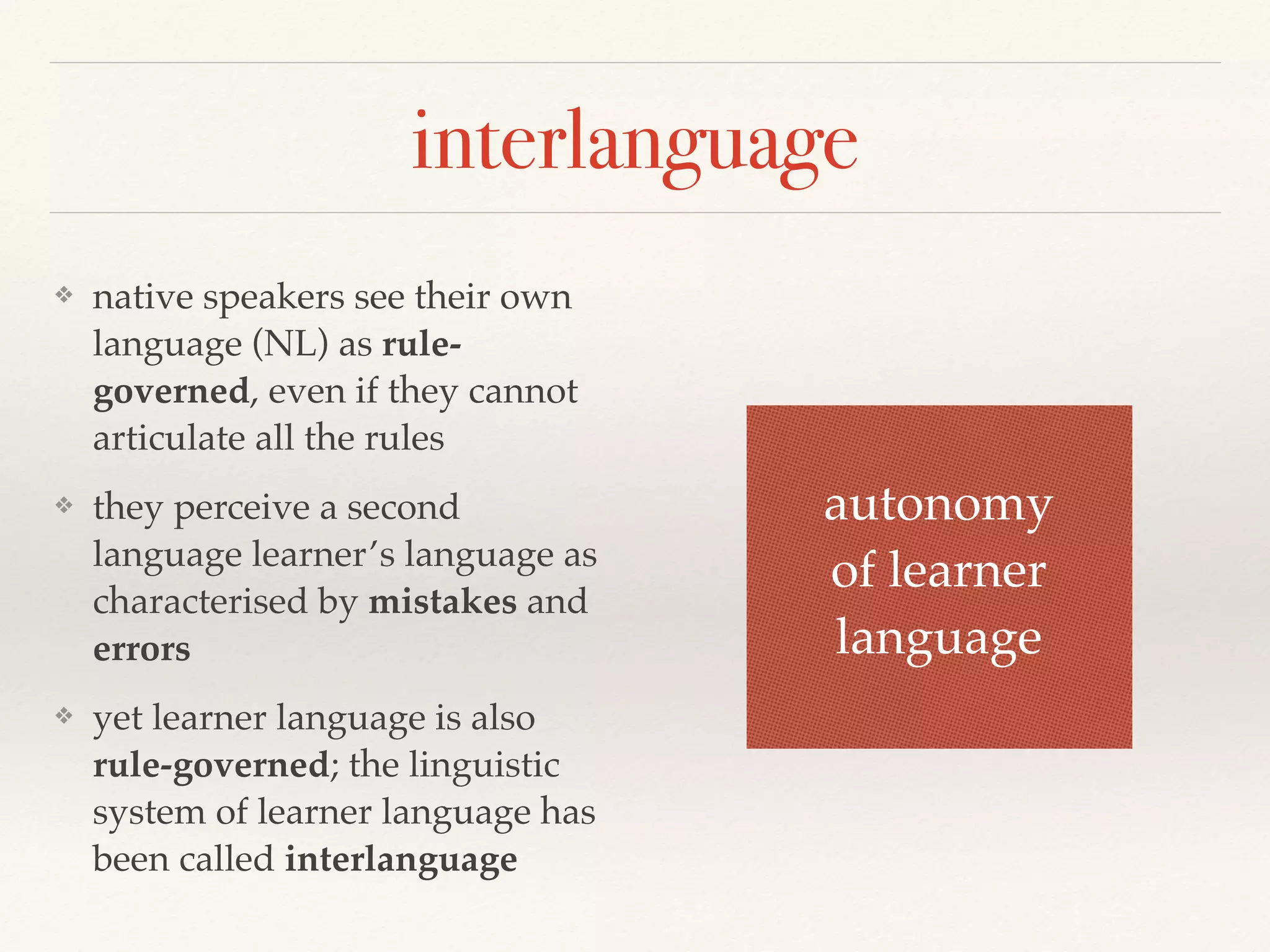
interlanguage 
❖ native speakers see their own 
language (NL) as rule-governed, 
even if they cannot 
articulate all the rules 
❖ they perceive a second 
language learner’s language as 
characterised by mistakes and 
errors 
❖ yet learner language is also 
rule-governed; the linguistic 
system of learner language has 
been called interlanguage 
autonomy 
of learner 
language
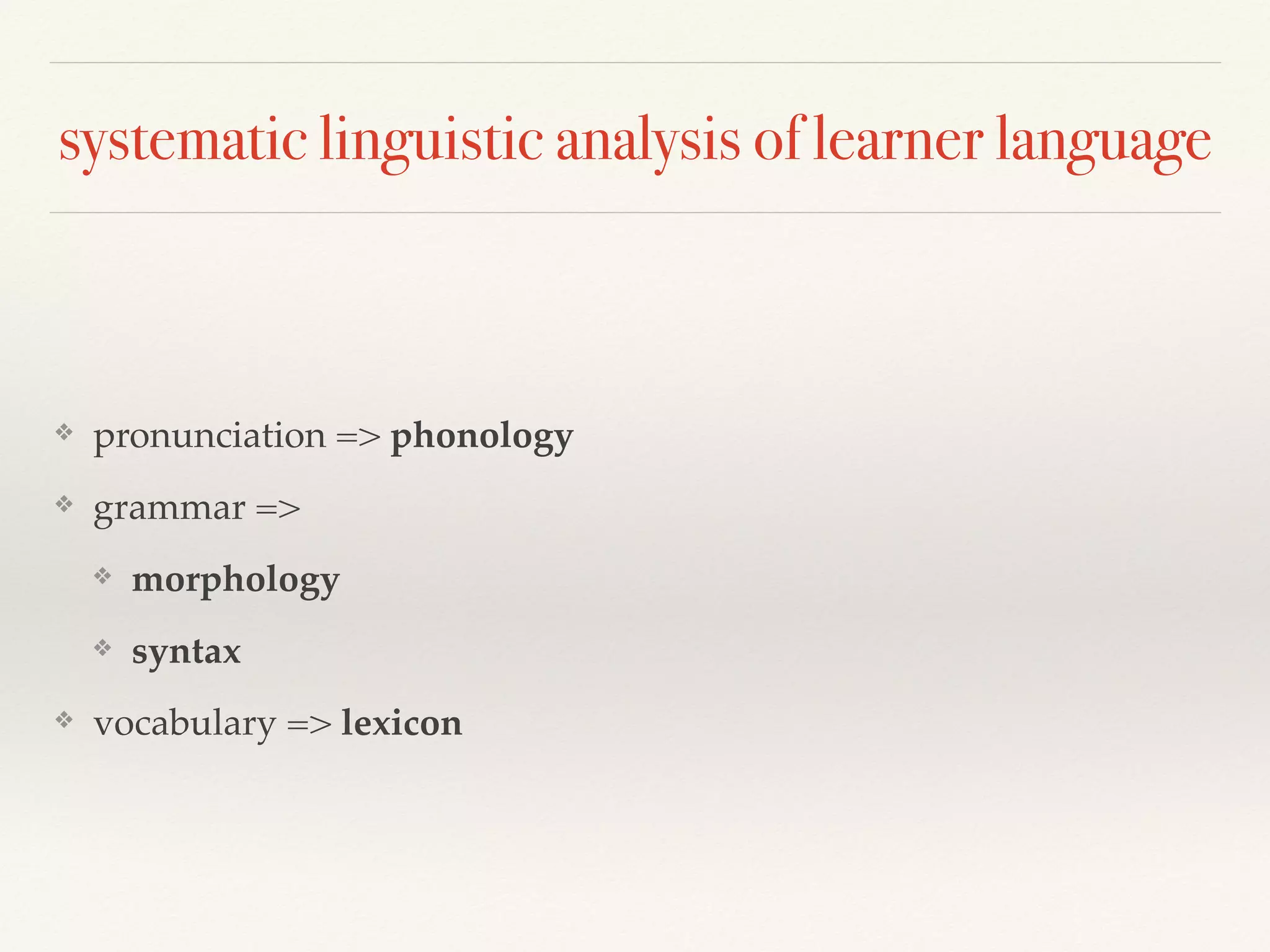
systematic linguistic analysis of learner language 
❖ pronunciation => phonology 
❖ grammar => 
❖ morphology 
❖ syntax 
❖ vocabulary => lexicon
learner errors 
❖ as teachers and fluent speakers 
of the target language, some 
features of learner language 
“jump out” at us 
❖ foreign accent or grammatical 
errors are often most noticeable 
❖ our first impressions are often 
based on exchanges of only a 
few words
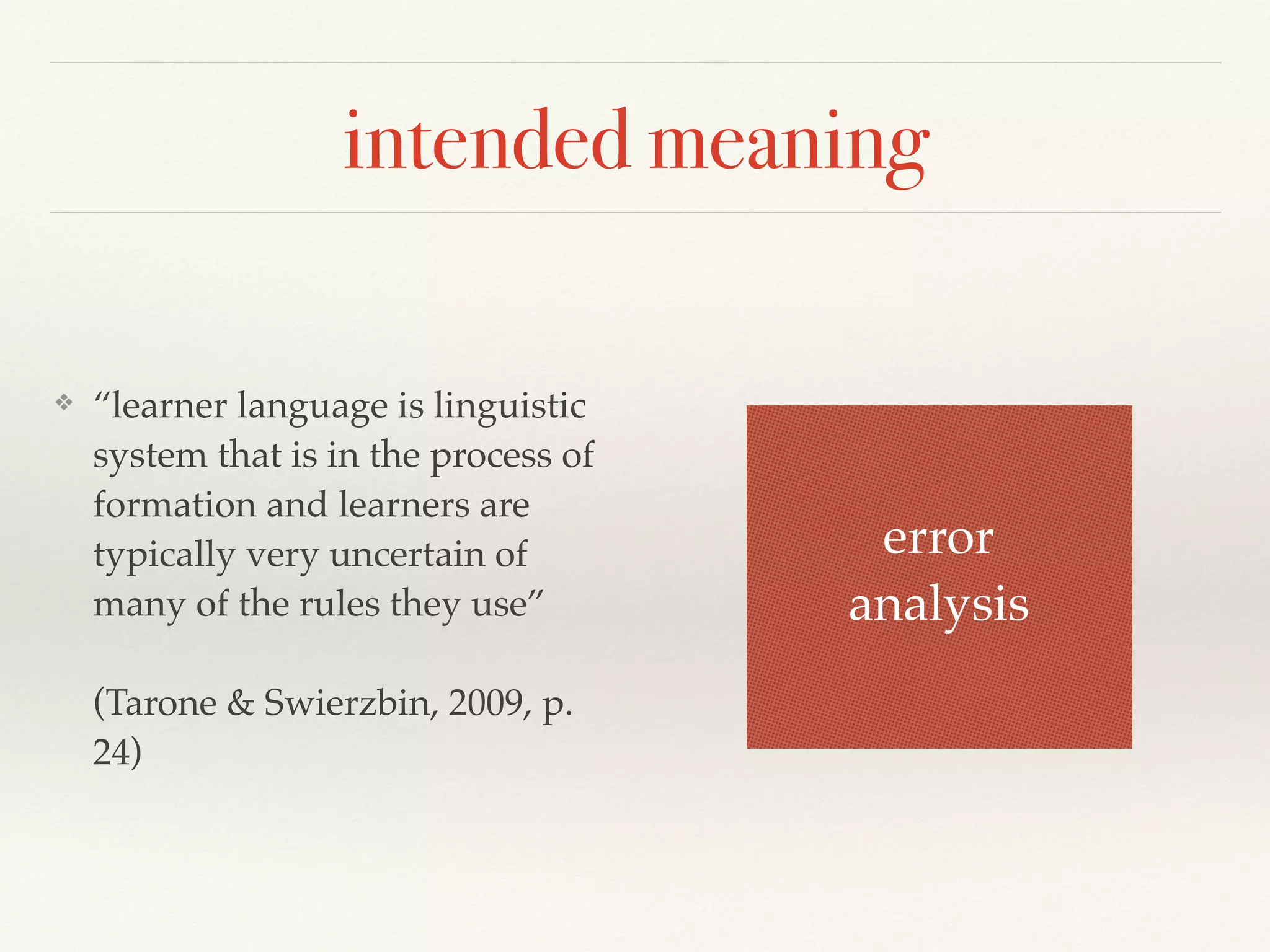
intended meaning 
❖ “learner language is linguistic 
system that is in the process of 
formation and learners are 
typically very uncertain of 
many of the rules they use” 
(Tarone & Swierzbin, 2009, p. 
24) 
error 
analysis
procedure for error analysis 
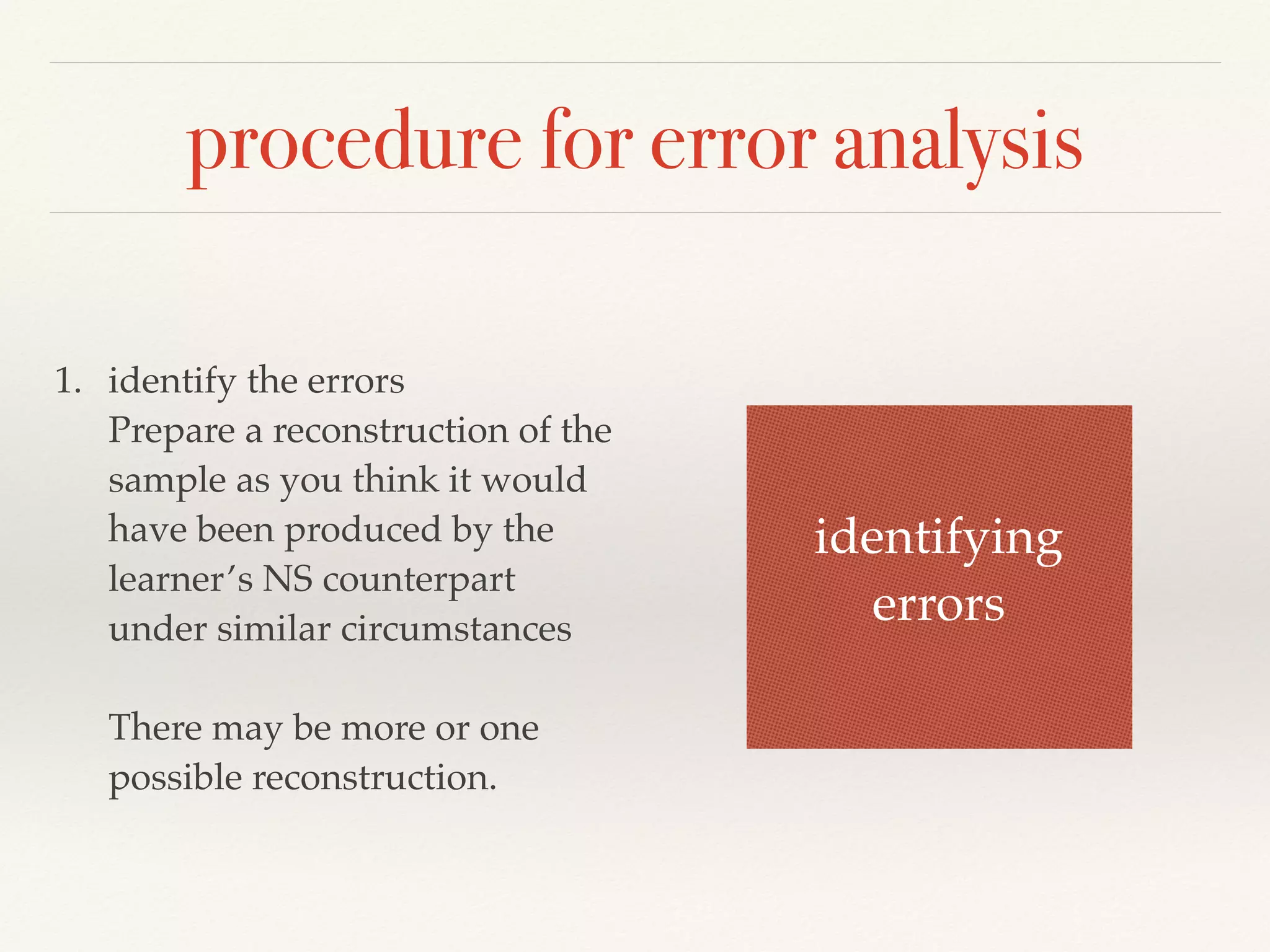
1. identify the errors 
Prepare a reconstruction of the 
sample as you think it would 
have been produced by the 
learner’s NS counterpart 
under similar circumstances 
There may be more or one 
possible reconstruction. 
identifying 
errors
procedure for error analysis 
1. identify the errors 
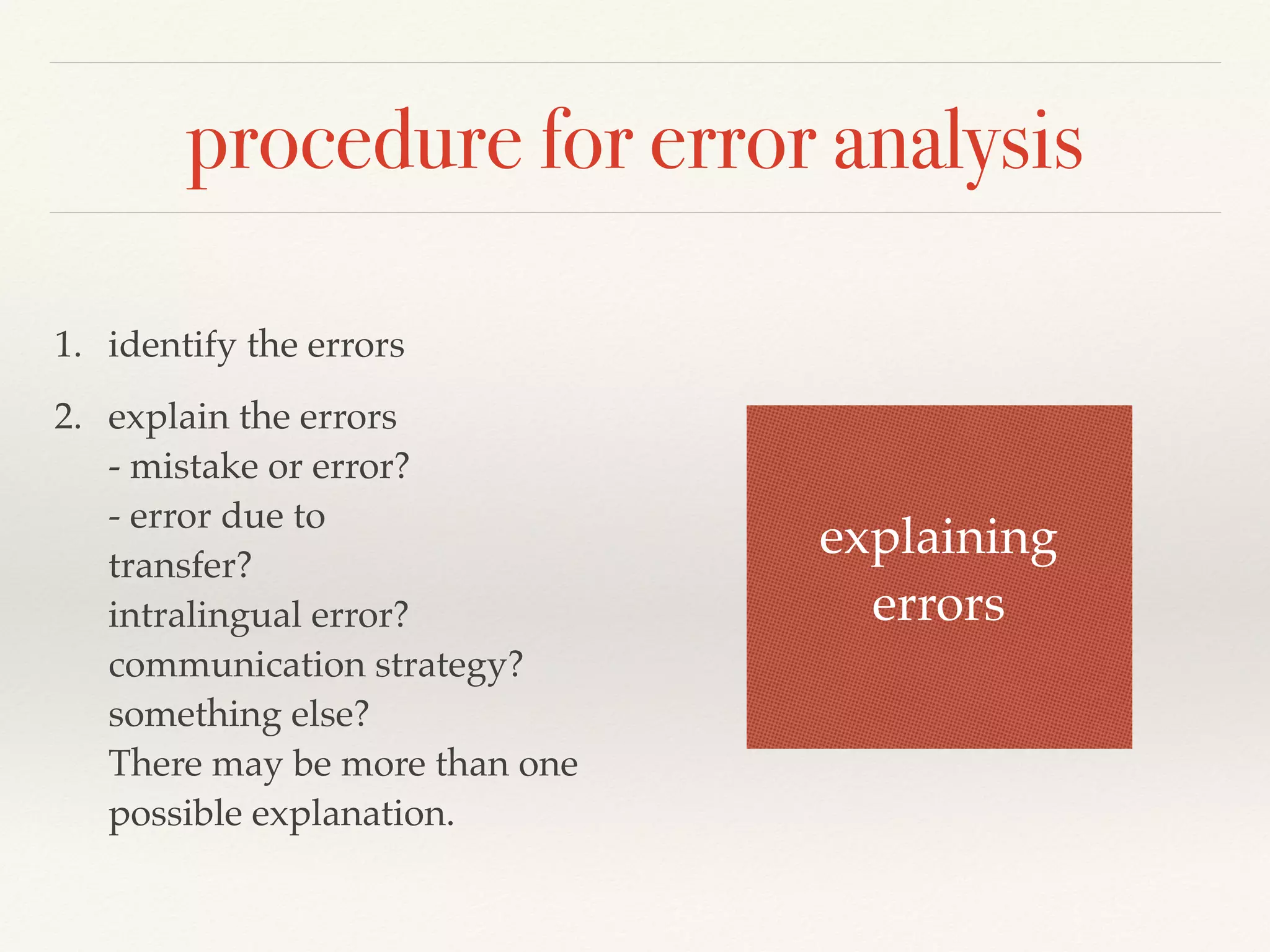
2. explain the errors 
- mistake or error? 
- error due to 
transfer? 
intralingual error? 
communication strategy? 
something else? 
There may be more than one 
possible explanation. 
explaining 
errors
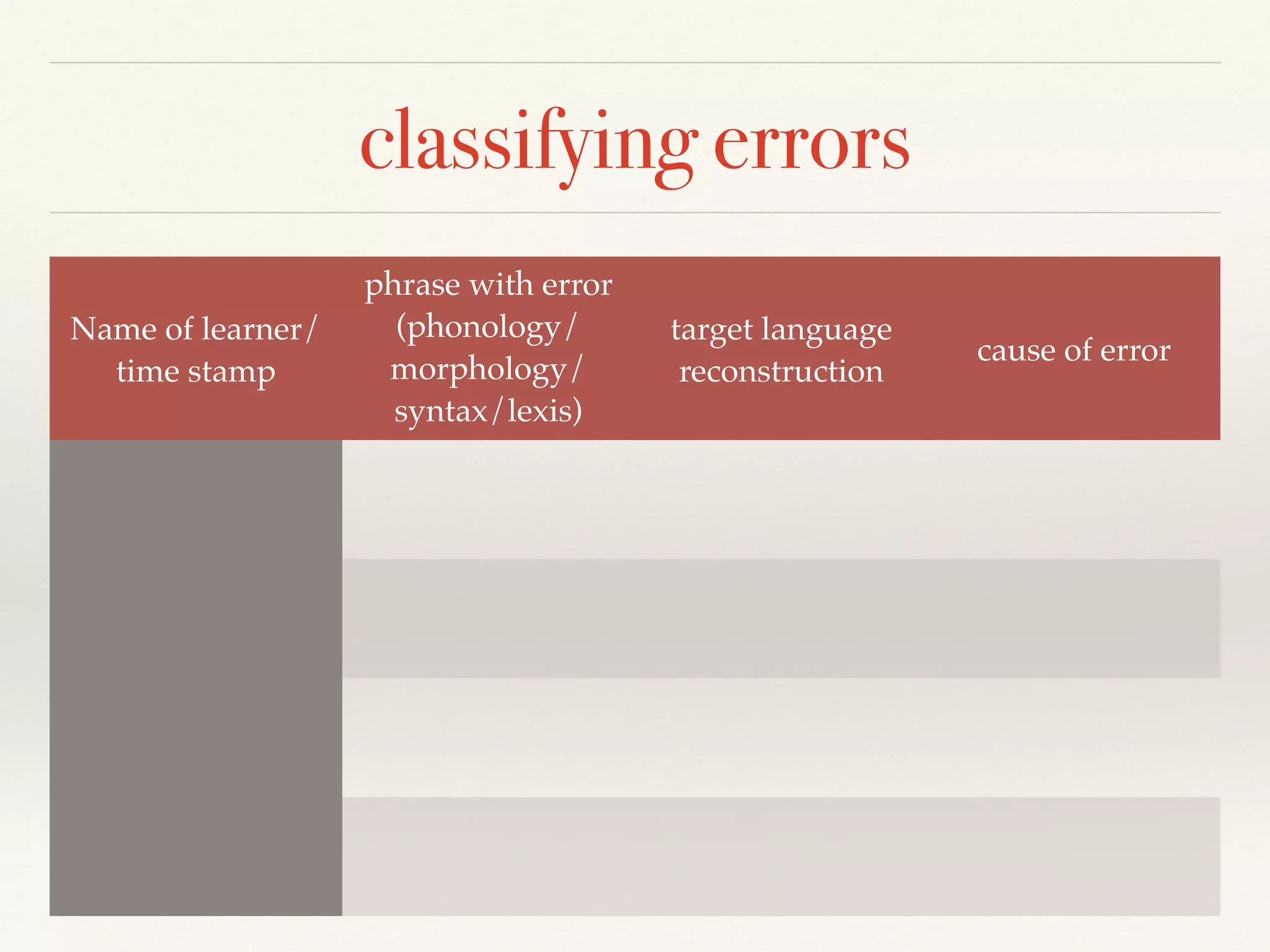
classifying errors 
Name of learner/ 
time stamp 
phrase with error 
(phonology/ 
morphology/ 
syntax/lexis) 
target language 
reconstruction 
cause of error
Reading 
❖ Lightbown, P. M., Spada, N., 
Ranta, L., & Rand, J. (2006). 
How languages are learned (Vol. 
2). Oxford: Oxford University 
Press. 
❖ Tarone, E., & Swierzbin, B. 
(2009). Exploring learner 
language. Oxford University 
Press. 
Learning and Teaching 
Foreign Languages 
http://unt.unice.fr/uoh/learn_teach_FL/ 
http://www.scoop.it/t/telt/

Interlanguage errors

  • 1.
    M2 MEEF November2014 Analysing interlanguage errors Tarone, E., & Swierzbin, B. (2009). Exploring learner language. Oxford University Press.
  • 2.
    interlanguage ❖ nativespeakers see their own language (NL) as rule-governed, even if they cannot articulate all the rules ❖ they perceive a second language learner’s language as characterised by mistakes and errors ❖ yet learner language is also rule-governed; the linguistic system of learner language has been called interlanguage autonomy of learner language
  • 3.
    systematic linguistic analysisof learner language ❖ pronunciation => phonology ❖ grammar => ❖ morphology ❖ syntax ❖ vocabulary => lexicon
  • 4.
    learner errors ❖as teachers and fluent speakers of the target language, some features of learner language “jump out” at us ❖ foreign accent or grammatical errors are often most noticeable ❖ our first impressions are often based on exchanges of only a few words
  • 5.
    intended meaning ❖“learner language is linguistic system that is in the process of formation and learners are typically very uncertain of many of the rules they use” (Tarone & Swierzbin, 2009, p. 24) error analysis
  • 6.
    procedure for erroranalysis 1. identify the errors Prepare a reconstruction of the sample as you think it would have been produced by the learner’s NS counterpart under similar circumstances There may be more or one possible reconstruction. identifying errors
  • 7.
    procedure for erroranalysis 1. identify the errors 2. explain the errors - mistake or error? - error due to transfer? intralingual error? communication strategy? something else? There may be more than one possible explanation. explaining errors
  • 8.
    classifying errors Nameof learner/ time stamp phrase with error (phonology/ morphology/ syntax/lexis) target language reconstruction cause of error
  • 9.
    Reading ❖ Lightbown,P. M., Spada, N., Ranta, L., & Rand, J. (2006). How languages are learned (Vol. 2). Oxford: Oxford University Press. ❖ Tarone, E., & Swierzbin, B. (2009). Exploring learner language. Oxford University Press. Learning and Teaching Foreign Languages http://unt.unice.fr/uoh/learn_teach_FL/ http://www.scoop.it/t/telt/