
Topic: Computer Assisted Language Learning 
Paper: 12 
Paper Name: English Language Teaching 
Prepared by: Drashti Mehta 
Roll No:7 
PG Enrollment No:PG13101021 
Sem:3 
Gmail id: drashti.mehta.111993@gmail.com 
Submitted to: Smt. S.B. Gardi, Department of English, Maharaja 
Krishnakumarsinghji Bhavnagar University 
Bhavnagar University 
Bhavnagar(Gujarat-India)
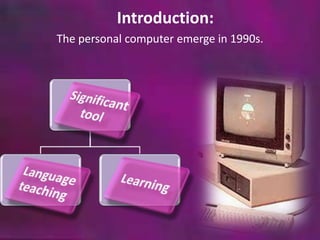
Introduction: 
The personal computer emerge in 1990s.
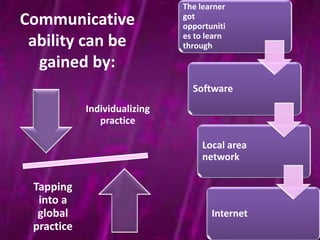
Communicative 
ability can be 
gained by: 
Individualizing 
practice 
Tapping 
into a 
global 
practice 
The learner 
got 
opportuniti 
es to learn 
through 
Software 
Local area 
network 
Internet
Background: 
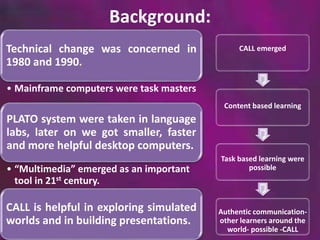
Technical change was concerned in 
1980 and 1990. 
• Mainframe computers were task masters 
PLATO system were taken in language 
labs, later on we got smaller, faster 
and more helpful desktop computers. 
• “Multimedia” emerged as an important 
tool in 21st century. 
CALL is helpful in exploring simulated 
worlds and in building presentations. 
CALL emerged 
Content based learning 
Task based learning were 
possible 
Authentic communication-other 
learners around the 
world- possible -CALL
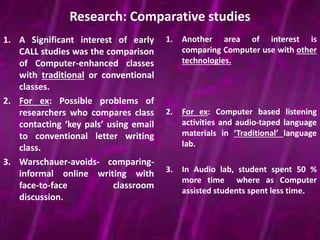
Research: Comparative studies 
1. A Significant interest of early 
CALL studies was the comparison 
of Computer-enhanced classes 
with traditional or conventional 
classes. 
2. For ex: Possible problems of 
researchers who compares class 
contacting ‘key pals’ using email 
to conventional letter writing 
class. 
3. Warschauer-avoids- comparing-informal 
online writing with 
face-to-face classroom 
discussion. 
1. Another area of interest is 
comparing Computer use with other 
technologies. 
2. For ex: Computer based listening 
activities and audio-taped language 
materials in ‘Traditional’ language 
lab. 
3. In Audio lab, student spent 50 % 
more time where as Computer 
assisted students spent less time.
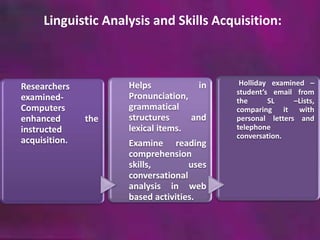
Linguistic Analysis and Skills Acquisition: 
Researchers 
examined- 
Computers 
enhanced the 
instructed 
acquisition. 
Helps in 
Pronunciation, 
grammatical 
structures and 
lexical items. 
Examine reading 
comprehension 
skills, uses 
conversational 
analysis in web 
based activities. 
Holliday examined – 
student’s email from 
the SL –Lists, 
comparing it with 
personal letters and 
telephone 
conversation.
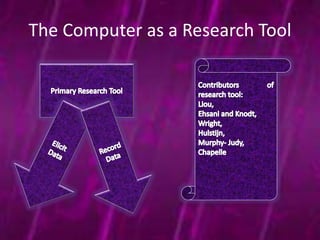
The Computer as a Research Tool
Motivation 
• Motivation has been a 
pervasive theme in CALL. 
• Jakobsdottir and Hooper 
found- when computers 
‘read’ a text aloud, 
learner’s listening skills and 
motivation improves.
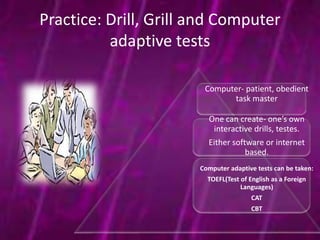
Practice: Drill, Grill and Computer 
adaptive tests 
Computer- patient, obedient 
task master 
One can create- one’s own 
interactive drills, testes. 
Either software or internet 
based. 
Computer adaptive tests can be taken: 
TOEFL(Test of English as a Foreign 
Languages) 
CAT 
CBT
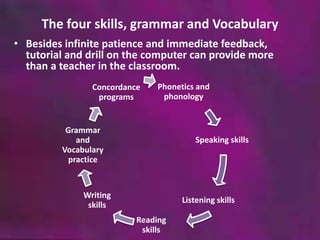
The four skills, grammar and Vocabulary 
• Besides infinite patience and immediate feedback, 
tutorial and drill on the computer can provide more 
than a teacher in the classroom. 
Phonetics and 
phonology 
Speaking skills 
Listening skills 
Concordance 
programs 
Reading 
skills 
Grammar 
and 
Vocabulary 
practice 
Writing 
skills
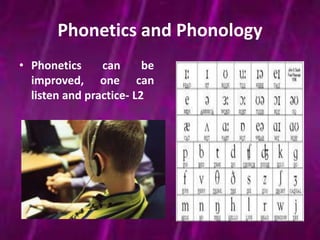
Phonetics and Phonology 
• Phonetics can be 
improved, one can 
listen and practice- L2
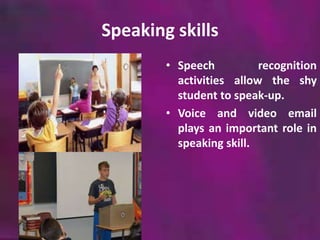
Speaking skills 
• Speech recognition 
activities allow the shy 
student to speak-up. 
• Voice and video email 
plays an important role in 
speaking skill.
Listening skill 
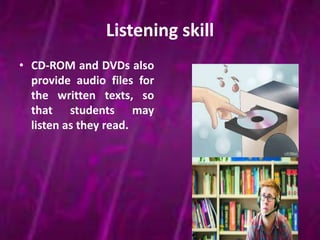
• CD-ROM and DVDs also 
provide audio files for 
the written texts, so 
that students may 
listen as they read.
Reading skill 
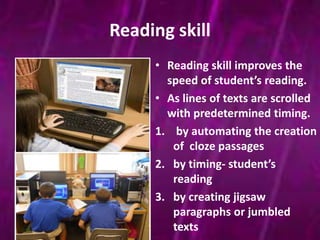
• Reading skill improves the 
speed of student’s reading. 
• As lines of texts are scrolled 
with predetermined timing. 
1. by automating the creation 
of cloze passages 
2. by timing- student’s 
reading 
3. by creating jigsaw 
paragraphs or jumbled 
texts
Writing skill and composition 
• Computer enhance writing 
process by allowing 
1. Easy revision 
2. Multiple drafts 
3. Spell checking
Grammar and Vocabulary Practice 
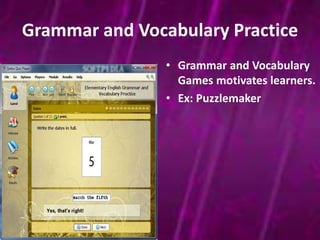
• Grammar and Vocabulary 
Games motivates learners. 
• Ex: Puzzlemaker
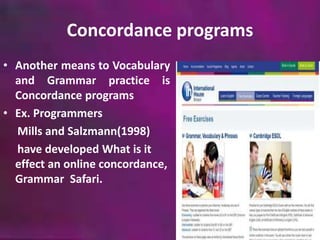
Concordance programs 
• Another means to Vocabulary 
and Grammar practice is 
Concordance programs 
• Ex. Programmers 
Mills and Salzmann(1998) 
have developed What is it 
effect an online concordance, 
Grammar Safari.
Authenticity, tasks, content and 
strategies 
• CALL practitioners stress the importance of 
authentic language and audience. 
• A more elaborate opportunities for using 
authentic language is the multi-user object-oriented 
(MOO) environment, where 
students enter a virtual reality. 
• An important trend in the use of content to 
built language skills. 
• Wide range of content is available on the 
internet for adaptation to language lessons. 
• Ex: Ready- made teaching materials and 
online lessons
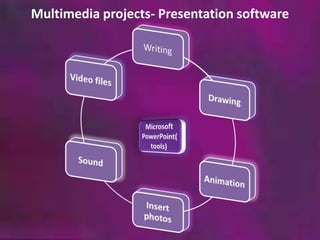
Multimedia projects- Presentation software
Current and Future trends and Directions 
• In some parts of the world online education 
and information through wireless- services 
are made possible 
• It is feared that technology may replace 
teachers. 
• Where computers takes the role of teacher, 
teacher could be guide and mentor to 
encourage students.
Computer Assisted Language Learning

Computer Assisted Language Learning

  • 1.
    Topic: Computer AssistedLanguage Learning Paper: 12 Paper Name: English Language Teaching Prepared by: Drashti Mehta Roll No:7 PG Enrollment No:PG13101021 Sem:3 Gmail id: drashti.mehta.111993@gmail.com Submitted to: Smt. S.B. Gardi, Department of English, Maharaja Krishnakumarsinghji Bhavnagar University Bhavnagar University Bhavnagar(Gujarat-India)
  • 2.
    Introduction: The personalcomputer emerge in 1990s.
  • 3.
    Communicative ability canbe gained by: Individualizing practice Tapping into a global practice The learner got opportuniti es to learn through Software Local area network Internet
  • 4.
    Background: Technical changewas concerned in 1980 and 1990. • Mainframe computers were task masters PLATO system were taken in language labs, later on we got smaller, faster and more helpful desktop computers. • “Multimedia” emerged as an important tool in 21st century. CALL is helpful in exploring simulated worlds and in building presentations. CALL emerged Content based learning Task based learning were possible Authentic communication-other learners around the world- possible -CALL
  • 5.
    Research: Comparative studies 1. A Significant interest of early CALL studies was the comparison of Computer-enhanced classes with traditional or conventional classes. 2. For ex: Possible problems of researchers who compares class contacting ‘key pals’ using email to conventional letter writing class. 3. Warschauer-avoids- comparing-informal online writing with face-to-face classroom discussion. 1. Another area of interest is comparing Computer use with other technologies. 2. For ex: Computer based listening activities and audio-taped language materials in ‘Traditional’ language lab. 3. In Audio lab, student spent 50 % more time where as Computer assisted students spent less time.
  • 6.
    Linguistic Analysis andSkills Acquisition: Researchers examined- Computers enhanced the instructed acquisition. Helps in Pronunciation, grammatical structures and lexical items. Examine reading comprehension skills, uses conversational analysis in web based activities. Holliday examined – student’s email from the SL –Lists, comparing it with personal letters and telephone conversation.
  • 7.
    The Computer asa Research Tool
  • 8.
    Motivation • Motivationhas been a pervasive theme in CALL. • Jakobsdottir and Hooper found- when computers ‘read’ a text aloud, learner’s listening skills and motivation improves.
  • 9.
    Practice: Drill, Grilland Computer adaptive tests Computer- patient, obedient task master One can create- one’s own interactive drills, testes. Either software or internet based. Computer adaptive tests can be taken: TOEFL(Test of English as a Foreign Languages) CAT CBT
  • 10.
    The four skills,grammar and Vocabulary • Besides infinite patience and immediate feedback, tutorial and drill on the computer can provide more than a teacher in the classroom. Phonetics and phonology Speaking skills Listening skills Concordance programs Reading skills Grammar and Vocabulary practice Writing skills
  • 11.
    Phonetics and Phonology • Phonetics can be improved, one can listen and practice- L2
  • 12.
    Speaking skills •Speech recognition activities allow the shy student to speak-up. • Voice and video email plays an important role in speaking skill.
  • 13.
    Listening skill •CD-ROM and DVDs also provide audio files for the written texts, so that students may listen as they read.
  • 14.
    Reading skill •Reading skill improves the speed of student’s reading. • As lines of texts are scrolled with predetermined timing. 1. by automating the creation of cloze passages 2. by timing- student’s reading 3. by creating jigsaw paragraphs or jumbled texts
  • 15.
    Writing skill andcomposition • Computer enhance writing process by allowing 1. Easy revision 2. Multiple drafts 3. Spell checking
  • 16.
    Grammar and VocabularyPractice • Grammar and Vocabulary Games motivates learners. • Ex: Puzzlemaker
  • 17.
    Concordance programs •Another means to Vocabulary and Grammar practice is Concordance programs • Ex. Programmers Mills and Salzmann(1998) have developed What is it effect an online concordance, Grammar Safari.
  • 18.
    Authenticity, tasks, contentand strategies • CALL practitioners stress the importance of authentic language and audience. • A more elaborate opportunities for using authentic language is the multi-user object-oriented (MOO) environment, where students enter a virtual reality. • An important trend in the use of content to built language skills. • Wide range of content is available on the internet for adaptation to language lessons. • Ex: Ready- made teaching materials and online lessons
  • 19.
  • 20.
    Current and Futuretrends and Directions • In some parts of the world online education and information through wireless- services are made possible • It is feared that technology may replace teachers. • Where computers takes the role of teacher, teacher could be guide and mentor to encourage students.