z
Integrating
Security Across
SDLC phases
Hack2secure contribution in
z
Why Secure SDLC
 Hackers are continuously looking for any vulnerability, flaw or
weakness in an application that could be exploited to
compromise the security of it.
 Exponential increase in number of Security attacks and
Vulnerabilities
z
Benefits Of SDLC
 Decrease its risk of susceptibility to attacks and exploits
 Reduce overall Security Control Implementation cost, Handle
Active and Passive Losses etc
z
Software Development Lifecycle
 Process which defines the various steps involved in the
development of a software.
 Adopted as a standard procedure by organizations to meet the
industry requirements and deliver high-quality and secure
software.
 Various models of SDLC are Agile, Waterfall, V-Shaped, Iterative
and more,
z
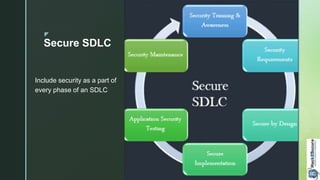
Secure SDLC
Include security as a part of
every phase of an SDLC
1. Security Training & Awareness:
Educate workforce about Security Concepts,
possible threats and attack scenarios so that
they will be able to define and evaluate security
Risk and Definitions.
Training and Awareness programs needs to be
organized to learn about Security Assurance and
methodologies, Security Policy, Procedure and
Best practices.
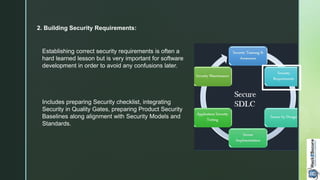
2. Building Security Requirements:
Establishing correct security requirements is often a
hard learned lesson but is very important for software
development in order to avoid any confusions later.
Includes preparing Security checklist, integrating
Security in Quality Gates, preparing Product Security
Baselines along alignment with Security Models and
Standards.
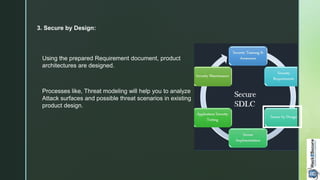
3. Secure by Design:
Using the prepared Requirement document, product
architectures are designed.
Processes like, Threat modeling will help you to analyze
Attack surfaces and possible threat scenarios in existing
product design.
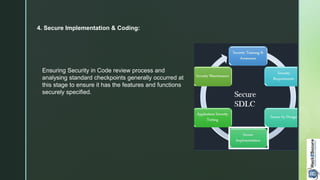
4. Secure Implementation & Coding:
Ensuring Security in Code review process and
analysing standard checkpoints generally occurred at
this stage to ensure it has the features and functions
securely specified.
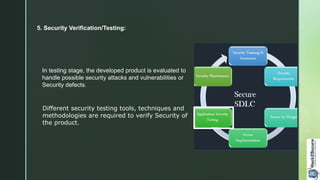
5. Security Verification/Testing:
In testing stage, the developed product is evaluated to
handle possible security attacks and vulnerabilities or
Security defects.
Different security testing tools, techniques and
methodologies are required to verify Security of
the product.
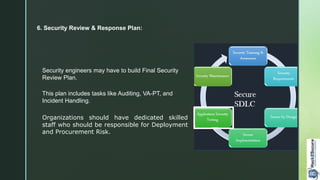
6. Security Review & Response Plan:
Security engineers may have to build Final Security
Review Plan.
This plan includes tasks like Auditing, VA-PT, and
Incident Handling.
Organizations should have dedicated skilled
staff who should be responsible for Deployment
and Procurement Risk.
7. Security Maintenance:
Organizations should have a maintenance plan ready to
provide customer’s after service help.
Security maintenance includes handling 3rd Party
Vulnerabilities, Security Escalation & Patch
Management Plan and Application Disposal: Policies,
Criteria & Process.
z
Hack2Secure
SWADLP Certification
Evaluate individual's
implementation level
skills in Security
practices to ensure
Secure Application
Development
Secure SDLC Services
Unique Secure
SDLC program &
Security services
across it
Security Training
Information Security
Training Secure
Software
Development
 Hack2Secure provides the overall solutions
to organizations that will be helpful for you
to develop a secure, flawless and threat free
Application, and make your product
differentiated from others.
 It will help to pay attention to every
single detail and perform in a
structured manner so as to minimize
threats or entry points for an
attacker.

Integrating Security Across SDLC Phases

  • 1.
  • 2.
    z Why Secure SDLC Hackers are continuously looking for any vulnerability, flaw or weakness in an application that could be exploited to compromise the security of it.  Exponential increase in number of Security attacks and Vulnerabilities
  • 3.
    z Benefits Of SDLC Decrease its risk of susceptibility to attacks and exploits  Reduce overall Security Control Implementation cost, Handle Active and Passive Losses etc
  • 4.
    z Software Development Lifecycle Process which defines the various steps involved in the development of a software.  Adopted as a standard procedure by organizations to meet the industry requirements and deliver high-quality and secure software.  Various models of SDLC are Agile, Waterfall, V-Shaped, Iterative and more,
  • 5.
    z Secure SDLC Include securityas a part of every phase of an SDLC
  • 6.
    1. Security Training& Awareness: Educate workforce about Security Concepts, possible threats and attack scenarios so that they will be able to define and evaluate security Risk and Definitions. Training and Awareness programs needs to be organized to learn about Security Assurance and methodologies, Security Policy, Procedure and Best practices.
  • 7.
    2. Building SecurityRequirements: Establishing correct security requirements is often a hard learned lesson but is very important for software development in order to avoid any confusions later. Includes preparing Security checklist, integrating Security in Quality Gates, preparing Product Security Baselines along alignment with Security Models and Standards.
  • 8.
    3. Secure byDesign: Using the prepared Requirement document, product architectures are designed. Processes like, Threat modeling will help you to analyze Attack surfaces and possible threat scenarios in existing product design.
  • 9.
    4. Secure Implementation& Coding: Ensuring Security in Code review process and analysing standard checkpoints generally occurred at this stage to ensure it has the features and functions securely specified.
  • 10.
    5. Security Verification/Testing: Intesting stage, the developed product is evaluated to handle possible security attacks and vulnerabilities or Security defects. Different security testing tools, techniques and methodologies are required to verify Security of the product.
  • 11.
    6. Security Review& Response Plan: Security engineers may have to build Final Security Review Plan. This plan includes tasks like Auditing, VA-PT, and Incident Handling. Organizations should have dedicated skilled staff who should be responsible for Deployment and Procurement Risk.
  • 12.
    7. Security Maintenance: Organizationsshould have a maintenance plan ready to provide customer’s after service help. Security maintenance includes handling 3rd Party Vulnerabilities, Security Escalation & Patch Management Plan and Application Disposal: Policies, Criteria & Process.
  • 13.
    z Hack2Secure SWADLP Certification Evaluate individual's implementationlevel skills in Security practices to ensure Secure Application Development Secure SDLC Services Unique Secure SDLC program & Security services across it Security Training Information Security Training Secure Software Development
  • 14.
     Hack2Secure providesthe overall solutions to organizations that will be helpful for you to develop a secure, flawless and threat free Application, and make your product differentiated from others.  It will help to pay attention to every single detail and perform in a structured manner so as to minimize threats or entry points for an attacker.