Delivery	
  Models	


CBE4CC
Annie Myers, Associate Dean of Computer Science & Engineering
 
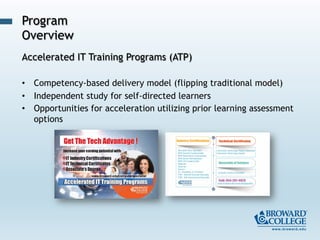
Accelerated IT Training Programs (ATP)
•  Competency-based delivery model (flipping traditional model)
•  Independent study for self-directed learners
•  Opportunities for acceleration utilizing prior learning assessment
options
Program
Overview
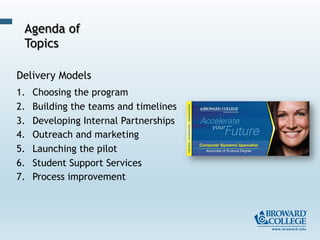
Delivery Models
1.  Choosing the program
2.  Building the teams and timelines
3.  Developing Internal Partnerships
4.  Outreach and marketing
5.  Launching the pilot
6.  Student Support Services
7.  Process improvement
Agenda of
Topics
•  Choose an existing AS in Computer
Systems Specialist
•  SACS approved
•  State framework aligned
•  Existing state outline
–  2 stacked Tech Certificates
–  9 latticed industry
certifications
Choosing the
Program
1.  21 courses to be developed
2.  Subject Matter Experts selected
3.  Separation of duties
a.  Content Developers
b.  Assessment Developers
c.  Quality Assurance Examiners
4.  Multimedia training on Wacom Tablets to
create OER
Teams &
Timelines
How do we make this work?
1.  Recruiting - Advising
2.  Registration – Open starts and early completion?
3.  Financial Aid
a.  What is a full time student?
b.  How do we track forward progress?
c.  When do we make the disbursements?
4.  Grades and transcripts
a.  Grading methods
b.  GPA
Developing
Internal
Partnerships
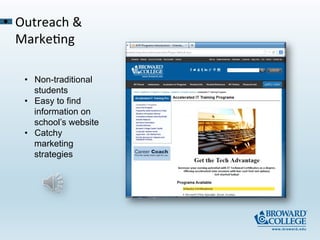
•  Outreach	
  &	
  
Marke-ng	
  
•  Non-traditional
students
•  Easy to find
information on
school’s website
•  Catchy
marketing
strategies
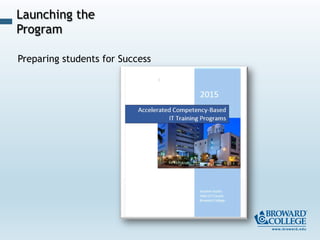
Preparing students for Success
Launching the
Program
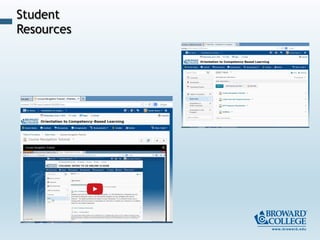
Student
Resources
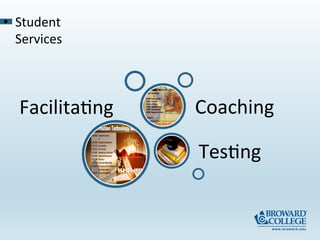
•  Student	
  
Services	
  
Facilita-ng	
  	
  
Tes-ng	
  
Coaching	
  
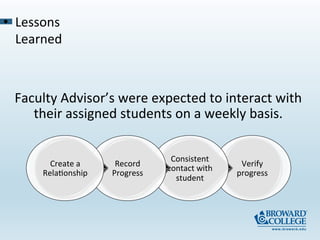
Verify	
  
progress	
  
Consistent	
  
contact	
  with	
  
student	
  
Record	
  
Progress	
  
Create	
  a	
  
Rela-onship	
  
Faculty	
  Advisor’s	
  were	
  expected	
  to	
  interact	
  with	
  
their	
  assigned	
  students	
  on	
  a	
  weekly	
  basis.	
  
•  Lessons	
  
Learned	
  
Problems	
  that	
  surfaced	
  quickly:	
  
•  Could	
  not	
  reach	
  students	
  directly	
  
–  Adult	
  and	
  or	
  working	
  students	
  usually	
  do	
  not	
  answer	
  
their	
  phones	
  during	
  the	
  day	
  while	
  they	
  are	
  at	
  work.	
  
•  Students	
  were	
  not	
  returning	
  phone	
  calls	
  or	
  emails	
  
–  If	
  they	
  did	
  return	
  a	
  call	
  they	
  usually	
  missed	
  their	
  
advisor	
  (who	
  was	
  probably	
  in	
  class)	
  
–  Faculty	
  did	
  not	
  have	
  experience	
  with	
  adult	
  
independent	
  learners	
  who	
  needed	
  liMle	
  or	
  no	
  advising	
  
(treated	
  them	
  like	
  18	
  –	
  22	
  year	
  olds)	
  
–  Most	
  students	
  (adult	
  or	
  not)	
  felt	
  they	
  were	
  being	
  
pressured	
  and	
  thus	
  went	
  into	
  avoidance	
  mode.	
  	
  
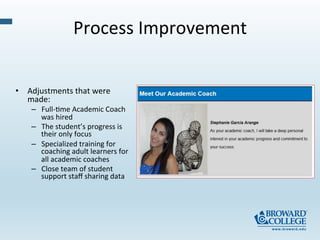
Process	
  Improvement	
  
•  Adjustments	
  that	
  were	
  
made:	
  
–  Full-­‐-me	
  Academic	
  Coach	
  
was	
  hired	
  
–  The	
  student’s	
  progress	
  is	
  
their	
  only	
  focus	
  
–  Specialized	
  training	
  for	
  
coaching	
  adult	
  learners	
  for	
  
all	
  academic	
  coaches	
  
–  Close	
  team	
  of	
  student	
  
support	
  staff	
  sharing	
  data	
  
Improvements	
  Observed	
  
•  Communica-on	
  with	
  students	
  improved	
  on	
  a	
  
consistent	
  basis,	
  and	
  feedback	
  from	
  the	
  students	
  
on	
  how	
  they	
  appreciated	
  the	
  new	
  suppor-ve	
  tone	
  
from	
  the	
  Academic	
  Coach,	
  instead	
  of	
  the	
  dictated	
  
tone	
  from	
  the	
  Faculty	
  Advisors	
  
•  Students	
  started	
  coming	
  on	
  campus	
  to	
  meet	
  the	
  
coach	
  
•  More	
  and	
  more	
  students	
  are	
  reaching	
  out	
  to	
  the	
  
coach	
  for	
  a	
  wide	
  variety	
  of	
  support	
  and	
  
informa-on	
  
•  An	
  increase	
  in	
  student	
  performance	
  and	
  progress	
  
in	
  just	
  one	
  semester	
  
1.  Not self-paced – push accelerated pace
2.  Pace charts to give students direction
3.  Creating partnerships between coach/student/instructor
4.  Remove barriers that keep students from moving forward
5.  Choose great learning resources
6.  Plan on improvements each term
7.  Hold regular meetings with coaches/instructors/staff
Lessons
Learned
Ques-ons?	
  
This workforce solution was funded by a $3,200,000 grant awarded
by the U.S. Department of Labor’s Employment and Training
Administration. The solution was created by the grantee and does
not necessarily reflect the official position of the U.S. Department of
labor. The Department of Labor makes no guarantees, warranties, or
assurances of any kind, express or implied, with respect to such
information, including any information on linked sites and including,
but not limited to, accuracy of the information or its completeness,
timeliness, usefulness, adequacy, continued availability, or
ownership

Delivery Models Faculty Development Model - Competency-Based Education

  • 1.
    Delivery  Models       CBE4CC Annie Myers, Associate Dean of Computer Science & Engineering
  • 2.
      Accelerated IT TrainingPrograms (ATP) •  Competency-based delivery model (flipping traditional model) •  Independent study for self-directed learners •  Opportunities for acceleration utilizing prior learning assessment options Program Overview
  • 3.
    Delivery Models 1.  Choosingthe program 2.  Building the teams and timelines 3.  Developing Internal Partnerships 4.  Outreach and marketing 5.  Launching the pilot 6.  Student Support Services 7.  Process improvement Agenda of Topics
  • 4.
    •  Choose anexisting AS in Computer Systems Specialist •  SACS approved •  State framework aligned •  Existing state outline –  2 stacked Tech Certificates –  9 latticed industry certifications Choosing the Program
  • 5.
    1.  21 coursesto be developed 2.  Subject Matter Experts selected 3.  Separation of duties a.  Content Developers b.  Assessment Developers c.  Quality Assurance Examiners 4.  Multimedia training on Wacom Tablets to create OER Teams & Timelines
  • 6.
    How do wemake this work? 1.  Recruiting - Advising 2.  Registration – Open starts and early completion? 3.  Financial Aid a.  What is a full time student? b.  How do we track forward progress? c.  When do we make the disbursements? 4.  Grades and transcripts a.  Grading methods b.  GPA Developing Internal Partnerships
  • 7.
    •  Outreach  &   Marke-ng   •  Non-traditional students •  Easy to find information on school’s website •  Catchy marketing strategies
  • 8.
    Preparing students forSuccess Launching the Program
  • 9.
  • 10.
    •  Student   Services   Facilita-ng     Tes-ng   Coaching  
  • 11.
    Verify   progress   Consistent   contact  with   student   Record   Progress   Create  a   Rela-onship   Faculty  Advisor’s  were  expected  to  interact  with   their  assigned  students  on  a  weekly  basis.   •  Lessons   Learned  
  • 12.
    Problems  that  surfaced  quickly:   •  Could  not  reach  students  directly   –  Adult  and  or  working  students  usually  do  not  answer   their  phones  during  the  day  while  they  are  at  work.   •  Students  were  not  returning  phone  calls  or  emails   –  If  they  did  return  a  call  they  usually  missed  their   advisor  (who  was  probably  in  class)   –  Faculty  did  not  have  experience  with  adult   independent  learners  who  needed  liMle  or  no  advising   (treated  them  like  18  –  22  year  olds)   –  Most  students  (adult  or  not)  felt  they  were  being   pressured  and  thus  went  into  avoidance  mode.    
  • 13.
    Process  Improvement   • Adjustments  that  were   made:   –  Full-­‐-me  Academic  Coach   was  hired   –  The  student’s  progress  is   their  only  focus   –  Specialized  training  for   coaching  adult  learners  for   all  academic  coaches   –  Close  team  of  student   support  staff  sharing  data  
  • 14.
    Improvements  Observed   • Communica-on  with  students  improved  on  a   consistent  basis,  and  feedback  from  the  students   on  how  they  appreciated  the  new  suppor-ve  tone   from  the  Academic  Coach,  instead  of  the  dictated   tone  from  the  Faculty  Advisors   •  Students  started  coming  on  campus  to  meet  the   coach   •  More  and  more  students  are  reaching  out  to  the   coach  for  a  wide  variety  of  support  and   informa-on   •  An  increase  in  student  performance  and  progress   in  just  one  semester  
  • 15.
    1.  Not self-paced– push accelerated pace 2.  Pace charts to give students direction 3.  Creating partnerships between coach/student/instructor 4.  Remove barriers that keep students from moving forward 5.  Choose great learning resources 6.  Plan on improvements each term 7.  Hold regular meetings with coaches/instructors/staff Lessons Learned
  • 16.
  • 17.
    This workforce solutionwas funded by a $3,200,000 grant awarded by the U.S. Department of Labor’s Employment and Training Administration. The solution was created by the grantee and does not necessarily reflect the official position of the U.S. Department of labor. The Department of Labor makes no guarantees, warranties, or assurances of any kind, express or implied, with respect to such information, including any information on linked sites and including, but not limited to, accuracy of the information or its completeness, timeliness, usefulness, adequacy, continued availability, or ownership