In-Situ Conservation
Dr. K. KANNATHASAN
Assistant Professor
Department of Botany
Arulmigu Palaniandavar College of Arts and Culture
Palani, Tamilnadu
BIODIVERSITY
Biodiversity is the variety of animals, plants, fungi, and even
microorganisms like bacteria that make up our natural world.
Scientists have identified about 1.75 million different species.
950,000 species of insects,
270,000 species of plants,
19,000 species of fish,
9,000 species of birds,and
4,000 species of mammals.
CONSERVATION
“Protection, restoration, and management of biodiversity in order to derive
sustainable benefits for present and future generations.”
The objectives of Biodiversity Conservation are
To protect and preserve species diversity.
To ensure sustainable management of the species and ecosystems.
To prevent and restore ecological processes and life support systems.
Lorem Ipsum
Lorem Ipsum
CONSERVATION STRATEGIES
In-situ Method Ex-situ Method
ZOOLOGICAL PARKS
BOTANICAL GARDENS
NATIONAL PARKS
BIOSPHERE RESERVES
SANCTUARIES SEED/GENE BANKS
BIOSPHERE RESERVES
Biosphere reserves are ‘learning places for sustainable development’.
They are sites for testing interdisciplinary approaches to understanding and managing changes
and interactions between social and ecological systems, including conflict prevention and
management of biodiversity.
Biosphere reserves are nominated by national governments and remain under the sovereign
jurisdiction of the states where they are located.
There are 738 biosphere reserves in 134 countries, including 22 transboundary
sites. They are distributed as follows:
● 90 sites in 33 countries in Africa
● 36 sites in 14 countries in the Arab States
● 172 sites in 24 countries in Asia and the Pacific
● 308 sites in 41 countries in Europe and North America
● 132 sites in 22 countries Latin America and the Caribbean.
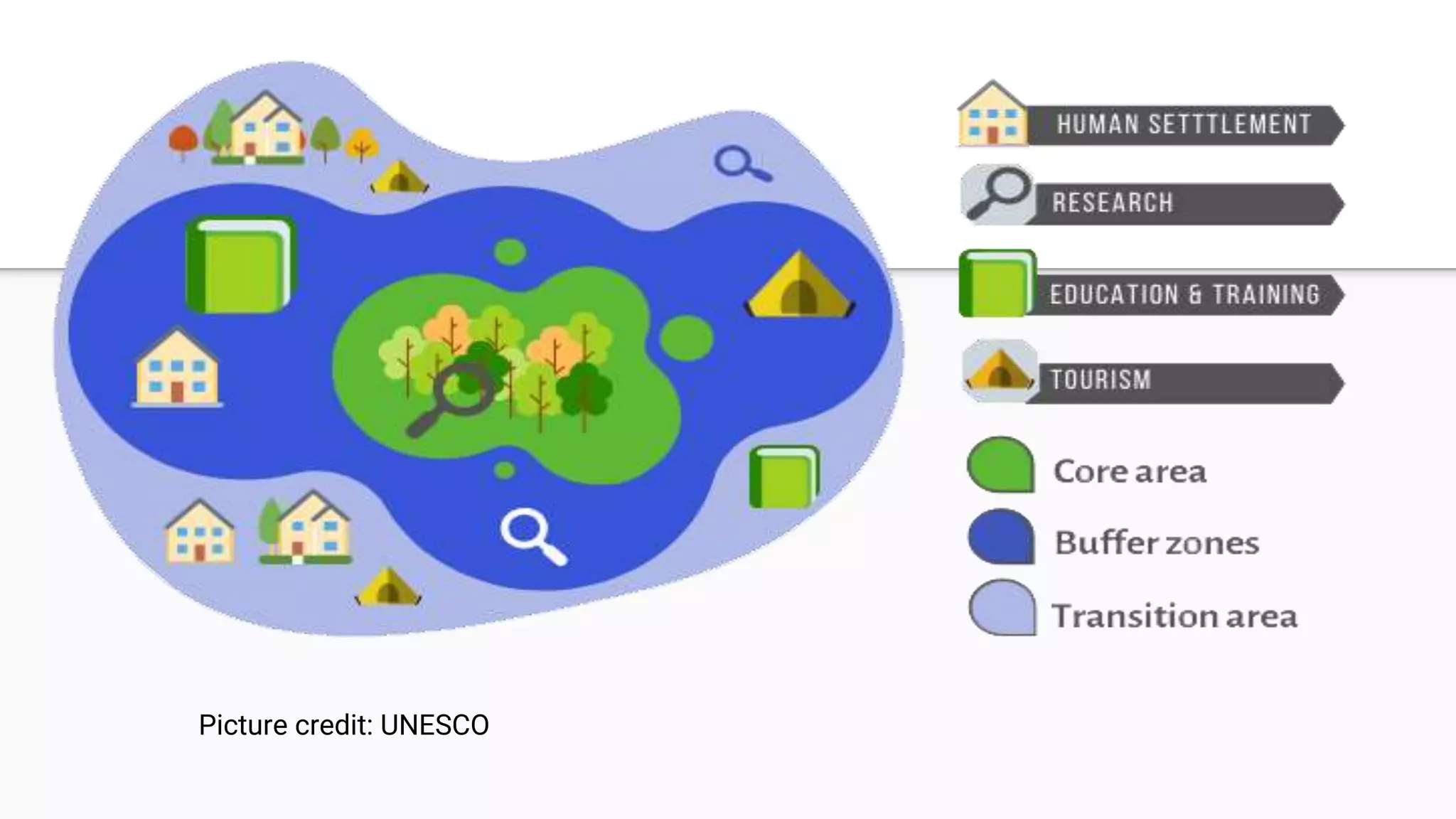
BIOSPHERE RESERVES
Picture credit: UNESCO
Core Areas
It comprises a strictly protected zone that contributes to the
conservation of landscapes, ecosystems, species and genetic variation
Buffer Zones
It surrounds or adjoins the core area(s), and is used for activities
compatible with sound ecological practices that can reinforce scientific
research, monitoring, training and education.
Transition Area
The transition area is where communities foster socio-culturally and
ecologically sustainable economic and human activities.
BIOSPHERE RESERVES OF INDIA
○ Nilgiri, Tamil Nadu-Kerala (First to be Included)
○ Gulf of Mannar, Tamil Nadu
○ Sundarban, West Bengal
○ Nanda Devi, Uttrakhand
○ Nokrek, Meghalaya
○ Pachmarhi, Madhya Pradesh
○ Similipal, Odisha
○ Achanakmar-Amarkantak, Madhya Pradesh-
Chhattisgarh
○ Great Nicobar, Andaman & Nicobar Island
○ Agasthyamala, Karnataka-Tamil Nadu-Kerala
○ Khangchendzonga, Sikkim
○ Panna, Madhya Pradesh
○ Cold Desert, Himachal Pradesh
○ Dehang-Debang, Arunachal Pradesh
○ Manas, Assam
○ Dibru-Saikhowa, Assam
12 under MAB
These are limited reserves maintained by the government for the conservation of wildlife
as well as the environment.
Human activities are prohibited in national parks and they are solely dedicated to the
protection of natural fauna of the area.
They mostly occupy an area of 100-500 square km.
There are a total of 104 national parks in India, right now.
The national parks may even be within a biosphere reserve.
These are small reserves that are protected and maintained by the government.
Its boundaries are well protected, where human activities such as grazing, forestry,
habitat, and cultivation are restricted.
Example- Kanha National Park, Gir National Park, Kaziranga National Park etc/
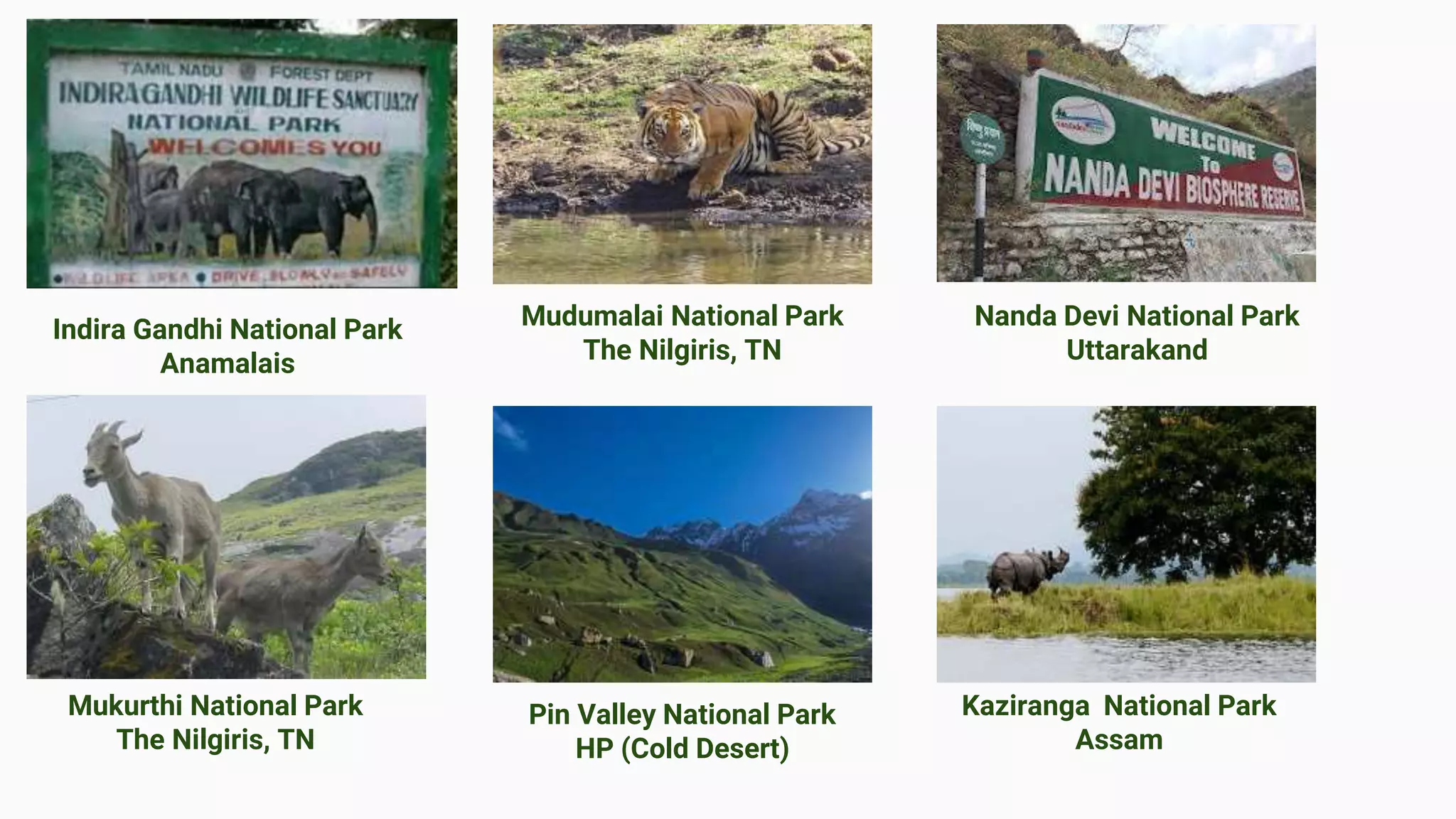
National Parks
Indira Gandhi National Park
Anamalais
Mukurthi National Park
The Nilgiris, TN
Mudumalai National Park
The Nilgiris, TN
Nanda Devi National Park
Uttarakand
Pin Valley National Park
HP (Cold Desert)
Kaziranga National Park
Assam
Wildlife Sanctuaries are protected areas meant only for the conservation of
wild animals.
A few human activities such as cultivation, wood collection, and other
forest product collection are allowed here, but they must not interfere with
the conservation of the animals.
Tourist visits are also allowed in these areas.
551 wildlife sanctuaries in India.
Recreation tourism is also permitted.
Example- Mudumalai Wildlife Sanctuary, Vedanthangal Birds’ Sanctuary,
Slender Loris Sanctuary- Karur, Cauvery South Wildlife Sanctuary - Dharmapuri and
Krishnagiri
Sanctuaries

In-Situ Conservation

  • 1.
    In-Situ Conservation Dr. K.KANNATHASAN Assistant Professor Department of Botany Arulmigu Palaniandavar College of Arts and Culture Palani, Tamilnadu
  • 2.
    BIODIVERSITY Biodiversity is thevariety of animals, plants, fungi, and even microorganisms like bacteria that make up our natural world. Scientists have identified about 1.75 million different species. 950,000 species of insects, 270,000 species of plants, 19,000 species of fish, 9,000 species of birds,and 4,000 species of mammals.
  • 3.
    CONSERVATION “Protection, restoration, andmanagement of biodiversity in order to derive sustainable benefits for present and future generations.” The objectives of Biodiversity Conservation are To protect and preserve species diversity. To ensure sustainable management of the species and ecosystems. To prevent and restore ecological processes and life support systems.
  • 4.
    Lorem Ipsum Lorem Ipsum CONSERVATIONSTRATEGIES In-situ Method Ex-situ Method ZOOLOGICAL PARKS BOTANICAL GARDENS NATIONAL PARKS BIOSPHERE RESERVES SANCTUARIES SEED/GENE BANKS
  • 5.
    BIOSPHERE RESERVES Biosphere reservesare ‘learning places for sustainable development’. They are sites for testing interdisciplinary approaches to understanding and managing changes and interactions between social and ecological systems, including conflict prevention and management of biodiversity. Biosphere reserves are nominated by national governments and remain under the sovereign jurisdiction of the states where they are located.
  • 6.
    There are 738biosphere reserves in 134 countries, including 22 transboundary sites. They are distributed as follows: ● 90 sites in 33 countries in Africa ● 36 sites in 14 countries in the Arab States ● 172 sites in 24 countries in Asia and the Pacific ● 308 sites in 41 countries in Europe and North America ● 132 sites in 22 countries Latin America and the Caribbean. BIOSPHERE RESERVES
  • 7.
  • 8.
    Core Areas It comprisesa strictly protected zone that contributes to the conservation of landscapes, ecosystems, species and genetic variation Buffer Zones It surrounds or adjoins the core area(s), and is used for activities compatible with sound ecological practices that can reinforce scientific research, monitoring, training and education. Transition Area The transition area is where communities foster socio-culturally and ecologically sustainable economic and human activities.
  • 9.
    BIOSPHERE RESERVES OFINDIA ○ Nilgiri, Tamil Nadu-Kerala (First to be Included) ○ Gulf of Mannar, Tamil Nadu ○ Sundarban, West Bengal ○ Nanda Devi, Uttrakhand ○ Nokrek, Meghalaya ○ Pachmarhi, Madhya Pradesh ○ Similipal, Odisha ○ Achanakmar-Amarkantak, Madhya Pradesh- Chhattisgarh ○ Great Nicobar, Andaman & Nicobar Island ○ Agasthyamala, Karnataka-Tamil Nadu-Kerala ○ Khangchendzonga, Sikkim ○ Panna, Madhya Pradesh ○ Cold Desert, Himachal Pradesh ○ Dehang-Debang, Arunachal Pradesh ○ Manas, Assam ○ Dibru-Saikhowa, Assam 12 under MAB
  • 10.
    These are limitedreserves maintained by the government for the conservation of wildlife as well as the environment. Human activities are prohibited in national parks and they are solely dedicated to the protection of natural fauna of the area. They mostly occupy an area of 100-500 square km. There are a total of 104 national parks in India, right now. The national parks may even be within a biosphere reserve. These are small reserves that are protected and maintained by the government. Its boundaries are well protected, where human activities such as grazing, forestry, habitat, and cultivation are restricted. Example- Kanha National Park, Gir National Park, Kaziranga National Park etc/ National Parks
  • 11.
    Indira Gandhi NationalPark Anamalais Mukurthi National Park The Nilgiris, TN Mudumalai National Park The Nilgiris, TN Nanda Devi National Park Uttarakand Pin Valley National Park HP (Cold Desert) Kaziranga National Park Assam
  • 12.
    Wildlife Sanctuaries areprotected areas meant only for the conservation of wild animals. A few human activities such as cultivation, wood collection, and other forest product collection are allowed here, but they must not interfere with the conservation of the animals. Tourist visits are also allowed in these areas. 551 wildlife sanctuaries in India. Recreation tourism is also permitted. Example- Mudumalai Wildlife Sanctuary, Vedanthangal Birds’ Sanctuary, Slender Loris Sanctuary- Karur, Cauvery South Wildlife Sanctuary - Dharmapuri and Krishnagiri Sanctuaries