Information System in Business Functions
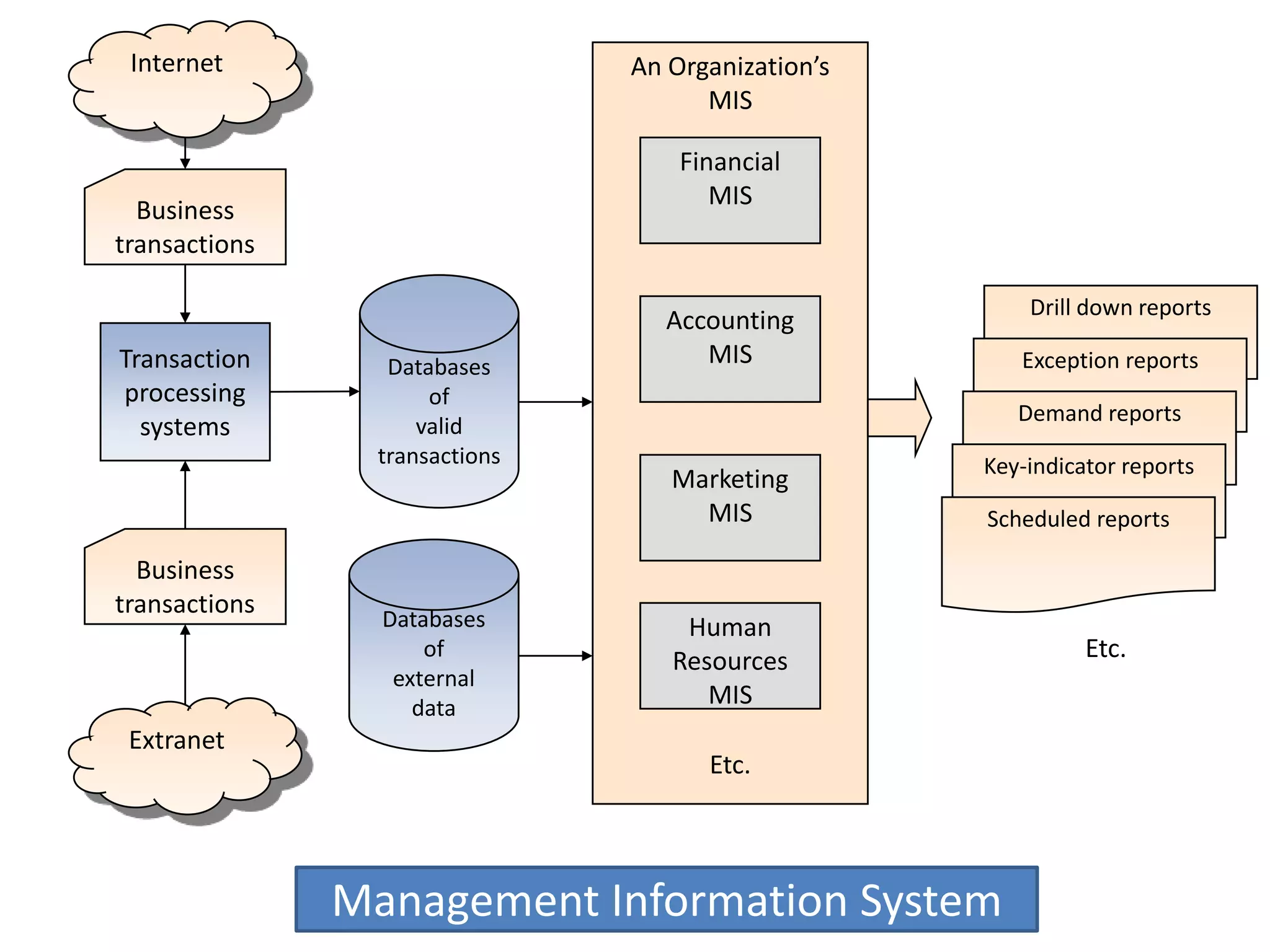
InternetAn Organization’sMISFinancialMISBusinesstransactionsDatabasesofvalidtransactionsDrill down reportsAccountingMISTransactionprocessingsystemsException reportsDemand reportsKey-indicator reportsMarketingMISScheduled reportsBusinesstransactionsDatabasesofexternaldataHumanResourcesMISEtc.ExtranetEtc.Management Information System
Accounting Information SystemAn AIS is a subset of an organization’s MIS that provides:accounting and financial informationother information obtained in the routine processing of accounting transactionsaggregated information on accounts payable, accounts receivable, payroll, and other applications.
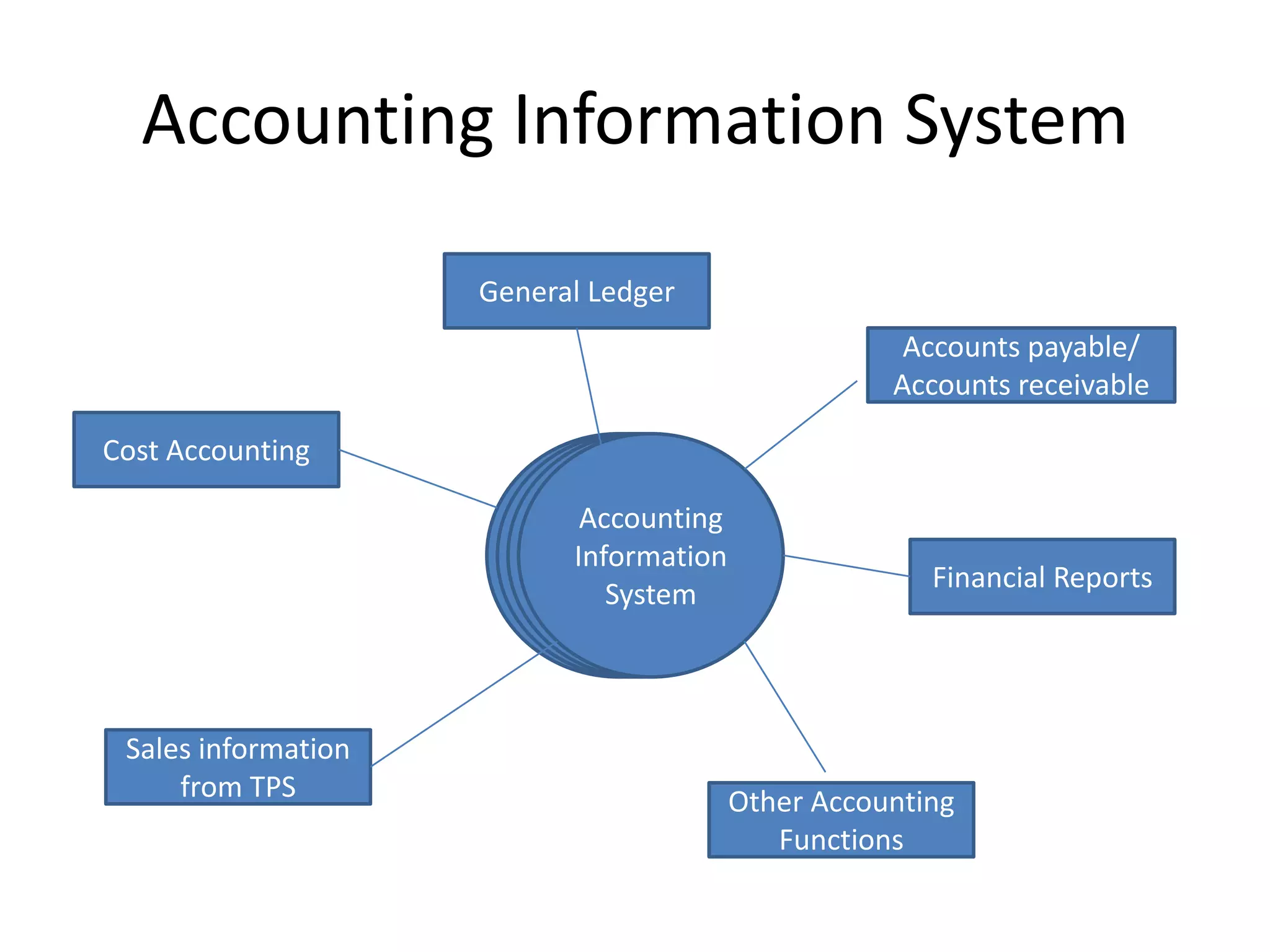
Accounting Information SystemGeneral LedgerAccounts payable/ Accounts receivableCost AccountingAccounting Information SystemAccounting Information SystemAccounting Information SystemAccounting Information SystemFinancial ReportsSales information from TPSOther Accounting Functions
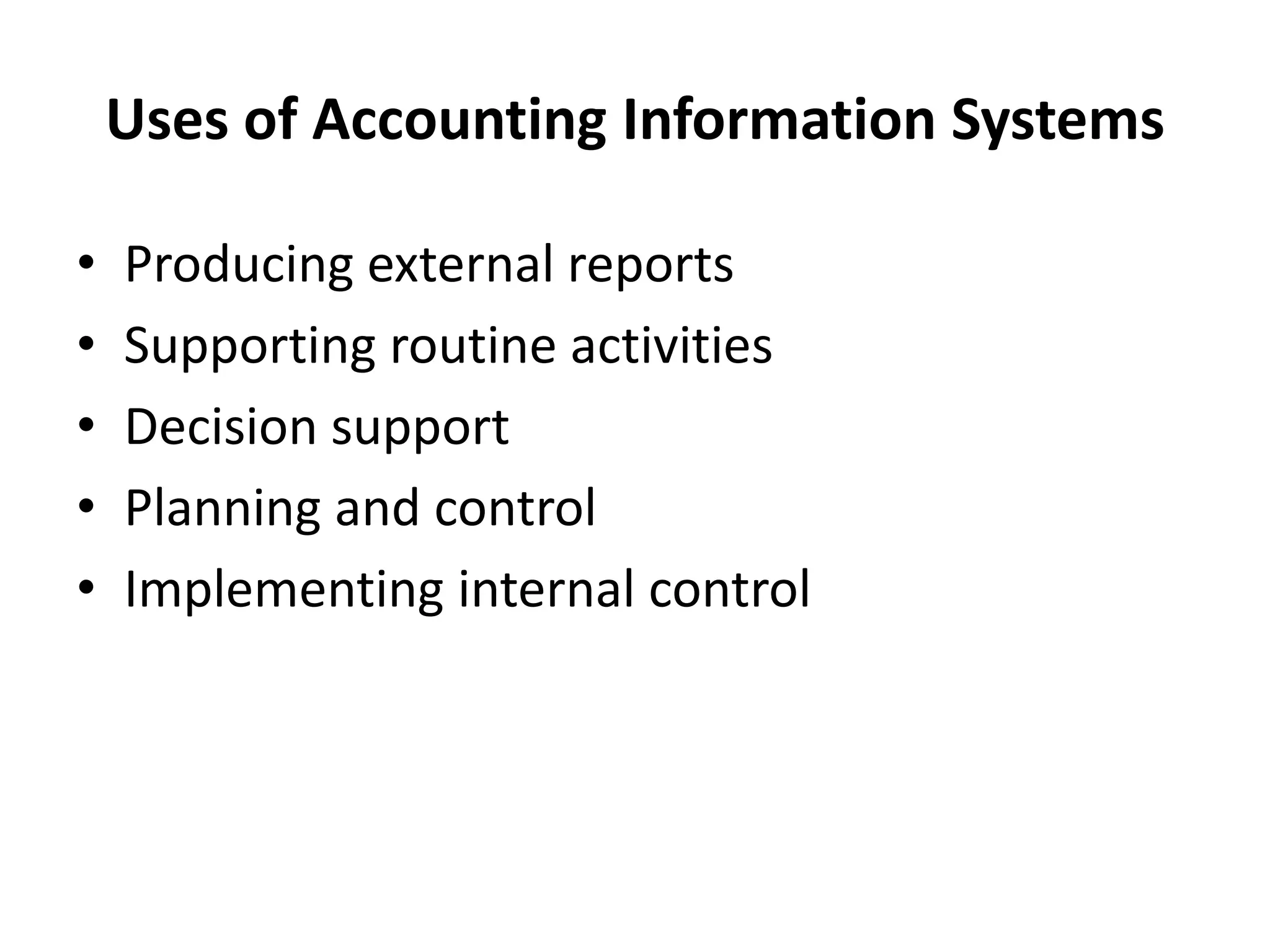
Uses of Accounting Information SystemsProducing external reportsSupporting routine activitiesDecision supportPlanning and controlImplementing internal control
Financial MISProvides financial information to all financial managers within an organization.
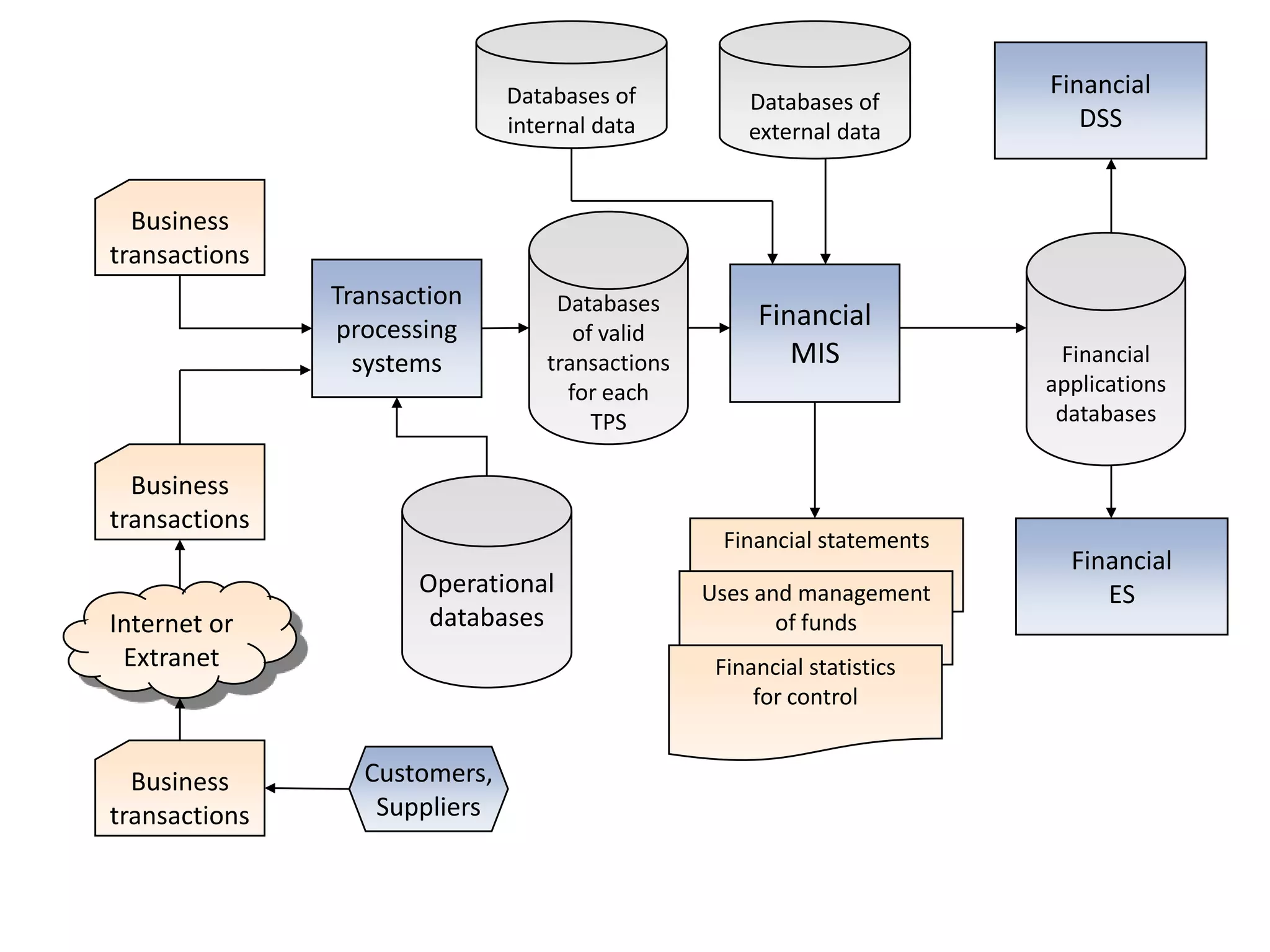
Databases ofexternal dataDatabases ofinternal dataFinancialDSSBusinesstransactionsDatabasesof validtransactionsfor eachTPSFinancialapplicationsdatabasesTransactionprocessingsystemsFinancialMISBusinesstransactionsOperationaldatabasesFinancial statementsFinancialESUses and managementof fundsInternet orExtranetFinancial statisticsfor controlBusinesstransactionsCustomers,Suppliers
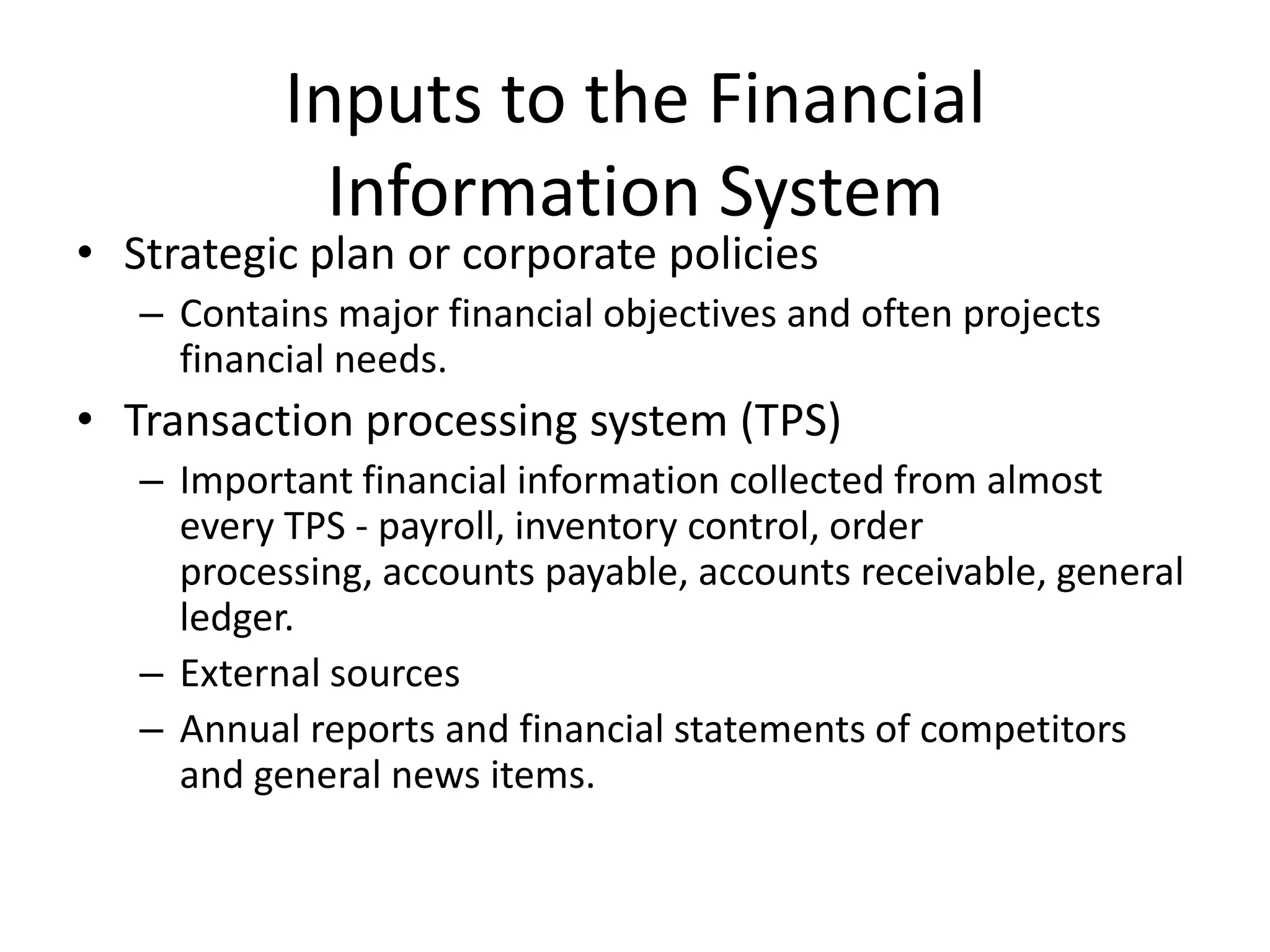
Inputs to the Financial Information SystemStrategic plan or corporate policiesContains major financial objectives and often projects financial needs.Transaction processing system (TPS)Important financial information collected from almost every TPS - payroll, inventory control, order processing, accounts payable, accounts receivable, general ledger.External sourcesAnnual reports and financial statements of competitors and general news items.
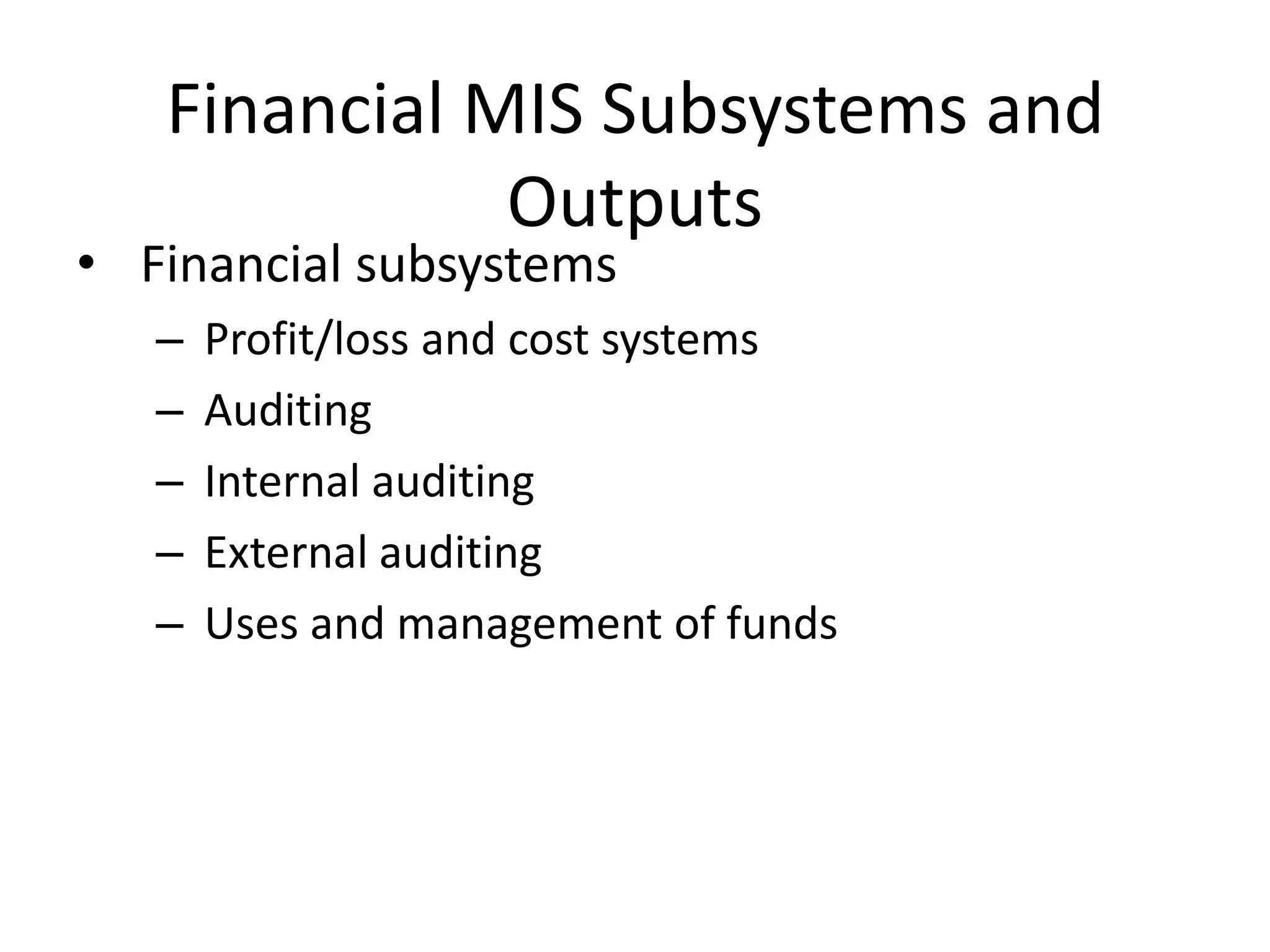
Financial MIS Subsystems and OutputsFinancial subsystemsProfit/loss and cost systemsAuditingInternal auditingExternal auditingUses and management of funds
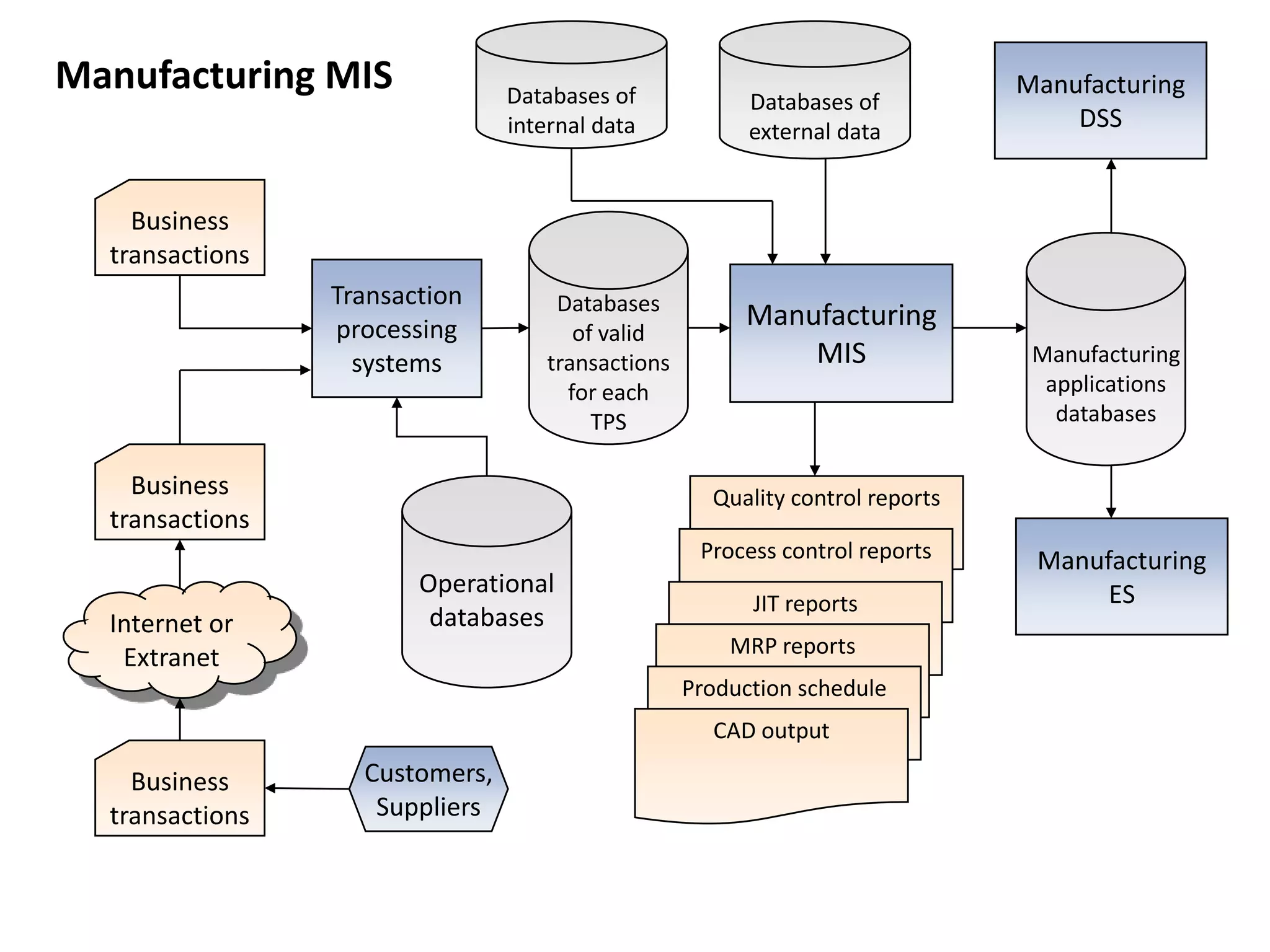
Databases ofexternal dataDatabases ofinternal dataManufacturingDSSManufacturing MISBusinesstransactionsDatabasesof validtransactionsfor eachTPSManufacturingapplicationsdatabasesTransactionprocessingsystemsManufacturingMISBusinesstransactionsQuality control reportsOperationaldatabasesManufacturingESProcess control reportsJIT reportsInternet orExtranetMRP reportsProduction scheduleCAD outputBusinesstransactionsCustomers,Suppliers
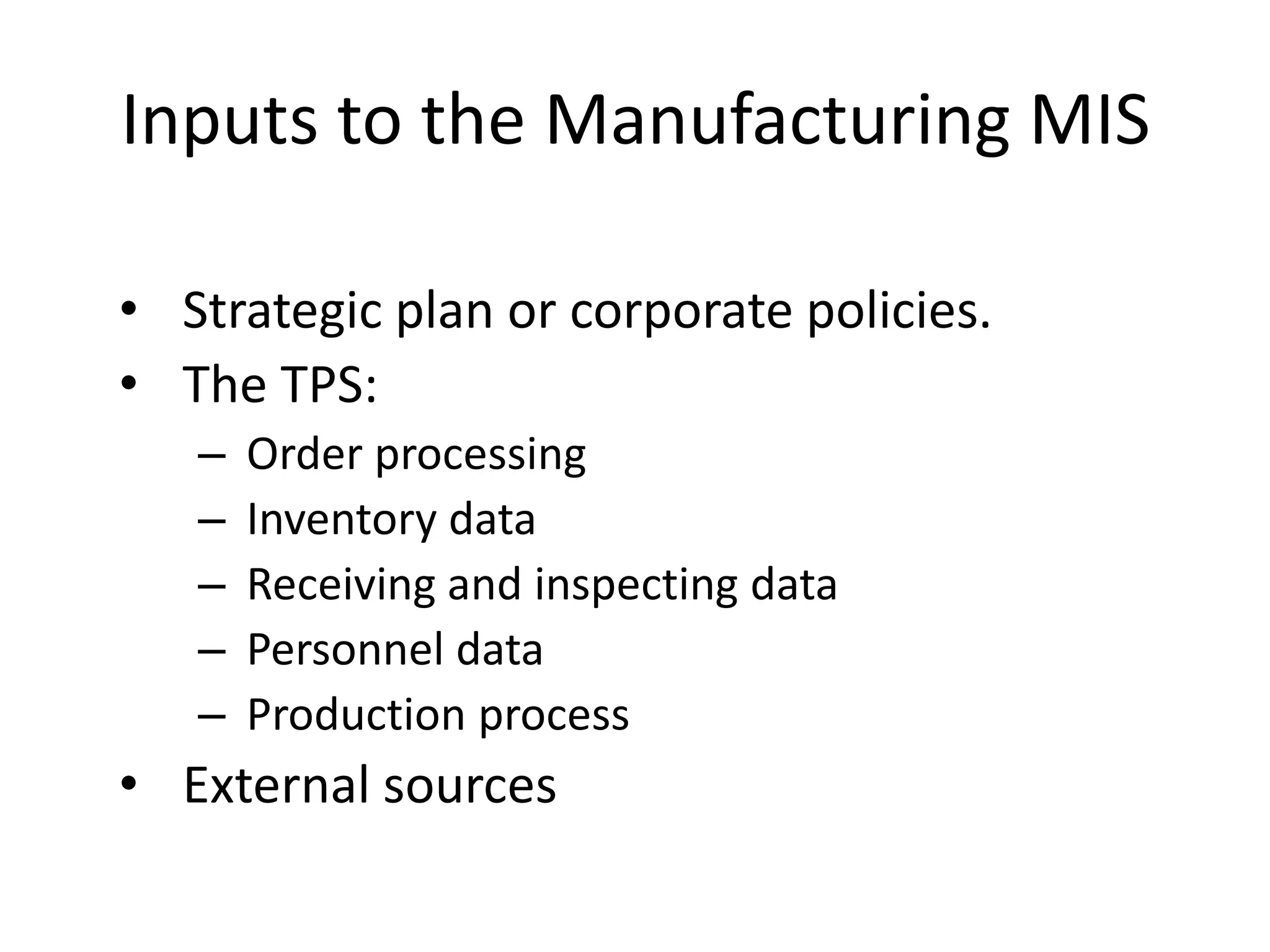
Inputs to the Manufacturing MISStrategic plan or corporate policies.The TPS:Order processingInventory dataReceiving and inspecting dataPersonnel dataProduction processExternal sources
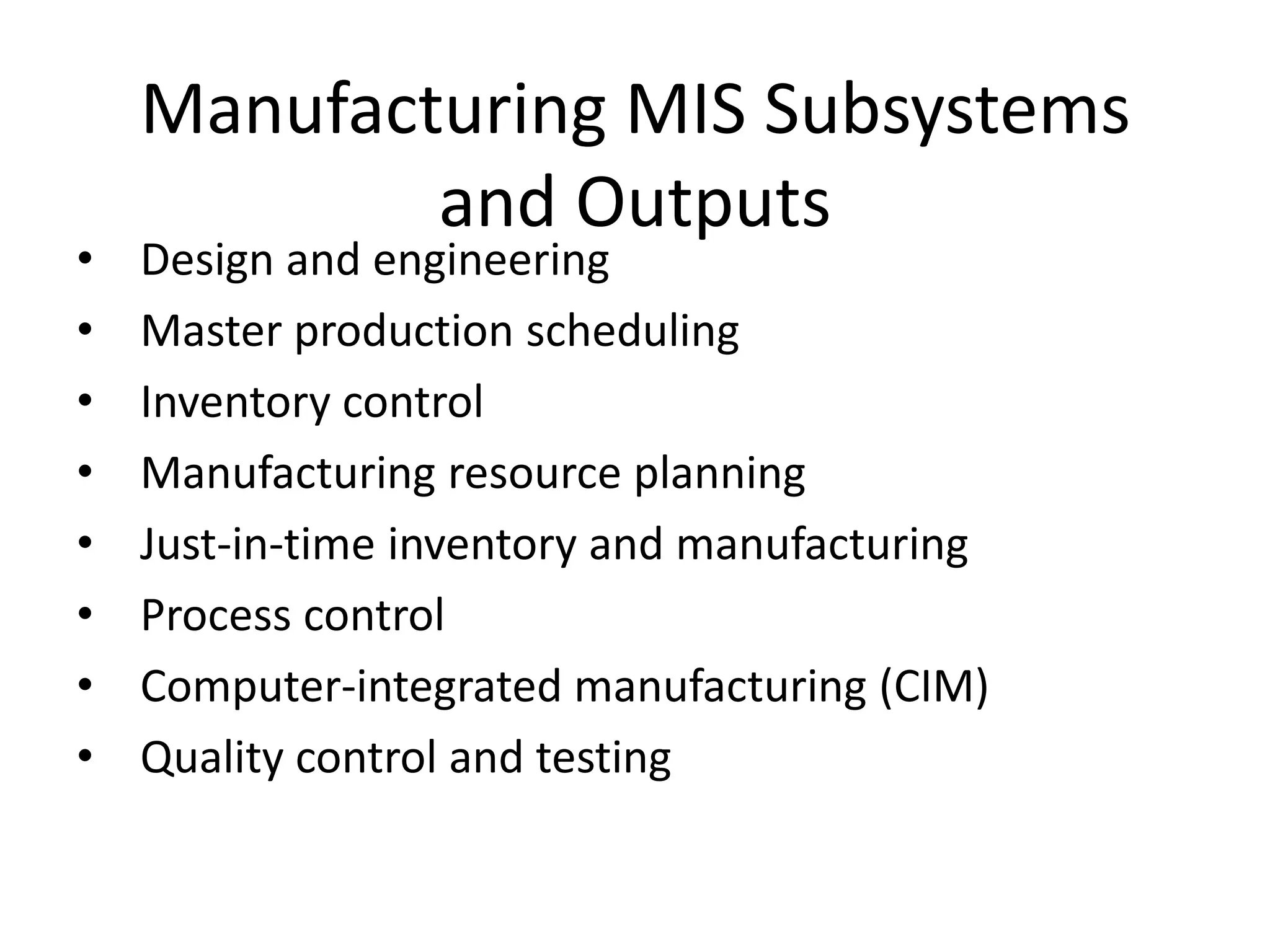
Manufacturing MIS Subsystems and OutputsDesign and engineeringMaster production schedulingInventory controlManufacturing resource planningJust-in-time inventory and manufacturingProcess controlComputer-integrated manufacturing (CIM)Quality control and testing
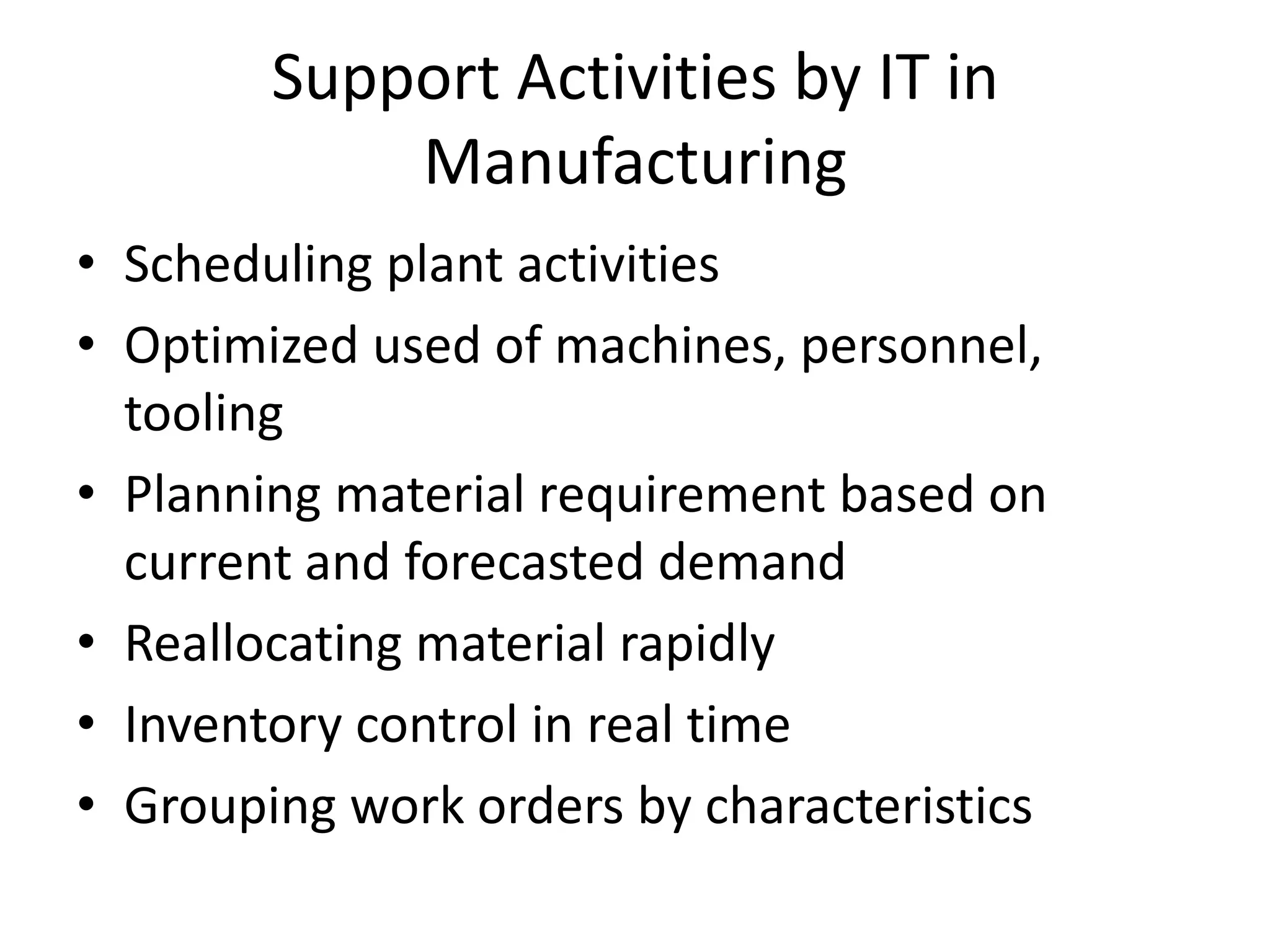
Support Activities by IT in ManufacturingScheduling plant activitiesOptimized used of machines, personnel, toolingPlanning material requirement based on current and forecasted demandReallocating material rapidlyInventory control in real timeGrouping work orders by characteristics
Marketing MISSupports managerial activities in product development, distribution, pricing decisions, and promotional effectiveness
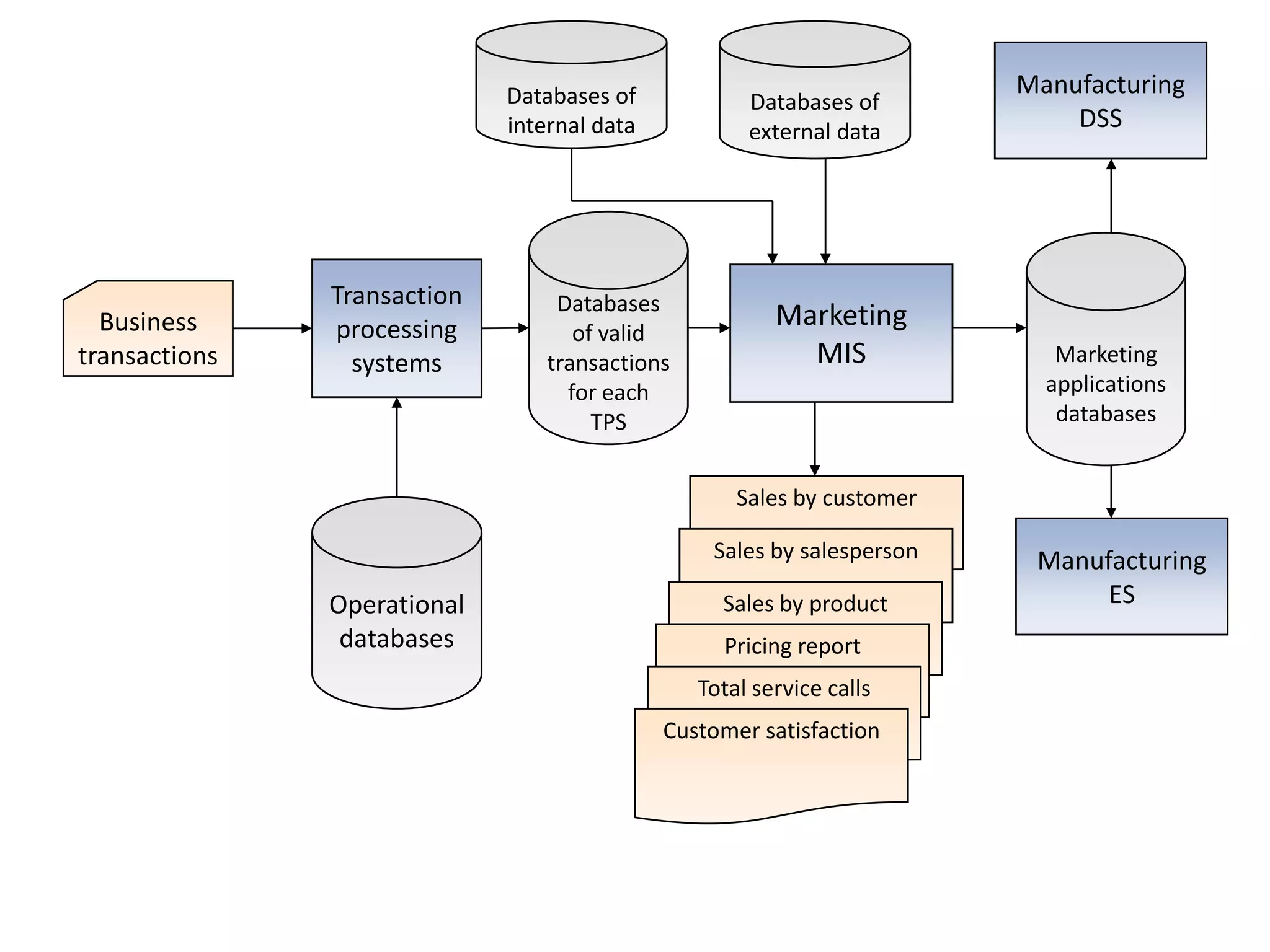
Databases ofexternal dataDatabases ofinternal dataManufacturingDSSDatabasesof validtransactionsfor eachTPSMarketingapplicationsdatabasesTransactionprocessingsystemsMarketingMISBusinesstransactionsSales by customerOperationaldatabasesManufacturingESSales by salespersonSales by productPricing reportTotal service callsCustomer satisfaction
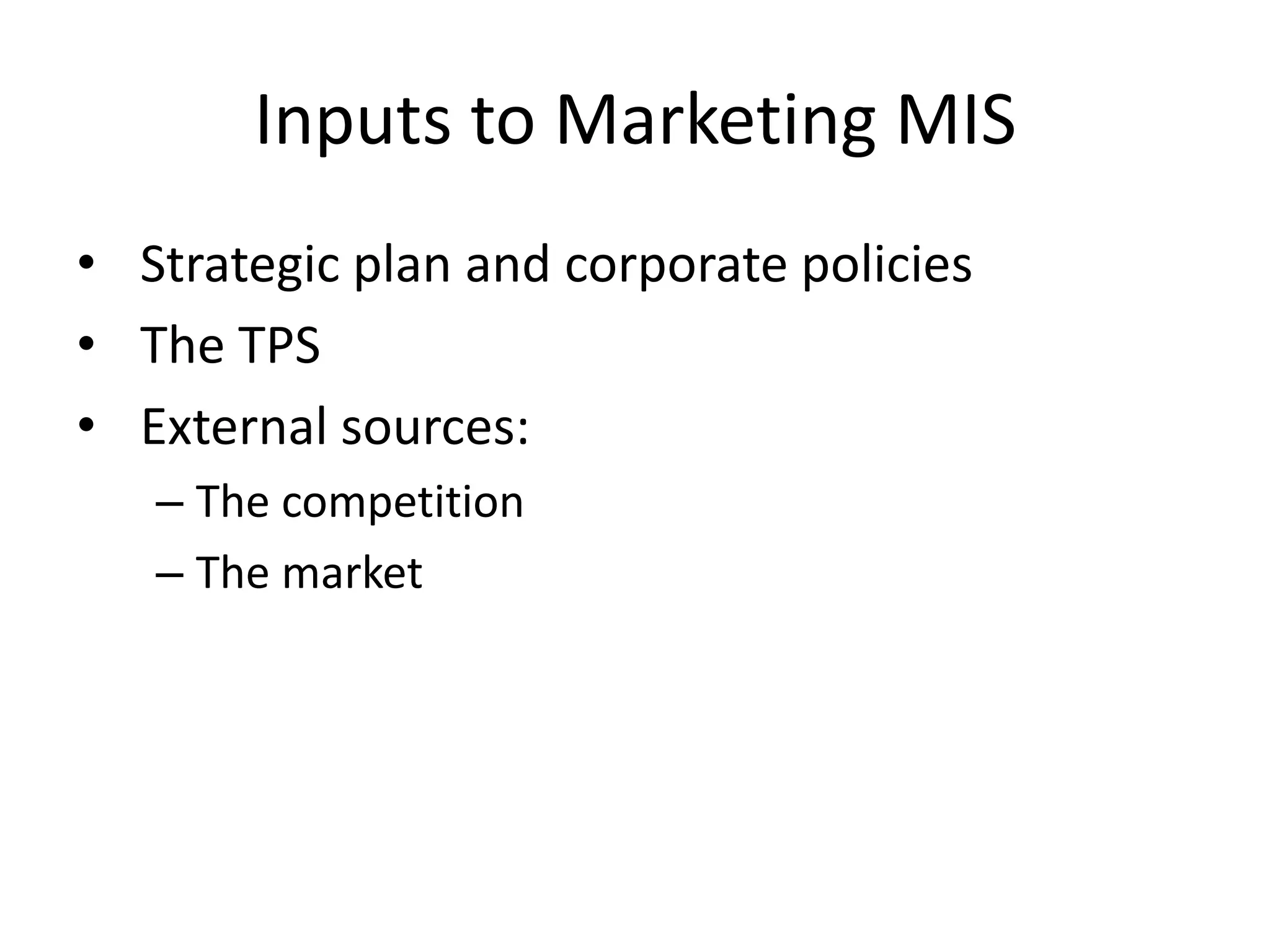
Inputs to Marketing MISStrategic plan and corporate policiesThe TPSExternal sources: The competitionThe market
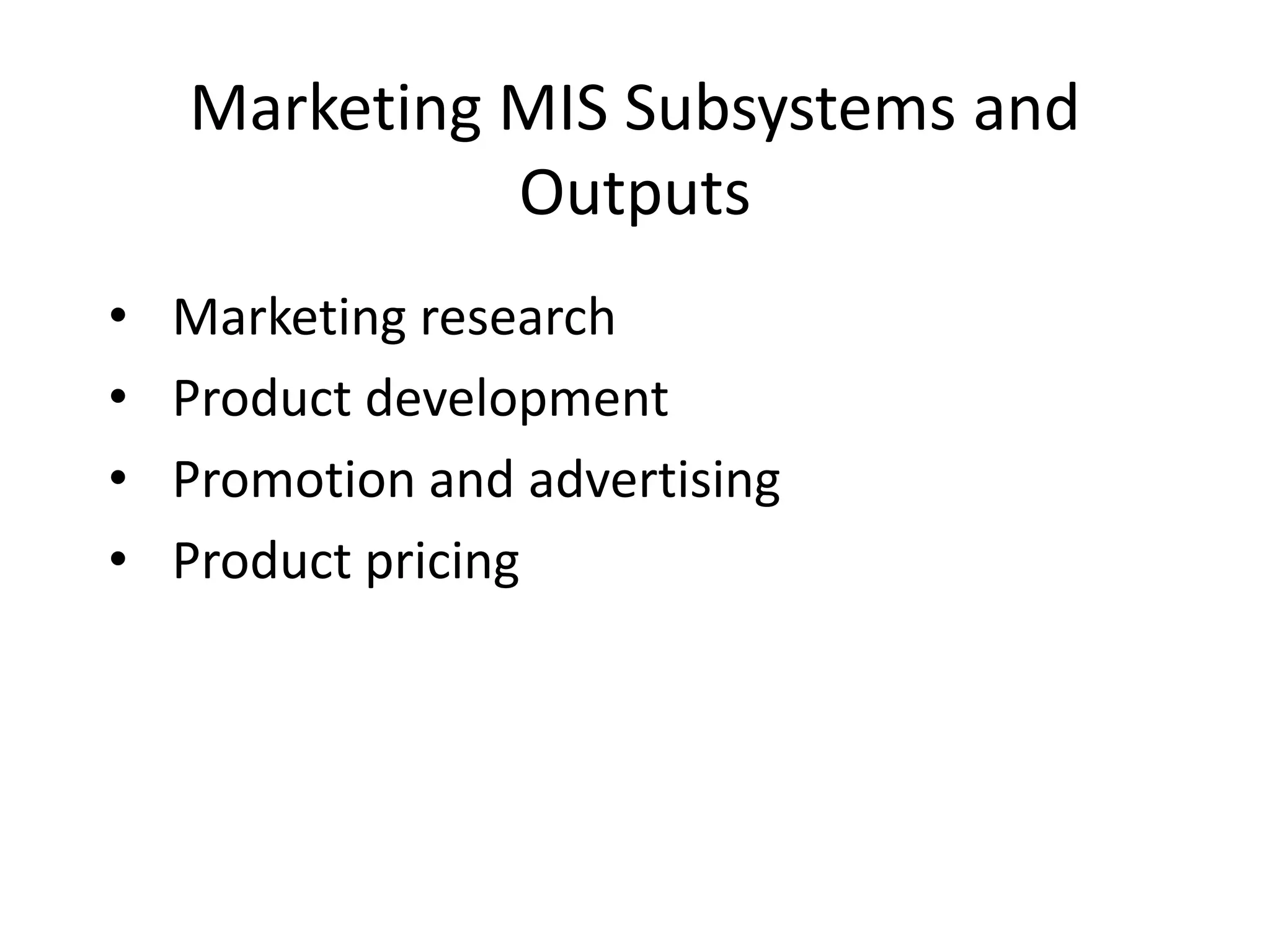
Marketing MIS Subsystems and OutputsMarketing researchProduct developmentPromotion and advertisingProduct pricing
Human Resource MISConcerned with all of the activities related to employees and potential employees of the organization
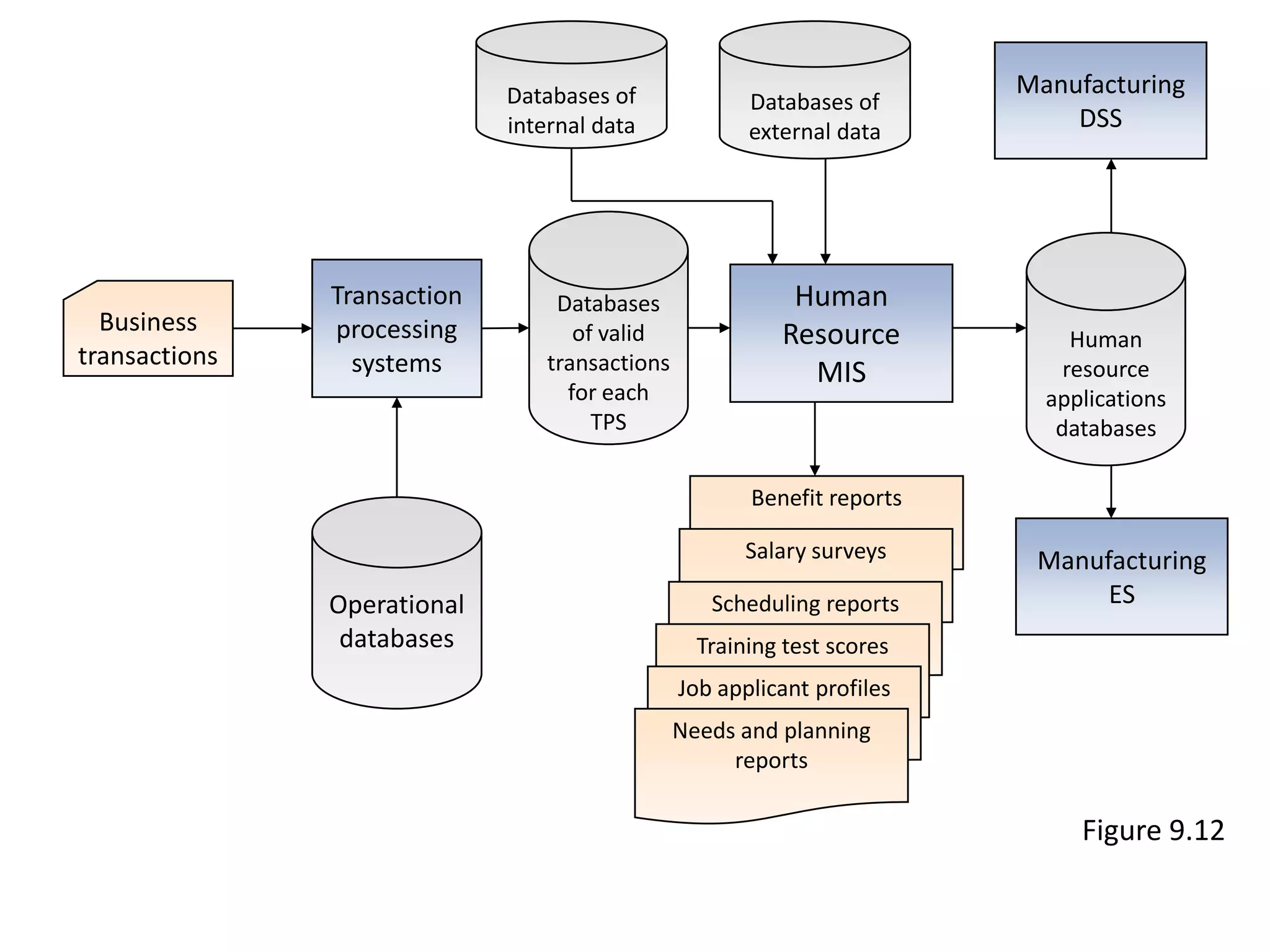
Databases ofexternal dataDatabases ofinternal dataManufacturingDSSDatabasesof validtransactionsfor eachTPSHumanresourceapplicationsdatabasesTransactionprocessingsystemsHumanResourceMISBusinesstransactionsBenefit reportsOperationaldatabasesManufacturingESSalary surveysScheduling reportsTraining test scoresJob applicant profilesNeeds and planningreportsFigure 9.12
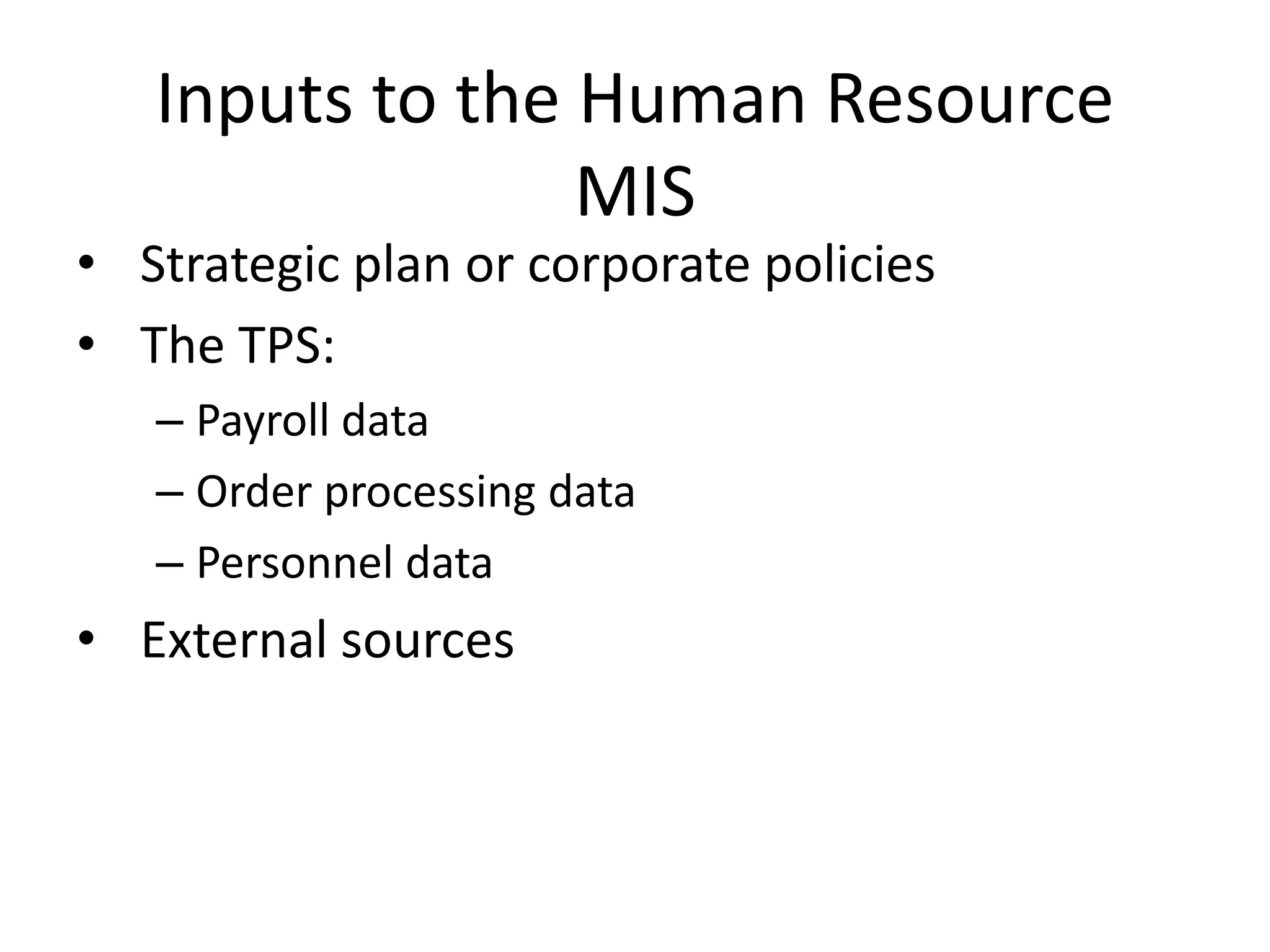
Inputs to the Human Resource MISStrategic plan or corporate policiesThe TPS:Payroll dataOrder processing dataPersonnel dataExternal sources
Human Resource MIS Subsystems and OutputsHuman resource planningPersonnel selection and recruitingTraining and skills inventoryScheduling and job placementWage and salary administration

Information system in business functions unit iv

  • 1.
    Information System inBusiness Functions
  • 2.
    InternetAn Organization’sMISFinancialMISBusinesstransactionsDatabasesofvalidtransactionsDrill downreportsAccountingMISTransactionprocessingsystemsException reportsDemand reportsKey-indicator reportsMarketingMISScheduled reportsBusinesstransactionsDatabasesofexternaldataHumanResourcesMISEtc.ExtranetEtc.Management Information System
  • 3.
    Accounting Information SystemAnAIS is a subset of an organization’s MIS that provides:accounting and financial informationother information obtained in the routine processing of accounting transactionsaggregated information on accounts payable, accounts receivable, payroll, and other applications.
  • 4.
    Accounting Information SystemGeneralLedgerAccounts payable/ Accounts receivableCost AccountingAccounting Information SystemAccounting Information SystemAccounting Information SystemAccounting Information SystemFinancial ReportsSales information from TPSOther Accounting Functions
  • 5.
    Uses of AccountingInformation SystemsProducing external reportsSupporting routine activitiesDecision supportPlanning and controlImplementing internal control
  • 6.
    Financial MISProvides financialinformation to all financial managers within an organization.
  • 7.
    Databases ofexternal dataDatabasesofinternal dataFinancialDSSBusinesstransactionsDatabasesof validtransactionsfor eachTPSFinancialapplicationsdatabasesTransactionprocessingsystemsFinancialMISBusinesstransactionsOperationaldatabasesFinancial statementsFinancialESUses and managementof fundsInternet orExtranetFinancial statisticsfor controlBusinesstransactionsCustomers,Suppliers
  • 8.
    Inputs to theFinancial Information SystemStrategic plan or corporate policiesContains major financial objectives and often projects financial needs.Transaction processing system (TPS)Important financial information collected from almost every TPS - payroll, inventory control, order processing, accounts payable, accounts receivable, general ledger.External sourcesAnnual reports and financial statements of competitors and general news items.
  • 9.
    Financial MIS Subsystemsand OutputsFinancial subsystemsProfit/loss and cost systemsAuditingInternal auditingExternal auditingUses and management of funds
  • 10.
    Databases ofexternal dataDatabasesofinternal dataManufacturingDSSManufacturing MISBusinesstransactionsDatabasesof validtransactionsfor eachTPSManufacturingapplicationsdatabasesTransactionprocessingsystemsManufacturingMISBusinesstransactionsQuality control reportsOperationaldatabasesManufacturingESProcess control reportsJIT reportsInternet orExtranetMRP reportsProduction scheduleCAD outputBusinesstransactionsCustomers,Suppliers
  • 11.
    Inputs to theManufacturing MISStrategic plan or corporate policies.The TPS:Order processingInventory dataReceiving and inspecting dataPersonnel dataProduction processExternal sources
  • 12.
    Manufacturing MIS Subsystemsand OutputsDesign and engineeringMaster production schedulingInventory controlManufacturing resource planningJust-in-time inventory and manufacturingProcess controlComputer-integrated manufacturing (CIM)Quality control and testing
  • 13.
    Support Activities byIT in ManufacturingScheduling plant activitiesOptimized used of machines, personnel, toolingPlanning material requirement based on current and forecasted demandReallocating material rapidlyInventory control in real timeGrouping work orders by characteristics
  • 14.
    Marketing MISSupports managerialactivities in product development, distribution, pricing decisions, and promotional effectiveness
  • 15.
    Databases ofexternal dataDatabasesofinternal dataManufacturingDSSDatabasesof validtransactionsfor eachTPSMarketingapplicationsdatabasesTransactionprocessingsystemsMarketingMISBusinesstransactionsSales by customerOperationaldatabasesManufacturingESSales by salespersonSales by productPricing reportTotal service callsCustomer satisfaction
  • 16.
    Inputs to MarketingMISStrategic plan and corporate policiesThe TPSExternal sources: The competitionThe market
  • 17.
    Marketing MIS Subsystemsand OutputsMarketing researchProduct developmentPromotion and advertisingProduct pricing
  • 18.
    Human Resource MISConcernedwith all of the activities related to employees and potential employees of the organization
  • 19.
    Databases ofexternal dataDatabasesofinternal dataManufacturingDSSDatabasesof validtransactionsfor eachTPSHumanresourceapplicationsdatabasesTransactionprocessingsystemsHumanResourceMISBusinesstransactionsBenefit reportsOperationaldatabasesManufacturingESSalary surveysScheduling reportsTraining test scoresJob applicant profilesNeeds and planningreportsFigure 9.12
  • 20.
    Inputs to theHuman Resource MISStrategic plan or corporate policiesThe TPS:Payroll dataOrder processing dataPersonnel dataExternal sources
  • 21.
    Human Resource MISSubsystems and OutputsHuman resource planningPersonnel selection and recruitingTraining and skills inventoryScheduling and job placementWage and salary administration