Information and Data - Relevance to Business 
Prepared by Sharath Bhujani 
Oracle India 
IASA India
Agenda 
IASA India 
• 
Evolution: Long Story Short 
• 
Data Warehouse: Terms & Concepts 
• 
Architecture Overview 
• 
OLTP Vs Data Warehouse 
• 
Data Modeling 
• 
Data Warehouse Challenges
Data Warehousing - Evolution 
• 
Terms, dimensions, and facts were developed way back in 1960s. 
• 
The concept of data warehousing dates back to the late 1980s. 
• 
Using operational data for decision making became a necessity. 
• 
Access to valuable information in the quickest possible time was key to success. 
• 
There was a need for an architectural framework to move data from operational systems to a decision support environment. 
• 
Forefathers: Bill Inmon and Ralph Kimball
Data Warehouse: Definition 
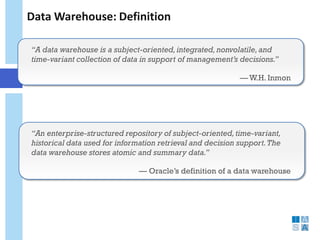
“A data warehouse is a subject-oriented, integrated, nonvolatile, and time-variant collection of data in support of management’s decisions.” 
— W.H. Inmon 
“An enterprise-structured repository of subject-oriented, time-variant, historical data used for information retrieval and decision support. The data warehouse stores atomic and summary data.” 
— Oracle’s definition of a data warehouse
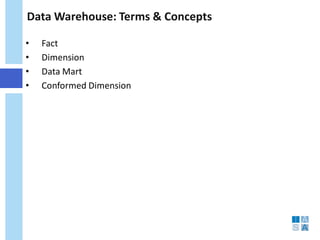
Data Warehouse: Terms & Concepts 
• 
Fact 
• 
Dimension 
• 
Data Mart 
• 
Conformed Dimension
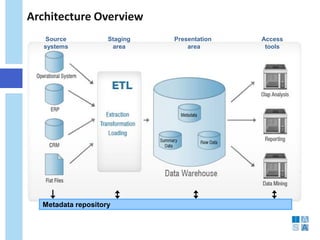
Architecture Overview 
Metadata repository 
Source systems 
Staging area 
Presentation 
area 
Access 
tools
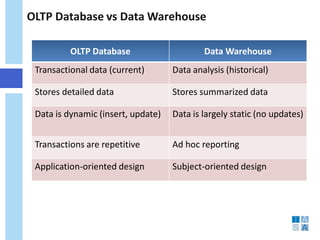
OLTP Database vs Data Warehouse 
OLTP Database 
Data Warehouse 
Transactional data (current) 
Data analysis (historical) 
Stores detailed data 
Stores summarized data 
Data is dynamic (insert, update) 
Data is largely static (no updates) 
Transactions are repetitive 
Ad hoc reporting 
Application-oriented design 
Subject-oriented design
Data Warehouse Challenges 
• 
Changing business needs vs changing IT infrastructure 
• 
Dealing with unstructured data
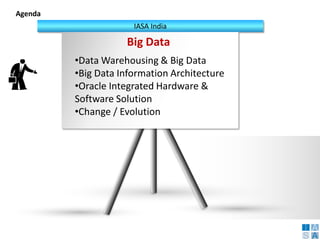
Agenda 
IASA India 
• 
Data Warehousing & Big Data 
• 
Big Data Information Architecture 
• 
Oracle Integrated Hardware & Software Solution 
• 
Change / Evolution 
Big Data
Data Warehousing and Big Data 
• 
What is Big Data? 
• 
Big Data characteristics: Volume, Velocity, Variety. 
• 
Big data and data warehousing share the same basic goals. 
• 
Type of data: big data Vs data warehouse 
• 
Bringing Big Data into Enterprise Data Warehouse.
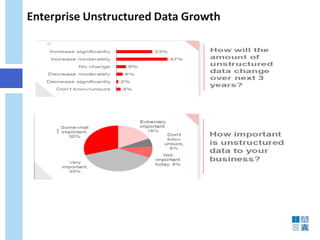
Enterprise Unstructured Data Growth
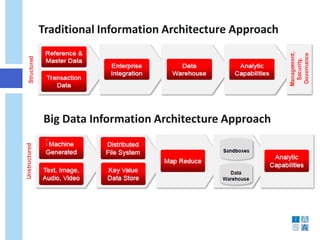
Traditional Information Architecture Approach 
Big Data Information Architecture Approach
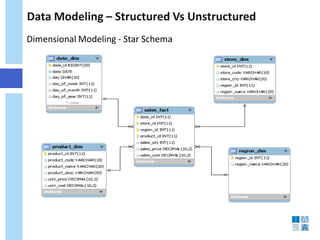
Data Modeling – Structured Vs Unstructured 
Dimensional Modeling - Star Schema
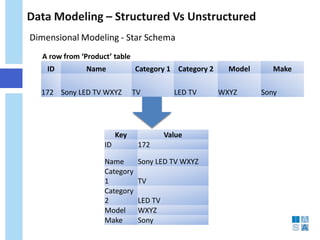
Data Modeling – Structured Vs Unstructured 
Key 
Value 
ID 
172 
Name 
Sony LED TV WXYZ 
Category 1 
TV 
Category 2 
LED TV 
Model 
WXYZ 
Make 
Sony 
A row from ‘Product’ table 
ID 
Name 
Category 1 
Category 2 
Model 
Make 
172 
Sony LED TV WXYZ 
TV 
LED TV 
WXYZ 
Sony 
Dimensional Modeling - Star Schema
Oracle’s Integrated Hardware & Software Solution
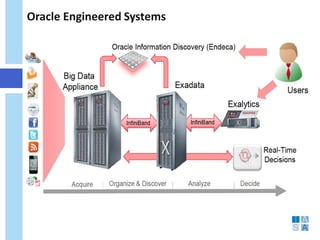
Oracle Engineered Systems
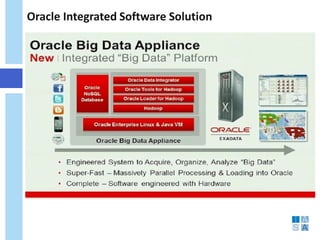
Oracle Integrated Software Solution
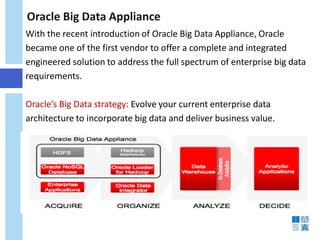
Oracle Big Data Appliance 
With the recent introduction of Oracle Big Data Appliance, Oracle became one of the first vendor to offer a complete and integrated engineered solution to address the full spectrum of enterprise big data requirements. Oracle’s Big Data strategy: Evolve your current enterprise data architecture to incorporate big data and deliver business value.
Change / Evolution
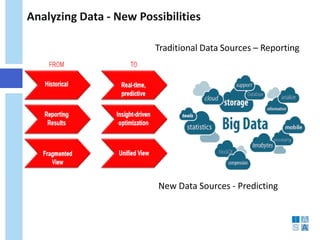
Analyzing Data - New Possibilities 
Traditional Data Sources – Reporting 
New Data Sources - Predicting
How Big Data Can Bring Chance: Insurance Domain 
 
Acquire: 
• 
Driving habits, breaking pattern, average driving distance etc. 
 
Organize: 
• 
Derive information on your driving habits, breaking pattern etc. 
 
Analyze: 
• 
Analyze derived data with other information such as traffic conditions & your profile data. Perform risk analysis etc. 
 
Decide: 
• 
Decide on the premium i.e. you can have a personalized insurance plan.
Thank you 
• 
Evolution: Long story short 
• 
Data Warehouse Architecture 
• 
OLTP Vs Data Warehouse 
• 
Data Warehouse Challenges 
• 
Big Data Information Architecture 
• 
Tools for Big Data 
• 
Change / Evolution 
Conclusion

Information and data relevance to business

  • 1.
    Information and Data- Relevance to Business Prepared by Sharath Bhujani Oracle India IASA India
  • 2.
    Agenda IASA India • Evolution: Long Story Short • Data Warehouse: Terms & Concepts • Architecture Overview • OLTP Vs Data Warehouse • Data Modeling • Data Warehouse Challenges
  • 3.
    Data Warehousing -Evolution • Terms, dimensions, and facts were developed way back in 1960s. • The concept of data warehousing dates back to the late 1980s. • Using operational data for decision making became a necessity. • Access to valuable information in the quickest possible time was key to success. • There was a need for an architectural framework to move data from operational systems to a decision support environment. • Forefathers: Bill Inmon and Ralph Kimball
  • 4.
    Data Warehouse: Definition “A data warehouse is a subject-oriented, integrated, nonvolatile, and time-variant collection of data in support of management’s decisions.” — W.H. Inmon “An enterprise-structured repository of subject-oriented, time-variant, historical data used for information retrieval and decision support. The data warehouse stores atomic and summary data.” — Oracle’s definition of a data warehouse
  • 5.
    Data Warehouse: Terms& Concepts • Fact • Dimension • Data Mart • Conformed Dimension
  • 6.
    Architecture Overview Metadatarepository Source systems Staging area Presentation area Access tools
  • 7.
    OLTP Database vsData Warehouse OLTP Database Data Warehouse Transactional data (current) Data analysis (historical) Stores detailed data Stores summarized data Data is dynamic (insert, update) Data is largely static (no updates) Transactions are repetitive Ad hoc reporting Application-oriented design Subject-oriented design
  • 8.
    Data Warehouse Challenges • Changing business needs vs changing IT infrastructure • Dealing with unstructured data
  • 9.
    Agenda IASA India • Data Warehousing & Big Data • Big Data Information Architecture • Oracle Integrated Hardware & Software Solution • Change / Evolution Big Data
  • 10.
    Data Warehousing andBig Data • What is Big Data? • Big Data characteristics: Volume, Velocity, Variety. • Big data and data warehousing share the same basic goals. • Type of data: big data Vs data warehouse • Bringing Big Data into Enterprise Data Warehouse.
  • 11.
  • 12.
    Traditional Information ArchitectureApproach Big Data Information Architecture Approach
  • 13.
    Data Modeling –Structured Vs Unstructured Dimensional Modeling - Star Schema
  • 14.
    Data Modeling –Structured Vs Unstructured Key Value ID 172 Name Sony LED TV WXYZ Category 1 TV Category 2 LED TV Model WXYZ Make Sony A row from ‘Product’ table ID Name Category 1 Category 2 Model Make 172 Sony LED TV WXYZ TV LED TV WXYZ Sony Dimensional Modeling - Star Schema
  • 15.
    Oracle’s Integrated Hardware& Software Solution
  • 16.
  • 17.
  • 18.
    Oracle Big DataAppliance With the recent introduction of Oracle Big Data Appliance, Oracle became one of the first vendor to offer a complete and integrated engineered solution to address the full spectrum of enterprise big data requirements. Oracle’s Big Data strategy: Evolve your current enterprise data architecture to incorporate big data and deliver business value.
  • 19.
  • 20.
    Analyzing Data -New Possibilities Traditional Data Sources – Reporting New Data Sources - Predicting
  • 21.
    How Big DataCan Bring Chance: Insurance Domain  Acquire: • Driving habits, breaking pattern, average driving distance etc.  Organize: • Derive information on your driving habits, breaking pattern etc.  Analyze: • Analyze derived data with other information such as traffic conditions & your profile data. Perform risk analysis etc.  Decide: • Decide on the premium i.e. you can have a personalized insurance plan.
  • 22.
    Thank you • Evolution: Long story short • Data Warehouse Architecture • OLTP Vs Data Warehouse • Data Warehouse Challenges • Big Data Information Architecture • Tools for Big Data • Change / Evolution Conclusion