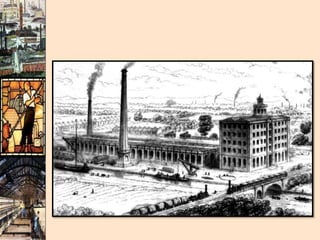
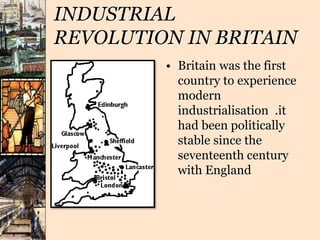
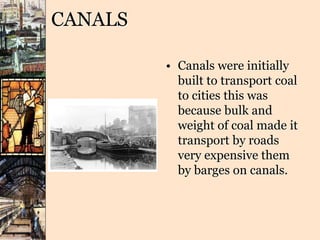
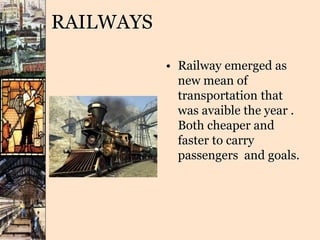
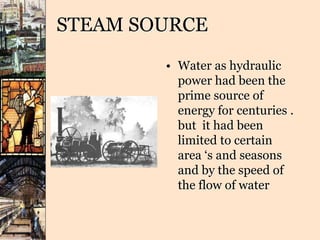
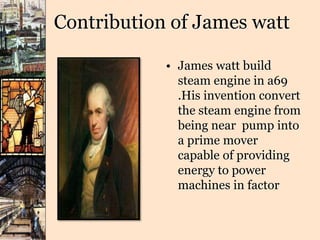
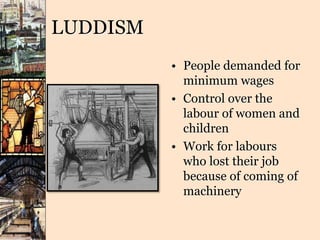
The industrial revolution began in Britain between 1780-1850 and transformed the country's economy. Britain was well-suited for industrialization due to its stable political system, common laws, and centralized market without internal tariffs. Innovations in iron production using coke instead of charcoal and later innovations like steam power, canals, and railroads drove industrial growth. New factories employing women and children worked long hours under difficult conditions. Over time, workers protested and reforms were passed to limit child labor and working hours. The industrial revolution ultimately changed Britain from an agricultural to industrial economic power.