Downloaded 20 times
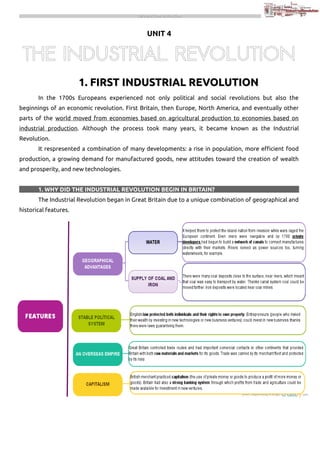
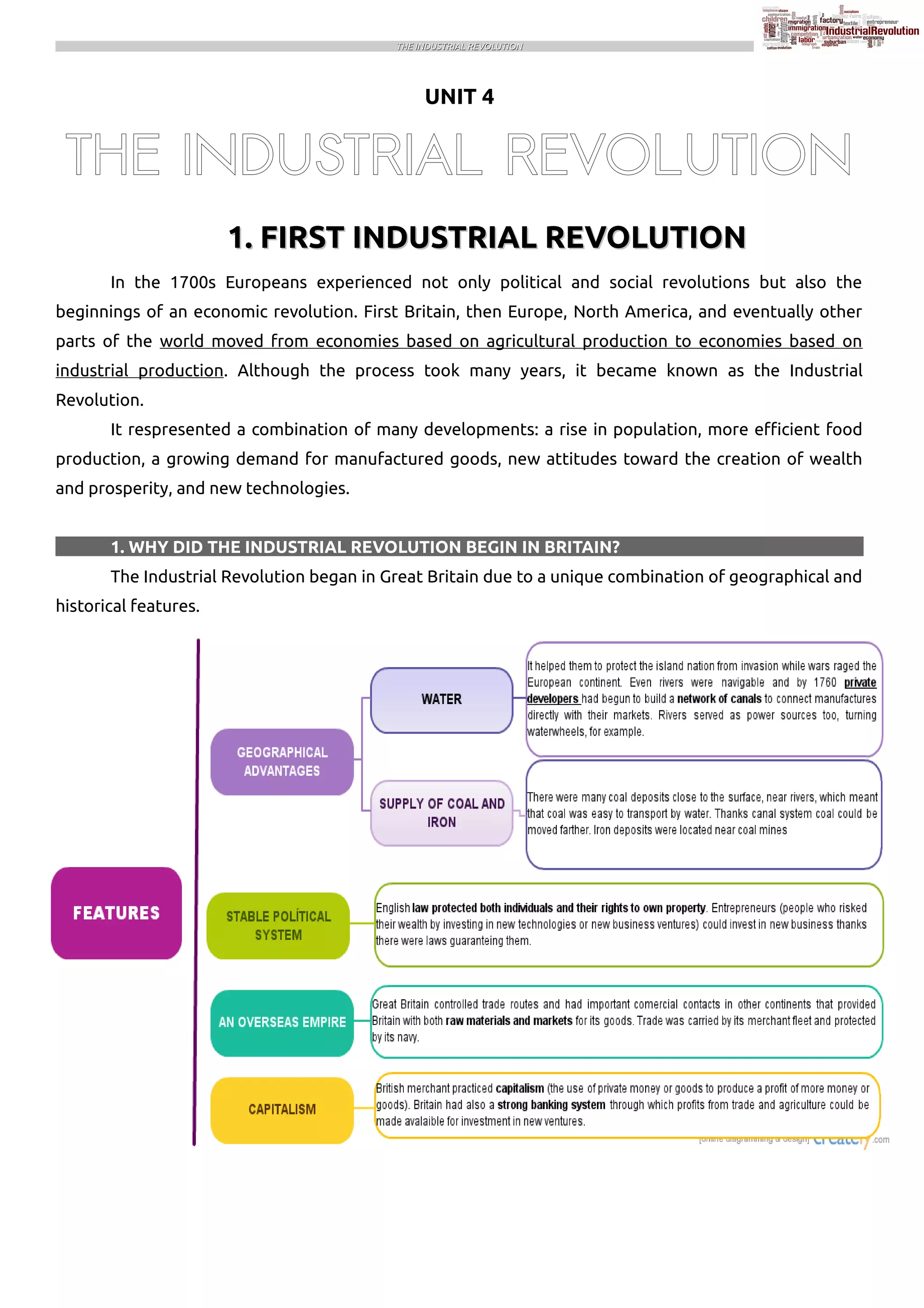
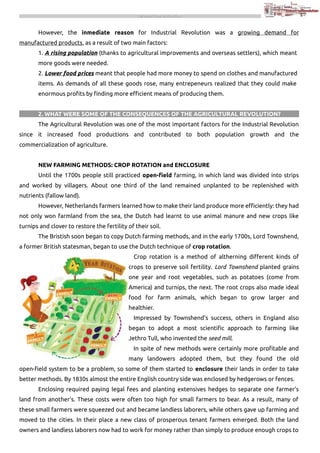
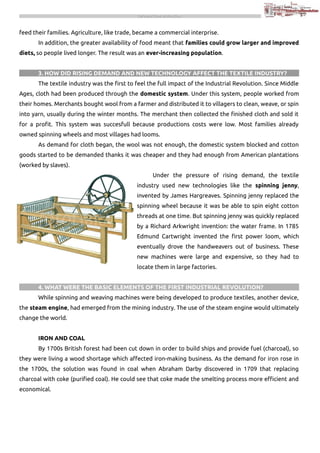
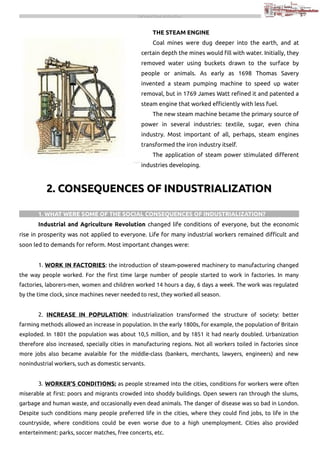
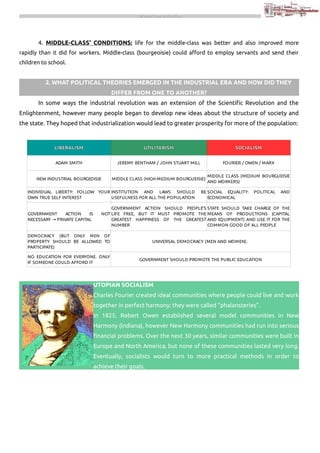
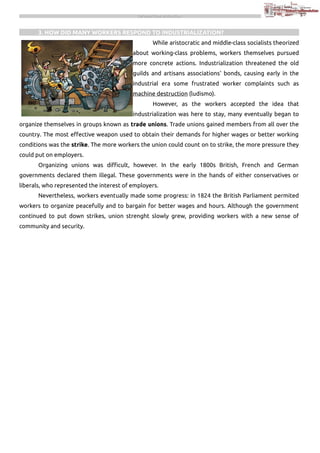

The industrial revolution began in Britain in the late 1700s and spread to other parts of Europe and North America. New farming methods during the agricultural revolution increased food production and freed up labor. Rising population and demand for manufactured goods drove entrepreneurs to develop new technologies like the spinning jenny, water frame, and steam engine to more efficiently produce goods like textiles. The industrial revolution had wide-ranging social consequences, including the rise of factories, rapid urbanization, and difficult working conditions for many. New political theories also emerged to address the societal changes of the industrial era, such as liberalism, utilitarianism, and socialism.


