Inductive
Proximity
sensors
BY
AHMED MAHMOUD AHMED
Components
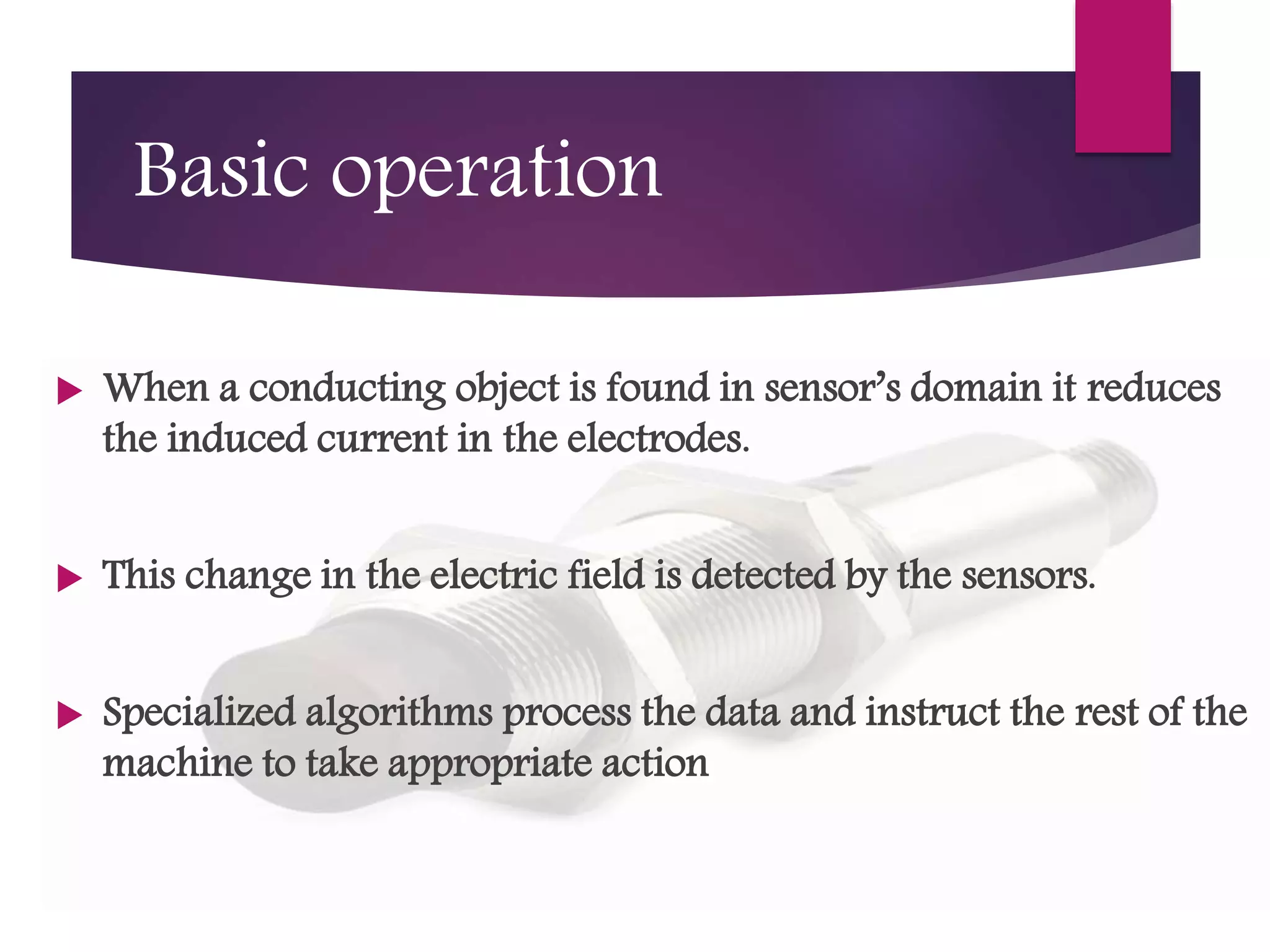
 An inductive proximity sensor has four elements:
 Coil
 Oscillator
 creates a radio frequency field that is shaped and defined by the coil and core
 Trigger circuit
 rectifies the AC sine wave signal to DC
 Output
 It changes according to the presence and absence of the target
Basic operation
 Proximity sensors are one type of pre-touch sensors.
 Inductive proximity sensors operate under the electrical principle
of inductance where a fluctuating current, which by definition has
a magnetic component, induces an electromotive force (emf) in a
target object.
Basic operation
 When a conducting object is found in sensor’s domain it reduces
the induced current in the electrodes.
 This change in the electric field is detected by the sensors.
 Specialized algorithms process the data and instruct the rest of the
machine to take appropriate action
Example from Intel
Robotic hand
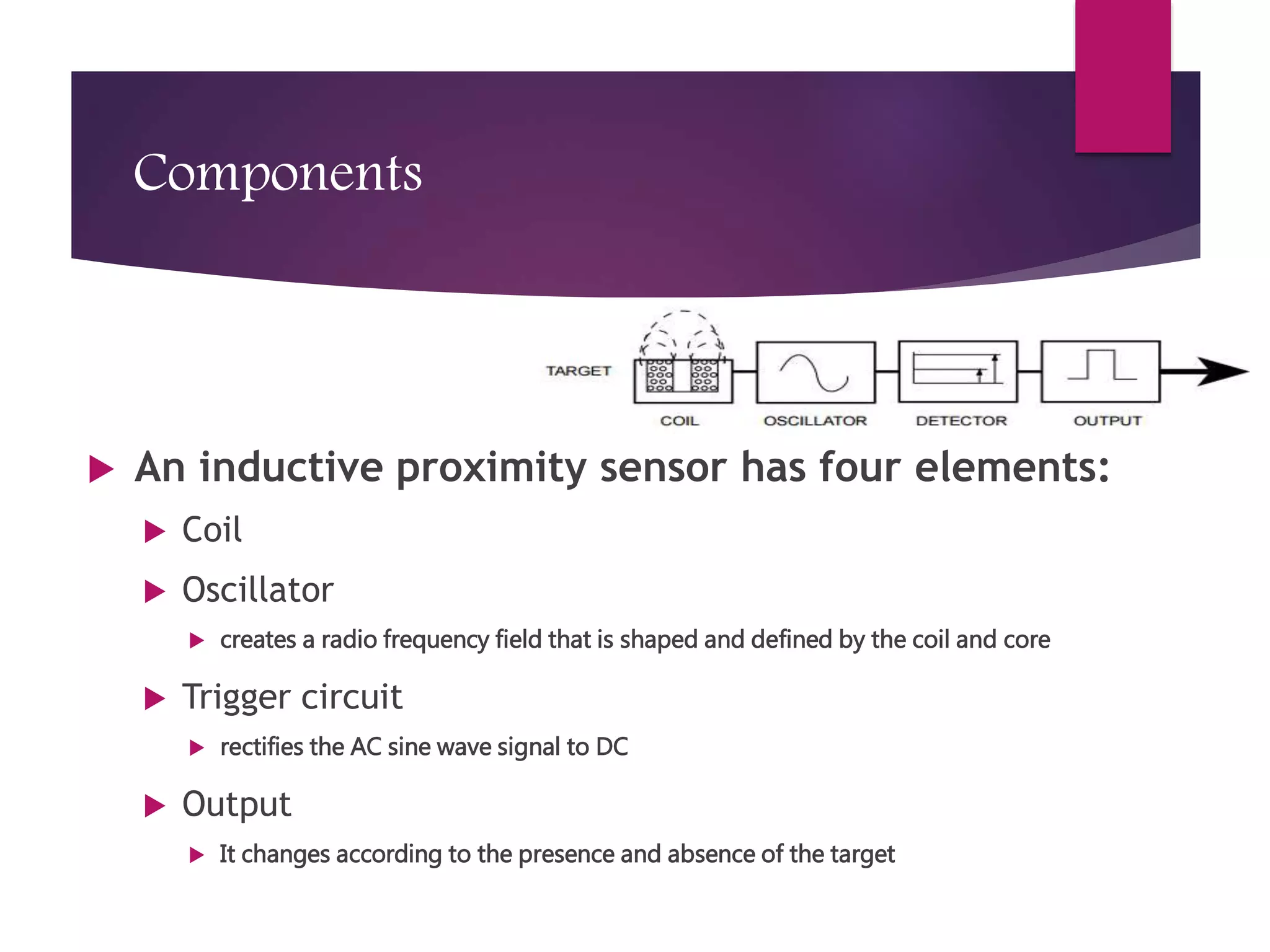
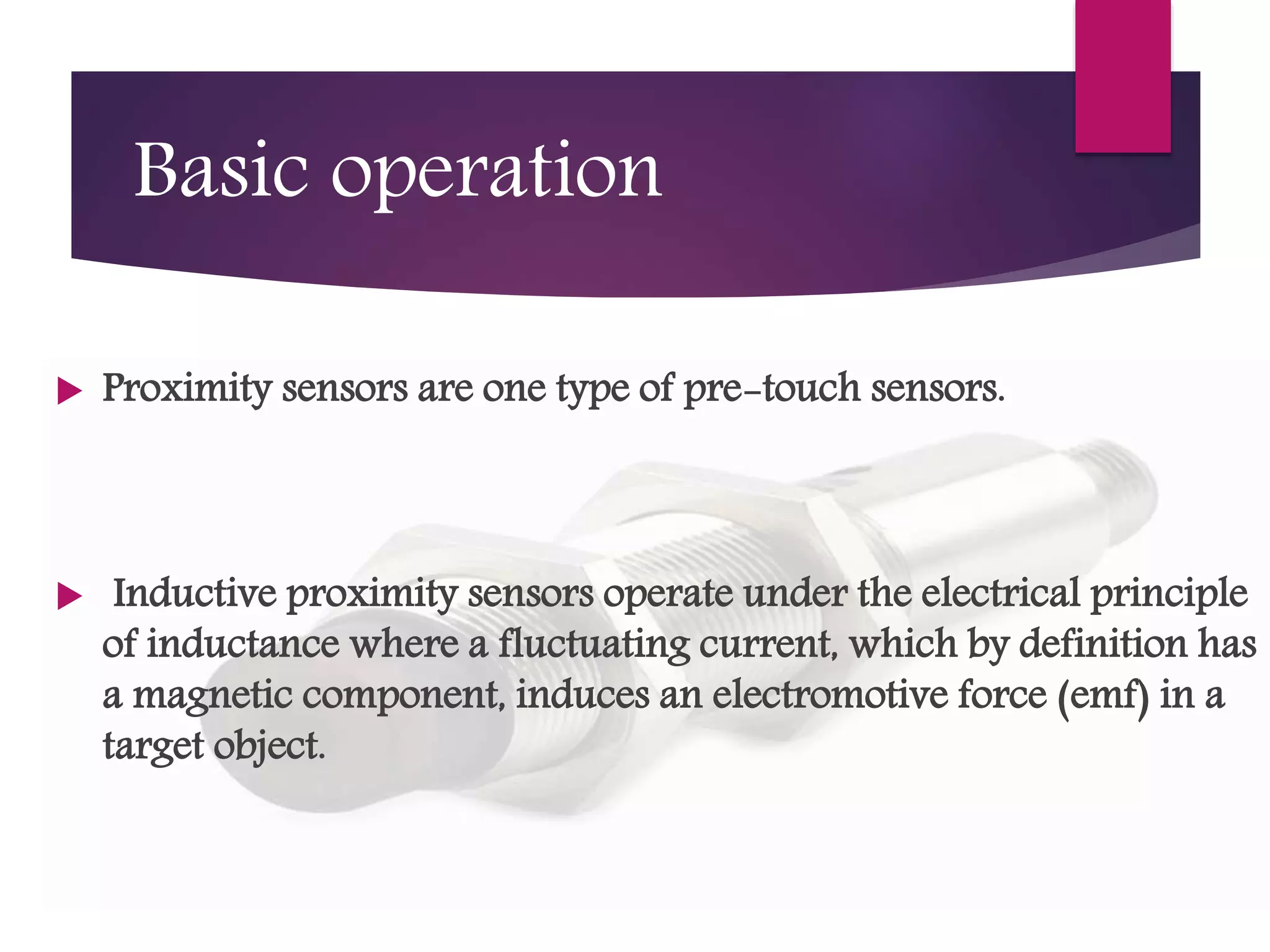
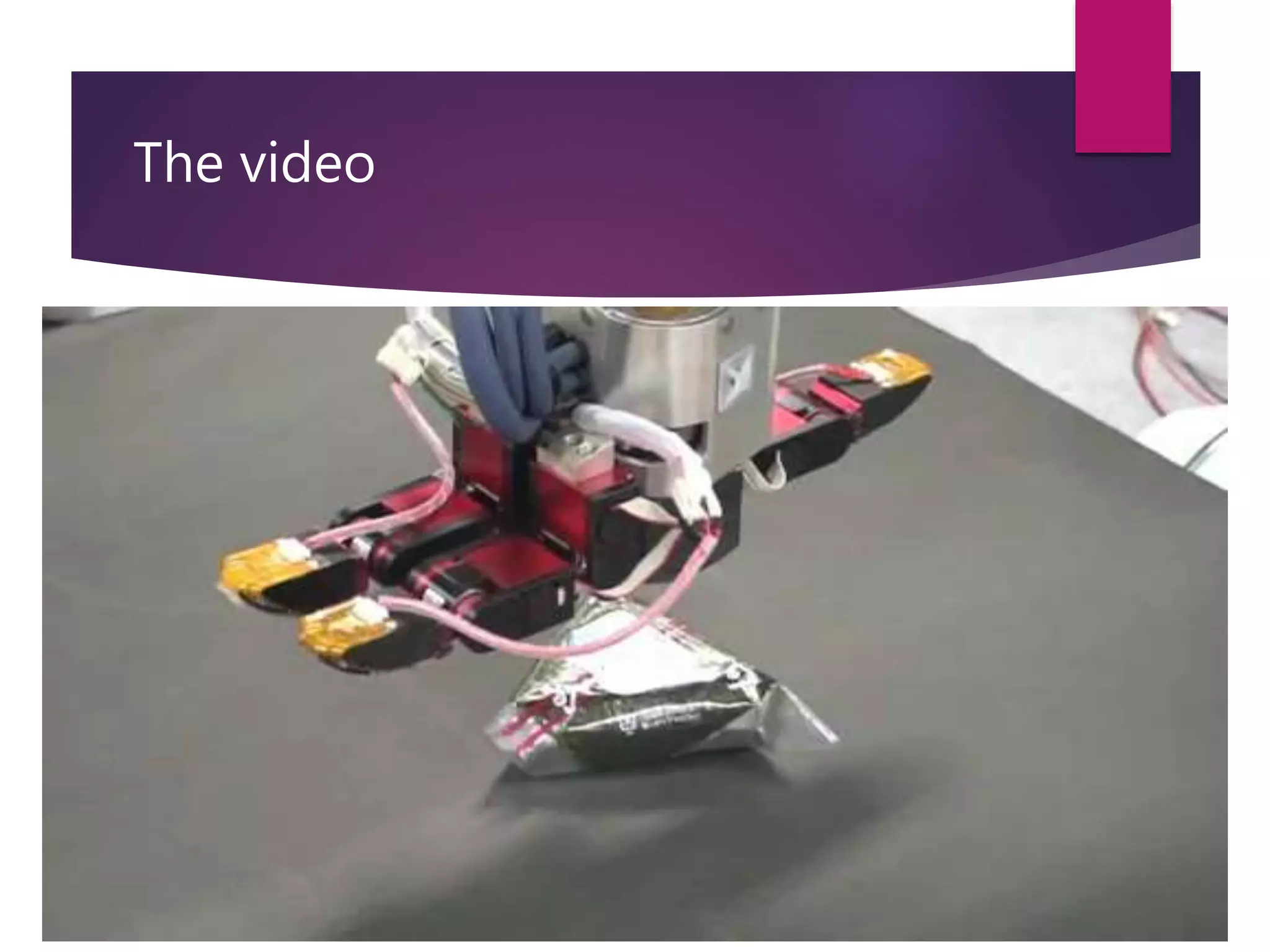
 The researchers have incorporated the sensors into a robotic
hand as well, allowing mechanical fingers to adjust to the
size and shape of an object that they encounter.
 The goal, is to improve the ability of robots to grasp objects
in unstructured human environments.
The video
Wind turbines
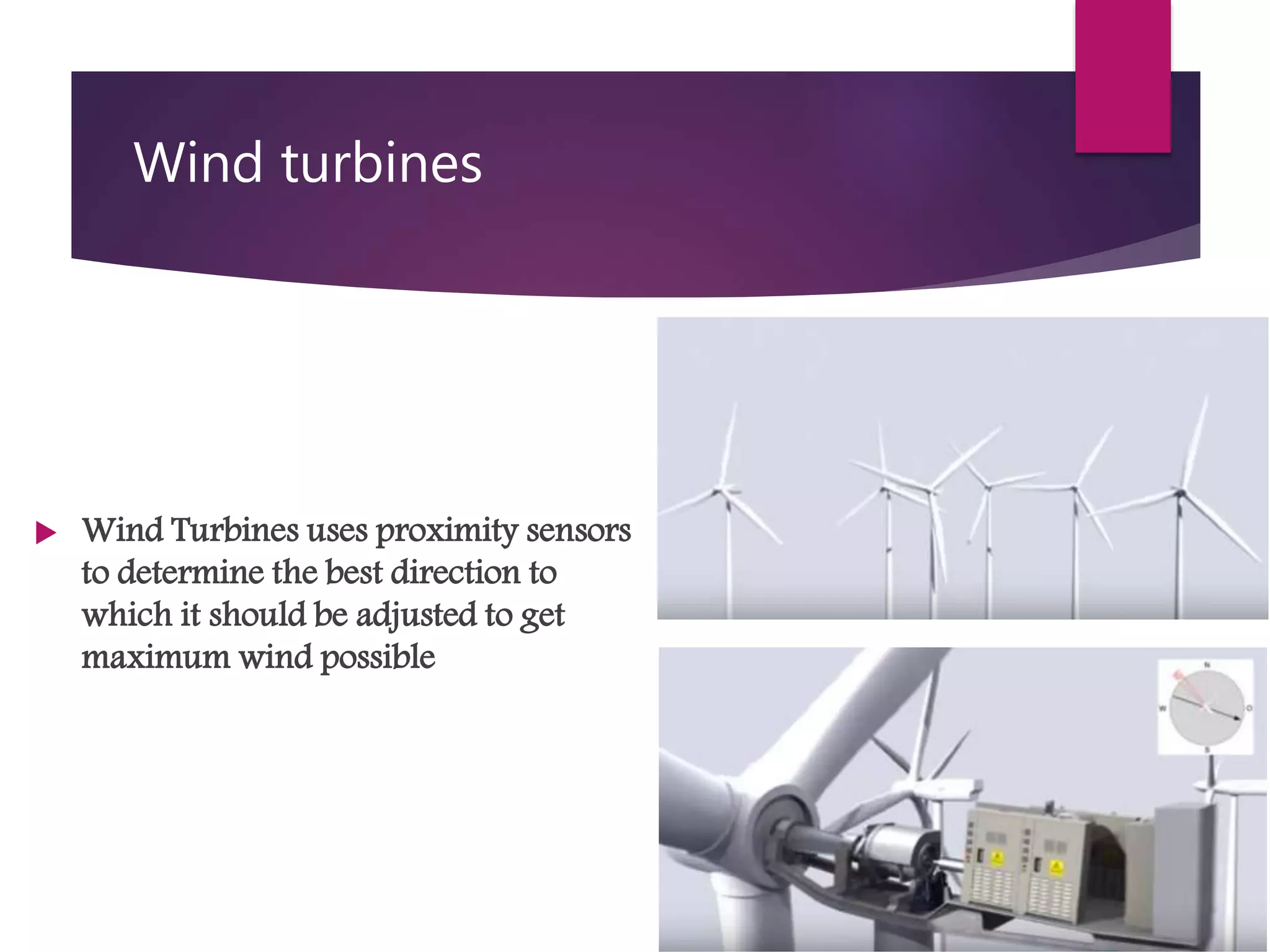
 Wind Turbines uses proximity sensors
to determine the best direction to
which it should be adjusted to get
maximum wind possible
Advantages
 They are very accurate compared to other technologies
 Have high switching rate
 Can work in harsh environmental condition
Minesweeper
 A robot to sweep over an object and collect EF information from it.
 The algorithm then compares, in near real time, this data to a series of
prerecorded signals that describe various shapes, sizes, and orientations
of the object.
 When the algorithm finds a reasonably certain match, it adjusts the
robotic fingers so that they can grasp the object.
Disadvantages
 It can detect only metallic targets
 Operating range may be limited
Inductive Proximity sensing

Inductive Proximity sensing

  • 1.
  • 2.
    Components  An inductiveproximity sensor has four elements:  Coil  Oscillator  creates a radio frequency field that is shaped and defined by the coil and core  Trigger circuit  rectifies the AC sine wave signal to DC  Output  It changes according to the presence and absence of the target
  • 3.
    Basic operation  Proximitysensors are one type of pre-touch sensors.  Inductive proximity sensors operate under the electrical principle of inductance where a fluctuating current, which by definition has a magnetic component, induces an electromotive force (emf) in a target object.
  • 4.
    Basic operation  Whena conducting object is found in sensor’s domain it reduces the induced current in the electrodes.  This change in the electric field is detected by the sensors.  Specialized algorithms process the data and instruct the rest of the machine to take appropriate action
  • 5.
    Example from Intel Robotichand  The researchers have incorporated the sensors into a robotic hand as well, allowing mechanical fingers to adjust to the size and shape of an object that they encounter.  The goal, is to improve the ability of robots to grasp objects in unstructured human environments.
  • 6.
  • 7.
    Wind turbines  WindTurbines uses proximity sensors to determine the best direction to which it should be adjusted to get maximum wind possible
  • 8.
    Advantages  They arevery accurate compared to other technologies  Have high switching rate  Can work in harsh environmental condition
  • 9.
    Minesweeper  A robotto sweep over an object and collect EF information from it.  The algorithm then compares, in near real time, this data to a series of prerecorded signals that describe various shapes, sizes, and orientations of the object.  When the algorithm finds a reasonably certain match, it adjusts the robotic fingers so that they can grasp the object.
  • 10.
    Disadvantages  It candetect only metallic targets  Operating range may be limited