FIBER OPTIC SENSORS
This presentation presents an overview of fiber optic sensor
technology ,basic classifications of optic sensors, the basic
functions of optical fiber sensors and also discusses the two
important fiber optic sensors , namely the Mach - Zehnder
interferometric fiber sensor and the fiber optic gyroscope.
 The field of measurement and instrumentation and
particular sensor development is one of that has expanded
rapidly in recent years.
 The need of high quality sensors to be integrated into
measurement and control system is clear.
 In parallel with rapid advance in the development of
sensors based on micro electronics, those based on optical
techniques have expanded significantly over last few
years.
INTRODUCTION
FIBER OPTIC SENSOR
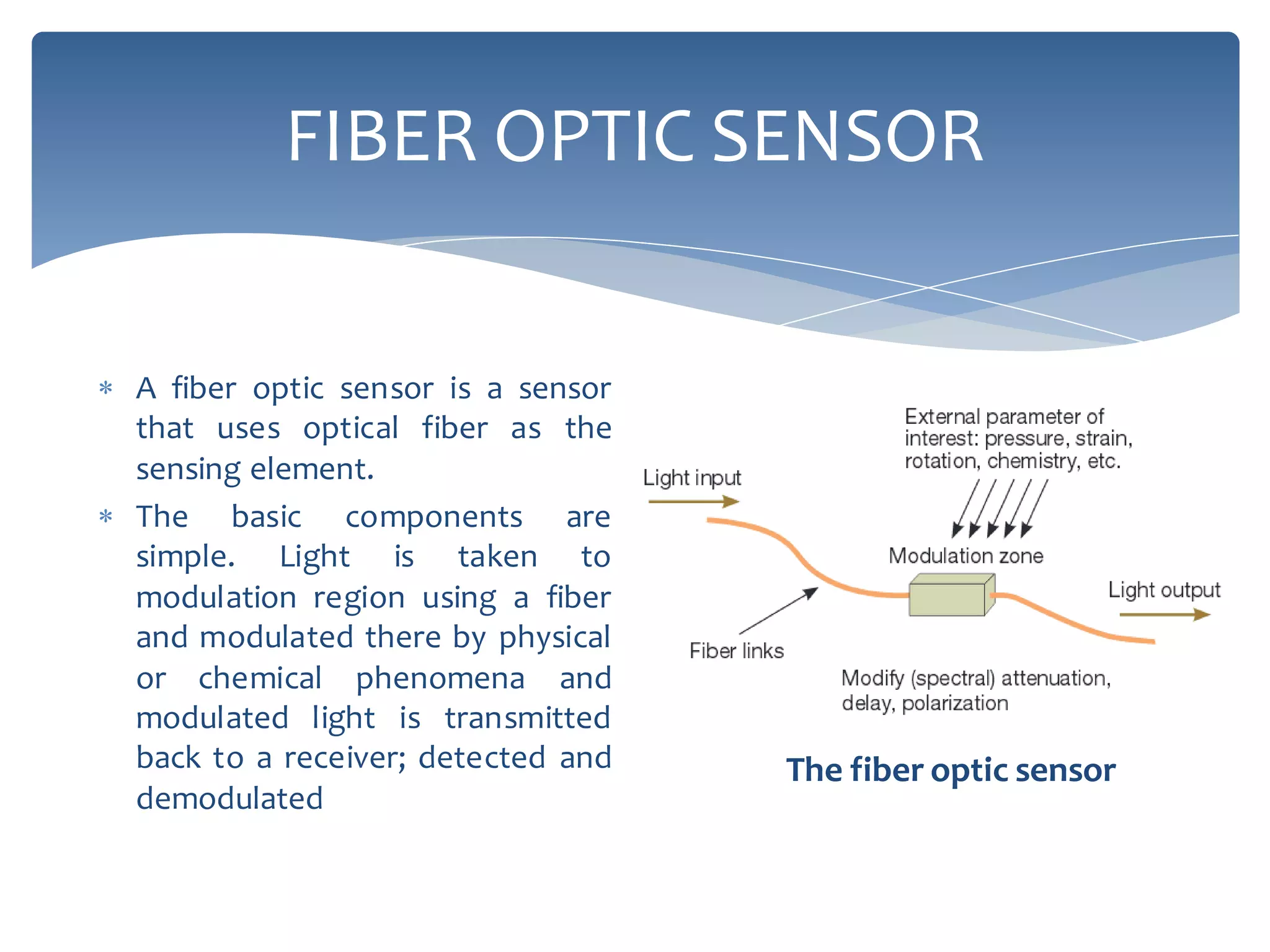
 A fiber optic sensor is a sensor
that uses optical fiber as the
sensing element.
 The basic components are
simple. Light is taken to
modulation region using a fiber
and modulated there by physical
or chemical phenomena and
modulated light is transmitted
back to a receiver; detected and
demodulated
The fiber optic sensor
EXTRINSIC FIBER OPTIC SENSOR
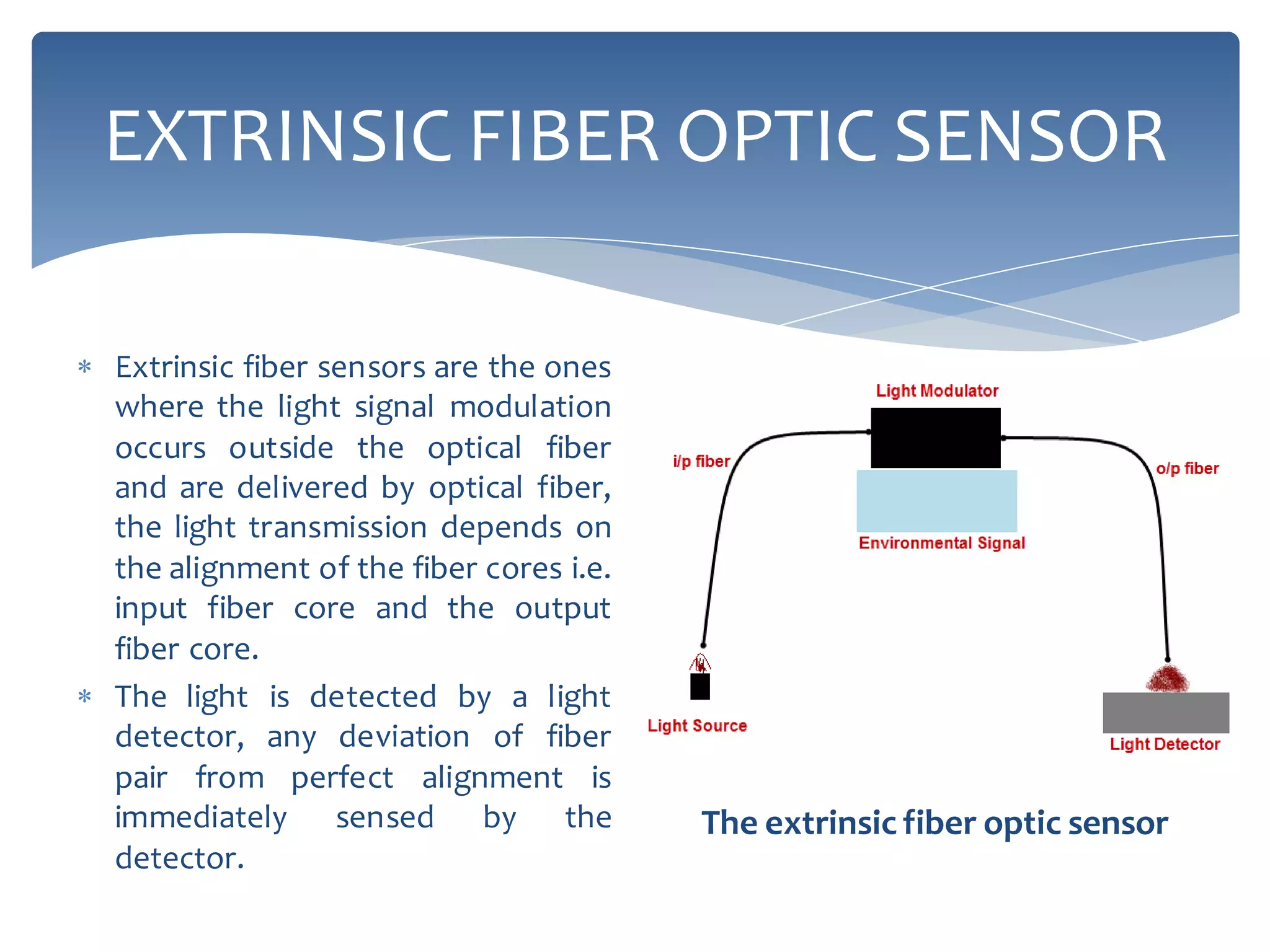
 Extrinsic fiber sensors are the ones
where the light signal modulation
occurs outside the optical fiber
and are delivered by optical fiber,
the light transmission depends on
the alignment of the fiber cores i.e.
input fiber core and the output
fiber core.
 The light is detected by a light
detector, any deviation of fiber
pair from perfect alignment is
immediately sensed by the
detector.
The extrinsicfiber optic sensor
INTRINSIC FIBER OPTIC SENSOR
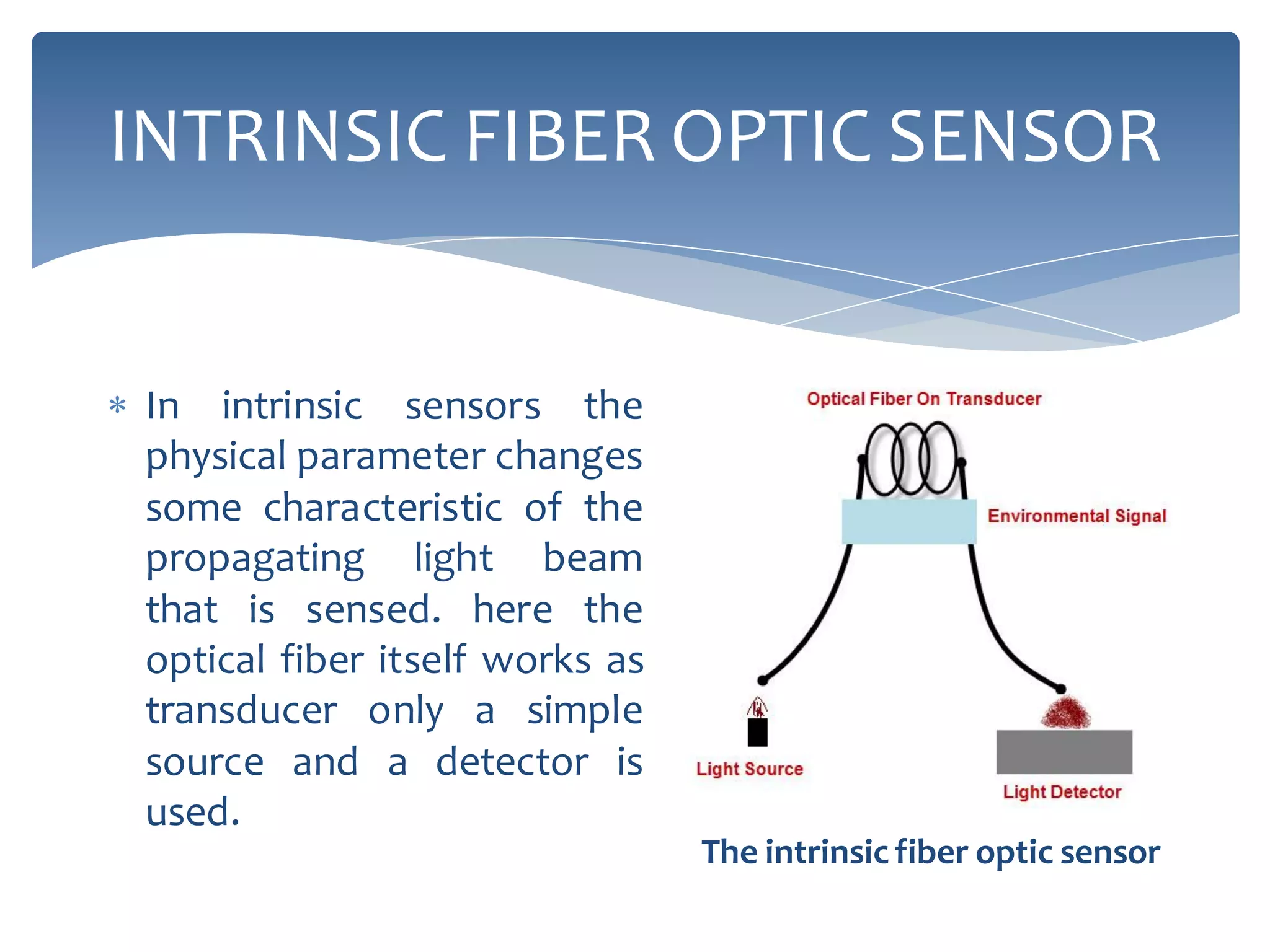
 In intrinsic sensors the
physical parameter changes
some characteristic of the
propagating light beam
that is sensed. here the
optical fiber itself works as
transducer only a simple
source and a detector is
used.
The intrinsicfiber optic sensor
IMPORTANT FIBER SENSORS
The Two important types of fiber sensors are :-
Mach-Zehnder Interferometric Sensor
&
Fiber Optic Gyroscope
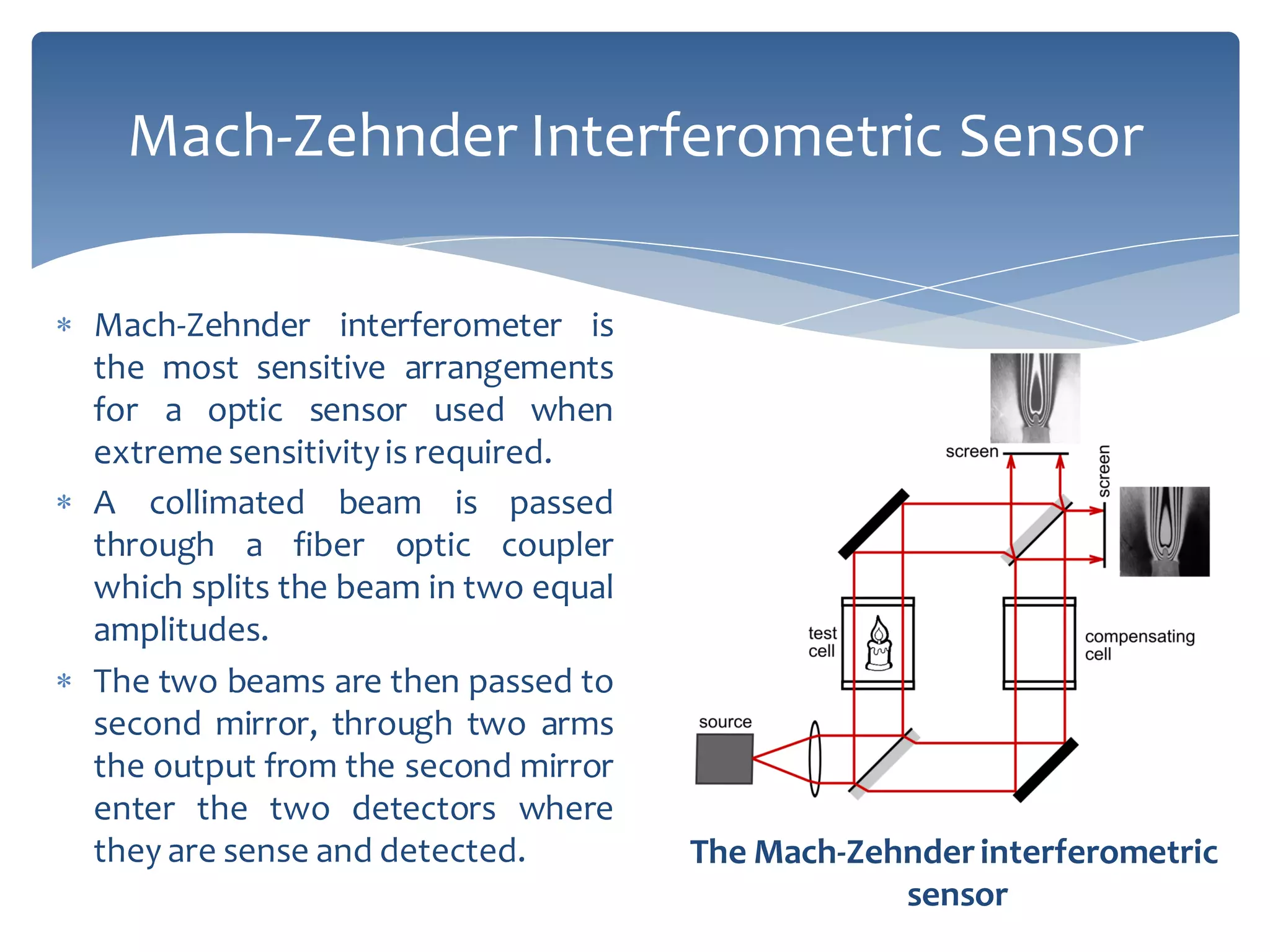
Mach-Zehnder Interferometric Sensor
 Mach-Zehnder interferometer is
the most sensitive arrangements
for a optic sensor used when
extreme sensitivityis required.
 A collimated beam is passed
through a fiber optic coupler
which splits the beam in two equal
amplitudes.
 The two beams are then passed to
second mirror, through two arms
the output from the second mirror
enter the two detectors where
they are sense and detected. The Mach-Zehnderinterferometric
sensor
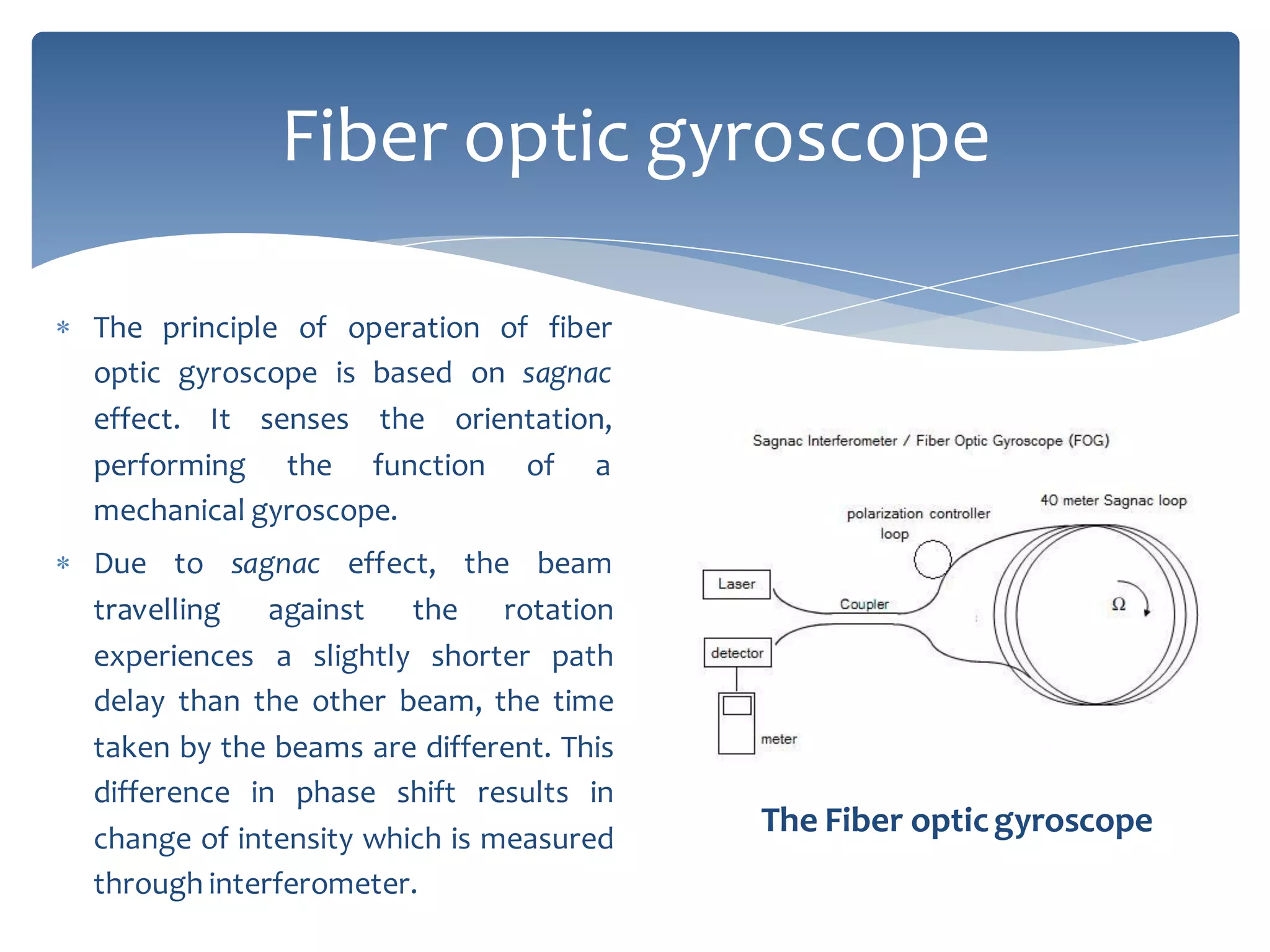
Fiber optic gyroscope
 The principle of operation of fiber
optic gyroscope is based on sagnac
effect. It senses the orientation,
performing the function of a
mechanical gyroscope.
 Due to sagnac effect, the beam
travelling against the rotation
experiences a slightly shorter path
delay than the other beam, the time
taken by the beams are different. This
difference in phase shift results in
change of intensity which is measured
through interferometer.
The Fiber opticgyroscope
 A brief overview of fiber optic sensors and its types
are given this presentation.
 The major two types of optic sensors viz., the Mach-
Zehnder interferometric sensor and the fiber optic
gyroscope are also discussed.
Conclusion
 Fiber optic sensor
https://en.wikipedia.org/wiki/Fiber_optic_sensor
 Mach-Zehnder interferometric sensor
https://en.wikipedia.org/wiki/MachZehnder_interfero
meter
 Fiber optic gyroscope
https://en.wikipedia.org/wiki/Fibre_optic_gyroscope
References

Fiber Optic Sensors

  • 1.
    FIBER OPTIC SENSORS Thispresentation presents an overview of fiber optic sensor technology ,basic classifications of optic sensors, the basic functions of optical fiber sensors and also discusses the two important fiber optic sensors , namely the Mach - Zehnder interferometric fiber sensor and the fiber optic gyroscope.
  • 2.
     The fieldof measurement and instrumentation and particular sensor development is one of that has expanded rapidly in recent years.  The need of high quality sensors to be integrated into measurement and control system is clear.  In parallel with rapid advance in the development of sensors based on micro electronics, those based on optical techniques have expanded significantly over last few years. INTRODUCTION
  • 3.
    FIBER OPTIC SENSOR A fiber optic sensor is a sensor that uses optical fiber as the sensing element.  The basic components are simple. Light is taken to modulation region using a fiber and modulated there by physical or chemical phenomena and modulated light is transmitted back to a receiver; detected and demodulated The fiber optic sensor
  • 4.
    EXTRINSIC FIBER OPTICSENSOR  Extrinsic fiber sensors are the ones where the light signal modulation occurs outside the optical fiber and are delivered by optical fiber, the light transmission depends on the alignment of the fiber cores i.e. input fiber core and the output fiber core.  The light is detected by a light detector, any deviation of fiber pair from perfect alignment is immediately sensed by the detector. The extrinsicfiber optic sensor
  • 5.
    INTRINSIC FIBER OPTICSENSOR  In intrinsic sensors the physical parameter changes some characteristic of the propagating light beam that is sensed. here the optical fiber itself works as transducer only a simple source and a detector is used. The intrinsicfiber optic sensor
  • 6.
    IMPORTANT FIBER SENSORS TheTwo important types of fiber sensors are :- Mach-Zehnder Interferometric Sensor & Fiber Optic Gyroscope
  • 7.
    Mach-Zehnder Interferometric Sensor Mach-Zehnder interferometer is the most sensitive arrangements for a optic sensor used when extreme sensitivityis required.  A collimated beam is passed through a fiber optic coupler which splits the beam in two equal amplitudes.  The two beams are then passed to second mirror, through two arms the output from the second mirror enter the two detectors where they are sense and detected. The Mach-Zehnderinterferometric sensor
  • 8.
    Fiber optic gyroscope The principle of operation of fiber optic gyroscope is based on sagnac effect. It senses the orientation, performing the function of a mechanical gyroscope.  Due to sagnac effect, the beam travelling against the rotation experiences a slightly shorter path delay than the other beam, the time taken by the beams are different. This difference in phase shift results in change of intensity which is measured through interferometer. The Fiber opticgyroscope
  • 9.
     A briefoverview of fiber optic sensors and its types are given this presentation.  The major two types of optic sensors viz., the Mach- Zehnder interferometric sensor and the fiber optic gyroscope are also discussed. Conclusion
  • 10.
     Fiber opticsensor https://en.wikipedia.org/wiki/Fiber_optic_sensor  Mach-Zehnder interferometric sensor https://en.wikipedia.org/wiki/MachZehnder_interfero meter  Fiber optic gyroscope https://en.wikipedia.org/wiki/Fibre_optic_gyroscope References