Submitted by,
Jeethu P. Tom
English
Roll No. 8
Submitted to,
Ms. Jeffey Mary Joseph
 It is the most popular innovations in teaching
learning process.
 Instructional material is organised in small
parts called frames.
 Frames are arranged in a sequence.
 Pupil moves to second frame after answering
the first question correctly.
Programmed Instruction is an
individualised method in which learning
content is broken up into small units and
presented in a series of interactive frames.
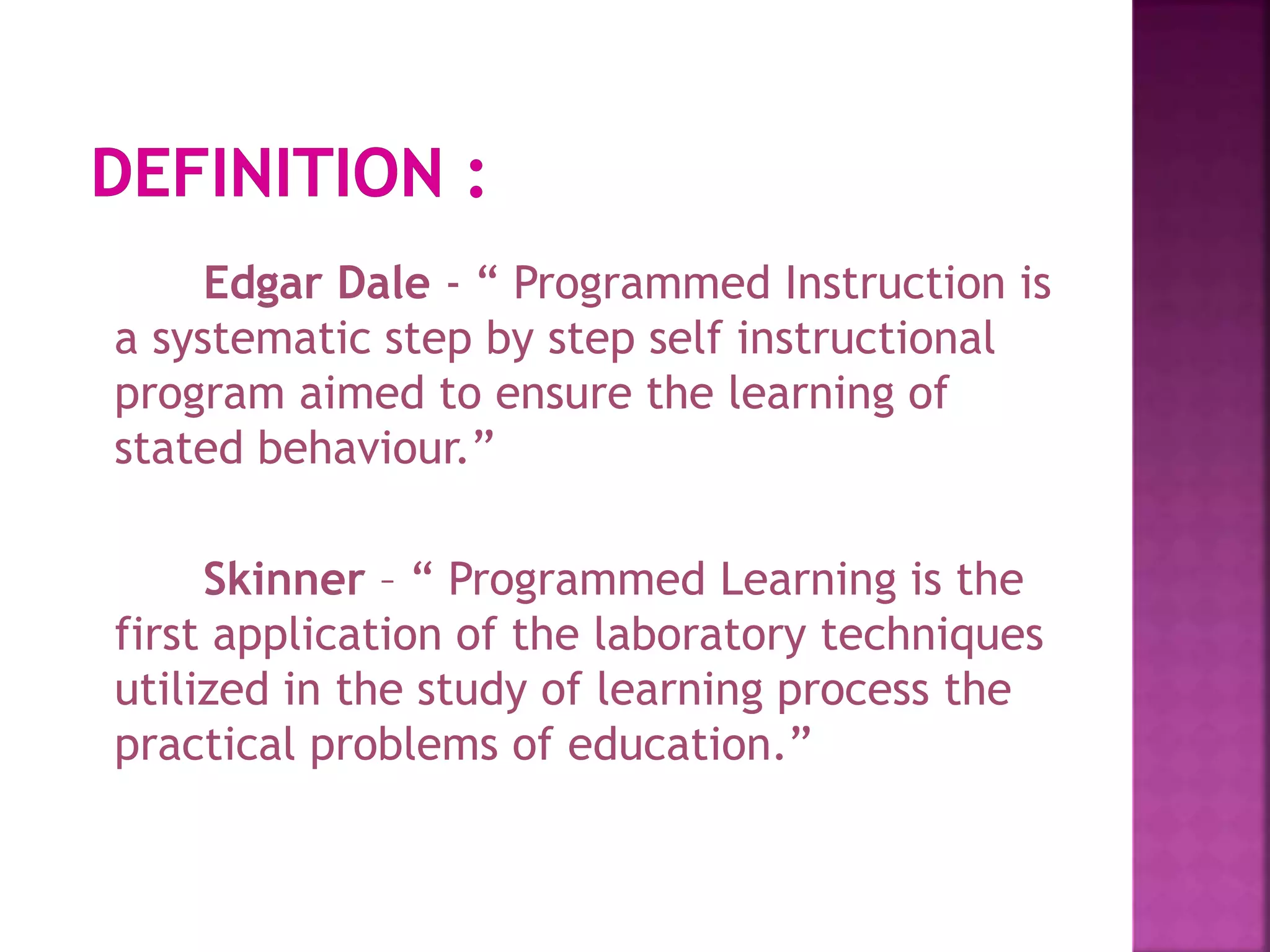
Edgar Dale - “ Programmed Instruction is
a systematic step by step self instructional
program aimed to ensure the learning of
stated behaviour.”
Skinner – “ Programmed Learning is the
first application of the laboratory techniques
utilized in the study of learning process the
practical problems of education.”
 Content is broken up into small and easy
steps called frames.
 Frames are arranged sequentially.
 Frequent response is elicited from the
student.
 Student is provided with immediate
conformation of right answer.
 Learner progress at his own speed.
 Principle of small steps – the subject matter is
divided into small units called frames.
 Principle of active responding – the learner remains
active throughout the learning process.
 Principle of immediate conformation – student is
provided with immediate conformation of right
answer.
 Principle of self pacing – student progresses at his
own pace.
 Principle of testing – teacher assess the progress of
his students and find out the weakness of the
program.
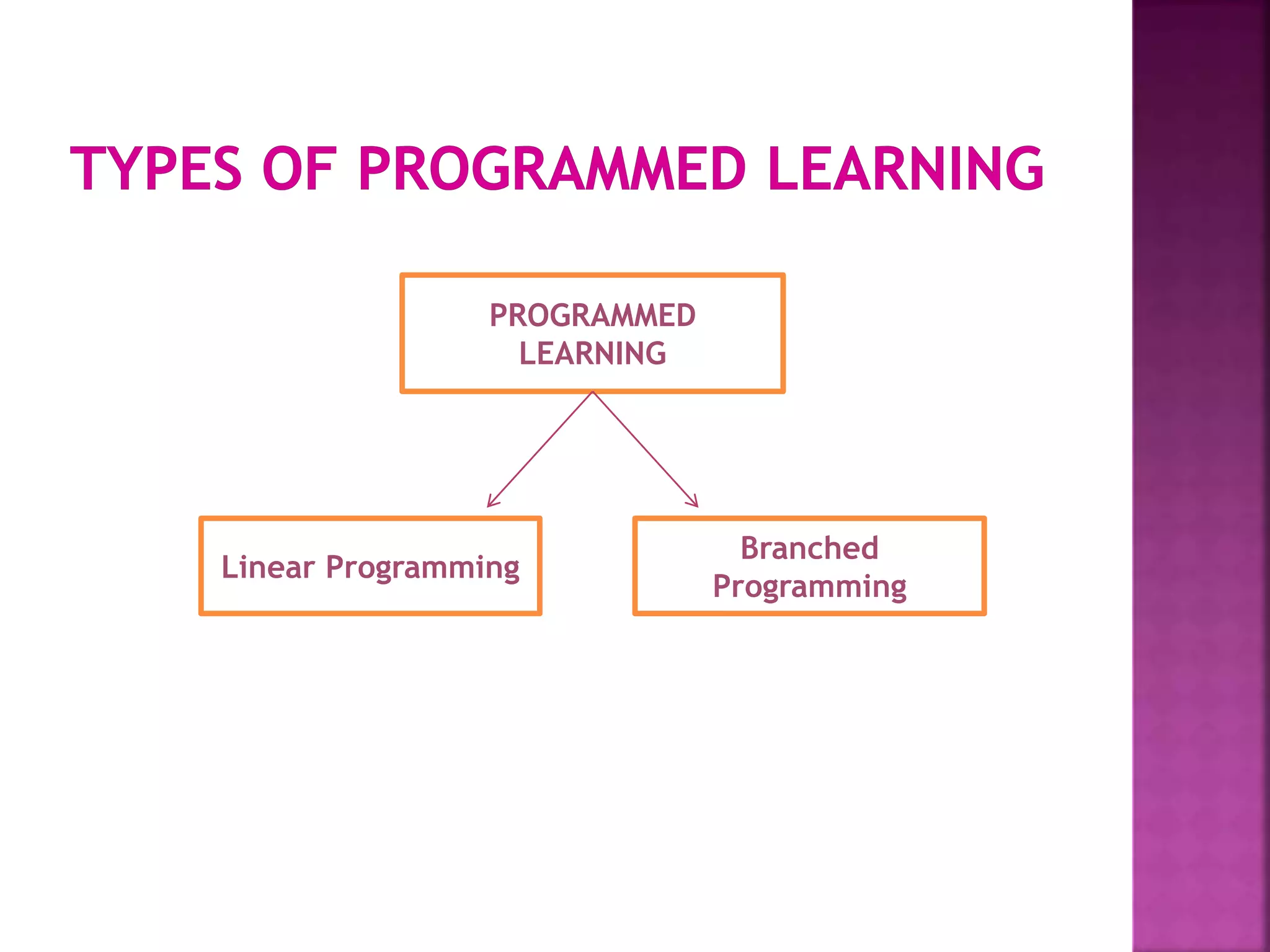
PROGRAMMED
LEARNING
Branched
Programming
Linear Programming
 B. F. Skinner and his associates are considered as
proponents, so also known as Skinnerian type of
Programming.
 The learner has no choice to follow his path, so
also called Extrinsic Programming.
Frame 1
Introduction
Stimulus
(Question)
Response
Frame 2
Correct
answer to the
question in
frame 1.
Information
Stimulus
Response
Frame 3
Correct
answer to the
question in
frame 2.
Information
Stimulus
Response
 Developed by A. Crowder, hence known as Crowdarian type
of Programming.
 Learner has a choice to select the path, so known as
Intrinsic Programming.
Frame 1 Frame 2 Frame 3
Remedial
Frame
Remedial
Frame
Remedial
Frame
Remedial
Frame
Remedial
Frame
Remedial
Frame
Remedial
Frame
Remedial
Frame
Remedial
Frame
 Backward Branching : In this type the learner
goes from the first frame to the mainstream
to the second, only if he makes the answer
correct.
 If he makes an error he is led to the remedial
frame.
 Forward Branching : In this type whether the
learner is making correct response or wrong
response he will always be going to a new
frame.
 If the response is wrong he is directed to the
remedial frame.
 Pupil remain active through out the program.
 This program can be used at any time.
 Immediate program help the pupil in knowing
whether his response is right or wrong.
 The problem of an individual learner can be
diagnosed.
 Pupil gets motivation from his continued
success.
 Time consuming.
 The contact between teacher and learner
gets totally eliminated .
 Lack of motivation
 No freedom of choice.
power point presentation

power point presentation

  • 1.
    Submitted by, Jeethu P.Tom English Roll No. 8 Submitted to, Ms. Jeffey Mary Joseph
  • 4.
     It isthe most popular innovations in teaching learning process.  Instructional material is organised in small parts called frames.  Frames are arranged in a sequence.  Pupil moves to second frame after answering the first question correctly.
  • 5.
    Programmed Instruction isan individualised method in which learning content is broken up into small units and presented in a series of interactive frames.
  • 6.
    Edgar Dale -“ Programmed Instruction is a systematic step by step self instructional program aimed to ensure the learning of stated behaviour.” Skinner – “ Programmed Learning is the first application of the laboratory techniques utilized in the study of learning process the practical problems of education.”
  • 7.
     Content isbroken up into small and easy steps called frames.  Frames are arranged sequentially.  Frequent response is elicited from the student.  Student is provided with immediate conformation of right answer.  Learner progress at his own speed.
  • 8.
     Principle ofsmall steps – the subject matter is divided into small units called frames.  Principle of active responding – the learner remains active throughout the learning process.  Principle of immediate conformation – student is provided with immediate conformation of right answer.  Principle of self pacing – student progresses at his own pace.  Principle of testing – teacher assess the progress of his students and find out the weakness of the program.
  • 9.
  • 10.
     B. F.Skinner and his associates are considered as proponents, so also known as Skinnerian type of Programming.  The learner has no choice to follow his path, so also called Extrinsic Programming. Frame 1 Introduction Stimulus (Question) Response Frame 2 Correct answer to the question in frame 1. Information Stimulus Response Frame 3 Correct answer to the question in frame 2. Information Stimulus Response
  • 11.
     Developed byA. Crowder, hence known as Crowdarian type of Programming.  Learner has a choice to select the path, so known as Intrinsic Programming. Frame 1 Frame 2 Frame 3 Remedial Frame Remedial Frame Remedial Frame Remedial Frame Remedial Frame Remedial Frame Remedial Frame Remedial Frame Remedial Frame
  • 12.
     Backward Branching: In this type the learner goes from the first frame to the mainstream to the second, only if he makes the answer correct.  If he makes an error he is led to the remedial frame.  Forward Branching : In this type whether the learner is making correct response or wrong response he will always be going to a new frame.  If the response is wrong he is directed to the remedial frame.
  • 13.
     Pupil remainactive through out the program.  This program can be used at any time.  Immediate program help the pupil in knowing whether his response is right or wrong.  The problem of an individual learner can be diagnosed.  Pupil gets motivation from his continued success.
  • 14.
     Time consuming. The contact between teacher and learner gets totally eliminated .  Lack of motivation  No freedom of choice.