 This is the case of Patient
B.M, 39 years old G7P6
(6006) 7 4/7 weeks AOG,
female, Filipino, Roman
Catholic, married, currently
lives in Mapandan
Pangasinan, admitted for
vaginal bleeding in
Pangasinan Provincial
Hospital on November
28,2015 around 12:20 pm.
 Informant: patient herself with a reliability of 80%
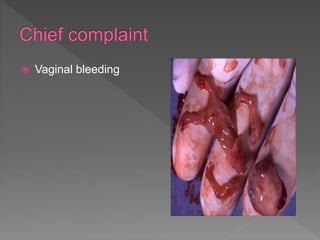
 Vaginal bleeding
 3 days prior to admission,
the patient experienced
crampy abdominal pain
located in the hypogastric
area with a pain scale of
7/10. patient took
mefenamic 500 mg but the
symptoms unrelieved.
2 days prior to admission,while
working in her parlor around
8:24 am, the patient
experienced heavy vaginal
bleeding consuming 3 napkins
fully soaked, along with
abdominal pain in the
hypogastric region that is
radiating to the lower back.
The patient took Cephalexin
3x a day to relieve the
symptoms.
1 day prior to admission,vaginal
bleeding with intermittent fever and
headache characterized as crampy and
bitemporal in location. Paracetamol 500
mg was taken to relieve the symptoms
Few hours prior to admission, heavy
vaginal bleeding,hypogastric pain, fever
with nausea and vomiting along with
headache that prompted her for
hospitalization.
 The patient has no
previous
hospitalization or any
surgeries noted
 No medical history of
cancer, Tb, asthma,
diabetes and
hypertension.
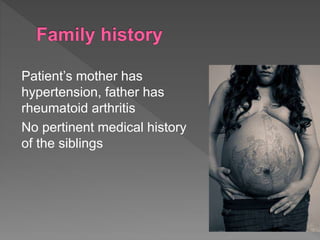
Patient’s mother has
hypertension, father has
rheumatoid arthritis
No pertinent medical history
of the siblings
 Patient lives in a concrete bungalow house,
with 2 bedrooms and 1 cr with her children
and husband. The patient is a college
graduate currently working in a parlor shop.
Patient is a smoker consuming 3 sticks per
day, occasional drinker consuming 1 bottle of
emperador lights. Diet consists mainly of
fish, meat, eggs, vegetables and rice.
 MENSTRUAL HISTORY
 Patient B.M menarche started when she was 18
years old, her menstrual duration is 4-5 days,
regular cycle of 28, with lighter menstrual flow on
the first day and become gradually heavier towards
the end of menses consuming 3 pads in a day. The
patient reported of having severe dysmenorrheal on
every first day of her menstruation. The patient
reported that the dysmenorrhea is severe with a
pain scale of 7/10 and mefenamic acid 2x a day
was taken to relieve the pain.
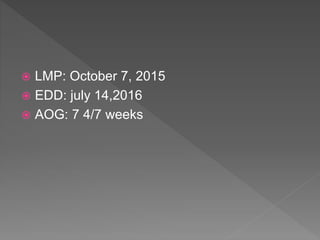
 LMP: October 7, 2015
 EDD: july 14,2016
 AOG: 7 4/7 weeks
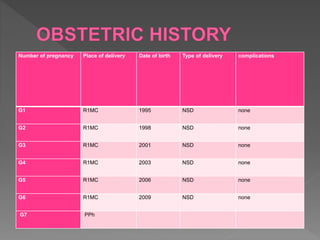
Number of pregnancy Place of delivery Date of birth Type of delivery complications
G1 R1MC 1995 NSD none
G2 R1MC 1998 NSD none
G3 R1MC 2001 NSD none
G4 R1MC 2003 NSD none
G5 R1MC 2006 NSD none
G6 R1MC 2009 NSD none
G7 PPh
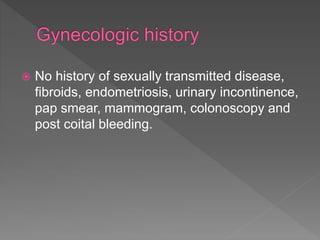
 No history of sexually transmitted disease,
fibroids, endometriosis, urinary incontinence,
pap smear, mammogram, colonoscopy and
post coital bleeding.
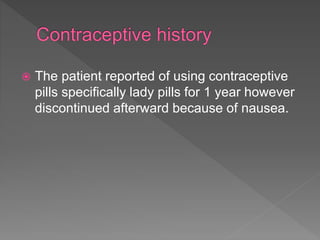
 The patient reported of using contraceptive
pills specifically lady pills for 1 year however
discontinued afterward because of nausea.
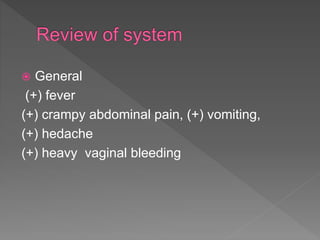
 General
(+) fever
(+) crampy abdominal pain, (+) vomiting,
(+) hedache
(+) heavy vaginal bleeding
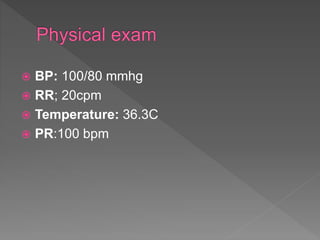
 BP: 100/80 mmhg
 RR; 20cpm
 Temperature: 36.3C
 PR:100 bpm
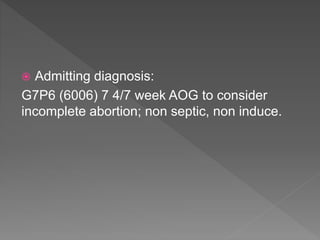
 Admitting diagnosis:
G7P6 (6006) 7 4/7 week AOG to consider
incomplete abortion; non septic, non induce.
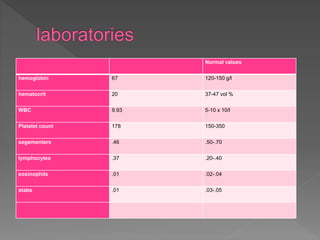
Normal values
hemoglobin 67 120-150 g/l
hematocrit 20 37-47 vol %
WBC 9.93 5-10 x 10/l
Platelet count 178 150-350
segementers .46 .50-.70
lymphocytes .37 .20-.40
eosinophils .01 .02-.04
stabs .01 .03-.05
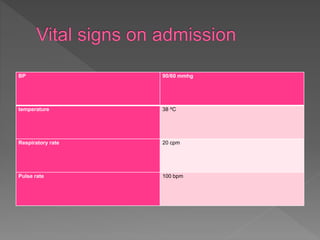
BP 90/60 mmhg
temperature 38 ^C
Respiratory rate 20 cpm
Pulse rate 100 bpm
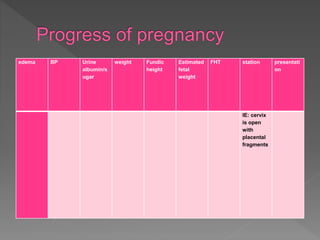
edema BP Urine
albumin/s
ugar
weight Fundic
height
Estimated
fetal
weight
FHT station presentati
on
IE: cervix
is open
with
placental
fragments
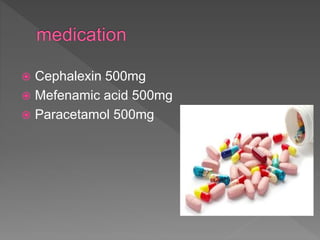
 Cephalexin 500mg
 Mefenamic acid 500mg
 Paracetamol 500mg
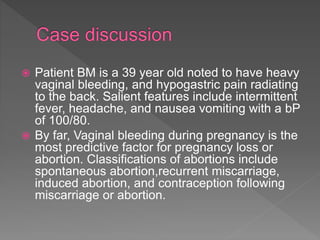
 Patient BM is a 39 year old noted to have heavy
vaginal bleeding, and hypogastric pain radiating
to the back. Salient features include intermittent
fever, headache, and nausea vomiting with a bP
of 100/80.
 By far, Vaginal bleeding during pregnancy is the
most predictive factor for pregnancy loss or
abortion. Classifications of abortions include
spontaneous abortion,recurrent miscarriage,
induced abortion, and contraception following
miscarriage or abortion.
 Threatened abortion
 Incomplete abortion
 Septic abortion
 Missed abortion
 Threatened abortion- the clinical diagnosis of
threatened abortion is presumed when a bloody
vaginal discharge or bleeding appears through
a closed cervical os during the first half of
pregnancy.
 With miscarriage, bleeding usually begins first
and cramping abdominal pain usually follows a
few hours to several days later. The pain may
present as anterior and clearly rhythmic
cramps. there is also persistent low back ache
associated with a feeling of pelvic pressure or
as a dull, midline suprapubic discomfort.
 Because ectopic pregnancy, ovarian torsion
may mimic threatened abortion, women with
early vaginal bleeding and pain should be
evaluated. Hematocrit is performed when
there is persistent or heavy vaginal bleeding.
If there is significant anemia or hypovolemia,
pregnancy evacuation is usually indicated.
 There are no effective therapies for
threatened abortion. Bed rest, although often
prescribed, does not alter its course.
Acetaminophen based analgesia may be
given for discomfort. Transvaginal
sonography,serial serumquantitative human
chorionic gonadotropin(HCG) and serum
progesterone levels, are used alone or in
combination levels to ascertain if the fetus is
alive and within the uterus. Repeat
evaluation if necessary.
 Rule in: the patient experience heavy vaginal
bleeding, abdominal pain on her first
trimester of pregnancy.
 Rule out: the clinical diagnosis of threatened
abortion is presumed when a bloody vaginal
discharge or bleeding appears through a
closed cervical os during the first half of
pregnancy.
 Missed abortion-is described as dead
products of conception that were retained for
days, weeks, or even months in the uterus
with a closed cervical os. Early pregnancy
appear to be normal, with amenorrhea,
nausea and vomiting, breast changes and
uterine growth. After embryonic death, there
may or may not be vaginal bleeding or any
other symptoms of threatened abortion.
There is gradual decrease in size of the
uterus and mammary changes usually
regress and women often lose a few pounds.
 Rule in:heavy vaginal bleeding
 Rule out: described as dead products of
conception in the uterus with a closed
cervical os.
 Septic abortion- is a condition where in the
product of conception and uterus is infected.
Endomyometritis is the most common
manifestation of postbortal infection.
Treatment of infection includes prompt
administration of intravenous broad
spectrum antibiotics followed by uterine
evacuation. With severe sepsis syndrome,
acute respiratory syndrome or dessiminated
intravascular coagulopathy may develop,
and supportive care is essential.
 Rule in: heavy vaginal bleeding, intermittent
fever, nausea and vomiting.
 Rule out: the patient has no severe
infections noted prior to pregnancy.
 Incomplete abortion: during incomplete
abortion, the internal cervical os opens and
allows passage of blood. The fetus or
placenta may remain entirely in utero or may
partially extrude through the dilated os. In
many cases retained placental tissue simply
lies loosely in the cervical canal, allowing
easy extraction from an exposed external os
with ring forceps.
 Hemorrhage from incomplete abortion of a
more advanced pregnancy is occasionally
severe but rarely fatal. Therefore, in women
with more advanced pregnancy or with
heavy bleeding, evacuation is promptly
performed. If there is fever, appropriate
antibiotics is given before curettage.
 Rule in: heavy vaginal bleeding with open
cervical os, fever, and nausea vomitting
 MATERNAL FACTORS
 Clinically, apparent miscarriage increases
with parity as well as maternal and paternal
age. The frequency doubles from 12 percent
from women younger than 20 years to 26
percent in those older than 40 years.
 DRUG USE AND ENVIRONMENTAL FACTORS
 A variety of different agents have been reported to
be associated with an increased incidence of
abortion.
 Tobacco. Smoking has been linked with an
increased risk for euploid abortion. Studies
suggested that the abortion risk increased in a
linear fashion with cigarette smoked per day.
 Alcohol. Both spontaneous abortion and fetal
anomalies may result from frequent alcohol use
during the first 8 weeks of pregnancy.
 COUNSELLING BEFORE ELECTIVE ABORTION
 there are three choices available for a woman
considering an abortion. This include continued
pregnancy with its risk and parental responsibilities;
continued pregnancy with its risks and
responsibilities of arranged adoption; or the choice
of abortion with its risks. Knowledgeable and
compassionate counsellors should objectively
describe and provide information about these
choices so that a woman or couple can make an
informed decision.
 Management for the patient upon admission:
give paracetamol 500mg tablet for fever
 Continue
mefenamic acid 500g capsule
 Blood
transfusion to KVO
 Dilatation and curettage
 Dilation and curettage (D&C) is a procedure
to remove tissue from inside the uterus.
Doctors perform dilation and curettage to
diagnose and treat certain uterine conditions
— such as heavy bleeding — or to clear the
uterine lining after a miscarriage or abortion.
 It requires dilatation of cervix and then evacuating the
pregnancy by mechanically scraping or suctioning out
the contents. The likelihood of complication increases
after the first trimester, these include uterine
perforation, cervical laceration, hemorrhage,
incomplete removal of fetus and placenta and
infections. Evidence supports that antimicrobial
prophylaxis should be provided to all women
undergoing a transcervical surgical abortion to
decrease risk of infection by 40%(sawaya and
associates 1996). One convenient, inexpensive and
effective regimen is doxycycline,100 mg orally twice
for 7 days.
 Dilatation and evacuation
 Beginning at 16 weeks, fetal size and structure
dictate use of this technique. Wide mechanical
cervical dilation, achieved with metal or
hypogastric dilators, precedes mechanical
destruction and evacuation of fetal parts. With
complete removal of the fetus, large bore
vacuum curette is used to remove the placenta
and remaining tissue
 Dilatation and extraction
 This is similar to dilatation and evacuation
except that suction evacuation of the
intracranial contents after delivery of the fetal
body through the dilated cervix aids
extraction and minimizes uterine or cervical
injury from instruments or fetal bones.
 G7P6 (6016) 7 4/7 week AOG incomplete
abortion completed by curettage, Non
septic, Non induce.
incomplete abortion case study

incomplete abortion case study

  • 2.
     This isthe case of Patient B.M, 39 years old G7P6 (6006) 7 4/7 weeks AOG, female, Filipino, Roman Catholic, married, currently lives in Mapandan Pangasinan, admitted for vaginal bleeding in Pangasinan Provincial Hospital on November 28,2015 around 12:20 pm.
  • 3.
     Informant: patientherself with a reliability of 80%
  • 4.
  • 5.
     3 daysprior to admission, the patient experienced crampy abdominal pain located in the hypogastric area with a pain scale of 7/10. patient took mefenamic 500 mg but the symptoms unrelieved.
  • 6.
    2 days priorto admission,while working in her parlor around 8:24 am, the patient experienced heavy vaginal bleeding consuming 3 napkins fully soaked, along with abdominal pain in the hypogastric region that is radiating to the lower back. The patient took Cephalexin 3x a day to relieve the symptoms.
  • 7.
    1 day priorto admission,vaginal bleeding with intermittent fever and headache characterized as crampy and bitemporal in location. Paracetamol 500 mg was taken to relieve the symptoms Few hours prior to admission, heavy vaginal bleeding,hypogastric pain, fever with nausea and vomiting along with headache that prompted her for hospitalization.
  • 8.
     The patienthas no previous hospitalization or any surgeries noted  No medical history of cancer, Tb, asthma, diabetes and hypertension.
  • 9.
    Patient’s mother has hypertension,father has rheumatoid arthritis No pertinent medical history of the siblings
  • 10.
     Patient livesin a concrete bungalow house, with 2 bedrooms and 1 cr with her children and husband. The patient is a college graduate currently working in a parlor shop. Patient is a smoker consuming 3 sticks per day, occasional drinker consuming 1 bottle of emperador lights. Diet consists mainly of fish, meat, eggs, vegetables and rice.
  • 12.
     MENSTRUAL HISTORY Patient B.M menarche started when she was 18 years old, her menstrual duration is 4-5 days, regular cycle of 28, with lighter menstrual flow on the first day and become gradually heavier towards the end of menses consuming 3 pads in a day. The patient reported of having severe dysmenorrheal on every first day of her menstruation. The patient reported that the dysmenorrhea is severe with a pain scale of 7/10 and mefenamic acid 2x a day was taken to relieve the pain.
  • 13.
     LMP: October7, 2015  EDD: july 14,2016  AOG: 7 4/7 weeks
  • 14.
    Number of pregnancyPlace of delivery Date of birth Type of delivery complications G1 R1MC 1995 NSD none G2 R1MC 1998 NSD none G3 R1MC 2001 NSD none G4 R1MC 2003 NSD none G5 R1MC 2006 NSD none G6 R1MC 2009 NSD none G7 PPh
  • 15.
     No historyof sexually transmitted disease, fibroids, endometriosis, urinary incontinence, pap smear, mammogram, colonoscopy and post coital bleeding.
  • 16.
     The patientreported of using contraceptive pills specifically lady pills for 1 year however discontinued afterward because of nausea.
  • 17.
     General (+) fever (+)crampy abdominal pain, (+) vomiting, (+) hedache (+) heavy vaginal bleeding
  • 18.
     BP: 100/80mmhg  RR; 20cpm  Temperature: 36.3C  PR:100 bpm
  • 19.
     Admitting diagnosis: G7P6(6006) 7 4/7 week AOG to consider incomplete abortion; non septic, non induce.
  • 20.
    Normal values hemoglobin 67120-150 g/l hematocrit 20 37-47 vol % WBC 9.93 5-10 x 10/l Platelet count 178 150-350 segementers .46 .50-.70 lymphocytes .37 .20-.40 eosinophils .01 .02-.04 stabs .01 .03-.05
  • 21.
    BP 90/60 mmhg temperature38 ^C Respiratory rate 20 cpm Pulse rate 100 bpm
  • 22.
    edema BP Urine albumin/s ugar weightFundic height Estimated fetal weight FHT station presentati on IE: cervix is open with placental fragments
  • 23.
     Cephalexin 500mg Mefenamic acid 500mg  Paracetamol 500mg
  • 24.
     Patient BMis a 39 year old noted to have heavy vaginal bleeding, and hypogastric pain radiating to the back. Salient features include intermittent fever, headache, and nausea vomiting with a bP of 100/80.  By far, Vaginal bleeding during pregnancy is the most predictive factor for pregnancy loss or abortion. Classifications of abortions include spontaneous abortion,recurrent miscarriage, induced abortion, and contraception following miscarriage or abortion.
  • 25.
     Threatened abortion Incomplete abortion  Septic abortion  Missed abortion
  • 26.
     Threatened abortion-the clinical diagnosis of threatened abortion is presumed when a bloody vaginal discharge or bleeding appears through a closed cervical os during the first half of pregnancy.  With miscarriage, bleeding usually begins first and cramping abdominal pain usually follows a few hours to several days later. The pain may present as anterior and clearly rhythmic cramps. there is also persistent low back ache associated with a feeling of pelvic pressure or as a dull, midline suprapubic discomfort.
  • 27.
     Because ectopicpregnancy, ovarian torsion may mimic threatened abortion, women with early vaginal bleeding and pain should be evaluated. Hematocrit is performed when there is persistent or heavy vaginal bleeding. If there is significant anemia or hypovolemia, pregnancy evacuation is usually indicated.
  • 28.
     There areno effective therapies for threatened abortion. Bed rest, although often prescribed, does not alter its course. Acetaminophen based analgesia may be given for discomfort. Transvaginal sonography,serial serumquantitative human chorionic gonadotropin(HCG) and serum progesterone levels, are used alone or in combination levels to ascertain if the fetus is alive and within the uterus. Repeat evaluation if necessary.
  • 29.
     Rule in:the patient experience heavy vaginal bleeding, abdominal pain on her first trimester of pregnancy.  Rule out: the clinical diagnosis of threatened abortion is presumed when a bloody vaginal discharge or bleeding appears through a closed cervical os during the first half of pregnancy.
  • 30.
     Missed abortion-isdescribed as dead products of conception that were retained for days, weeks, or even months in the uterus with a closed cervical os. Early pregnancy appear to be normal, with amenorrhea, nausea and vomiting, breast changes and uterine growth. After embryonic death, there may or may not be vaginal bleeding or any other symptoms of threatened abortion. There is gradual decrease in size of the uterus and mammary changes usually regress and women often lose a few pounds.
  • 31.
     Rule in:heavyvaginal bleeding  Rule out: described as dead products of conception in the uterus with a closed cervical os.
  • 32.
     Septic abortion-is a condition where in the product of conception and uterus is infected. Endomyometritis is the most common manifestation of postbortal infection. Treatment of infection includes prompt administration of intravenous broad spectrum antibiotics followed by uterine evacuation. With severe sepsis syndrome, acute respiratory syndrome or dessiminated intravascular coagulopathy may develop, and supportive care is essential.
  • 33.
     Rule in:heavy vaginal bleeding, intermittent fever, nausea and vomiting.  Rule out: the patient has no severe infections noted prior to pregnancy.
  • 34.
     Incomplete abortion:during incomplete abortion, the internal cervical os opens and allows passage of blood. The fetus or placenta may remain entirely in utero or may partially extrude through the dilated os. In many cases retained placental tissue simply lies loosely in the cervical canal, allowing easy extraction from an exposed external os with ring forceps.
  • 35.
     Hemorrhage fromincomplete abortion of a more advanced pregnancy is occasionally severe but rarely fatal. Therefore, in women with more advanced pregnancy or with heavy bleeding, evacuation is promptly performed. If there is fever, appropriate antibiotics is given before curettage.
  • 36.
     Rule in:heavy vaginal bleeding with open cervical os, fever, and nausea vomitting
  • 37.
     MATERNAL FACTORS Clinically, apparent miscarriage increases with parity as well as maternal and paternal age. The frequency doubles from 12 percent from women younger than 20 years to 26 percent in those older than 40 years.
  • 38.
     DRUG USEAND ENVIRONMENTAL FACTORS  A variety of different agents have been reported to be associated with an increased incidence of abortion.  Tobacco. Smoking has been linked with an increased risk for euploid abortion. Studies suggested that the abortion risk increased in a linear fashion with cigarette smoked per day.  Alcohol. Both spontaneous abortion and fetal anomalies may result from frequent alcohol use during the first 8 weeks of pregnancy.
  • 40.
     COUNSELLING BEFOREELECTIVE ABORTION  there are three choices available for a woman considering an abortion. This include continued pregnancy with its risk and parental responsibilities; continued pregnancy with its risks and responsibilities of arranged adoption; or the choice of abortion with its risks. Knowledgeable and compassionate counsellors should objectively describe and provide information about these choices so that a woman or couple can make an informed decision.
  • 41.
     Management forthe patient upon admission: give paracetamol 500mg tablet for fever  Continue mefenamic acid 500g capsule  Blood transfusion to KVO
  • 43.
     Dilatation andcurettage  Dilation and curettage (D&C) is a procedure to remove tissue from inside the uterus. Doctors perform dilation and curettage to diagnose and treat certain uterine conditions — such as heavy bleeding — or to clear the uterine lining after a miscarriage or abortion.
  • 44.
     It requiresdilatation of cervix and then evacuating the pregnancy by mechanically scraping or suctioning out the contents. The likelihood of complication increases after the first trimester, these include uterine perforation, cervical laceration, hemorrhage, incomplete removal of fetus and placenta and infections. Evidence supports that antimicrobial prophylaxis should be provided to all women undergoing a transcervical surgical abortion to decrease risk of infection by 40%(sawaya and associates 1996). One convenient, inexpensive and effective regimen is doxycycline,100 mg orally twice for 7 days.
  • 45.
     Dilatation andevacuation  Beginning at 16 weeks, fetal size and structure dictate use of this technique. Wide mechanical cervical dilation, achieved with metal or hypogastric dilators, precedes mechanical destruction and evacuation of fetal parts. With complete removal of the fetus, large bore vacuum curette is used to remove the placenta and remaining tissue
  • 46.
     Dilatation andextraction  This is similar to dilatation and evacuation except that suction evacuation of the intracranial contents after delivery of the fetal body through the dilated cervix aids extraction and minimizes uterine or cervical injury from instruments or fetal bones.
  • 47.
     G7P6 (6016)7 4/7 week AOG incomplete abortion completed by curettage, Non septic, Non induce.

Editor's Notes

  • #44 It requires dilatation of cervix and then evacuating the pregnancy by mechanically scraping or suctioning out the contents. The likelihood of complication increases after the first trimester, these include uterine perforation, cervical laceration, hemorrhage, incomplete removal of fetus and placenta and infections. Evidence supports that antimicrobial prophylaxis should be provided to all women undergoing a transcervical surgical abortion to decrease risk of infection by 40%(sawaya and associates 1996). One convenient, inexpensive and effective regimen is doxycycline,100 mg orally twice for 7 days.