abortions
Presented by:
Phiri Reagan -
RN
Student(BSc
nursing)-
UNZA
OBJECTIVES:
Define abortion.
State causes of abortion
Describe the different types of abortion using a tree
diagram
State the signs and symptoms of each type of abortion
Describe the general management of a patient with an
abortion
Introduction
Abortion has become rampant all over the world. It is a
common issue among the teenagers and adult women in
the society. Issues relating to abortion has been on and
generated a heated argument and distressing statistics
concerning abortion have been documented. The peak
time for abortions is between 6-12th week of pregnancy
when the level of progesterone secreted by the corpus
luteum falls and the placental hormone has not reached its
sufficiently high level to sustain the conceptus.
Definitions of abortion vary across and within countries as
well as among different institutions.
What is abortion?
-Abortion is the interruption of pregnancy before the
28th week, after which the fetus is said to be viable(
Zambian law)
- Abortion is the expulsion of the conceptus before 20-
22 completed weeks of gestation, or a fetus weighing
less than 500g.( WHO)
Types of Abortion
Spontaneous Abortion
Induced Abortion
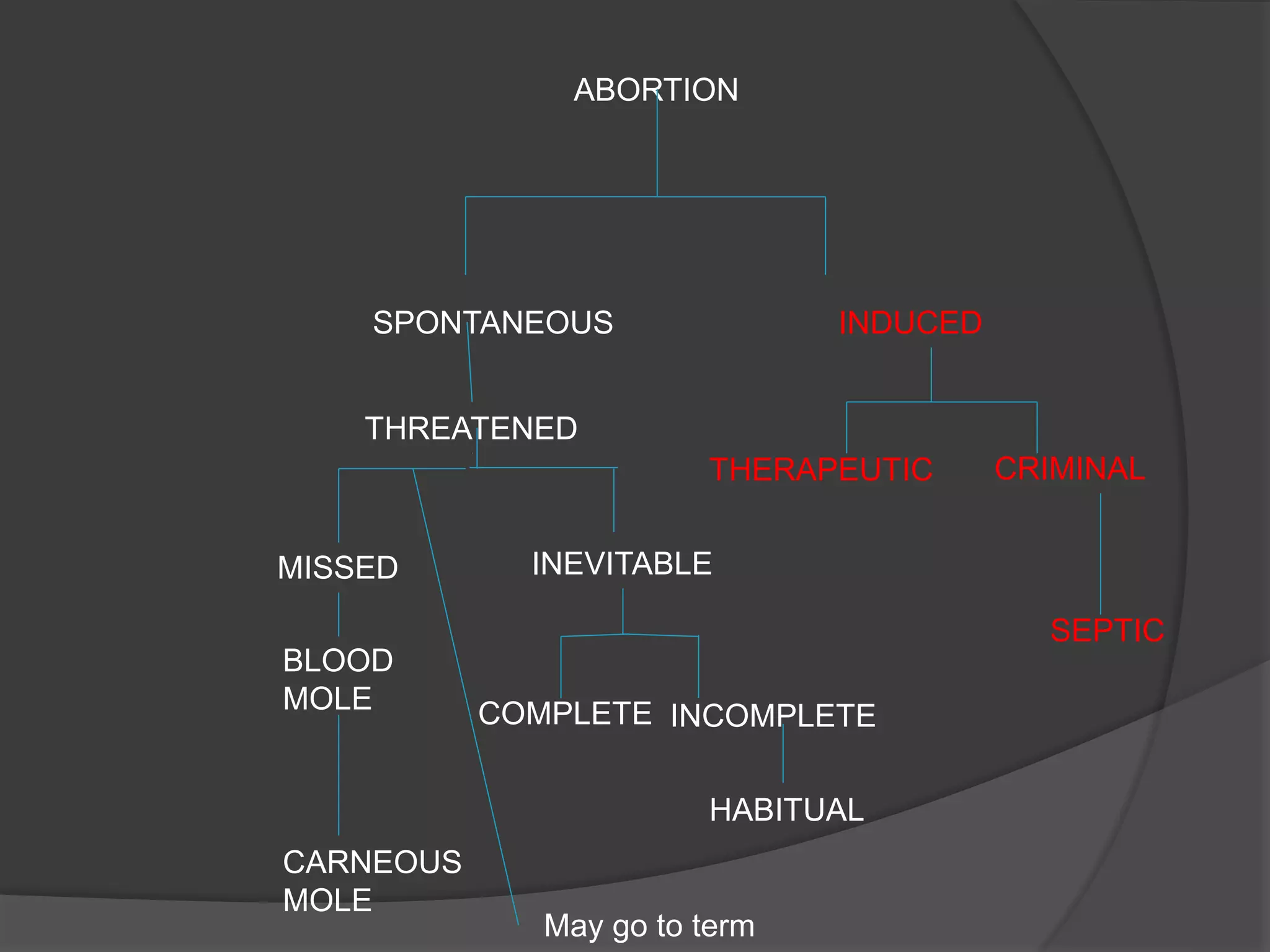
ABORTION
SPONTANEOUS
THREATENED
MISSED INEVITABLE
BLOOD
MOLE COMPLETE INCOMPLETE
CARNEOUS
MOLE
INDUCED
THERAPEUTIC CRIMINAL
SEPTIC
May go to term
HABITUAL
causes
-Disease or mal-development of the ovum and the
fetus.
-Defective implantation of the trophoblast which
results in the inability to synthesize progesterone.
-hydatidiform mole
-metabolic disorders such as DM, anemia, thyroid
disease, renal disease and/or failure, hypertensive
disorders.
-acute infections such as influenza, rubella, malaria.
Toxoplasmosis.
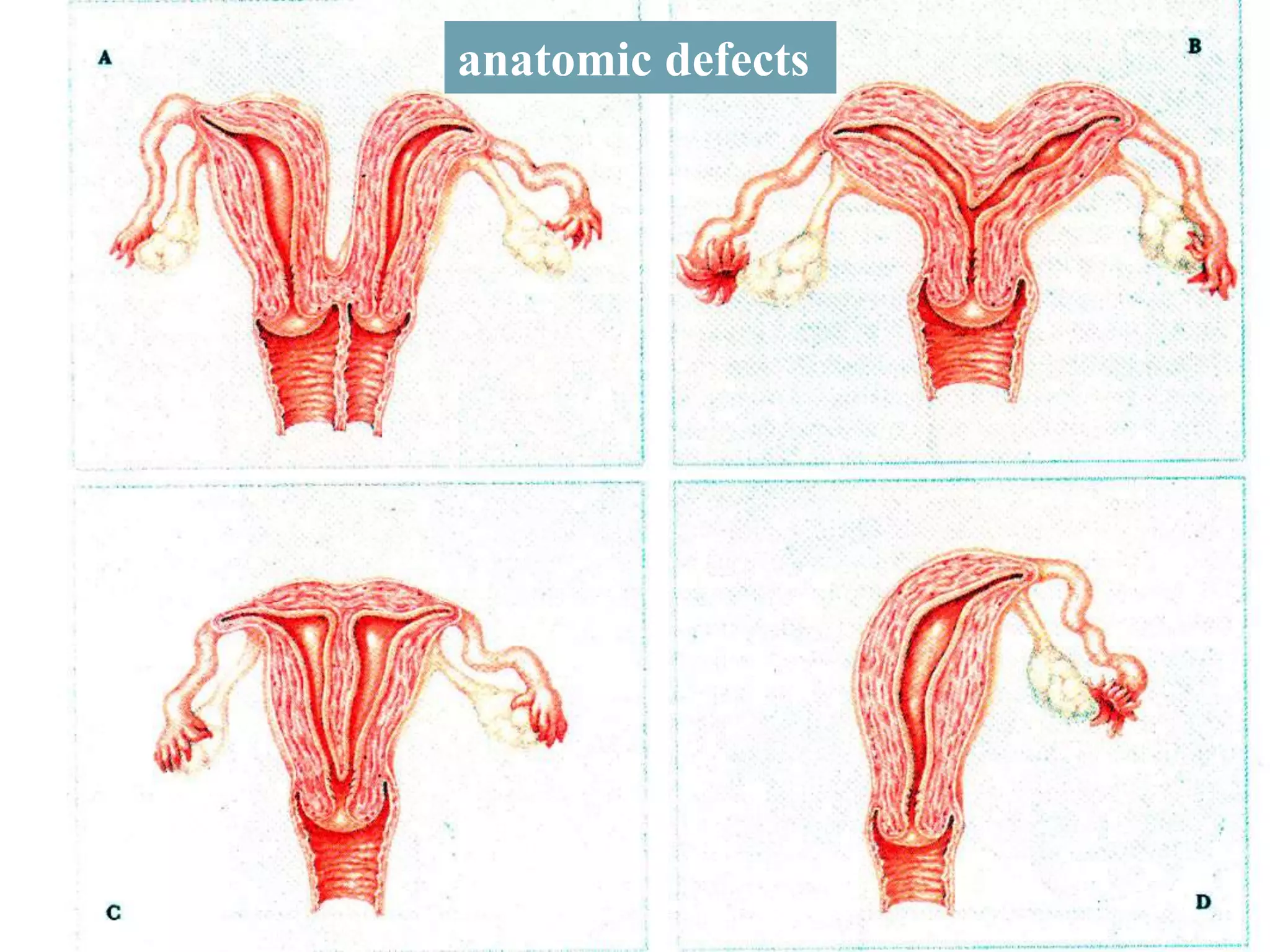
-uterine abnormalities: myomas, bi-cornuate uterus,
double uterus and vagina. Infantile uterus ,fibroids
Causes--cont.
-cervical incompetence caused by
trauma due to previous D & C or cone
biopsy.
-extreme emotional stress result in the
release of pituitary hormones which
affect uterine function.
-certain toxic drugs and substances e.g.
anesthetic gases, antimetabolic drugs,
oxytocics and herbs.
ABO and Rhesus incompatibility.
anatomic defects
Spontaneous abortion
Spontaneous abortion / miscarriage: This is
commonly referred to as miscarriage. It occurs when
pregnancy ends before the baby has any chance of
survival. Most spontaneous abortion occurs in the
first 12 weeks of pregnancy. Spontaneous abortion
can be divided into
Threatened abortion
Missed abortion
Blood mole and carneous mole
Inevitable abortion, which can be complete or
incomplete.
Habitual or recurrent abortion
·.
An abortion characterized by
slight bleeding through an un-
dilated cervix.
Signs and symptoms
- vaginal bleeding (usually slight)
- slight abdominal cramps
- internal os is closed
- viable fetus on U/S examination
Threatened abortion
Management of a threatened
abortion
- Reassurance of patients
- Rest for few days until the bleeding
has settled down
- may require progesterone
supplementation
- folic acid
- anti D if RH negative
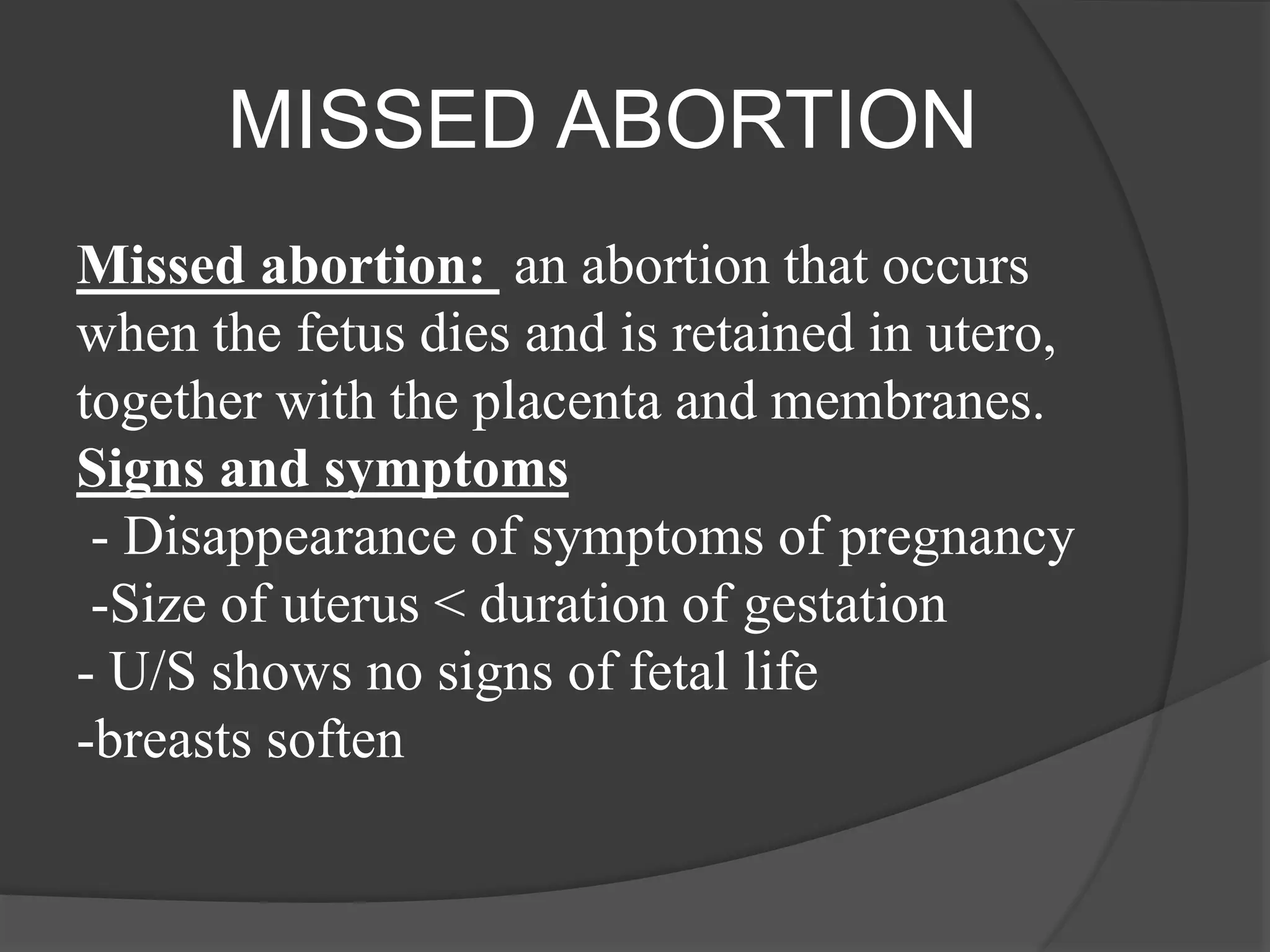
MISSED ABORTION
Missed abortion: an abortion that occurs
when the fetus dies and is retained in utero,
together with the placenta and membranes.
Signs and symptoms
- Disappearance of symptoms of pregnancy
-Size of uterus < duration of gestation
- U/S shows no signs of fetal life
-breasts soften
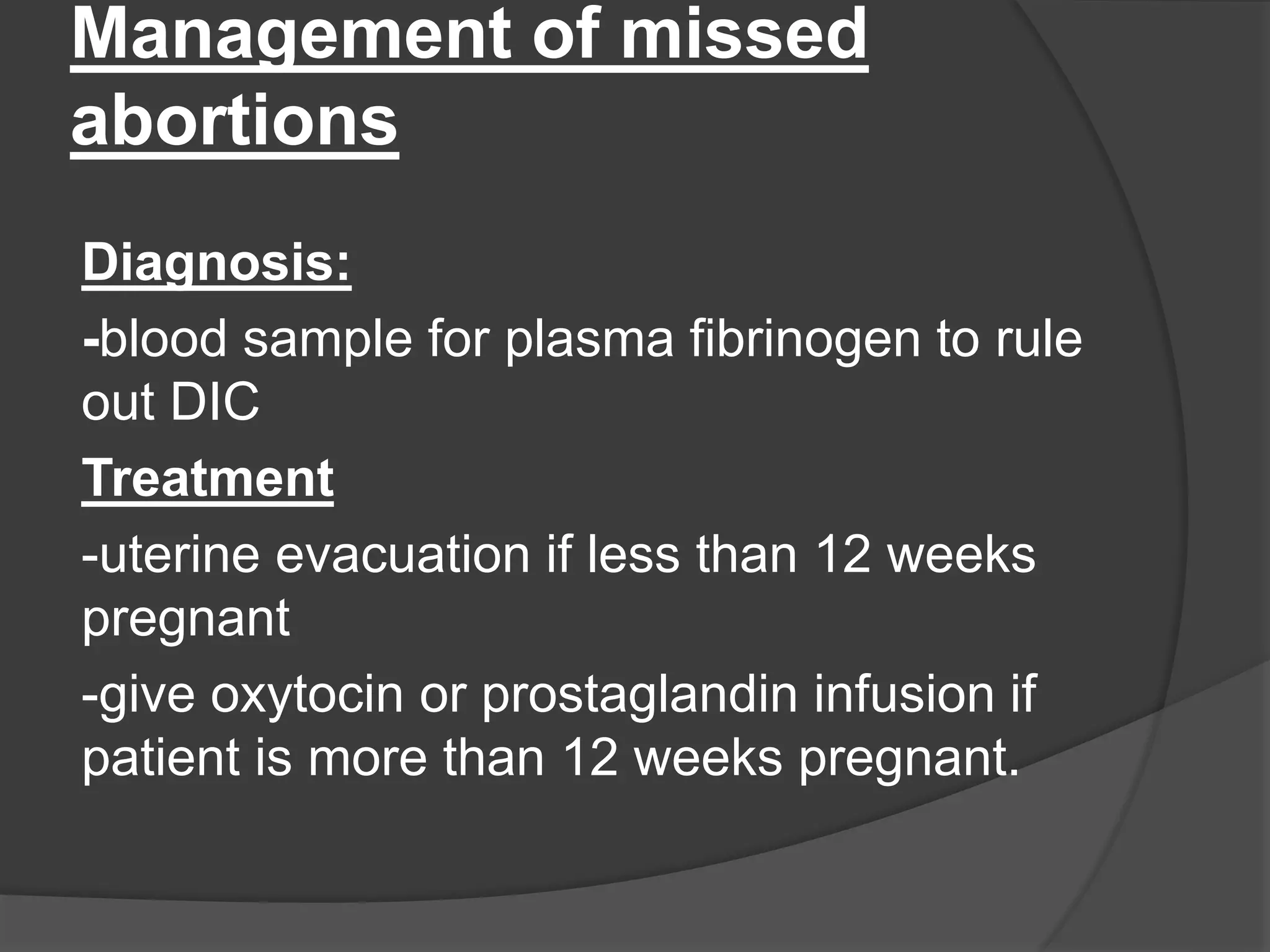
Management of missed
abortions
Diagnosis:
-blood sample for plasma fibrinogen to rule
out DIC
Treatment
-uterine evacuation if less than 12 weeks
pregnant
-give oxytocin or prostaglandin infusion if
patient is more than 12 weeks pregnant.
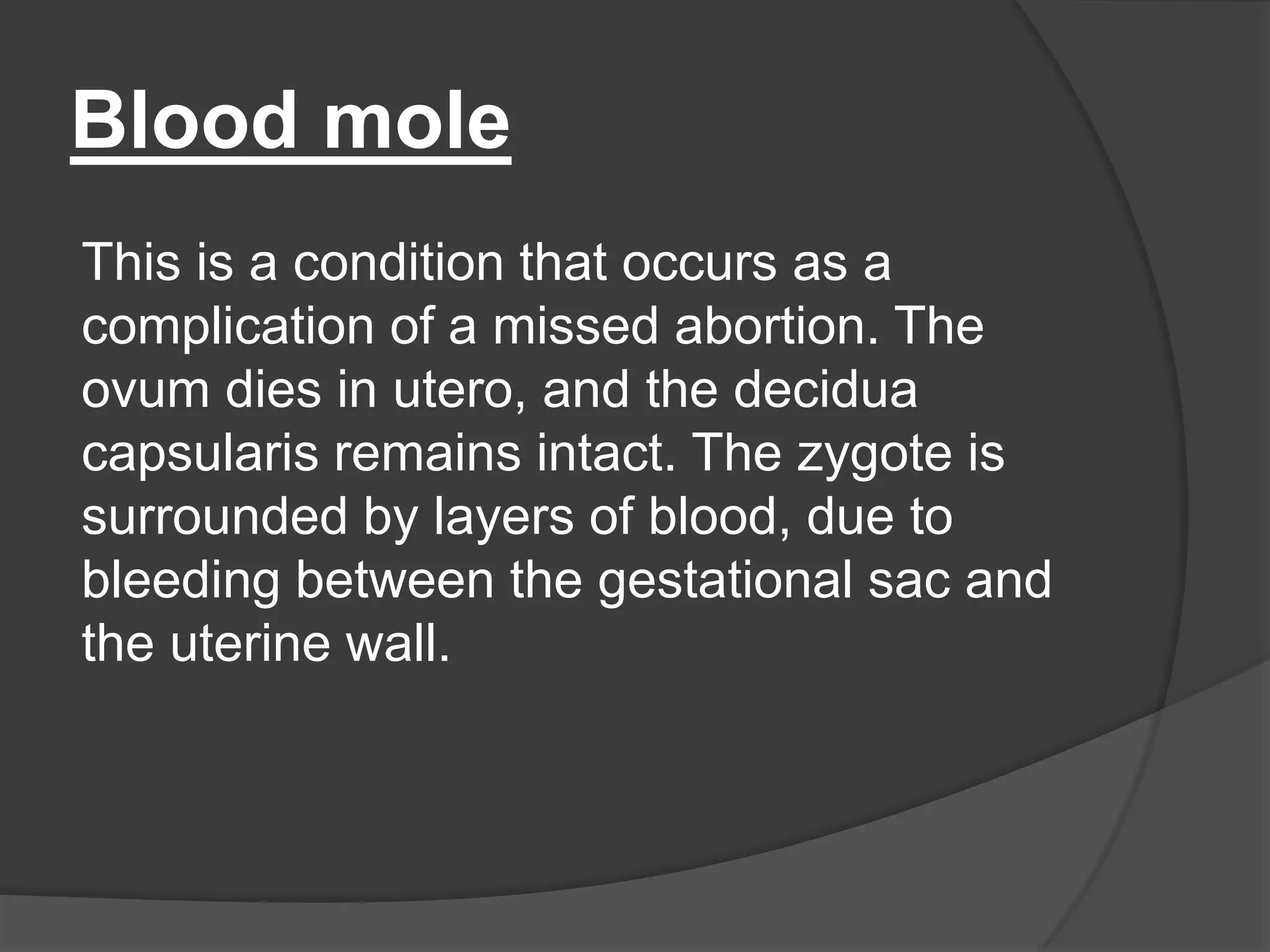
Blood mole
This is a condition that occurs as a
complication of a missed abortion. The
ovum dies in utero, and the decidua
capsularis remains intact. The zygote is
surrounded by layers of blood, due to
bleeding between the gestational sac and
the uterine wall.
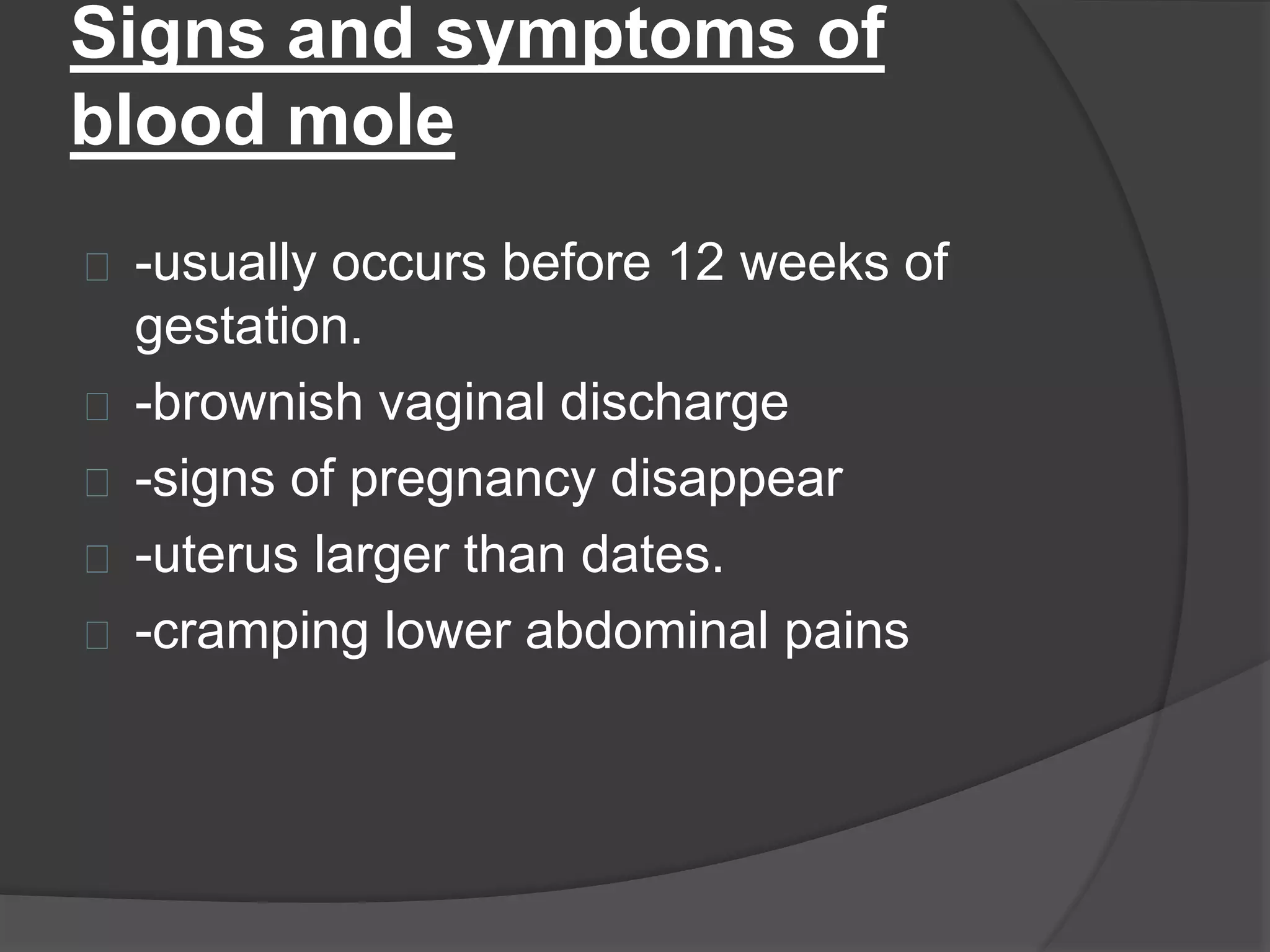
Signs and symptoms of
blood mole
-usually occurs before 12 weeks of
gestation.
-brownish vaginal discharge
-signs of pregnancy disappear
-uterus larger than dates.
-cramping lower abdominal pains
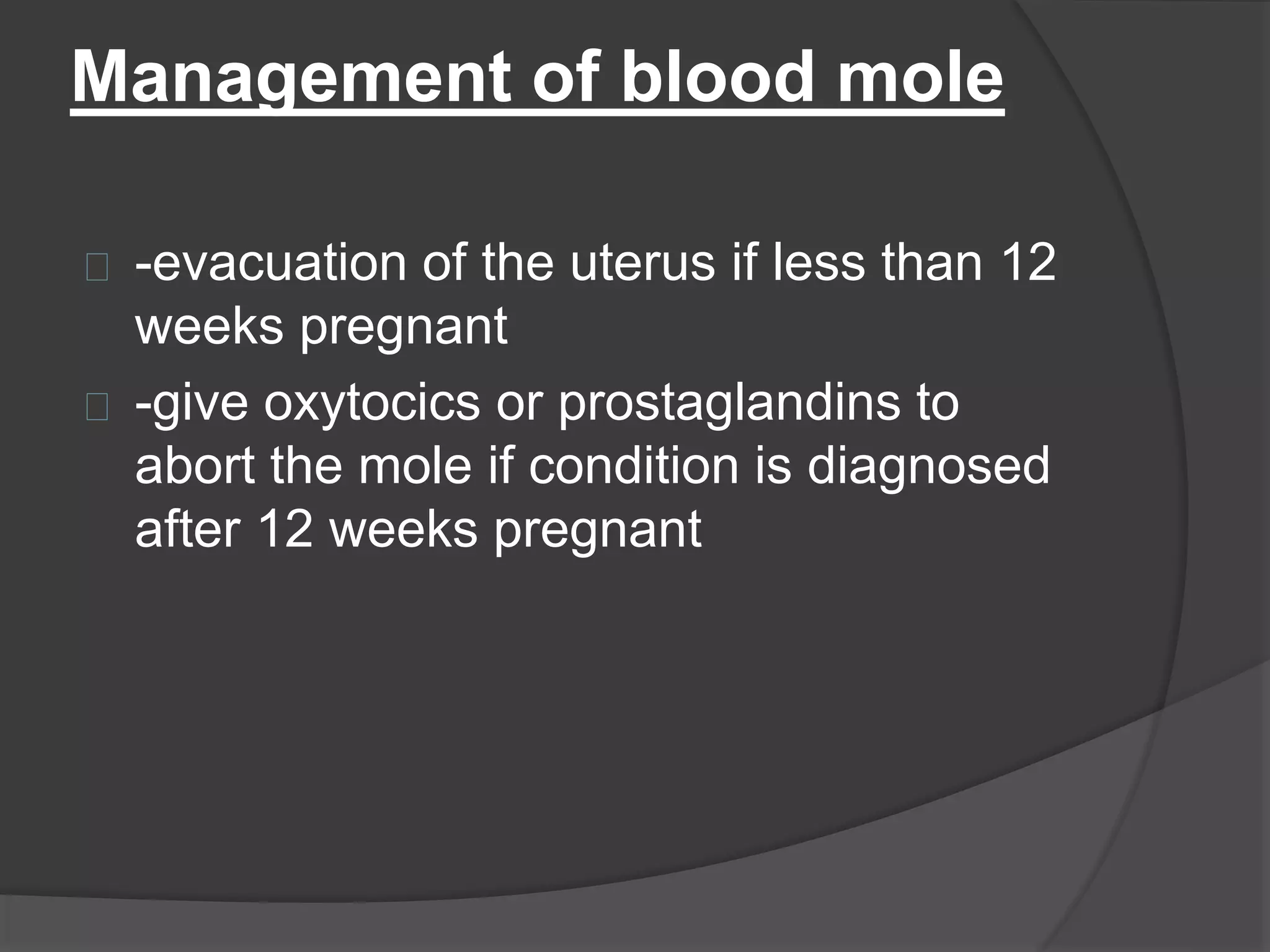
Management of blood mole
-evacuation of the uterus if less than 12
weeks pregnant
-give oxytocics or prostaglandins to
abort the mole if condition is diagnosed
after 12 weeks pregnant
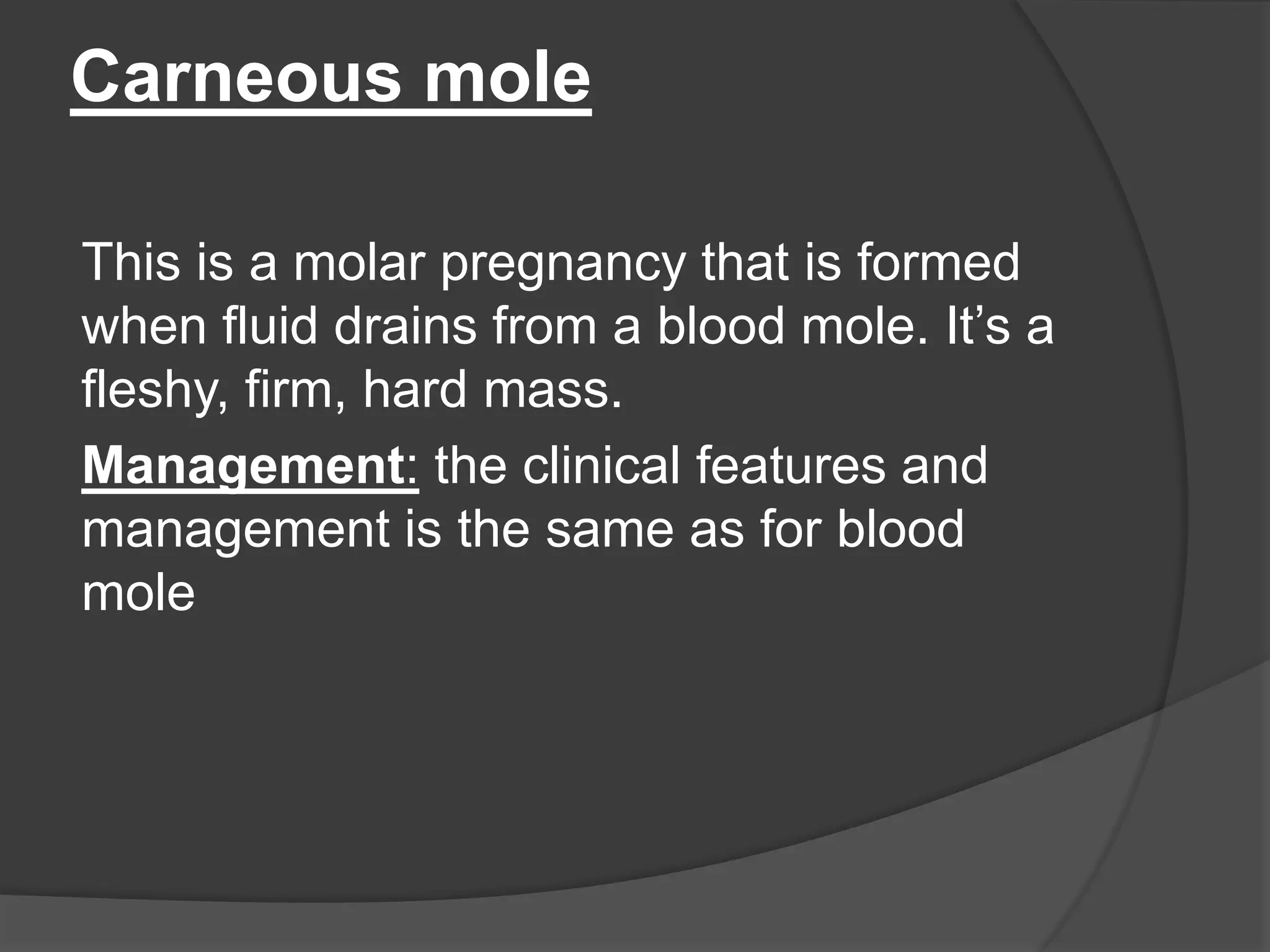
Carneous mole
This is a molar pregnancy that is formed
when fluid drains from a blood mole. It’s a
fleshy, firm, hard mass.
Management: the clinical features and
management is the same as for blood
mole
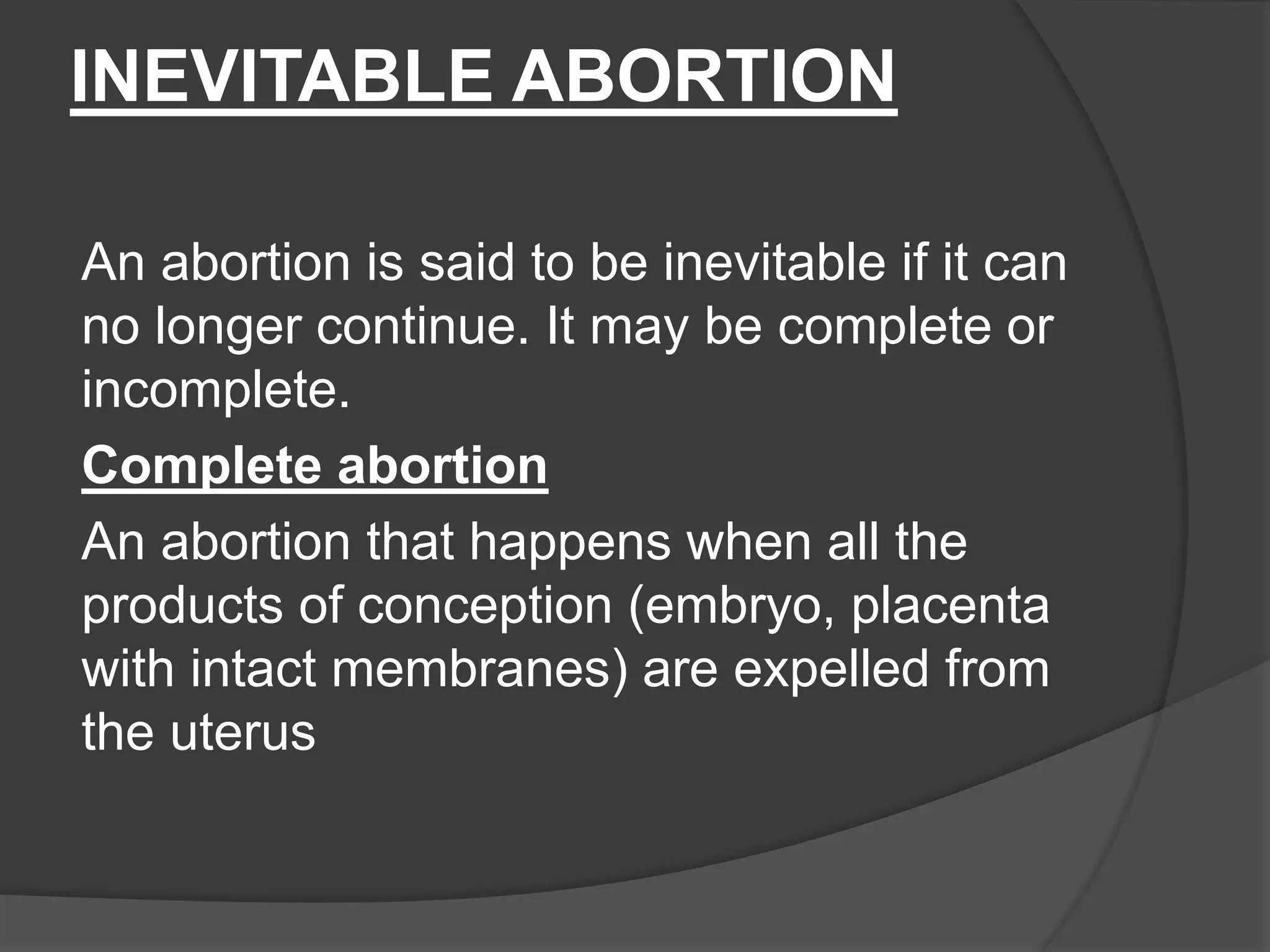
INEVITABLE ABORTION
An abortion is said to be inevitable if it can
no longer continue. It may be complete or
incomplete.
Complete abortion
An abortion that happens when all the
products of conception (embryo, placenta
with intact membranes) are expelled from
the uterus
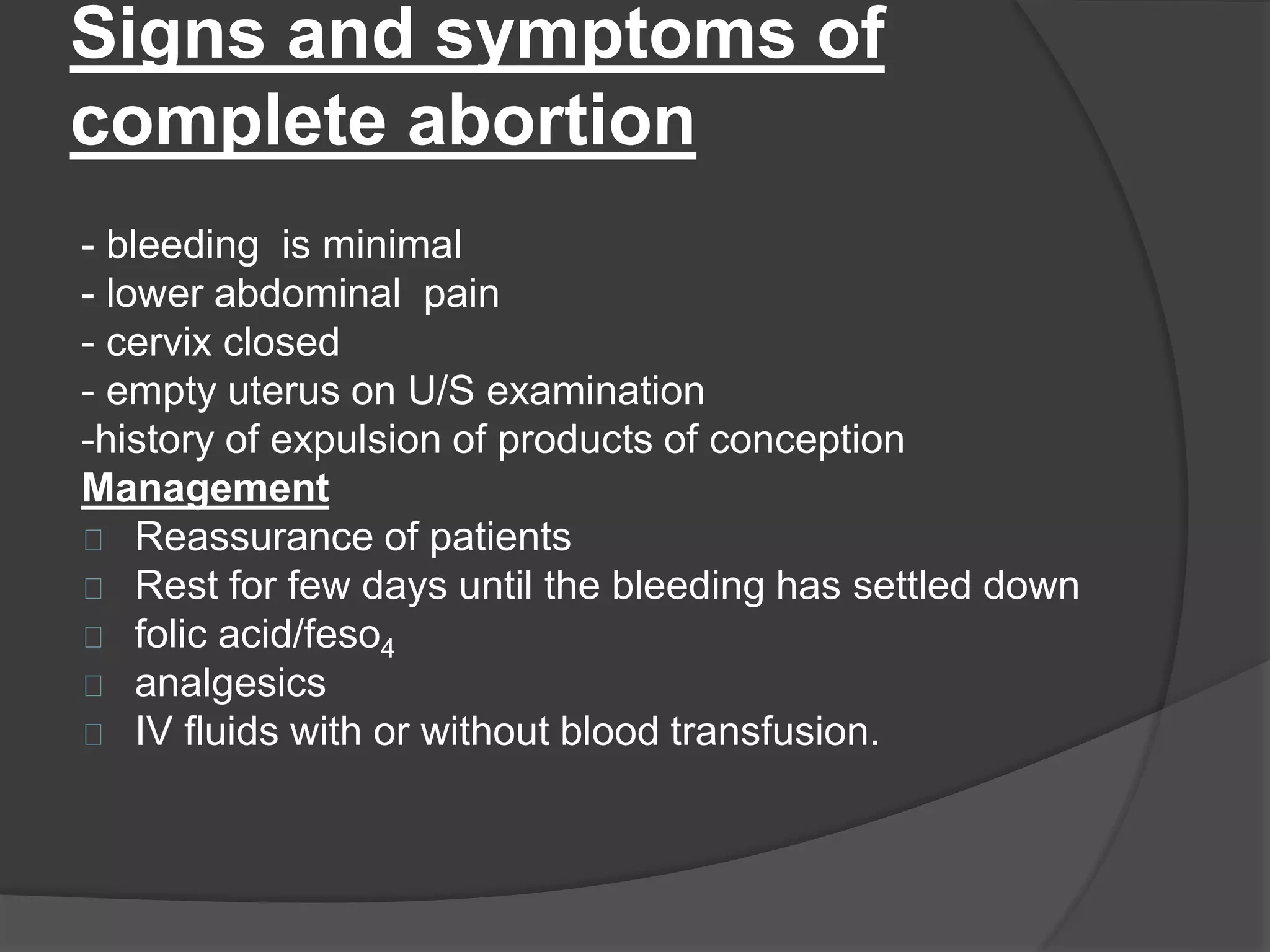
Signs and symptoms of
complete abortion
- bleeding is minimal
- lower abdominal pain
- cervix closed
- empty uterus on U/S examination
-history of expulsion of products of conception
Management
Reassurance of patients
Rest for few days until the bleeding has settled down
folic acid/feso4
analgesics
IV fluids with or without blood transfusion.
Incomplete abortion
An abortion in which part of the products of
conception (usually the foetus) is passed, while
the placenta and membranes are retained.
Clinical features
-profuse bleeding
-Abdominal pains and backache
-Signs of shock such as weak and rapid pulse, -
hypotension, cyanosis, unconsciousness,
-dilated cervix
-history of passing something. –
-retained products of conception on U/S scan
Management of incomplete
abortion
- assessment of general condition
- blood sample for blood group, RH factor,
and CBC
- removal of POC if felt in cervical canal
- ergometrine 0.5mg IV or IM to ↓ blood
loss
- IV fluids with or without blood
transfusion.
-antibiotics and analgesics
-sedation to relieve anxiety
HABITUAL OR RECURRENT
ABORTION
This occurs when a patient has experienced 3
or more consecutive spontaneous abortions,
usually after 14 weeks gestation. There is
usually no warning signs but the sudden
rapture of membranes and expulsion of
abortus occurs after a gradual painless dilation
of the internal cervical os. The cause is usually
mechanical e.g. uterine abnormality or cervical
incompetence. May also be due to
psychological, immunological, infective, or
chromosomal causes. Manage the patient
according to
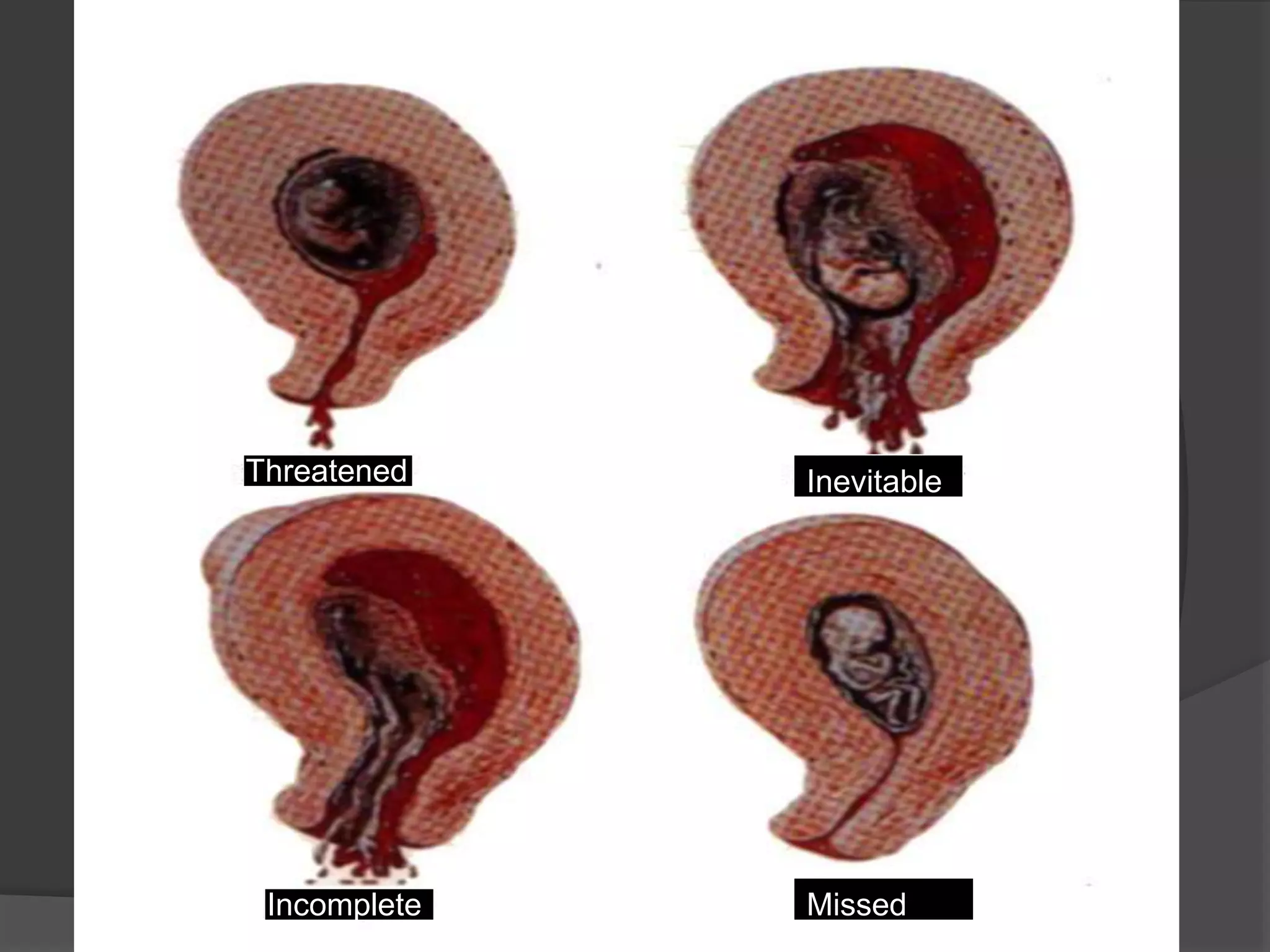
Threatened Abortion Inevitable
Incomplete Missed
INDUCED ABORTION
This is the deliberate termination of pregnancy
for various reasons such as threat to the life of
the pregnant woman or for social reason. It can
be therapeutic or criminal abortion.
THERAPEUTIC
ABORTIONAn abortion performed by qualified trained
medical doctor, for a valid medical reason.
The procedure must be performed only in
the interest of the mother’s life and her
total well-being. It is carried out in a
hospital where haemorrhage can be
effectively controlled and resuscitative
facilities at hand, and where aseptic
measures are always taken. The consent
of the medical superintendent, patient and
her husband or guardian if less than 18 is
required by law.
Procedures used in
therapeutic abortions
Vacuum Aspiration-uterus is vacuumed
with a syringe through a dilated cervix to
remove conceptus, placenta and
endometrial tissue. Also called menstrual
aspiration
Dilation and Evacuation (D & E) removal
of fetus, conceptus and placenta by a
suction curettage through a dilated cervix.
Prostaglandin or Saline Administration
Dilation and Curettage (D & C)-cramping
fetus, conceptus and placenta using an
instrument called a curette through a
dilated cervix
Criminal abortion
This is an abortion which is illegally procured. It
may be performed by an unqualified person
under unhygienic conditions, utilizing a variety
of methods. This abortion is punishable by law
in Zambia. Risks involved include:
-sepsis
-uterine perforation
-cervical laceration
-haemorrhage.
-acute renal failure
-shock and death.
-infertility
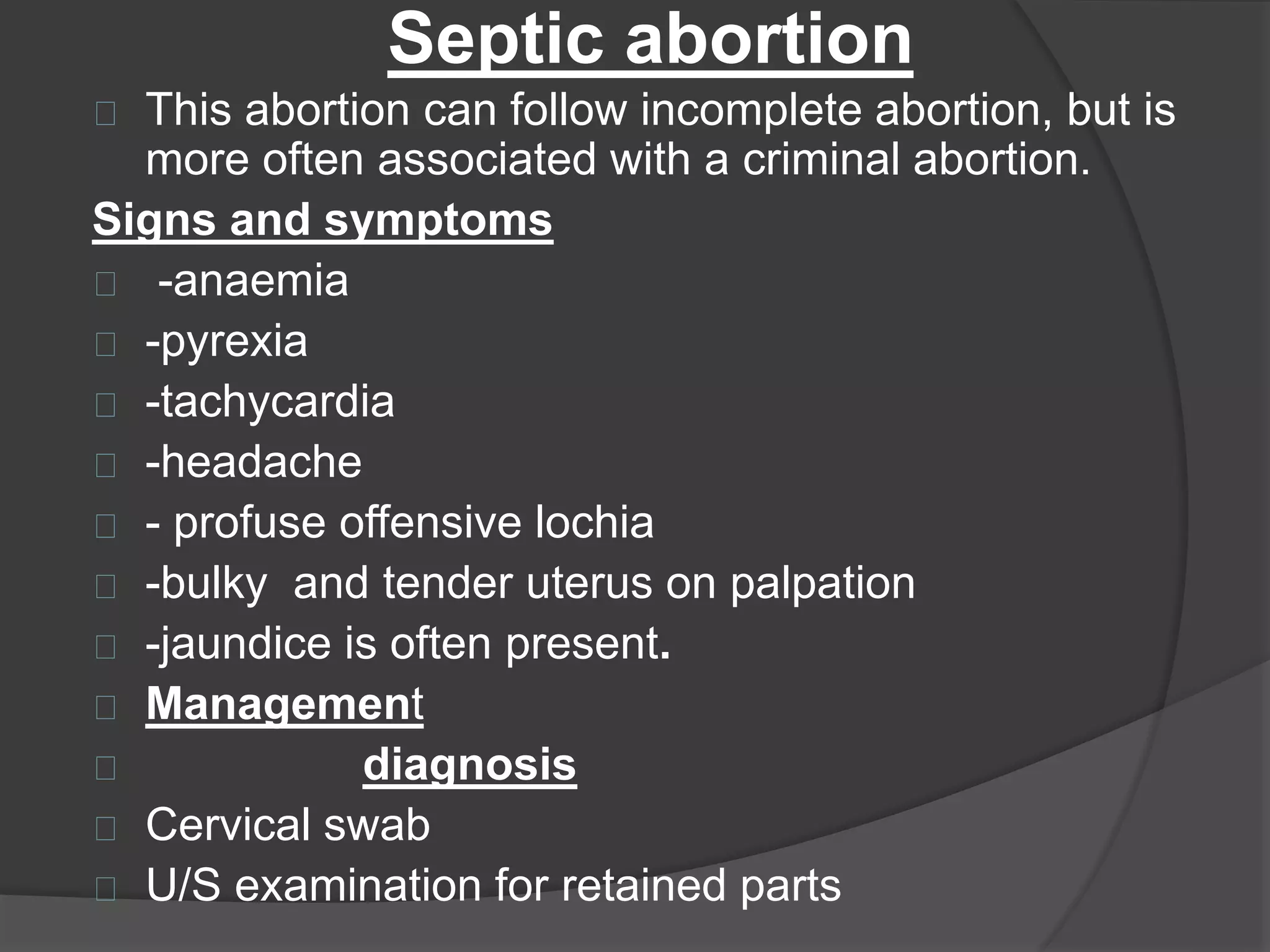
Septic abortion
This abortion can follow incomplete abortion, but is
more often associated with a criminal abortion.
Signs and symptoms
-anaemia
-pyrexia
-tachycardia
-headache
- profuse offensive lochia
-bulky and tender uterus on palpation
-jaundice is often present.
Management
diagnosis
Cervical swab
U/S examination for retained parts
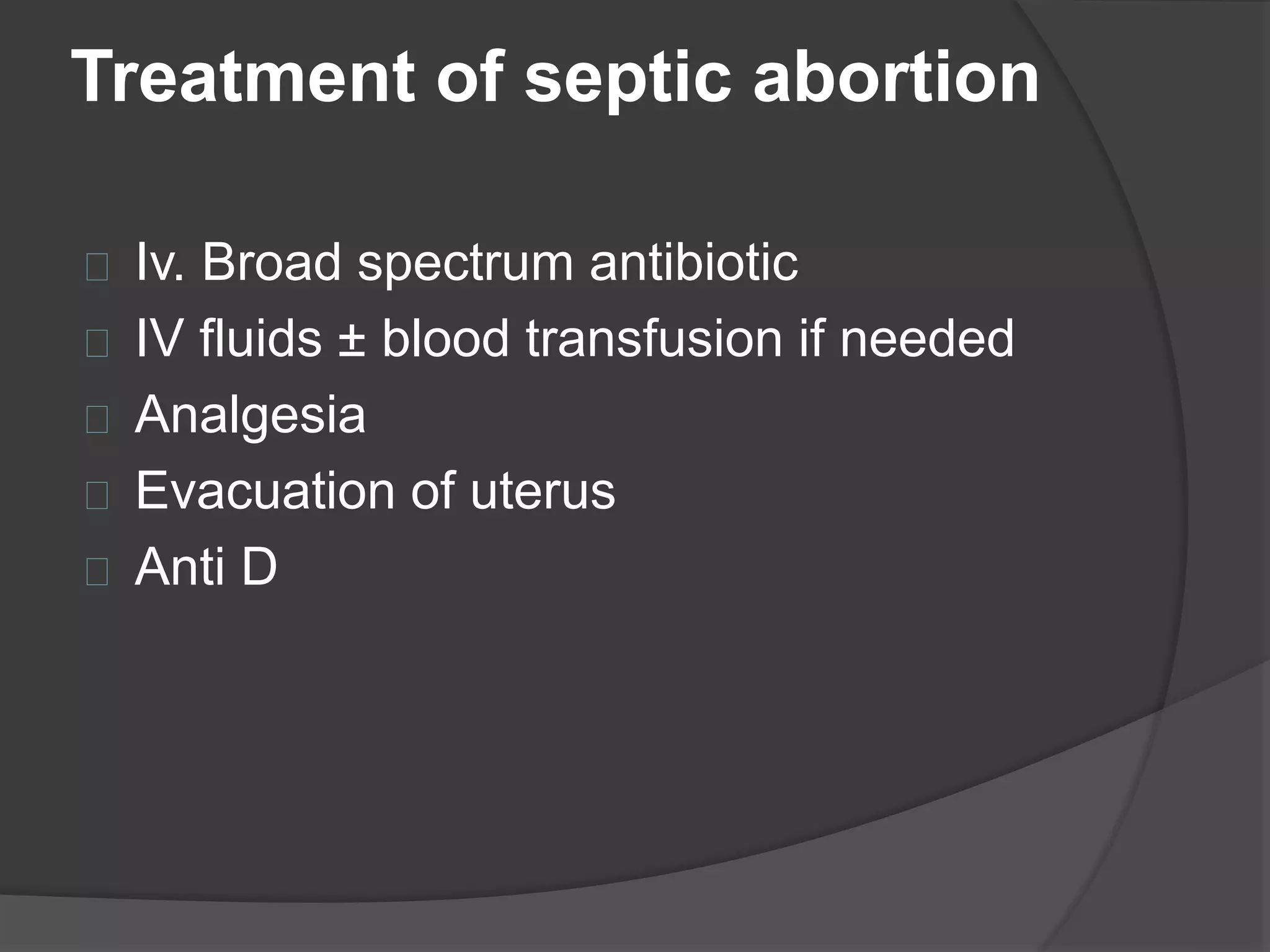
Treatment of septic abortion
Iv. Broad spectrum antibiotic
IV fluids ± blood transfusion if needed
Analgesia
Evacuation of uterus
Anti D
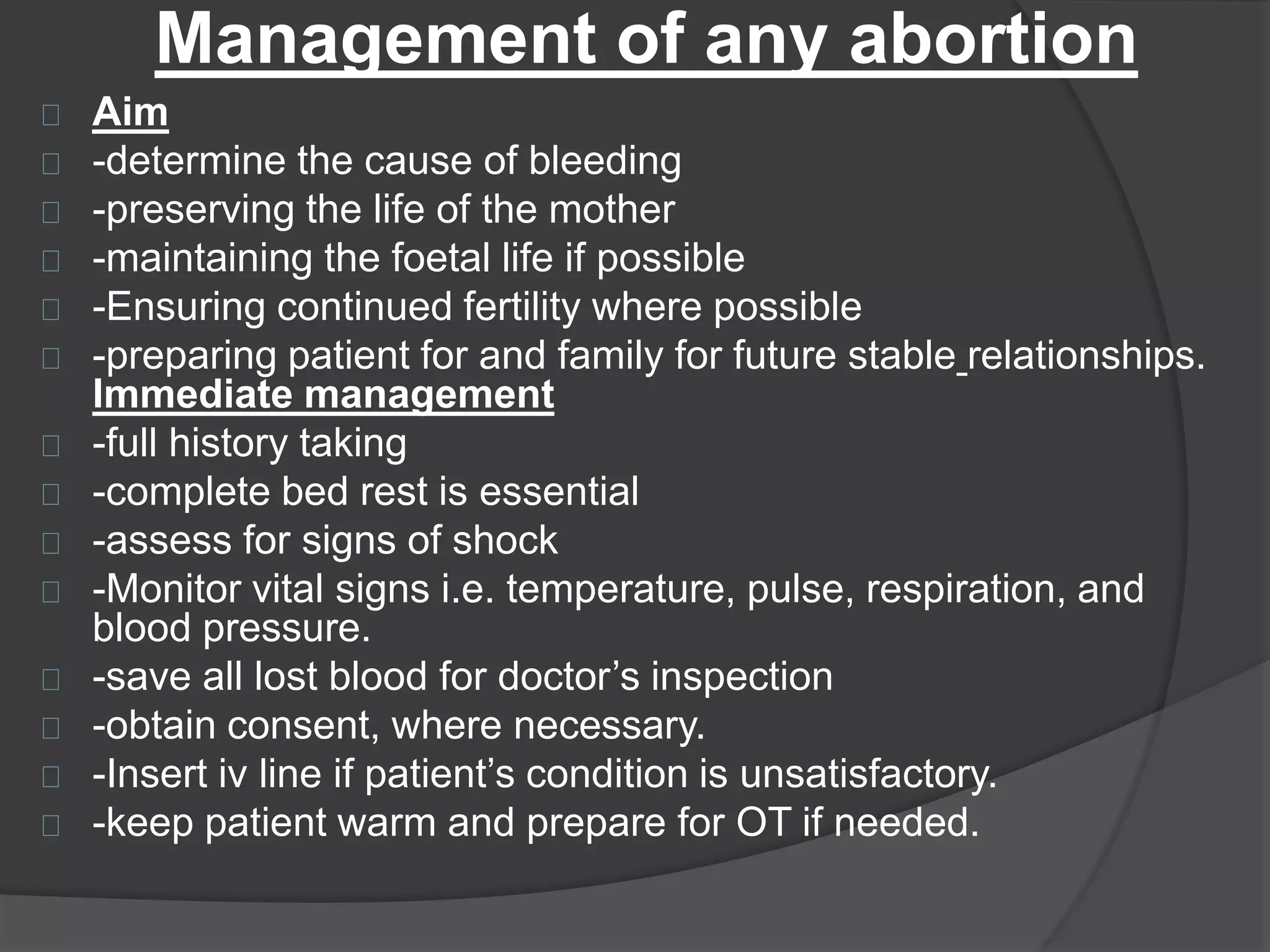
Management of any abortion
Aim
-determine the cause of bleeding
-preserving the life of the mother
-maintaining the foetal life if possible
-Ensuring continued fertility where possible
-preparing patient for and family for future stable relationships.
Immediate management
-full history taking
-complete bed rest is essential
-assess for signs of shock
-Monitor vital signs i.e. temperature, pulse, respiration, and
blood pressure.
-save all lost blood for doctor’s inspection
-obtain consent, where necessary.
-Insert iv line if patient’s condition is unsatisfactory.
-keep patient warm and prepare for OT if needed.
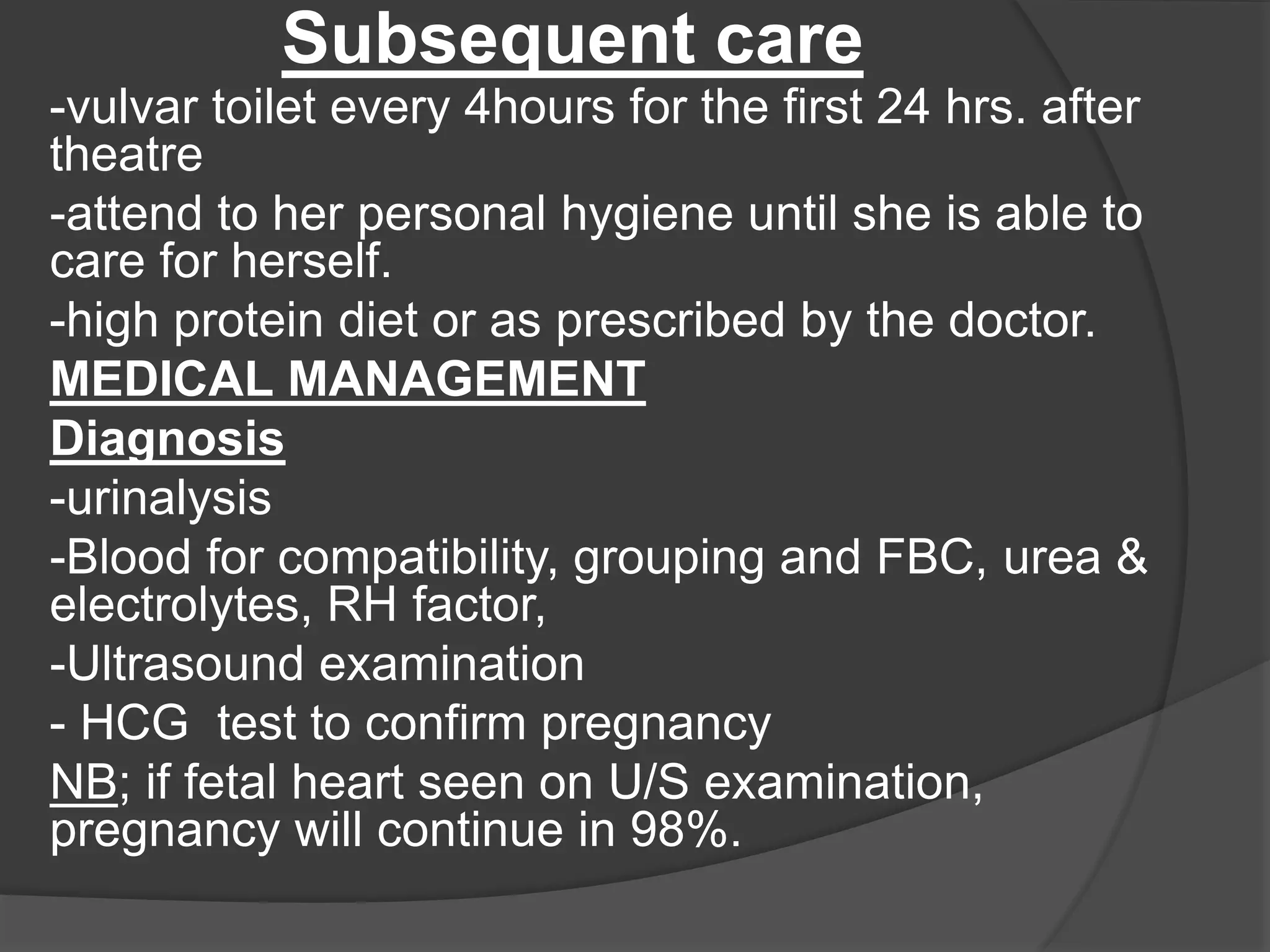
Subsequent care
-vulvar toilet every 4hours for the first 24 hrs. after
theatre
-attend to her personal hygiene until she is able to
care for herself.
-high protein diet or as prescribed by the doctor.
MEDICAL MANAGEMENT
Diagnosis
-urinalysis
-Blood for compatibility, grouping and FBC, urea &
electrolytes, RH factor,
-Ultrasound examination
- HCG test to confirm pregnancy
NB; if fetal heart seen on U/S examination,
pregnancy will continue in 98%.
treatment
-sedation to relieve anxiety
-analgesics to relieve pain
-broad spectrum antibiotics
-give anti D gamma globulin if rhesus is negative
-oxytocin or prostaglandin infusion to terminate
the pregnancy or evacuate products of
conception.
-insertion of shirodkar suture to save the
pregnancy where possible
Nursing management
Nursing Diagnosis
•Risk for fluid volume deficit d/t maternal
bleeding
Nursing Interventions
•Report any tachycardia, hypotension,
diaphoresis, or pallor, indicating hemorrhage
and shock.
•Draw blood for type and screen for possible
blood administration.
•Establish and maintain an IV with large-bore
catheter for possible transfusion and large
quantities of fluid replacement.
•Anticipatory grieving d/t loss of pregnancy, cause
of abortion, future childbearing
Nursing Diagnosis
Nursing Interventions
•Assess the reaction of patient and support
person, and provide information regarding current
status, as needed.
•Encourage the patient to discuss feelings about
the loss of the baby’ include effects on relationship
with the father.
•Do not minimize the loss by focusing on future
childbearing; rather acknowledge the loss and
allow grieving.
•Providing time alone for the couple to discuss
their feelings.
Nursing Diagnosis
•Risk for infection d/t dilated cervix
and open uterine vessels
Nursing Interventions
•Evaluate temperature q 4H if normal, and every
2H if elevated.
•Check vaginal drainage for increased amount
and odor, which may indicate infection.
•Instruct on and encourage perineal care after
each urination and defecation to prevent
contamination.
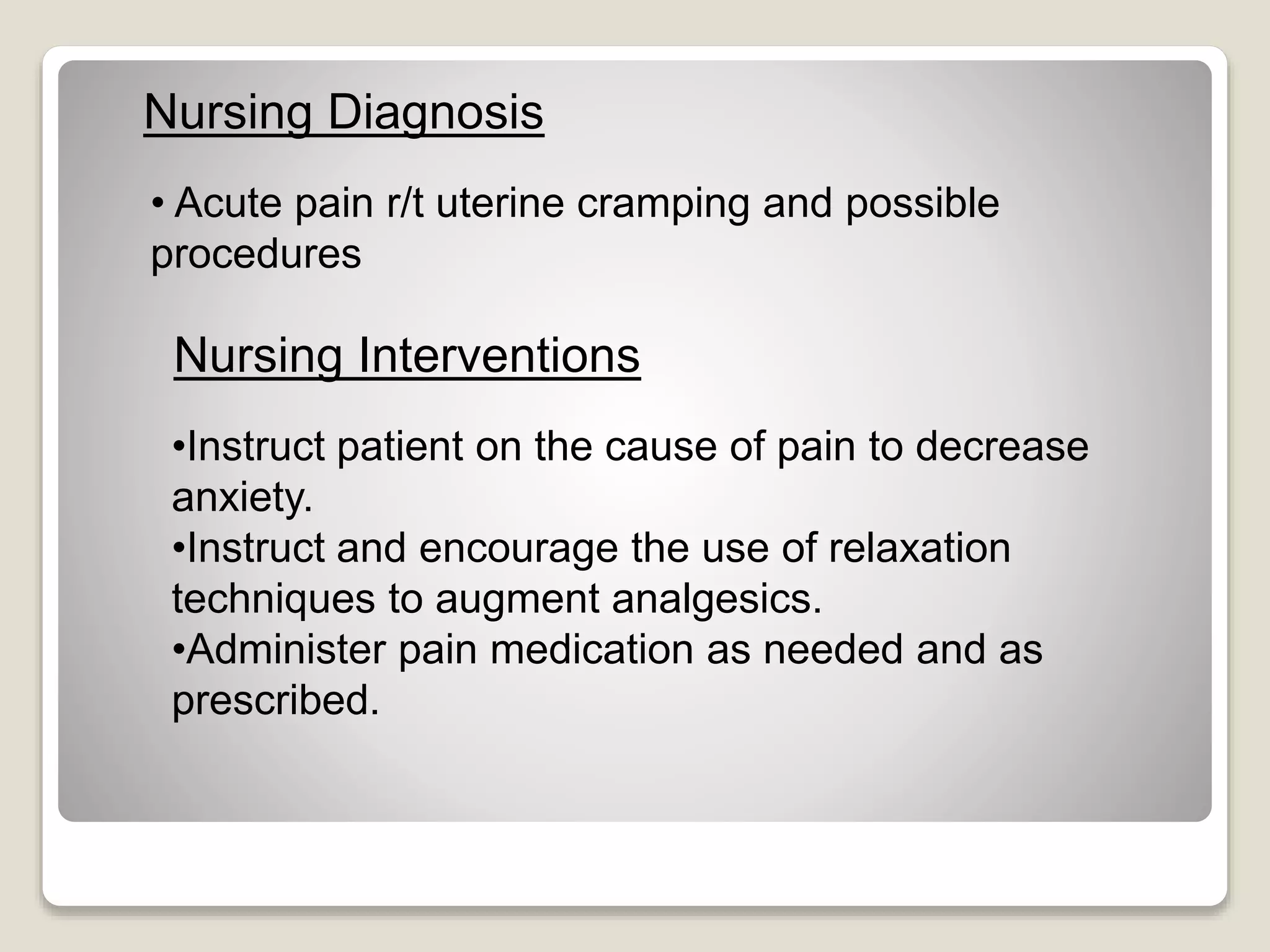
• Acute pain r/t uterine cramping and possible
procedures
Nursing Diagnosis
Nursing Interventions
•Instruct patient on the cause of pain to decrease
anxiety.
•Instruct and encourage the use of relaxation
techniques to augment analgesics.
•Administer pain medication as needed and as
prescribed.
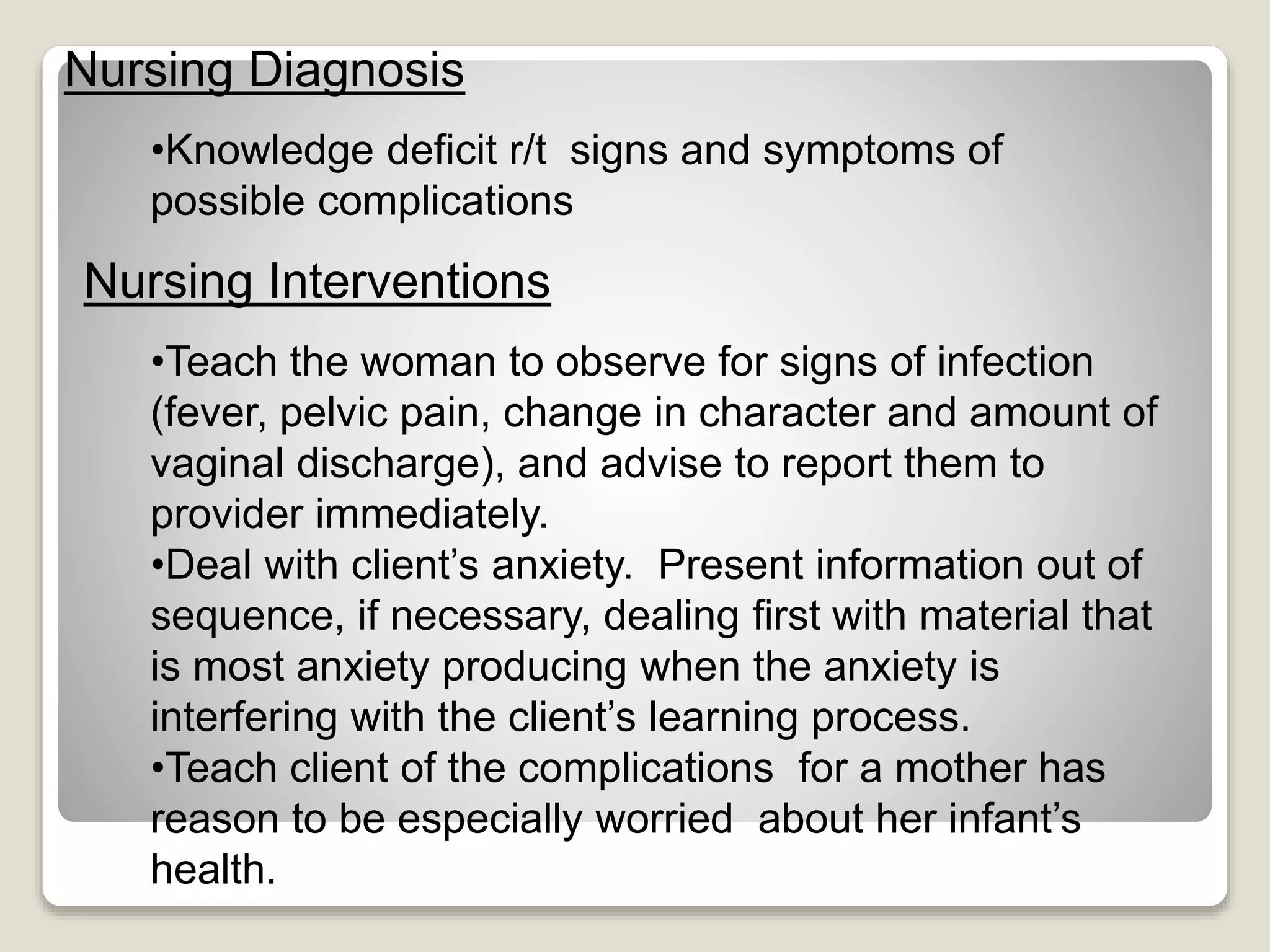
Nursing Diagnosis
Nursing Interventions
•Knowledge deficit r/t signs and symptoms of
possible complications
•Teach the woman to observe for signs of infection
(fever, pelvic pain, change in character and amount of
vaginal discharge), and advise to report them to
provider immediately.
•Deal with client’s anxiety. Present information out of
sequence, if necessary, dealing first with material that
is most anxiety producing when the anxiety is
interfering with the client’s learning process.
•Teach client of the complications for a mother has
reason to be especially worried about her infant’s
health.
COMPLICATIONS
Uterine infection
Septicemia
Hemorrhage
Disseminated Intravascular
Coagulation(DIC) in missed abortion
Infertility
Shock
Renal failure
Hydatidiform mole
death
Questions
Define abortion?
What causes abortions?
Classify abortions using a tree diagram
What is a spontaneous abortion? Define the different types
of spontaneous abortion?
What is an induced abortion?
Differentiate therapeutic from criminal abortion
What is a septic abortion and how would you manage it?
Name 4 procedures done in induced abortion
Describe the general management of abortions
State five complications of abortions
Thank you for listening

Abortion -what it is

  • 1.
    abortions Presented by: Phiri Reagan- RN Student(BSc nursing)- UNZA
  • 2.
    OBJECTIVES: Define abortion. State causesof abortion Describe the different types of abortion using a tree diagram State the signs and symptoms of each type of abortion Describe the general management of a patient with an abortion
  • 3.
    Introduction Abortion has becomerampant all over the world. It is a common issue among the teenagers and adult women in the society. Issues relating to abortion has been on and generated a heated argument and distressing statistics concerning abortion have been documented. The peak time for abortions is between 6-12th week of pregnancy when the level of progesterone secreted by the corpus luteum falls and the placental hormone has not reached its sufficiently high level to sustain the conceptus. Definitions of abortion vary across and within countries as well as among different institutions.
  • 4.
    What is abortion? -Abortionis the interruption of pregnancy before the 28th week, after which the fetus is said to be viable( Zambian law) - Abortion is the expulsion of the conceptus before 20- 22 completed weeks of gestation, or a fetus weighing less than 500g.( WHO)
  • 5.
    Types of Abortion SpontaneousAbortion Induced Abortion
  • 6.
    ABORTION SPONTANEOUS THREATENED MISSED INEVITABLE BLOOD MOLE COMPLETEINCOMPLETE CARNEOUS MOLE INDUCED THERAPEUTIC CRIMINAL SEPTIC May go to term HABITUAL
  • 7.
    causes -Disease or mal-developmentof the ovum and the fetus. -Defective implantation of the trophoblast which results in the inability to synthesize progesterone. -hydatidiform mole -metabolic disorders such as DM, anemia, thyroid disease, renal disease and/or failure, hypertensive disorders. -acute infections such as influenza, rubella, malaria. Toxoplasmosis. -uterine abnormalities: myomas, bi-cornuate uterus, double uterus and vagina. Infantile uterus ,fibroids
  • 8.
    Causes--cont. -cervical incompetence causedby trauma due to previous D & C or cone biopsy. -extreme emotional stress result in the release of pituitary hormones which affect uterine function. -certain toxic drugs and substances e.g. anesthetic gases, antimetabolic drugs, oxytocics and herbs. ABO and Rhesus incompatibility.
  • 9.
  • 10.
    Spontaneous abortion Spontaneous abortion/ miscarriage: This is commonly referred to as miscarriage. It occurs when pregnancy ends before the baby has any chance of survival. Most spontaneous abortion occurs in the first 12 weeks of pregnancy. Spontaneous abortion can be divided into Threatened abortion Missed abortion Blood mole and carneous mole Inevitable abortion, which can be complete or incomplete. Habitual or recurrent abortion ·.
  • 11.
    An abortion characterizedby slight bleeding through an un- dilated cervix. Signs and symptoms - vaginal bleeding (usually slight) - slight abdominal cramps - internal os is closed - viable fetus on U/S examination Threatened abortion
  • 12.
    Management of athreatened abortion - Reassurance of patients - Rest for few days until the bleeding has settled down - may require progesterone supplementation - folic acid - anti D if RH negative
  • 13.
    MISSED ABORTION Missed abortion:an abortion that occurs when the fetus dies and is retained in utero, together with the placenta and membranes. Signs and symptoms - Disappearance of symptoms of pregnancy -Size of uterus < duration of gestation - U/S shows no signs of fetal life -breasts soften
  • 14.
    Management of missed abortions Diagnosis: -bloodsample for plasma fibrinogen to rule out DIC Treatment -uterine evacuation if less than 12 weeks pregnant -give oxytocin or prostaglandin infusion if patient is more than 12 weeks pregnant.
  • 15.
    Blood mole This isa condition that occurs as a complication of a missed abortion. The ovum dies in utero, and the decidua capsularis remains intact. The zygote is surrounded by layers of blood, due to bleeding between the gestational sac and the uterine wall.
  • 16.
    Signs and symptomsof blood mole -usually occurs before 12 weeks of gestation. -brownish vaginal discharge -signs of pregnancy disappear -uterus larger than dates. -cramping lower abdominal pains
  • 17.
    Management of bloodmole -evacuation of the uterus if less than 12 weeks pregnant -give oxytocics or prostaglandins to abort the mole if condition is diagnosed after 12 weeks pregnant
  • 18.
    Carneous mole This isa molar pregnancy that is formed when fluid drains from a blood mole. It’s a fleshy, firm, hard mass. Management: the clinical features and management is the same as for blood mole
  • 19.
    INEVITABLE ABORTION An abortionis said to be inevitable if it can no longer continue. It may be complete or incomplete. Complete abortion An abortion that happens when all the products of conception (embryo, placenta with intact membranes) are expelled from the uterus
  • 20.
    Signs and symptomsof complete abortion - bleeding is minimal - lower abdominal pain - cervix closed - empty uterus on U/S examination -history of expulsion of products of conception Management Reassurance of patients Rest for few days until the bleeding has settled down folic acid/feso4 analgesics IV fluids with or without blood transfusion.
  • 21.
    Incomplete abortion An abortionin which part of the products of conception (usually the foetus) is passed, while the placenta and membranes are retained. Clinical features -profuse bleeding -Abdominal pains and backache -Signs of shock such as weak and rapid pulse, - hypotension, cyanosis, unconsciousness, -dilated cervix -history of passing something. – -retained products of conception on U/S scan
  • 22.
    Management of incomplete abortion -assessment of general condition - blood sample for blood group, RH factor, and CBC - removal of POC if felt in cervical canal - ergometrine 0.5mg IV or IM to ↓ blood loss - IV fluids with or without blood transfusion. -antibiotics and analgesics -sedation to relieve anxiety
  • 23.
    HABITUAL OR RECURRENT ABORTION Thisoccurs when a patient has experienced 3 or more consecutive spontaneous abortions, usually after 14 weeks gestation. There is usually no warning signs but the sudden rapture of membranes and expulsion of abortus occurs after a gradual painless dilation of the internal cervical os. The cause is usually mechanical e.g. uterine abnormality or cervical incompetence. May also be due to psychological, immunological, infective, or chromosomal causes. Manage the patient according to
  • 24.
  • 25.
    INDUCED ABORTION This isthe deliberate termination of pregnancy for various reasons such as threat to the life of the pregnant woman or for social reason. It can be therapeutic or criminal abortion.
  • 26.
    THERAPEUTIC ABORTIONAn abortion performedby qualified trained medical doctor, for a valid medical reason. The procedure must be performed only in the interest of the mother’s life and her total well-being. It is carried out in a hospital where haemorrhage can be effectively controlled and resuscitative facilities at hand, and where aseptic measures are always taken. The consent of the medical superintendent, patient and her husband or guardian if less than 18 is required by law.
  • 27.
    Procedures used in therapeuticabortions Vacuum Aspiration-uterus is vacuumed with a syringe through a dilated cervix to remove conceptus, placenta and endometrial tissue. Also called menstrual aspiration Dilation and Evacuation (D & E) removal of fetus, conceptus and placenta by a suction curettage through a dilated cervix. Prostaglandin or Saline Administration Dilation and Curettage (D & C)-cramping fetus, conceptus and placenta using an instrument called a curette through a dilated cervix
  • 28.
    Criminal abortion This isan abortion which is illegally procured. It may be performed by an unqualified person under unhygienic conditions, utilizing a variety of methods. This abortion is punishable by law in Zambia. Risks involved include: -sepsis -uterine perforation -cervical laceration -haemorrhage. -acute renal failure -shock and death. -infertility
  • 29.
    Septic abortion This abortioncan follow incomplete abortion, but is more often associated with a criminal abortion. Signs and symptoms -anaemia -pyrexia -tachycardia -headache - profuse offensive lochia -bulky and tender uterus on palpation -jaundice is often present. Management diagnosis Cervical swab U/S examination for retained parts
  • 30.
    Treatment of septicabortion Iv. Broad spectrum antibiotic IV fluids ± blood transfusion if needed Analgesia Evacuation of uterus Anti D
  • 31.
    Management of anyabortion Aim -determine the cause of bleeding -preserving the life of the mother -maintaining the foetal life if possible -Ensuring continued fertility where possible -preparing patient for and family for future stable relationships. Immediate management -full history taking -complete bed rest is essential -assess for signs of shock -Monitor vital signs i.e. temperature, pulse, respiration, and blood pressure. -save all lost blood for doctor’s inspection -obtain consent, where necessary. -Insert iv line if patient’s condition is unsatisfactory. -keep patient warm and prepare for OT if needed.
  • 32.
    Subsequent care -vulvar toiletevery 4hours for the first 24 hrs. after theatre -attend to her personal hygiene until she is able to care for herself. -high protein diet or as prescribed by the doctor. MEDICAL MANAGEMENT Diagnosis -urinalysis -Blood for compatibility, grouping and FBC, urea & electrolytes, RH factor, -Ultrasound examination - HCG test to confirm pregnancy NB; if fetal heart seen on U/S examination, pregnancy will continue in 98%.
  • 33.
    treatment -sedation to relieveanxiety -analgesics to relieve pain -broad spectrum antibiotics -give anti D gamma globulin if rhesus is negative -oxytocin or prostaglandin infusion to terminate the pregnancy or evacuate products of conception. -insertion of shirodkar suture to save the pregnancy where possible
  • 34.
  • 35.
    Nursing Diagnosis •Risk forfluid volume deficit d/t maternal bleeding Nursing Interventions •Report any tachycardia, hypotension, diaphoresis, or pallor, indicating hemorrhage and shock. •Draw blood for type and screen for possible blood administration. •Establish and maintain an IV with large-bore catheter for possible transfusion and large quantities of fluid replacement.
  • 36.
    •Anticipatory grieving d/tloss of pregnancy, cause of abortion, future childbearing Nursing Diagnosis Nursing Interventions •Assess the reaction of patient and support person, and provide information regarding current status, as needed. •Encourage the patient to discuss feelings about the loss of the baby’ include effects on relationship with the father. •Do not minimize the loss by focusing on future childbearing; rather acknowledge the loss and allow grieving. •Providing time alone for the couple to discuss their feelings.
  • 37.
    Nursing Diagnosis •Risk forinfection d/t dilated cervix and open uterine vessels Nursing Interventions •Evaluate temperature q 4H if normal, and every 2H if elevated. •Check vaginal drainage for increased amount and odor, which may indicate infection. •Instruct on and encourage perineal care after each urination and defecation to prevent contamination.
  • 38.
    • Acute painr/t uterine cramping and possible procedures Nursing Diagnosis Nursing Interventions •Instruct patient on the cause of pain to decrease anxiety. •Instruct and encourage the use of relaxation techniques to augment analgesics. •Administer pain medication as needed and as prescribed.
  • 39.
    Nursing Diagnosis Nursing Interventions •Knowledgedeficit r/t signs and symptoms of possible complications •Teach the woman to observe for signs of infection (fever, pelvic pain, change in character and amount of vaginal discharge), and advise to report them to provider immediately. •Deal with client’s anxiety. Present information out of sequence, if necessary, dealing first with material that is most anxiety producing when the anxiety is interfering with the client’s learning process. •Teach client of the complications for a mother has reason to be especially worried about her infant’s health.
  • 40.
    COMPLICATIONS Uterine infection Septicemia Hemorrhage Disseminated Intravascular Coagulation(DIC)in missed abortion Infertility Shock Renal failure Hydatidiform mole death
  • 41.
    Questions Define abortion? What causesabortions? Classify abortions using a tree diagram What is a spontaneous abortion? Define the different types of spontaneous abortion? What is an induced abortion? Differentiate therapeutic from criminal abortion What is a septic abortion and how would you manage it? Name 4 procedures done in induced abortion Describe the general management of abortions State five complications of abortions
  • 42.
    Thank you forlistening