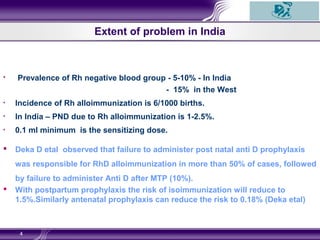
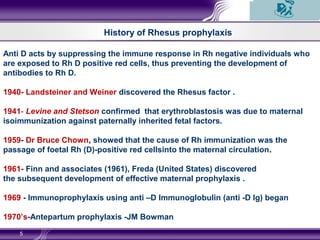
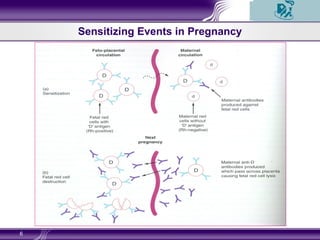
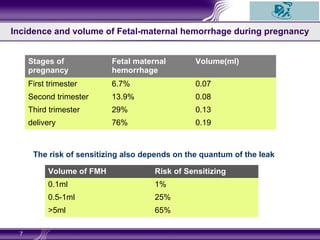
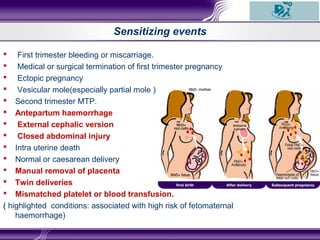
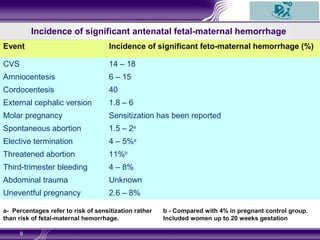
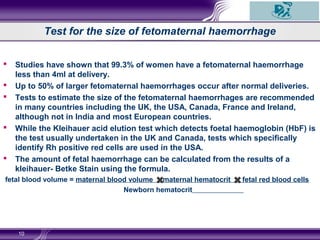
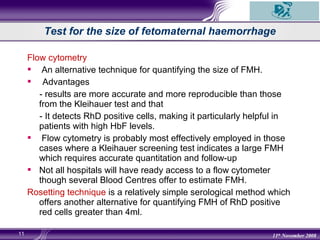
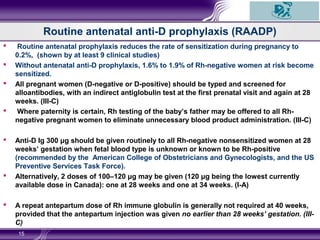
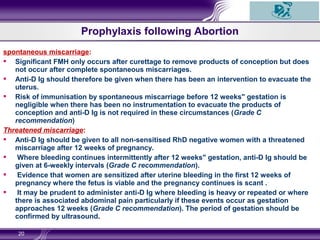
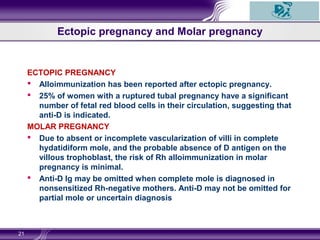
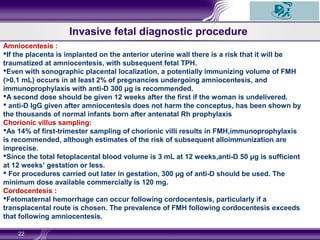
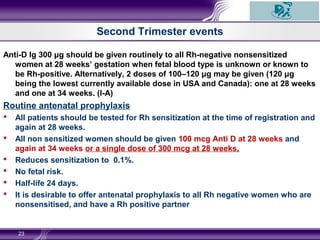
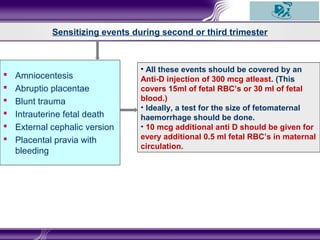
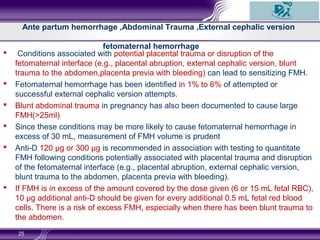
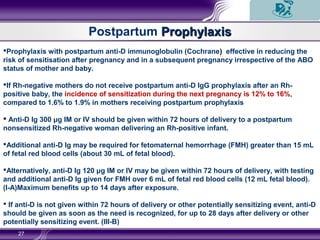
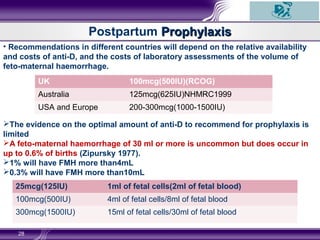
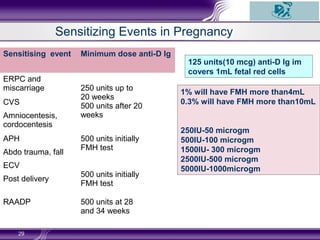
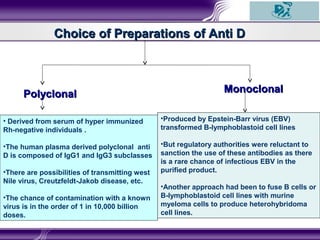
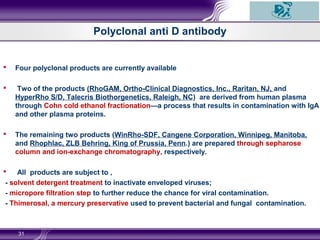
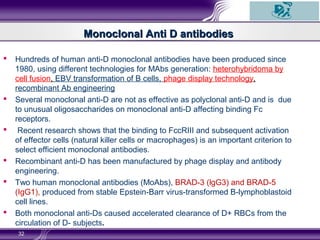
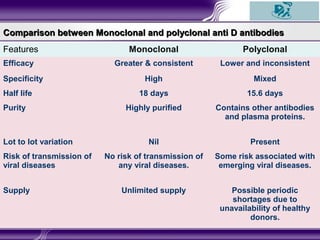
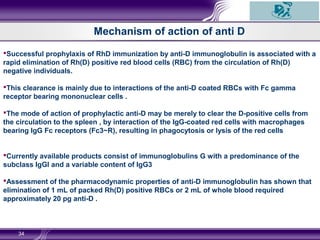
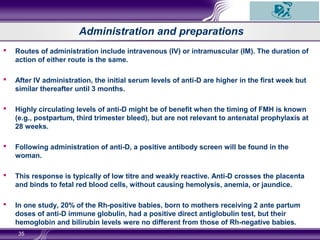
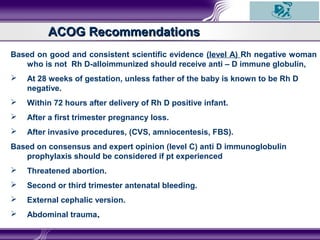
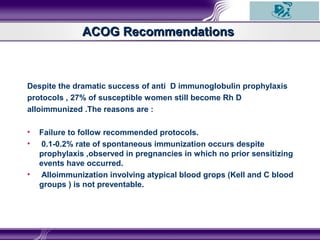
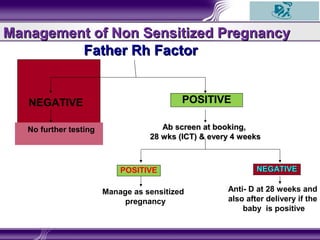
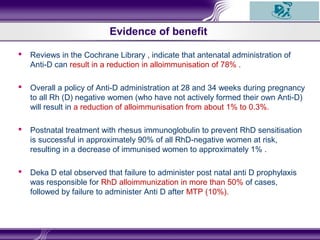
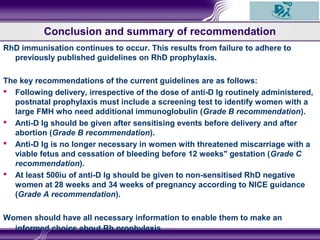
Anti-D prophylaxis involves administering Anti-D immunoglobulin to Rh-negative women to prevent the production of antibodies against Rh-positive blood cells. This prevents hemolytic disease of the newborn. Anti-D immunoglobulin suppresses the immune response and prevents sensitization. Routine antenatal anti-D prophylaxis reduces the rate of sensitization during pregnancy to 0.2% by providing anti-D at 28 weeks even if fetal blood type is unknown. First trimester events like bleeding or termination procedures also require anti-D administration to prevent sensitization. The document discusses the history, mechanisms, testing and management of Rh sensitization and anti-D prophylaxis.