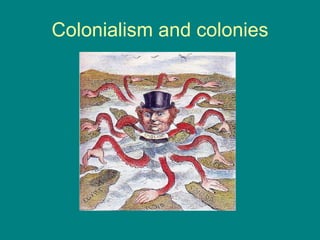
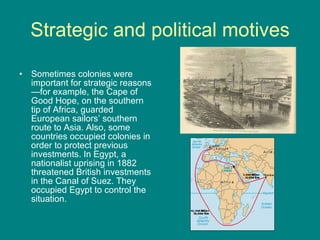
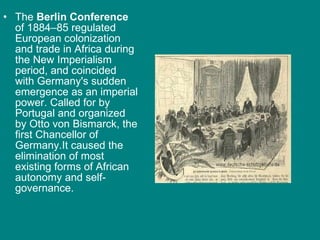
Colonialism involved one country dominating another through military force to establish control over territory and people. There were economic, religious, and strategic motivations for colonialism. Economically, colonies provided markets, raw materials, and investment opportunities. Religiously, countries sought to spread their beliefs. Strategically, colonies protected trade routes and investments. The 1884-85 Berlin Conference regulated European colonization in Africa, eliminating African autonomy and dividing the continent between European powers. Colonial rule had significant negative consequences for colonized peoples through exploitation of resources and labor forces, destruction of local industries, slavery, and institutionalized racism.







![AP World History - Lesson 26 [PBA]: Imperialism](https://cdn.slidesharecdn.com/ss_thumbnails/apwh-20-150205072113-conversion-gate02-thumbnail.jpg?width=640&height=640&fit=bounds)


