
Immunotherapy- the promises
and pitfalls
Lydia Warburton
Medical Oncology Fellow SCGH
Immunotherapy
• Melanoma has led the way in terms of
development of immunotherapy
• Now approved for bladder cancer, renal cell
cancer, lung cancer, non hodgkins lymphoma
and head and neck cancer.
The Past…..
• Prior to 2010 systemic treatment for advanced
melanoma was limited
• Response rates low, responses not durable
and no clear overall survival advantage
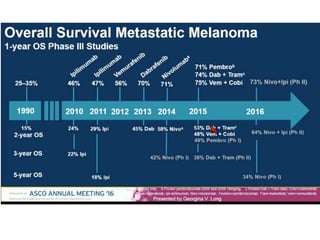
• For decades 1 years OS for stage IV melanoma
stood at 25-30%.
• No new FDA approved drugs from 1992-2011
• Until 2010 first line therapy of questionable
value over supportive care
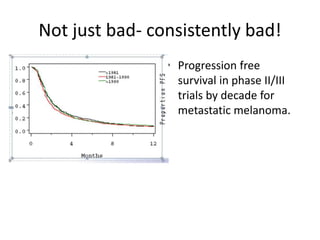
Not just bad- consistently bad!
• Progression free
survival in phase II/III
trials by decade for
metastatic melanoma.
2017
• We have come so far in the last 7 years…
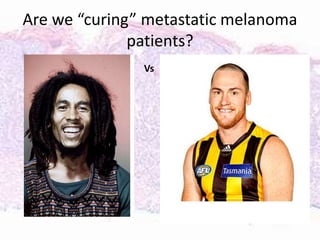
Are we “curing” metastatic melanoma
patients?
Vs
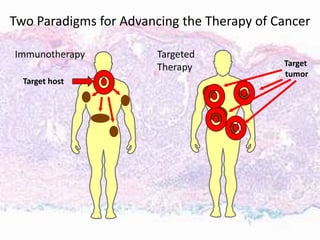
Two Paradigms for Advancing the Therapy of Cancer
Target host
Target
tumor
Immunotherapy Targeted
Therapy
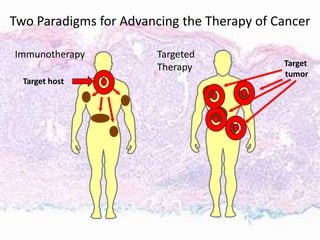
Two Paradigms for Advancing the Therapy of Cancer
Target host
Target
tumor
Immunotherapy Targeted
Therapy
Immunotherapy
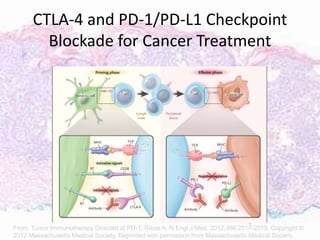
From: Tumor Immunotherapy Directed at PD-1; Ribas A. N Engl J Med. 2012;366:2517-2519. Copyright ©
2012 Massachusetts Medical Society. Reprinted with permission from Massachusetts Medical Society.
CTLA-4 and PD-1/PD-L1 Checkpoint
Blockade for Cancer Treatment
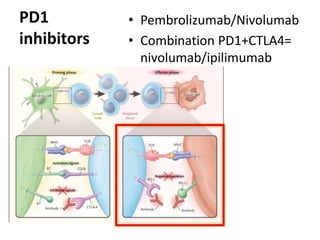
PD1
inhibitors
• Pembrolizumab/Nivolumab
• Combination PD1+CTLA4=
nivolumab/ipilimumab
Pembrolizumab
• Approved for use in 2014. Approved in >50
countries
• Superior to ipilimumab
• IV infusion
• Delivered three weekly
• Well tolerated (improved toxicity profile
compared to ipilimumab)
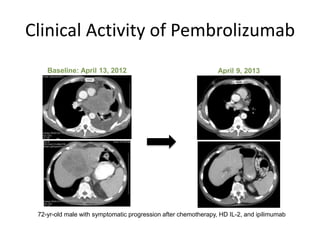
Clinical Activity of Pembrolizumab
Baseline: April 13, 2012
72-yr-old male with symptomatic progression after chemotherapy, HD IL-2, and ipilimumab
April 9, 2013
UCLA Health. Reproduced with permission.
Combination PD1/CTLA4 (nivolumab
and ipilimumab)
• Increased response rates
• Improved PFS
• Increased toxicity (>30% have to cease
therapy due to toxicity)
Toxicity and side effects of
immunotherapy
• Thyroid – hypo/hyper
• Endocrine- diabetes, hypophysitis
• Pneumonitis
• Colitis
• Hepatitis
• Nephritis
• Neurological
• Pancreatitis
Case studies
Case Study- ‘BOB’
• 62 yo male- referred to SCGH melanoma clinic
2013
• Lives in Toodyay
• Smoker- >40 pack years. No comorbid formal
respiratory diagnosis
• ECOG: 0
• No other significant past medical history
Background
• Unknown primary melanoma
• Presented with bilateral axillary nodal disease –
clinically detected- May 2013
• Underwent bilateral axillary dissection (7/11
involved lymph nodes involved on left, 1/11 on
right)
• Followed by post op RXT to left axilla
• Commenced on close surveillance
Background
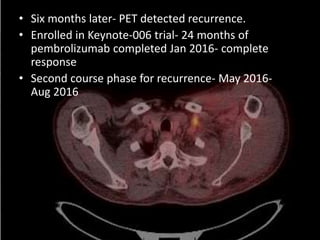
• Six months later- PET detected recurrence.
• Enrolled in Keynote-006 trial- 24 months of
pembrolizumab completed Jan 2016- complete
response
• Second course phase for recurrence- May 2016-
Aug 2016
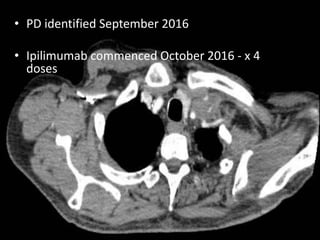
• PD identified September 2016
• Ipilimumab commenced October 2016 - x 4
doses
History of presenting complaint
• 29th December 2016
• Presents to ED- lethargy, fever, SOB at rest,
anorexia
• No coryzal symptoms, no chest pain, no
PND, no ankle swelling
• Exercise tolerance < 30m
Clinical examination
• Looked unwell
• SaO2: 80% RA 96% on 6L Oxygen
• RR: 30, BP: 100/65, HR: 95, Temp: 37.7
• Resp exam: Bibasal crepitations, no wheeze, normal
percussion note, no bronchial breathing
• CVS: JVPNE, no pedal oedema, HS dual, nil added.
• Rest of examination unremarkable.
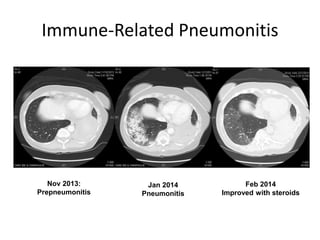
Immune-Related Pneumonitis
Nov 2013:
Prepneumonitis
Jan 2014
Pneumonitis
Feb 2014
Improved with steroids
Mr RE
• 45yo
• BRAF mutant metastatic melanoma.
• Started on dabrafenib and trametinib- good
disease control for one year
• Went to UK on holiday= acute left sided
weakness. Found to have new brain mets.
• Underwent neurosurgical resection of largest
met and returned to Aus
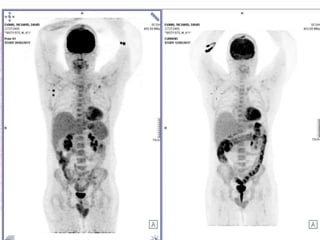
• Commenced on ipi/nivo
• Had 4 cycles of ipi/nivo
• Developed diarrhoea
• Advised to start gastro stop. No follow up plan
provided.
• Diarrhoea escalated to >8-10 x day. Mucousy.
• Admitted to ward
• Commenced on methylpred
• Weaned to oral steroids.
• Dose reduced but diarrhoea flared
• Underwent sigmoidoscopy= colitis confirmed
• Now on infliximab and steroids.
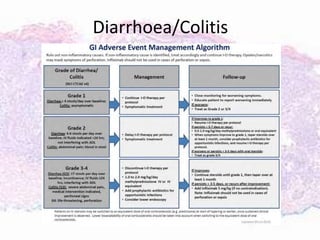
Diarrhoea/Colitis
Mr DG
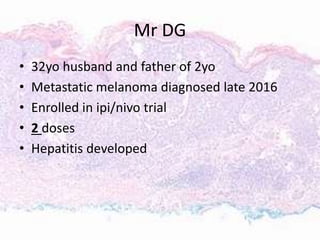
• 32yo husband and father of 2yo
• Metastatic melanoma diagnosed late 2016
• Enrolled in ipi/nivo trial
• 2 doses
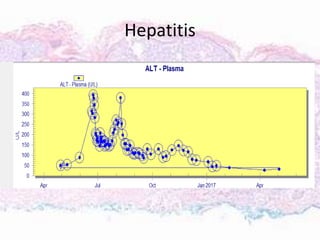
• Hepatitis developed
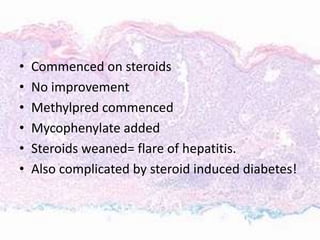
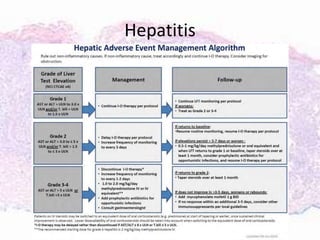
• Commenced on steroids
• No improvement
• Methylpred commenced
• Mycophenylate added
• Steroids weaned= flare of hepatitis.
• Also complicated by steroid induced diabetes!
Hepatitis
Hepatitis
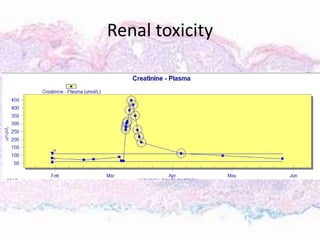
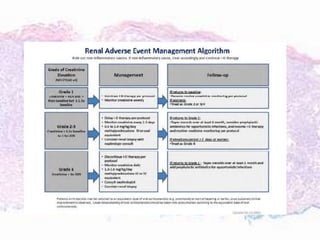
Renal toxicity
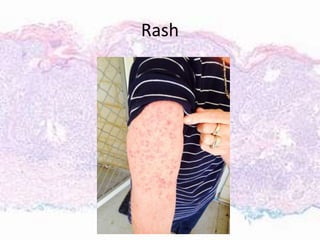
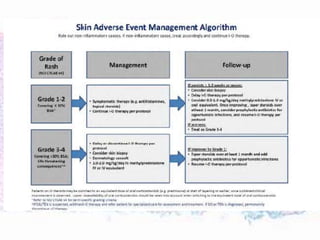
Rash
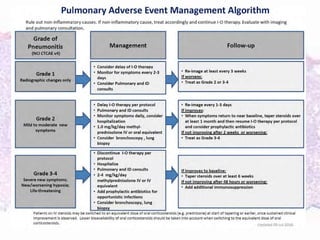
Management of immune related
toxicity
• Requires specialist input
• Patients on immunotherapy should be
assumed to have immune related toxicity until
another cause is proven
• Treated aggressively with steroids +/-
immunomodulation
Thank you
• Questions?

Immunotherapy - the promises and pitfalls

  • 1.
    Immunotherapy- the promises andpitfalls Lydia Warburton Medical Oncology Fellow SCGH
  • 2.
    Immunotherapy • Melanoma hasled the way in terms of development of immunotherapy • Now approved for bladder cancer, renal cell cancer, lung cancer, non hodgkins lymphoma and head and neck cancer.
  • 3.
    The Past….. • Priorto 2010 systemic treatment for advanced melanoma was limited • Response rates low, responses not durable and no clear overall survival advantage • For decades 1 years OS for stage IV melanoma stood at 25-30%. • No new FDA approved drugs from 1992-2011 • Until 2010 first line therapy of questionable value over supportive care
  • 4.
    Not just bad-consistently bad! • Progression free survival in phase II/III trials by decade for metastatic melanoma.
  • 5.
    2017 • We havecome so far in the last 7 years…
  • 6.
    Are we “curing”metastatic melanoma patients? Vs
  • 7.
    Two Paradigms forAdvancing the Therapy of Cancer Target host Target tumor Immunotherapy Targeted Therapy
  • 9.
    Two Paradigms forAdvancing the Therapy of Cancer Target host Target tumor Immunotherapy Targeted Therapy
  • 10.
  • 11.
    From: Tumor ImmunotherapyDirected at PD-1; Ribas A. N Engl J Med. 2012;366:2517-2519. Copyright © 2012 Massachusetts Medical Society. Reprinted with permission from Massachusetts Medical Society. CTLA-4 and PD-1/PD-L1 Checkpoint Blockade for Cancer Treatment
  • 12.
  • 13.
    Pembrolizumab • Approved foruse in 2014. Approved in >50 countries • Superior to ipilimumab • IV infusion • Delivered three weekly • Well tolerated (improved toxicity profile compared to ipilimumab)
  • 15.
    Clinical Activity ofPembrolizumab Baseline: April 13, 2012 72-yr-old male with symptomatic progression after chemotherapy, HD IL-2, and ipilimumab April 9, 2013 UCLA Health. Reproduced with permission.
  • 17.
    Combination PD1/CTLA4 (nivolumab andipilimumab) • Increased response rates • Improved PFS • Increased toxicity (>30% have to cease therapy due to toxicity)
  • 18.
    Toxicity and sideeffects of immunotherapy • Thyroid – hypo/hyper • Endocrine- diabetes, hypophysitis • Pneumonitis • Colitis • Hepatitis • Nephritis • Neurological • Pancreatitis
  • 19.
  • 20.
    Case Study- ‘BOB’ •62 yo male- referred to SCGH melanoma clinic 2013 • Lives in Toodyay • Smoker- >40 pack years. No comorbid formal respiratory diagnosis • ECOG: 0 • No other significant past medical history
  • 21.
    Background • Unknown primarymelanoma • Presented with bilateral axillary nodal disease – clinically detected- May 2013 • Underwent bilateral axillary dissection (7/11 involved lymph nodes involved on left, 1/11 on right) • Followed by post op RXT to left axilla • Commenced on close surveillance
  • 22.
    Background • Six monthslater- PET detected recurrence. • Enrolled in Keynote-006 trial- 24 months of pembrolizumab completed Jan 2016- complete response • Second course phase for recurrence- May 2016- Aug 2016
  • 23.
    • PD identifiedSeptember 2016 • Ipilimumab commenced October 2016 - x 4 doses
  • 24.
    History of presentingcomplaint • 29th December 2016 • Presents to ED- lethargy, fever, SOB at rest, anorexia • No coryzal symptoms, no chest pain, no PND, no ankle swelling • Exercise tolerance < 30m
  • 25.
    Clinical examination • Lookedunwell • SaO2: 80% RA 96% on 6L Oxygen • RR: 30, BP: 100/65, HR: 95, Temp: 37.7 • Resp exam: Bibasal crepitations, no wheeze, normal percussion note, no bronchial breathing • CVS: JVPNE, no pedal oedema, HS dual, nil added. • Rest of examination unremarkable.
  • 27.
    Immune-Related Pneumonitis Nov 2013: Prepneumonitis Jan2014 Pneumonitis Feb 2014 Improved with steroids
  • 29.
    Mr RE • 45yo •BRAF mutant metastatic melanoma. • Started on dabrafenib and trametinib- good disease control for one year • Went to UK on holiday= acute left sided weakness. Found to have new brain mets. • Underwent neurosurgical resection of largest met and returned to Aus
  • 30.
    • Commenced onipi/nivo • Had 4 cycles of ipi/nivo • Developed diarrhoea • Advised to start gastro stop. No follow up plan provided. • Diarrhoea escalated to >8-10 x day. Mucousy.
  • 32.
    • Admitted toward • Commenced on methylpred • Weaned to oral steroids. • Dose reduced but diarrhoea flared • Underwent sigmoidoscopy= colitis confirmed • Now on infliximab and steroids.
  • 33.
  • 34.
    Mr DG • 32yohusband and father of 2yo • Metastatic melanoma diagnosed late 2016 • Enrolled in ipi/nivo trial • 2 doses • Hepatitis developed
  • 35.
    • Commenced onsteroids • No improvement • Methylpred commenced • Mycophenylate added • Steroids weaned= flare of hepatitis. • Also complicated by steroid induced diabetes!
  • 36.
  • 37.
  • 38.
  • 40.
  • 42.
    Management of immunerelated toxicity • Requires specialist input • Patients on immunotherapy should be assumed to have immune related toxicity until another cause is proven • Treated aggressively with steroids +/- immunomodulation
  • 43.