Presented by :
Sivasankar . P
ADAPTIVE IMMUNITY IN
CANCER THERAPIES
Introduction
• Cancer immunotherapy –enhancing ani tumour immune response
• mAb, T cells, cytokines, vaccines
• Active or passive
Cancer immunotherapy
• 1600 BC –surgery
• 1896-radiotherapy
•
• 1942-chemotherapy
• 1976-immunotherapy
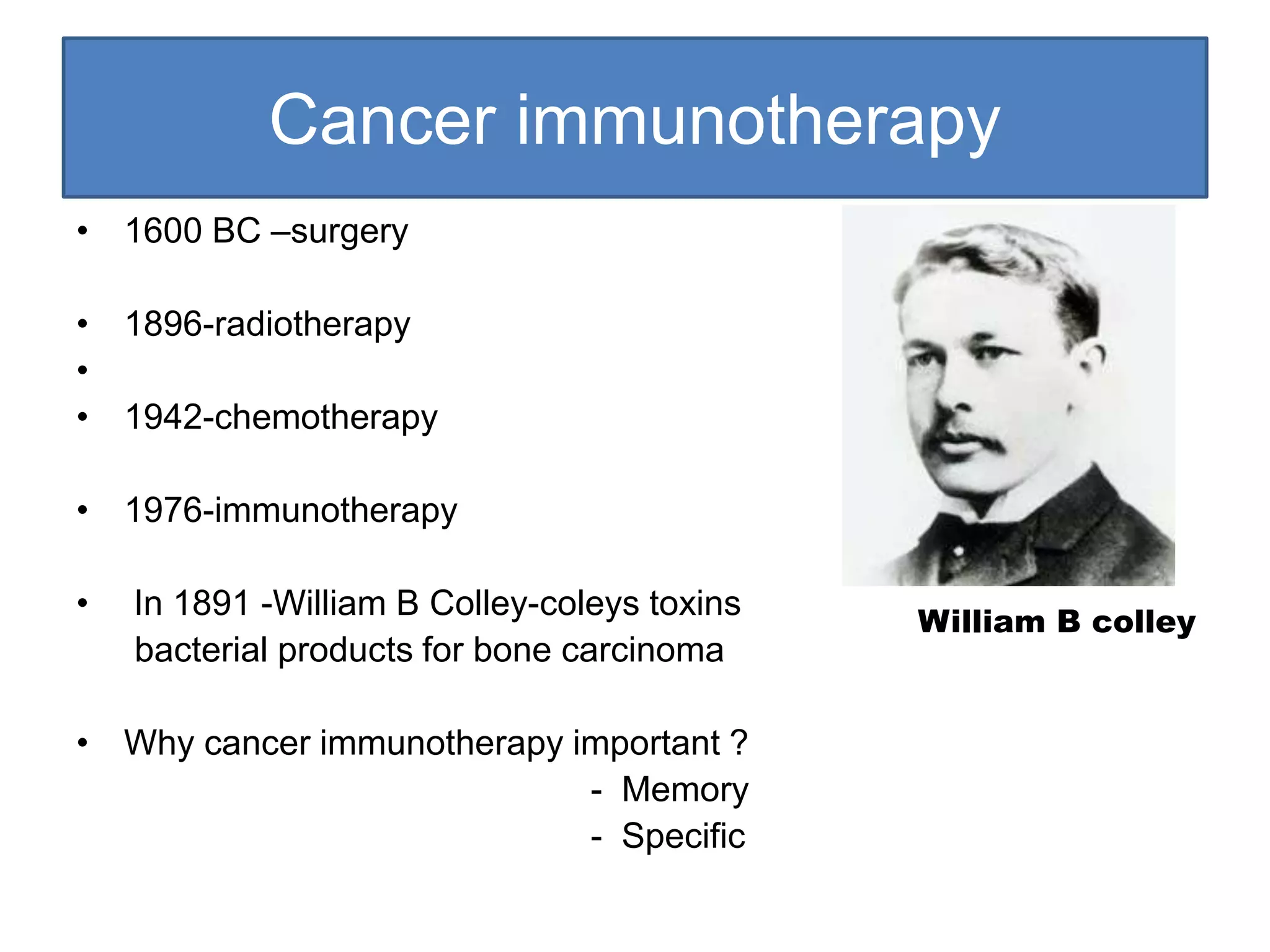
• In 1891 -William B Colley-coleys toxins
bacterial products for bone carcinoma
• Why cancer immunotherapy important ?
- Memory
- Specific
William B colley
Key players of anti tumour immune response
• Mostly cell mediated
• Adaptive immunity
• T cytotoxic cell
• B cell
• T helper cell
• TREG cell
• Innate immunity
• Macrophage
• Dentritic cell
• NK cell
• Complement system
How the immune system attacks the cancer cell
T cell activation is the heart of immunotherapy
Different immune based therapies
1. Monoclonal antibodies
2. Cytokines
3. Vaccines
4. Manipulation of costimulatory signals
5. Blocking inhibitory pathways
1.CTLA-4 blockers
2.PDL1/PD1 blockers
6. Adoptive T cell therapy
1.Monoclonal antibodies
• Targets tumour antigens
• Flagging targeted cancer cells for
destruction
• Blocking growth signals and
receptors-trastuzumab
• Marking for destruction
• Naked mAb-anti CD 20 (Rituximab)-
non hodgkins lymphoma
• Stimulating apototic pathway
• Anti-CD30 Brentuximab
Contd…
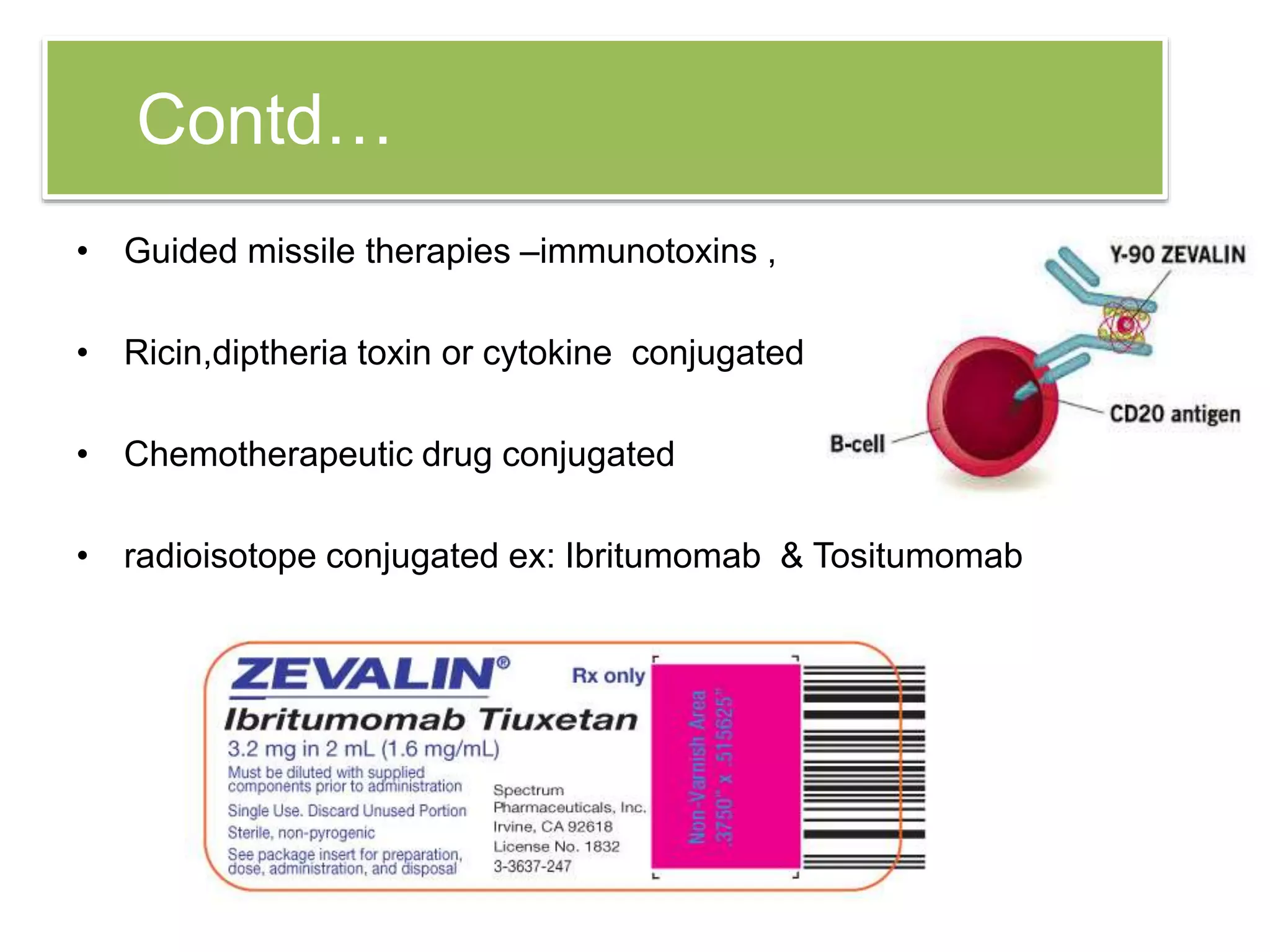
• Guided missile therapies –immunotoxins ,
• Ricin,diptheria toxin or cytokine conjugated
• Chemotherapeutic drug conjugated
• radioisotope conjugated ex: Ibritumomab & Tositumomab
Contd…
2.Cytokines
• IFN alpha(intron A) ,beta ,gamma (malignant melanoma)
• TNF- alpha, beta
• GM-CSF- sargramostim (Leukine)
• IL-2,4,6,12
• IL-2 (proleukin) licensed for advanced kidney cancer & melanoma
• TLR agonist imiquimod (Aldara, Zyclara), binds to specific toll-like
receptors, basal cell carcinoma ,skin cancers.
Interferons
• Most clinical trials involve IFN-α
• Has been shown to induce tumor regression in
hematologic malignancies i.e. leukemias,
lymphomas, melanomas and breast cancer
• All types of IFN increase MHC I expression
• IFN-γ also has also been shown to increase MHC II expression on
macrophages and increase activity of Tc cells, macrophages,
and NK cells
INTRON ALPHA 2b(merck)
• FDA approved for AIDS related
kaposi carcoma
• Hairy cell leukemia
• Melanoma
• Nom-hodgkins lymphoma
Proleukin(IL-2)
• Skin, kidney cancer,kaposis
sarcoma
• contains IL-2
• Capillary leak syndrome
• DNA recombinant technology
• Stimulates production of TNF-a
IL-1,IFN-Y
• Induction of LAK cell
• Exact mechanism unknown
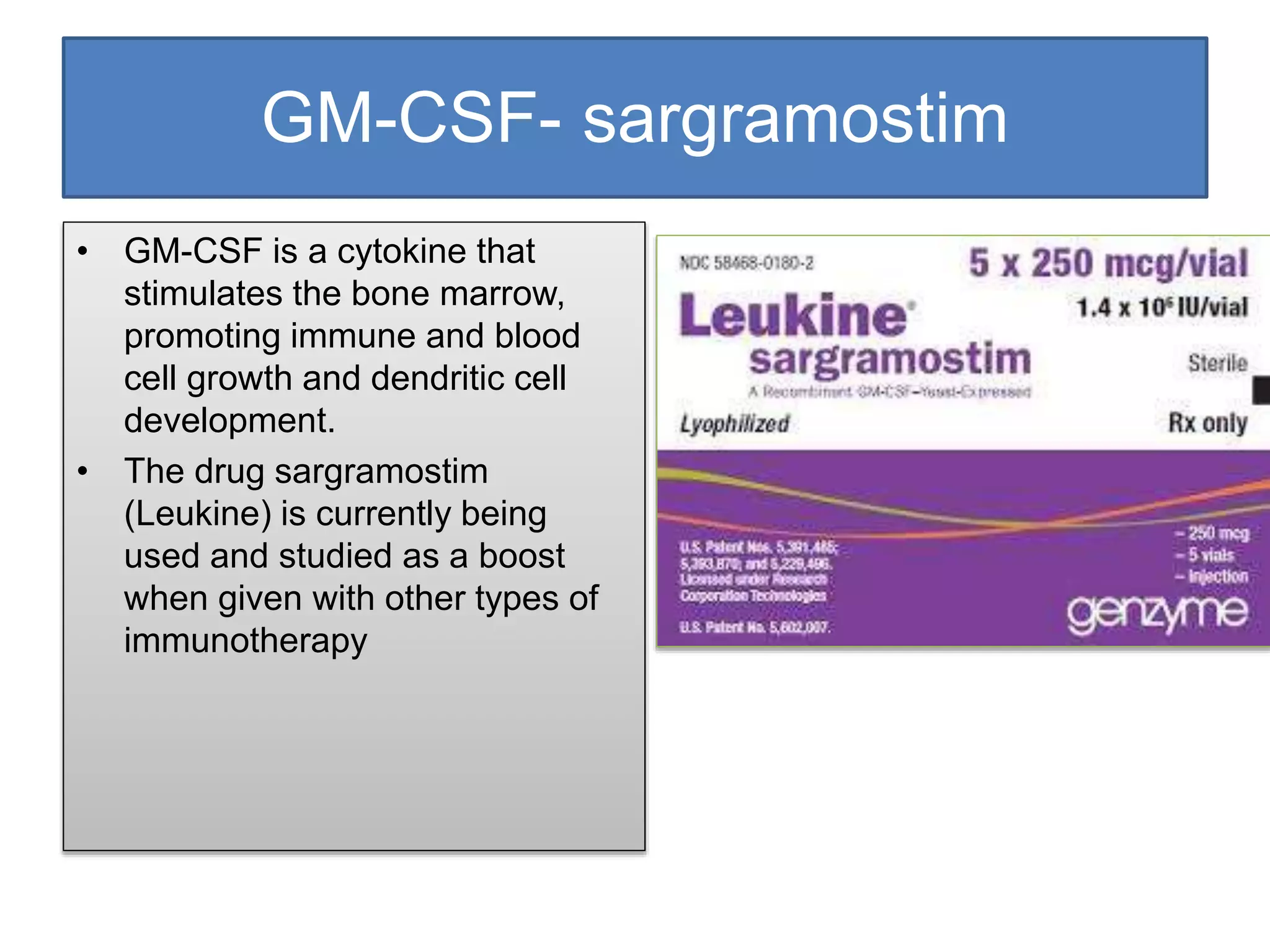
GM-CSF- sargramostim
• GM-CSF is a cytokine that
stimulates the bone marrow,
promoting immune and blood
cell growth and dendritic cell
development.
• The drug sargramostim
(Leukine) is currently being
used and studied as a boost
when given with other types of
immunotherapy
TLR agonist
• The immune system often detects
germs through a series of receptors
(called toll like receptors) found on the
surface of most immune cells.
• Several of these specialized receptors
have been evaluated for use in cancer,
• one such agent, imiquimod (Aldara,
Zyclara), bindsto specific toll
likereceptors,resulting in an immune
response that kills cancer cells in
patients with basal cell carcinoma and
possibly other early-stage skin cancers.
Non specific stimulation of immune
system
• Modified bacteria
• Intra vesicular BCG vaccine - bladder cancer
• bacteria act as adjuvant and activates macrophage &T cells
• Bacillus CalmetteGuerin (BCG), approved to treat bladder cancer, is
tuberculosis bacteria modified to ensure they will not spread disease.
• Treatment causes inflammation in the bladder that stimulates an immune
response and guides immune cells to the bladder.
6.Adoptive T cell therapy
• Anti tumour actively cultured
immune cells transferred into
tumour bearing host
• TIL (NK cells ) activated with IL-2
called LAK cells
• Chimeric antigen receptor T cells
• Used in metastatic melanoma
• This type of immunotherapy
treatment is still investigational and
available only through clinical trials.
• Studies haves shown promise in the
treatment of leukemia lymphoma,
metastaticmelanoma,neuroblastoma
and synovial cell sarcoma.
(June et al.,2015)
CAR-T cells
Antigen specific
domain
CAR-T cells (Chimeric antigen receptor-T
cells0
T cells transduced with tumor-specific
CAR
CAR: Single fusion molecule with
antigen specificity plus signaling
domain
cancer: Solid tumor & hematological
malignancies
Maus M V et al. Blood 2014;123:2625-2635
“Live drug”
Tumor recognition
independent of HLA
(no HLA typing
needed)
Multiple anti-
tumor immuno-
modulators can
be engineered
Target variety of
antigens (protein,
carbohydrate,
glycolipid)
Advantages of CAR T cells
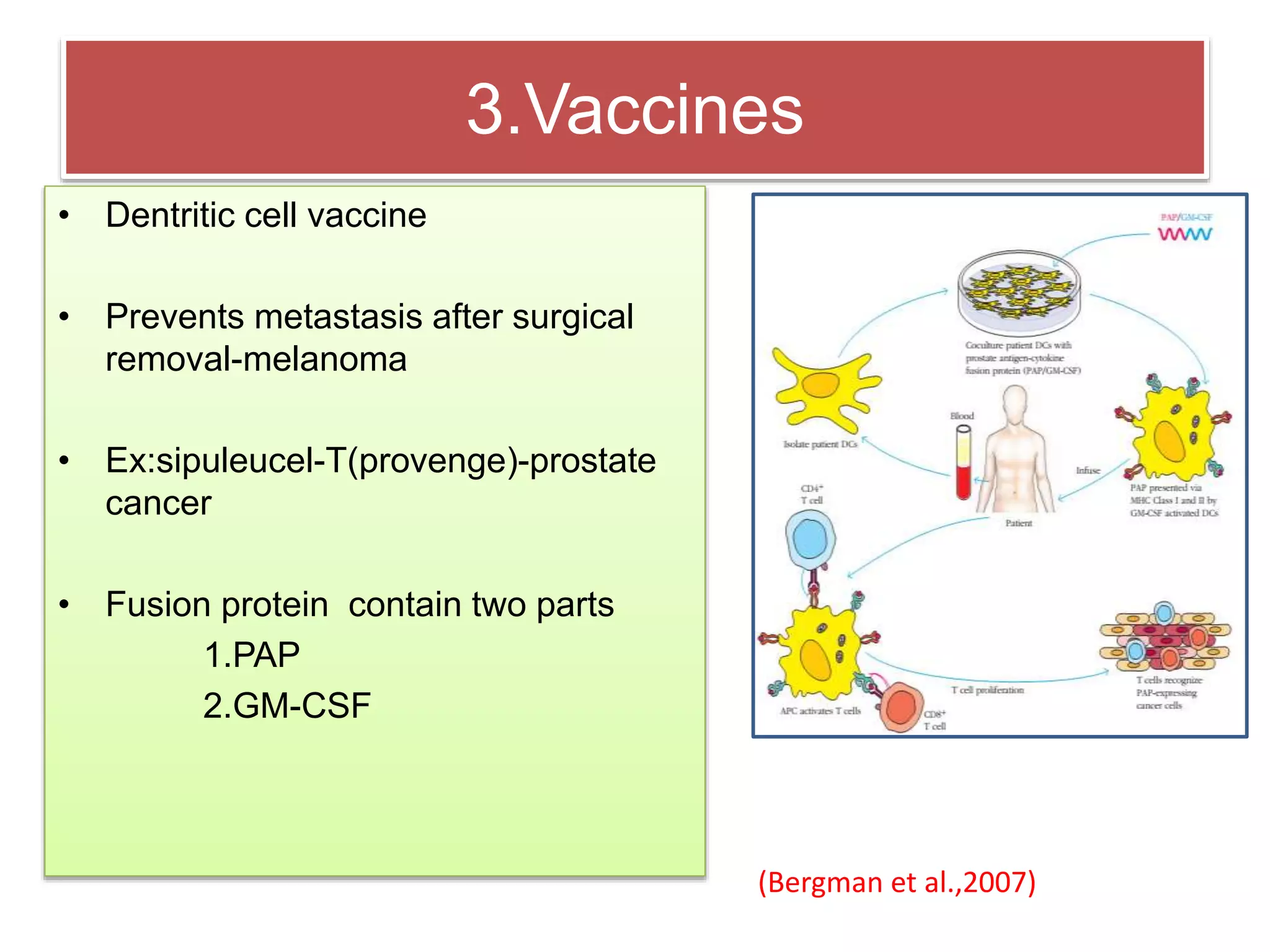
3.Vaccines
• Dentritic cell vaccine
• Prevents metastasis after surgical
removal-melanoma
• Ex:sipuleucel-T(provenge)-prostate
cancer
• Fusion protein contain two parts
1.PAP
2.GM-CSF
(Bergman et al.,2007)
sipuleucel-T
(Bergman et al.,2007
Contd…
• Prophylactc HPV vaccine –
cervical cancer
• poultry – mareks disease
• Cat –feline leukemia virus
• DNA vaccine
Oncept
• Xenogeneic DNA vaccine
Oncept which was approved
by the USDA for use in canine
oral melanoma in 2007
• Another genetic vaccine that
has been pursued in canine
clinical trials encodes a
catalytically inactive form of
dog telomerase reverse
transcriptase (dTERT)
(Bergman et al.,2006)
(Peruzzi et al.,2010)
4.Manipulation of costimulatory signals
• Cancer cells lack costimulation
• Tumour cells transfected with B7 gene or IL-2
Contd…
5.Blocking inhibitory pathways
• CTLA-4 blocker -(iplimumab)
• Blocking of PDL1 /PD1
pathway (pembrolizumab)
Yervoy
• An intravenous (IV) injection, was
approved in 2011
• First-line treatment for unresectable
metastatic melanoma.
• It works by blocking the CTLA-4
checkpoint to allow a more lasting
response against the cancer
• Side effects for this drug often
include diarrhea, fatigue, itching and
skin rash.
Contd…
(Hodi et al., 2010)
Blocking of PDL1 /PD1 pathway
Suppression of T-cell by by expressing PD-1L (Regan et al.,2016)
Contd…
Contd…
• Pembrolizumab (Keytruda) and
nivolumab (Opdivo) are IV injections,
both approved in 2014 as second-line
treatment for patients with metastatic
melanoma who are no longer helped by
ipilimumab
• Clinical trials are also studying the
effectiveness of combining CTLA-4 and
PD-1 checkpoint inhibitor drugs to create a
longer lasting immune response against
melanoma
Oncolytic virotherapy
• Oncolytic viruses (OV), which preferentially infect and lyse
cancer cells
• Adenoviruses(H101)-head &neck cancer ,reo virus, polio virus -
glioblastoma
• Oncolytic viruses were originally designed to induce “acute tumor
debulking” following direct lysis of the tumor cells
• China approved the use of a recombinant adenovirus (Oncorine)
(Lichty et al.,2014)
CONCLUSION
• Immunotherapy of malignancy employs various preparation for
augmentation of tumour specific as well as non specific immune
responses
• Immunotoxins with monoclonal antibodies currently being tested
• Though some articles saying immunotherapy is effective for some
types of cancer ,to date immunotherapy has not been proved to be
an effective treatment of cancer when used either alone or in
conjunction with chemotherapy ,radiotherapy or surgery
References:
1.Berzofsky JA, M Terabe, S Oh, IM Belyakov, JD Ahlers, JEJanik, and JC Morris. Progress on
new vaccine strategies for the immunotherapy and prevention of cancer. Journal ofClinical
Investigation 113:1515-1525, 2004.
2.Curiel TJ. Regulatory T cells and treatment of cancer. Current Opinions in
Immunology20:241-246, 2008.
3.Dranoff G. Cytokines in cancer pathogenesis and cancer therapy.Nature Reviews Cancer
4:11-22, 2004.
4.Farkas AM, and OJ Finn. Vaccines based on abnormal selfantigens as tumor
associatedantigens: immune regulation. Seminars in Immunology 22:125-131, 2010.
5.Gattinoni L, DJ Powell Jr, SA Rosenberg, and NP Restifo. Adoptive immunotherapy for
cancer: building on success. NatureReviews Immunology 6:383-393, 2006.
6.Gilboa E. DC-based cancer vaccines. Journal of Clinical Investigation 117:119 1203,2007.
7.Laheru DA, DM Pardoll, and EM Jaffee. Genes to vaccines forimmunotherapy: how the
molecular biology revolution hasinflenced cancer immunology. Molecular Cancer Therapy
4:1645-1652, 2005.
Cancer immunotherapy

Cancer immunotherapy

  • 1.
    Presented by : Sivasankar. P ADAPTIVE IMMUNITY IN CANCER THERAPIES
  • 2.
    Introduction • Cancer immunotherapy–enhancing ani tumour immune response • mAb, T cells, cytokines, vaccines • Active or passive
  • 3.
    Cancer immunotherapy • 1600BC –surgery • 1896-radiotherapy • • 1942-chemotherapy • 1976-immunotherapy • In 1891 -William B Colley-coleys toxins bacterial products for bone carcinoma • Why cancer immunotherapy important ? - Memory - Specific William B colley
  • 4.
    Key players ofanti tumour immune response • Mostly cell mediated • Adaptive immunity • T cytotoxic cell • B cell • T helper cell • TREG cell • Innate immunity • Macrophage • Dentritic cell • NK cell • Complement system
  • 5.
    How the immunesystem attacks the cancer cell T cell activation is the heart of immunotherapy
  • 6.
    Different immune basedtherapies 1. Monoclonal antibodies 2. Cytokines 3. Vaccines 4. Manipulation of costimulatory signals 5. Blocking inhibitory pathways 1.CTLA-4 blockers 2.PDL1/PD1 blockers 6. Adoptive T cell therapy
  • 7.
    1.Monoclonal antibodies • Targetstumour antigens • Flagging targeted cancer cells for destruction • Blocking growth signals and receptors-trastuzumab • Marking for destruction • Naked mAb-anti CD 20 (Rituximab)- non hodgkins lymphoma • Stimulating apototic pathway • Anti-CD30 Brentuximab
  • 8.
    Contd… • Guided missiletherapies –immunotoxins , • Ricin,diptheria toxin or cytokine conjugated • Chemotherapeutic drug conjugated • radioisotope conjugated ex: Ibritumomab & Tositumomab
  • 9.
  • 10.
    2.Cytokines • IFN alpha(intronA) ,beta ,gamma (malignant melanoma) • TNF- alpha, beta • GM-CSF- sargramostim (Leukine) • IL-2,4,6,12 • IL-2 (proleukin) licensed for advanced kidney cancer & melanoma • TLR agonist imiquimod (Aldara, Zyclara), binds to specific toll-like receptors, basal cell carcinoma ,skin cancers.
  • 11.
    Interferons • Most clinicaltrials involve IFN-α • Has been shown to induce tumor regression in hematologic malignancies i.e. leukemias, lymphomas, melanomas and breast cancer • All types of IFN increase MHC I expression • IFN-γ also has also been shown to increase MHC II expression on macrophages and increase activity of Tc cells, macrophages, and NK cells
  • 12.
    INTRON ALPHA 2b(merck) •FDA approved for AIDS related kaposi carcoma • Hairy cell leukemia • Melanoma • Nom-hodgkins lymphoma
  • 13.
    Proleukin(IL-2) • Skin, kidneycancer,kaposis sarcoma • contains IL-2 • Capillary leak syndrome • DNA recombinant technology • Stimulates production of TNF-a IL-1,IFN-Y • Induction of LAK cell • Exact mechanism unknown
  • 14.
    GM-CSF- sargramostim • GM-CSFis a cytokine that stimulates the bone marrow, promoting immune and blood cell growth and dendritic cell development. • The drug sargramostim (Leukine) is currently being used and studied as a boost when given with other types of immunotherapy
  • 15.
    TLR agonist • Theimmune system often detects germs through a series of receptors (called toll like receptors) found on the surface of most immune cells. • Several of these specialized receptors have been evaluated for use in cancer, • one such agent, imiquimod (Aldara, Zyclara), bindsto specific toll likereceptors,resulting in an immune response that kills cancer cells in patients with basal cell carcinoma and possibly other early-stage skin cancers.
  • 16.
    Non specific stimulationof immune system • Modified bacteria • Intra vesicular BCG vaccine - bladder cancer • bacteria act as adjuvant and activates macrophage &T cells • Bacillus CalmetteGuerin (BCG), approved to treat bladder cancer, is tuberculosis bacteria modified to ensure they will not spread disease. • Treatment causes inflammation in the bladder that stimulates an immune response and guides immune cells to the bladder.
  • 17.
    6.Adoptive T celltherapy • Anti tumour actively cultured immune cells transferred into tumour bearing host • TIL (NK cells ) activated with IL-2 called LAK cells • Chimeric antigen receptor T cells • Used in metastatic melanoma • This type of immunotherapy treatment is still investigational and available only through clinical trials. • Studies haves shown promise in the treatment of leukemia lymphoma, metastaticmelanoma,neuroblastoma and synovial cell sarcoma. (June et al.,2015)
  • 18.
    CAR-T cells Antigen specific domain CAR-Tcells (Chimeric antigen receptor-T cells0 T cells transduced with tumor-specific CAR CAR: Single fusion molecule with antigen specificity plus signaling domain cancer: Solid tumor & hematological malignancies Maus M V et al. Blood 2014;123:2625-2635 “Live drug” Tumor recognition independent of HLA (no HLA typing needed) Multiple anti- tumor immuno- modulators can be engineered Target variety of antigens (protein, carbohydrate, glycolipid) Advantages of CAR T cells
  • 19.
    3.Vaccines • Dentritic cellvaccine • Prevents metastasis after surgical removal-melanoma • Ex:sipuleucel-T(provenge)-prostate cancer • Fusion protein contain two parts 1.PAP 2.GM-CSF (Bergman et al.,2007)
  • 20.
  • 21.
    Contd… • Prophylactc HPVvaccine – cervical cancer • poultry – mareks disease • Cat –feline leukemia virus • DNA vaccine
  • 22.
    Oncept • Xenogeneic DNAvaccine Oncept which was approved by the USDA for use in canine oral melanoma in 2007 • Another genetic vaccine that has been pursued in canine clinical trials encodes a catalytically inactive form of dog telomerase reverse transcriptase (dTERT) (Bergman et al.,2006) (Peruzzi et al.,2010)
  • 23.
    4.Manipulation of costimulatorysignals • Cancer cells lack costimulation • Tumour cells transfected with B7 gene or IL-2
  • 24.
  • 25.
    5.Blocking inhibitory pathways •CTLA-4 blocker -(iplimumab) • Blocking of PDL1 /PD1 pathway (pembrolizumab)
  • 26.
    Yervoy • An intravenous(IV) injection, was approved in 2011 • First-line treatment for unresectable metastatic melanoma. • It works by blocking the CTLA-4 checkpoint to allow a more lasting response against the cancer • Side effects for this drug often include diarrhea, fatigue, itching and skin rash.
  • 27.
  • 28.
    Blocking of PDL1/PD1 pathway Suppression of T-cell by by expressing PD-1L (Regan et al.,2016)
  • 29.
  • 30.
    Contd… • Pembrolizumab (Keytruda)and nivolumab (Opdivo) are IV injections, both approved in 2014 as second-line treatment for patients with metastatic melanoma who are no longer helped by ipilimumab • Clinical trials are also studying the effectiveness of combining CTLA-4 and PD-1 checkpoint inhibitor drugs to create a longer lasting immune response against melanoma
  • 31.
    Oncolytic virotherapy • Oncolyticviruses (OV), which preferentially infect and lyse cancer cells • Adenoviruses(H101)-head &neck cancer ,reo virus, polio virus - glioblastoma • Oncolytic viruses were originally designed to induce “acute tumor debulking” following direct lysis of the tumor cells • China approved the use of a recombinant adenovirus (Oncorine) (Lichty et al.,2014)
  • 32.
    CONCLUSION • Immunotherapy ofmalignancy employs various preparation for augmentation of tumour specific as well as non specific immune responses • Immunotoxins with monoclonal antibodies currently being tested • Though some articles saying immunotherapy is effective for some types of cancer ,to date immunotherapy has not been proved to be an effective treatment of cancer when used either alone or in conjunction with chemotherapy ,radiotherapy or surgery
  • 33.
    References: 1.Berzofsky JA, MTerabe, S Oh, IM Belyakov, JD Ahlers, JEJanik, and JC Morris. Progress on new vaccine strategies for the immunotherapy and prevention of cancer. Journal ofClinical Investigation 113:1515-1525, 2004. 2.Curiel TJ. Regulatory T cells and treatment of cancer. Current Opinions in Immunology20:241-246, 2008. 3.Dranoff G. Cytokines in cancer pathogenesis and cancer therapy.Nature Reviews Cancer 4:11-22, 2004. 4.Farkas AM, and OJ Finn. Vaccines based on abnormal selfantigens as tumor associatedantigens: immune regulation. Seminars in Immunology 22:125-131, 2010. 5.Gattinoni L, DJ Powell Jr, SA Rosenberg, and NP Restifo. Adoptive immunotherapy for cancer: building on success. NatureReviews Immunology 6:383-393, 2006. 6.Gilboa E. DC-based cancer vaccines. Journal of Clinical Investigation 117:119 1203,2007. 7.Laheru DA, DM Pardoll, and EM Jaffee. Genes to vaccines forimmunotherapy: how the molecular biology revolution hasinflenced cancer immunology. Molecular Cancer Therapy 4:1645-1652, 2005.