Immune Check Point Inhibitors
and Adverse Effects
For the Emergency Physician
Introduction
• Immune system has “check points”, inhibitory pathways
which promote self-tolerance and avoid collateral tissue
damage in immune reactions.
• Cancers express proteins to co-opt immune check points
and resist immune attack. Sneaky!
– Killer T cells (predominantly) are “put to sleep”.
• Drugs that block immune checkpoint proteins can restore
anti-cancer immune function. T cells “reawaken”.
• Monoclonal Ab that enhance anti-tumour immune
response in this way are called Immune Checkpoint
Inhibitors (ICIs).
• This is a hot area of research and there will likely be many
more of these drugs in a few years.
Adverse effects
• AKA immune-related adverse events (irAE).
• Incidence >50%.
• Onset is often delayed by several months.
• Most side-effects of these drugs revolve
around excess immune activation. I.e. Type A
ADR.
• Life-threatening hyperimmunity is possible.
• Withhold ICI and give steroids in most cases.
• Consider concurrent prophylactic ABx with
high-dose steroids.
ICI ADR timing
ICI Target Cancer Major adverse effects
Ipilimumab CTLA-4
Melanoma - unresectable
?Lung/pancreatic
- Dermatitis 42
- Enterocolitis 28, hepatitis 3
- Endocrinopathy 8
Other: insomnia, HA, cough.
Nivolumab PD-1
Melanoma - unresectable
NSCLC – chemo-refr
TCC – chemo-refr
RCC – advanced and antiangiogenic-refr
SCC of HN – chemo-refr
Hodgkin’s – after ASCT and other immunoRx
- Dermatitis 27
- Enterocolitis 13, hepatitis 7
- Endocrinopathy 10
- Pneumonitis 3
- Nephritis 3
Other: Neuropathy, neutropaenia
Pembrolizumab PD-1
Melanoma – unresectable
NSCLC – imm criteria
TCC – chemo-refr
SCC of HN – chemo-refr
Hodgkin’s – after ASCT and other immunoRx
- Endocrinopathy 13
- Pneumonitis 3
- Enterocolitis 2, hepatitis 1
Atezolizumab PD-L1 NSCLC – chemo refr and imm criteria
- Dermatitis 19
- Pneumonitis 3
- Hypotension 3
- Endocrinopathy 7
- Anaphylaxis 1
- Hypokalemia 5, natraemia 4
Other: D+V, arthralgia, SOB
Avelumab* PD-L1 Merkel cell ca – metastatic
- Dermatitis 22
- Enterocolitis 23
- Pneumonitis
- Hepatitis
- Nephritis
- Endocrinopathy
Durvalumab*
PD-L1 TCC – chemo-refr -Hepatitis 1
- Endocrinopathy 15
- Enterocolitis 13
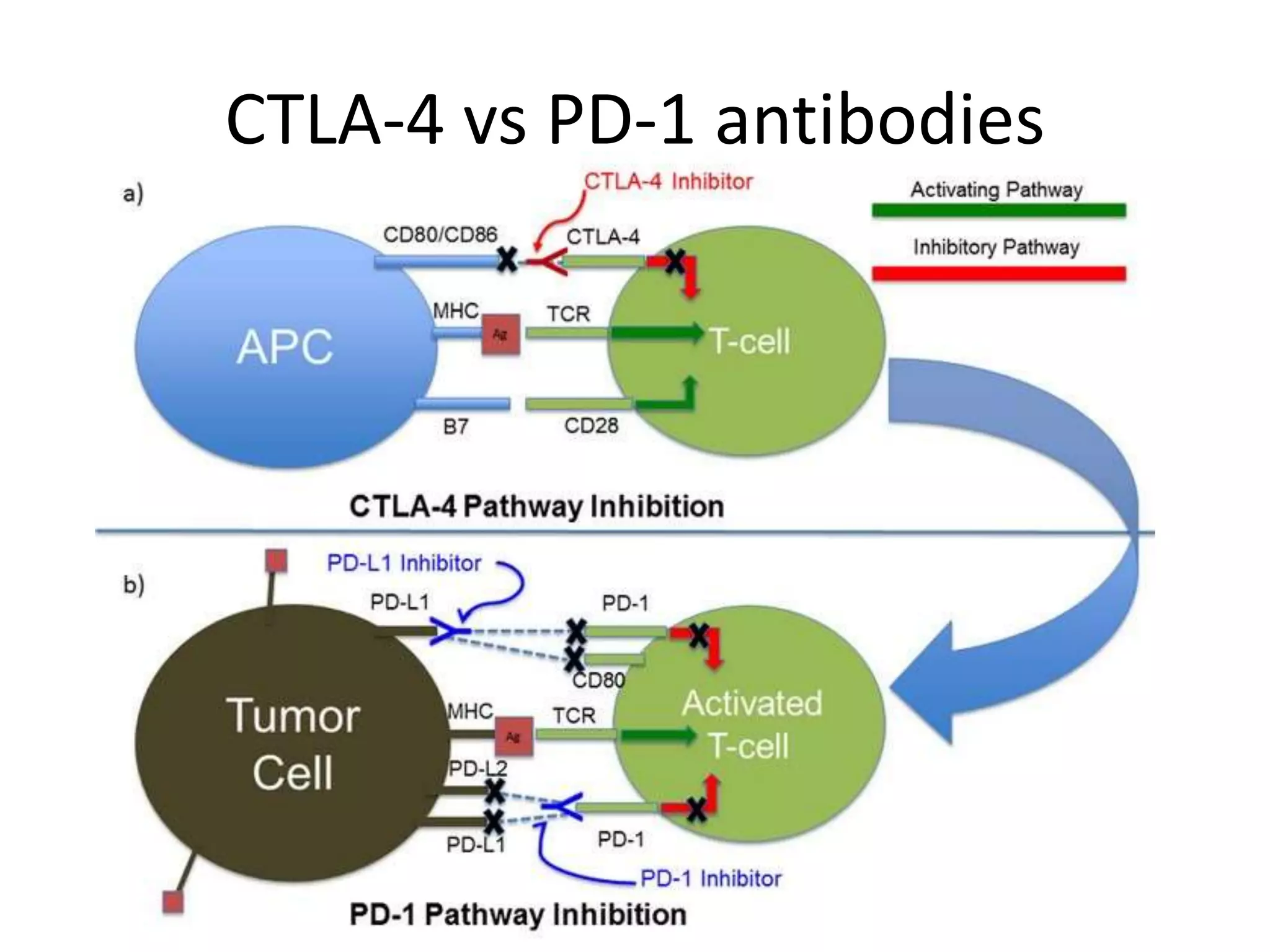
CTLA-4
• Expressed on T cells early in their activation in
lymph nodes, preventing potential autoreactivity.
• Main effect: Reduces immature T killer activation
when bound by B7.
• Multiple other inhibitory effects: removes B7
from APC, dampens Thelper activity, enhances
suppressive Treg activity.
• Knockout mice die from autoimmunity! CTLA-4 is
essential for self-tolerance. Blocking CTLA-4 with
drugs can lead to serious side effects.
ADR of CTLA-4 inhibition
• >20%
– Dermatitis
– Fever/chills/lethargy
– Enterocolitis
• 3-20%
– Hepatitis
– Endocrinopathy: hypophysitis, thyroiditis, adrenal insufficiency
• <3%
– Uveitis/episcleritis
– Nephritis
– Pancreatitis
– Neuropathy incl GBS, MG
– Lymphadenopathy
– Thrombocytopaenia
– TEN/SJS
PD-1
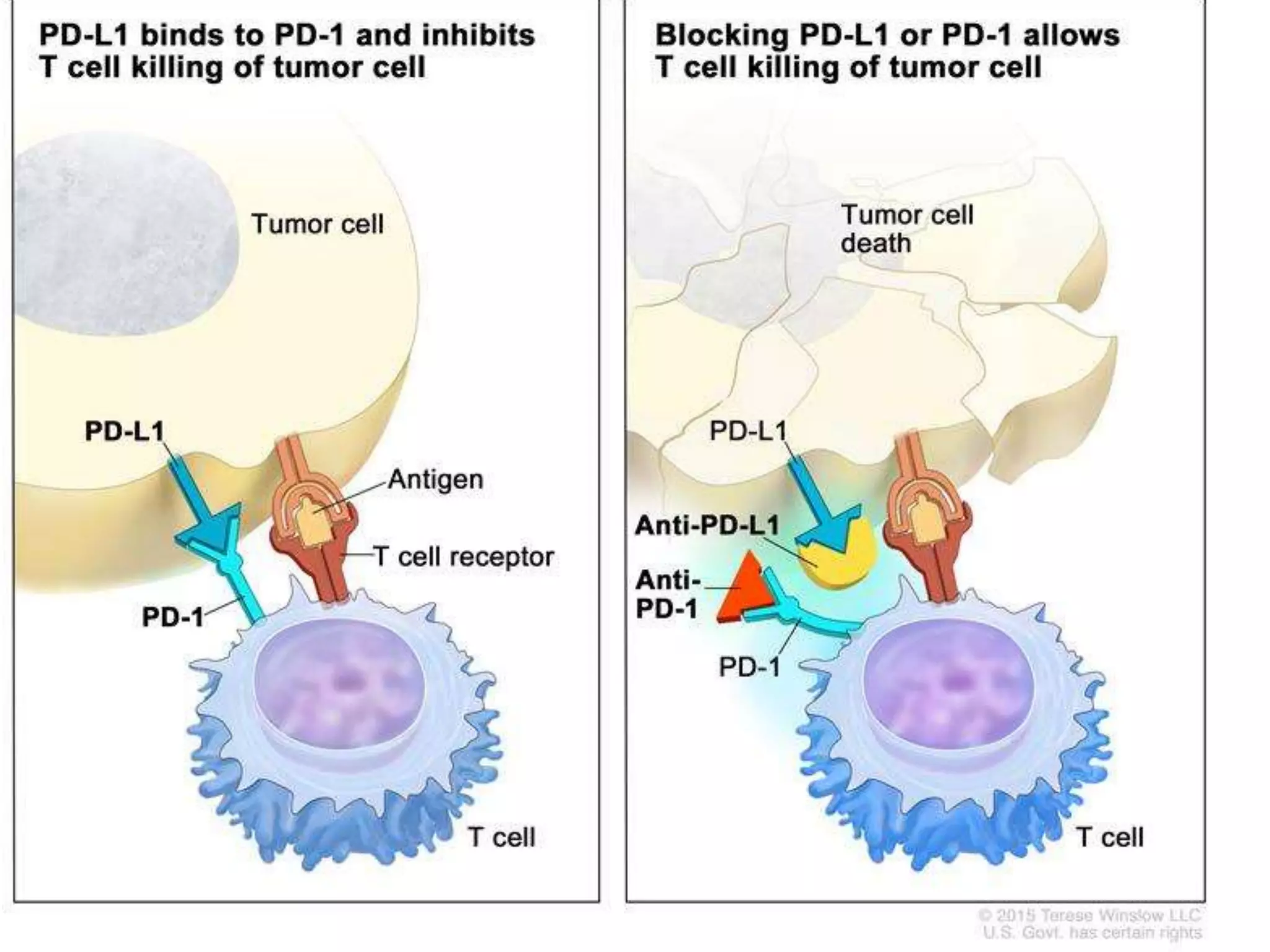
• Expressed by T cells that are already active in tissues.
Also present on other lymphocytes (B, NK).
• Main effect: Reduces T killer activity when bound by
PD-1 ligands during tissue inflammation.
• Multiple other inhibitory effects: increases Treg activity.
• Tumors frequently express PD-L1.
– Sometimes as an oncogene
– Sometimes as a response to IFN-gamma
• PD-1 knockout mice can survive. Side effects should be
less severe from ICIs targeting this pathway than CTLA-
4.
ADR of PD-1 inhibition
• Better-tolerated than CTLA-4 blockade
• 5-20%
– Dermatitis
– Fever/chills/lethargy
– Enterocolitis
– Hepatitis
– Infusion reaction
– Endocrinopathy
• <5%
– Pneumonitis
– Anaemia
Real cases from clinical trials
Case
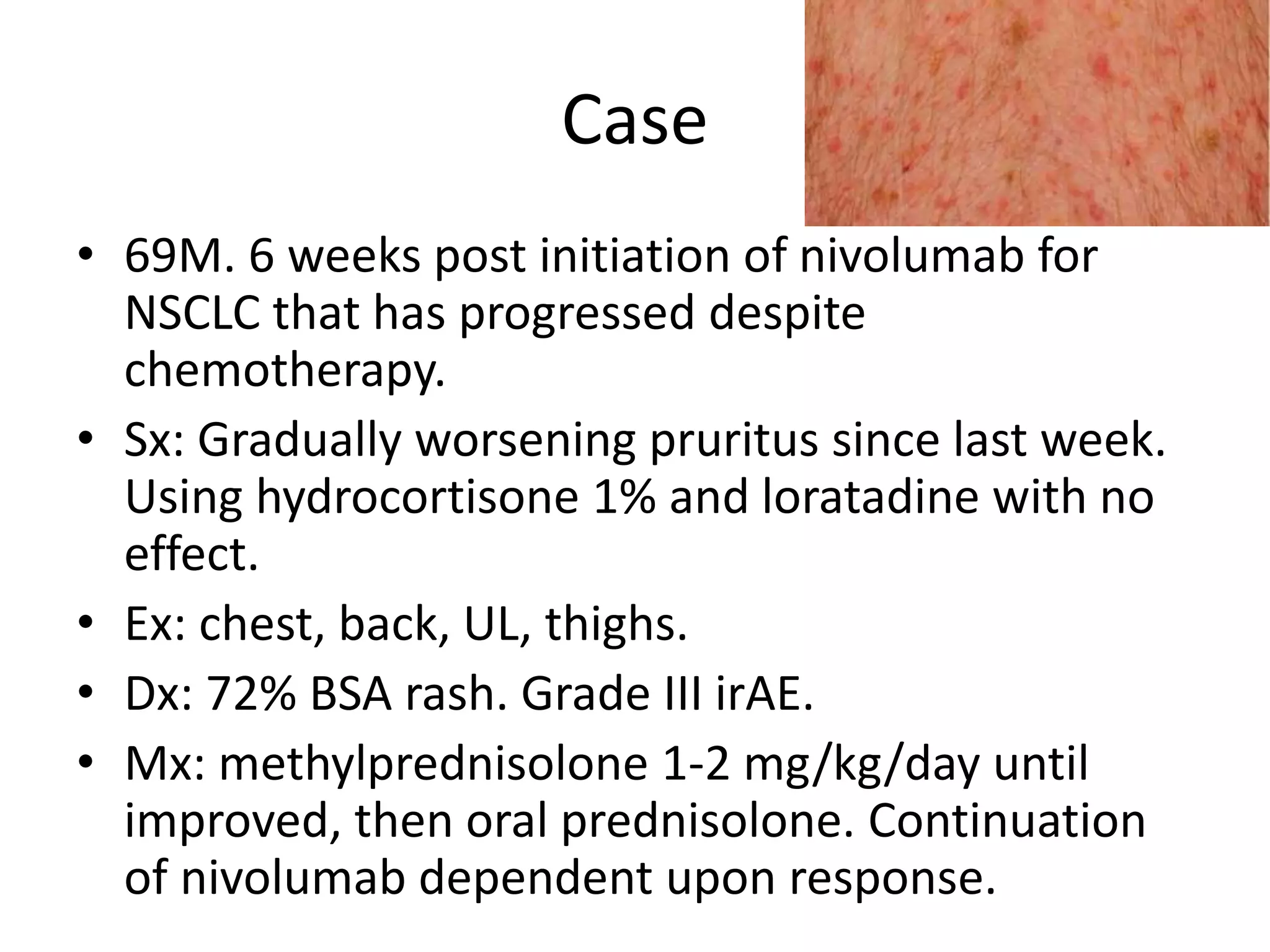
• 69M. 6 weeks post initiation of nivolumab for
NSCLC that has progressed despite
chemotherapy.
• Sx: Gradually worsening pruritus since last week.
Using hydrocortisone 1% and loratadine with no
effect.
• Ex: chest, back, UL, thighs.
• Dx: 72% BSA rash. Grade III irAE.
• Mx: methylprednisolone 1-2 mg/kg/day until
improved, then oral prednisolone. Continuation
of nivolumab dependent upon response.
Dermatitis
• Commonest irAE. >50% incidence in ipilimumab Rx.
• Median onset 3-4 weeks
• Usually mild, but wide-ranging from pruritus to SJS
• Similar rash to many other drugs: reticular
maculopapular erythema to trunk/limbs
• Management escalation
– Emollient
– Topical corticosteroid
– Antihistamine
– Withhold if >30% BSA
– Systemic corticosteroid
– Consider Bx
– Dermatology review
Case
• 74F. Melanoma with pulmonary mets. Progressing
despite polychemotherapy and radiotherapy. Partial
remission after 6 weeks of ipilimumab.
• Diarrhoea 10x/day.
• Dx: Colitis. Grade III (>6 stools/day over baseline).
• Mx: prednisolone 2mg/kg/day and loperamide
• Improved after 5 days and prednisolone dose was
reduced. Then flared again 3 days later.
• Mx: higher-dose corticosteroids, infliximab
• Acute abdomen. Perforation. Mx: R hemicolectomy.
Steroids and infliximab continued for 6 weeks until
colitis resolved.
Enterocolitis
• Anti-CTLA-4 incidence <45%
• Anti-PD-1 incidence <20%
• Median onset 6 weeks
• Management escalation
– Fluid/electrolyte replacement
– Loperamide
– Consider stool MCS, endoscopy
– Withold/Discontinue (>3 extra BO/day or symptomatic
colitis)
– Systemic corticosteroids (Exclude infectious causes before
prescribing steroids)
– Gastroenterology review
– TNF inhibitor e.g. Infliximab (Similar to IBD Rx)
Case
• 63M. Metastatic melanoma to inguinal LN, peritoneum, muscle. On
ipilimumab for 7 weeks.
• Sx: productive cough, mild SOB, preceding rhinorrhoea
• Ex: HR 80, BP 110/70, SaO2 95%RA, RR 20, T 36.0. Crackles RLZ.
• Ix: CXR = slight opacification RLZ, incidentally ALT 372. Inpatient
triphasic CT: slight hepatomegaly, no liver mets, no PVT, peritoneal
mets improved since previous CT.
• Mx: ABx for CAP, moderate dose prednisolone for AIH.
• Steroid tapered, but ALT 553 at 6 weeks.
• Liver Bx: inflam infiltrates and necrosis.
• Mx: Ipilimumab ceased. High-dose methylprednisolone, then oral
prednisolone tapering over 1/12. Hepatitis resolved.
• Died of progressive melanoma 3/12 later.
Hepatitis
• Suspect drug-related AIH in ICI pts with transaminitis. Consider also
liver mets, other drugs, viral, etc.
• Incidence <9%
• Median onset 6 weeks
• Grade 1 (transaminitis): monitoring.
• Grade 2 (hepatotoxicity):
– Withhold
– 1-2 mg/kg/day prednisolone PO for a long taper
– Consult oncologist/hepatologist
• Grade 3/4 (hepatitis):
– Discontinue
– 1-4 mg/kg/day methylprednisone IV
– Admit
– If no improvement in 48-72 hours, consider alternative
immunosuppressant e.g. Mycophenolate, tacrolimus
Case
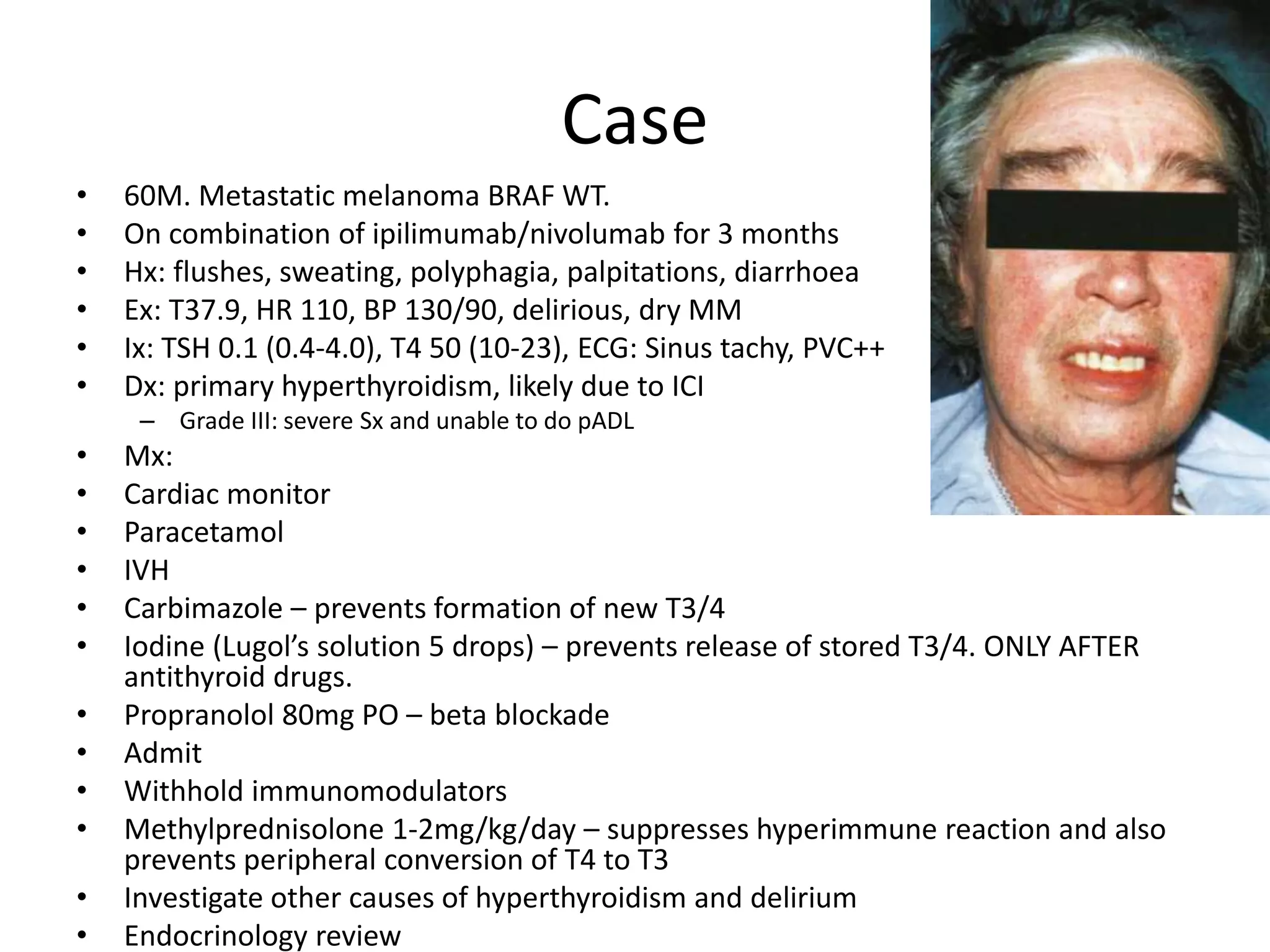
• 60M. Metastatic melanoma BRAF WT.
• On combination of ipilimumab/nivolumab for 3 months
• Hx: flushes, sweating, polyphagia, palpitations, diarrhoea
• Ex: T37.9, HR 110, BP 130/90, delirious, dry MM
• Ix: TSH 0.1 (0.4-4.0), T4 50 (10-23), ECG: Sinus tachy, PVC++
• Dx: primary hyperthyroidism, likely due to ICI
– Grade III: severe Sx and unable to do pADL
• Mx:
• Cardiac monitor
• Paracetamol
• IVH
• Carbimazole – prevents formation of new T3/4
• Iodine (Lugol’s solution 5 drops) – prevents release of stored T3/4. ONLY AFTER
antithyroid drugs.
• Propranolol 80mg PO – beta blockade
• Admit
• Withhold immunomodulators
• Methylprednisolone 1-2mg/kg/day – suppresses hyperimmune reaction and also
prevents peripheral conversion of T4 to T3
• Investigate other causes of hyperthyroidism and delirium
• Endocrinology review
Case
• 54M. WLE on back for primary melanoma 2ya, but developed pulmonary mets.
Initial metastatic disease treatment was docetaxel but relapsed soon afterwards.
Now 6 weeks into ipilimumab treatment for metastatic melanoma.
• Sx: Severe HA 1/52, lethargy.
• Other important Hx?
• NV, visual: no.
• Polydipsia, polyuria: no.
• Weight, appetite, temp intol: mild wt loss only.
• Libido, ED: yes.
• Ex: HR 110, BP 90/50, RR 18, SaO2 94%RA, T37.0.
• Ix: MRI brain = hypophysitis.
– Cortisol 10 (180-620)
– Testosterone <4 (8.4-28.7). FSH/LH low-normal.
– TSH <0.01 (0.35-5.5). T4 9.4 (10.5-20.5).
• Dx: Hypophysitis grade III.
• Mx: dexamethasone 8mg bd, thyroxine 75mcg od, testosterone.
• Dexamethasone then tapered and replaced with hydrocortisone.
• Hypophysitis took 3/12 to resolve radiologically.
• Ipilimumab continued with good tumour response.
Endocrinopathy
• Hypophysitis incidence <6%. Mean onset 6 weeks. HA, NV, vertigo, visual,
behavioural, hypoadrenalism, hypothyroidism, hypogonadism. May be
irreversible.
• Less common are primary hypoadrenalism and hypogonadism
• Management
– Monitor if asymptomatic and TSH >0.5LLN or <2ULN
– Withhold
– High-dose corticosteroids (tapering down to a physiologic replacement dose in
pts with hypoadrenalism)
– Treat adrenal crisis with IVH, adequate gluco/mineralo-corticoid replacement
– Treat hypothyroidism with T4
– Treat hypogonadism with testosterone
– Endocrinology review
• Ix: ACTH/cortisol, TFT, FSH/LH/test, PRL, UEC, BGL, MRI brain to confirm
and distinguish from mets
Case
• 70M.
• Had ipilimumab previously but now on nivolumab for 6
months for metastatic melanoma.
• Sx: cough, SOB,
• Ex: HR 130, RR30, SaO2 80%RA, T37.8
• Ix: CXR = diffuse interstitial infiltrates. CT chest = AIP w GGO
all lobes
• Dx: Pneumonitis. Grade III (severe Sx, needing O2).
• Mx: methylprednisolone 2mg/kg/day, tazocin,
azithromycin, ETT, ICU (in USA), infliximab
• Survived to DC 10 weeks later and taken off nivolumab
trials
Pneumonitis
• Incidence <5%
• Consider in ICI pts with cough/SOB
• Management escalation
– Repeat imaging and clinical monitoring (radiographic changes
only)
– Withhold (if symptomatic)
– High-dose corticosteroid. Methylprednisolone 2-4mg/kg/day.
– Prophylactic ABx
– Admit (desat, severely unwell)
– Consider cyclophosphamide, mycophenolate, infliximab, or IVIG
if not improving
– Respiratory/ID review
– Consider bronchoscopy, Bx
Nephritis
• Rare. Consider other causes of ARF in ICI pts.
• Median onset 9 weeks
• Management escalation
– Monitoring UEC
– Withhold
– Corticosteroids if Cr >1.5x baseline
• Cr <6x ULN = Prednisolone 0.5-1mg/kg/day.
• Cr >6x ULN = Prednisolone 1-2mg/kg/day.
– Consider renal Bx
– Renal review
Neuropathy
• Rare. Incidence <1%.
• Forms: peripheral, GBS, MG, autonomic,
meningitis
• Management
– Depends on severity
– Corticosteroids
– Withhold/discontinue
– GBS, MG: IVIG in addition
– Neurology review
Ophthalmopathy
• Rare. Incidence <1%.
• Forms: uveitis, episcleritis, blepharitis, etc.
• Median onset 8 weeks.
• Management
– Ophthalmology review
– Prednefrin eyedrops
– Systemic corticosteroids
– Withhold
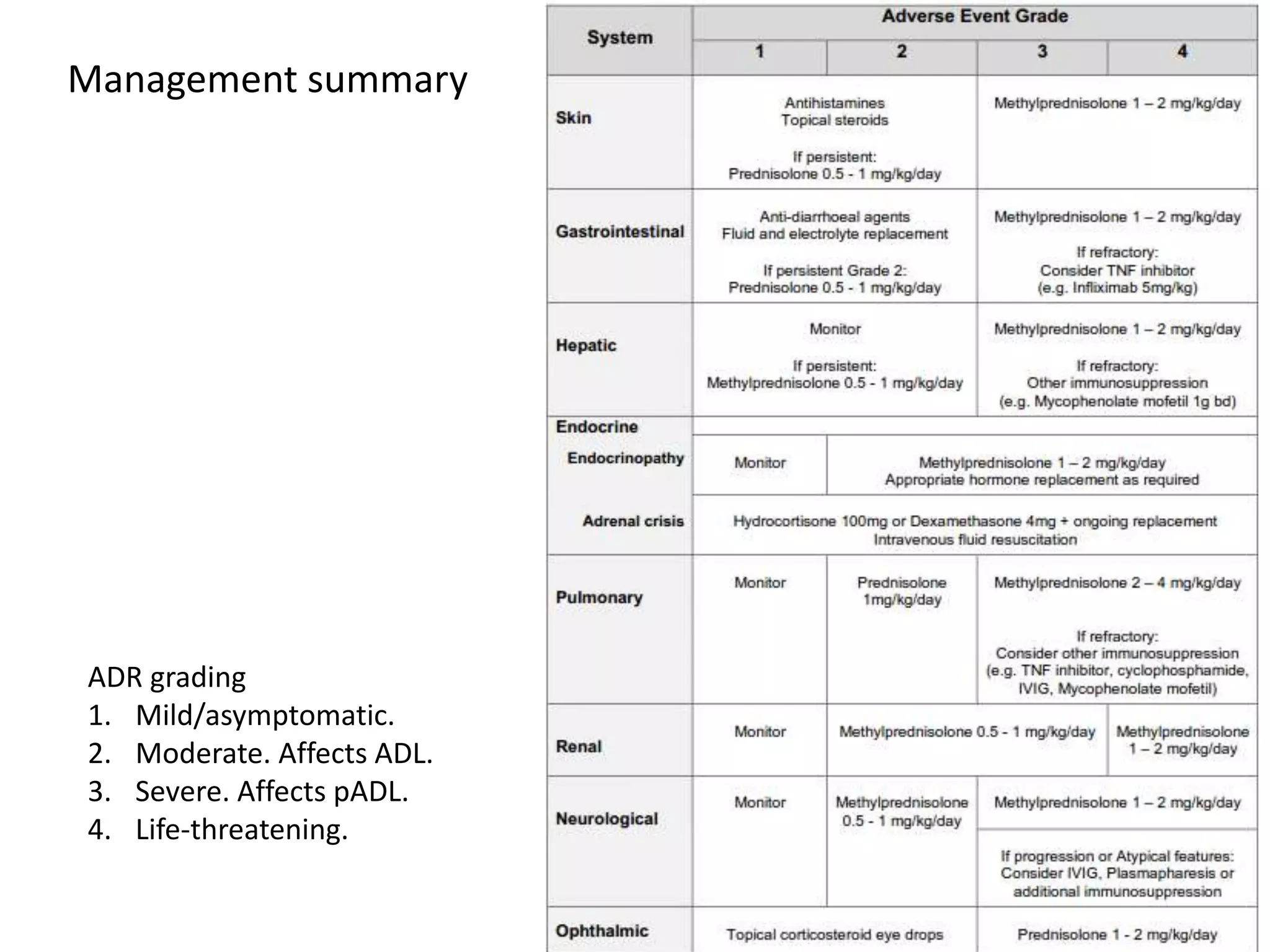
Management summary
ADR grading
1. Mild/asymptomatic.
2. Moderate. Affects ADL.
3. Severe. Affects pADL.
4. Life-threatening.
Key points
• Life-threatening hyperimmunity is possible.
• Side effects are usually delayed by months after
drug initiation.
• Stop the drug and give steroids.
• Call treating oncologist.
• Consult other specialities as needed e.g.
endocrinology for hypophysitis, dermatology for
dermatitis, etc.
• Guideline on CHIPS with helpful summary tables
for grading and management of irAEs.
References
• MEDICAL PRACTICE GUIDELINE: MANAGEMENT OF IMMUNE RELATED ADVERSE
EVENTS ASSOCIATED WITH USE OF IMMUNE CHECKPOINT INHIBITORS
• https://www.ncbi.nlm.nih.gov/pmc/articles/PMC4856023/
• https://www.fda.gov/drugs/informationondrugs/approveddrugs/ucm555930.htm
• https://www-mimsonline-com-au.qelibresources.health.wa.gov.au
• Voskens C, Goldinger S, Loquai C, Robert C, Kaehler K, Berking C, et al. The Price of
Tumor Control: An Analysis of Rare Side Effects of Anti-CTLA-4 Therapy in
Metastatic Melanoma from the Ipilimumab Network. PLoS ONE. 2013;8(1):e53745.
• Nishino M, Sholl L, Hatabu H, Ramaiya N, Hodi FS. Anti–PD-1–Related Pneumonitis
during Cancer Immunotherapy. The New England Journal of Medicine.
2015;373(3):288-90.
• Juszczak A, Gupta A, Karavitaki N, Middleton M, Grossman A. Ipilimumab: a novel
immunomodulating therapy causing autoimmune hypophysitis: a case report and
review. European Journal of Endocrinology. 2012;167(1):1-5.
• Cheng R, Cooper A, Kench J, Watson G, Bye W, McNeil C, et al. Ipilimumab-induced
toxicities and the gastroenterologist. Journal of Gastroenterology and Hepatology.
2015;30(4):657-66.
• Joseph R, Cappel M, Goedjen B, Gordon M, Kirsch B, Gilstrap C, et al. Lichenoid
dermatitis in three patients with metastatic melanoma treated with anti-PD-1
therapy. Cancer Immunology Research. 2015;3(1):18-22.
Notes
• Cases
• Pix
• Practice presenting
Malignant Melanoma in transplant
patients
• Non melanoma skin cancers increased risk is 250 times in organ transplant recipients
• Preexisting local melanoma- No increased risk of recurrence if 5 year interval between treatment and
organ transplant recommended.
• Primary melanoma post transplant- Up to 8 times higher in transplant group( range in different studies
2.6-12%.)
• Survival outcomes similar in transplant patients to matched controls if < 2mm thickness but significantly
worse if >2mm (wide local surgical excision)
• threatening cancers.
• Outcomes-3 year survival considerably less than in matched controls
• Significantly worse for T3 and T4 tumours
• Reduction in immunosuppression in patients with numerous or life threatening cancers
Renal Transplants- dialysis if Tx fails
Liver Transplants -Slowly reduce. Ability of liver to regenerate
Cardiac Tx - Reducing immunosuppression not as easy
• Choice of therapy
• PD-1 blockade has been shown to improve survival and progression-free survival in patients with
metastatic melanoma and in patients with previously treated metastatic squamous and nonsquamous
NSCLC.
• Response rates with PD-1 pathway blockade were higher than with CTLA-4 blockade in advanced
melanoma: 33% to 34% versus 12% of patients
• Pembrolizumab versus -Higher 1-year survival rates with pembrolizumab versus ipilimumab: 68% to 74%
versus 58%54
Case History
• Liver Tx 2011.
• Metastatic melanoma diagnosed Feb 2016
• Excision of left shoulder mass and split skin graft
• October 2016 Left shoulder radiation.
• Subcutaneous nodules left lumbar region
• Ascending colon uptake above ileocaecal junction
• Comenced pembrolizumab 1/12/16
• Cyclosporin dose previously decreased to 25mg bd
• Adverse reaction to tacrolimus
• 17/12/16-↑SOBOE ,Nausea & vomiting,Dark urine,pale stools,jaundiced
• 18/12/16 High dose methylprednisolone commenced
• Continued deterioration in liver function
• Patient deceased 25/12/16
Liver Function Tests
30/11/16
• Bilirubin 8
• ALT 49
• AST 44
• Alk Phos 95
• GGT 288
• Albumin 39
17/12/16
• Bilirubin 215
• ALT 1420
• AST 2680
• Alk Phos 372
• GGT 1300
• Albumin 36
Appears to be rejection-related rather
than pembrolizumab hepatitis. Too early
for this ADR. Rejection from reduced
cyclosporin.
Kidney Transplant Experience with ICI’s
• PD-1 pathway plays a very important role, in the
development of malignancy and in the maintenance of
adaptive immune tolerance in patients with solid organ
transplants on long-term immunosuppression
• First reported cases of kidney transplant patients
receiving ICI involved two patients with metastatic
melanoma who received the CTLA-4 antagonist
ipilumumab .
• Renal allografts in both patients were unaffected by
ipilumumab, and the patients had excellent anti-tumor
response to the immunotherapy.
CTLA-4 vs PD-1
CTLA-4 vs PD-1 antibodies

Immune check point inhibitors and adverse effects

  • 1.
    Immune Check PointInhibitors and Adverse Effects For the Emergency Physician
  • 2.
    Introduction • Immune systemhas “check points”, inhibitory pathways which promote self-tolerance and avoid collateral tissue damage in immune reactions. • Cancers express proteins to co-opt immune check points and resist immune attack. Sneaky! – Killer T cells (predominantly) are “put to sleep”. • Drugs that block immune checkpoint proteins can restore anti-cancer immune function. T cells “reawaken”. • Monoclonal Ab that enhance anti-tumour immune response in this way are called Immune Checkpoint Inhibitors (ICIs). • This is a hot area of research and there will likely be many more of these drugs in a few years.
  • 3.
    Adverse effects • AKAimmune-related adverse events (irAE). • Incidence >50%. • Onset is often delayed by several months. • Most side-effects of these drugs revolve around excess immune activation. I.e. Type A ADR. • Life-threatening hyperimmunity is possible. • Withhold ICI and give steroids in most cases. • Consider concurrent prophylactic ABx with high-dose steroids.
  • 4.
  • 5.
    ICI Target CancerMajor adverse effects Ipilimumab CTLA-4 Melanoma - unresectable ?Lung/pancreatic - Dermatitis 42 - Enterocolitis 28, hepatitis 3 - Endocrinopathy 8 Other: insomnia, HA, cough. Nivolumab PD-1 Melanoma - unresectable NSCLC – chemo-refr TCC – chemo-refr RCC – advanced and antiangiogenic-refr SCC of HN – chemo-refr Hodgkin’s – after ASCT and other immunoRx - Dermatitis 27 - Enterocolitis 13, hepatitis 7 - Endocrinopathy 10 - Pneumonitis 3 - Nephritis 3 Other: Neuropathy, neutropaenia Pembrolizumab PD-1 Melanoma – unresectable NSCLC – imm criteria TCC – chemo-refr SCC of HN – chemo-refr Hodgkin’s – after ASCT and other immunoRx - Endocrinopathy 13 - Pneumonitis 3 - Enterocolitis 2, hepatitis 1 Atezolizumab PD-L1 NSCLC – chemo refr and imm criteria - Dermatitis 19 - Pneumonitis 3 - Hypotension 3 - Endocrinopathy 7 - Anaphylaxis 1 - Hypokalemia 5, natraemia 4 Other: D+V, arthralgia, SOB Avelumab* PD-L1 Merkel cell ca – metastatic - Dermatitis 22 - Enterocolitis 23 - Pneumonitis - Hepatitis - Nephritis - Endocrinopathy Durvalumab* PD-L1 TCC – chemo-refr -Hepatitis 1 - Endocrinopathy 15 - Enterocolitis 13
  • 6.
    CTLA-4 • Expressed onT cells early in their activation in lymph nodes, preventing potential autoreactivity. • Main effect: Reduces immature T killer activation when bound by B7. • Multiple other inhibitory effects: removes B7 from APC, dampens Thelper activity, enhances suppressive Treg activity. • Knockout mice die from autoimmunity! CTLA-4 is essential for self-tolerance. Blocking CTLA-4 with drugs can lead to serious side effects.
  • 7.
    ADR of CTLA-4inhibition • >20% – Dermatitis – Fever/chills/lethargy – Enterocolitis • 3-20% – Hepatitis – Endocrinopathy: hypophysitis, thyroiditis, adrenal insufficiency • <3% – Uveitis/episcleritis – Nephritis – Pancreatitis – Neuropathy incl GBS, MG – Lymphadenopathy – Thrombocytopaenia – TEN/SJS
  • 9.
    PD-1 • Expressed byT cells that are already active in tissues. Also present on other lymphocytes (B, NK). • Main effect: Reduces T killer activity when bound by PD-1 ligands during tissue inflammation. • Multiple other inhibitory effects: increases Treg activity. • Tumors frequently express PD-L1. – Sometimes as an oncogene – Sometimes as a response to IFN-gamma • PD-1 knockout mice can survive. Side effects should be less severe from ICIs targeting this pathway than CTLA- 4.
  • 10.
    ADR of PD-1inhibition • Better-tolerated than CTLA-4 blockade • 5-20% – Dermatitis – Fever/chills/lethargy – Enterocolitis – Hepatitis – Infusion reaction – Endocrinopathy • <5% – Pneumonitis – Anaemia
  • 12.
    Real cases fromclinical trials
  • 13.
    Case • 69M. 6weeks post initiation of nivolumab for NSCLC that has progressed despite chemotherapy. • Sx: Gradually worsening pruritus since last week. Using hydrocortisone 1% and loratadine with no effect. • Ex: chest, back, UL, thighs. • Dx: 72% BSA rash. Grade III irAE. • Mx: methylprednisolone 1-2 mg/kg/day until improved, then oral prednisolone. Continuation of nivolumab dependent upon response.
  • 14.
    Dermatitis • Commonest irAE.>50% incidence in ipilimumab Rx. • Median onset 3-4 weeks • Usually mild, but wide-ranging from pruritus to SJS • Similar rash to many other drugs: reticular maculopapular erythema to trunk/limbs • Management escalation – Emollient – Topical corticosteroid – Antihistamine – Withhold if >30% BSA – Systemic corticosteroid – Consider Bx – Dermatology review
  • 15.
    Case • 74F. Melanomawith pulmonary mets. Progressing despite polychemotherapy and radiotherapy. Partial remission after 6 weeks of ipilimumab. • Diarrhoea 10x/day. • Dx: Colitis. Grade III (>6 stools/day over baseline). • Mx: prednisolone 2mg/kg/day and loperamide • Improved after 5 days and prednisolone dose was reduced. Then flared again 3 days later. • Mx: higher-dose corticosteroids, infliximab • Acute abdomen. Perforation. Mx: R hemicolectomy. Steroids and infliximab continued for 6 weeks until colitis resolved.
  • 16.
    Enterocolitis • Anti-CTLA-4 incidence<45% • Anti-PD-1 incidence <20% • Median onset 6 weeks • Management escalation – Fluid/electrolyte replacement – Loperamide – Consider stool MCS, endoscopy – Withold/Discontinue (>3 extra BO/day or symptomatic colitis) – Systemic corticosteroids (Exclude infectious causes before prescribing steroids) – Gastroenterology review – TNF inhibitor e.g. Infliximab (Similar to IBD Rx)
  • 17.
    Case • 63M. Metastaticmelanoma to inguinal LN, peritoneum, muscle. On ipilimumab for 7 weeks. • Sx: productive cough, mild SOB, preceding rhinorrhoea • Ex: HR 80, BP 110/70, SaO2 95%RA, RR 20, T 36.0. Crackles RLZ. • Ix: CXR = slight opacification RLZ, incidentally ALT 372. Inpatient triphasic CT: slight hepatomegaly, no liver mets, no PVT, peritoneal mets improved since previous CT. • Mx: ABx for CAP, moderate dose prednisolone for AIH. • Steroid tapered, but ALT 553 at 6 weeks. • Liver Bx: inflam infiltrates and necrosis. • Mx: Ipilimumab ceased. High-dose methylprednisolone, then oral prednisolone tapering over 1/12. Hepatitis resolved. • Died of progressive melanoma 3/12 later.
  • 18.
    Hepatitis • Suspect drug-relatedAIH in ICI pts with transaminitis. Consider also liver mets, other drugs, viral, etc. • Incidence <9% • Median onset 6 weeks • Grade 1 (transaminitis): monitoring. • Grade 2 (hepatotoxicity): – Withhold – 1-2 mg/kg/day prednisolone PO for a long taper – Consult oncologist/hepatologist • Grade 3/4 (hepatitis): – Discontinue – 1-4 mg/kg/day methylprednisone IV – Admit – If no improvement in 48-72 hours, consider alternative immunosuppressant e.g. Mycophenolate, tacrolimus
  • 19.
    Case • 60M. Metastaticmelanoma BRAF WT. • On combination of ipilimumab/nivolumab for 3 months • Hx: flushes, sweating, polyphagia, palpitations, diarrhoea • Ex: T37.9, HR 110, BP 130/90, delirious, dry MM • Ix: TSH 0.1 (0.4-4.0), T4 50 (10-23), ECG: Sinus tachy, PVC++ • Dx: primary hyperthyroidism, likely due to ICI – Grade III: severe Sx and unable to do pADL • Mx: • Cardiac monitor • Paracetamol • IVH • Carbimazole – prevents formation of new T3/4 • Iodine (Lugol’s solution 5 drops) – prevents release of stored T3/4. ONLY AFTER antithyroid drugs. • Propranolol 80mg PO – beta blockade • Admit • Withhold immunomodulators • Methylprednisolone 1-2mg/kg/day – suppresses hyperimmune reaction and also prevents peripheral conversion of T4 to T3 • Investigate other causes of hyperthyroidism and delirium • Endocrinology review
  • 20.
    Case • 54M. WLEon back for primary melanoma 2ya, but developed pulmonary mets. Initial metastatic disease treatment was docetaxel but relapsed soon afterwards. Now 6 weeks into ipilimumab treatment for metastatic melanoma. • Sx: Severe HA 1/52, lethargy. • Other important Hx? • NV, visual: no. • Polydipsia, polyuria: no. • Weight, appetite, temp intol: mild wt loss only. • Libido, ED: yes. • Ex: HR 110, BP 90/50, RR 18, SaO2 94%RA, T37.0. • Ix: MRI brain = hypophysitis. – Cortisol 10 (180-620) – Testosterone <4 (8.4-28.7). FSH/LH low-normal. – TSH <0.01 (0.35-5.5). T4 9.4 (10.5-20.5). • Dx: Hypophysitis grade III. • Mx: dexamethasone 8mg bd, thyroxine 75mcg od, testosterone. • Dexamethasone then tapered and replaced with hydrocortisone. • Hypophysitis took 3/12 to resolve radiologically. • Ipilimumab continued with good tumour response.
  • 21.
    Endocrinopathy • Hypophysitis incidence<6%. Mean onset 6 weeks. HA, NV, vertigo, visual, behavioural, hypoadrenalism, hypothyroidism, hypogonadism. May be irreversible. • Less common are primary hypoadrenalism and hypogonadism • Management – Monitor if asymptomatic and TSH >0.5LLN or <2ULN – Withhold – High-dose corticosteroids (tapering down to a physiologic replacement dose in pts with hypoadrenalism) – Treat adrenal crisis with IVH, adequate gluco/mineralo-corticoid replacement – Treat hypothyroidism with T4 – Treat hypogonadism with testosterone – Endocrinology review • Ix: ACTH/cortisol, TFT, FSH/LH/test, PRL, UEC, BGL, MRI brain to confirm and distinguish from mets
  • 22.
    Case • 70M. • Hadipilimumab previously but now on nivolumab for 6 months for metastatic melanoma. • Sx: cough, SOB, • Ex: HR 130, RR30, SaO2 80%RA, T37.8 • Ix: CXR = diffuse interstitial infiltrates. CT chest = AIP w GGO all lobes • Dx: Pneumonitis. Grade III (severe Sx, needing O2). • Mx: methylprednisolone 2mg/kg/day, tazocin, azithromycin, ETT, ICU (in USA), infliximab • Survived to DC 10 weeks later and taken off nivolumab trials
  • 23.
    Pneumonitis • Incidence <5% •Consider in ICI pts with cough/SOB • Management escalation – Repeat imaging and clinical monitoring (radiographic changes only) – Withhold (if symptomatic) – High-dose corticosteroid. Methylprednisolone 2-4mg/kg/day. – Prophylactic ABx – Admit (desat, severely unwell) – Consider cyclophosphamide, mycophenolate, infliximab, or IVIG if not improving – Respiratory/ID review – Consider bronchoscopy, Bx
  • 24.
    Nephritis • Rare. Considerother causes of ARF in ICI pts. • Median onset 9 weeks • Management escalation – Monitoring UEC – Withhold – Corticosteroids if Cr >1.5x baseline • Cr <6x ULN = Prednisolone 0.5-1mg/kg/day. • Cr >6x ULN = Prednisolone 1-2mg/kg/day. – Consider renal Bx – Renal review
  • 25.
    Neuropathy • Rare. Incidence<1%. • Forms: peripheral, GBS, MG, autonomic, meningitis • Management – Depends on severity – Corticosteroids – Withhold/discontinue – GBS, MG: IVIG in addition – Neurology review
  • 26.
    Ophthalmopathy • Rare. Incidence<1%. • Forms: uveitis, episcleritis, blepharitis, etc. • Median onset 8 weeks. • Management – Ophthalmology review – Prednefrin eyedrops – Systemic corticosteroids – Withhold
  • 27.
    Management summary ADR grading 1.Mild/asymptomatic. 2. Moderate. Affects ADL. 3. Severe. Affects pADL. 4. Life-threatening.
  • 28.
    Key points • Life-threateninghyperimmunity is possible. • Side effects are usually delayed by months after drug initiation. • Stop the drug and give steroids. • Call treating oncologist. • Consult other specialities as needed e.g. endocrinology for hypophysitis, dermatology for dermatitis, etc. • Guideline on CHIPS with helpful summary tables for grading and management of irAEs.
  • 29.
    References • MEDICAL PRACTICEGUIDELINE: MANAGEMENT OF IMMUNE RELATED ADVERSE EVENTS ASSOCIATED WITH USE OF IMMUNE CHECKPOINT INHIBITORS • https://www.ncbi.nlm.nih.gov/pmc/articles/PMC4856023/ • https://www.fda.gov/drugs/informationondrugs/approveddrugs/ucm555930.htm • https://www-mimsonline-com-au.qelibresources.health.wa.gov.au • Voskens C, Goldinger S, Loquai C, Robert C, Kaehler K, Berking C, et al. The Price of Tumor Control: An Analysis of Rare Side Effects of Anti-CTLA-4 Therapy in Metastatic Melanoma from the Ipilimumab Network. PLoS ONE. 2013;8(1):e53745. • Nishino M, Sholl L, Hatabu H, Ramaiya N, Hodi FS. Anti–PD-1–Related Pneumonitis during Cancer Immunotherapy. The New England Journal of Medicine. 2015;373(3):288-90. • Juszczak A, Gupta A, Karavitaki N, Middleton M, Grossman A. Ipilimumab: a novel immunomodulating therapy causing autoimmune hypophysitis: a case report and review. European Journal of Endocrinology. 2012;167(1):1-5. • Cheng R, Cooper A, Kench J, Watson G, Bye W, McNeil C, et al. Ipilimumab-induced toxicities and the gastroenterologist. Journal of Gastroenterology and Hepatology. 2015;30(4):657-66. • Joseph R, Cappel M, Goedjen B, Gordon M, Kirsch B, Gilstrap C, et al. Lichenoid dermatitis in three patients with metastatic melanoma treated with anti-PD-1 therapy. Cancer Immunology Research. 2015;3(1):18-22.
  • 31.
    Notes • Cases • Pix •Practice presenting
  • 34.
    Malignant Melanoma intransplant patients • Non melanoma skin cancers increased risk is 250 times in organ transplant recipients • Preexisting local melanoma- No increased risk of recurrence if 5 year interval between treatment and organ transplant recommended. • Primary melanoma post transplant- Up to 8 times higher in transplant group( range in different studies 2.6-12%.) • Survival outcomes similar in transplant patients to matched controls if < 2mm thickness but significantly worse if >2mm (wide local surgical excision) • threatening cancers. • Outcomes-3 year survival considerably less than in matched controls • Significantly worse for T3 and T4 tumours • Reduction in immunosuppression in patients with numerous or life threatening cancers Renal Transplants- dialysis if Tx fails Liver Transplants -Slowly reduce. Ability of liver to regenerate Cardiac Tx - Reducing immunosuppression not as easy • Choice of therapy • PD-1 blockade has been shown to improve survival and progression-free survival in patients with metastatic melanoma and in patients with previously treated metastatic squamous and nonsquamous NSCLC. • Response rates with PD-1 pathway blockade were higher than with CTLA-4 blockade in advanced melanoma: 33% to 34% versus 12% of patients • Pembrolizumab versus -Higher 1-year survival rates with pembrolizumab versus ipilimumab: 68% to 74% versus 58%54
  • 35.
    Case History • LiverTx 2011. • Metastatic melanoma diagnosed Feb 2016 • Excision of left shoulder mass and split skin graft • October 2016 Left shoulder radiation. • Subcutaneous nodules left lumbar region • Ascending colon uptake above ileocaecal junction • Comenced pembrolizumab 1/12/16 • Cyclosporin dose previously decreased to 25mg bd • Adverse reaction to tacrolimus • 17/12/16-↑SOBOE ,Nausea & vomiting,Dark urine,pale stools,jaundiced • 18/12/16 High dose methylprednisolone commenced • Continued deterioration in liver function • Patient deceased 25/12/16
  • 36.
    Liver Function Tests 30/11/16 •Bilirubin 8 • ALT 49 • AST 44 • Alk Phos 95 • GGT 288 • Albumin 39 17/12/16 • Bilirubin 215 • ALT 1420 • AST 2680 • Alk Phos 372 • GGT 1300 • Albumin 36 Appears to be rejection-related rather than pembrolizumab hepatitis. Too early for this ADR. Rejection from reduced cyclosporin.
  • 37.
    Kidney Transplant Experiencewith ICI’s • PD-1 pathway plays a very important role, in the development of malignancy and in the maintenance of adaptive immune tolerance in patients with solid organ transplants on long-term immunosuppression • First reported cases of kidney transplant patients receiving ICI involved two patients with metastatic melanoma who received the CTLA-4 antagonist ipilumumab . • Renal allografts in both patients were unaffected by ipilumumab, and the patients had excellent anti-tumor response to the immunotherapy.
  • 39.
  • 40.
    CTLA-4 vs PD-1antibodies

Editor's Notes

  • #6 *FDA fast-tracked but not yet available in Australia
  • #7 Immunology can be horribly complicated. Just remember the main effect to remember the principle.
  • #9 Siteman cancer centre. https://siteman.wustl.edu/
  • #12 Siteman cancer centre. https://siteman.wustl.edu/
  • #14 Image: Joseph R, Cappel M, Goedjen B, Gordon M, Kirsch B, Gilstrap C, et al. Lichenoid dermatitis in three patients with metastatic melanoma treated with anti-PD-1 therapy. Cancer Immunology Research. 2015;3(1):18-22.
  • #16 Courtesy of Voskens C, Goldinger S, Loquai C, Robert C, Kaehler K, Berking C, et al. The Price of Tumor Control: An Analysis of Rare Side Effects of Anti-CTLA-4 Therapy in Metastatic Melanoma from the Ipilimumab Network. PLoS ONE. 2013;8(1):e53745.
  • #18 Cheng R, Cooper A, Kench J, Watson G, Bye W, McNeil C, et al. Ipilimumab-induced toxicities and the gastroenterologist. Journal of Gastroenterology and Hepatology. 2015;30(4):657-66.
  • #21 Juszczak A, Gupta A, Karavitaki N, Middleton M, Grossman A. Ipilimumab: a novel immunomodulating therapy causing autoimmune hypophysitis: a case report and review. European Journal of Endocrinology. 2012;167(1):1-5.
  • #23 Nishino M, Sholl L, Hatabu H, Ramaiya N, Hodi FS. Anti–PD-1–Related Pneumonitis during Cancer Immunotherapy. The New England Journal of Medicine. 2015;373(3):288-90.
  • #40 a. CTLA-4’s inhibitory action occurs mainly during the initial antigen response of T cells in lymphoid tissue b. PD-1’s inhibitory action occurs during the inflammatory response in peripheral tissues Reference: Pardoll DM. The blockade of immune checkpoints in cancer immunotherapy. Nature reviews Cancer. 2012;12(4):252-64.