IR ON D EFIC IEN C Y A N D OTH ER
H YPOPR OLIFER ATIVE A N EMIA S
ZIV H OSPITA L 2 0 2 1
SA MEER SAWA ED , MD
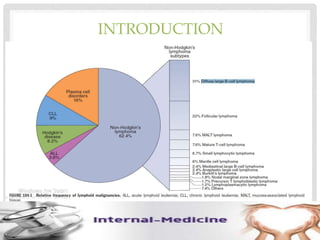
INTRODUCTION
EPIDEMIOLOGY
• Diffuse large B-cell lymphoma (DLBCL) is the most
common histologic subtype of NHL
• It is slightly more common in Caucasians and men, and
the median age at diagnosis is 64.
RISK FACTORS
The relative risk of DLBCL is higher amongst people with
affected first-degree relatives (RR 3.5-fold)
patients with congenital or acquired immunodeficiency
patients on immunosuppression, and patients with
autoimmune disorders also have a higher risk of
developing DLBCL, often EBV-related.
PRESENTATION
The majority of patients present with advanced stage
disease
with only 30–40% of patients having stage I or II disease
about 40% of patients will have “B” symptoms
50% of patients will have an elevated LDH.
Up to 40% of patients will have involvement of non-lymph
node sites including bone marrow, CNS, GI track, thyroid,
liver, and skin.
PRESENTATION
Patients with extensive bone marrow involvement,
or involvement of the testes, breast, kidney,
adrenal gland, paranasal sinus, or epidural space
are at increased risk of CNS dissemination.
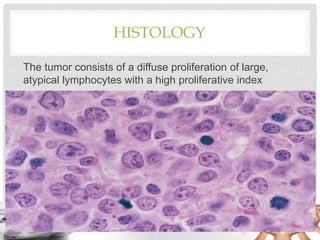
HISTOLOGY
The tumor consists of a diffuse proliferation of large,
atypical lymphocytes with a high proliferative index
IMMUNE PHENOTYPING
These cells typically express the B-cell antigens CD19,
CD20, and CD79a.
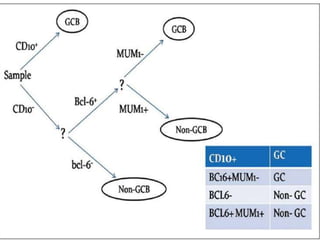
Expression of CD10 and BCL6 is consistent with the tumor
cell being of germinal center origin (GCB)
while the expression of MUM1 corresponds with the non-
GC or activated B cell (ABC) subtype.
GENETICS
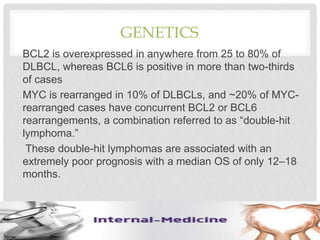
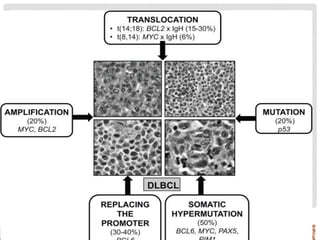
BCL2 is overexpressed in anywhere from 25 to 80% of
DLBCL, whereas BCL6 is positive in more than two-thirds
of cases
MYC is rearranged in 10% of DLBCLs, and ~20% of MYC-
rearranged cases have concurrent BCL2 or BCL6
rearrangements, a combination referred to as “double-hit
lymphoma.”
These double-hit lymphomas are associated with an
extremely poor prognosis with a median OS of only 12–18
months.
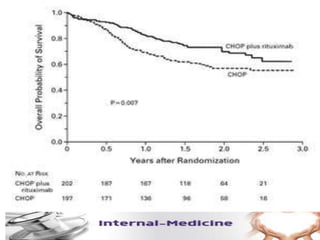
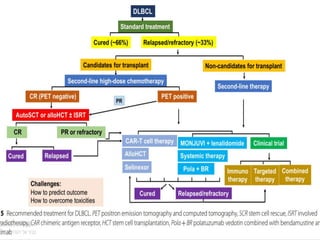
THERAPY
The addition of the anti-CD20 antibody rituximab to
cyclophosphamide, doxorubicin, vincristine, and
prednisone (R-CHOP) improved survival and is the
standard first-line chemotherapy for this disease.
EARLY STAGE DISEASE
For patients with early stage disease localized to a
radiation field, treatment options include full course
chemotherapy with R-CHOP every 3 weeks for 6 cycles/
abbreviated chemotherapy for 3–4 cycles followed by
involved field radiotherapy.
ADVANCED DISEASE
For advanced stage DLBCL, therapy is with a full course
of chemotherapy.
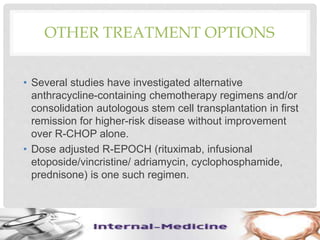
OTHER TREATMENT OPTIONS
• Several studies have investigated alternative
anthracycline-containing chemotherapy regimens and/or
consolidation autologous stem cell transplantation in first
remission for higher-risk disease without improvement
over R-CHOP alone.
• Dose adjusted R-EPOCH (rituximab, infusional
etoposide/vincristine/ adriamycin, cyclophosphamide,
prednisone) is one such regimen.
R-EPOCH
• Although this regimen is no better than R-CHOP for
DLBCL in general, it is often used to treat primary
mediastinal large B-cell lymphoma and double-hit
DLBCL based on results from phase 2 and retrospective
studies, respectively.
CNS PROPHYLAXIS
• intrathecal chemotherapy or high-dose systemic
methotrexate and leucovorin rescue should be
considered for patients with high risk of CNS
dissemination.
• This includes patients with primary testicular
involvement and breast involvement, as well as patients
with several IPI risk factors and diffuse bone marrow
involvement, renal involvement, or adrenal involvement.
RESISTANCE
• For patients with chemorefractory disease, clinical trials
or palliative therapy or clinical trials should be
considered, with a goal of achieving a disease response
sufficient for allogeneic stem cell transplant.
OTHER AGENTS FOR REFRACTORY
CASES
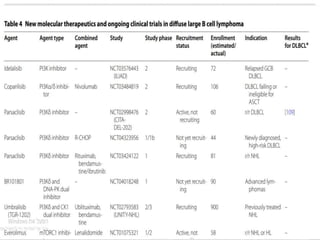
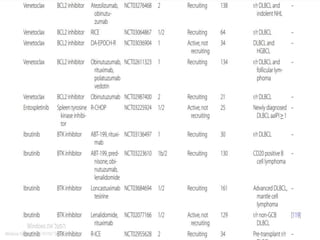
• Several new agents have shown some promise in
patients with relapsed DLBCL, including ibrutinib,
particularly in the ABC cell of origin subtype,
lenalidomide, and everolimus.
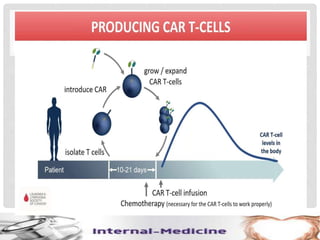
• This strategy uses T cells collected from a patient that
are genetically modified to express a receptor that will
bind to a surface antigen expressed on the patient’s own
tumor cells.
• In the case of B-cell malignancies, CD19 has been
targeted most commonly.
CHIMERIC ANTIGEN RECEPTOR T CELLS
(CAR-T CELLS)
Diffuse large B-cell lymphoma

Diffuse large B-cell lymphoma

  • 1.
    IR ON DEFIC IEN C Y A N D OTH ER H YPOPR OLIFER ATIVE A N EMIA S ZIV H OSPITA L 2 0 2 1 SA MEER SAWA ED , MD
  • 2.
  • 3.
    EPIDEMIOLOGY • Diffuse largeB-cell lymphoma (DLBCL) is the most common histologic subtype of NHL • It is slightly more common in Caucasians and men, and the median age at diagnosis is 64.
  • 4.
    RISK FACTORS The relativerisk of DLBCL is higher amongst people with affected first-degree relatives (RR 3.5-fold) patients with congenital or acquired immunodeficiency patients on immunosuppression, and patients with autoimmune disorders also have a higher risk of developing DLBCL, often EBV-related.
  • 5.
    PRESENTATION The majority ofpatients present with advanced stage disease with only 30–40% of patients having stage I or II disease about 40% of patients will have “B” symptoms 50% of patients will have an elevated LDH. Up to 40% of patients will have involvement of non-lymph node sites including bone marrow, CNS, GI track, thyroid, liver, and skin.
  • 6.
    PRESENTATION Patients with extensivebone marrow involvement, or involvement of the testes, breast, kidney, adrenal gland, paranasal sinus, or epidural space are at increased risk of CNS dissemination.
  • 7.
    HISTOLOGY The tumor consistsof a diffuse proliferation of large, atypical lymphocytes with a high proliferative index
  • 8.
    IMMUNE PHENOTYPING These cellstypically express the B-cell antigens CD19, CD20, and CD79a. Expression of CD10 and BCL6 is consistent with the tumor cell being of germinal center origin (GCB) while the expression of MUM1 corresponds with the non- GC or activated B cell (ABC) subtype.
  • 10.
    GENETICS BCL2 is overexpressedin anywhere from 25 to 80% of DLBCL, whereas BCL6 is positive in more than two-thirds of cases MYC is rearranged in 10% of DLBCLs, and ~20% of MYC- rearranged cases have concurrent BCL2 or BCL6 rearrangements, a combination referred to as “double-hit lymphoma.” These double-hit lymphomas are associated with an extremely poor prognosis with a median OS of only 12–18 months.
  • 13.
    THERAPY The addition ofthe anti-CD20 antibody rituximab to cyclophosphamide, doxorubicin, vincristine, and prednisone (R-CHOP) improved survival and is the standard first-line chemotherapy for this disease.
  • 15.
    EARLY STAGE DISEASE Forpatients with early stage disease localized to a radiation field, treatment options include full course chemotherapy with R-CHOP every 3 weeks for 6 cycles/ abbreviated chemotherapy for 3–4 cycles followed by involved field radiotherapy.
  • 16.
    ADVANCED DISEASE For advancedstage DLBCL, therapy is with a full course of chemotherapy.
  • 17.
    OTHER TREATMENT OPTIONS •Several studies have investigated alternative anthracycline-containing chemotherapy regimens and/or consolidation autologous stem cell transplantation in first remission for higher-risk disease without improvement over R-CHOP alone. • Dose adjusted R-EPOCH (rituximab, infusional etoposide/vincristine/ adriamycin, cyclophosphamide, prednisone) is one such regimen.
  • 20.
    R-EPOCH • Although thisregimen is no better than R-CHOP for DLBCL in general, it is often used to treat primary mediastinal large B-cell lymphoma and double-hit DLBCL based on results from phase 2 and retrospective studies, respectively.
  • 21.
    CNS PROPHYLAXIS • intrathecalchemotherapy or high-dose systemic methotrexate and leucovorin rescue should be considered for patients with high risk of CNS dissemination. • This includes patients with primary testicular involvement and breast involvement, as well as patients with several IPI risk factors and diffuse bone marrow involvement, renal involvement, or adrenal involvement.
  • 22.
    RESISTANCE • For patientswith chemorefractory disease, clinical trials or palliative therapy or clinical trials should be considered, with a goal of achieving a disease response sufficient for allogeneic stem cell transplant.
  • 23.
    OTHER AGENTS FORREFRACTORY CASES • Several new agents have shown some promise in patients with relapsed DLBCL, including ibrutinib, particularly in the ABC cell of origin subtype, lenalidomide, and everolimus.
  • 24.
    • This strategyuses T cells collected from a patient that are genetically modified to express a receptor that will bind to a surface antigen expressed on the patient’s own tumor cells. • In the case of B-cell malignancies, CD19 has been targeted most commonly. CHIMERIC ANTIGEN RECEPTOR T CELLS (CAR-T CELLS)

Editor's Notes

  • #3 A
  • #4 E
  • #6 C - no recommendation for complete drainage based solely on pleural luid protein result.