Treatment for GlioblastomaBy Cassie and Dylan
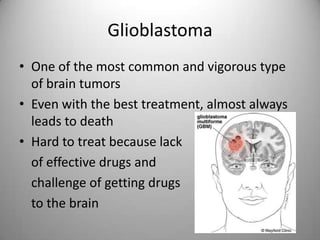
GlioblastomaOne of the most common and vigorous type of brain tumorsEven with the best treatment, almost always leads to deathHard to treat because lack 	of effective drugs and 	challenge of getting drugs 	to the brain
Current TreatmentsChemotherapy, surgery, and radiation are not very successfulTumor cells can be resistant to chemotherapyThese types of therapy can damage other parts of the brainMany drugs are unable to cross the blood brain barrier to treat the tumor
Blood Brain BarrierNatural defense system, keeps out toxins and microbesThe cells that line the walls of the capillaries of the brain are so tightly packed that it is hard for molecules in the bloodstream to go through and reach the brain tissueKeeps many tumor-fighting drugs out
TemodarTemozolomide – chemotherapy pillGoes through the blood brain barrierHas increased 2-year survival rate to 25% from 8%But new tumors continue to show up throughout the treatment
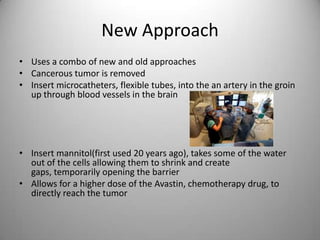
New ApproachUses a combo of new and old approachesCancerous tumor is removedInsert microcatheters, flexible tubes, into the an artery in the groin up through blood vessels in the brain Insert mannitol(first used 20 years ago), takes some of the water out of the cells allowing them to shrink and create gaps, temporarily opening the barrier Allows for a higher dose of the Avastin, chemotherapy drug, to directly reach the tumor
Avastin - EndostatinWorks in a similar way as EndostatinStops angiogenesis, preventing cancer cells from getting nutrients and the growth of the tumorsUnlike  Endostatin, Avastin not only slows down the tumor growth, it also makes them disappear
TodayStill in earliest phaseMain concerns are to find out if it is safe to directly spray Avastin into brain and at what dosesSo far, treatment seems to erase any sign of recurring glioblastoma tumorsBut how long it will last is still unknown
Sourcehttp://www.nytimes.com/2009/11/17/health/17tumor.html?pagewanted=1&_r=2&sudsredirect=true

Glioblastoma Presentation

  • 1.
  • 2.
    GlioblastomaOne of themost common and vigorous type of brain tumorsEven with the best treatment, almost always leads to deathHard to treat because lack of effective drugs and challenge of getting drugs to the brain
  • 3.
    Current TreatmentsChemotherapy, surgery,and radiation are not very successfulTumor cells can be resistant to chemotherapyThese types of therapy can damage other parts of the brainMany drugs are unable to cross the blood brain barrier to treat the tumor
  • 4.
    Blood Brain BarrierNaturaldefense system, keeps out toxins and microbesThe cells that line the walls of the capillaries of the brain are so tightly packed that it is hard for molecules in the bloodstream to go through and reach the brain tissueKeeps many tumor-fighting drugs out
  • 5.
    TemodarTemozolomide – chemotherapypillGoes through the blood brain barrierHas increased 2-year survival rate to 25% from 8%But new tumors continue to show up throughout the treatment
  • 6.
    New ApproachUses acombo of new and old approachesCancerous tumor is removedInsert microcatheters, flexible tubes, into the an artery in the groin up through blood vessels in the brain Insert mannitol(first used 20 years ago), takes some of the water out of the cells allowing them to shrink and create gaps, temporarily opening the barrier Allows for a higher dose of the Avastin, chemotherapy drug, to directly reach the tumor
  • 7.
    Avastin - EndostatinWorksin a similar way as EndostatinStops angiogenesis, preventing cancer cells from getting nutrients and the growth of the tumorsUnlike Endostatin, Avastin not only slows down the tumor growth, it also makes them disappear
  • 8.
    TodayStill in earliestphaseMain concerns are to find out if it is safe to directly spray Avastin into brain and at what dosesSo far, treatment seems to erase any sign of recurring glioblastoma tumorsBut how long it will last is still unknown
  • 9.