Immunology andImmunology and
MicrobiologyMicrobiology
Host-Microbe Interactions
 Non-specific (Innate) Immunity
First line of defense (Non-specificFirst line of defense (Non-specific
resistance)resistance)
Physical and Chemical Defenses
Normal Flora
 Second line of defense (Non-Second line of defense (Non-
specific resistance)specific resistance)
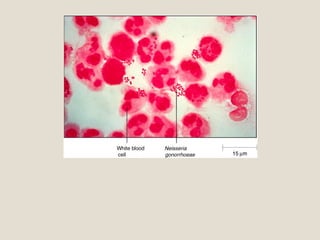
Phagocytosis
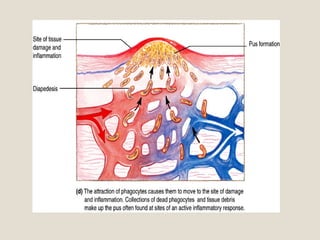
Inflammation
Fever
Antimicrobial substances: Complement,
Interferon
Third line of defense (Specific
Resistance)
Antibodies
B cells and T cells
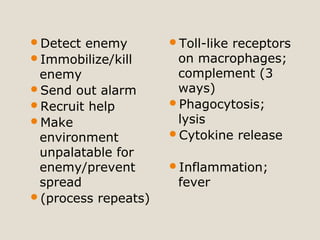
Detect enemy
Immobilize/kill
enemy
Send out alarm
Recruit help
Make
environment
unpalatable for
enemy/prevent
spread
(process repeats)
Toll-like receptors
on macrophages;
complement (3
ways)
Phagocytosis;
lysis
Cytokine release
Inflammation;
fever
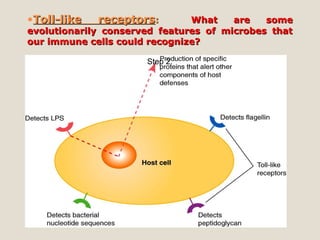
•Toll-like receptorsToll-like receptors:: What are someWhat are some
evolutionarily conserved features of microbes thatevolutionarily conserved features of microbes that
our immune cells could recognize?our immune cells could recognize?
Step 2.
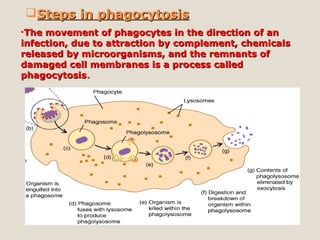
Steps in phagocytosisSteps in phagocytosis
•The movement of phagocytes in the direction of anThe movement of phagocytes in the direction of an
infection, due to attraction by complement, chemicalsinfection, due to attraction by complement, chemicals
released by microorganisms, and the remnants ofreleased by microorganisms, and the remnants of
damaged cell membranes is a process calleddamaged cell membranes is a process called
phagocytosisphagocytosis..
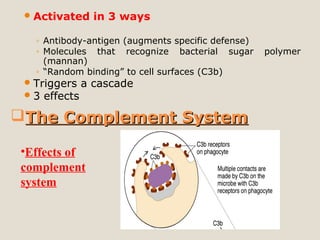
The Complement SystemThe Complement System
Activated in 3 ways
◦ Antibody-antigen (augments specific defense)
◦ Molecules that recognize bacterial sugar polymer
(mannan)
◦ “Random binding” to cell surfaces (C3b)
Triggers a cascade
3 effects
•Effects of
complement
system
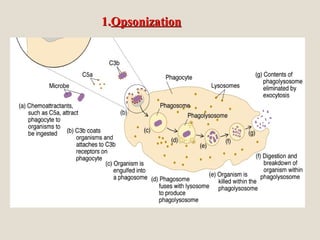
1.1.OpsonizationOpsonization
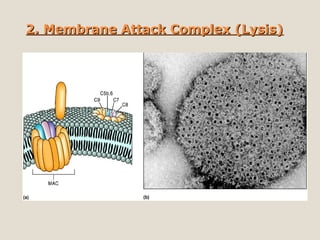
2. Membrane Attack Complex (Lysis)2. Membrane Attack Complex (Lysis)
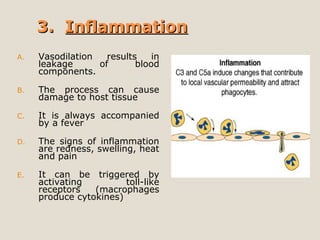
3.3. InflammationInflammation
A. Vasodilation results in
leakage of blood
components.
B. The process can cause
damage to host tissue
C. It is always accompanied
by a fever
D. The signs of inflammation
are redness, swelling, heat
and pain
E. It can be triggered by
activating toll-like
receptors (macrophages
produce cytokines)
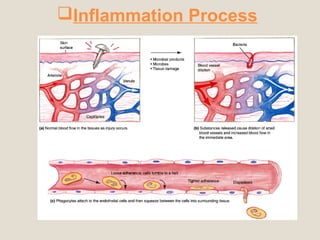
Inflammation Process
Hypothalamus controls body
temp.
Pyrogens resets temp set
point.
Pyrogens: cytokines; LPS
Unfavourable for bacterial
replication.
Favourable for immune
response--phagocytosis;
lymphocyte replication etc.
FEVER
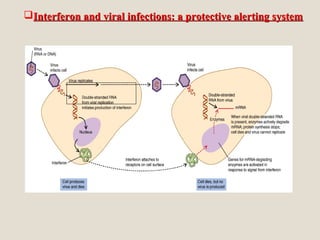
Interferon and viral infections: a protective alerting systemInterferon and viral infections: a protective alerting system
1. Innate (Non-specific)1. Innate (Non-specific)
DefensesDefenses
a. Chemical anda. Chemical and
Physical;Physical; ((BiologicalBiological))
b. Normal Florab. Normal Flora
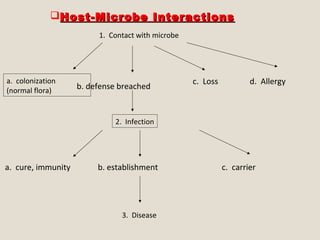
Host-Microbe InteractionsHost-Microbe Interactions
1. Contact with microbe
a. colonization
(normal flora)
b. defense breached
c. Loss d. Allergy
2. Infection
a. cure, immunity b. establishment c. carrier
3. Disease
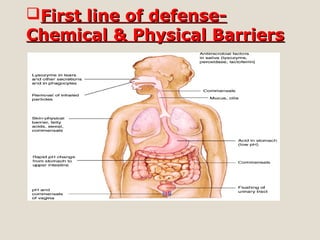
First line of defense-First line of defense-
Chemical & Physical BarriersChemical & Physical Barriers
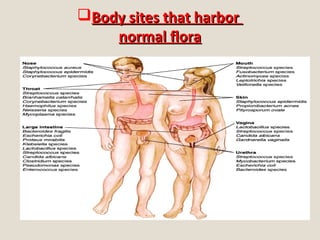
Body sites that harborBody sites that harbor
normal floranormal flora
Importance of the normal floraImportance of the normal flora
Prevent attachment of invading organisms
Produce antimicrobial substances against
other microbes that are pathogens
Stimulate immune system
◦ Cause the production of cross-reacting
antibodies
Significant nutritional source of vitamins
Cause dental caries and gum disease
How do we acquire microflora?How do we acquire microflora?
During birth & within first 12 hours after
delivery
Breast-fed v bottle-fed
Contact with people, environment, food.
Eruption of teeth & introduction of solid
food.
What leads to changes in theWhat leads to changes in the
normal flora?normal flora?
Antibiotic treatment
Immunosuppression
Diet
Changes in physiology , e.g. estrogen-
glycogen effect
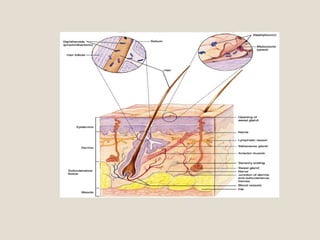
Normal Skin FloraNormal Skin Flora
1000 to >1 million/ cm2
Diphtheroids: G+ rods & cocci, e.g.
Corynebacterium & Proprionobacterium ,
e.g. P.acnes (acne)
facultatively anaerobic, coagulase
negative Staphylococci [carriers of
coagulase positive S. aureus in
population]
Yeasts
First line of defense (Non-specific resistance)
• Physical and Chemical Defenses
• Normal Flora
Second line of defense (Non-specific resistance)
• Phagocytosis
• Inflammation
• Fever
• Antimicrobial substances: Complement, Interferon
Third line of defense (Specific Resistance)
• B cells and T cells
• Antibodies and Humoral Response
• Cellular Mediated Immunity
Genetic Immunodeficiencies
Common Variable Hypogammaglobulinemia: Affecting both males and females and occurring at
any age, this disease is manifest by repeated pyrogenic infections. The B cells fail to mature
to plasma cells. Passive Ig is the common treatment.
Chronic Candidiasis: Fungal infection by nonpathogenic yeast is the manifestation of a number of
afflictions where few mature T cells are present. These patients often have B cells that
respond to T-independent antigens, but Candida albicans (yeast) stimulates a poor antibody
response.
1) What immune component fails to be made in CVH?
2) How come a defect in T cells affects antibody response in chronic candidiasis?
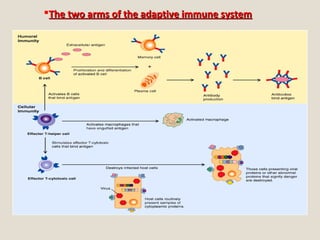
The two arms of the adaptive immune systemThe two arms of the adaptive immune system
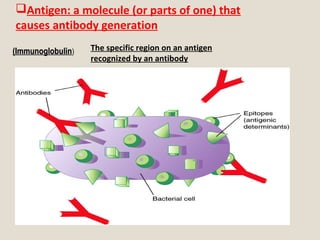
Antigen: a molecule (or parts of one) that
causes antibody generation
(Immunoglobulin(Immunoglobulin) The specific region on an antigen
recognized by an antibody
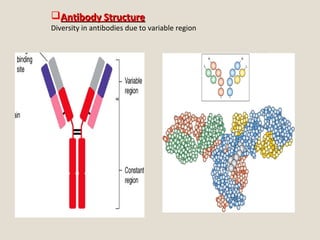
Antibody StructureAntibody Structure
Diversity in antibodies due to variable region
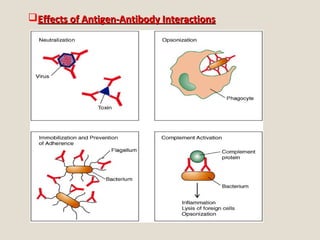
Effects of Antigen-Antibody InteractionsEffects of Antigen-Antibody Interactions
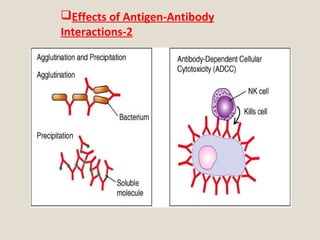
Effects of Antigen-Antibody
Interactions-2
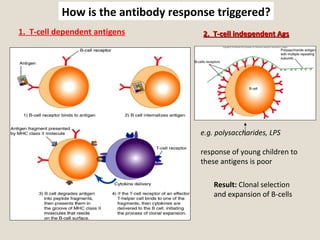
How is the antibody response triggered?
1. T-cell dependent antigens 2. T-cell independent Ags2. T-cell independent Ags
e.g. polysaccharides, LPS
response of young children to
these antigens is poor
Result: Clonal selection
and expansion of B-cells
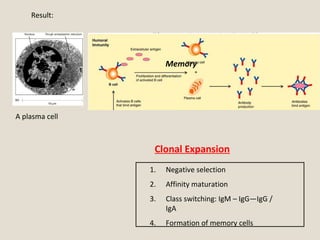
A plasma cell
Clonal Expansion
Memory
Result:
1. Negative selection
2. Affinity maturation
3. Class switching: IgM – IgG—IgG /
IgA
4. Formation of memory cells
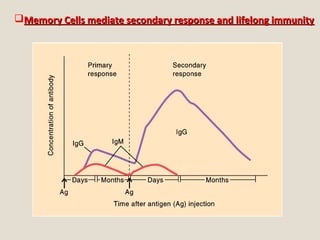
Memory Cells mediate secondary response and lifelong immunityMemory Cells mediate secondary response and lifelong immunity
 Cellular ImmunityCellular Immunity
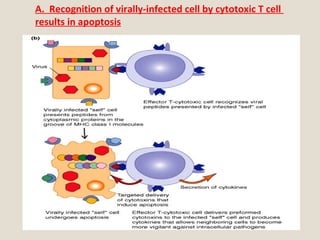
1. Cytotoxic T cells (CD8+)
• Eliminates cells infected with virus, intracellular parasite
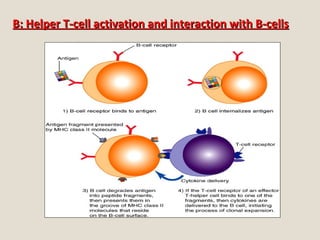
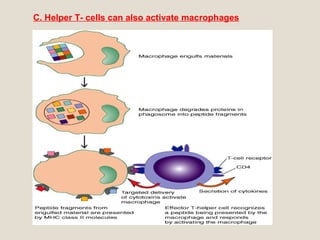
2. Helper T cells (CD4+)
• Mediates B-cell proliferation; macrophage activation
 Both stimulated by dendritic cells (cells of innate immunity)
 Both produce cytokines that stimulate own proliferation
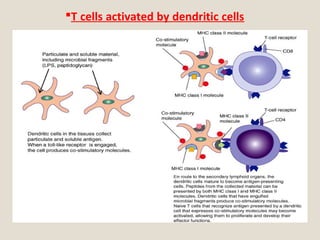
T cells activated by dendritic cells
A. Recognition of virally-infected cell by cytotoxic T cell
results in apoptosis
B: Helper T-cell activation and interaction with B-cellsB: Helper T-cell activation and interaction with B-cells
C. Helper T- cells can also activate macrophages
Applications of Principles ofApplications of Principles of
ImmunityImmunity
40
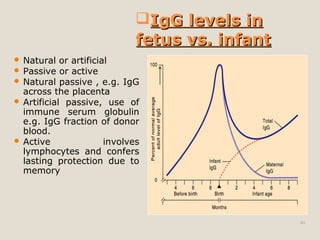
IgG levels inIgG levels in
fetus vs. infantfetus vs. infant
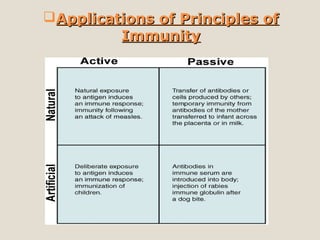
 Natural or artificial
 Passive or active
 Natural passive , e.g. IgG
across the placenta
 Artificial passive, use of
immune serum globulin
e.g. IgG fraction of donor
blood.
 Active involves
lymphocytes and confers
lasting protection due to
memory
41
42
43
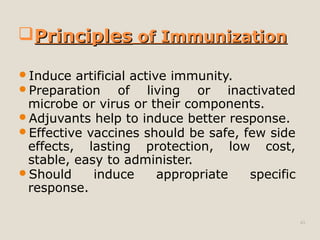
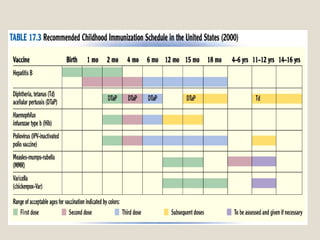
Induce artificial active immunity.
Preparation of living or inactivated
microbe or virus or their components.
Adjuvants help to induce better response.
Effective vaccines should be safe, few side
effects, lasting protection, low cost,
stable, easy to administer.
Should induce appropriate specific
response.
PrinciplesPrinciples of Immunizationof Immunization
44
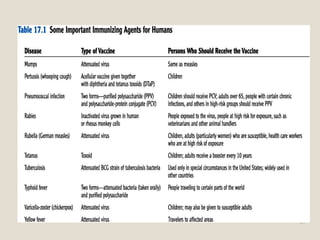
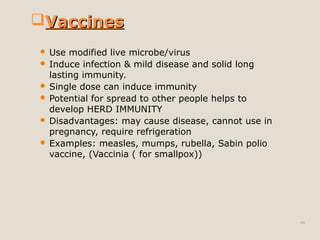
 Use modified live microbe/virus
 Induce infection & mild disease and solid long
lasting immunity.
 Single dose can induce immunity
 Potential for spread to other people helps to
develop HERD IMMUNITY
 Disadvantages: may cause disease, cannot use in
pregnancy, require refrigeration
 Examples: measles, mumps, rubella, Sabin polio
vaccine, (Vaccinia ( for smallpox))
VaccinesVaccines
45
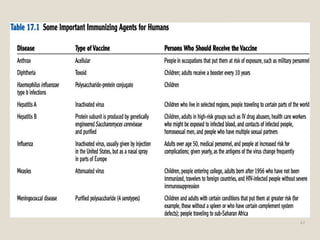
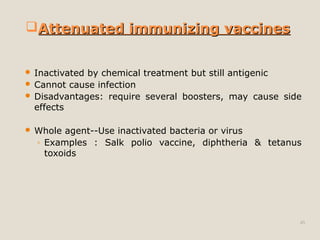
 Inactivated by chemical treatment but still antigenic
 Cannot cause infection
 Disadvantages: require several boosters, may cause side
effects
 Whole agent--Use inactivated bacteria or virus
◦ Examples : Salk polio vaccine, diphtheria & tetanus
toxoids
Attenuated immunizing vaccinesAttenuated immunizing vaccines
46
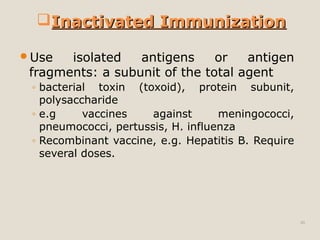
Use isolated antigens or antigen
fragments: a subunit of the total agent
◦ bacterial toxin (toxoid), protein subunit,
polysaccharide
◦ e.g vaccines against meningococci,
pneumococci, pertussis, H. influenza
◦ Recombinant vaccine, e.g. Hepatitis B. Require
several doses.
Inactivated ImmunizationInactivated Immunization
47
48
49
HIV/AIDS, Malaria, cancer
Use of DNA alone
Further information: www.immunizationinfo.org
vaccine.chop.edu (Children’s Hospital of
Philadelphia)
Developing New Smallpox Vaccines, in EID, vol7,
#6, 2001. On line at www.cdc.gov/eid
Inactivated Immunization:Inactivated Immunization:
Subunit vaccinesSubunit vaccines
SerologySerology
Testing for the presence of a
specific antigen using specific
antibody (antiserum)
Examples: ELISA blood test for
HIV,
home pregnancy test
http://www.sumanasinc.com/webcontent/an
50
Future developments &Future developments &
informationinformation
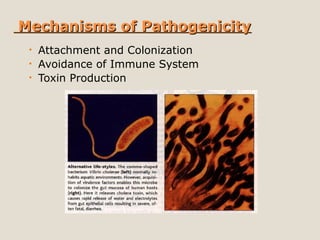
Mechanisms of PathogenicityMechanisms of Pathogenicity
• Attachment and Colonization
• Avoidance of Immune System
• Toxin Production
Host-Parasite DynamicsHost-Parasite Dynamics
1. Reservoirs
2. Modes of transmission
3. Adherence and invasion of host
4. Growth in/on host
5. Evade host defense
6. Damage host
7. Leave host for reservoir or new host
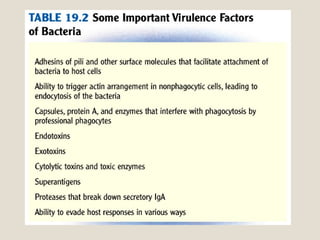
How do bacterial pathogens overcome host defenses?
VIRULENCE FACTORSVIRULENCE FACTORS
bacterial products or structural components that contribute tobacterial products or structural components that contribute to
pathogenicity or diseasepathogenicity or disease
A. promote bacterial colonization of the host
(infectivity and invasiveness)
B. obtain nutrients, especially iron
C. evade immune system
D. actively harm the host (toxins)
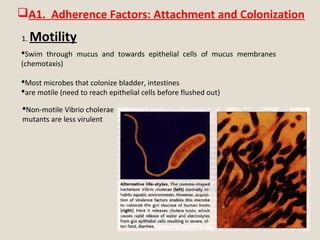
1. Motility
Swim through mucus and towards epithelial cells of mucus membranes
(chemotaxis)
Most microbes that colonize bladder, intestines
are motile (need to reach epithelial cells before flushed out)
Non-motile Vibrio cholerae
mutants are less virulent
A1. Adherence Factors: Attachment and Colonization
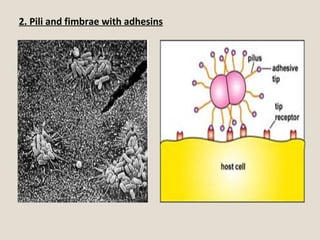
2. Pili and fimbrae with adhesins
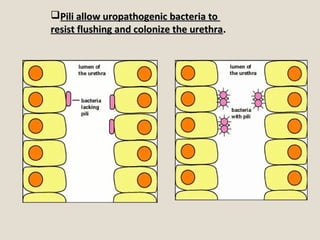
Pili allow uropathogenic bacteria toPili allow uropathogenic bacteria to
resist flushing and colonize the urethraresist flushing and colonize the urethra..
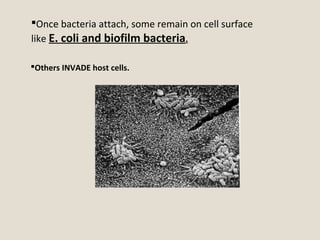
Once bacteria attach, some remain on cell surface
like E. coli and biofilm bacteria.
Others INVADE host cells.
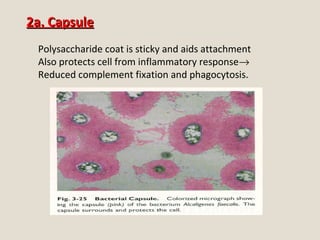
2a. Capsule2a. Capsule
Polysaccharide coat is sticky and aids attachment
Also protects cell from inflammatory response→
Reduced complement fixation and phagocytosis.
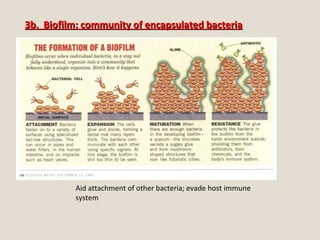
3b. Biofilm: community of encapsulated bacteria3b. Biofilm: community of encapsulated bacteria
Aid attachment of other bacteria; evade host immune
system
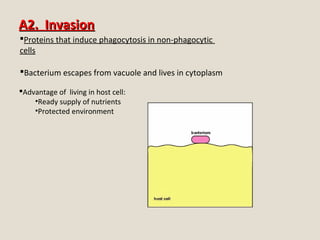
A2. InvasionA2. Invasion
Proteins that induce phagocytosis in non-phagocytic
cells
Advantage of living in host cell:
•Ready supply of nutrients
•Protected environment
Bacterium escapes from vacuole and lives in cytoplasm
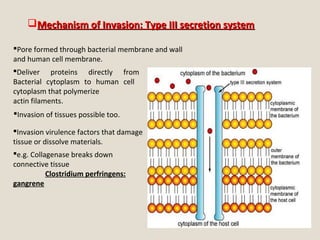
Mechanism of Invasion: Type III secretion systemMechanism of Invasion: Type III secretion system
Pore formed through bacterial membrane and wall
and human cell membrane.
Deliver proteins directly from
Bacterial cytoplasm to human cell
cytoplasm that polymerize
actin filaments.
Invasion of tissues possible too.
Invasion virulence factors that damage
tissue or dissolve materials.
e.g. Collagenase breaks down
connective tissue
Clostridium perfringens:
gangrene
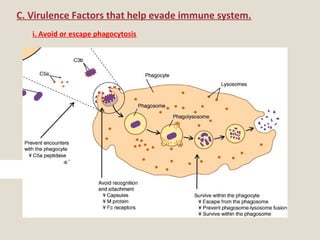
C. Virulence Factors that help evade immune system.
i. Avoid or escape phagocytosis
• destroy phagocytes or signals for
recruitment
• capsule
• type III secretion of proteins that directly
inhibit phagocytosis: Yersinia pestis
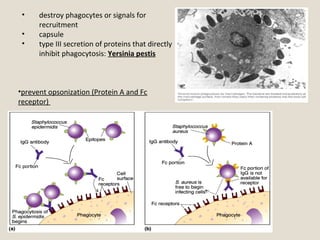
•prevent opsonization (Protein A and Fc
receptor)
Antigenic variability (phase variation):
alter genes that encode surface
proteins
like adhesins
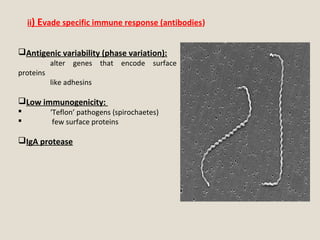
Low immunogenicity:
 ‘Teflon’ pathogens (spirochaetes)
 few surface proteins
IgA protease
ii) Evade specific immune response (antibodies)
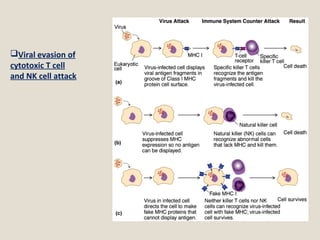
Viral evasion of
cytotoxic T cell
and NK cell attack
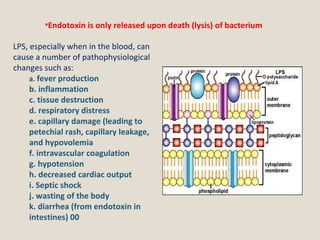
LPS, especially when in the blood, can
cause a number of pathophysiological
changes such as:
a. fever production
b. inflammation
c. tissue destruction
d. respiratory distress
e. capillary damage (leading to
petechial rash, capillary leakage,
and hypovolemia
f. intravascular coagulation
g. hypotension
h. decreased cardiac output
i. Septic shock
j. wasting of the body
k. diarrhea (from endotoxin in
intestines) 00
•Endotoxin is only released upon death (lysis) of bacterium
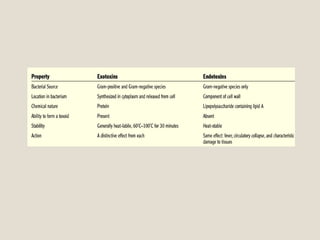
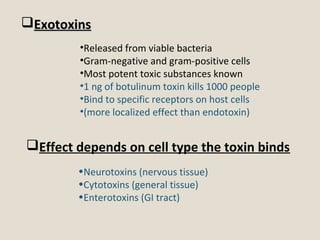
ExotoxinsExotoxins
•Released from viable bacteria
•Gram-negative and gram-positive cells
•Most potent toxic substances known
•1 ng of botulinum toxin kills 1000 people
•Bind to specific receptors on host cells
•(more localized effect than endotoxin)
•Neurotoxins (nervous tissue)
•Cytotoxins (general tissue)
•Enterotoxins (GI tract)
Effect depends on cell type the toxin binds
Examples of bacterial exotoxinsExamples of bacterial exotoxins
Botulinum toxin (neurotoxin)
• Blocks release of neurotransmitter
• Paralysis results
Cholera toxin (enterotoxin)
• Fluid loss results
Genetics of Pathogenicity
•can involve many genes, complex.
•chromosomal, plasmids, bacteriophage.
•Transfer of virulence genes via transformation,
•transduction, and conjugation.
•Virulence factor genes often transferred as groups
•called pathogenicity islands: type III secretion system

Immunology and Microbiology,Host-Microbe Interactions

  • 1.
    Immunology andImmunology and MicrobiologyMicrobiology Host-MicrobeInteractions  Non-specific (Innate) Immunity First line of defense (Non-specificFirst line of defense (Non-specific resistance)resistance) Physical and Chemical Defenses Normal Flora
  • 2.
     Second lineof defense (Non-Second line of defense (Non- specific resistance)specific resistance) Phagocytosis Inflammation Fever Antimicrobial substances: Complement, Interferon Third line of defense (Specific Resistance) Antibodies B cells and T cells
  • 3.
    Detect enemy Immobilize/kill enemy Send outalarm Recruit help Make environment unpalatable for enemy/prevent spread (process repeats) Toll-like receptors on macrophages; complement (3 ways) Phagocytosis; lysis Cytokine release Inflammation; fever
  • 4.
    •Toll-like receptorsToll-like receptors::What are someWhat are some evolutionarily conserved features of microbes thatevolutionarily conserved features of microbes that our immune cells could recognize?our immune cells could recognize? Step 2.
  • 5.
    Steps in phagocytosisStepsin phagocytosis •The movement of phagocytes in the direction of anThe movement of phagocytes in the direction of an infection, due to attraction by complement, chemicalsinfection, due to attraction by complement, chemicals released by microorganisms, and the remnants ofreleased by microorganisms, and the remnants of damaged cell membranes is a process calleddamaged cell membranes is a process called phagocytosisphagocytosis..
  • 6.
    The Complement SystemTheComplement System Activated in 3 ways ◦ Antibody-antigen (augments specific defense) ◦ Molecules that recognize bacterial sugar polymer (mannan) ◦ “Random binding” to cell surfaces (C3b) Triggers a cascade 3 effects •Effects of complement system
  • 7.
  • 8.
    2. Membrane AttackComplex (Lysis)2. Membrane Attack Complex (Lysis)
  • 9.
    3.3. InflammationInflammation A. Vasodilationresults in leakage of blood components. B. The process can cause damage to host tissue C. It is always accompanied by a fever D. The signs of inflammation are redness, swelling, heat and pain E. It can be triggered by activating toll-like receptors (macrophages produce cytokines)
  • 10.
  • 13.
    Hypothalamus controls body temp. Pyrogensresets temp set point. Pyrogens: cytokines; LPS Unfavourable for bacterial replication. Favourable for immune response--phagocytosis; lymphocyte replication etc. FEVER
  • 14.
    Interferon and viralinfections: a protective alerting systemInterferon and viral infections: a protective alerting system
  • 15.
    1. Innate (Non-specific)1.Innate (Non-specific) DefensesDefenses a. Chemical anda. Chemical and Physical;Physical; ((BiologicalBiological)) b. Normal Florab. Normal Flora
  • 16.
    Host-Microbe InteractionsHost-Microbe Interactions 1.Contact with microbe a. colonization (normal flora) b. defense breached c. Loss d. Allergy 2. Infection a. cure, immunity b. establishment c. carrier 3. Disease
  • 17.
    First line ofdefense-First line of defense- Chemical & Physical BarriersChemical & Physical Barriers
  • 18.
    Body sites thatharborBody sites that harbor normal floranormal flora
  • 19.
    Importance of thenormal floraImportance of the normal flora Prevent attachment of invading organisms Produce antimicrobial substances against other microbes that are pathogens Stimulate immune system ◦ Cause the production of cross-reacting antibodies Significant nutritional source of vitamins Cause dental caries and gum disease
  • 20.
    How do weacquire microflora?How do we acquire microflora? During birth & within first 12 hours after delivery Breast-fed v bottle-fed Contact with people, environment, food. Eruption of teeth & introduction of solid food.
  • 21.
    What leads tochanges in theWhat leads to changes in the normal flora?normal flora? Antibiotic treatment Immunosuppression Diet Changes in physiology , e.g. estrogen- glycogen effect
  • 23.
    Normal Skin FloraNormalSkin Flora 1000 to >1 million/ cm2 Diphtheroids: G+ rods & cocci, e.g. Corynebacterium & Proprionobacterium , e.g. P.acnes (acne) facultatively anaerobic, coagulase negative Staphylococci [carriers of coagulase positive S. aureus in population] Yeasts
  • 24.
    First line ofdefense (Non-specific resistance) • Physical and Chemical Defenses • Normal Flora Second line of defense (Non-specific resistance) • Phagocytosis • Inflammation • Fever • Antimicrobial substances: Complement, Interferon Third line of defense (Specific Resistance) • B cells and T cells • Antibodies and Humoral Response • Cellular Mediated Immunity
  • 25.
    Genetic Immunodeficiencies Common VariableHypogammaglobulinemia: Affecting both males and females and occurring at any age, this disease is manifest by repeated pyrogenic infections. The B cells fail to mature to plasma cells. Passive Ig is the common treatment. Chronic Candidiasis: Fungal infection by nonpathogenic yeast is the manifestation of a number of afflictions where few mature T cells are present. These patients often have B cells that respond to T-independent antigens, but Candida albicans (yeast) stimulates a poor antibody response. 1) What immune component fails to be made in CVH? 2) How come a defect in T cells affects antibody response in chronic candidiasis?
  • 26.
    The two armsof the adaptive immune systemThe two arms of the adaptive immune system
  • 27.
    Antigen: a molecule(or parts of one) that causes antibody generation (Immunoglobulin(Immunoglobulin) The specific region on an antigen recognized by an antibody
  • 28.
    Antibody StructureAntibody Structure Diversityin antibodies due to variable region
  • 29.
    Effects of Antigen-AntibodyInteractionsEffects of Antigen-Antibody Interactions
  • 30.
  • 31.
    How is theantibody response triggered? 1. T-cell dependent antigens 2. T-cell independent Ags2. T-cell independent Ags e.g. polysaccharides, LPS response of young children to these antigens is poor Result: Clonal selection and expansion of B-cells
  • 32.
    A plasma cell ClonalExpansion Memory Result: 1. Negative selection 2. Affinity maturation 3. Class switching: IgM – IgG—IgG / IgA 4. Formation of memory cells
  • 33.
    Memory Cells mediatesecondary response and lifelong immunityMemory Cells mediate secondary response and lifelong immunity
  • 34.
     Cellular ImmunityCellularImmunity 1. Cytotoxic T cells (CD8+) • Eliminates cells infected with virus, intracellular parasite 2. Helper T cells (CD4+) • Mediates B-cell proliferation; macrophage activation  Both stimulated by dendritic cells (cells of innate immunity)  Both produce cytokines that stimulate own proliferation
  • 35.
    T cells activatedby dendritic cells
  • 36.
    A. Recognition ofvirally-infected cell by cytotoxic T cell results in apoptosis
  • 37.
    B: Helper T-cellactivation and interaction with B-cellsB: Helper T-cell activation and interaction with B-cells
  • 38.
    C. Helper T-cells can also activate macrophages
  • 39.
    Applications of PrinciplesofApplications of Principles of ImmunityImmunity
  • 40.
    40 IgG levels inIgGlevels in fetus vs. infantfetus vs. infant  Natural or artificial  Passive or active  Natural passive , e.g. IgG across the placenta  Artificial passive, use of immune serum globulin e.g. IgG fraction of donor blood.  Active involves lymphocytes and confers lasting protection due to memory
  • 41.
  • 42.
  • 43.
    43 Induce artificial activeimmunity. Preparation of living or inactivated microbe or virus or their components. Adjuvants help to induce better response. Effective vaccines should be safe, few side effects, lasting protection, low cost, stable, easy to administer. Should induce appropriate specific response. PrinciplesPrinciples of Immunizationof Immunization
  • 44.
    44  Use modifiedlive microbe/virus  Induce infection & mild disease and solid long lasting immunity.  Single dose can induce immunity  Potential for spread to other people helps to develop HERD IMMUNITY  Disadvantages: may cause disease, cannot use in pregnancy, require refrigeration  Examples: measles, mumps, rubella, Sabin polio vaccine, (Vaccinia ( for smallpox)) VaccinesVaccines
  • 45.
    45  Inactivated bychemical treatment but still antigenic  Cannot cause infection  Disadvantages: require several boosters, may cause side effects  Whole agent--Use inactivated bacteria or virus ◦ Examples : Salk polio vaccine, diphtheria & tetanus toxoids Attenuated immunizing vaccinesAttenuated immunizing vaccines
  • 46.
    46 Use isolated antigensor antigen fragments: a subunit of the total agent ◦ bacterial toxin (toxoid), protein subunit, polysaccharide ◦ e.g vaccines against meningococci, pneumococci, pertussis, H. influenza ◦ Recombinant vaccine, e.g. Hepatitis B. Require several doses. Inactivated ImmunizationInactivated Immunization
  • 47.
  • 48.
  • 49.
    49 HIV/AIDS, Malaria, cancer Useof DNA alone Further information: www.immunizationinfo.org vaccine.chop.edu (Children’s Hospital of Philadelphia) Developing New Smallpox Vaccines, in EID, vol7, #6, 2001. On line at www.cdc.gov/eid Inactivated Immunization:Inactivated Immunization: Subunit vaccinesSubunit vaccines
  • 50.
    SerologySerology Testing for thepresence of a specific antigen using specific antibody (antiserum) Examples: ELISA blood test for HIV, home pregnancy test http://www.sumanasinc.com/webcontent/an 50 Future developments &Future developments & informationinformation
  • 51.
    Mechanisms of PathogenicityMechanismsof Pathogenicity • Attachment and Colonization • Avoidance of Immune System • Toxin Production
  • 52.
    Host-Parasite DynamicsHost-Parasite Dynamics 1.Reservoirs 2. Modes of transmission 3. Adherence and invasion of host 4. Growth in/on host 5. Evade host defense 6. Damage host 7. Leave host for reservoir or new host How do bacterial pathogens overcome host defenses? VIRULENCE FACTORSVIRULENCE FACTORS bacterial products or structural components that contribute tobacterial products or structural components that contribute to pathogenicity or diseasepathogenicity or disease A. promote bacterial colonization of the host (infectivity and invasiveness) B. obtain nutrients, especially iron C. evade immune system D. actively harm the host (toxins)
  • 54.
    1. Motility Swim throughmucus and towards epithelial cells of mucus membranes (chemotaxis) Most microbes that colonize bladder, intestines are motile (need to reach epithelial cells before flushed out) Non-motile Vibrio cholerae mutants are less virulent A1. Adherence Factors: Attachment and Colonization
  • 55.
    2. Pili andfimbrae with adhesins
  • 56.
    Pili allow uropathogenicbacteria toPili allow uropathogenic bacteria to resist flushing and colonize the urethraresist flushing and colonize the urethra..
  • 57.
    Once bacteria attach,some remain on cell surface like E. coli and biofilm bacteria. Others INVADE host cells.
  • 58.
    2a. Capsule2a. Capsule Polysaccharidecoat is sticky and aids attachment Also protects cell from inflammatory response→ Reduced complement fixation and phagocytosis.
  • 59.
    3b. Biofilm: communityof encapsulated bacteria3b. Biofilm: community of encapsulated bacteria Aid attachment of other bacteria; evade host immune system
  • 60.
    A2. InvasionA2. Invasion Proteinsthat induce phagocytosis in non-phagocytic cells Advantage of living in host cell: •Ready supply of nutrients •Protected environment Bacterium escapes from vacuole and lives in cytoplasm
  • 61.
    Mechanism of Invasion:Type III secretion systemMechanism of Invasion: Type III secretion system Pore formed through bacterial membrane and wall and human cell membrane. Deliver proteins directly from Bacterial cytoplasm to human cell cytoplasm that polymerize actin filaments. Invasion of tissues possible too. Invasion virulence factors that damage tissue or dissolve materials. e.g. Collagenase breaks down connective tissue Clostridium perfringens: gangrene
  • 62.
    C. Virulence Factorsthat help evade immune system. i. Avoid or escape phagocytosis
  • 63.
    • destroy phagocytesor signals for recruitment • capsule • type III secretion of proteins that directly inhibit phagocytosis: Yersinia pestis •prevent opsonization (Protein A and Fc receptor)
  • 64.
    Antigenic variability (phasevariation): alter genes that encode surface proteins like adhesins Low immunogenicity:  ‘Teflon’ pathogens (spirochaetes)  few surface proteins IgA protease ii) Evade specific immune response (antibodies)
  • 65.
    Viral evasion of cytotoxicT cell and NK cell attack
  • 66.
    LPS, especially whenin the blood, can cause a number of pathophysiological changes such as: a. fever production b. inflammation c. tissue destruction d. respiratory distress e. capillary damage (leading to petechial rash, capillary leakage, and hypovolemia f. intravascular coagulation g. hypotension h. decreased cardiac output i. Septic shock j. wasting of the body k. diarrhea (from endotoxin in intestines) 00 •Endotoxin is only released upon death (lysis) of bacterium
  • 68.
    ExotoxinsExotoxins •Released from viablebacteria •Gram-negative and gram-positive cells •Most potent toxic substances known •1 ng of botulinum toxin kills 1000 people •Bind to specific receptors on host cells •(more localized effect than endotoxin) •Neurotoxins (nervous tissue) •Cytotoxins (general tissue) •Enterotoxins (GI tract) Effect depends on cell type the toxin binds
  • 69.
    Examples of bacterialexotoxinsExamples of bacterial exotoxins Botulinum toxin (neurotoxin) • Blocks release of neurotransmitter • Paralysis results Cholera toxin (enterotoxin) • Fluid loss results
  • 70.
    Genetics of Pathogenicity •caninvolve many genes, complex. •chromosomal, plasmids, bacteriophage. •Transfer of virulence genes via transformation, •transduction, and conjugation. •Virulence factor genes often transferred as groups •called pathogenicity islands: type III secretion system

Editor's Notes