
Prepared By:
Bhavya Dhir L-2013-HSC-04-BND
Garima Goyal L-2013-HSC-09-BND
Kritika Gupta L-2013-HSC-20-BND
HIGHLIGHTS
The proportion of elderly individuals is increasing in both
developed and developing countries.
Major Consequence –
• Significant increase in age related illness and disease
• Increase in health related expenditure
Factors affecting ageing process –
• Genetic
• Environmental
i. Nutritional factors
ii. Exposure to antigens throughout life
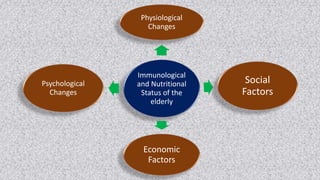
Immunological
and Nutritional
Status of the
elderly
Physiological
Changes
Social
Factors
Economic
Factors
Psychological
Changes
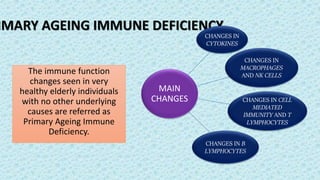
IMARY AGEING IMMUNE DEFICIENCY
The immune function
changes seen in very
healthy elderly individuals
with no other underlying
causes are referred as
Primary Ageing Immune
Deficiency.
MAIN
CHANGES
CHANGES IN
CYTOKINES
CHANGES IN CELL
MEDIATED
IMMUNITY AND T
LYMPHOCYTES
CHANGES IN B
LYMPHOCYTES
CHANGES IN
MACROPHAGES
AND NK CELLS
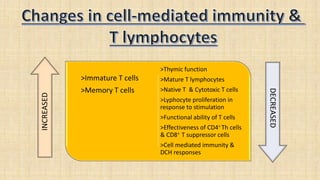
>Immature T cells
>Memory T cells
>Thymic function
>Mature T lymphocytes
>Native T & Cytotoxic T cells
>Lyphocyte proliferation in
response to stimulation
>Functional ability of T cells
>Effectiveness of CD4+ Th cells
& CD8+ T suppressor cells
>Cell mediated immunity &
DCH responses
INCREASED
DECREASED
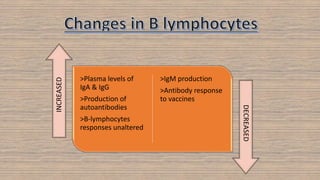
>Plasma levels of
IgA & IgG
>Production of
autoantibodies
>B-lymphocytes
responses unaltered
>IgM production
>Antibody response
to vaccines
INCREASED
DECREASED
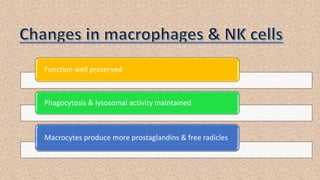
Function well preserved
Phagocytosis & lysosomal activity maintained
Macrocytes produce more prostaglandins & free radicles
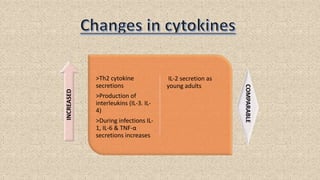
>Th2 cytokine
secretions
>Production of
interleukins (IL-3. IL-
4)
>During infections IL-
1, IL-6 & TNF-α
secretions increases
IL-2 secretion as
young adults
INCREASED
COMPARABLE
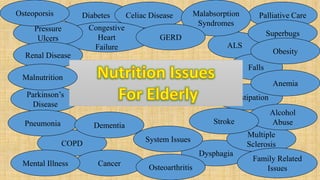
Diabetes
ALS
COPD
Dysphagia
Cancer
Palliative CareCeliac Disease
Constipation
Superbugs
Congestive
Heart
Failure
Pressure
Ulcers
Multiple
Sclerosis
Parkinson’s
Disease
Malabsorption
Syndromes
Osteoporsis
GERD
Pneumonia
Falls
Alcohol
AbuseStroke
Osteoarthritis
Anemia
Family Related
Issues
Renal Disease
System Issues
Dementia
Mental Illness
Obesity
Malnutrition
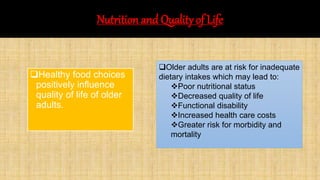
Nutrition and Quality of Life
Healthy food choices
positively influence
quality of life of older
adults.
Older adults are at risk for inadequate
dietary intakes which may lead to:
Poor nutritional status
Decreased quality of life
Functional disability
Increased health care costs
Greater risk for morbidity and
mortality
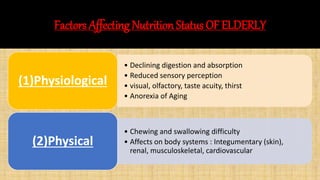
Factors Affecting Nutrition Status OF ELDERLY
• Declining digestion and absorption
• Reduced sensory perception
• visual, olfactory, taste acuity, thirst
• Anorexia of Aging
(1)Physiological
• Chewing and swallowing difficulty
• Affects on body systems : Integumentary (skin),
renal, musculoskeletal, cardiovascular
(2)Physical
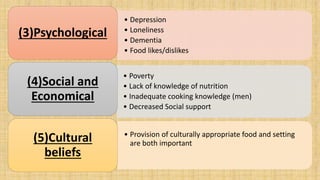
• Depression
• Loneliness
• Dementia
• Food likes/dislikes
(3)Psychological
• Poverty
• Lack of knowledge of nutrition
• Inadequate cooking knowledge (men)
• Decreased Social support
(4)Social and
Economical
• Provision of culturally appropriate food and setting
are both important(5)Cultural
beliefs
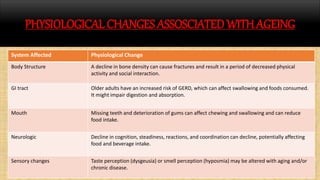
PHYSIOLOGICAL CHANGES ASSOSCIATED WITHAGEING
System Affected Physiological Change
Body Structure A decline in bone density can cause fractures and result in a period of decreased physical
activity and social interaction.
GI tract Older adults have an increased risk of GERD, which can affect swallowing and foods consumed.
It might impair digestion and absorption.
Mouth Missing teeth and deterioration of gums can affect chewing and swallowing and can reduce
food intake.
Neurologic Decline in cognition, steadiness, reactions, and coordination can decline, potentially affecting
food and beverage intake.
Sensory changes Taste perception (dysgeusia) or smell perception (hyposmia) may be altered with aging and/or
chronic disease.
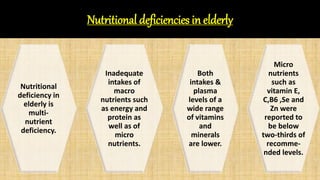
Nutritional deficiencies in elderly
Nutritional
deficiency in
elderly is
multi-
nutrient
deficiency.
Inadequate
intakes of
macro
nutrients such
as energy and
protein as
well as of
micro
nutrients.
Both
intakes &
plasma
levels of a
wide range
of vitamins
and
minerals
are lower.
Micro
nutrients
such as
vitamin E,
C,B6 ,Se and
Zn were
reported to
be below
two-thirds of
recomme-
nded levels.
EFFECT OF AGEING ON NUTRITION
Submitted to – Dr Harpreet Kaur

Immunity elderly

  • 1.
    Prepared By: Bhavya DhirL-2013-HSC-04-BND Garima Goyal L-2013-HSC-09-BND Kritika Gupta L-2013-HSC-20-BND
  • 2.
    HIGHLIGHTS The proportion ofelderly individuals is increasing in both developed and developing countries. Major Consequence – • Significant increase in age related illness and disease • Increase in health related expenditure Factors affecting ageing process – • Genetic • Environmental i. Nutritional factors ii. Exposure to antigens throughout life
  • 3.
    Immunological and Nutritional Status ofthe elderly Physiological Changes Social Factors Economic Factors Psychological Changes
  • 4.
    IMARY AGEING IMMUNEDEFICIENCY The immune function changes seen in very healthy elderly individuals with no other underlying causes are referred as Primary Ageing Immune Deficiency. MAIN CHANGES CHANGES IN CYTOKINES CHANGES IN CELL MEDIATED IMMUNITY AND T LYMPHOCYTES CHANGES IN B LYMPHOCYTES CHANGES IN MACROPHAGES AND NK CELLS
  • 5.
    >Immature T cells >MemoryT cells >Thymic function >Mature T lymphocytes >Native T & Cytotoxic T cells >Lyphocyte proliferation in response to stimulation >Functional ability of T cells >Effectiveness of CD4+ Th cells & CD8+ T suppressor cells >Cell mediated immunity & DCH responses INCREASED DECREASED
  • 6.
    >Plasma levels of IgA& IgG >Production of autoantibodies >B-lymphocytes responses unaltered >IgM production >Antibody response to vaccines INCREASED DECREASED
  • 7.
    Function well preserved Phagocytosis& lysosomal activity maintained Macrocytes produce more prostaglandins & free radicles
  • 8.
    >Th2 cytokine secretions >Production of interleukins(IL-3. IL- 4) >During infections IL- 1, IL-6 & TNF-α secretions increases IL-2 secretion as young adults INCREASED COMPARABLE
  • 9.
  • 10.
    Nutrition and Qualityof Life Healthy food choices positively influence quality of life of older adults. Older adults are at risk for inadequate dietary intakes which may lead to: Poor nutritional status Decreased quality of life Functional disability Increased health care costs Greater risk for morbidity and mortality
  • 11.
    Factors Affecting NutritionStatus OF ELDERLY • Declining digestion and absorption • Reduced sensory perception • visual, olfactory, taste acuity, thirst • Anorexia of Aging (1)Physiological • Chewing and swallowing difficulty • Affects on body systems : Integumentary (skin), renal, musculoskeletal, cardiovascular (2)Physical
  • 12.
    • Depression • Loneliness •Dementia • Food likes/dislikes (3)Psychological • Poverty • Lack of knowledge of nutrition • Inadequate cooking knowledge (men) • Decreased Social support (4)Social and Economical • Provision of culturally appropriate food and setting are both important(5)Cultural beliefs
  • 13.
    PHYSIOLOGICAL CHANGES ASSOSCIATEDWITHAGEING System Affected Physiological Change Body Structure A decline in bone density can cause fractures and result in a period of decreased physical activity and social interaction. GI tract Older adults have an increased risk of GERD, which can affect swallowing and foods consumed. It might impair digestion and absorption. Mouth Missing teeth and deterioration of gums can affect chewing and swallowing and can reduce food intake. Neurologic Decline in cognition, steadiness, reactions, and coordination can decline, potentially affecting food and beverage intake. Sensory changes Taste perception (dysgeusia) or smell perception (hyposmia) may be altered with aging and/or chronic disease.
  • 14.
    Nutritional deficiencies inelderly Nutritional deficiency in elderly is multi- nutrient deficiency. Inadequate intakes of macro nutrients such as energy and protein as well as of micro nutrients. Both intakes & plasma levels of a wide range of vitamins and minerals are lower. Micro nutrients such as vitamin E, C,B6 ,Se and Zn were reported to be below two-thirds of recomme- nded levels.
  • 15.
    EFFECT OF AGEINGON NUTRITION
  • 16.
    Submitted to –Dr Harpreet Kaur