Nutrition in Old Age
Food biochemistry
Presented by:
Arijit Acharjee
FPB15015
Introduction
• Gerontology: The medical study of the ageing
process.
• Geriatrics: The study of diseases that afflict the
elderly.
• Geriatric nutrition: Nutrition for the elderly.
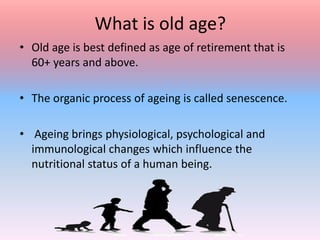
What is old age?
• Old age is best defined as age of retirement that is
60+ years and above.
• The organic process of ageing is called senescence.
• Ageing brings physiological, psychological and
immunological changes which influence the
nutritional status of a human being.
Physiological changes
• Loss of teeth
• Decreased Neuromuscular
coordination
• Impaired hearing and failing
vision.
• Anorexia.
• Change in body composition.
• Change in gastro-intestinal
tract.
• Change in cardiovascular
system.
• Change in respiratory function.
• Change in renal function.
• Change in skeletal tissue.
Changes in organ functions
• Decrease in sense of taste
and smell.
• Decrease in saliva secretion.
• Mouth and teeth problems.
• Swallowing difficulties
• Decrease in stomach
functions
• Decrease in function of liver
and gallbladder
• Decrease in function of
intestine.
• Decrease in function of
immune system.
• Decrease in the function of
nervous system.
• Energy metabolism.
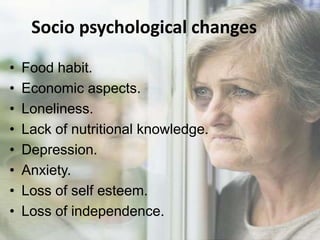
Socio psychological changes
• Food habit.
• Economic aspects.
• Loneliness.
• Lack of nutritional knowledge.
• Depression.
• Anxiety.
• Loss of self esteem.
• Loss of independence.
Nutrition
• Prevention, retardation
and treatment of
diseases affiliated with
ageing.
• Adequate and balanced
nutrition is important with
respect to the
perpetuation of the
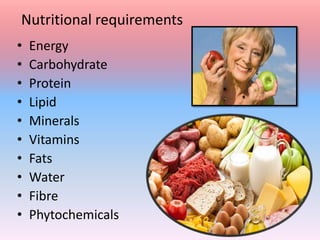
Nutritional requirements
• Energy
• Carbohydrate
• Protein
• Lipid
• Minerals
• Vitamins
• Fats
• Water
• Fibre
• Phytochemicals
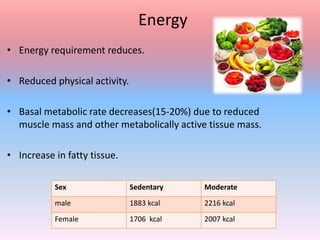
Energy
• Energy requirement reduces.
• Reduced physical activity.
• Basal metabolic rate decreases(15-20%) due to reduced
muscle mass and other metabolically active tissue mass.
• Increase in fatty tissue.
Sex Sedentary Moderate
male 1883 kcal 2216 kcal
Female 1706 kcal 2007 kcal
Carbohydrate
• Requirement reduces.
• Impaired glucose intolerance can lead to hypoglycemia,
hyperglycemia, and type II diabetes mellitus.
• Insulin sensitivity can be enhanced by balance energy
intake, weight management and regular physical activity.
• 50 percent energy should derive from carbohydrate.
Protein
• Production of body organs.
• Restoration of cells.
• 1g = 4 calories
• Protection of body from external
effects.
• Facilitating recovery in conditions
of fracture.
• Protection and strengthening of
muscles.
• Development of resistance to
diseases by strengthening of the
immune system.
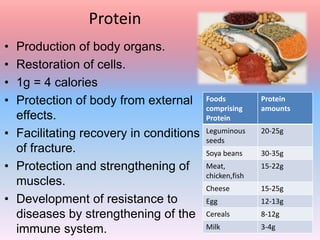
Foods
comprising
Protein
Protein
amounts
Leguminous
seeds
20-25g
Soya beans 30-35g
Meat,
chicken,fish
15-22g
Cheese 15-25g
Egg 12-13g
Cereals 8-12g
Milk 3-4g
Lipid
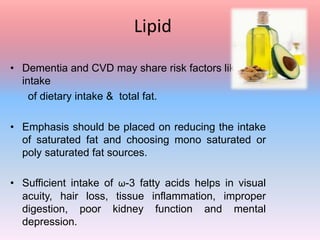
• Dementia and CVD may share risk factors like high
intake
of dietary intake & total fat.
• Emphasis should be placed on reducing the intake
of saturated fat and choosing mono saturated or
poly saturated fat sources.
• Sufficient intake of ω-3 fatty acids helps in visual
acuity, hair loss, tissue inflammation, improper
digestion, poor kidney function and mental
depression.
Fats
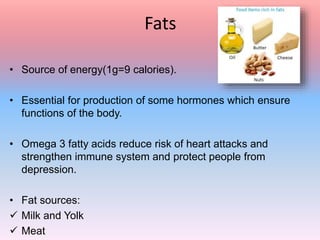
• Source of energy(1g=9 calories).
• Essential for production of some hormones which ensure
functions of the body.
• Omega 3 fatty acids reduce risk of heart attacks and
strengthen immune system and protect people from
depression.
• Fat sources:
 Milk and Yolk
 Meat
Fat requirements in old age
• Minimum 25% of daily energy intake should be provided
from fats.
• If not much limitations caused by diseases the amount to
be consumed is 35-40g.
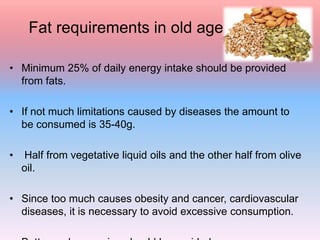
• Half from vegetative liquid oils and the other half from olive
oil.
• Since too much causes obesity and cancer, cardiovascular
diseases, it is necessary to avoid excessive consumption.
Minerals
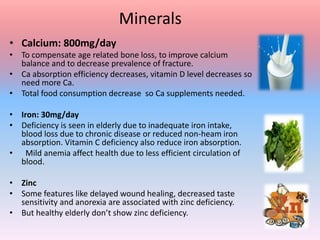
• Calcium: 800mg/day
• To compensate age related bone loss, to improve calcium
balance and to decrease prevalence of fracture.
• Ca absorption efficiency decreases, vitamin D level decreases so
need more Ca.
• Total food consumption decrease so Ca supplements needed.
• Iron: 30mg/day
• Deficiency is seen in elderly due to inadequate iron intake,
blood loss due to chronic disease or reduced non-heam iron
absorption. Vitamin C deficiency also reduce iron absorption.
• Mild anemia affect health due to less efficient circulation of
blood.
• Zinc
• Some features like delayed wound healing, decreased taste
sensitivity and anorexia are associated with zinc deficiency.
• But healthy elderly don’t show zinc deficiency.
Vitamins
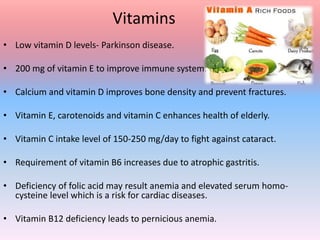
• Low vitamin D levels- Parkinson disease.
• 200 mg of vitamin E to improve immune system.
• Calcium and vitamin D improves bone density and prevent fractures.
• Vitamin E, carotenoids and vitamin C enhances health of elderly.
• Vitamin C intake level of 150-250 mg/day to fight against cataract.
• Requirement of vitamin B6 increases due to atrophic gastritis.
• Deficiency of folic acid may result anemia and elevated serum homo-
cysteine level which is a risk for cardiac diseases.
• Vitamin B12 deficiency leads to pernicious anemia.
Water
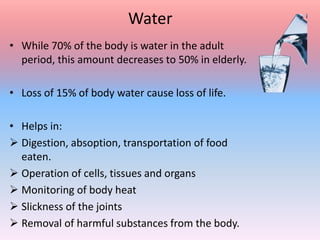
• While 70% of the body is water in the adult
period, this amount decreases to 50% in elderly.
• Loss of 15% of body water cause loss of life.
• Helps in:
 Digestion, absoption, transportation of food
eaten.
 Operation of cells, tissues and organs
 Monitoring of body heat
 Slickness of the joints
 Removal of harmful substances from the body.
Fibre
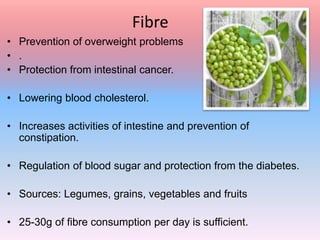
• Prevention of overweight problems
• .
• Protection from intestinal cancer.
• Lowering blood cholesterol.
• Increases activities of intestine and prevention of
constipation.
• Regulation of blood sugar and protection from the diabetes.
• Sources: Legumes, grains, vegetables and fruits
• 25-30g of fibre consumption per day is sufficient.
Phytochemicals
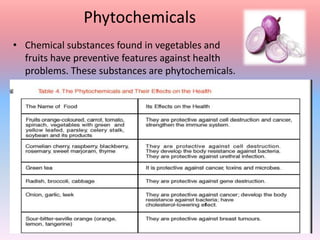
• Chemical substances found in vegetables and
fruits have preventive features against health
problems. These substances are phytochemicals.
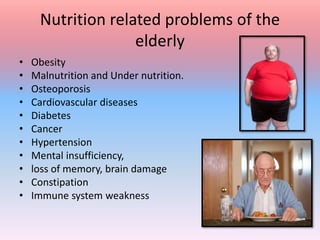
Nutrition related problems of the
elderly
• Obesity
• Malnutrition and Under nutrition.
• Osteoporosis
• Cardiovascular diseases
• Diabetes
• Cancer
• Hypertension
• Mental insufficiency,
• loss of memory, brain damage
• Constipation
• Immune system weakness
Principles of nutrition in old age period
• No. of daily meal should be regulated as 3 main and 3 interim
meals.
• High amount of fibre as legumes & wholegrain must be
consumed.
• 8-10 glasses of water (1500ml) should be consumed.
• High level of calcium should be consumed.
• Fish should be consumed atleast twice a week(omega 3 fatty
acids).
• Salt and sugar consumption should be limited.
Conclusion
• Healthy ageing begins from childhood
itself.
• Eat well to age well.
• Old age is second childhood-
Aristophanes
References
• http://beslenme.gov.tr/content/files/yayinlar/
ingilizce_yayinlar/books/yaslilik.pdf
• World Health Organisation-
http://www.who.int/en/
• Geriatric Nutrition- ebook by Tom Brody
Nutrition in old age

Nutrition in old age

  • 1.
    Nutrition in OldAge Food biochemistry Presented by: Arijit Acharjee FPB15015
  • 2.
    Introduction • Gerontology: Themedical study of the ageing process. • Geriatrics: The study of diseases that afflict the elderly. • Geriatric nutrition: Nutrition for the elderly.
  • 3.
    What is oldage? • Old age is best defined as age of retirement that is 60+ years and above. • The organic process of ageing is called senescence. • Ageing brings physiological, psychological and immunological changes which influence the nutritional status of a human being.
  • 4.
    Physiological changes • Lossof teeth • Decreased Neuromuscular coordination • Impaired hearing and failing vision. • Anorexia. • Change in body composition. • Change in gastro-intestinal tract. • Change in cardiovascular system. • Change in respiratory function. • Change in renal function. • Change in skeletal tissue.
  • 5.
    Changes in organfunctions • Decrease in sense of taste and smell. • Decrease in saliva secretion. • Mouth and teeth problems. • Swallowing difficulties • Decrease in stomach functions • Decrease in function of liver and gallbladder • Decrease in function of intestine. • Decrease in function of immune system. • Decrease in the function of nervous system. • Energy metabolism.
  • 6.
    Socio psychological changes •Food habit. • Economic aspects. • Loneliness. • Lack of nutritional knowledge. • Depression. • Anxiety. • Loss of self esteem. • Loss of independence.
  • 7.
    Nutrition • Prevention, retardation andtreatment of diseases affiliated with ageing. • Adequate and balanced nutrition is important with respect to the perpetuation of the
  • 8.
    Nutritional requirements • Energy •Carbohydrate • Protein • Lipid • Minerals • Vitamins • Fats • Water • Fibre • Phytochemicals
  • 9.
    Energy • Energy requirementreduces. • Reduced physical activity. • Basal metabolic rate decreases(15-20%) due to reduced muscle mass and other metabolically active tissue mass. • Increase in fatty tissue. Sex Sedentary Moderate male 1883 kcal 2216 kcal Female 1706 kcal 2007 kcal
  • 10.
    Carbohydrate • Requirement reduces. •Impaired glucose intolerance can lead to hypoglycemia, hyperglycemia, and type II diabetes mellitus. • Insulin sensitivity can be enhanced by balance energy intake, weight management and regular physical activity. • 50 percent energy should derive from carbohydrate.
  • 11.
    Protein • Production ofbody organs. • Restoration of cells. • 1g = 4 calories • Protection of body from external effects. • Facilitating recovery in conditions of fracture. • Protection and strengthening of muscles. • Development of resistance to diseases by strengthening of the immune system. Foods comprising Protein Protein amounts Leguminous seeds 20-25g Soya beans 30-35g Meat, chicken,fish 15-22g Cheese 15-25g Egg 12-13g Cereals 8-12g Milk 3-4g
  • 12.
    Lipid • Dementia andCVD may share risk factors like high intake of dietary intake & total fat. • Emphasis should be placed on reducing the intake of saturated fat and choosing mono saturated or poly saturated fat sources. • Sufficient intake of ω-3 fatty acids helps in visual acuity, hair loss, tissue inflammation, improper digestion, poor kidney function and mental depression.
  • 13.
    Fats • Source ofenergy(1g=9 calories). • Essential for production of some hormones which ensure functions of the body. • Omega 3 fatty acids reduce risk of heart attacks and strengthen immune system and protect people from depression. • Fat sources:  Milk and Yolk  Meat
  • 14.
    Fat requirements inold age • Minimum 25% of daily energy intake should be provided from fats. • If not much limitations caused by diseases the amount to be consumed is 35-40g. • Half from vegetative liquid oils and the other half from olive oil. • Since too much causes obesity and cancer, cardiovascular diseases, it is necessary to avoid excessive consumption.
  • 15.
    Minerals • Calcium: 800mg/day •To compensate age related bone loss, to improve calcium balance and to decrease prevalence of fracture. • Ca absorption efficiency decreases, vitamin D level decreases so need more Ca. • Total food consumption decrease so Ca supplements needed. • Iron: 30mg/day • Deficiency is seen in elderly due to inadequate iron intake, blood loss due to chronic disease or reduced non-heam iron absorption. Vitamin C deficiency also reduce iron absorption. • Mild anemia affect health due to less efficient circulation of blood. • Zinc • Some features like delayed wound healing, decreased taste sensitivity and anorexia are associated with zinc deficiency. • But healthy elderly don’t show zinc deficiency.
  • 16.
    Vitamins • Low vitaminD levels- Parkinson disease. • 200 mg of vitamin E to improve immune system. • Calcium and vitamin D improves bone density and prevent fractures. • Vitamin E, carotenoids and vitamin C enhances health of elderly. • Vitamin C intake level of 150-250 mg/day to fight against cataract. • Requirement of vitamin B6 increases due to atrophic gastritis. • Deficiency of folic acid may result anemia and elevated serum homo- cysteine level which is a risk for cardiac diseases. • Vitamin B12 deficiency leads to pernicious anemia.
  • 17.
    Water • While 70%of the body is water in the adult period, this amount decreases to 50% in elderly. • Loss of 15% of body water cause loss of life. • Helps in:  Digestion, absoption, transportation of food eaten.  Operation of cells, tissues and organs  Monitoring of body heat  Slickness of the joints  Removal of harmful substances from the body.
  • 18.
    Fibre • Prevention ofoverweight problems • . • Protection from intestinal cancer. • Lowering blood cholesterol. • Increases activities of intestine and prevention of constipation. • Regulation of blood sugar and protection from the diabetes. • Sources: Legumes, grains, vegetables and fruits • 25-30g of fibre consumption per day is sufficient.
  • 19.
    Phytochemicals • Chemical substancesfound in vegetables and fruits have preventive features against health problems. These substances are phytochemicals.
  • 20.
    Nutrition related problemsof the elderly • Obesity • Malnutrition and Under nutrition. • Osteoporosis • Cardiovascular diseases • Diabetes • Cancer • Hypertension • Mental insufficiency, • loss of memory, brain damage • Constipation • Immune system weakness
  • 21.
    Principles of nutritionin old age period • No. of daily meal should be regulated as 3 main and 3 interim meals. • High amount of fibre as legumes & wholegrain must be consumed. • 8-10 glasses of water (1500ml) should be consumed. • High level of calcium should be consumed. • Fish should be consumed atleast twice a week(omega 3 fatty acids). • Salt and sugar consumption should be limited.
  • 22.
    Conclusion • Healthy ageingbegins from childhood itself. • Eat well to age well. • Old age is second childhood- Aristophanes
  • 23.
    References • http://beslenme.gov.tr/content/files/yayinlar/ ingilizce_yayinlar/books/yaslilik.pdf • WorldHealth Organisation- http://www.who.int/en/ • Geriatric Nutrition- ebook by Tom Brody