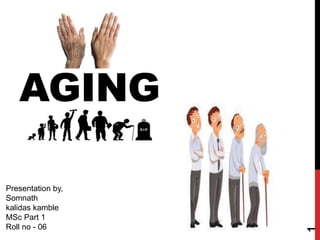

AGING
1
Presentation by,
Somnath
kalidas kamble
MSc Part 1
Roll no - 06
CONTENTS
1. Short introduction
2. Definition
3. Theorieses of aging
4. causes of aging
5. life span
2
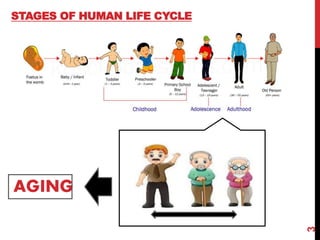
STAGES OF HUMAN LIFE CYCLE
3
AGING
WHAT IS AGING ?
4
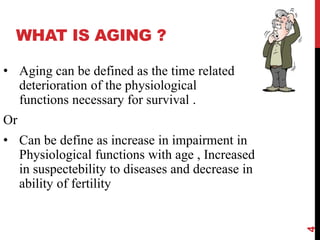
• Aging can be defined as the time related
deterioration of the physiological
functions necessary for survival .
Or
• Can be define as increase in impairment in
Physiological functions with age , Increased
in suspectebility to diseases and decrease in
ability of fertility
5
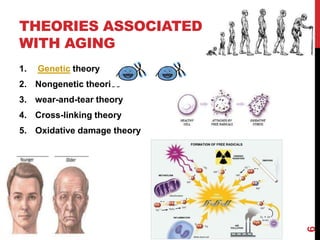
THEORIES ASSOCIATED
WITH AGING
1. Genetic theory
2. Nongenetic theories
3. wear-and-tear theory
4. Cross-linking theory
5. Oxidative damage theory
6
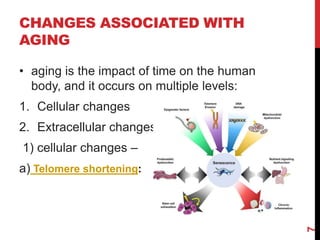
CHANGES ASSOCIATED WITH
AGING
• aging is the impact of time on the human
body, and it occurs on multiple levels:
1. Cellular changes
2. Extracellular changes
1) cellular changes –
a) Telomere shortening:
7
• Enzymes changes
• Accumalation of aging pigments
8
EXTRACELLULAR
CHANGES
9
• The changes Occuring in the Intracellular
Spaces and lumen of blood Vascular system
are the example of extracellular changes
• Dementia
• Alzheimer's
• Progeria
• Parkinson’s
disease
CAUSES OF AGING
1. Cellular senescence and aging
2. Telomere shortening: linked to life expectancy and aging
3. Mitochondrial dysfunction and aging
4. Oxidative stress
5. Stem cell exhaustion:
10
LIFE SPAN
• The maximum life span is a characteristic of the species.
• It is the maximum number of years a member of that species has
been known to survive.
• The maximum human life span is estimated to be 121 years
• he life spans of tortoises and lake trout are both unknown, but are
estimated to be more than 150 years.
11
THANK YOU
• Reference
12
• Developmental biology by T.subramonium
• Developmental biology 6th edition

Aging

  • 1.
  • 2.
    CONTENTS 1. Short introduction 2.Definition 3. Theorieses of aging 4. causes of aging 5. life span 2
  • 3.
    STAGES OF HUMANLIFE CYCLE 3 AGING
  • 4.
    WHAT IS AGING? 4 • Aging can be defined as the time related deterioration of the physiological functions necessary for survival . Or • Can be define as increase in impairment in Physiological functions with age , Increased in suspectebility to diseases and decrease in ability of fertility
  • 5.
  • 6.
    THEORIES ASSOCIATED WITH AGING 1.Genetic theory 2. Nongenetic theories 3. wear-and-tear theory 4. Cross-linking theory 5. Oxidative damage theory 6
  • 7.
    CHANGES ASSOCIATED WITH AGING •aging is the impact of time on the human body, and it occurs on multiple levels: 1. Cellular changes 2. Extracellular changes 1) cellular changes – a) Telomere shortening: 7
  • 8.
    • Enzymes changes •Accumalation of aging pigments 8
  • 9.
    EXTRACELLULAR CHANGES 9 • The changesOccuring in the Intracellular Spaces and lumen of blood Vascular system are the example of extracellular changes • Dementia • Alzheimer's • Progeria • Parkinson’s disease
  • 10.
    CAUSES OF AGING 1.Cellular senescence and aging 2. Telomere shortening: linked to life expectancy and aging 3. Mitochondrial dysfunction and aging 4. Oxidative stress 5. Stem cell exhaustion: 10
  • 11.
    LIFE SPAN • Themaximum life span is a characteristic of the species. • It is the maximum number of years a member of that species has been known to survive. • The maximum human life span is estimated to be 121 years • he life spans of tortoises and lake trout are both unknown, but are estimated to be more than 150 years. 11
  • 12.
    THANK YOU • Reference 12 •Developmental biology by T.subramonium • Developmental biology 6th edition