




Integrated Marketing Communications
regulation and ethics
7
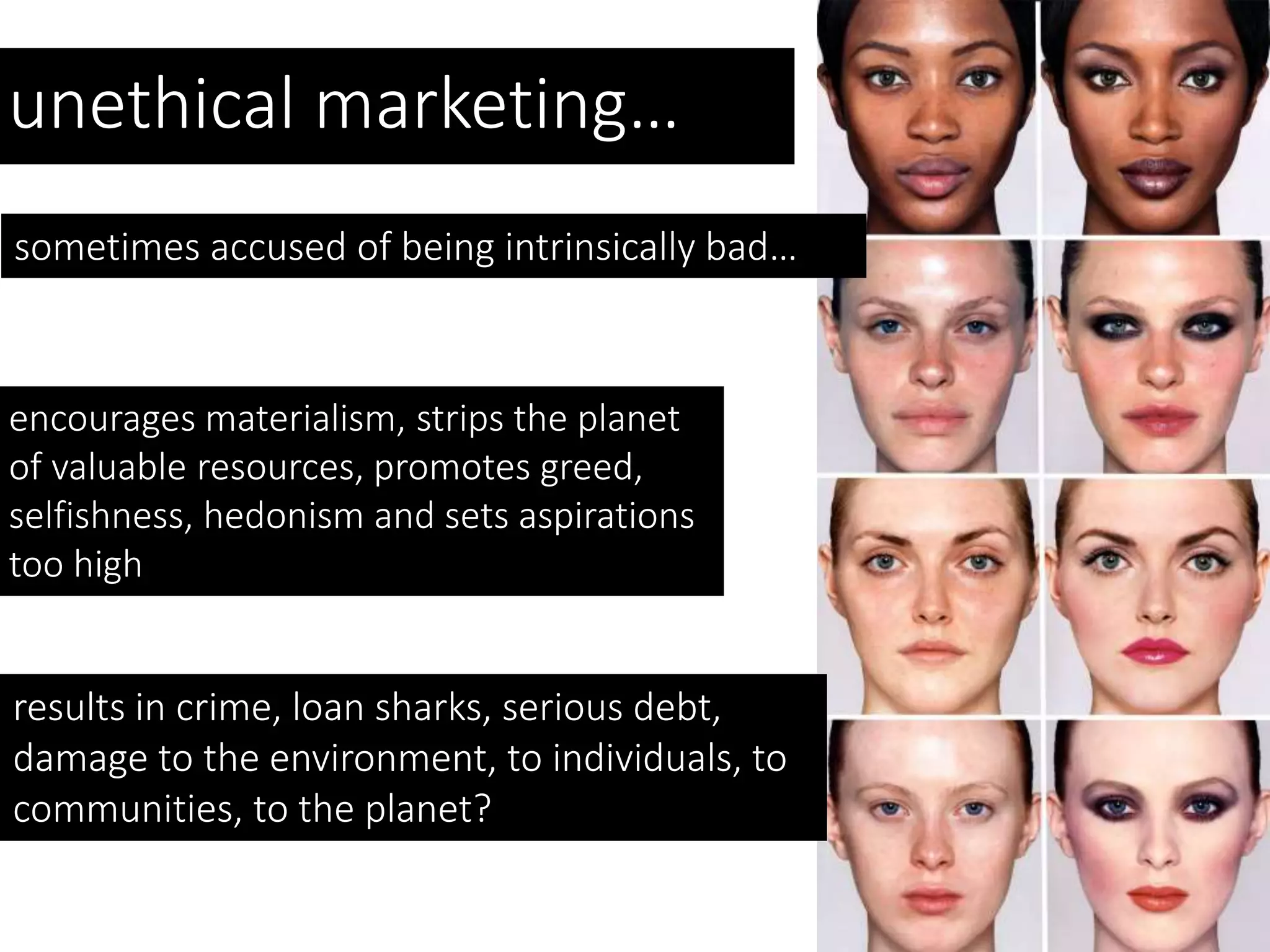
unethical marketing…
sometimes accused of being intrinsically bad…
encourages materialism, strips the planet
of valuable resources, promotes greed,
selfishness, hedonism and sets aspirations
too high
results in crime, loan sharks, serious debt,
damage to the environment, to individuals, to
communities, to the planet?
marketing ethics…
diverse as people’s views on any moral issue
are we happy with the ‘free-market’?
forced ‘self-regulation’ through consumer power…
…or should we have a interventionist, regulatory approach?
state controls in place to stop abuse of power
voluntary, self-regulating codes of conduct?
…it is the role of the marketer to find
the line between ethical practice and
using marketing techniques effectively
to gain competitive advantage
marketing ethics…
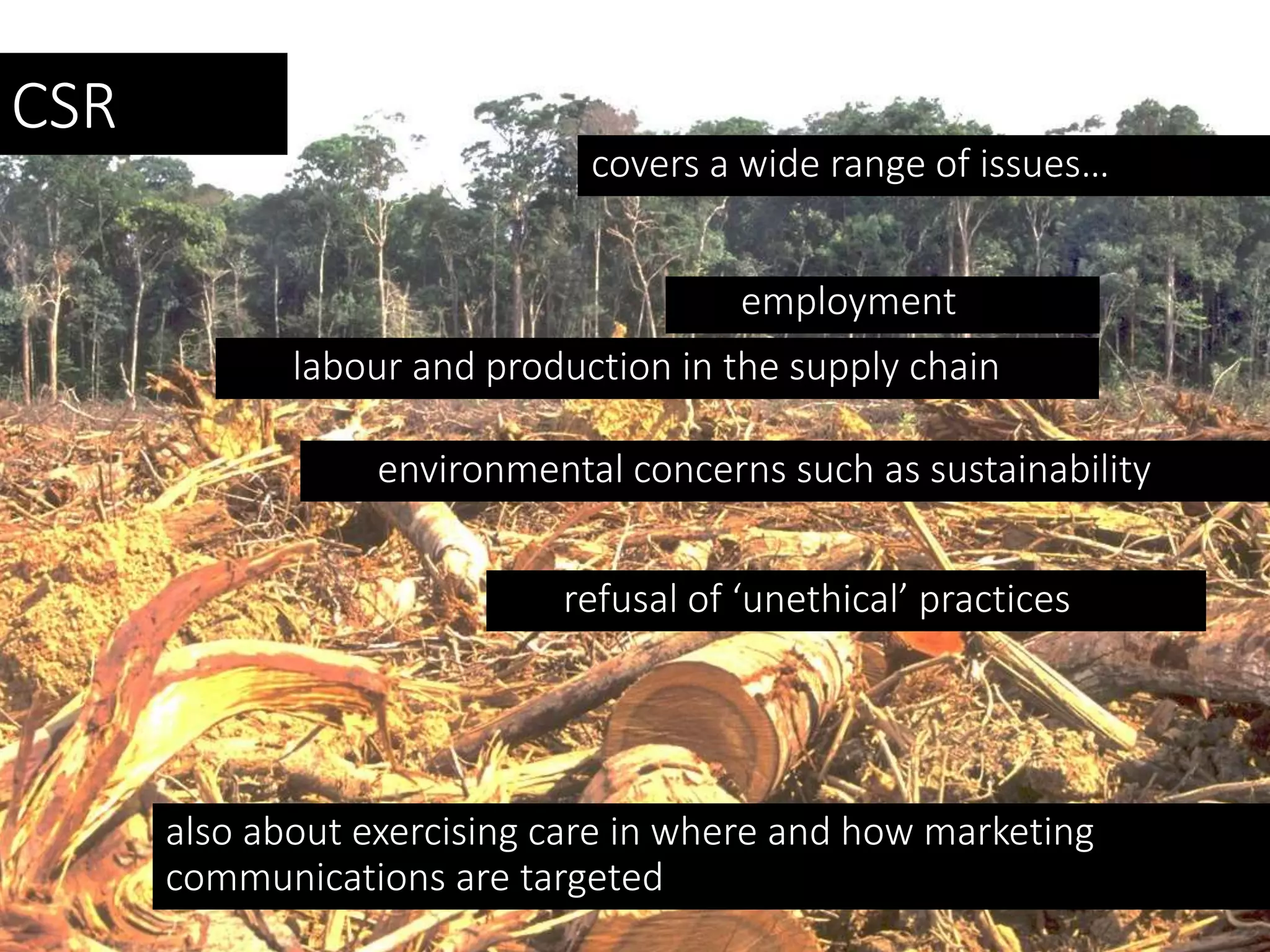
CSR
covers a wide range of issues…
employment
labour and production in the supply chain
environmental concerns such as sustainability
refusal of ‘unethical’ practices
also about exercising care in where and how marketing
communications are targeted
ethical decision making models
certain tests have been developed, Laczniak and Murphy (1996)
suggest…
‘the golden rule’ – act how you expect others to act
‘the professional ethic’ – act in a way that a panel of
objective, professionals would view as appropriate
‘the tv test’ – can you explain your actions
comfortably to your public via tv?
‘categorical imperative’ – act in a way deemed universally
appropriate for anyone in the same situation
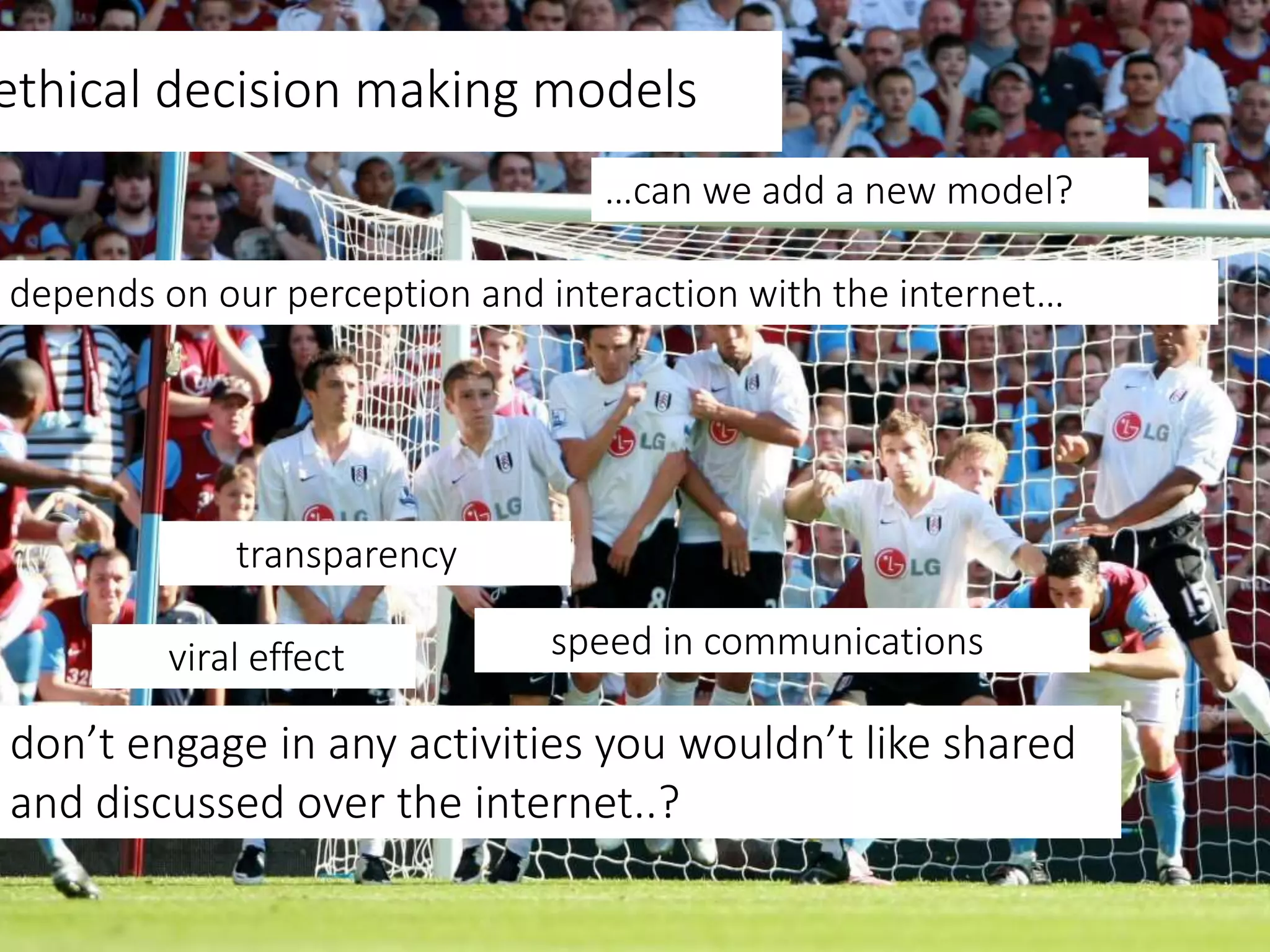
ethical decision making models
transparency
depends on our perception and interaction with the internet…
…can we add a new model?
don’t engage in any activities you wouldn’t like shared
and discussed over the internet..?
viral effect speed in communications
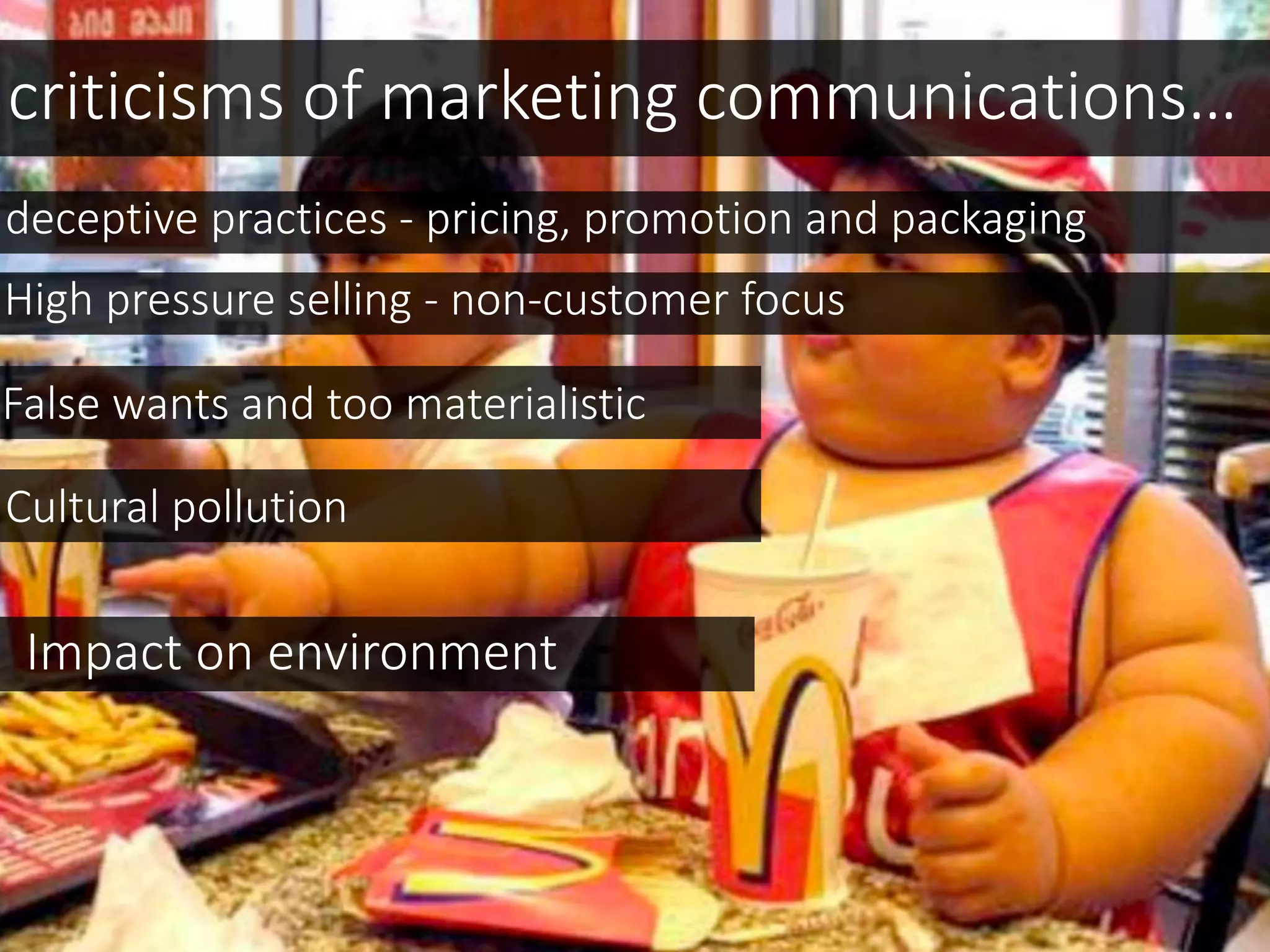
criticisms of marketing communications…
deceptive practices - pricing, promotion and packaging
High pressure selling - non-customer focus
False wants and too materialistic
Cultural pollution
Impact on environment
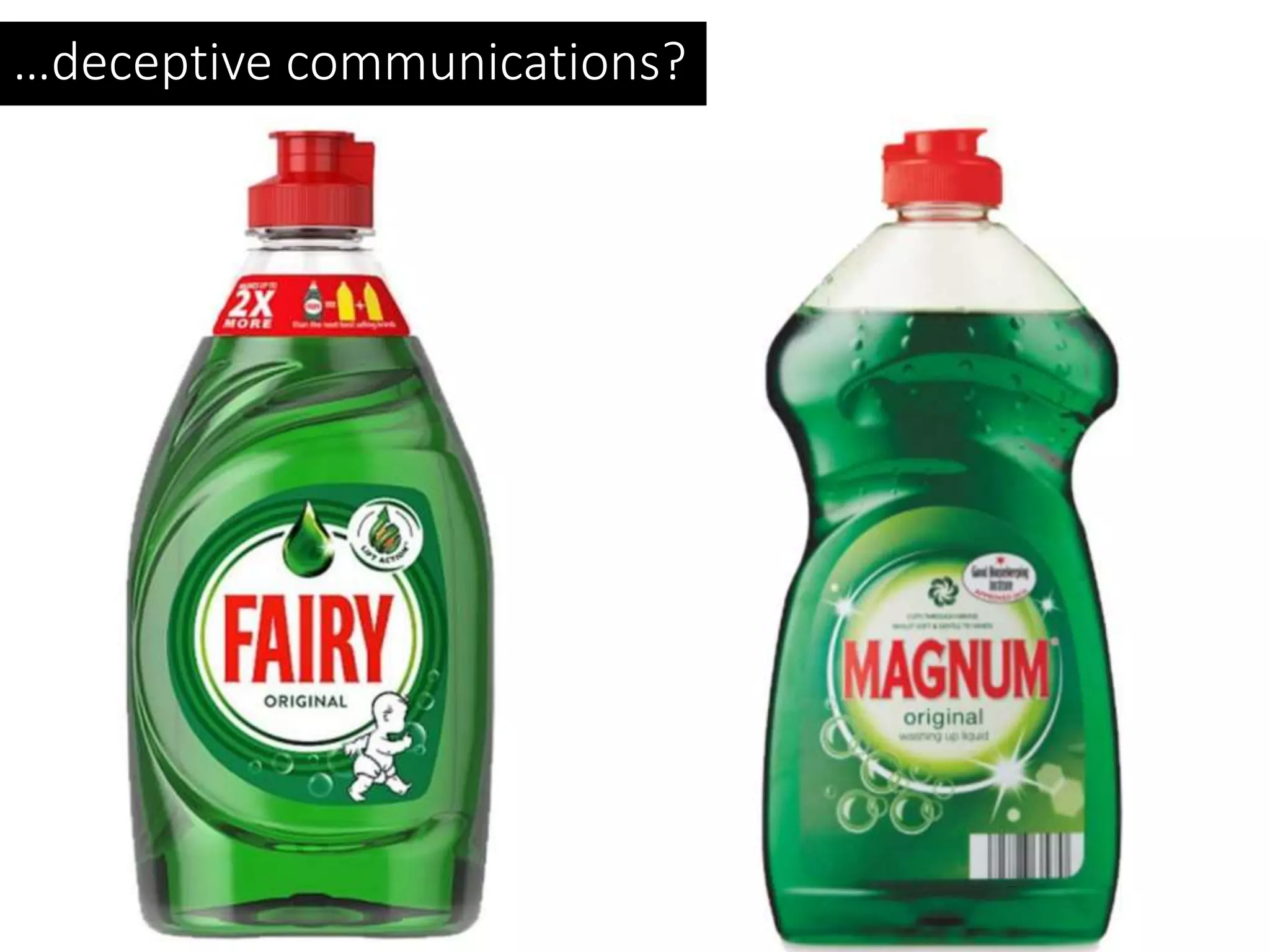
…deceptive communications?
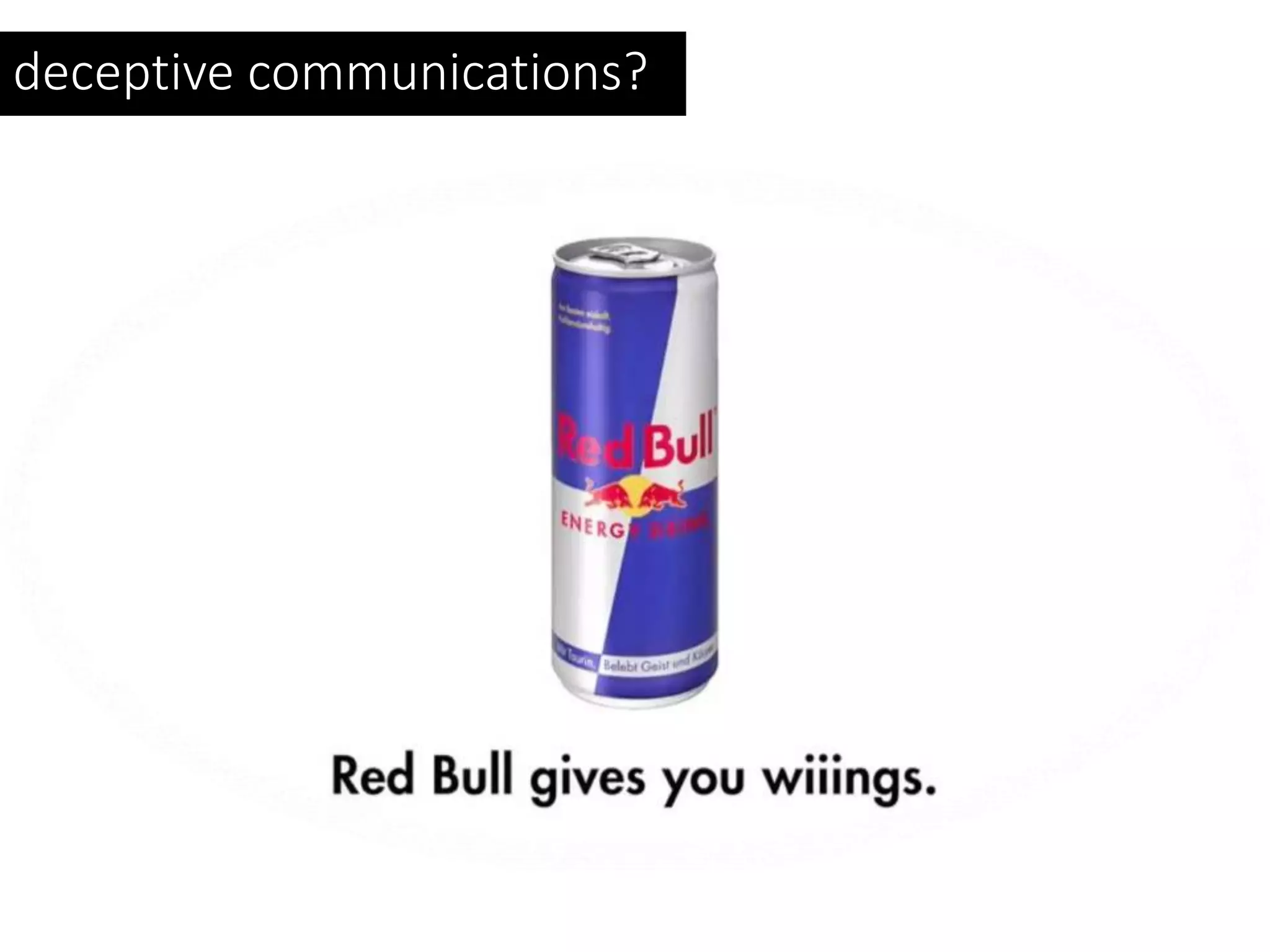
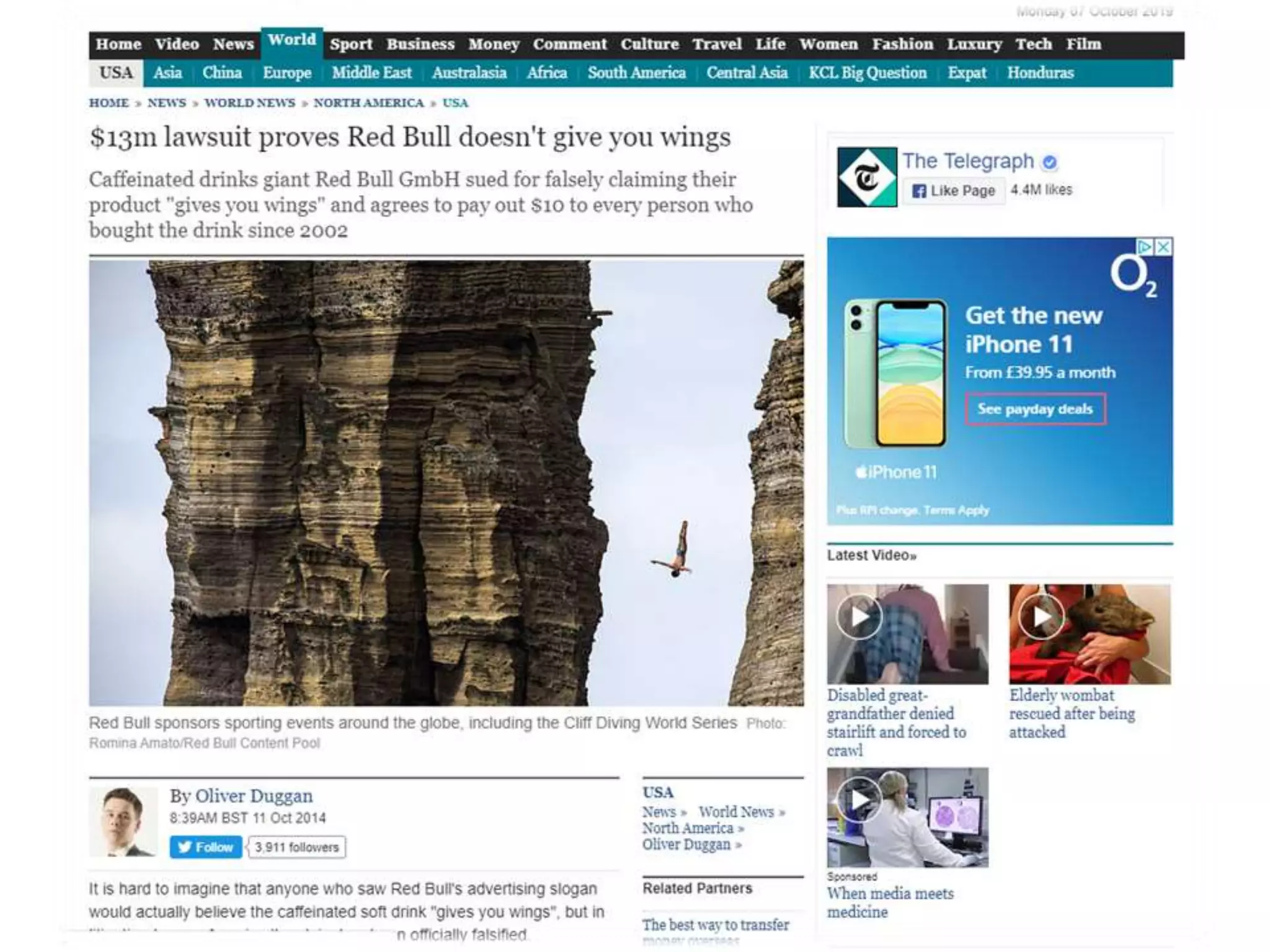
deceptive communications?
Materialism and marketing
…materialism
Cultural pollution
offensive?
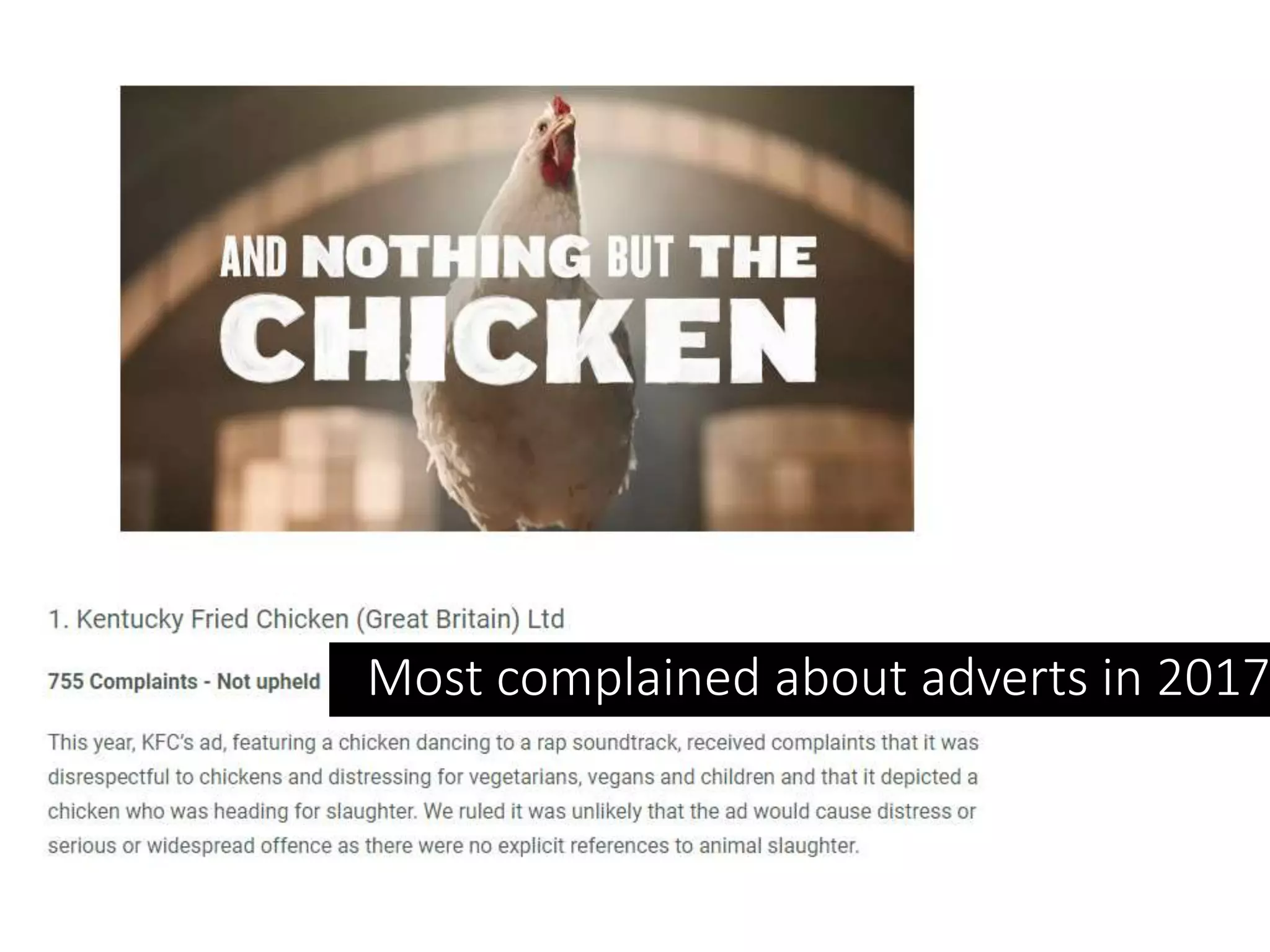
Most complained about adverts in 2017
Christmas 2018… banned
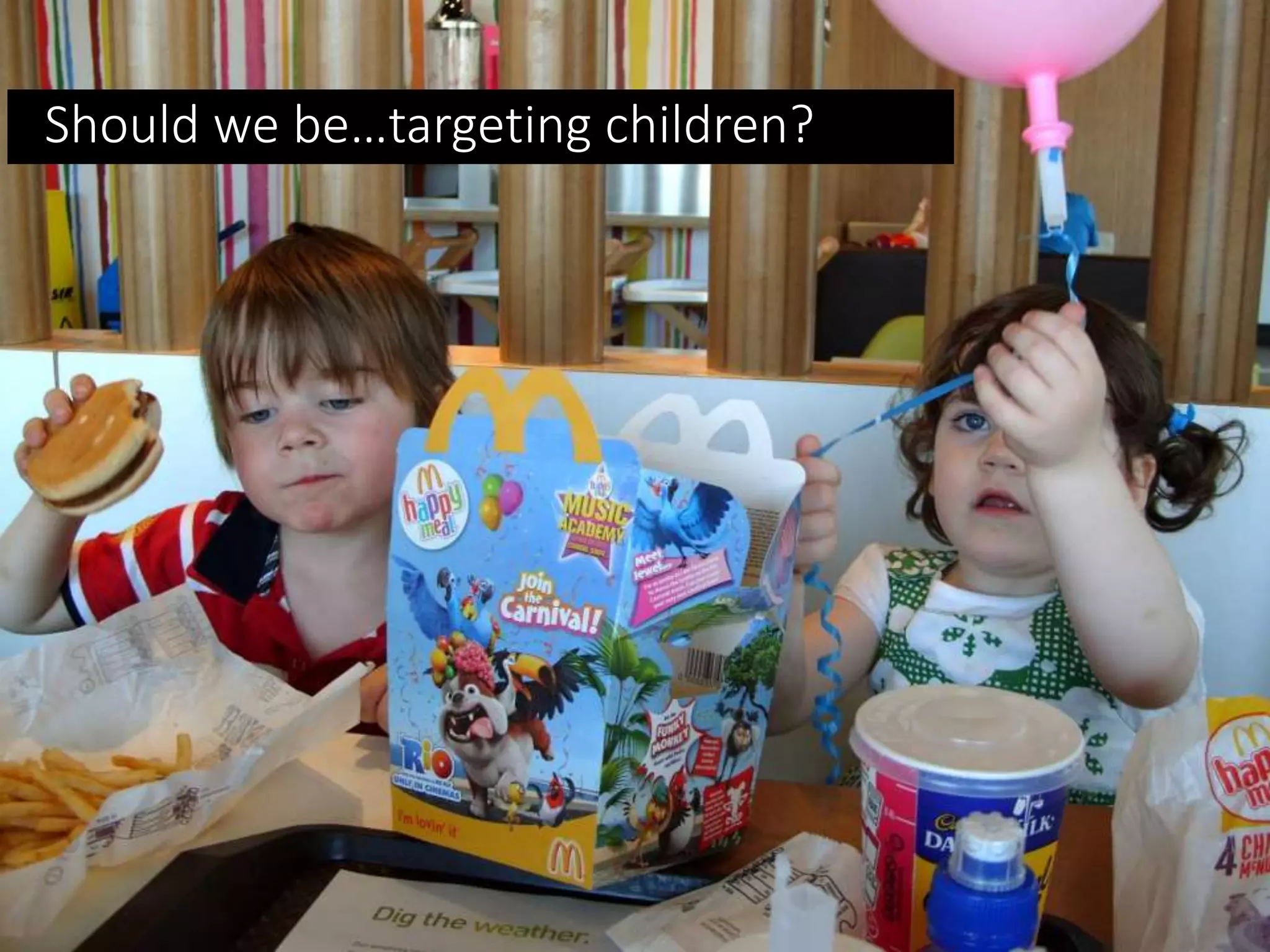
Should we be…targeting children?
banned… #ad
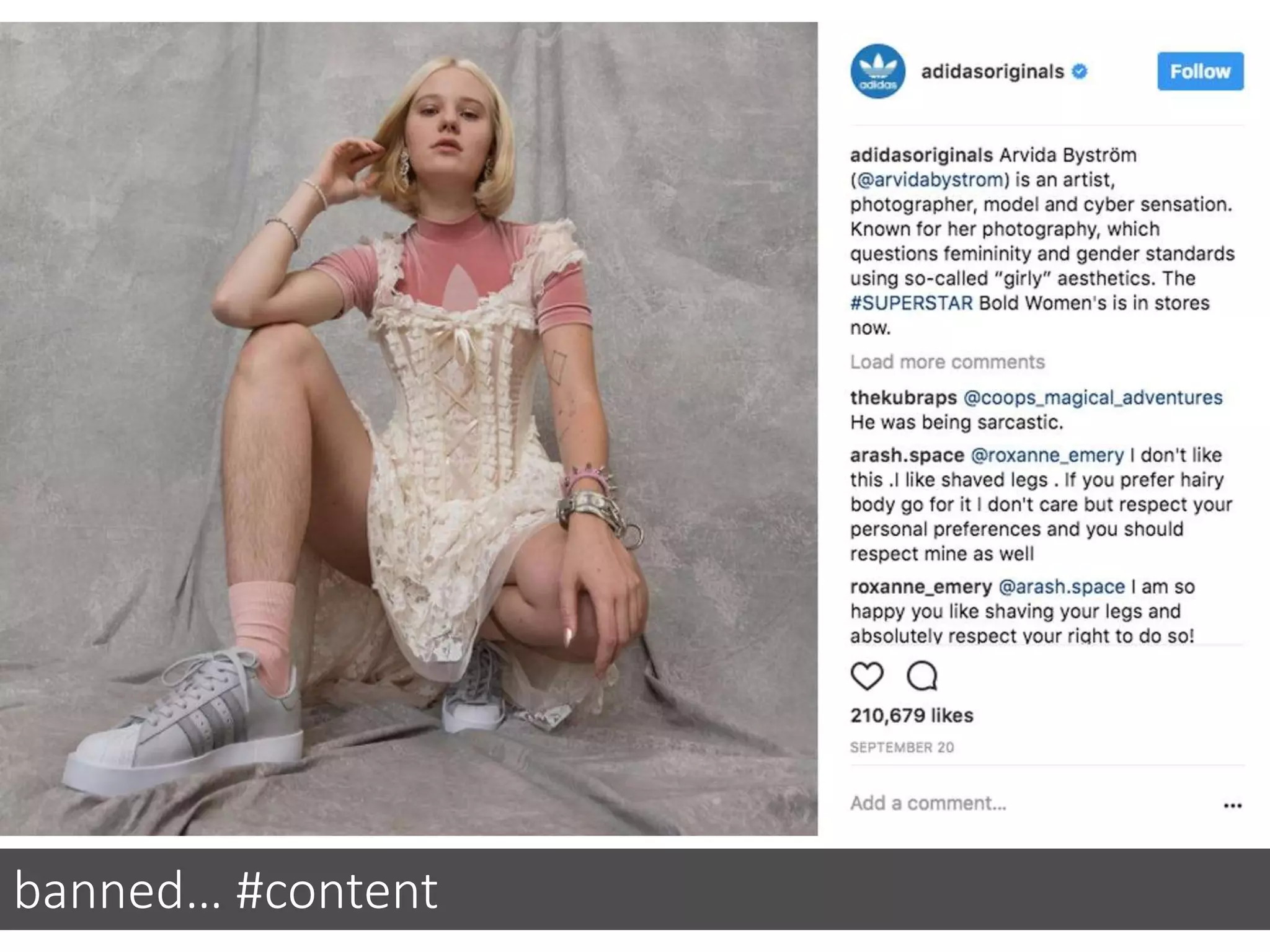
banned… #content
advertising codes…
CAP
BCAP
advertising codes to ensure we’re legal,
honest, decent and trustworthy
ASA, 2019
consumer protection regulations…
…and business protection regulations
designed to ensure that the consumer is ‘free’ to make their own
informed purchasing decisions
avoiding misleading and aggressive practices
as well as those that are legally prohibited such as…
False prize draws
False recommendations and celebrity blogging
Unwanted communications
Cookies law CIM, 2012
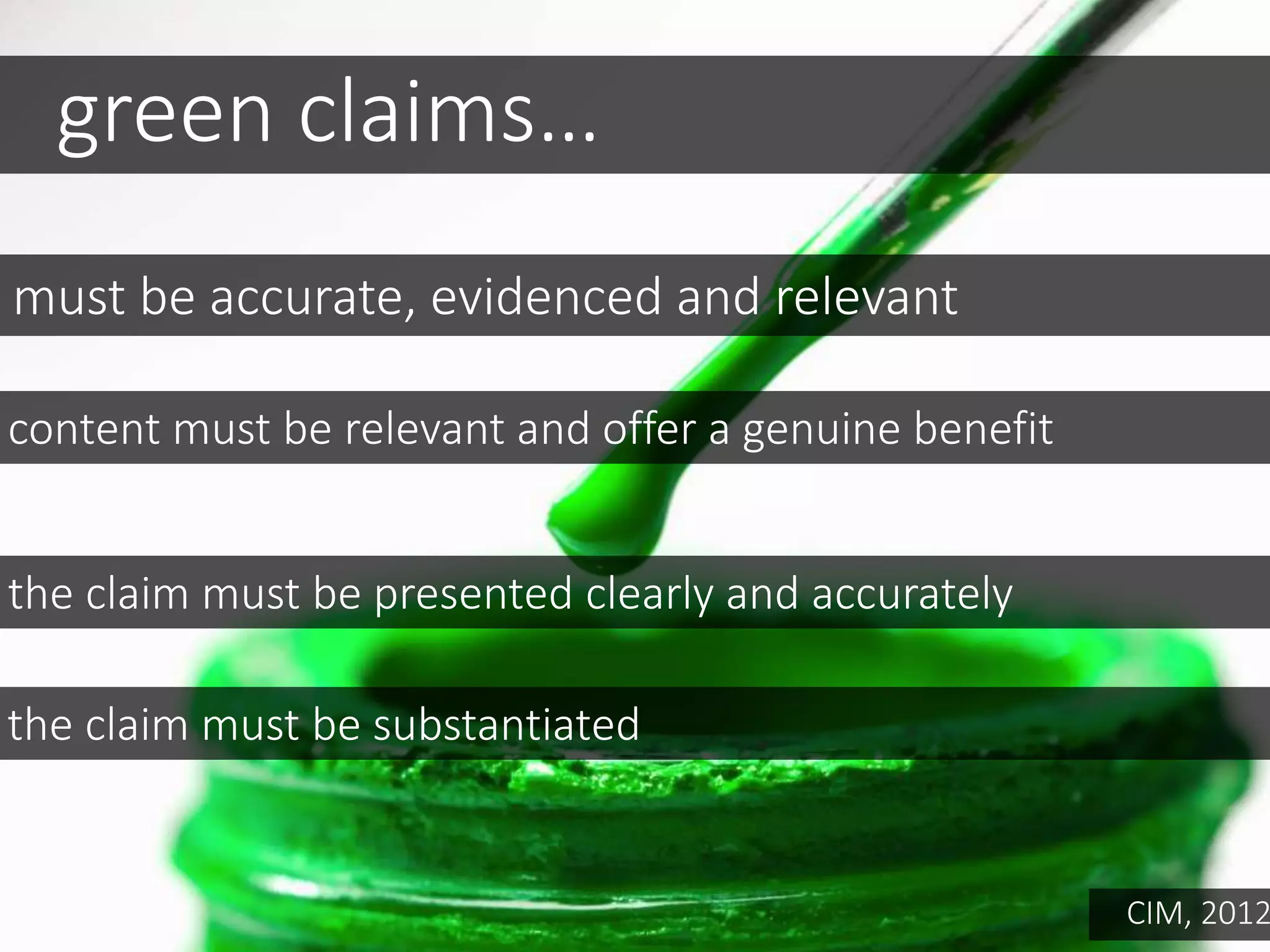
green claims…
content must be relevant and offer a genuine benefit
the claim must be presented clearly and accurately
must be accurate, evidenced and relevant
the claim must be substantiated
CIM, 2012
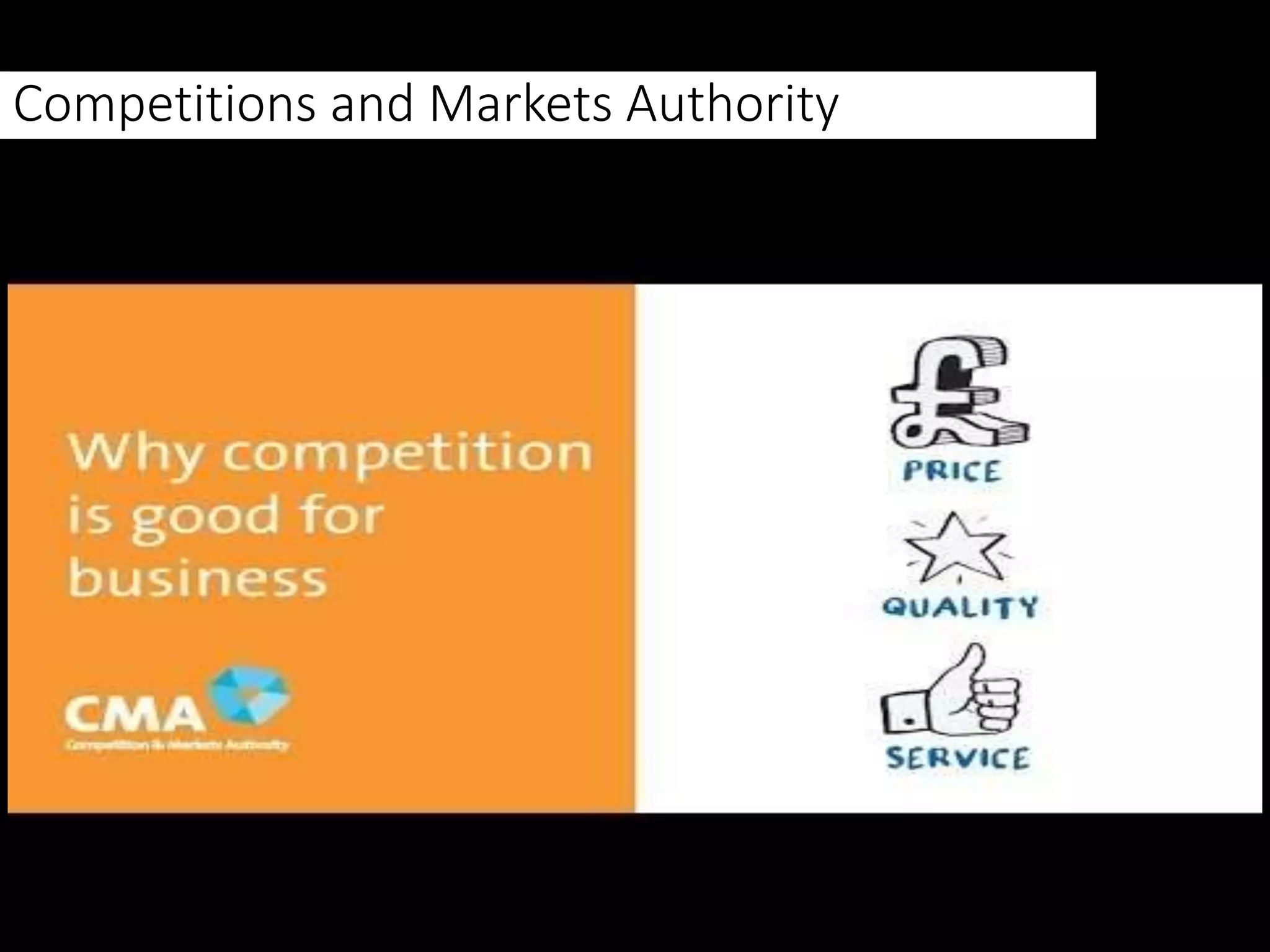
Competitions and Markets Authority
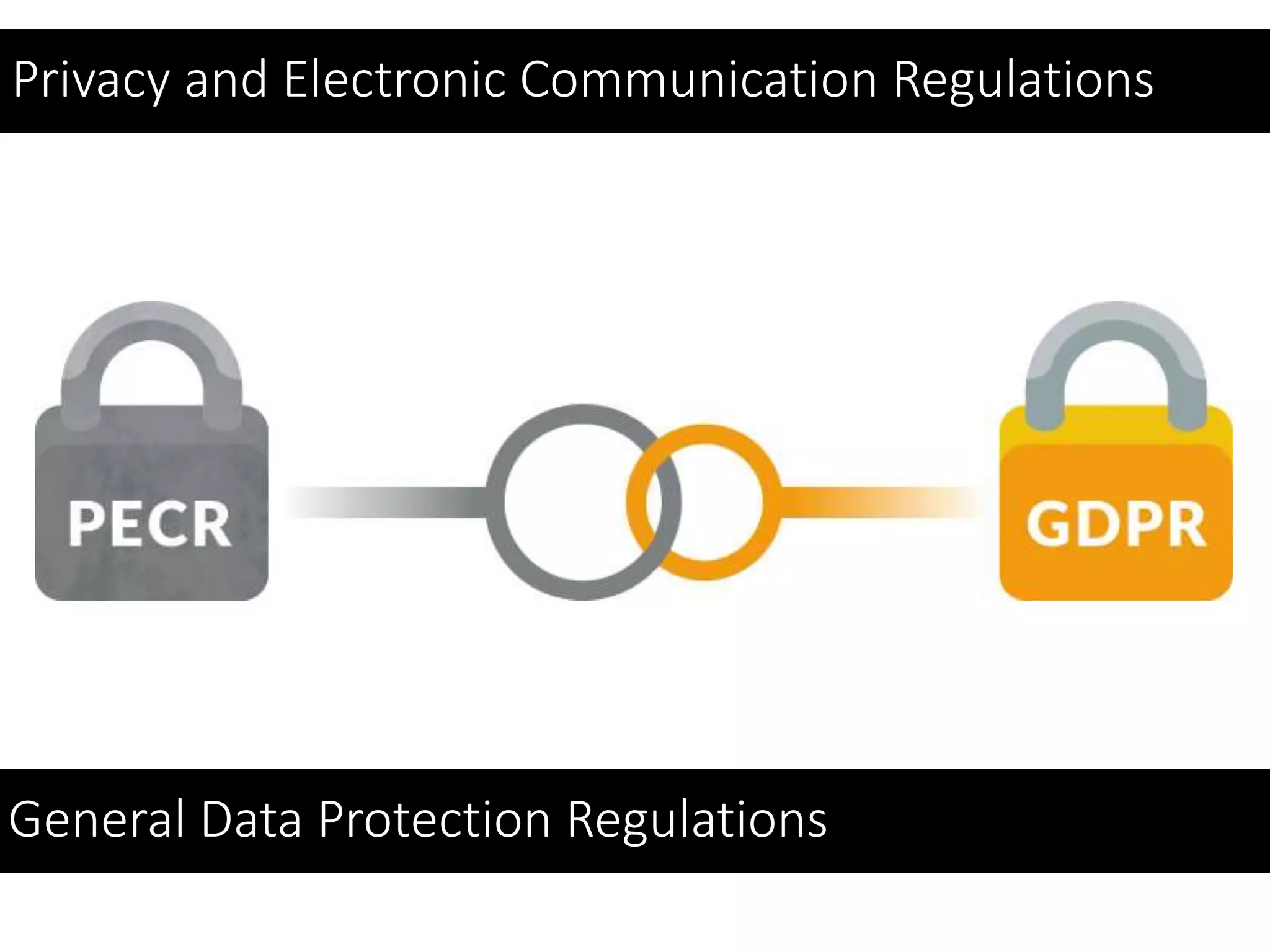
PECR
Privacy and Electronic Communication Regulations
General Data Protection Regulations
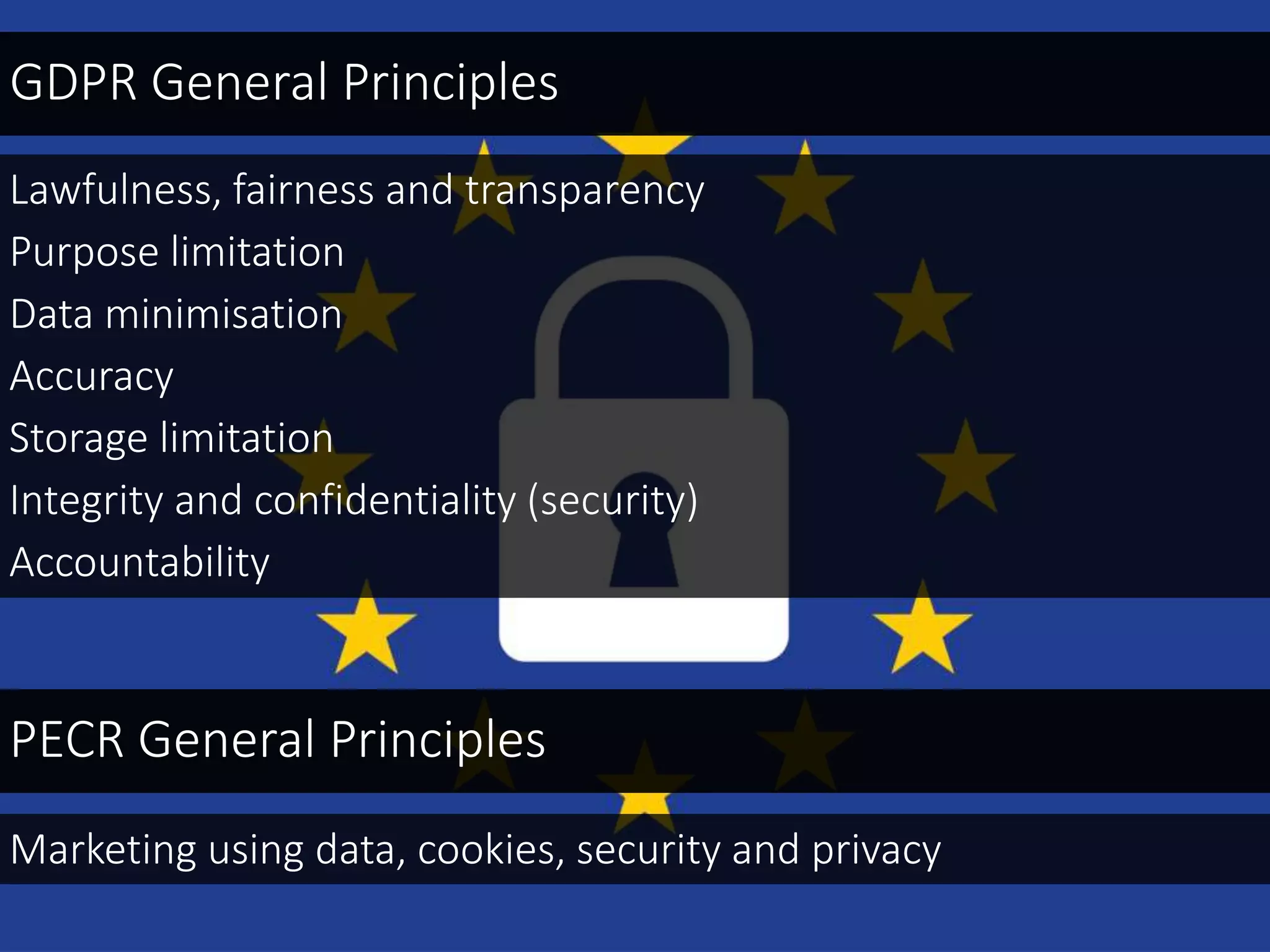
Lawfulness, fairness and transparency
Purpose limitation
Data minimisation
Accuracy
Storage limitation
Integrity and confidentiality (security)
Accountability
GDPR General Principles
PECR General Principles
Marketing using data, cookies, security and privacy
…foods high in fat, salt and sugar (HFSS)
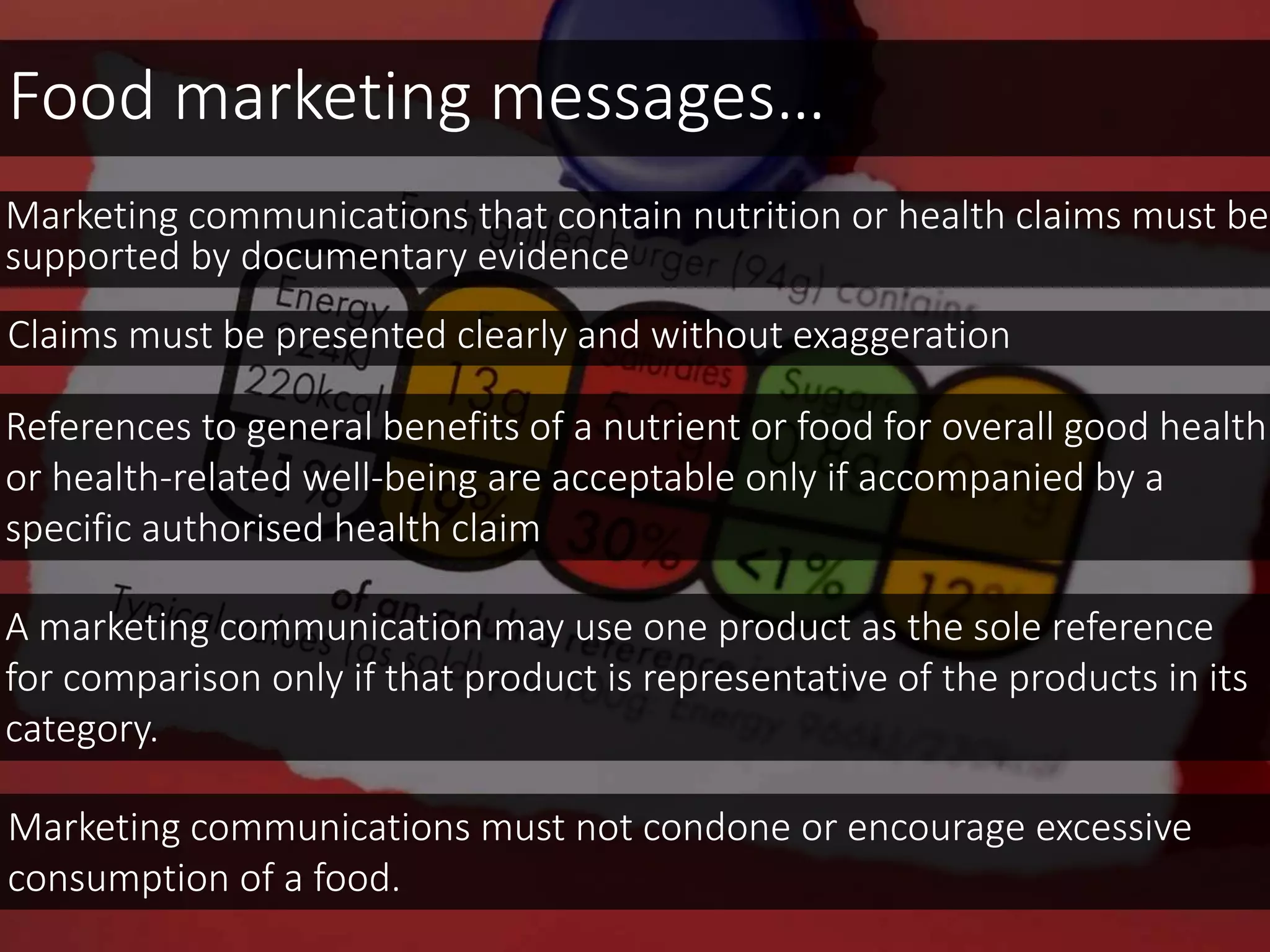
Food marketing messages…
Marketing communications that contain nutrition or health claims must be
supported by documentary evidence
Claims must be presented clearly and without exaggeration
Marketing communications must not condone or encourage excessive
consumption of a food.
References to general benefits of a nutrient or food for overall good health
or health-related well-being are acceptable only if accompanied by a
specific authorised health claim
A marketing communication may use one product as the sole reference
for comparison only if that product is representative of the products in its
category.
What’s important here?
…marketing communications are often accused of being intrinsically bad
The ASA and both the CAP and BCAP have a major influence on comms
ethics, sustainability, honest and transparency are vital
Gathering, storing and using data is subject to very strict regulation

IMC Lecture 7 1920

  • 1.
  • 2.
    unethical marketing… sometimes accusedof being intrinsically bad… encourages materialism, strips the planet of valuable resources, promotes greed, selfishness, hedonism and sets aspirations too high results in crime, loan sharks, serious debt, damage to the environment, to individuals, to communities, to the planet?
  • 3.
    marketing ethics… diverse aspeople’s views on any moral issue are we happy with the ‘free-market’? forced ‘self-regulation’ through consumer power… …or should we have a interventionist, regulatory approach? state controls in place to stop abuse of power voluntary, self-regulating codes of conduct?
  • 4.
    …it is therole of the marketer to find the line between ethical practice and using marketing techniques effectively to gain competitive advantage marketing ethics…
  • 5.
    CSR covers a widerange of issues… employment labour and production in the supply chain environmental concerns such as sustainability refusal of ‘unethical’ practices also about exercising care in where and how marketing communications are targeted
  • 6.
    ethical decision makingmodels certain tests have been developed, Laczniak and Murphy (1996) suggest… ‘the golden rule’ – act how you expect others to act ‘the professional ethic’ – act in a way that a panel of objective, professionals would view as appropriate ‘the tv test’ – can you explain your actions comfortably to your public via tv? ‘categorical imperative’ – act in a way deemed universally appropriate for anyone in the same situation
  • 7.
    ethical decision makingmodels transparency depends on our perception and interaction with the internet… …can we add a new model? don’t engage in any activities you wouldn’t like shared and discussed over the internet..? viral effect speed in communications
  • 8.
    criticisms of marketingcommunications… deceptive practices - pricing, promotion and packaging High pressure selling - non-customer focus False wants and too materialistic Cultural pollution Impact on environment
  • 9.
  • 10.
  • 12.
  • 13.
  • 14.
  • 15.
    Most complained aboutadverts in 2017
  • 16.
  • 17.
  • 18.
  • 19.
  • 20.
    advertising codes… CAP BCAP advertising codesto ensure we’re legal, honest, decent and trustworthy ASA, 2019
  • 21.
    consumer protection regulations… …andbusiness protection regulations designed to ensure that the consumer is ‘free’ to make their own informed purchasing decisions avoiding misleading and aggressive practices as well as those that are legally prohibited such as… False prize draws False recommendations and celebrity blogging Unwanted communications Cookies law CIM, 2012
  • 22.
    green claims… content mustbe relevant and offer a genuine benefit the claim must be presented clearly and accurately must be accurate, evidenced and relevant the claim must be substantiated CIM, 2012
  • 23.
  • 24.
    PECR Privacy and ElectronicCommunication Regulations General Data Protection Regulations
  • 25.
    Lawfulness, fairness andtransparency Purpose limitation Data minimisation Accuracy Storage limitation Integrity and confidentiality (security) Accountability GDPR General Principles PECR General Principles Marketing using data, cookies, security and privacy
  • 26.
    …foods high infat, salt and sugar (HFSS)
  • 27.
    Food marketing messages… Marketingcommunications that contain nutrition or health claims must be supported by documentary evidence Claims must be presented clearly and without exaggeration Marketing communications must not condone or encourage excessive consumption of a food. References to general benefits of a nutrient or food for overall good health or health-related well-being are acceptable only if accompanied by a specific authorised health claim A marketing communication may use one product as the sole reference for comparison only if that product is representative of the products in its category.
  • 28.
    What’s important here? …marketingcommunications are often accused of being intrinsically bad The ASA and both the CAP and BCAP have a major influence on comms ethics, sustainability, honest and transparency are vital Gathering, storing and using data is subject to very strict regulation