- ANJITH JOHN 
AIMIT Mangalore
ETHICS 
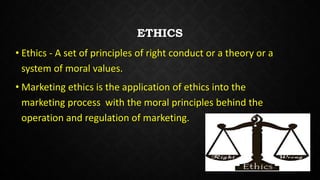
• Ethics - A set of principles of right conduct or a theory or a 
system of moral values. 
• Marketing ethics is the application of ethics into the 
marketing process with the moral principles behind the 
operation and regulation of marketing.
• Ethics are all about principles present in an individual 
showing the right conduct which helps in shaping the 
decisions of the customers as well as of the organization. 
• Ethics play a very important role in influencing the behavior 
of the individuals to help them in their buying decision.
• It is true that marketing involves buying and selling of 
products, services or ideas to the people in different ways, 
some are ethical but some are unethical. 
- The Right to Safety 
- The Right to Be Informed 
- The Right to Selection 
- The Right to Confidentiality (Privacy )
ADVANTAGE OF MARKETING ETHICS 
• The transparency in selling or buying is always liked by people and 
they show great interest in the product/service. 
• Ethics synergizes a mutual relationship between the customer and 
the organization which is built on trust, good faith and fair dealing in 
their interaction. 
• It helps the customers to take the right and fast decision in choosing 
a particular product.
ETHICAL ISSUES & THE MARKETING MIX 
Customers 
Pricing 
Issues 
Promotion 
Issues 
Distribution 
Issues 
Product 
Issues
ETHICAL CRITICISMS OF MARKETING 
• High prices 
• Deceptive practices 
•Harmful, or unsafe products 
•Poor service to disadvantaged consumers
• Presuppositions: fat or dark is not beautiful, making value 
judgments 
• Irritation: 
Many people find the increasing number of hard-sell direct-marketing 
solicitations to be a nuisance. 
They dislike direct-response TV commercials that are too loud, 
too long and too insistent. Especially, dinnertime or late-night 
phone calls, poorly trained callers and computerized calls 
placed by an auto-dial recorded-message player.
• Invasion of privacy: 
It seems that almost every time consumers order products 
by mail or telephone, enter a sweepstakes, apply for a credit 
card, or take out a magazine subscription, their names, 
addresses, and purchasing behavior may be added to 
several company databases. 
• Critics worry that marketers may know too much about 
consumer’s lives, and that they may use this knowledge to 
take unfair advantage.
•Unfairness- some direct marketers take advantage of 
impulsive or less sophisticated buyers or prey on the 
vulnerable, especially the elderly. 
•Deception and fraud- some direct marketers design 
mailers and write copy intended to mislead. They may 
exaggerate product size, performance claims, or the retail 
price.
THANK YOU…..

Ethical issues in direct marketing

  • 1.
    - ANJITH JOHN AIMIT Mangalore
  • 2.
    ETHICS • Ethics- A set of principles of right conduct or a theory or a system of moral values. • Marketing ethics is the application of ethics into the marketing process with the moral principles behind the operation and regulation of marketing.
  • 3.
    • Ethics areall about principles present in an individual showing the right conduct which helps in shaping the decisions of the customers as well as of the organization. • Ethics play a very important role in influencing the behavior of the individuals to help them in their buying decision.
  • 4.
    • It istrue that marketing involves buying and selling of products, services or ideas to the people in different ways, some are ethical but some are unethical. - The Right to Safety - The Right to Be Informed - The Right to Selection - The Right to Confidentiality (Privacy )
  • 5.
    ADVANTAGE OF MARKETINGETHICS • The transparency in selling or buying is always liked by people and they show great interest in the product/service. • Ethics synergizes a mutual relationship between the customer and the organization which is built on trust, good faith and fair dealing in their interaction. • It helps the customers to take the right and fast decision in choosing a particular product.
  • 6.
    ETHICAL ISSUES &THE MARKETING MIX Customers Pricing Issues Promotion Issues Distribution Issues Product Issues
  • 7.
    ETHICAL CRITICISMS OFMARKETING • High prices • Deceptive practices •Harmful, or unsafe products •Poor service to disadvantaged consumers
  • 8.
    • Presuppositions: fator dark is not beautiful, making value judgments • Irritation: Many people find the increasing number of hard-sell direct-marketing solicitations to be a nuisance. They dislike direct-response TV commercials that are too loud, too long and too insistent. Especially, dinnertime or late-night phone calls, poorly trained callers and computerized calls placed by an auto-dial recorded-message player.
  • 9.
    • Invasion ofprivacy: It seems that almost every time consumers order products by mail or telephone, enter a sweepstakes, apply for a credit card, or take out a magazine subscription, their names, addresses, and purchasing behavior may be added to several company databases. • Critics worry that marketers may know too much about consumer’s lives, and that they may use this knowledge to take unfair advantage.
  • 10.
    •Unfairness- some directmarketers take advantage of impulsive or less sophisticated buyers or prey on the vulnerable, especially the elderly. •Deception and fraud- some direct marketers design mailers and write copy intended to mislead. They may exaggerate product size, performance claims, or the retail price.
  • 11.

Editor's Notes

  • #4 Firstly, when an organization behaves ethical manner, customers develop a positive attitude about the organizations and its products or services. Secondly, the organization will get more frequent responses from its customers.
  • #6 Ethics always play crucial role in attracting the attention of customers.
  • #7 Copyright © 2000 by Houghton Mifflin Company. All rights reserved.