
Integrated Marketing Communications
communications strategy branding
5
what is a brand?
“...a special relationship with customers,
based on intangible qualities that evoke
strong emotional responses. These
might consist of a logo, a general look and
feel, a tone of voice and the way a
company interacts with its customers –
but the whole should be much greater
than the sum of the parts.”
a brand is something that creates…
CIM, 2010
“A brand is the set of expectations,
memories, stories and relationships that,
taken together, account for a consumer’s
decision to choose one product or service
over another. If the consumer (whether it’s a
business, a buyer, a voter or a donor)
doesn’t pay a premium, make a selection or
spread the word, then no brand value exists
for that consumer.”
Godin, 2011
what is a brand?
a brand can be perceived as a product…
...that adds either rational and tangible
dimensions (related to performance)
…or as a symbol...
...symbolic, emotional and intangible
dimensions (related to what the brand
represents)
Keller, 1997
what is a brand?
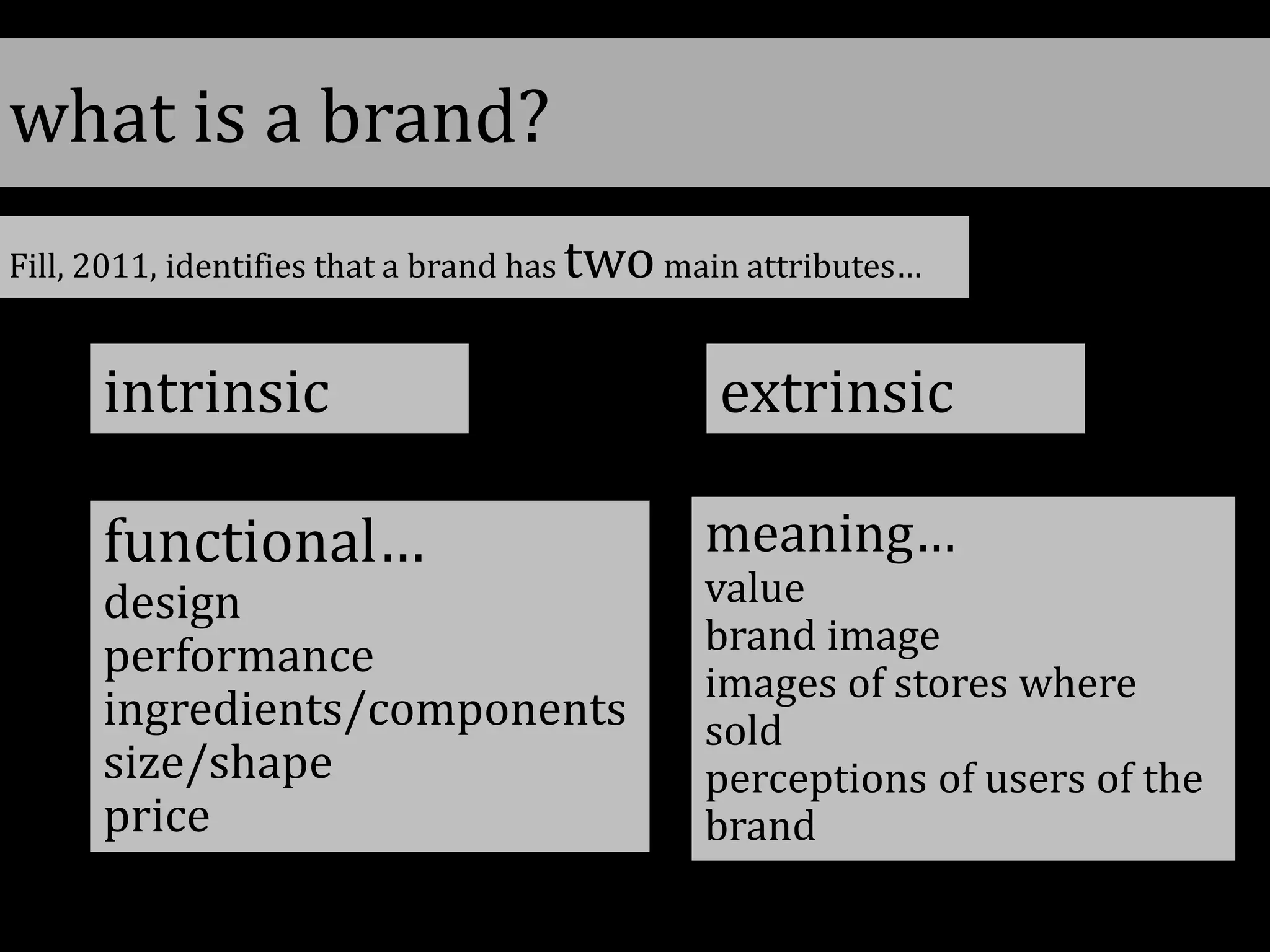
Fill, 2011, identifies that a brand has twomain attributes…
intrinsic extrinsic
functional…
design
performance
ingredients/components
size/shape
price
meaning…
value
brand image
images of stores where
sold
perceptions of users of the
brand
what is a brand?
brand names need to be...
memorable
likeable
adaptable
transferable
meaningful
protectable
brand names…
should be distinctive and able to differentiate
good brand names are easy to…
say
should be transferable across products, culture and coun
spell recall
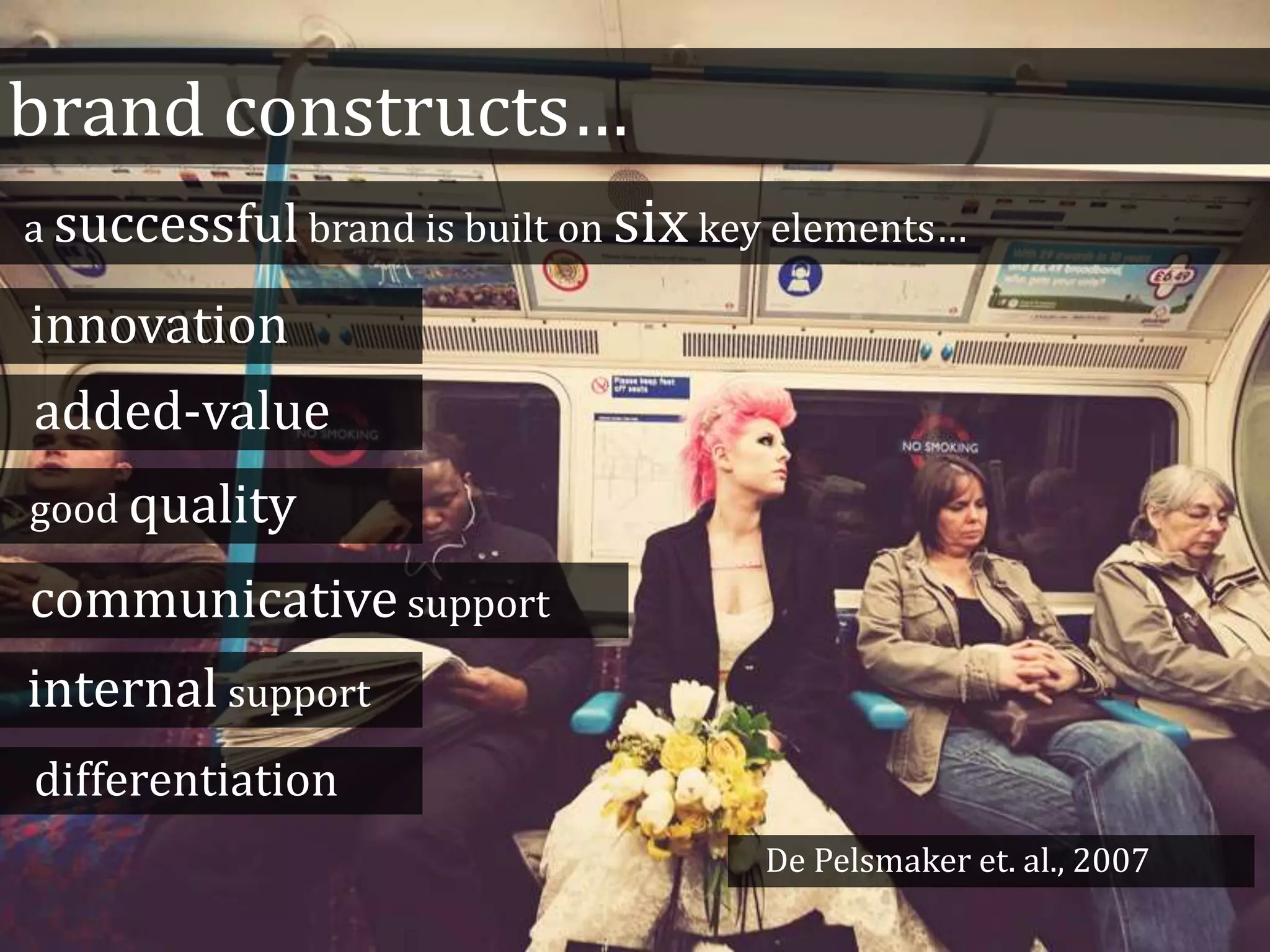
brand constructs…
a successful brand is built on sixkey elements…
innovation
added-value
good quality
communicative support
differentiation
De Pelsmaker et. al., 2007
internal support
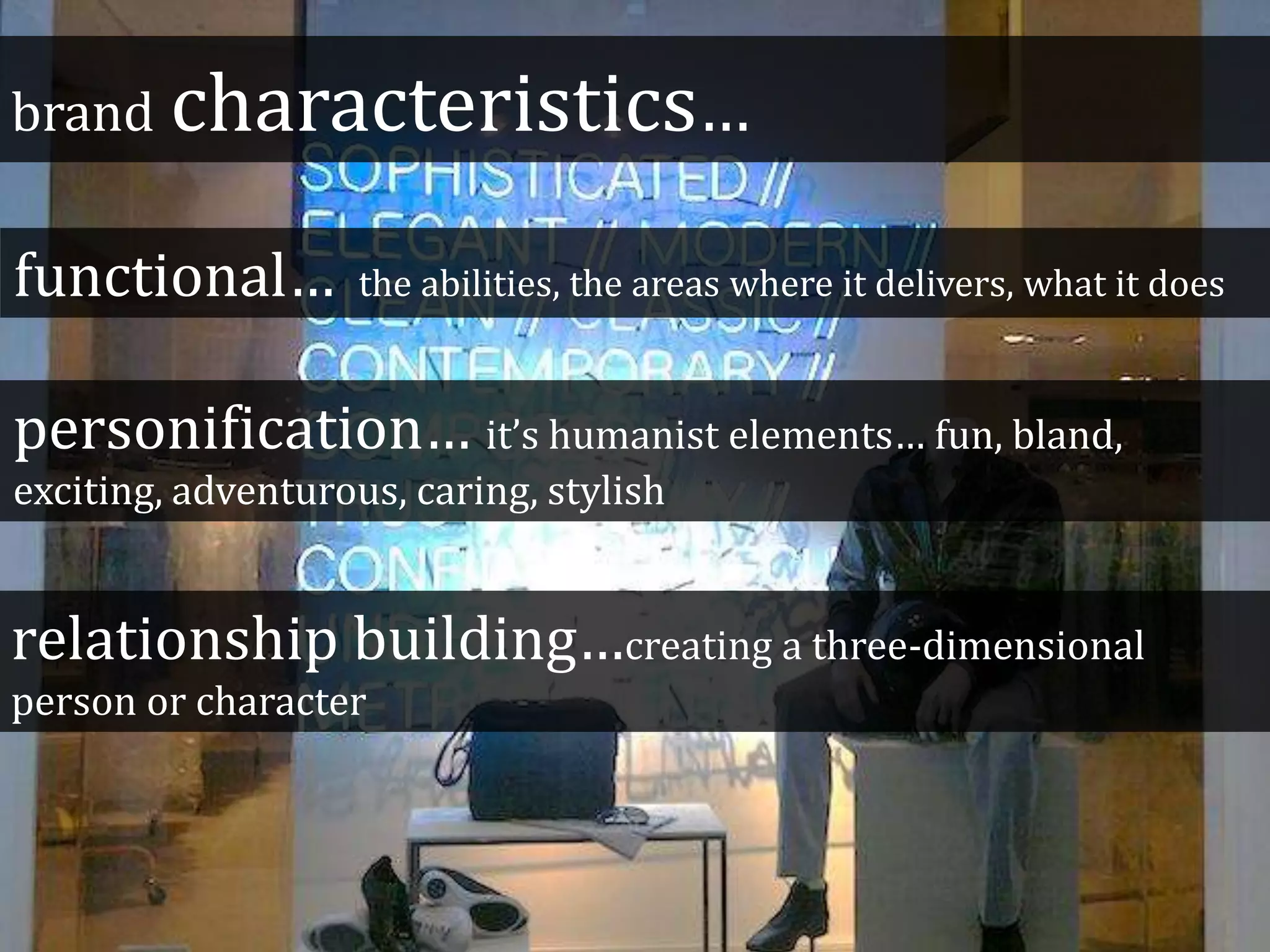
brand characteristics…
functional… the abilities, the areas where it delivers, what it does
personification… it’s humanist elements… fun, bland,
exciting, adventurous, caring, stylish
relationship building…creating a three-dimensional
person or character
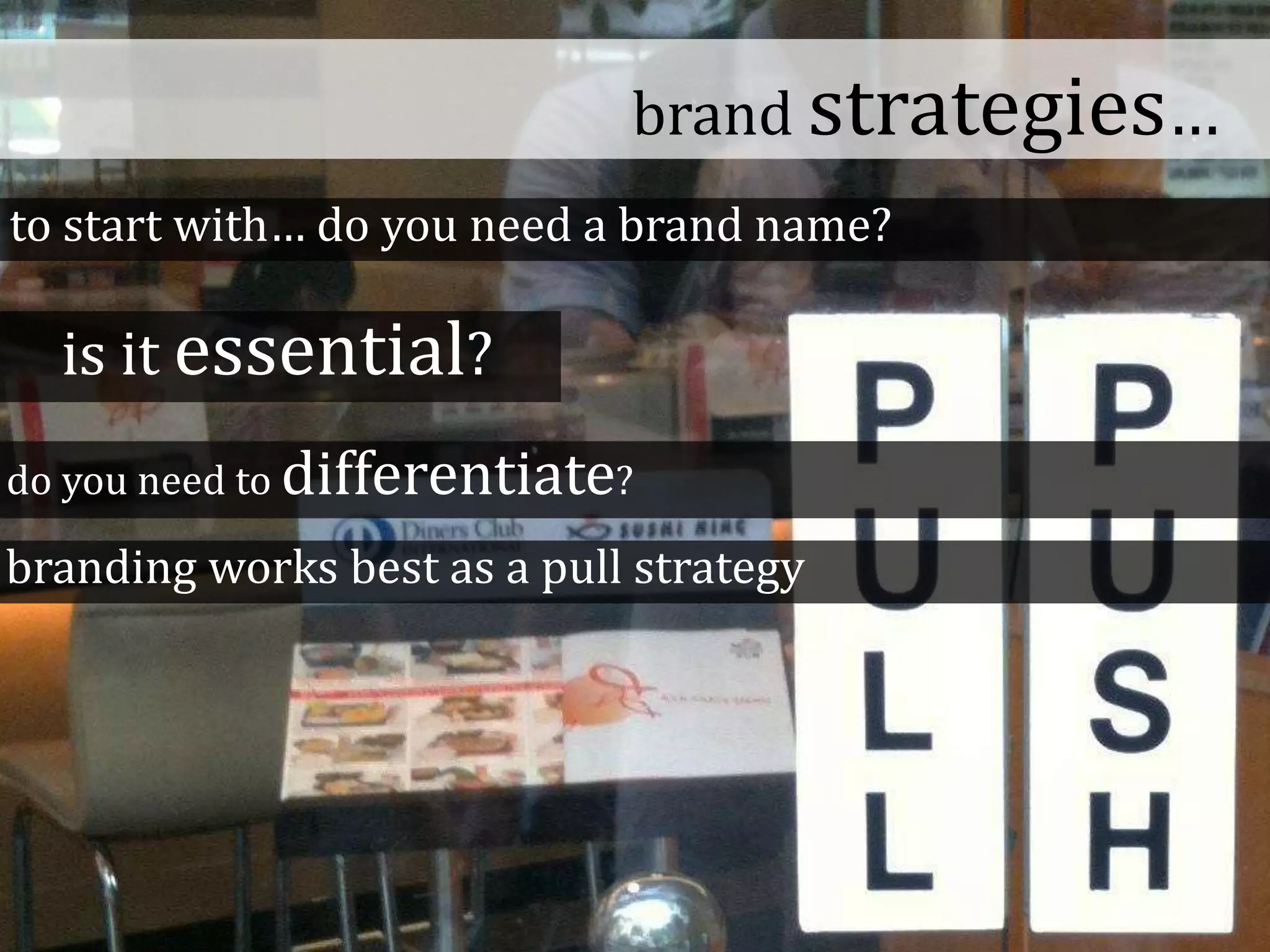
brand strategies…
to start with… do you need a brand name?
is it essential?
do you need to differentiate?
branding works best as a pull strategy
brand names…
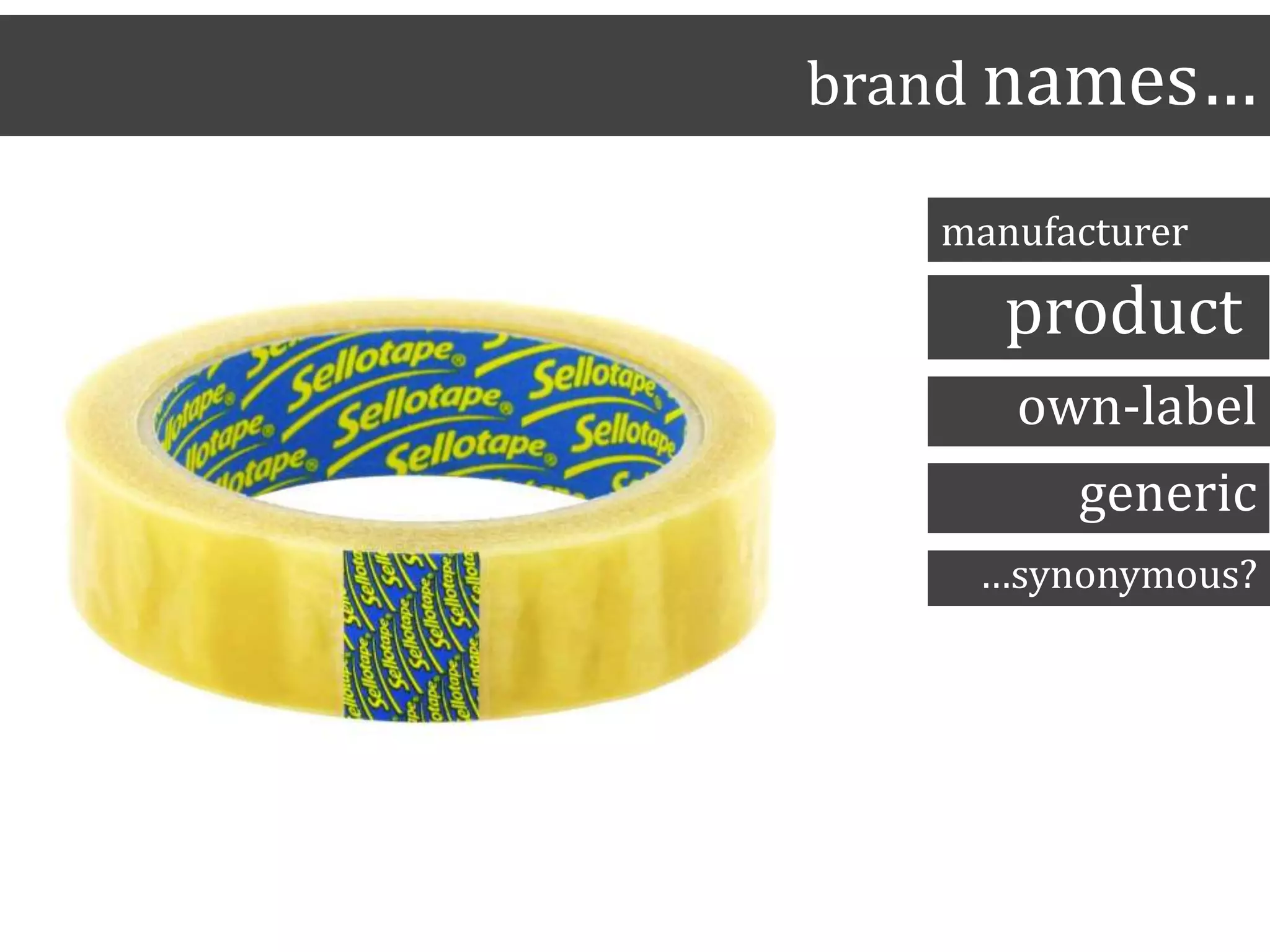
manufacturer
product
own-label
generic
…synonymous?
brand strategies…
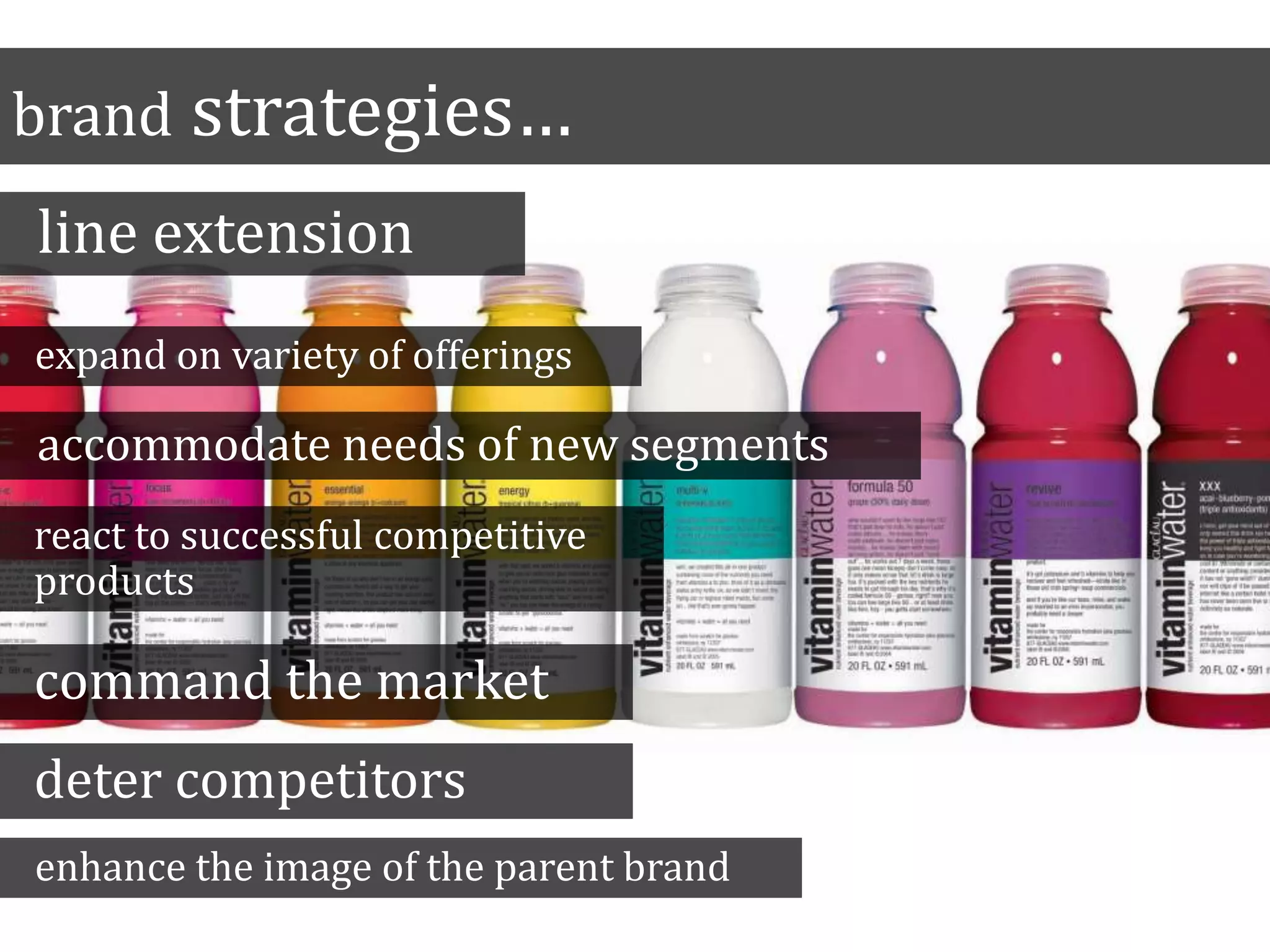
line extension
expand on variety of offerings
accommodate needs of new segments
react to successful competitive
products
command the market
deter competitors
enhance the image of the parent brand
brand strategies…
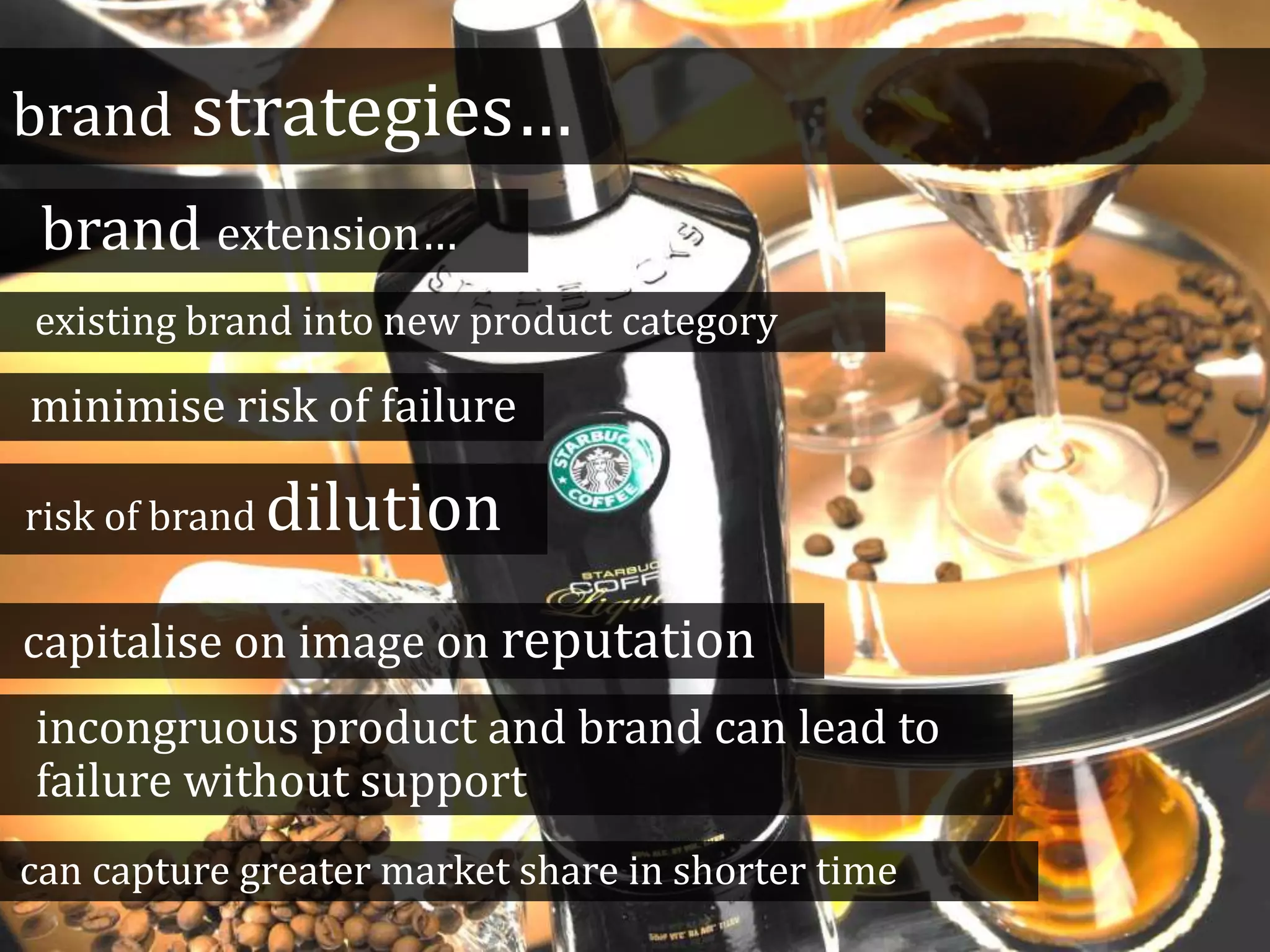
brand extension…
existing brand into new product category
minimise risk of failure
risk of brand dilution
capitalise on image on reputation
incongruous product and brand can lead to
failure without support
can capture greater market share in shorter time
brand strategies…
corporate brand
using the name of the company for all products
commonly used by banks and financial
institutions
capitalise on reputation
fairly inflexible
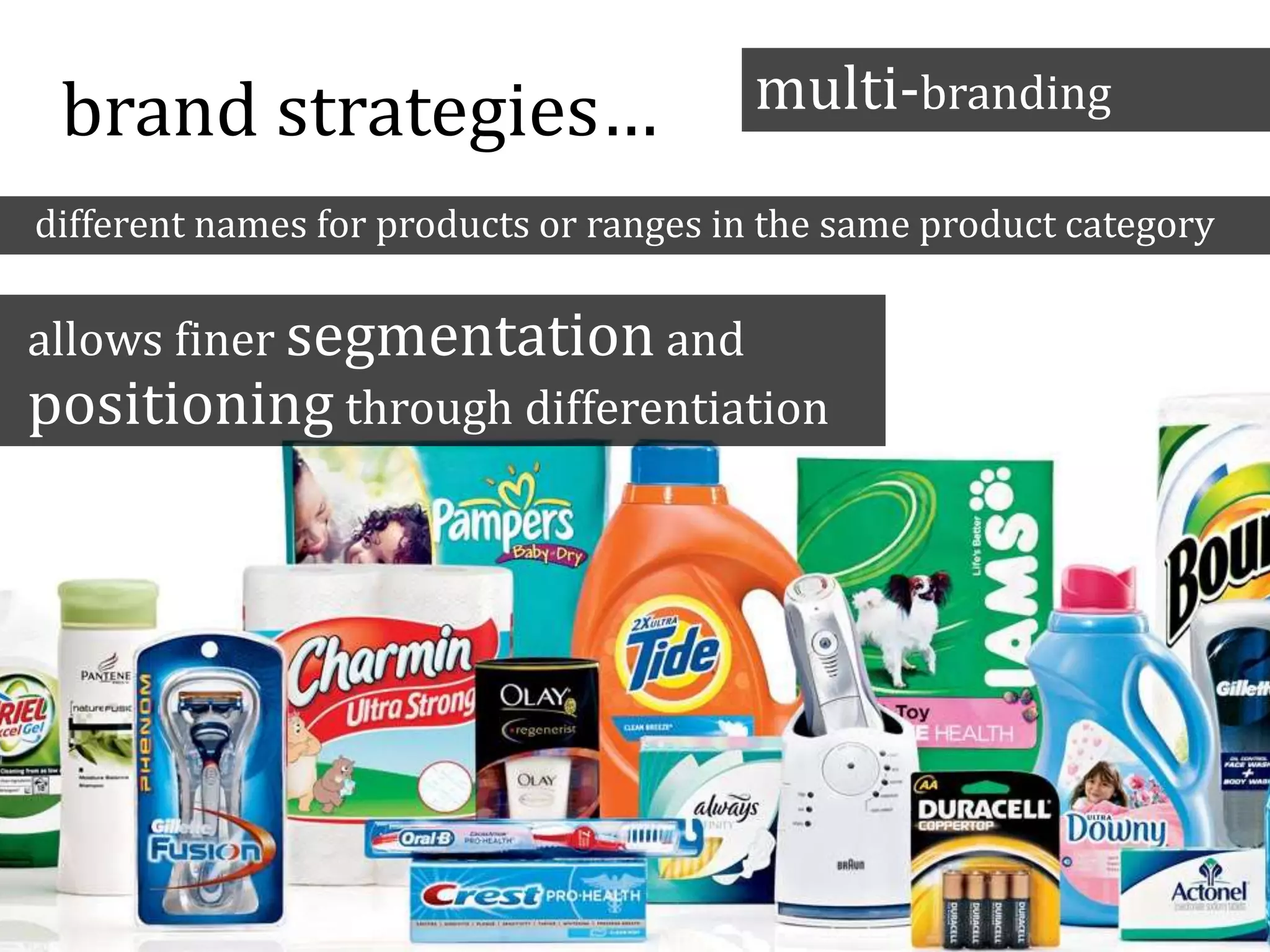
brand strategies… multi-branding
different names for products or ranges in the same product category
allows finer segmentation and
positioning through differentiation
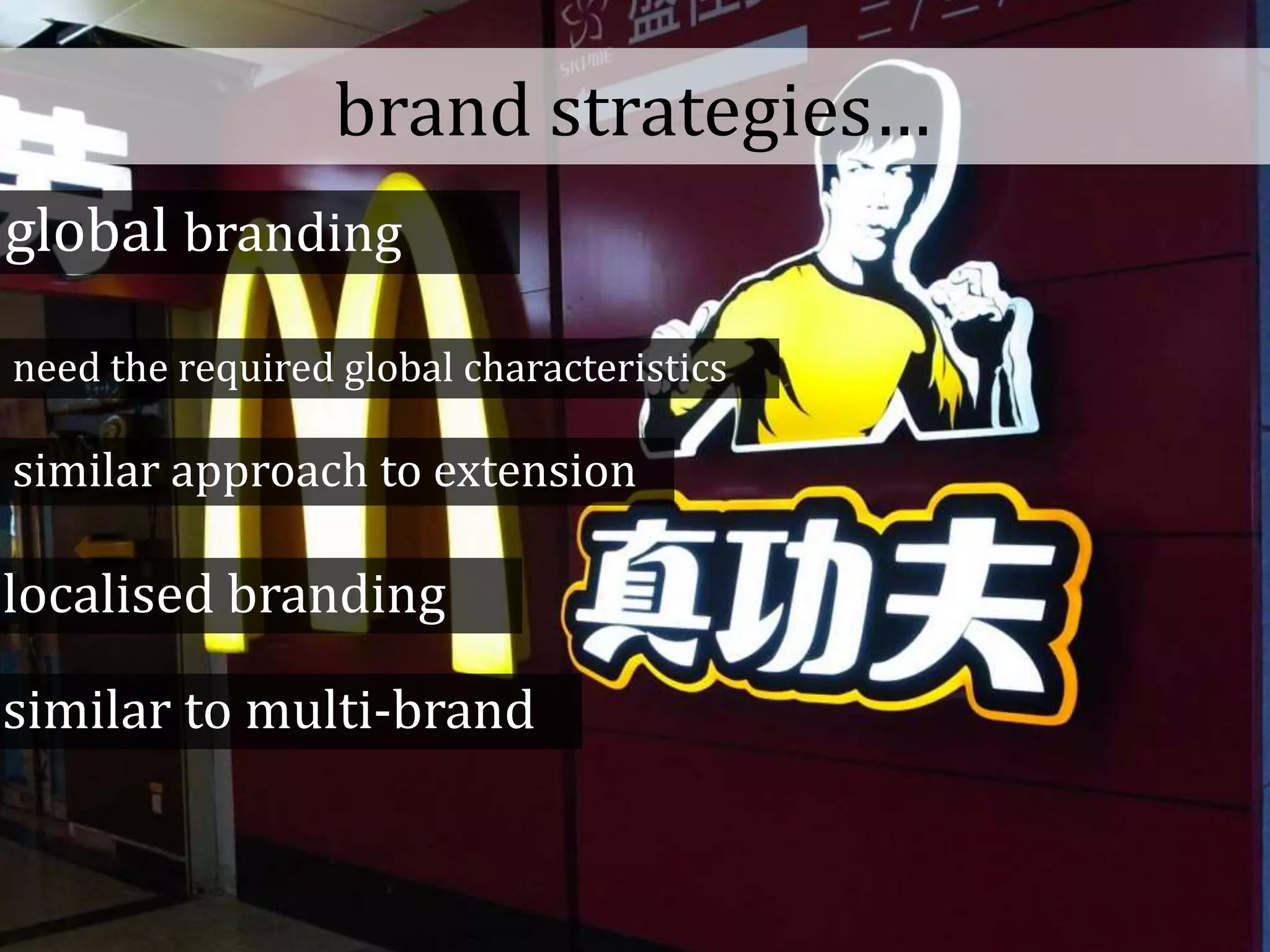
brand strategies…
global branding
need the required global characteristics
similar approach to extension
localised branding
similar to multi-brand
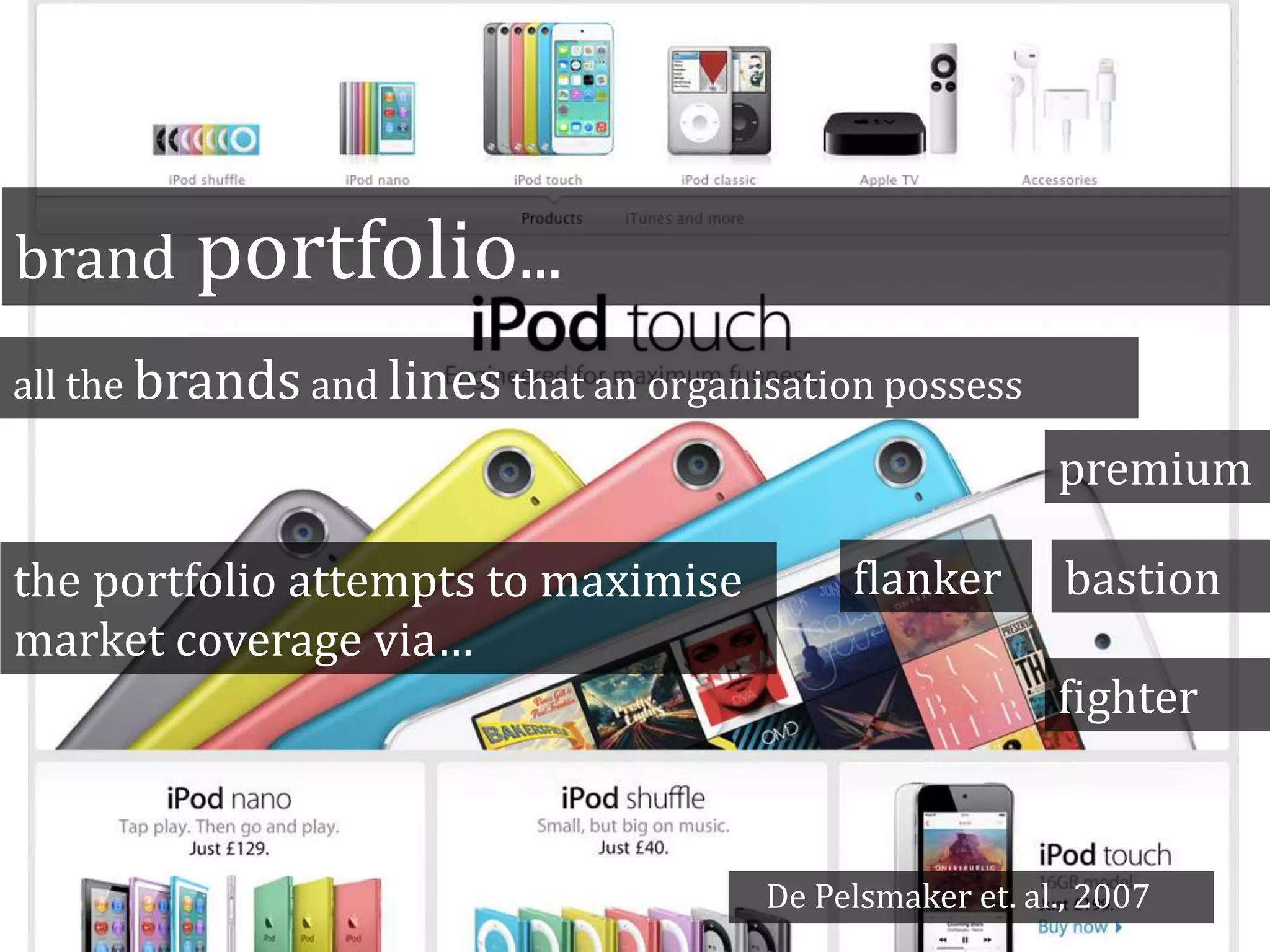
brand portfolio...
all the brands and lines that an organisation possess
premium
the portfolio attempts to maximise
market coverage via…
bastion
fighter
flanker
De Pelsmaker et. al., 2007
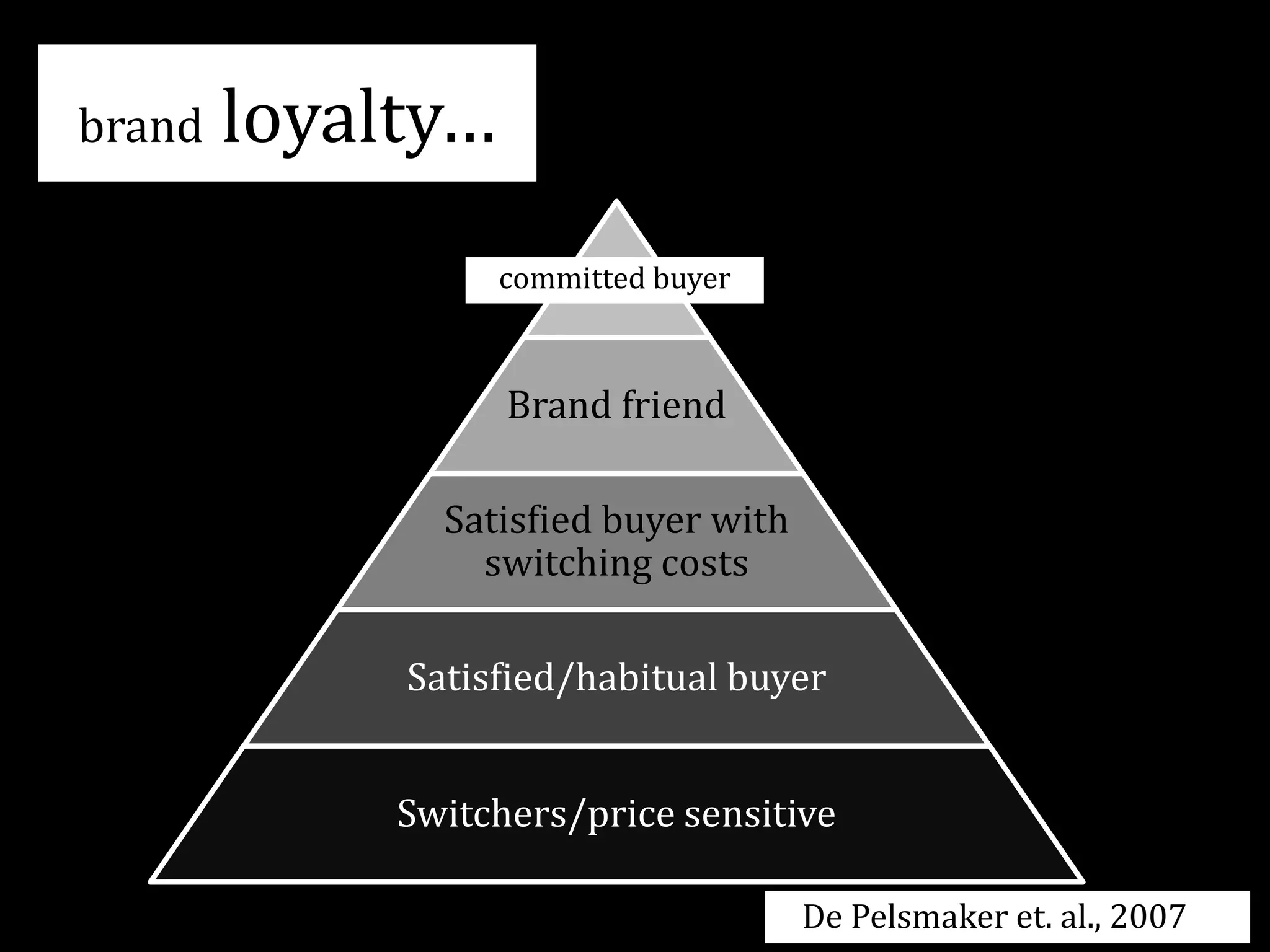
brand loyalty…
Brand friend
Satisfied buyer with
switching costs
Satisfied/habitual buyer
Switchers/price sensitive
committed buyer
De Pelsmaker et. al., 2007
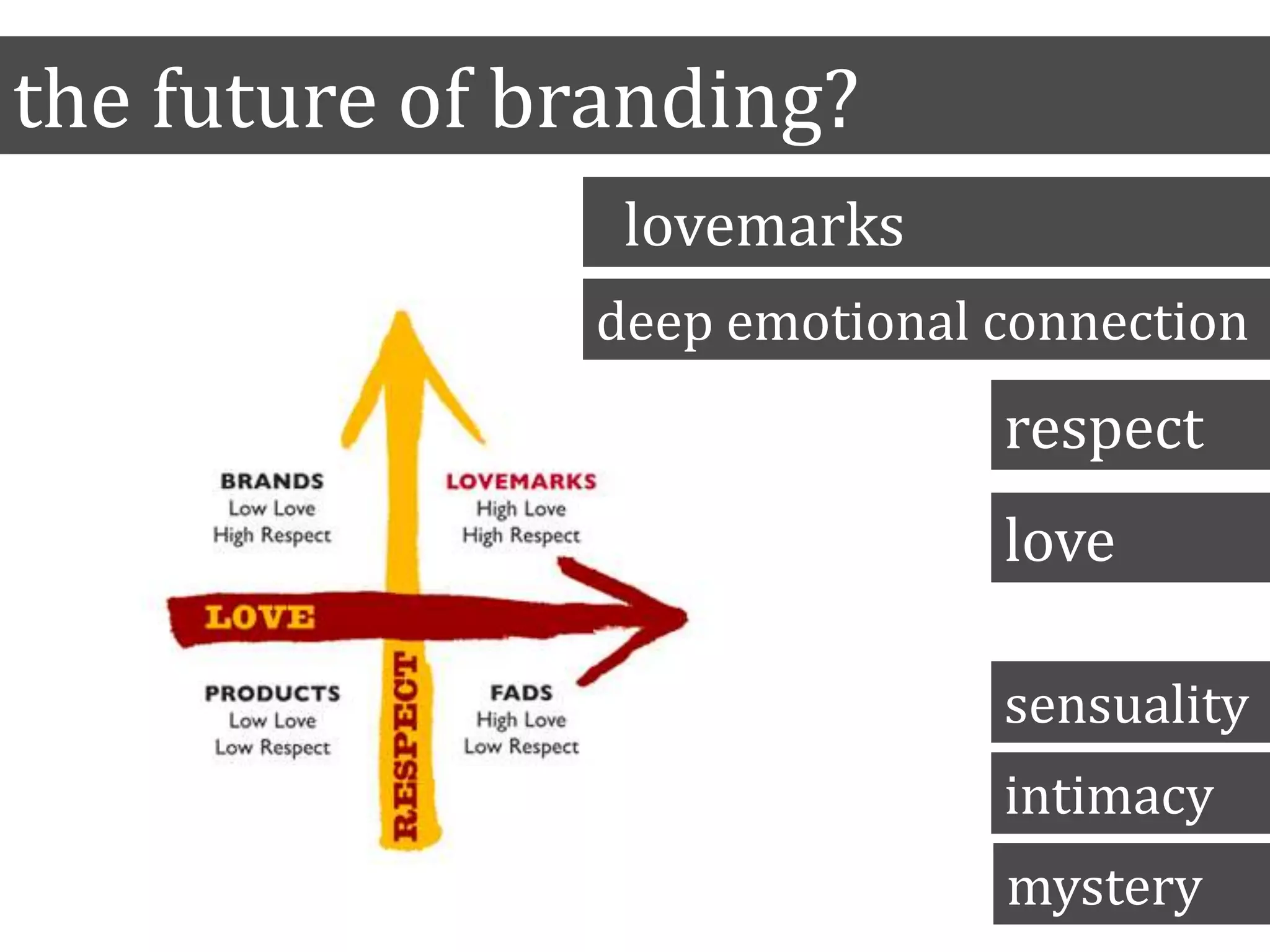
the future of branding?
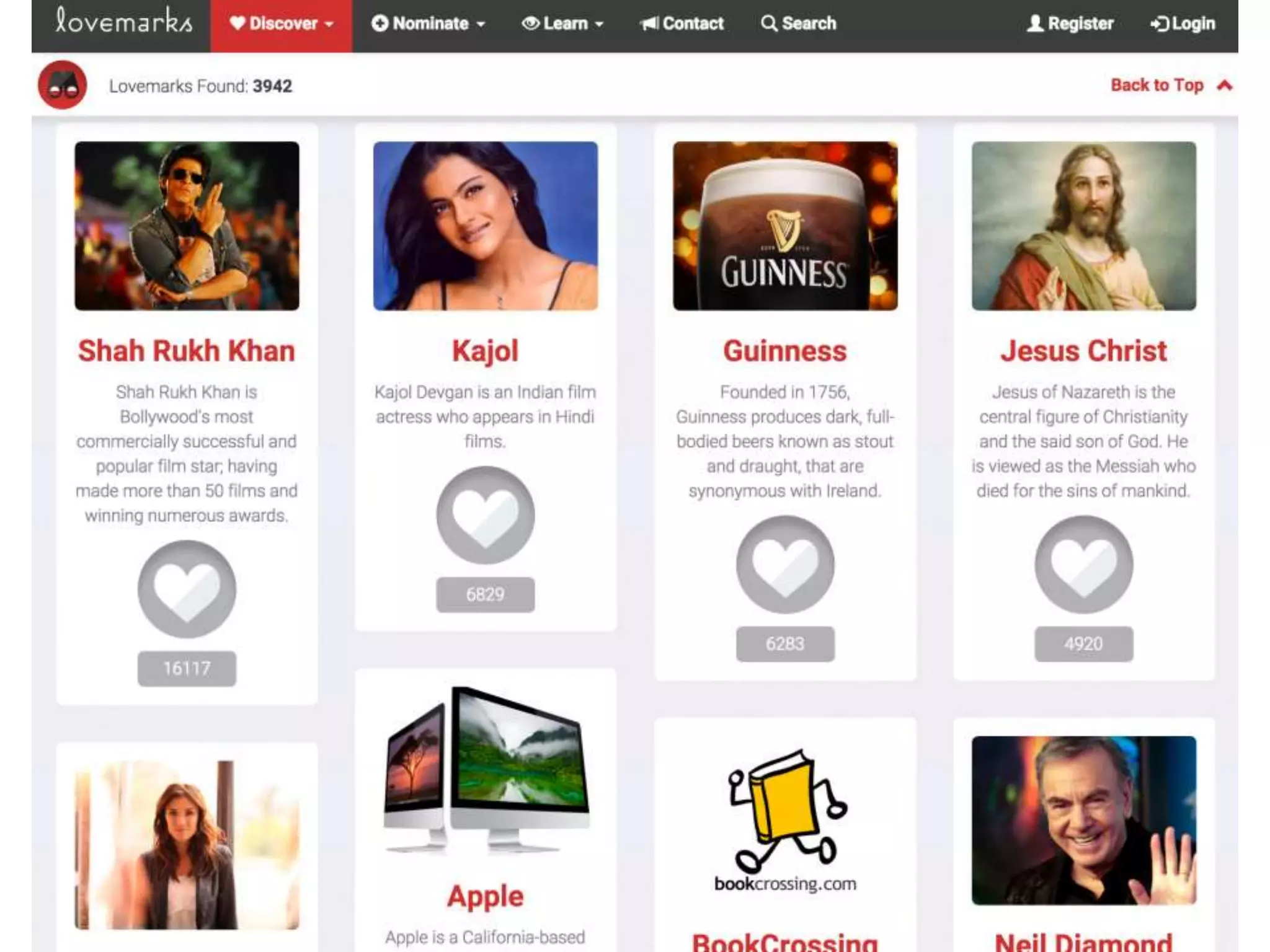
lovemarks
respect
love
sensuality
deep emotional connection
intimacy
mystery
the future of branding…
Brand narratives
…an ongoing story
using metaphors and myths we understand…
…and connect with…
…and develop emotional attachments to
Creates identity, publicity and profit
…but what makes a good story?
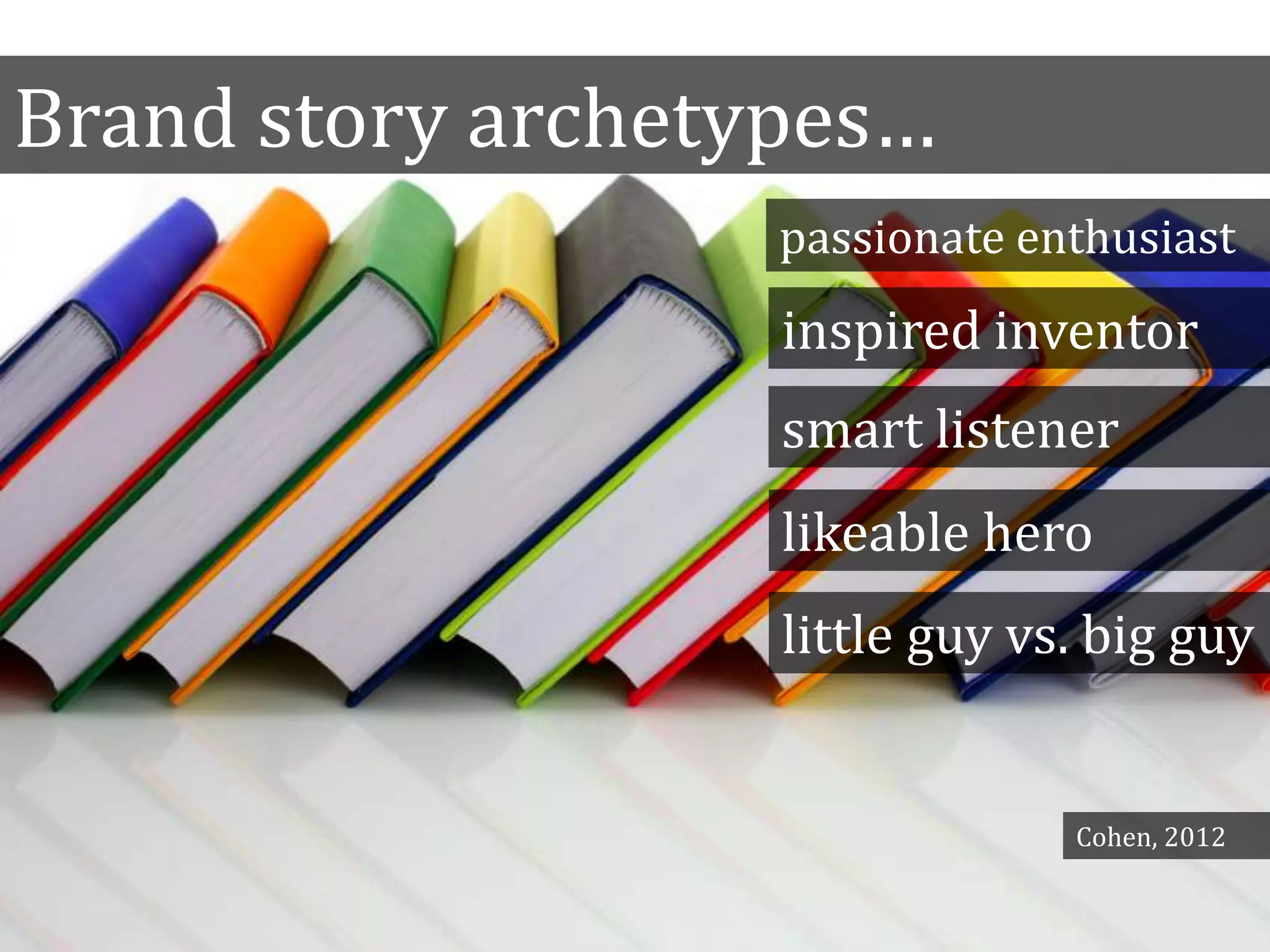
Brand story archetypes…
passionate enthusiast
smart listener
likeable hero
little guy vs. big guy
inspired inventor
Cohen, 2012
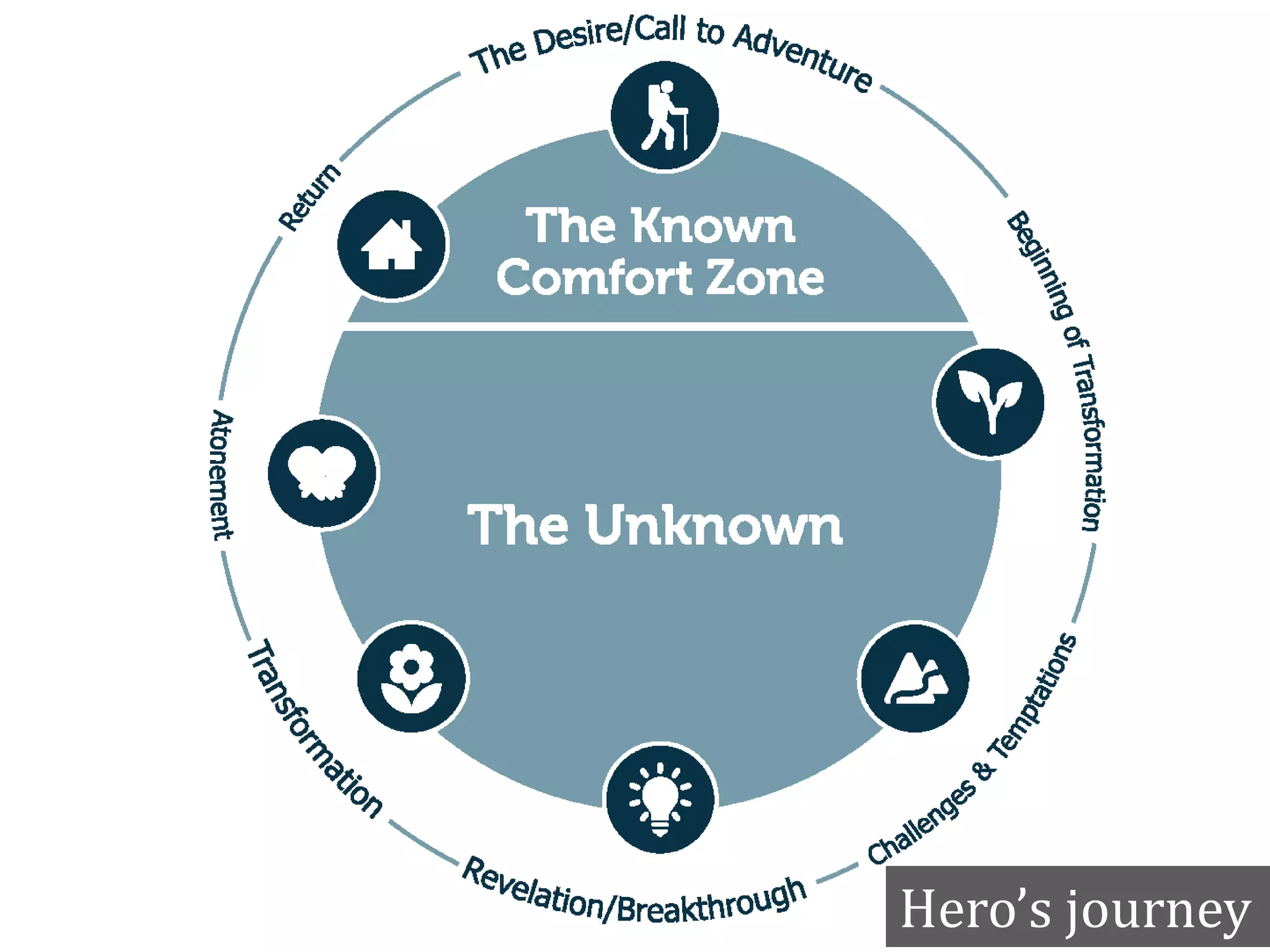
Hero’s journey
brand narratives
Theories of
…brands are highly influential in influencing behaviour
…brands have intrinsic and extrinsic factors attached to them…
we can better understand these as functional (rational) and emotional factors
brands can be incredibly valuable and polarising
…a brand narrative helps us identify with the brand

IMC Lecture 5

  • 1.
  • 2.
    what is abrand? “...a special relationship with customers, based on intangible qualities that evoke strong emotional responses. These might consist of a logo, a general look and feel, a tone of voice and the way a company interacts with its customers – but the whole should be much greater than the sum of the parts.” a brand is something that creates… CIM, 2010
  • 3.
    “A brand isthe set of expectations, memories, stories and relationships that, taken together, account for a consumer’s decision to choose one product or service over another. If the consumer (whether it’s a business, a buyer, a voter or a donor) doesn’t pay a premium, make a selection or spread the word, then no brand value exists for that consumer.” Godin, 2011 what is a brand?
  • 4.
    a brand canbe perceived as a product… ...that adds either rational and tangible dimensions (related to performance) …or as a symbol... ...symbolic, emotional and intangible dimensions (related to what the brand represents) Keller, 1997 what is a brand?
  • 5.
    Fill, 2011, identifiesthat a brand has twomain attributes… intrinsic extrinsic functional… design performance ingredients/components size/shape price meaning… value brand image images of stores where sold perceptions of users of the brand what is a brand?
  • 6.
    brand names needto be... memorable likeable adaptable transferable meaningful protectable
  • 7.
    brand names… should bedistinctive and able to differentiate good brand names are easy to… say should be transferable across products, culture and coun spell recall
  • 9.
    brand constructs… a successfulbrand is built on sixkey elements… innovation added-value good quality communicative support differentiation De Pelsmaker et. al., 2007 internal support
  • 11.
    brand characteristics… functional… theabilities, the areas where it delivers, what it does personification… it’s humanist elements… fun, bland, exciting, adventurous, caring, stylish relationship building…creating a three-dimensional person or character
  • 13.
    brand strategies… to startwith… do you need a brand name? is it essential? do you need to differentiate? branding works best as a pull strategy
  • 14.
  • 15.
    brand strategies… line extension expandon variety of offerings accommodate needs of new segments react to successful competitive products command the market deter competitors enhance the image of the parent brand
  • 16.
    brand strategies… brand extension… existingbrand into new product category minimise risk of failure risk of brand dilution capitalise on image on reputation incongruous product and brand can lead to failure without support can capture greater market share in shorter time
  • 17.
    brand strategies… corporate brand usingthe name of the company for all products commonly used by banks and financial institutions capitalise on reputation fairly inflexible
  • 18.
    brand strategies… multi-branding differentnames for products or ranges in the same product category allows finer segmentation and positioning through differentiation
  • 19.
    brand strategies… global branding needthe required global characteristics similar approach to extension localised branding similar to multi-brand
  • 20.
    brand portfolio... all thebrands and lines that an organisation possess premium the portfolio attempts to maximise market coverage via… bastion fighter flanker De Pelsmaker et. al., 2007
  • 21.
    brand loyalty… Brand friend Satisfiedbuyer with switching costs Satisfied/habitual buyer Switchers/price sensitive committed buyer De Pelsmaker et. al., 2007
  • 22.
    the future ofbranding? lovemarks respect love sensuality deep emotional connection intimacy mystery
  • 24.
    the future ofbranding… Brand narratives …an ongoing story using metaphors and myths we understand… …and connect with… …and develop emotional attachments to Creates identity, publicity and profit …but what makes a good story?
  • 25.
    Brand story archetypes… passionateenthusiast smart listener likeable hero little guy vs. big guy inspired inventor Cohen, 2012
  • 26.
  • 27.
  • 28.
    Theories of …brands arehighly influential in influencing behaviour …brands have intrinsic and extrinsic factors attached to them… we can better understand these as functional (rational) and emotional factors brands can be incredibly valuable and polarising …a brand narrative helps us identify with the brand