Life and works of 
Achuyt Prakash Kanvinde 
1916-2002 
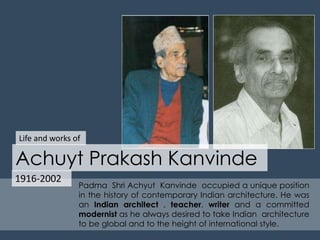
Padma Shri Achyut Kanvinde occupied a unique position 
in the history of contemporary Indian architecture. He was 
an Indian architect , teacher, writer and a committed 
modernist as he always desired to take Indian architecture 
to be global and to the height of international style.
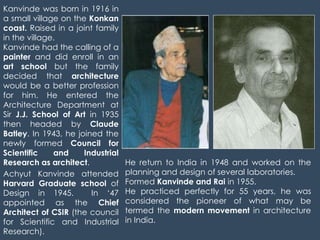
Kanvinde was born in 1916 in 
a small village on the Konkan 
coast. Raised in a joint family 
in the village. 
Kanvinde had the calling of a 
painter and did enroll in an 
art school but the family 
decided that architecture 
would be a better profession 
for him. He entered the 
Architecture Department at 
Sir J.J. School of Art in 1935 
then headed by Claude 
Batley. In 1943, he joined the 
newly formed Council for 
Scientific and Industrial 
Research as architect. 
Achyut Kanvinde attended 
Harvard Graduate school of 
Design in 1945. In ‘47 
appointed as the Chief 
Architect of CSIR (the council 
for Scientific and Industrial 
Research). 
He return to India in 1948 and worked on the 
planning and design of several laboratories. 
Formed Kanvinde and Rai in 1955. 
He practiced perfectly for 55 years, he was 
considered the pioneer of what may be 
termed the modern movement in architecture 
in India.
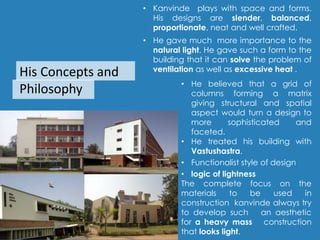
• Kanvinde plays with space and forms. 
His designs are slender, balanced, 
proportionate, neat and well crafted. 
His Concepts and 
Philosophy 
• He gave much more importance to the 
natural light. He gave such a form to the 
building that it can solve the problem of 
ventilation as well as excessive heat . 
• He believed that a grid of 
columns forming a matrix 
giving structural and spatial 
aspect would turn a design to 
more sophisticated and 
faceted. 
• He treated his building with 
Vastushastra. 
• Functionalist style of design 
• logic of lightness 
The complete focus on the 
materials to be used in 
construction kanvinde always try 
to develop such an aesthetic 
for a heavy mass construction 
that looks light.
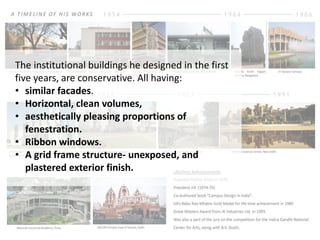
The institutional buildings he designed in the first 
five years, are conservative. All having: 
• similar facades. 
• Horizontal, clean volumes, 
• aesthetically pleasing proportions of 
fenestration. 
• Ribbon windows. 
• A grid frame structure- unexposed, and 
plastered exterior finish.
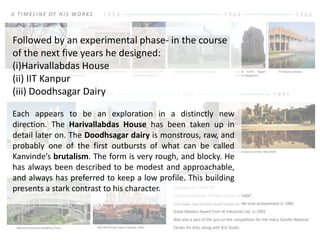
Followed by an experimental phase- in the course 
of the next five years he designed: 
(i)Harivallabdas House 
(ii) IIT Kanpur 
(iii) Doodhsagar Dairy 
Each appears to be an exploration in a distinctly new 
direction. The Harivallabdas House has been taken up in 
detail later on. The Doodhsagar dairy is monstrous, raw, and 
probably one of the first outbursts of what can be called 
Kanvinde’s brutalism. The form is very rough, and blocky. He 
has always been described to be modest and approachable, 
and always has preferred to keep a low profile. This building 
presents a stark contrast to his character.
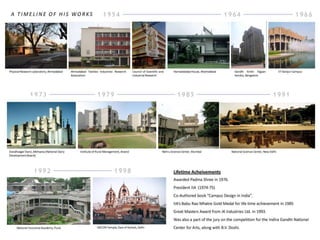
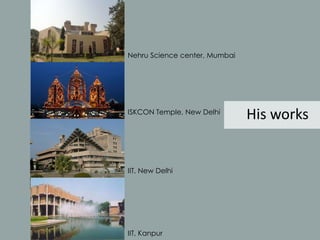
His works 
Nehru Science center, Mumbai 
ISKCON Temple, New Delhi 
IIT, New Delhi 
IIT, Kanpur
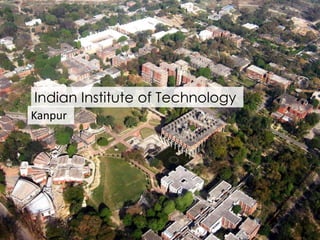
Indian Institute of Technology 
Kanpur
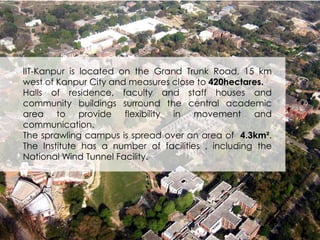
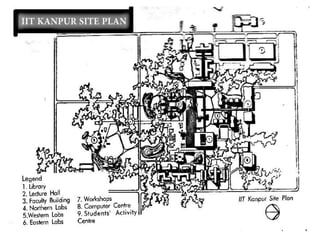
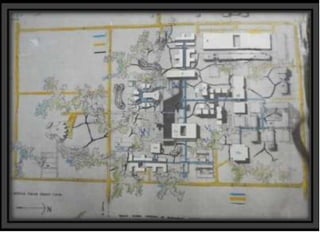
IIT-Kanpur is located on the Grand Trunk Road, 15 km 
west of Kanpur City and measures close to 420hectares. 
Halls of residence, faculty and staff houses and 
community buildings surround the central academic 
area to provide flexibility in movement and 
communication. 
The sprawling campus is spread over an area of 4.3km². 
The Institute has a number of facilities , including the 
National Wind Tunnel Facility.
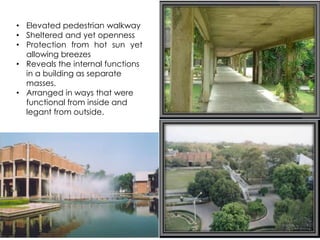
• Elevated pedestrian walkway 
• Sheltered and yet openness 
• Protection from hot sun yet 
allowing breezes 
• Reveals the internal functions 
in a building as separate 
masses. 
• Arranged in ways that were 
functional from inside and 
legant from outside.
Indian Institute of Technology 
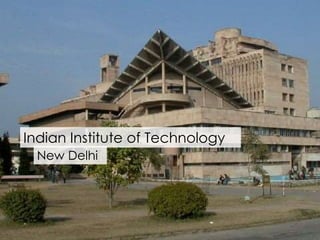
New Delhi
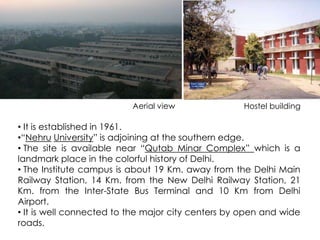
Aerial view Hostel building 
• It is established in 1961. 
•“Nehru University” is adjoining at the southern edge. 
• The site is available near “Qutab Minar Complex” which is a 
landmark place in the colorful history of Delhi. 
• The Institute campus is about 19 Km. away from the Delhi Main 
Railway Station, 14 Km. from the New Delhi Railway Station, 21 
Km. from the Inter-State Bus Terminal and 10 Km from Delhi 
Airport. 
• It is well connected to the major city centers by open and wide 
roads.
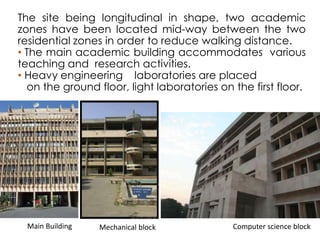
The site being longitudinal in shape, two academic 
zones have been located mid-way between the two 
residential zones in order to reduce walking distance. 
• The main academic building accommodates various 
teaching and research activities. 
• Heavy engineering laboratories are placed 
on the ground floor, light laboratories on the first floor. 
Main Building Mechanical block Computer science block
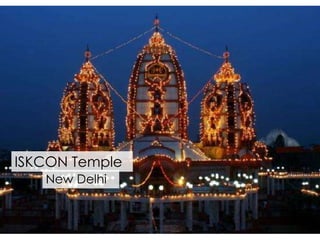
ISKCON Temple 
New Delhi
•It is built in 1998 and it is 
located in New Delhi. 
• The project is situated on a 
sloping site and covers an area 
of 3 acres with the slope of 8 
meters in relation to road 
level. 
• Deity spaces are located at 
the highest level. 
• It has assembly hall for 400 
people. 
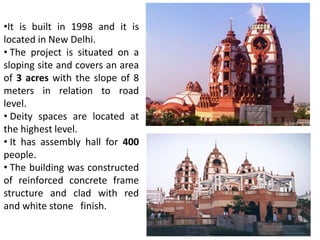
• The building was constructed 
of reinforced concrete frame 
structure and clad with red 
and white stone finish.
•Services spaces like kitchen, dinning areas for 
devotees, offices are located at the lower level. 
• Other activities are :- 
•Multimedia cultural center. 
•Auditorium. 
•Animistic presentation museum. 
•Dormitory for devotees. 
•Small shopping areas. 
•Restaurant and offices. 
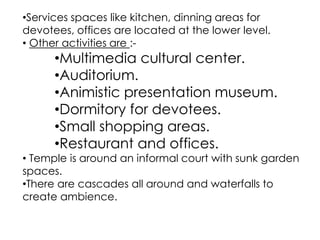
• Temple is around an informal court with sunk garden 
spaces. 
•There are cascades all around and waterfalls to 
create ambience.
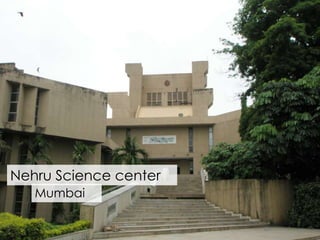
Nehru Science center 
Mumbai
Nehru Science Centre is Situated on Dr. E. Moses Road, Mumbai 
-400018, in between Worli Naka and Mahalaxmi Railway Station 
and spread over 14 acres of land. 
The Centre provides a natural and free environment for 
students to learn, familiarize and spend creative holidays and 
for professionals in the field of science education to have a 
glimpse of innovations in science education. 
Close to 1,20,000 school children alone participate in the 
activities of the Centre. 
Nehru Science Centre, the largest Science Centre in the 
country has a sprawling 8 acres of science park with varieties of 
plants, trees and shrubs . 
More than 50 hands-on and interactive science exhibits on 
energy, sound, kinematics, mechanics , transport, etc . are 
installed in the science park. 
The NSC building with its unique architecture houses several 
permanent science expositions on various themes.
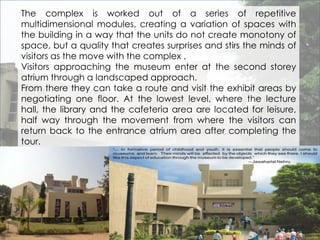
The complex is worked out of a series of repetitive 
multidimensional modules, creating a variation of spaces with 
the building in a way that the units do not create monotony of 
space, but a quality that creates surprises and stirs the minds of 
visitors as the move with the complex . 
Visitors approaching the museum enter at the second storey 
atrium through a landscaped approach. 
From there they can take a route and visit the exhibit areas by 
negotiating one floor. At the lowest level, where the lecture 
hall, the library and the cafeteria area are located for leisure, 
half way through the movement from where the visitors can 
return back to the entrance atrium area after completing the 
tour.
Thank you 
Abida Ansar 
Shahul Shibili

Ar. achuyt prakash kanvinde s5

  • 1.
    Life and worksof Achuyt Prakash Kanvinde 1916-2002 Padma Shri Achyut Kanvinde occupied a unique position in the history of contemporary Indian architecture. He was an Indian architect , teacher, writer and a committed modernist as he always desired to take Indian architecture to be global and to the height of international style.
  • 2.
    Kanvinde was bornin 1916 in a small village on the Konkan coast. Raised in a joint family in the village. Kanvinde had the calling of a painter and did enroll in an art school but the family decided that architecture would be a better profession for him. He entered the Architecture Department at Sir J.J. School of Art in 1935 then headed by Claude Batley. In 1943, he joined the newly formed Council for Scientific and Industrial Research as architect. Achyut Kanvinde attended Harvard Graduate school of Design in 1945. In ‘47 appointed as the Chief Architect of CSIR (the council for Scientific and Industrial Research). He return to India in 1948 and worked on the planning and design of several laboratories. Formed Kanvinde and Rai in 1955. He practiced perfectly for 55 years, he was considered the pioneer of what may be termed the modern movement in architecture in India.
  • 3.
    • Kanvinde playswith space and forms. His designs are slender, balanced, proportionate, neat and well crafted. His Concepts and Philosophy • He gave much more importance to the natural light. He gave such a form to the building that it can solve the problem of ventilation as well as excessive heat . • He believed that a grid of columns forming a matrix giving structural and spatial aspect would turn a design to more sophisticated and faceted. • He treated his building with Vastushastra. • Functionalist style of design • logic of lightness The complete focus on the materials to be used in construction kanvinde always try to develop such an aesthetic for a heavy mass construction that looks light.
  • 5.
    The institutional buildingshe designed in the first five years, are conservative. All having: • similar facades. • Horizontal, clean volumes, • aesthetically pleasing proportions of fenestration. • Ribbon windows. • A grid frame structure- unexposed, and plastered exterior finish.
  • 6.
    Followed by anexperimental phase- in the course of the next five years he designed: (i)Harivallabdas House (ii) IIT Kanpur (iii) Doodhsagar Dairy Each appears to be an exploration in a distinctly new direction. The Harivallabdas House has been taken up in detail later on. The Doodhsagar dairy is monstrous, raw, and probably one of the first outbursts of what can be called Kanvinde’s brutalism. The form is very rough, and blocky. He has always been described to be modest and approachable, and always has preferred to keep a low profile. This building presents a stark contrast to his character.
  • 7.
    His works NehruScience center, Mumbai ISKCON Temple, New Delhi IIT, New Delhi IIT, Kanpur
  • 8.
    Indian Institute ofTechnology Kanpur
  • 9.
    IIT-Kanpur is locatedon the Grand Trunk Road, 15 km west of Kanpur City and measures close to 420hectares. Halls of residence, faculty and staff houses and community buildings surround the central academic area to provide flexibility in movement and communication. The sprawling campus is spread over an area of 4.3km². The Institute has a number of facilities , including the National Wind Tunnel Facility.
  • 10.
    • Elevated pedestrianwalkway • Sheltered and yet openness • Protection from hot sun yet allowing breezes • Reveals the internal functions in a building as separate masses. • Arranged in ways that were functional from inside and legant from outside.
  • 13.
    Indian Institute ofTechnology New Delhi
  • 14.
    Aerial view Hostelbuilding • It is established in 1961. •“Nehru University” is adjoining at the southern edge. • The site is available near “Qutab Minar Complex” which is a landmark place in the colorful history of Delhi. • The Institute campus is about 19 Km. away from the Delhi Main Railway Station, 14 Km. from the New Delhi Railway Station, 21 Km. from the Inter-State Bus Terminal and 10 Km from Delhi Airport. • It is well connected to the major city centers by open and wide roads.
  • 15.
    The site beinglongitudinal in shape, two academic zones have been located mid-way between the two residential zones in order to reduce walking distance. • The main academic building accommodates various teaching and research activities. • Heavy engineering laboratories are placed on the ground floor, light laboratories on the first floor. Main Building Mechanical block Computer science block
  • 16.
  • 17.
    •It is builtin 1998 and it is located in New Delhi. • The project is situated on a sloping site and covers an area of 3 acres with the slope of 8 meters in relation to road level. • Deity spaces are located at the highest level. • It has assembly hall for 400 people. • The building was constructed of reinforced concrete frame structure and clad with red and white stone finish.
  • 18.
    •Services spaces likekitchen, dinning areas for devotees, offices are located at the lower level. • Other activities are :- •Multimedia cultural center. •Auditorium. •Animistic presentation museum. •Dormitory for devotees. •Small shopping areas. •Restaurant and offices. • Temple is around an informal court with sunk garden spaces. •There are cascades all around and waterfalls to create ambience.
  • 19.
  • 20.
    Nehru Science Centreis Situated on Dr. E. Moses Road, Mumbai -400018, in between Worli Naka and Mahalaxmi Railway Station and spread over 14 acres of land. The Centre provides a natural and free environment for students to learn, familiarize and spend creative holidays and for professionals in the field of science education to have a glimpse of innovations in science education. Close to 1,20,000 school children alone participate in the activities of the Centre. Nehru Science Centre, the largest Science Centre in the country has a sprawling 8 acres of science park with varieties of plants, trees and shrubs . More than 50 hands-on and interactive science exhibits on energy, sound, kinematics, mechanics , transport, etc . are installed in the science park. The NSC building with its unique architecture houses several permanent science expositions on various themes.
  • 21.
    The complex isworked out of a series of repetitive multidimensional modules, creating a variation of spaces with the building in a way that the units do not create monotony of space, but a quality that creates surprises and stirs the minds of visitors as the move with the complex . Visitors approaching the museum enter at the second storey atrium through a landscaped approach. From there they can take a route and visit the exhibit areas by negotiating one floor. At the lowest level, where the lecture hall, the library and the cafeteria area are located for leisure, half way through the movement from where the visitors can return back to the entrance atrium area after completing the tour.
  • 22.
    Thank you AbidaAnsar Shahul Shibili