IDENTIFYING THE INQUIRY
&
STATING THE PROBLEM
D AP H N I E S . M O N T E V E R D E , L P T
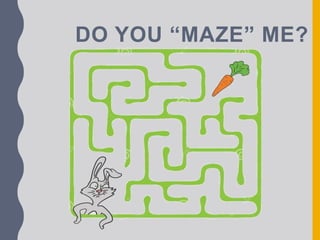
DO YOU “MAZE” ME?
WAYS TO WIN?
STRATEGIZE
REACH THE END GOAL
FIND A WAY
Starting a research investigation is similar
to embarking a journey through the maze.
There may be different routes to the exit point, but the
key is where to begin
LET’S GET STARTED!
+
KEY QUESTIONS
1. Where should a research begin?
2. How is a topic chosen?
RESEARCHER’S INTEREST
DO YOU KNOW
WHERE TO
BEGIN?
SOURCES OF INTEREST
• Ex. Fishermen could have developed the most effective
way to grow fish because they are exposed to these
things.
DAILY LIFE EXPERIENCES
• Can stimulate one’s interest to explore a particular topic.
ACADEMIC READINGS
• Ex. Survey the views of people about a certain issue
because they enjoy doing so
PERSONAL HOBBIES
• Researchers can formulate questions as to how this thing
became possible, how that thing is able to do those, etc.
ATTENTION-CATCHING SITUATION
IDENTIFYING A RESEARCH
TOPIC
1. Reading books, research articles, and
other professional publications
2. Asking helps from experts
3. Observing things for some experiences
about this interest
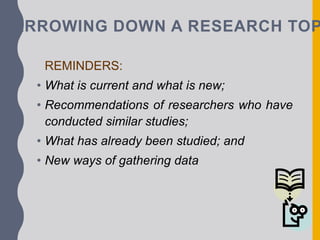
NARROWING DOWN A RESEARCH TOP
REMINDERS:
• What is current and what is new;
• Recommendations of researchers who have
conducted similar studies;
• What has already been studied; and
• New ways of gathering data
NARROW IT DOWN!
Health services
Malnourished children
Southeast Asia
Last 10
years
Historical
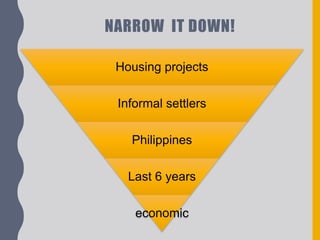
NARROW IT DOWN!
Housing projects
Informal settlers
Philippines
Last 6 years
economic
GIVE IT A TRY!
1. Look for a partner.
2. Think of a broad topic that interests you (e.g., animals,
ICT, games, medicine, etc.)
3. From this broad topic, think of a possible smaller topic
connected to this broad topic.
4. Make this topic more specific.
5. Ask questions regarding the specific you have chosen.
6. Use the inverted pyramid to concretize your idea.
RESEARCH PROBLEM
A statement about an area of concern, a
condition to be improved upon, a difficulty to
be eliminated, or a troubling question that
exists in scholarly literature, theory, or
practice that points to the need for a
meaningful understanding and deliberate
investigation.
CHARACTERISTICS OF A RESEARCH
PROBLEM1. A research problem is not just answerable by yes or
no. It should imply that explanations and
justifications regarding the true situation or
observation are required.
2. It implies relationship between the variables of the
study.
3. The problem should be stated in clear,
unambiguous manner.
4. A researchable problem must imply interpretation
and analysis of data.
RESEARCH PROBLEM
It is what the
researchers aim to
answer later on as
they go through the
research endeavor.
WORK AT HOME 
1 whole yellow paper
1. Look for at least 5 research
TITLES.
2. Identify whether each can lead to
good research problems. Explain
your answer.
CRITERIA FOR EVALUATION OF A GOOD
RESEARCH PROBLEM
NOVEL
INTERESTING
PRACTICALINNOVATIVE
COST-
EFFECTIVE
RESEARCH PROBLEM SHOULD
BE:
S • SPECIFIC
R
• REALISTIC
T • TIME-BOUND
M
• MEASURABLE
A
• ATTAINABLE
RESEARC
H TITLE
RESEARCH TITLE
• Give weight and reputation to the research paper.
• In QUALITATIVE research, a researcher starts with a
tentative title. As the study progresses, the context of
the study and the manner of the research respondents
are revealed. The highlights of the research are then
included in the final title.
ELEMENTS OF A RESEARCH
TITLE• PURPOSE
• Why do I want
to conduct this
study?
AIM
• SUBJECT
MATTER
• What do I want
to study
about?
TOPIC
• LOCALE
• Where do I
conduct the
study?
PLACE
• How long
will it take
for me to
finish my
study?
PERIOD
• From whom
will my data
come from or
be collected?
Population/Responde
nts
LET’S GIVE IT A TRY!
Problems Met by Science and Mathematics Teachers in Public
High Schools in NCR for the School Year 2005-2006 to School
Year 2010-2011
To determine the problems met by the science and
mathematics teachers
science and mathematics teaching and learning
public high schools in NCR
7 years
students, teachers, and school administrators
Aim:
Topic:
Place:
Period:
Population:
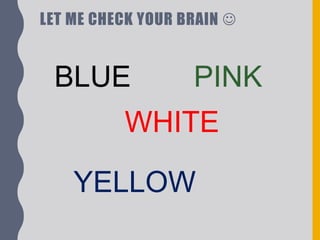
LET ME CHECK YOUR BRAIN 
BLUE PINK
WHITE
YELLOW
IDENTIFY THE ELEMENTS OF THE
GIVEN RESEARCH BELOW
Relationship of Perceived Stress and Self- Esteem among Grade 9
Students in Region IX for the School year 2015-2016.
Determine the relationship of perceived stress and self-esteem
perceived stress and self-esteem
Region IX
1 year
Grade 9 students
Aim:
Topic:
Place:
Period:
Population:
SHORT QUIZ
From the research titles you had gathered, identify the elements of each
title
Aim: ___________________________________
Topic: ___________________________________
Place: ___________________________________
Period: ___________________________________
Population: ___________________________________

Identifying the Inquiry and Stating the Problem

  • 1.
    IDENTIFYING THE INQUIRY & STATINGTHE PROBLEM D AP H N I E S . M O N T E V E R D E , L P T
  • 2.
  • 3.
    WAYS TO WIN? STRATEGIZE REACHTHE END GOAL FIND A WAY Starting a research investigation is similar to embarking a journey through the maze. There may be different routes to the exit point, but the key is where to begin
  • 4.
    LET’S GET STARTED! + KEYQUESTIONS 1. Where should a research begin? 2. How is a topic chosen? RESEARCHER’S INTEREST
  • 5.
  • 6.
    SOURCES OF INTEREST •Ex. Fishermen could have developed the most effective way to grow fish because they are exposed to these things. DAILY LIFE EXPERIENCES • Can stimulate one’s interest to explore a particular topic. ACADEMIC READINGS • Ex. Survey the views of people about a certain issue because they enjoy doing so PERSONAL HOBBIES • Researchers can formulate questions as to how this thing became possible, how that thing is able to do those, etc. ATTENTION-CATCHING SITUATION
  • 7.
    IDENTIFYING A RESEARCH TOPIC 1.Reading books, research articles, and other professional publications 2. Asking helps from experts 3. Observing things for some experiences about this interest
  • 8.
    NARROWING DOWN ARESEARCH TOP REMINDERS: • What is current and what is new; • Recommendations of researchers who have conducted similar studies; • What has already been studied; and • New ways of gathering data
  • 9.
    NARROW IT DOWN! Healthservices Malnourished children Southeast Asia Last 10 years Historical
  • 10.
    NARROW IT DOWN! Housingprojects Informal settlers Philippines Last 6 years economic
  • 11.
    GIVE IT ATRY! 1. Look for a partner. 2. Think of a broad topic that interests you (e.g., animals, ICT, games, medicine, etc.) 3. From this broad topic, think of a possible smaller topic connected to this broad topic. 4. Make this topic more specific. 5. Ask questions regarding the specific you have chosen. 6. Use the inverted pyramid to concretize your idea.
  • 13.
    RESEARCH PROBLEM A statementabout an area of concern, a condition to be improved upon, a difficulty to be eliminated, or a troubling question that exists in scholarly literature, theory, or practice that points to the need for a meaningful understanding and deliberate investigation.
  • 14.
    CHARACTERISTICS OF ARESEARCH PROBLEM1. A research problem is not just answerable by yes or no. It should imply that explanations and justifications regarding the true situation or observation are required. 2. It implies relationship between the variables of the study. 3. The problem should be stated in clear, unambiguous manner. 4. A researchable problem must imply interpretation and analysis of data.
  • 15.
    RESEARCH PROBLEM It iswhat the researchers aim to answer later on as they go through the research endeavor.
  • 16.
    WORK AT HOME 1 whole yellow paper 1. Look for at least 5 research TITLES. 2. Identify whether each can lead to good research problems. Explain your answer.
  • 17.
    CRITERIA FOR EVALUATIONOF A GOOD RESEARCH PROBLEM NOVEL INTERESTING PRACTICALINNOVATIVE COST- EFFECTIVE
  • 18.
    RESEARCH PROBLEM SHOULD BE: S• SPECIFIC R • REALISTIC T • TIME-BOUND M • MEASURABLE A • ATTAINABLE
  • 19.
  • 20.
    RESEARCH TITLE • Giveweight and reputation to the research paper. • In QUALITATIVE research, a researcher starts with a tentative title. As the study progresses, the context of the study and the manner of the research respondents are revealed. The highlights of the research are then included in the final title.
  • 21.
    ELEMENTS OF ARESEARCH TITLE• PURPOSE • Why do I want to conduct this study? AIM • SUBJECT MATTER • What do I want to study about? TOPIC • LOCALE • Where do I conduct the study? PLACE • How long will it take for me to finish my study? PERIOD • From whom will my data come from or be collected? Population/Responde nts
  • 22.
    LET’S GIVE ITA TRY! Problems Met by Science and Mathematics Teachers in Public High Schools in NCR for the School Year 2005-2006 to School Year 2010-2011 To determine the problems met by the science and mathematics teachers science and mathematics teaching and learning public high schools in NCR 7 years students, teachers, and school administrators Aim: Topic: Place: Period: Population:
  • 23.
    LET ME CHECKYOUR BRAIN  BLUE PINK WHITE YELLOW
  • 24.
    IDENTIFY THE ELEMENTSOF THE GIVEN RESEARCH BELOW Relationship of Perceived Stress and Self- Esteem among Grade 9 Students in Region IX for the School year 2015-2016. Determine the relationship of perceived stress and self-esteem perceived stress and self-esteem Region IX 1 year Grade 9 students Aim: Topic: Place: Period: Population:
  • 25.
    SHORT QUIZ From theresearch titles you had gathered, identify the elements of each title Aim: ___________________________________ Topic: ___________________________________ Place: ___________________________________ Period: ___________________________________ Population: ___________________________________