UNIT – 2
Identification and delimitation of
research problems
Contents
• Research topic selection
• Identification and prioritization of research problem
• Writing study background and problem statement
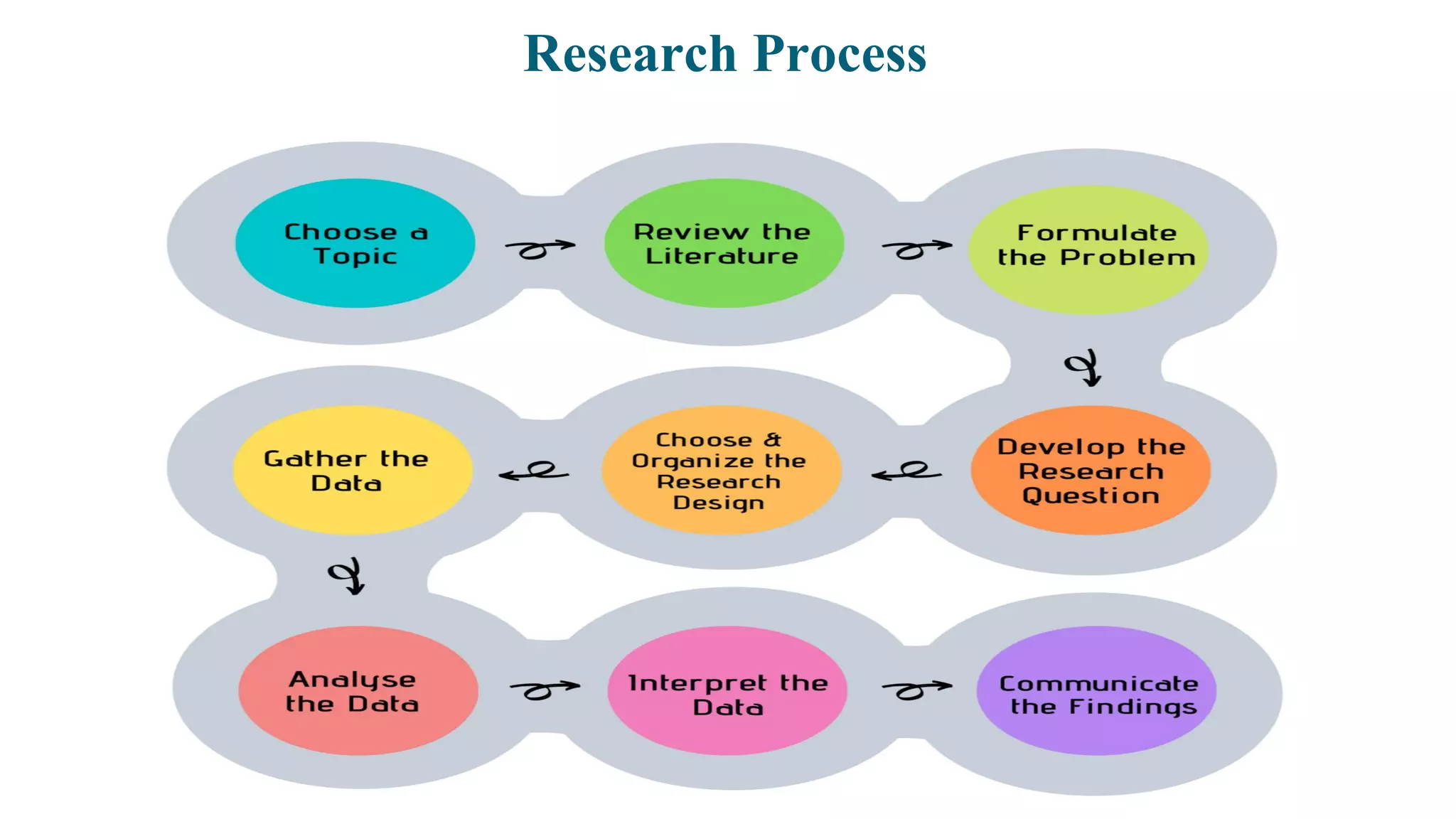
Research Process
Research Topic
• The first step and one of the most important requirements
of the research process is to delineate the research study
area clearly and state the problem concisely.
• Research on any topic should, ultimately, be directed to
bring changes towards health of the population;
Whether a problem situation requires research
depends on three conditions:
1. There should be a perceived difference or discrepancy
between what exists and the ideal or planned situation;
2. The reason(s) for this difference should be unclear (so that it
makes sense to develop research questions); and
3. There should be more than one possible answer to a question
or more than one solution to the problem.
Cont …
The sources for generating appropriate research
question/problems may be;
• Personal experiences
• Literature sources
• Existing theories and
• Previous researches.
A good title;
• short, accurate, and concise
• make the central objectives of the study clear to the reader
• specify what population will be investigated, and where it will be
conducted
Criteria for selecting a research topic
1. Relevance: What is the magnitude of the problem? Who is
affected? How severe is the problem? Who perceives the problem?
2. Avoidance of duplication: not been investigated before
3. Urgency of data needed: for decision or intervention
4. Feasibility of study: affordability (resources/money), access
5. Applicability of results:
6. Ethical acceptability: consent, cultural sensitivity
7. Political acceptability of study: support authorities
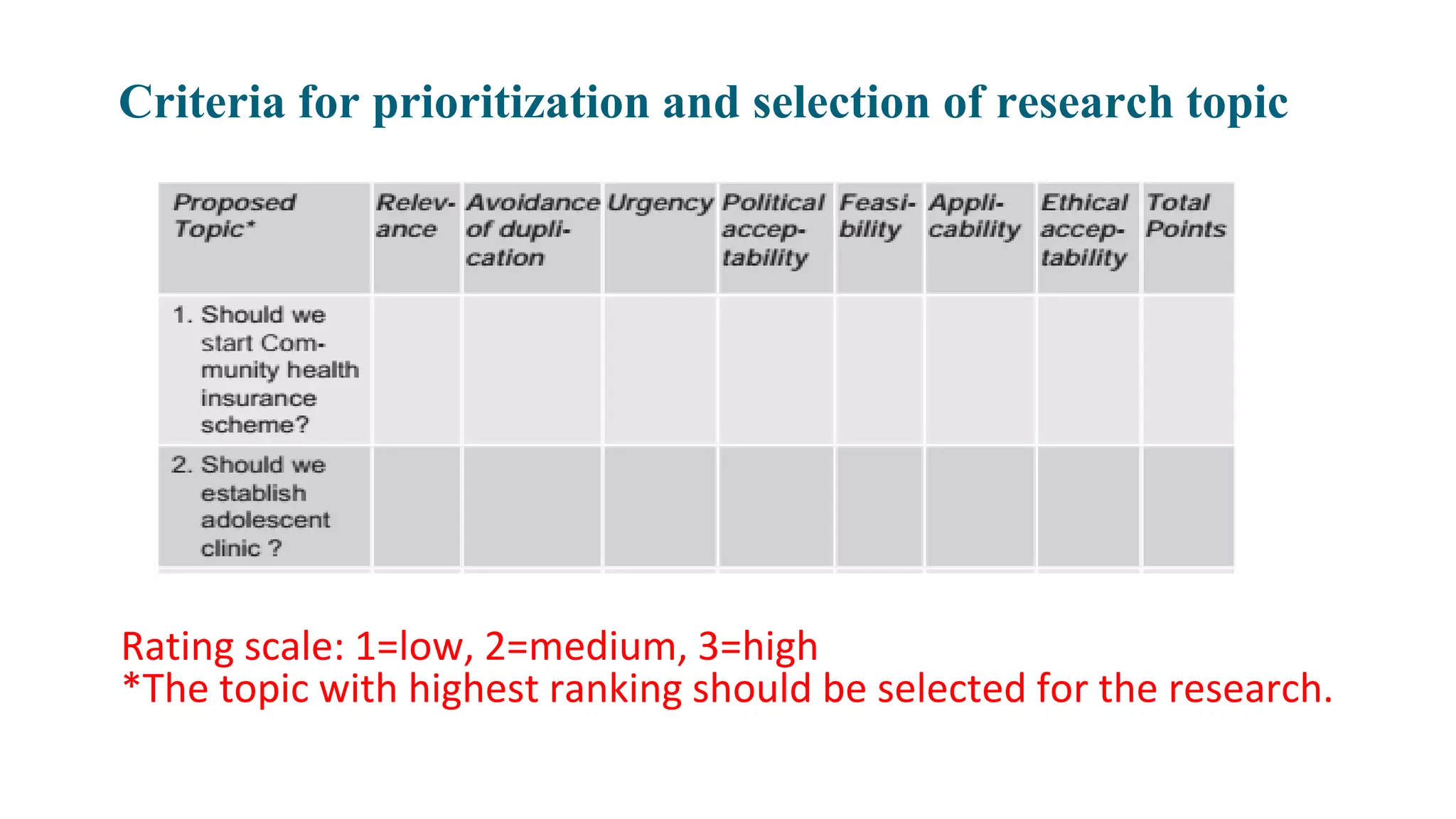
Criteria for prioritization and selection of research topic
Rating scale: 1=low, 2=medium, 3=high
*The topic with highest ranking should be selected for the research.
Writing the background
• Background should begin with defining a topic and audience.
• It is important that you identify which topic you need to review and what
your audience already knows about the topic.
• It is helpful to use one of the research paper management systems such as
Papers, Mendeley, Evernote, or Sente.
• Be careful when copying quotes verbatim and make sure to put them in
quotation marks and cite the sources.
• Aside from these, your background should be critical, consistent, and
logically structured.
• The background of the study is the key to introduce your audience to your
research topic
Problem Statement
• A problem statement is an explanation in research that
describes the issue that is in need of study.
• It is expected to be brief and concise, and should not
include the findings of the research or detailed data.
• The average length of a research statement is generally about one
page.
• It is going to define the problem, which can be thought of as a gap
in the information base.
Problem Statement …
• The purpose of the problem statement is to identify the
issue that is a concern and focus it in a way that allows it to
be studied in a systematic way.
• It defines the problem and proposes a way to research a
solution, or
• Demonstrates why further information is needed in order for a
solution to become possible.
What is Included in a Problem Statement?
Besides identifying the gap of understanding or the weakness of
necessary data, it is important to explain the significance of this lack.
• How will your research contribute to the existing knowledge base in
your field of study?
• How is it significant?
• Why does it matter?
How to write a problem statement in research?
The problem statement should not drag on needlessly. Despite the absence of a
fixed format, a good research problem statement usually consists of three main
parts:
• Context: describes an ideal scenario that could exist in the absence of the
problem. It also includes any past attempts and shortcomings at solving the
problem.
• Significance: This section defines how the problem prevents the ideal
scenario from being achieved,
• Solution: This section describes the aim and objectives of your research, and
your solution to overcome the problem.
Thank You

Identification of Research Problems.pdf

  • 1.
    UNIT – 2 Identificationand delimitation of research problems
  • 2.
    Contents • Research topicselection • Identification and prioritization of research problem • Writing study background and problem statement
  • 3.
  • 4.
    Research Topic • Thefirst step and one of the most important requirements of the research process is to delineate the research study area clearly and state the problem concisely. • Research on any topic should, ultimately, be directed to bring changes towards health of the population;
  • 5.
    Whether a problemsituation requires research depends on three conditions: 1. There should be a perceived difference or discrepancy between what exists and the ideal or planned situation; 2. The reason(s) for this difference should be unclear (so that it makes sense to develop research questions); and 3. There should be more than one possible answer to a question or more than one solution to the problem.
  • 6.
    Cont … The sourcesfor generating appropriate research question/problems may be; • Personal experiences • Literature sources • Existing theories and • Previous researches. A good title; • short, accurate, and concise • make the central objectives of the study clear to the reader • specify what population will be investigated, and where it will be conducted
  • 7.
    Criteria for selectinga research topic 1. Relevance: What is the magnitude of the problem? Who is affected? How severe is the problem? Who perceives the problem? 2. Avoidance of duplication: not been investigated before 3. Urgency of data needed: for decision or intervention 4. Feasibility of study: affordability (resources/money), access 5. Applicability of results: 6. Ethical acceptability: consent, cultural sensitivity 7. Political acceptability of study: support authorities
  • 8.
    Criteria for prioritizationand selection of research topic Rating scale: 1=low, 2=medium, 3=high *The topic with highest ranking should be selected for the research.
  • 9.
    Writing the background •Background should begin with defining a topic and audience. • It is important that you identify which topic you need to review and what your audience already knows about the topic. • It is helpful to use one of the research paper management systems such as Papers, Mendeley, Evernote, or Sente. • Be careful when copying quotes verbatim and make sure to put them in quotation marks and cite the sources. • Aside from these, your background should be critical, consistent, and logically structured. • The background of the study is the key to introduce your audience to your research topic
  • 10.
    Problem Statement • Aproblem statement is an explanation in research that describes the issue that is in need of study. • It is expected to be brief and concise, and should not include the findings of the research or detailed data. • The average length of a research statement is generally about one page. • It is going to define the problem, which can be thought of as a gap in the information base.
  • 11.
    Problem Statement … •The purpose of the problem statement is to identify the issue that is a concern and focus it in a way that allows it to be studied in a systematic way. • It defines the problem and proposes a way to research a solution, or • Demonstrates why further information is needed in order for a solution to become possible.
  • 12.
    What is Includedin a Problem Statement? Besides identifying the gap of understanding or the weakness of necessary data, it is important to explain the significance of this lack. • How will your research contribute to the existing knowledge base in your field of study? • How is it significant? • Why does it matter?
  • 13.
    How to writea problem statement in research? The problem statement should not drag on needlessly. Despite the absence of a fixed format, a good research problem statement usually consists of three main parts: • Context: describes an ideal scenario that could exist in the absence of the problem. It also includes any past attempts and shortcomings at solving the problem. • Significance: This section defines how the problem prevents the ideal scenario from being achieved, • Solution: This section describes the aim and objectives of your research, and your solution to overcome the problem.
  • 14.