Over view
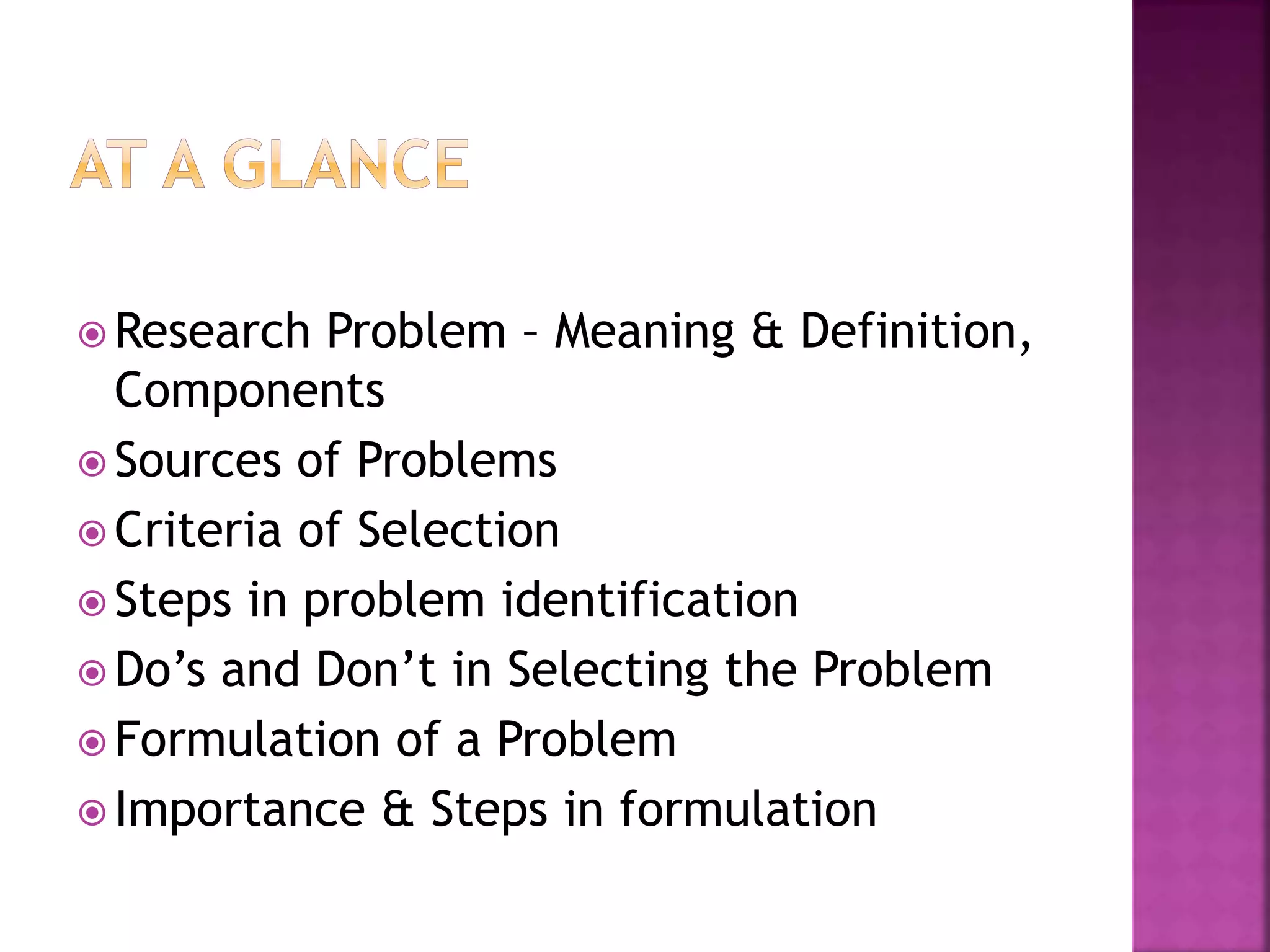
 Research Problem – Meaning & Definition,
Components
 Sources of Problems
 Criteria of Selection
 Steps in problem identification
 Do’s and Don’t in Selecting the Problem
 Formulation of a Problem
 Importance & Steps in formulation
Research Problem
 A research problem is a question that a researcher
wants to answer, or a problem that a researcher wants
to solve.
 A research problem is the situation that causes the
researcher to feel apprehensive, confused and ill at
ease.
Copyright © Allyn & Bacon 2008
 Identification & Formulation of research problem is a
first step in the research process.
 It is believed that most of the good research studies
needs lot of time for selection of a research problem.
Copyright © Allyn & Bacon 2008
RESEARCH PROBLEM- DEFINITION
A problem is an interrogative sentence or
statement that asks what relation exists
between two or more variables. – Kerlinger
Copyright © Allyn & Bacon 2008
COMPONENTS OF RESEARCH PROBLEM
 There must be an individual or a group which has some
difficulty.
 There must be some objective(s) to be attained at.If one wants
nothing,one cannot have a problem.
 There must be alternative means (or the courses of action) for
attaining the objectives one wish to attain.This means that there
must be at least two means available to a researcher for if he has
no choice of means,he cannot have a problem.
 There must remain some doubt in the mind of a researcher with
regard to the selection of alternatives.This means that research
must answer the question concerning the relative efficency of the
possible alternatives.
 There must be some environment to which the difficulty pertains.
SOURCES OF
PROBLEM & CRITERIA
OF SELECTION
Vishnu s kumar
Steps in Problem Identification
 Statement of the problem in general way
 Understanding the nature of the problem
 Surveying the available literature
 Developing the ideas through discussions
 Rephrasing the research problem into a working
proposition.
 Define the problem in general way
Ex: Does negative news interest people more than positive
news?
 Narrow it down by rethinking over the problem. (Consider
feasibility of problem)
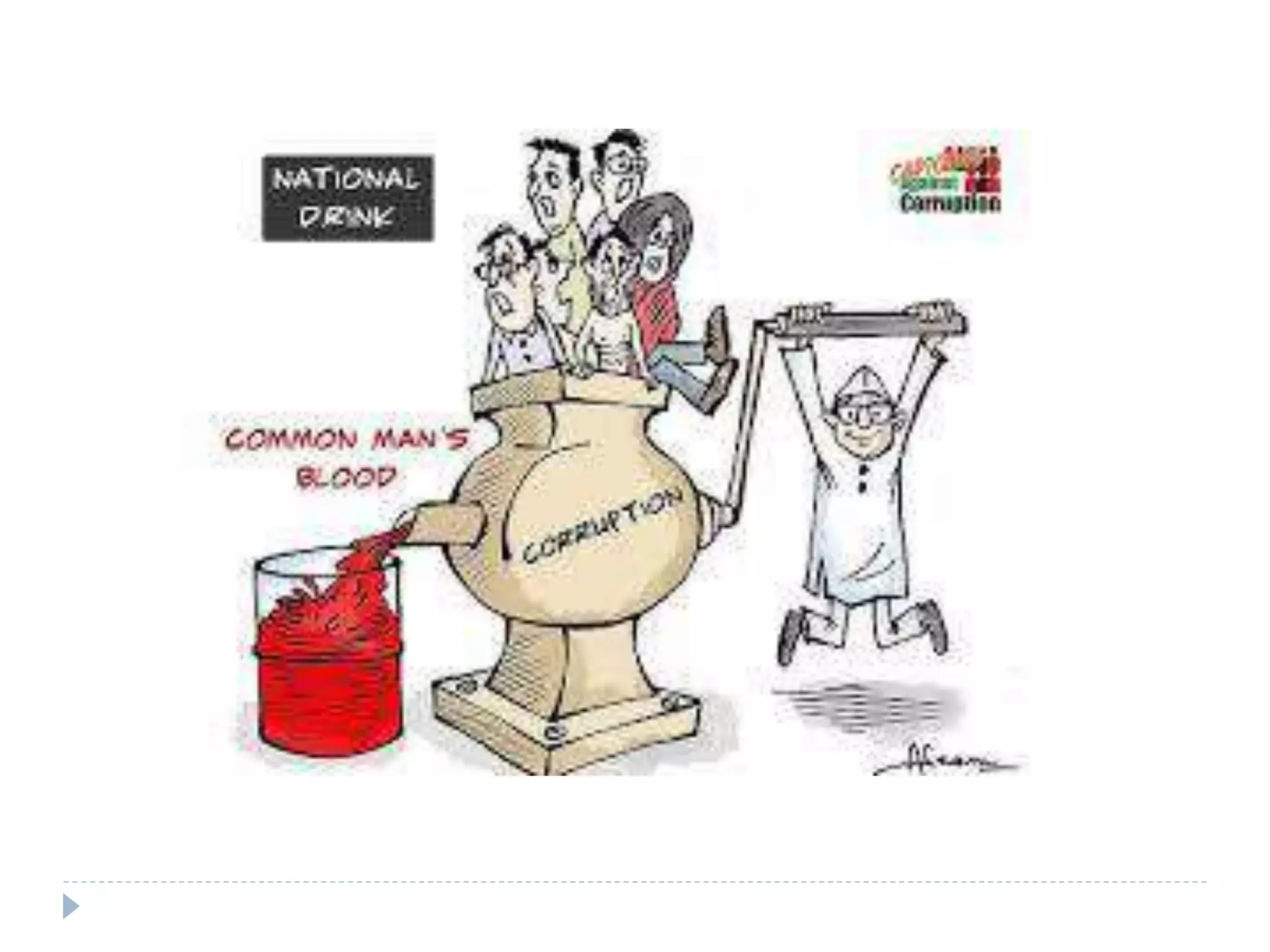
Ex: Does negative news such as robbery, corruption interest
people more than positive news like country economic
growth ?
 How to define in general way?
Study the related subject thoroughly
Do preliminary survey or pilot survey
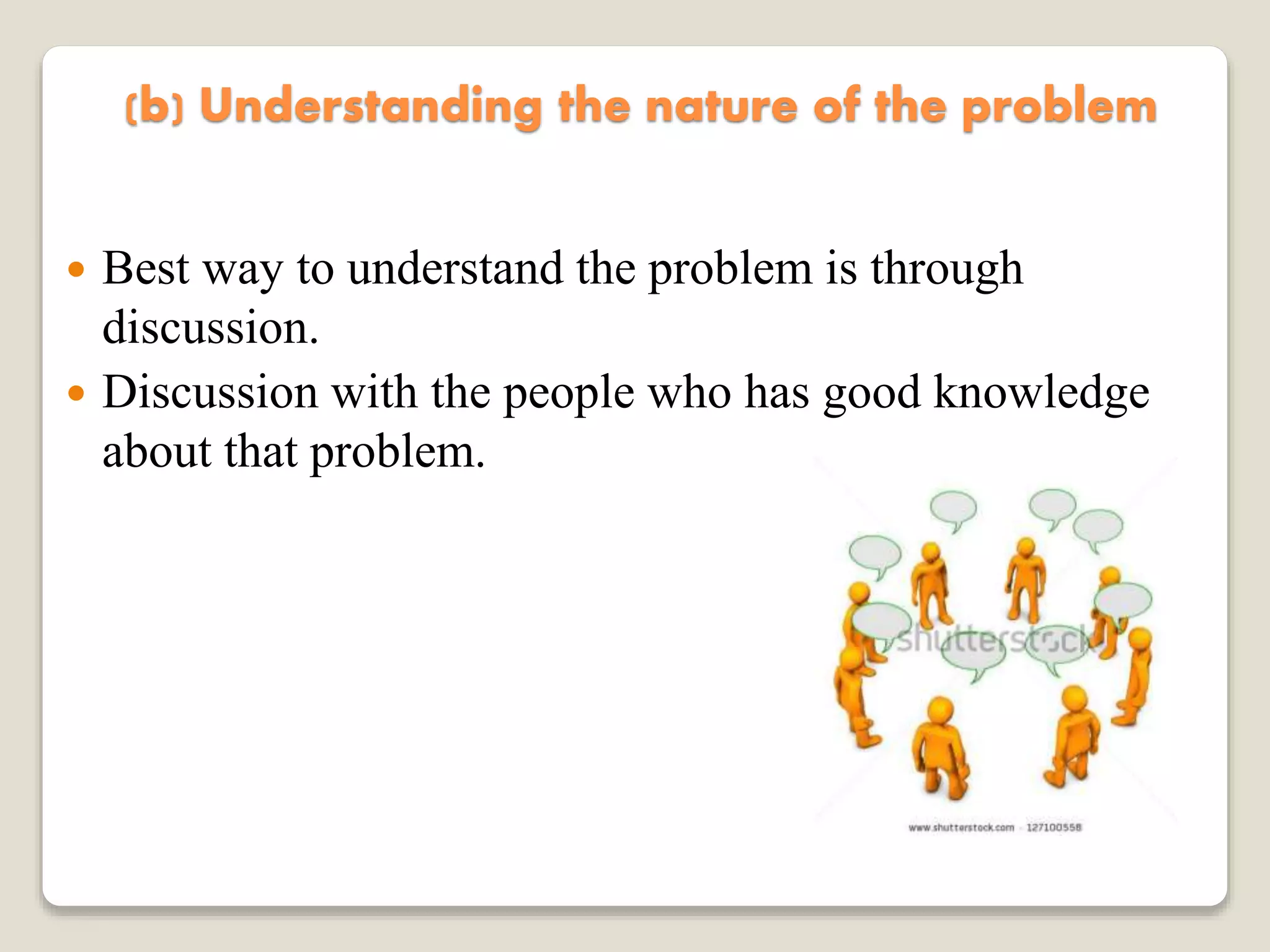
(b) Understanding the nature of the problem
 Best way to understand the problem is through
discussion.
 Discussion with the people who has good knowledge
about that problem.
(c) Surveying the available literature
Survey all the research which are already
undertaken in related problem.
It helps to :
 Narrow down the problem
 To identify research gaps
 Gives new ideas in related area
 Helps for research design
(D) DEVELOPING THE IDEAS THROUGH
DISCUSSIONS
 Discussion always produces useful information.
 Various new ideas can be developed through such an
exercise.
 Researcher must discuss his/her problem with his/
her colleagues and others who have enough
experience in the same area or in working on similar
problems. This is known as experience survey.
(e) REPHRASING THE RESEARCH PROBLEM
 Rephrase the research problem in to operational term.
 Initial research question: Why is productivity in Japan so
much higher than in India?
 After, the problem has understood, available literature has
taken place and discussion over the problem has taken
place, the question has rephrased.
 Rephrased Research question: What factors were
responsible for the higher labour productivity of Japan’s
manufacturing industries during the decade 1971 to 1980
relative to India’s manufacturing industries?
Do’s and Don’t in Selecting the Problem
 Subject which is overdone should not be normally
chosen, for it will be a difficult task to throw any new light
in such a case.
 Controversial subject should not become the choice of an
average researcher.
 Research Question should be clear.
Unclear: Why are social networking sites harmful?
Clear: How are online users experiencing or
addressing privacy issues on such social
networking sites as MySpace and Facebook?
Which social networking site? (My space and
Facebook) Type of harm (privacy issues)
,Who gets harm? (users)
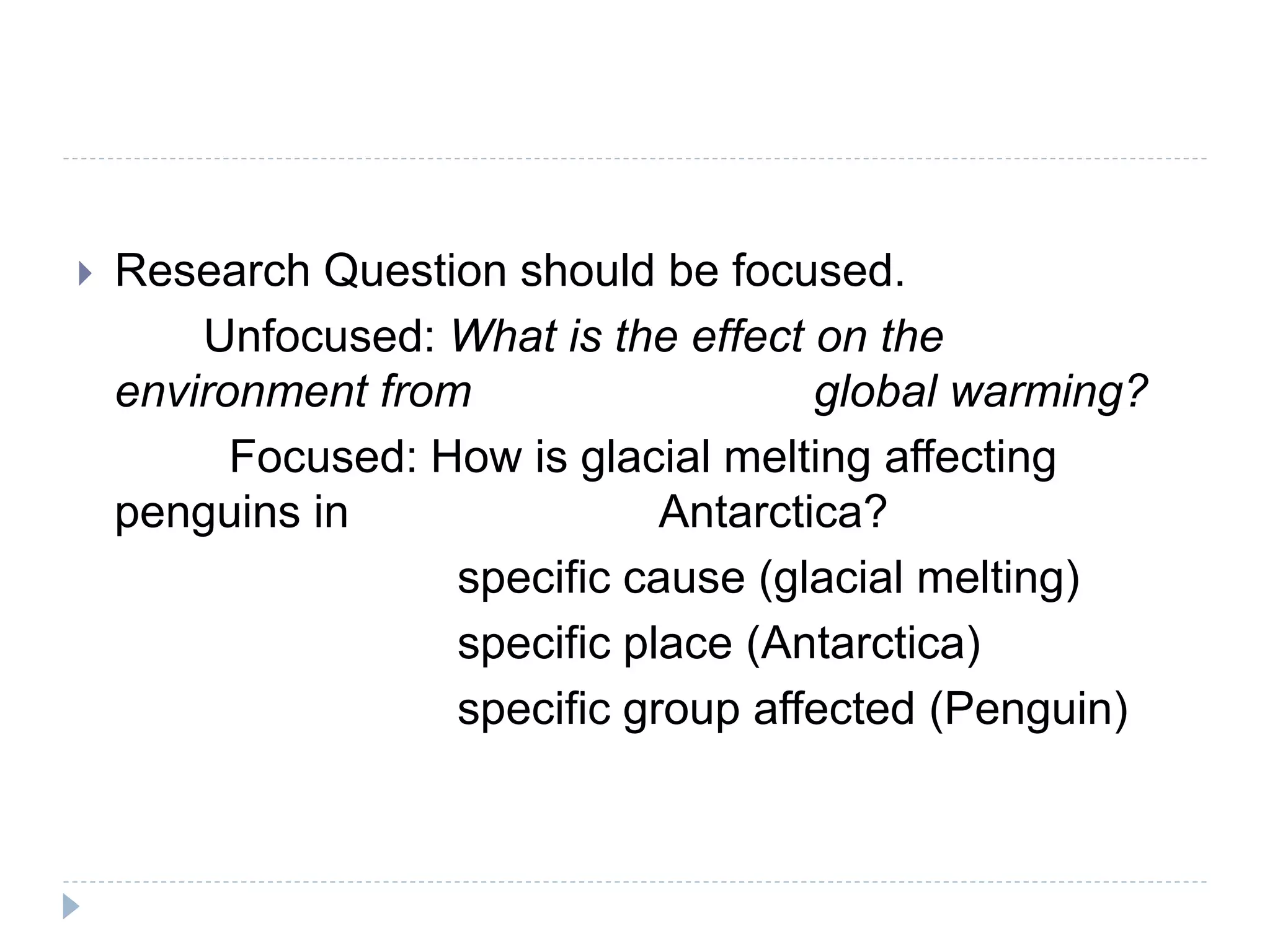
 Research Question should be focused.
Unfocused: What is the effect on the
environment from global warming?
Focused: How is glacial melting affecting
penguins in Antarctica?
specific cause (glacial melting)
specific place (Antarctica)
specific group affected (Penguin)
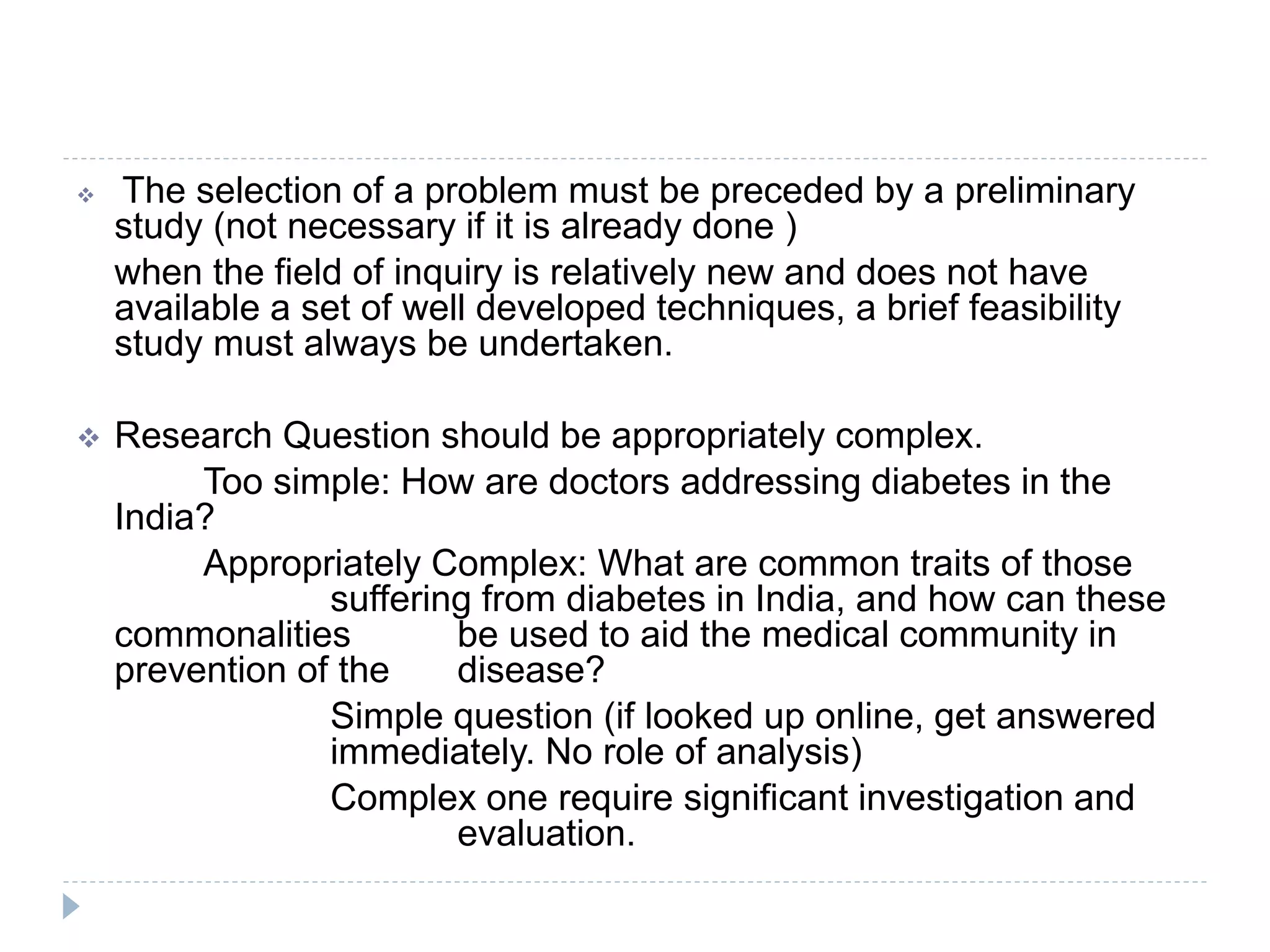
 The selection of a problem must be preceded by a preliminary
study (not necessary if it is already done )
when the field of inquiry is relatively new and does not have
available a set of well developed techniques, a brief feasibility
study must always be undertaken.
 Research Question should be appropriately complex.
Too simple: How are doctors addressing diabetes in the
India?
Appropriately Complex: What are common traits of those
suffering from diabetes in India, and how can these
commonalities be used to aid the medical community in
prevention of the disease?
Simple question (if looked up online, get answered
immediately. No role of analysis)
Complex one require significant investigation and
evaluation.
Formulation of a
Problem
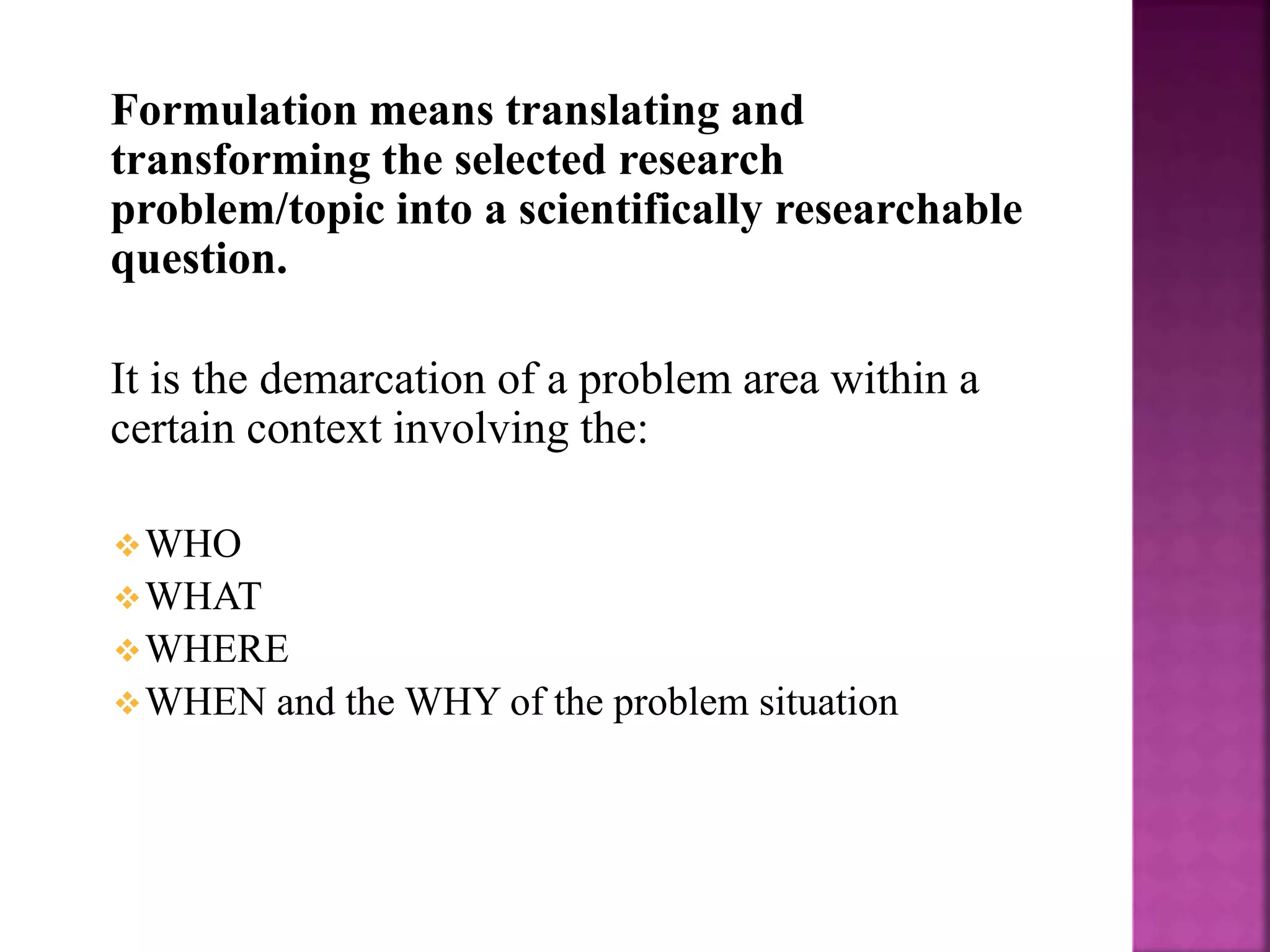
Formulation means translating and
transforming the selected research
problem/topic into a scientifically researchable
question.
It is the demarcation of a problem area within a
certain context involving the:
WHO
WHAT
WHERE
WHEN and the WHY of the problem situation
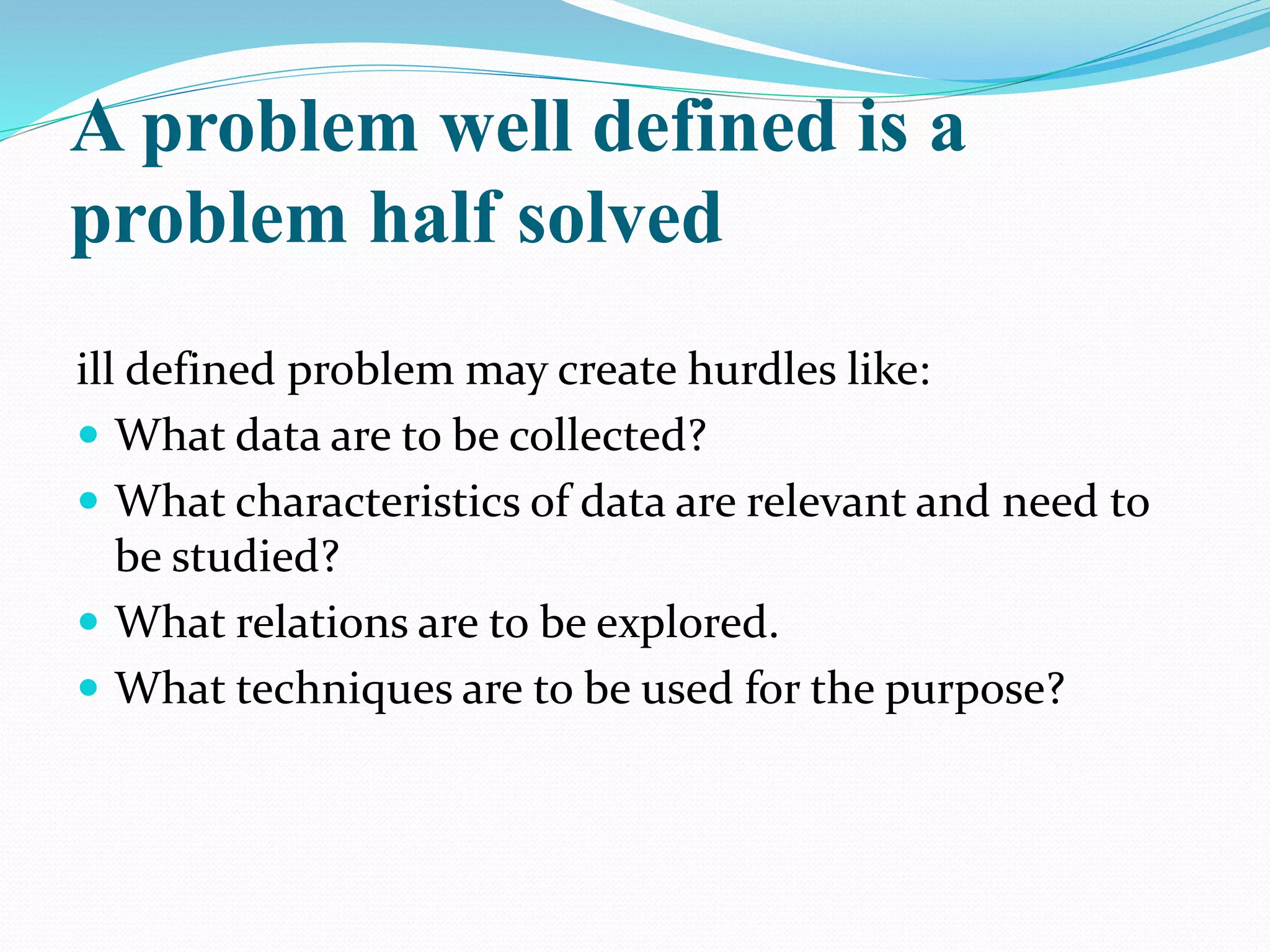
A problem well defined is a
problem half solved
ill defined problem may create hurdles like:
 What data are to be collected?
 What characteristics of data are relevant and need to
be studied?
 What relations are to be explored.
 What techniques are to be used for the purpose?
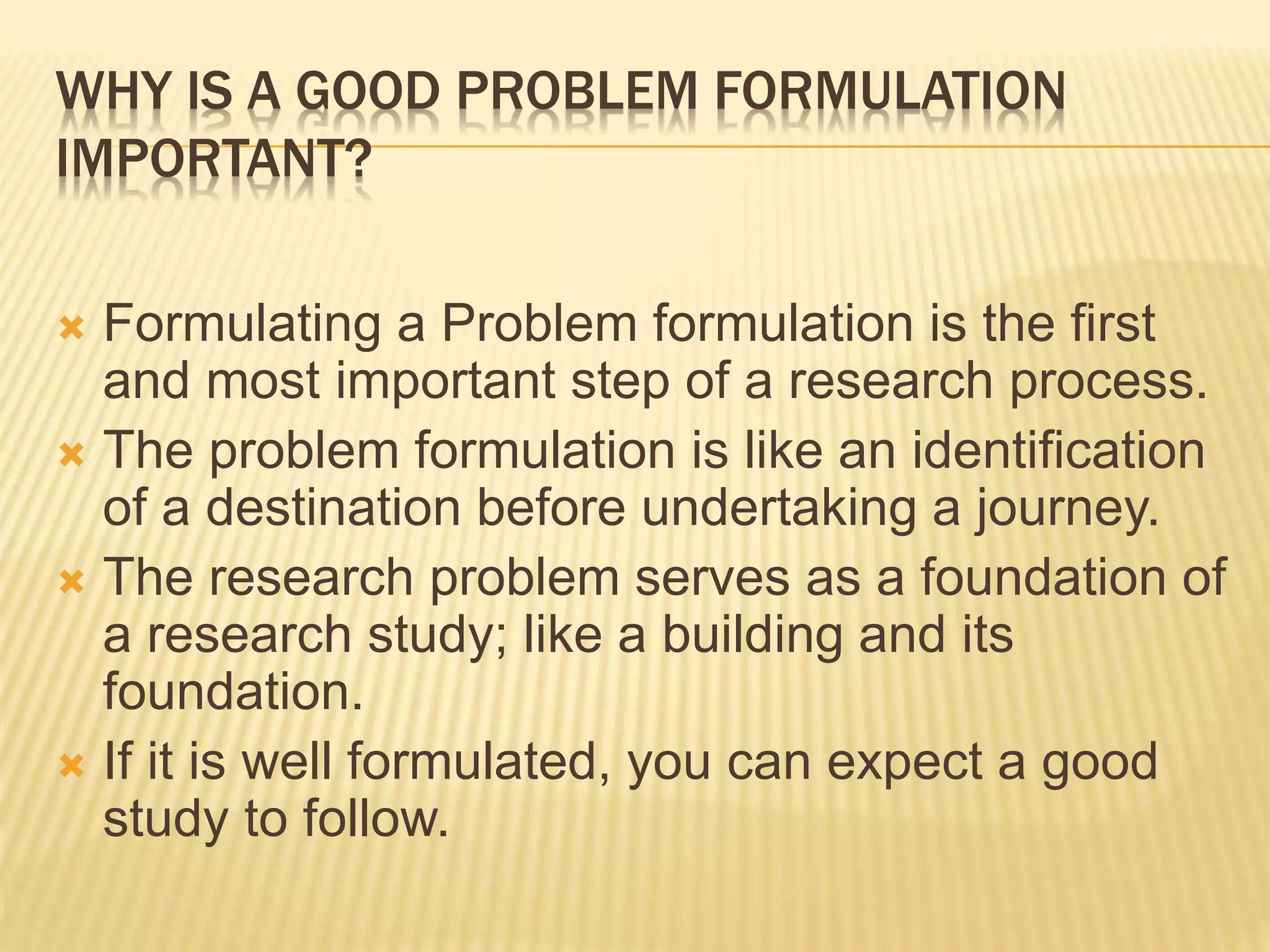
WHY IS A GOOD PROBLEM FORMULATION
IMPORTANT?
 Formulating a Problem formulation is the first
and most important step of a research process.
 The problem formulation is like an identification
of a destination before undertaking a journey.
 The research problem serves as a foundation of
a research study; like a building and its
foundation.
 If it is well formulated, you can expect a good
study to follow.
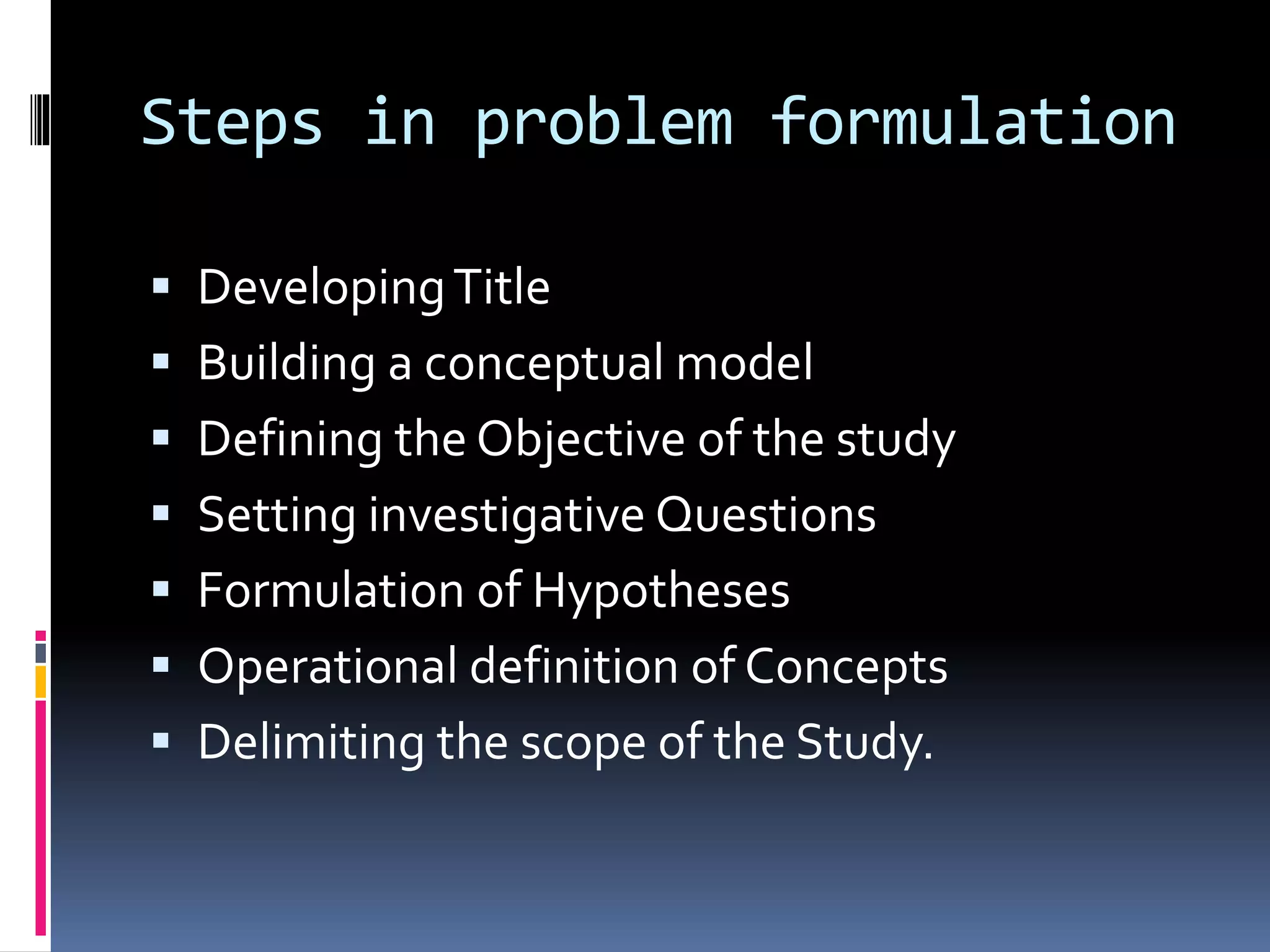
Steps in problem formulation
 DevelopingTitle
 Building a conceptual model
 Defining the Objective of the study
 Setting investigative Questions
 Formulation of Hypotheses
 Operational definition of Concepts
 Delimiting the scope of the Study.
 Research Problem – Meaning & Definition,
Components
 Sources of Problems
 Criteria of Selection
 Steps in problem identification
 Do’s and Don’t in Selecting the Problem
 Formulation of a Problem
 Importance & Steps in formulation
Identification & formulation of problem

Identification & formulation of problem

  • 3.
    Over view  ResearchProblem – Meaning & Definition, Components  Sources of Problems  Criteria of Selection  Steps in problem identification  Do’s and Don’t in Selecting the Problem  Formulation of a Problem  Importance & Steps in formulation
  • 4.
    Research Problem  Aresearch problem is a question that a researcher wants to answer, or a problem that a researcher wants to solve.  A research problem is the situation that causes the researcher to feel apprehensive, confused and ill at ease. Copyright © Allyn & Bacon 2008
  • 5.
     Identification &Formulation of research problem is a first step in the research process.  It is believed that most of the good research studies needs lot of time for selection of a research problem. Copyright © Allyn & Bacon 2008
  • 6.
    RESEARCH PROBLEM- DEFINITION Aproblem is an interrogative sentence or statement that asks what relation exists between two or more variables. – Kerlinger Copyright © Allyn & Bacon 2008
  • 7.
    COMPONENTS OF RESEARCHPROBLEM  There must be an individual or a group which has some difficulty.  There must be some objective(s) to be attained at.If one wants nothing,one cannot have a problem.  There must be alternative means (or the courses of action) for attaining the objectives one wish to attain.This means that there must be at least two means available to a researcher for if he has no choice of means,he cannot have a problem.  There must remain some doubt in the mind of a researcher with regard to the selection of alternatives.This means that research must answer the question concerning the relative efficency of the possible alternatives.  There must be some environment to which the difficulty pertains.
  • 8.
    SOURCES OF PROBLEM &CRITERIA OF SELECTION Vishnu s kumar
  • 9.
    Steps in ProblemIdentification  Statement of the problem in general way  Understanding the nature of the problem  Surveying the available literature  Developing the ideas through discussions  Rephrasing the research problem into a working proposition.
  • 10.
     Define theproblem in general way Ex: Does negative news interest people more than positive news?  Narrow it down by rethinking over the problem. (Consider feasibility of problem) Ex: Does negative news such as robbery, corruption interest people more than positive news like country economic growth ?  How to define in general way? Study the related subject thoroughly Do preliminary survey or pilot survey
  • 11.
    (b) Understanding thenature of the problem  Best way to understand the problem is through discussion.  Discussion with the people who has good knowledge about that problem.
  • 12.
    (c) Surveying theavailable literature Survey all the research which are already undertaken in related problem. It helps to :  Narrow down the problem  To identify research gaps  Gives new ideas in related area  Helps for research design
  • 13.
    (D) DEVELOPING THEIDEAS THROUGH DISCUSSIONS  Discussion always produces useful information.  Various new ideas can be developed through such an exercise.  Researcher must discuss his/her problem with his/ her colleagues and others who have enough experience in the same area or in working on similar problems. This is known as experience survey.
  • 14.
    (e) REPHRASING THERESEARCH PROBLEM  Rephrase the research problem in to operational term.  Initial research question: Why is productivity in Japan so much higher than in India?  After, the problem has understood, available literature has taken place and discussion over the problem has taken place, the question has rephrased.  Rephrased Research question: What factors were responsible for the higher labour productivity of Japan’s manufacturing industries during the decade 1971 to 1980 relative to India’s manufacturing industries?
  • 15.
    Do’s and Don’tin Selecting the Problem  Subject which is overdone should not be normally chosen, for it will be a difficult task to throw any new light in such a case.  Controversial subject should not become the choice of an average researcher.  Research Question should be clear. Unclear: Why are social networking sites harmful? Clear: How are online users experiencing or addressing privacy issues on such social networking sites as MySpace and Facebook? Which social networking site? (My space and Facebook) Type of harm (privacy issues) ,Who gets harm? (users)
  • 18.
     Research Questionshould be focused. Unfocused: What is the effect on the environment from global warming? Focused: How is glacial melting affecting penguins in Antarctica? specific cause (glacial melting) specific place (Antarctica) specific group affected (Penguin)
  • 19.
     The selectionof a problem must be preceded by a preliminary study (not necessary if it is already done ) when the field of inquiry is relatively new and does not have available a set of well developed techniques, a brief feasibility study must always be undertaken.  Research Question should be appropriately complex. Too simple: How are doctors addressing diabetes in the India? Appropriately Complex: What are common traits of those suffering from diabetes in India, and how can these commonalities be used to aid the medical community in prevention of the disease? Simple question (if looked up online, get answered immediately. No role of analysis) Complex one require significant investigation and evaluation.
  • 20.
  • 21.
    Formulation means translatingand transforming the selected research problem/topic into a scientifically researchable question. It is the demarcation of a problem area within a certain context involving the: WHO WHAT WHERE WHEN and the WHY of the problem situation
  • 22.
    A problem welldefined is a problem half solved ill defined problem may create hurdles like:  What data are to be collected?  What characteristics of data are relevant and need to be studied?  What relations are to be explored.  What techniques are to be used for the purpose?
  • 23.
    WHY IS AGOOD PROBLEM FORMULATION IMPORTANT?  Formulating a Problem formulation is the first and most important step of a research process.  The problem formulation is like an identification of a destination before undertaking a journey.  The research problem serves as a foundation of a research study; like a building and its foundation.  If it is well formulated, you can expect a good study to follow.
  • 24.
    Steps in problemformulation  DevelopingTitle  Building a conceptual model  Defining the Objective of the study  Setting investigative Questions  Formulation of Hypotheses  Operational definition of Concepts  Delimiting the scope of the Study.
  • 25.
     Research Problem– Meaning & Definition, Components  Sources of Problems  Criteria of Selection  Steps in problem identification  Do’s and Don’t in Selecting the Problem  Formulation of a Problem  Importance & Steps in formulation